
NASA-UAP-D023, Fragmento de entrevista con el astronauta Gordon Cooper, 1962
Datos del expediente
- ID oficial del expediente
- NASA-UAP-D23 (citado como NASA-UAP-D023 en este archivo)
- Tipo de documento
- Audio
- Agencia
- NASA
- Publicado en
- R03 · 2026-06-12
- Fecha del incidente
- November, 1962
- Lugar del incidente
Descripción oficial
En noviembre de 1962, el periodista Walter Cronkite entrevistó al astronauta Gordon Cooper. En este fragmento de esa entrevista, Cronkite le pregunta a Cooper sobre sus opiniones respecto a la naturaleza de los objetos voladores no identificados, ya que este había expresado previamente interés en el tema. Cooper opina que “un gran número de personas excepcionalmente calificadas ha visto objetos” sin una “explicación lógica”, y especula sobre la existencia de otros planetas con “una atmósfera habitable” y que tal vez haya “algún tipo de vida humana” allá afuera. La entrevista se realizó en noviembre de 1962.
✦ Resumen IA
Este es un extracto de una entrevista televisiva de noviembre de 1962 en la que el periodista Walter Cronkite interroga al astronauta del Proyecto Mercury Gordon Cooper sobre objetos voladores no identificados. Cronkite señala el interés previamente expresado por Cooper en el tema y le pregunta si todavía cree que puede haber algo cierto en los reportes de ovnis. Cooper responde que un gran número de personas "excepcionalmente calificadas" han visto objetos sin una explicación lógica, y aunque admite que cada avistamiento individualmente puede tener una causa mundana, especula que, dado el vasto número de planetas en el universo, algunos podrían tener atmósferas habitables y quizás alguna forma de vida, lo que hace plausible que algunos avistamientos involucren tales orígenes. Cronkite luego pregunta si el próximo vuelo del propio Cooper en el Mercury (un viaje relativamente corto al espacio) sería lo suficientemente lejano como para hacer observaciones relevantes; Cooper responde que no, ya que las verdaderas distancias del vuelo espacial se miden en millones de millas frente a las aproximadamente cien millas que alcanza el Mercury. Cronkite cierra planteando el "efecto Glenn" —las partículas tipo copos de nieve/luciérnagas reportadas por John Glenn, Scott Carpenter, y (según la transcripción corregida) Wally Schirra, que Glenn atribuyó a escarcha desprendida de la cápsula— y el extracto termina antes de que Cooper responda.
Generado con IA a partir del archivo oficial — puede contener errores.
▸Transcripción
[00:00] Cronkite: I know you expressed interest at one time in unidentified flying objects, the feeling that there might be something to all these stories. Do you still feel that way? [00:17] Cooper: Well, I feel that there have been a large number of fairly well-qualified, or exceptionally well-qualified, I should say, people who have seen objects that have not had any really logical explanation other than this. I think that maybe, in fact, each and every one of them does have an explanation. But I think that there are so many possibilities, so many thousands of possibilities of other planets out somewhere in the universe that would have a livable atmosphere, that I would hate to rule out the possibility that maybe there are people or some type of human life on some of these. And if this is the case, then it's not too unfeasible to think that perhaps some of these objects might have been something of this type. [01:09] Cronkite: You don't think that the comparatively short step out into space that the Mercury flight will take you on is far enough out to make any observations in this area? [01:20] Cooper: No, I think we're still at a fairly low order of getting out into space when you speak of space and being millions of miles involved, and we're only getting out a hundred miles or so. [01:39] Cronkite: What about the so-called Glenn effect? You know, the snowflakes, the fireflies — now both Schirra and Carpenter seem to feel that it's a frost of some nature off of the capsule, but apparently Glenn still sort of casts doubt on that theory.
Generado con IA a partir del archivo oficial — puede contener errores.
Traducción automática — el documento original está en inglés. Ver en inglés →
Fuente: Departamento de Guerra de EE. UU. / AARO — dominio público · war.gov/ufo
Entidades en este documento
Casos conectados
NASA-UAP-D018, Gemini 4 Experiment Debriefing, 1967
NASA-UAP-D010, Mercury Atlas 9 Audio Excerpt, May 15, 1963
NASA-UAP-D012, Mercury Atlas 8 Audio Excerpt, October 3, 1962
NASA-UAP-D015, Astronaut Scientific Debriefings, 1962-1963
NASA-UAP-D011, Mercury Atlas 9 Audio Excerpt, May 15, 1963
NASA-UAP-D013, Mercury Atlas 7, May 24, 1962
Casos relacionados
Misma serie de expedientes
NASA-UAP-D001, Transcripción del Apolo 12, 1969
NASA-UAP-D002, Transcripción del Apolo 17, 1972
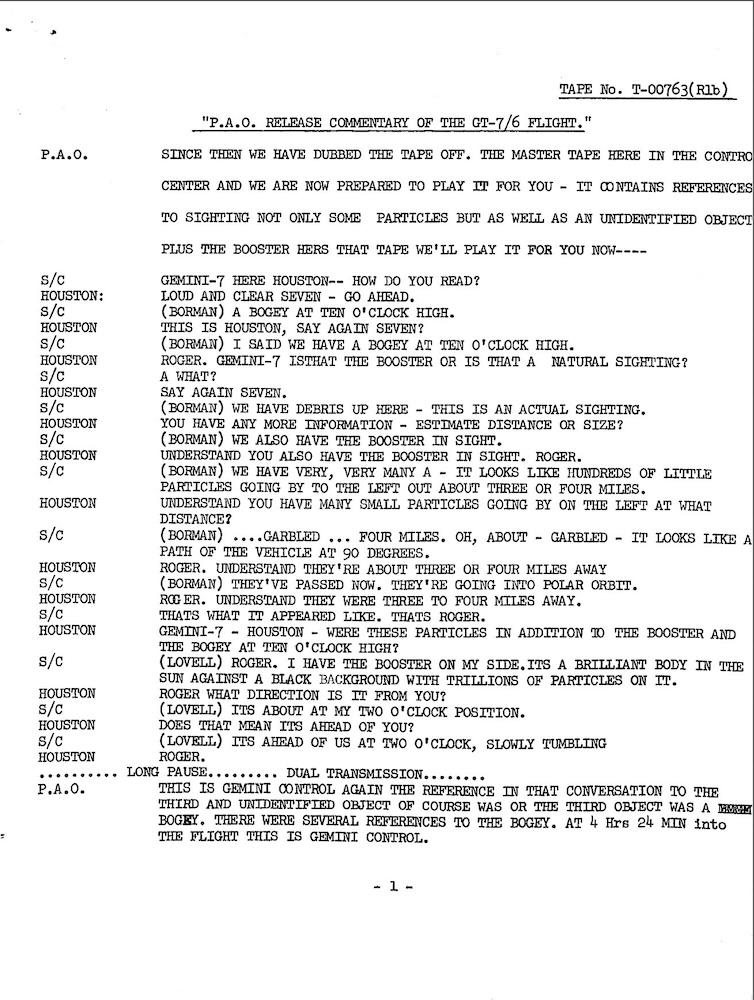
NASA-UAP-D003, Transcripción del Gemini 7, 1965
NASA-UAP-D003A, Extracto de audio del Gemini 7, 1965
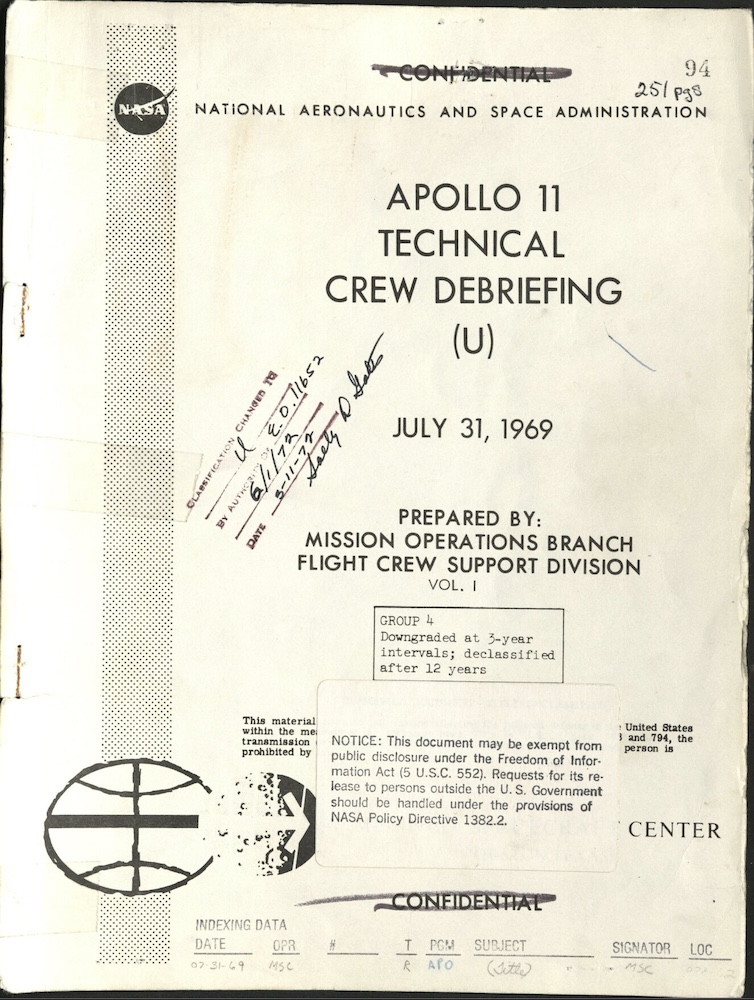
NASA-UAP-D004, Interrogatorio técnico de la tripulación del Apolo 11, 1969
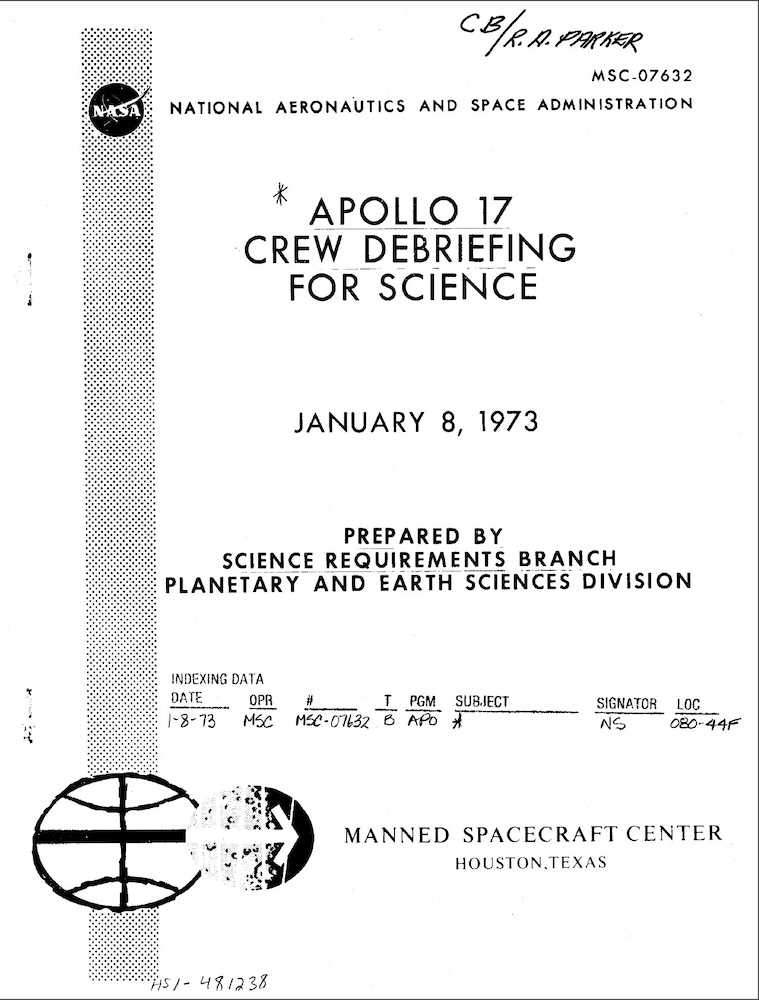
NASA-UAP-D005, Interrogatorio científico de la tripulación del Apolo 17, 1973
Mismo periodo
Mismo release
FBI-UAP-D011, Remisión de correspondencia del Director del FBI, 1949
CIA-UAP-005, Artículo de un científico alemán sobre los “discos voladores”
CIA-UAP-002, Panel Asesor Científico sobre Objetos Voladores No Identificados, Informe, 1952-1953
CIA-UAP-014, Actividad británica en el campo de los “objetos voladores no identificados”
FBI-UAP-D012, Oficina de Campo de Newark, 1952-1967
FBI-UAP-D013, Investigación de “OVNIs” en el estado de Washington, 1952-1960
Misma agencia
NASA-UAP-D014, Mercury-Redstone 4, 21 de julio de 1961
NASA-UAP-D010, Extracto de audio del Mercury Atlas 9, 15 de mayo de 1963
NASA-UAP-D011, Extracto de audio del Mercury Atlas 9, 15 de mayo de 1963
NASA-UAP-D016, Interrogatorio preliminar a la tripulación del Gemini 4, Parte I, 1965
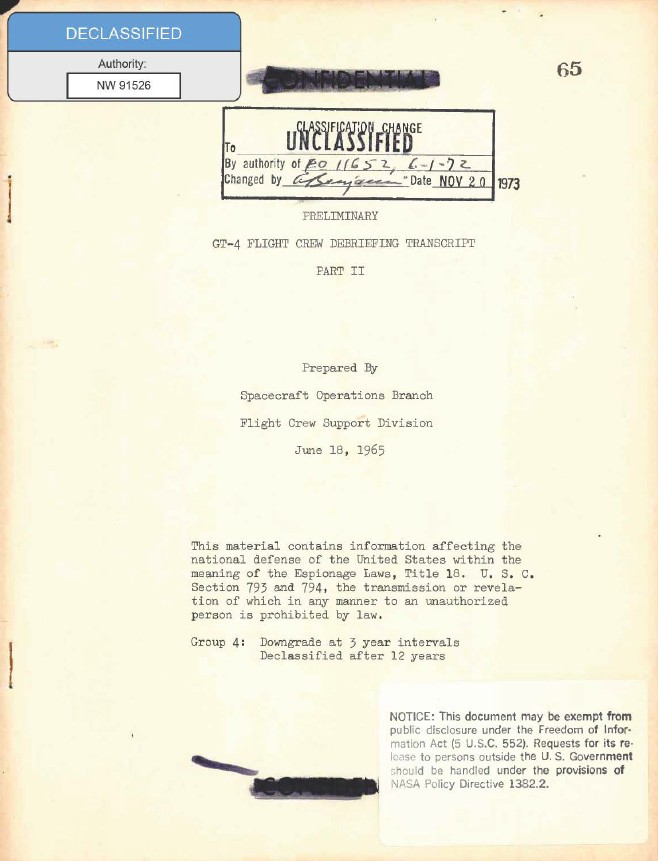
NASA-UAP-D017, Interrogatorio preliminar a la tripulación del Gemini 4, Parte II, 1965