
NASA-UAP-D023, Trecho de Entrevista com o Astronauta Gordon Cooper, 1962
Dados principais
- ID oficial do arquivo
- NASA-UAP-D23 (citado como NASA-UAP-D023 neste arquivo)
- Tipo de documento
- Áudio
- Agência
- NASA
- Publicado em
- R03 · 2026-06-12
- Data do incidente
- November, 1962
- Local do incidente
Descrição oficial
Em novembro de 1962, o jornalista Walter Cronkite entrevistou o astronauta Gordon Cooper. Neste trecho da entrevista, Cronkite pergunta a Cooper sobre suas opiniões a respeito da natureza dos objetos voadores não identificados, já que este havia manifestado anteriormente interesse no assunto. Cooper opina que “um grande número de pessoas excepcionalmente qualificadas viu objetos” sem uma “explicação lógica” e especula sobre a existência de outros planetas com “uma atmosfera habitável” e que talvez exista “algum tipo de vida humana” em outros lugares. A entrevista foi realizada em novembro de 1962.
✦ Resumo IA
Este é um trecho de uma entrevista de televisão de novembro de 1962 em que o jornalista Walter Cronkite questiona o astronauta do Projeto Mercury Gordon Cooper sobre objetos voadores não identificados. Cronkite observa o interesse anteriormente expresso por Cooper no assunto e pergunta se ele ainda acredita que possa haver algo nos relatos de OVNIs. Cooper responde que um grande número de pessoas "excepcionalmente qualificadas" viu objetos sem uma explicação lógica, e embora admita que cada avistamento possa individualmente ter uma causa mundana, especula que, dado o vasto número de planetas no universo, alguns poderiam ter atmosferas habitáveis e talvez alguma forma de vida, tornando plausível que alguns avistamentos envolvam tais origens. Cronkite então pergunta se o próprio voo iminente de Cooper na Mercury (uma viagem relativamente curta ao espaço) seria distante o suficiente para fazer observações relevantes; Cooper diz que não, já que as verdadeiras distâncias de voo espacial são medidas em milhões de milhas, em comparação com as cerca de cem milhas que a Mercury alcança. Cronkite encerra levantando o "efeito Glenn" —as partículas tipo floco de neve/vaga-lume relatadas por John Glenn, Scott Carpenter, e (segundo a transcrição corrigida) Wally Schirra, que Glenn atribuiu a geada desprendida da cápsula— e o trecho termina antes que Cooper responda.
Gerado com IA a partir do arquivo oficial — pode conter erros.
▸Transcrição
[00:00] Cronkite: I know you expressed interest at one time in unidentified flying objects, the feeling that there might be something to all these stories. Do you still feel that way? [00:17] Cooper: Well, I feel that there have been a large number of fairly well-qualified, or exceptionally well-qualified, I should say, people who have seen objects that have not had any really logical explanation other than this. I think that maybe, in fact, each and every one of them does have an explanation. But I think that there are so many possibilities, so many thousands of possibilities of other planets out somewhere in the universe that would have a livable atmosphere, that I would hate to rule out the possibility that maybe there are people or some type of human life on some of these. And if this is the case, then it's not too unfeasible to think that perhaps some of these objects might have been something of this type. [01:09] Cronkite: You don't think that the comparatively short step out into space that the Mercury flight will take you on is far enough out to make any observations in this area? [01:20] Cooper: No, I think we're still at a fairly low order of getting out into space when you speak of space and being millions of miles involved, and we're only getting out a hundred miles or so. [01:39] Cronkite: What about the so-called Glenn effect? You know, the snowflakes, the fireflies — now both Schirra and Carpenter seem to feel that it's a frost of some nature off of the capsule, but apparently Glenn still sort of casts doubt on that theory.
Gerado com IA a partir do arquivo oficial — pode conter erros.
Tradução automática — o documento original está em inglês. Ver em inglês →
Fonte: Departamento de Guerra dos EUA / AARO — domínio público · war.gov/ufo
Entidades neste documento
Casos conectados
NASA-UAP-D018, Gemini 4 Experiment Debriefing, 1967
NASA-UAP-D010, Mercury Atlas 9 Audio Excerpt, May 15, 1963
NASA-UAP-D012, Mercury Atlas 8 Audio Excerpt, October 3, 1962
NASA-UAP-D015, Astronaut Scientific Debriefings, 1962-1963
NASA-UAP-D011, Mercury Atlas 9 Audio Excerpt, May 15, 1963
NASA-UAP-D013, Mercury Atlas 7, May 24, 1962
Casos relacionados
Mesma série de arquivos
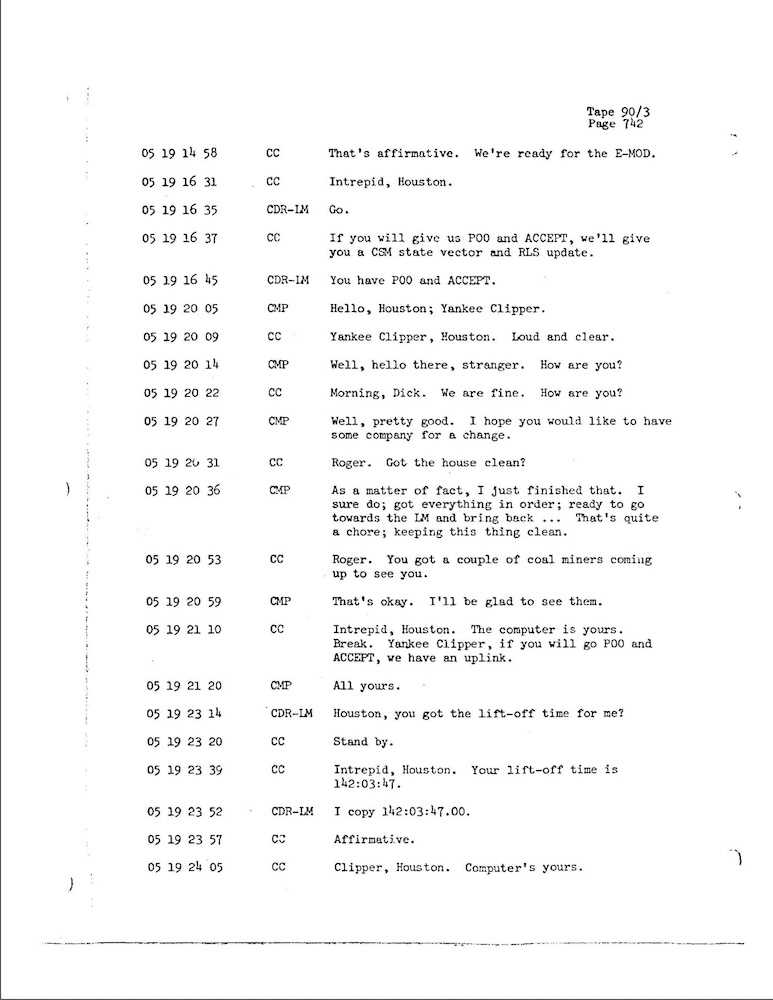
NASA-UAP-D001, Transcrição Apollo 12, 1969
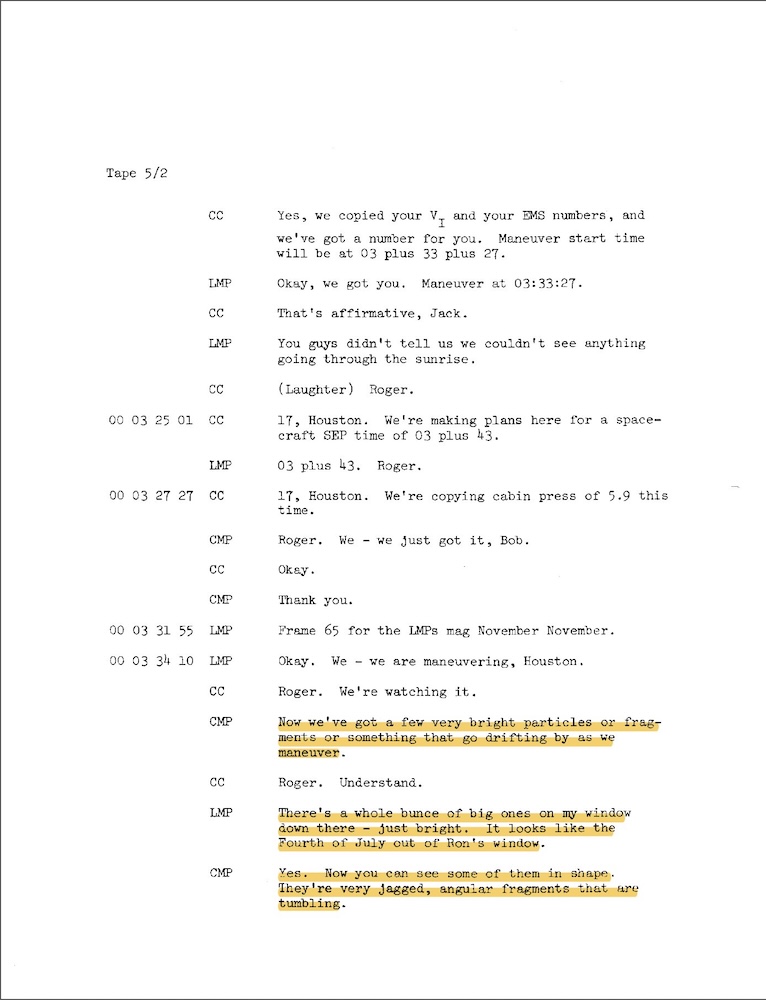
NASA-UAP-D002, Transcrição Apollo 17, 1972
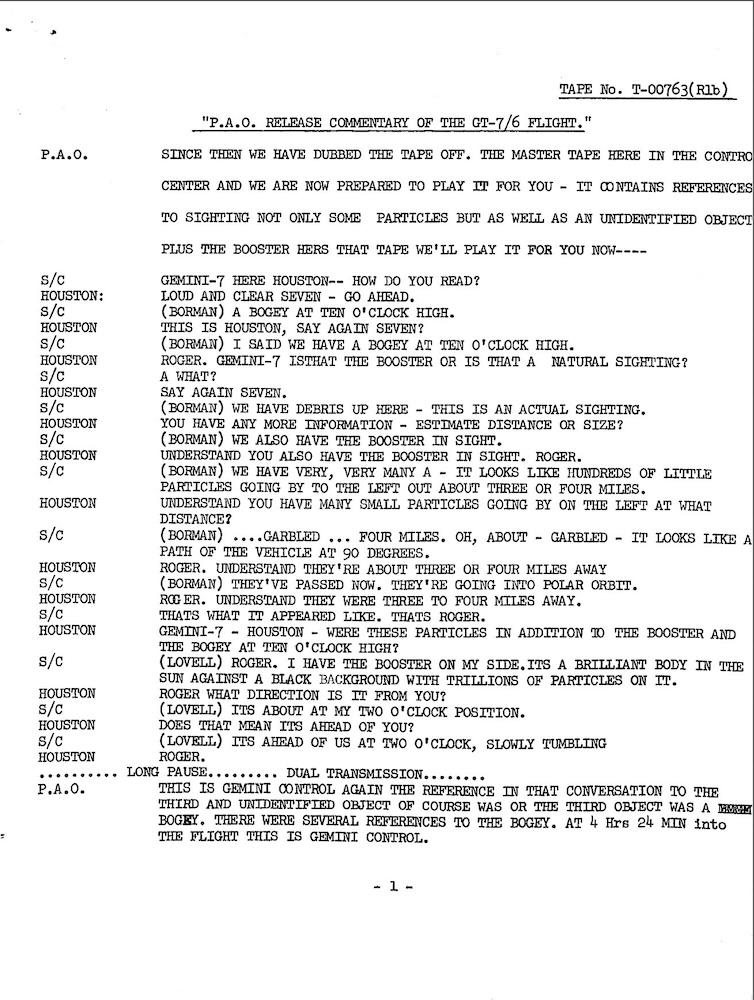
NASA-UAP-D003, Transcrição Gemini 7, 1965
NASA-UAP-D003A, Trecho de Áudio Gemini 7, 1965
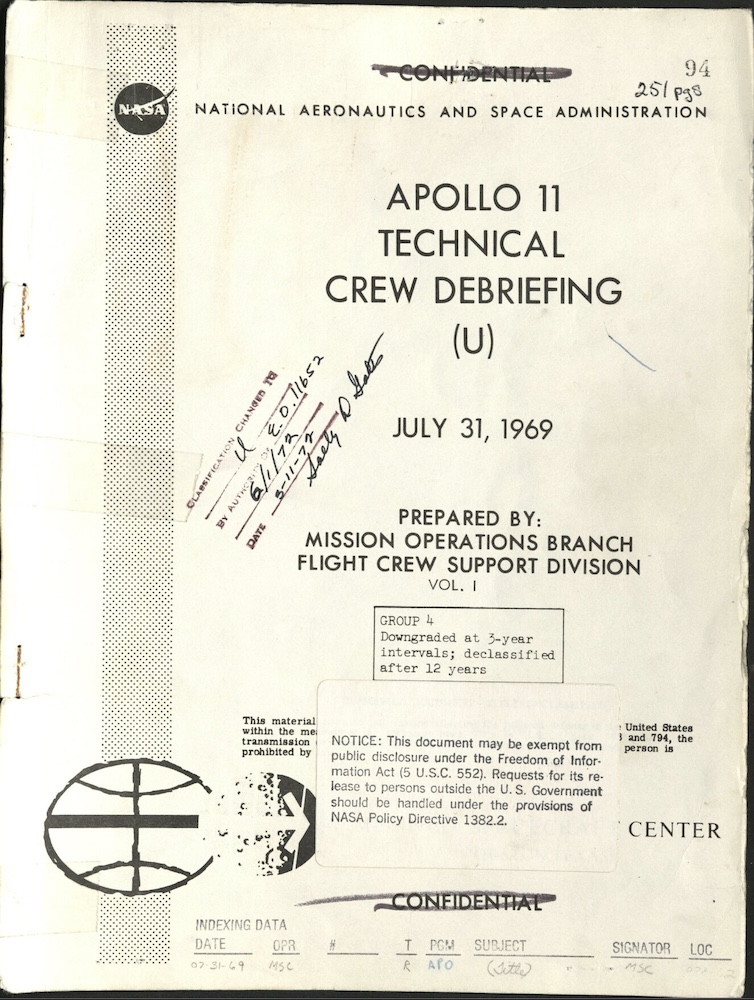
NASA-UAP-D004, Entrevista Técnica da Tripulação Apollo 11, 1969
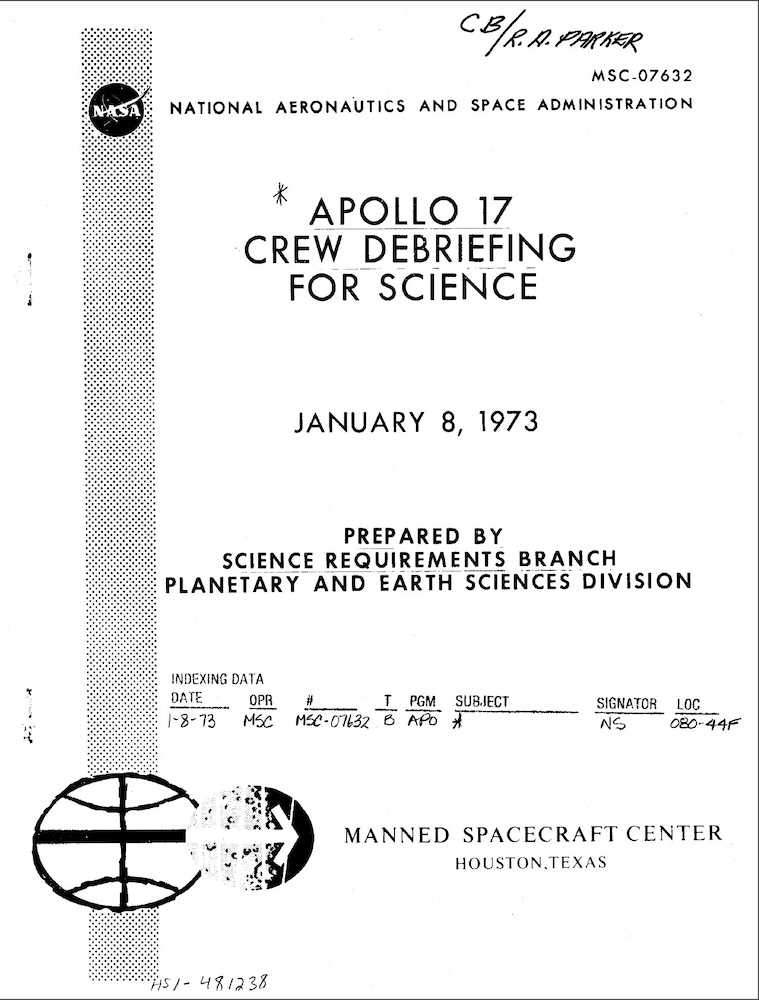
NASA-UAP-D005, Entrevista da Tripulação Apollo 17 para Ciência, 1973
Mesmo período
Mesmo release
FBI-UAP-D011, Encaminhamento de Correspondência D/FBI, 1949
CIA-UAP-005, Artigo de Cientista Alemão sobre "Discos Voadores"
CIA-UAP-002, Painel Consultivo Científico sobre Objetos Voadores Não Identificados, Relatório, 1952-1953
CIA-UAP-014, Atividade Britânica no Campo dos "Objetos Voadores Não Identificados"
FBI-UAP-D012, Escritório de Campo de Newark, 1952-1967
FBI-UAP-D013, Investigação de ‘OVNI’ no Estado de Washington, 1952-1960
Mesma agência
NASA-UAP-D014, Mercury-Redstone 4, 21 de Julho de 1961
NASA-UAP-D010, Trecho de Áudio Mercury Atlas 9, 15 de Maio de 1963
NASA-UAP-D011, Trecho de Áudio Mercury Atlas 9, 15 de Maio de 1963
NASA-UAP-D016, Debriefing Preliminar da Tripulação da Gemini 4, Parte I, 1965
NASA-UAP-D017, Debriefing Preliminar da Tripulação da Gemini 4, Parte II, 1965