NASA-UAP-D005, Apollo-17-Besatzungsdebriefing für Wissenschaft, 1973
Kerndaten
- Offizielle Akten-ID
- NASA-UAP-D5 (hier zitiert als NASA-UAP-D005)
- Dokumenttyp
- Dokument
- Behörde
- NASA
- Veröffentlicht in
- R01 · 2026-05-08
- Datum des Vorfalls
- 1973
- Ort des Vorfalls
- Lesbare Seiten
- 3/3
- VIRIN
- 260508-O-D0360-1064
Offizielle Beschreibung
Apollo 17 war die neunte bemannte US-Mission zum Mond und die sechste, bei der Astronauten auf der Mondoberfläche landeten. Bei diesem Dokument handelt es sich um einen Auszug aus dem Apollo-17-Besatzungsdebriefing für Wissenschaft vom 8. Januar 1973, in dem Dick Henry, Ko-Untersucher des Ultraviolett-Experiments auf Apollo 17, über unerwartete Ergebnisse spricht. • Seiten 119-120. „Eines der spannendsten Ergebnisse der Röntgenastronomie war die Tatsache, dass ein Röntgenhintergrund am Himmel beobachtet wurde, den niemand erwartet hatte, und ein Teil davon ist der Gammastrahlenhintergrund, über den Dr. Trombka gesprochen hat. Im UV-Bereich weiß es niemand, aber man weiß es erst, wenn man hinschaut. Man muss sich mit diesem Sternenhintergrund auseinandersetzen, von dem wir wissen, dass er da ist. Also haben wir eine große Anzahl verschiedener Punkte bei hohen galaktischen Breiten betrachtet, sowohl im Norden als auch im Süden. Das Spektrum, das wir sehen, liegt über diesem Dunkelstrom. Mit anderen Worten: Dieser ungewöhnlich hohe Dunkelstrom hat das Experiment tatsächlich nicht beeinträchtigt. Das Spektrum, das wir sehen, sieht aus wie das Spektrum eines heißen Sterns; wir wissen jedoch, dass sich keine heißen Sterne in unserem Sichtfeld befanden. Daher ist die vorsichtigste Interpretation, denke ich, dass wir Licht von heißen Sternen in der galaktischen Ebene sehen, das aus der Ebene aufsteigt und von interstellarem Staub reflektiert wird. Es gibt jedoch bestimmte Merkmale des Spektrums, die nicht zu dieser Theorie passen, und es ist zumindest möglich, dass es sich um extragalaktische Strahlung handelt. Ich freue mich sehr auf die detaillierte Computeranalyse dazu, aber das wird lange dauern.“
✦ KI-Zusammenfassung
Dieses Dokument handelt NICHT von UAP. Es ist ein 3-seitiger Auszug (Seiten 119-120 des Originals, datiert auf den 8. Januar 1973, MSC-07632) aus einem pressekonferenzähnlichen Briefing 'Crew Debriefing for Science' der Apollo-17-Mission, das im Manned Spacecraft Center in Houston abgehalten wurde. Der Sprecher (identifiziert als 'HENRY,' vermutlich der Astronom/Hauptforscher Richard Henry) bespricht die Ergebnisse des Fern-Ultraviolett-Spektrometer/Kamera-Experiments der Mission: eine Suche nach Lyman-Alpha-Strahlung von ionisiertem Wasserstoff, die möglicherweise den Coma-Galaxienhaufen zusammenhält (keine gefunden, wodurch dieser Bindungsmechanismus ausgeschlossen wird); einen unerwarteten UV-Hintergrund, der bei hohen galaktischen Breiten beobachtet wurde und Spektren heißer Sterne ähnelt, vorläufig zugeschrieben Sternenlicht, das von interstellarem Staub in der galaktischen Ebene reflektiert wird (wobei einige Spektralmerkmale möglicherweise auf extragalaktische Strahlung hindeuten); interplanetare Lyman-Alpha-Wasserstoffdaten von interstellarem Wasserstoff, der durch das Sonnensystem strömt (abgeglichen mit OGO-5-Beobachtungen von Gary Thomas und Charles Barth); sowie eine geplante Diskussion über spektrale Erdbeobachtungen von außerhalb der Atmosphäre. Dies ist ein reines astrophysikalisches Ergebnisbriefing ohne UAP- oder anomale Sichtungsinhalte; es scheint nur deshalb in die Veröffentlichung aufgenommen worden zu sein, weil es Teil der umfassenderen Debriefing-Dokumentation der Apollo-17-Besatzung ist.
Mit KI aus der Originaldatei erstellt — kann Fehler enthalten.
▸Transkript(3 von 3 Seiten lesbar)
[PAGE 1] * APOLLO 17 - CREW DEBRIEFING - - - FOR SCIENCE JANUARY 8, 1973 MSC-07632 SIGNATOR LOCUS oso-44 MANNED SPACECRAFT CENTER HOUSTON, TEXAS [PAGE 2] 119 HENRY (CONT'D) ... gravitationally holding it together. We thought it might be in the form of ionized hydrogen. We looked for Lyman-alpha radiation, red shifted from the ionized hydrogen, and we didn't see any. We set a lower limit, which certainly excludes the possibility that the Coma cluster is held together by this ionized hydrogen. I think that may leave a real mystery as to what is holding the thing together. The fourth point may turn out to be the most interesting thing of all. When you look in the Milky Way, you see a lot of UV coming from the stars, but the question is, what do you see when you look up to the North Galactic Pole or down to the South Galactic Pole. One of the most exciting results of X-ray astronomy was the fact that an X-ray background was observed over the sky that nobody had expected, and part of this is the gamma-ray background that Dr. Trombka talked about. In the UV, nobody knows, but you never know until you look. You do have to deal with this background of stars that we know is there. So we did look at a large number of different points at high galactic latitudes, both north and south. The spectrum that we see is above this dark count. In other words, this abnormally high dark current did not, in fact, interfere with that experiment. The spectrum that we see looks like the spectrum of the hot [star] [PAGE 3] 120 HENRY (CONT'D) star; however, we know that there were no hot stars within our field of view. Therefore, the most conservative interpretation, I think, is that what we're seeing is light from hot stars in the galactic plane going up out of the plane and reflecting off interstellar dust. There are certain characteristics of the spectrum, though, that don't fit that theory, and it's at least possible that this is extragalactic radiation. I'm looking forward very much to the detailed computer study of this, but it's going to take a long time. Fifth point: Lyman-alpha hydrogen radiation is a completely separate problem, and Gary Thomas at the University of Colorado and Charles Barth [?] observed this from OGO-5. We obtained just an enormous amount of data on the Apollo that's going to straighten out this picture and clarify it considerably. This is hydrogen that is inside our solar system. It's sunlight reflecting off this. The hydrogen, Gary Thomas thinks, is hydrogen from interstellar space streaming through the solar system, and he is looking forward with great anticipation to getting detailed analyses of that. One more thing: the spectrum of the Earth. I keep saying 'we' but these were the guys that were there. We looked at the Earth from outside. A lot of people have observed [text continues beyond excerpt]
Mit KI aus der Originaldatei erstellt — kann Fehler enthalten.
Automatische Übersetzung — das Originaldokument ist auf Englisch. Auf Englisch ansehen →
Quelle: US-Kriegsministerium / AARO — gemeinfrei · war.gov/ufo
Entitäten in diesem Dokument
Verbundene Fälle
NASA-UAP-D024, “Apollo 16 Scientific Debriefing”
18_6369445_General_1948_Vol_1
NASA-UAP-D002, Apollo 17 Transcript, 1972
NASA-UAP-D006, Apollo 17 Technical Crew Debriefing, 1973
NASA-UAP-D007, Skylab Technical Crew Debriefing 1973
NASA-UAP-D009, Apollo 17 Audio Excerpt, December 7, 1972
Verwandte Fälle
NASA-UAP-D026, Apollo-14-Nachbesprechung, 1971
NASA-UAP-D027, Apollo-14-Nachbesprechung (Fortsetzung), 1971
NASA-UAP-D028, Medizinische Nachbesprechung der Apollo-17-Besatzung, 1972
NASA-UAP-D029, Medizinische Nachbesprechung der Apollo-17-Besatzung (Fortsetzung), 1972
Gleiche Aktenserie
NASA-UAP-D001, Apollo-12-Transkript, 1969
NASA-UAP-D002, Apollo-17-Transkript, 1972
NASA-UAP-D003, Gemini-7-Transkript, 1965
NASA-UAP-D003A, Gemini-7-Audioausschnitt, 1965
NASA-UAP-D004, Apollo-11-Technisches Besatzungsdebriefing, 1969
NASA-UAP-D006, Apollo-17-Technisches Besatzungsdebriefing, 1973
Gleicher Zeitraum
Gleiche Veröffentlichung
331_120752_Numeric_Files_1944–1945_37153_German_Armament_Equipment_Documents
18_100754_ General 1946-7_Vol_2
18_6369445_General_1948_Vol_1
341_110448_Records_Relating_to_the_Collection_and_Dissemination_of_Intelligence_1948-1955-TS_CONT_No.2_2-5300-2-5399
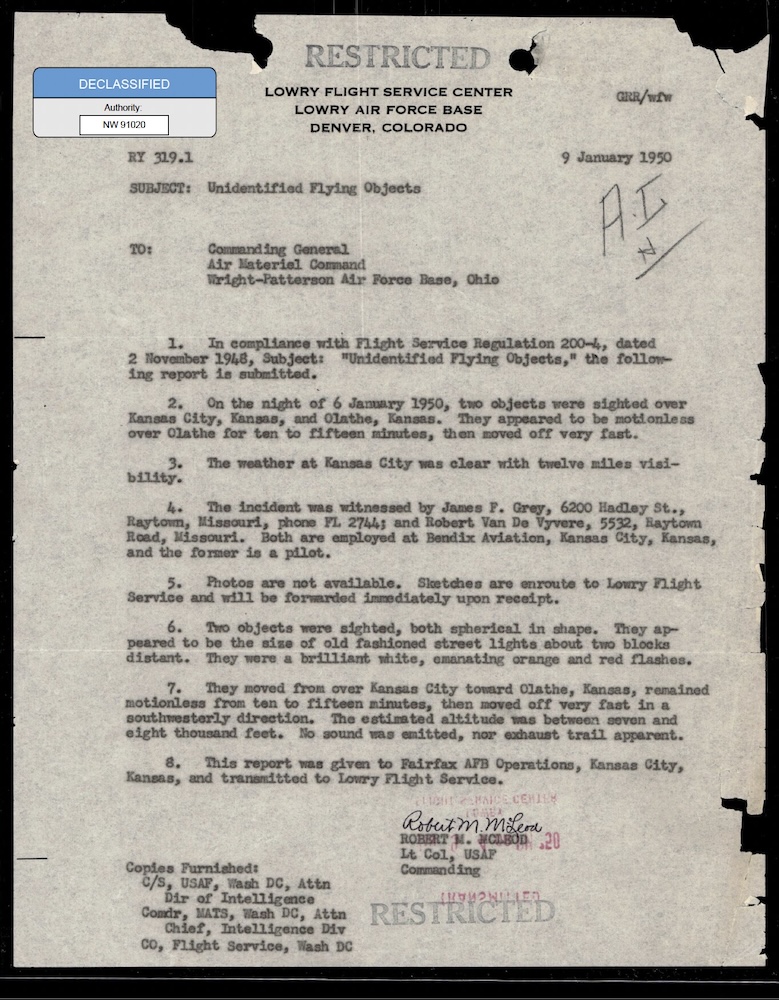
342_HS1-416511228_319.1 Flying Discs 1949
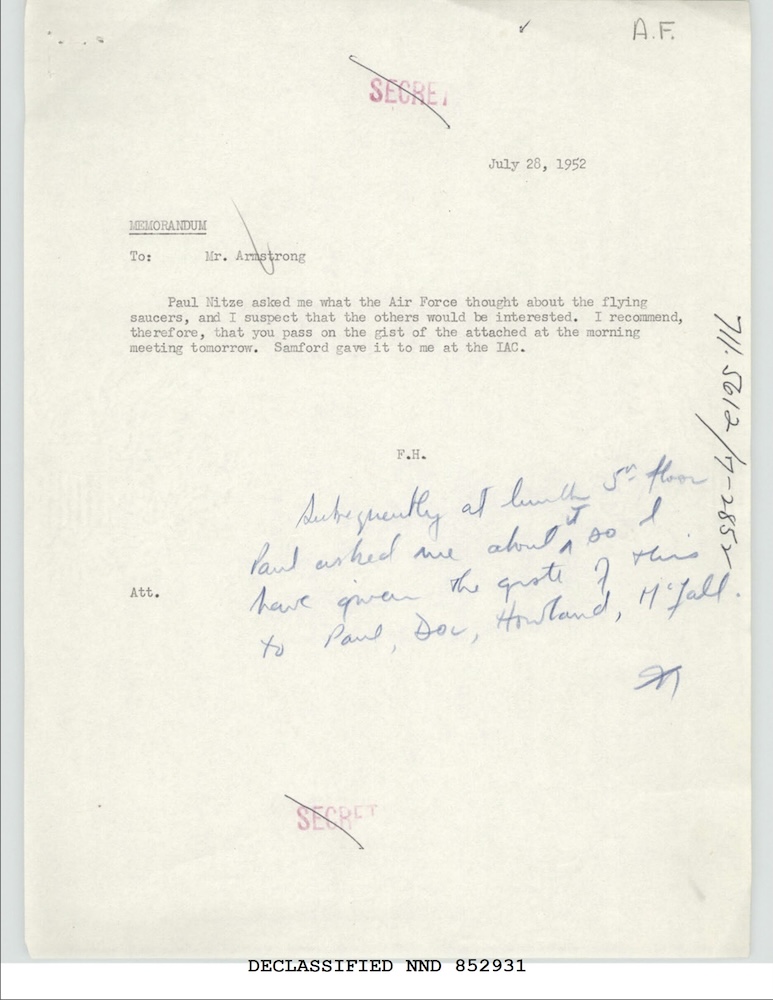
59_64634_711.5612[7-2852
Gleiche Behörde
NASA-UAP-D014, Mercury-Redstone 4, 21. Juli 1961
NASA-UAP-D012, Mercury-Atlas-8-Audioausschnitt, 3. Oktober 1962
NASA-UAP-D013, Mercury-Atlas 7, 24. Mai 1962
NASA-UAP-D015, Wissenschaftliche Astronauten-Debriefings, 1962–1963
NASA-UAP-D023, Interviewausschnitt mit Astronaut Gordon Cooper, 1962