Archivos de la USAF sobre OVNI y el disco Avro Y2, 1954-55
Archivo oficial: DOW-UAP-D095, Proyectos conjuntos de aviación entre EE. UU. y Canadá y reportes de avistamientos OVNI, 1954-1955
Publicado el · Actualizado el
Datos del expediente
- ID oficial del expediente
- DOW-UAP-D95 (citado como DOW-UAP-D095 en este archivo)
- Tipo de documento
- Documento
- Agencia
- Department of War
- Publicado en
- R04 · 2026-07-10
- Fecha del incidente
- 1955
- Lugar del incidente
- Varios
- Páginas legibles
- 54/57
- VIRIN
- 260710-D-D0360-1080
Descripción oficial
Este archivo contiene informes, memorandos y correspondencia relacionados con varias aeronaves de despegue y aterrizaje vertical (VTOL) entonces en desarrollo. El archivo incluye evaluaciones del potencial experimental del “Avro Project Y2”, una aeronave VTOL conjunta entre EE. UU. y Canadá de forma casi circular, similar en apariencia a las descripciones populares contemporáneas de los objetos voladores no identificados (OVNI). Un memorando de 1954 opina que las aeronaves VTOL de forma circular podrían confundirse con OVNI por parte de observadores no familiarizados con dichas tecnologías. También recomienda que se reexaminen los reportes de OVNI en las cercanías de operaciones o activos militares soviéticos, para evaluar si podrían ser atribuibles a aeronaves VTOL avanzadas de diseño extranjero previamente desconocidas. El archivo también contiene correspondencia relacionada con un incidente OVNI que involucró a un avión KC-97 de la Fuerza Aérea de EE. UU. (USAF) que volaba cerca de Terranova, Canadá, en julio de 1955. Un comité de la USAF determinó que las características descritas en el informe eran incompatibles con las de los sistemas militares soviéticos, estadounidenses o canadienses conocidos. El comité también fue “incapaz de explicar los retornos de radar terrestre simultáneos y los avistamientos visuales de la tripulación”. También contiene correspondencia relacionada con el valor potencial de los datos obtenidos de forma incidental por radar al captar meteoros que ingresan a la atmósfera. El Comando de Investigación y Desarrollo Aéreo de la USAF recomendó usar esos datos para mejorar el desempeño del sistema de radar AN/FPS-17. Finalmente, el archivo contiene correspondencia que indica apoyo al programa Communications Instructions for Reporting Vital Intelligence Sightings (CIRVIS), un programa civil-militar conjunto entre EE. UU. y Canadá para estandarizar los métodos de reporte de amenazas y peligros aéreos y marítimos inusuales o no identificados.
✦ Resumen IA
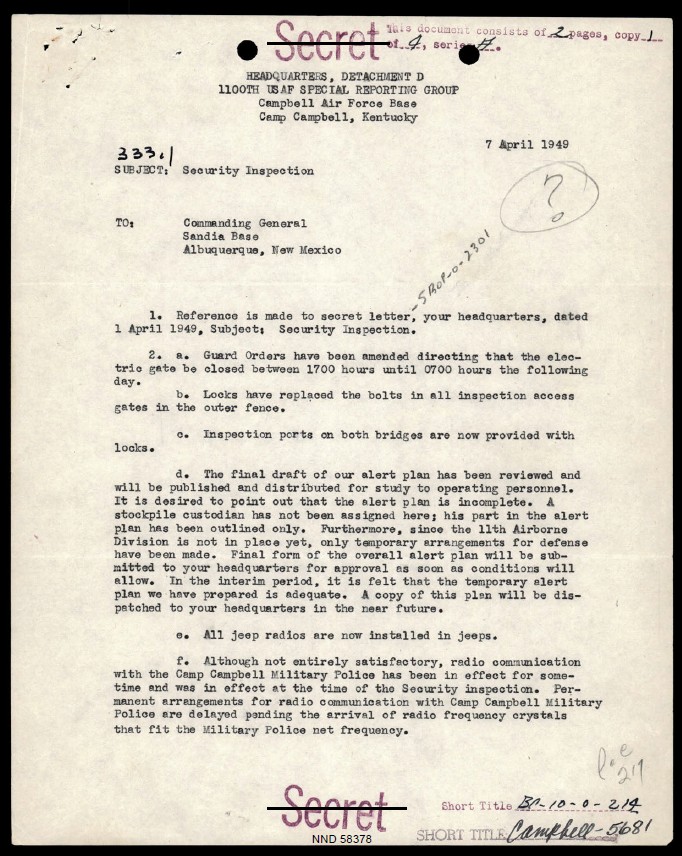
Este expediente desclasificado de 57 páginas de la Dirección de Inteligencia de la USAF (1954-1955), archivado bajo «INT 2-2-7 Unidentified Flying Objects (UFO)», gira en torno al Proyecto Y2 de A. V. Roe (Canadá), conocido en la USAF como Proyecto «Ladybird», una aeronave circular y plana de despegue vertical. Un grupo ad hoc del Scientific Advisory Board (Donovan, Markham, Soderberg) visitó A. V. Roe el 17 y 18 de noviembre de 1954 y, en un informe fechado el 6 de diciembre de 1954 y remitido por J. H. Doolittle el 10 de diciembre, recomendó no dar ningún apoyo contractual hasta que el propio análisis de A. V. Roe mostrara potencialidades mucho mayores; dijo que la resistencia aerodinámica pudo subestimarse por un factor de dos, y señaló que «no parece haberse transgredido ninguna ley básica». Un memorando para el registro del 1 de octubre de 1954, de Carl Bollum (AFOIN-2C1), adopta la postura opuesta: concluye que las probabilidades de éxito del proyecto son buenas y cita informes sobre esfuerzos alemanes de discos voladores durante la guerra (Klein, Habermohl, Schriever, Miethe); se pregunta si Bruno Berberich (escrito «Berbevich» en una página), que envió a un senador un manuscrito sobre platillos voladores, podría ser Miethe, y recomienda alertar a la comunidad de inteligencia sobre una posible actividad soviética. Memorandos de diciembre de 1954 y enero de 1955 cuestionan el artículo «The Flying Disc» del Air Intelligence Digest de diciembre de 1954: el comandante del ATIC, general de brigada Harold E. Watson, dice que sus cifras técnicas (alcance de 1.500 NM y altitud de 90.000 pies, frente a las estimaciones de A. V. Roe de 620 millas y 80.600 pies) son incorrectas y que la Fuerza Aérea no tenía contrato de desarrollo con A. V. Roe, y el teniente coronel Bloomer recomienda no publicar más artículos ni dar más informes sin la aprobación del general Samford. Una carta de Watson del 17 de enero de 1955 informa de un contrato de estudio de un año fechado el 29 de diciembre de 1954 y de un informe técnico conjunto WADC/ATIC previsto para el 15 de febrero de 1955. Los documentos de julio de 1955 tratan de un avistamiento del 6 de julio de 1955 cerca de Terranova (4910N/5950W), en el que el avistamiento visual de la tripulación de un KC-97 coincidió con un retorno de radar GCI; un comité del cuartel general no pudo explicar los retornos y avistamientos simultáneos, aceptó tentativamente la evaluación del Northeast Air Command de fenómeno eléctrico y mala interpretación de la tripulación, no halló información que respalde ni descarte aeronaves soviéticas no convencionales comparables, lo clasificó como UFOB y recomendó que, en incidentes futuros, se despachen cazas sin demora. El expediente incluye también una evaluación de un comité sobre avistamientos de RB-47 sobre el Archipiélago Canadiense del 1 al 8 de junio de 1955 (los avistamientos visuales del 3 y el 8 de junio fueron de aeronaves de nacionalidad desconocida, a reserva de información adicional), documentos sobre la distribución de datos de meteoros del radar AN/FPS-17 (julio-septiembre de 1955) y memorandos de noviembre de 1955 sobre el programa CIRVIS que elogian al MATS por instruir a aerolíneas y pilotos civiles.
Generado con IA a partir del archivo oficial — puede contener errores.
Lugares mencionados en el documento
Otros lugares a los que se refiere el documento, además de su ubicación oficial.
- Newfoundland area (KC-97 sighting)Avistamiento · 1955
the crew of a KC-97 tanker reported the sighting of an unidentified airborne object in the Newfoundland area (4910N/5950W). At
▸Transcripción(54 de 57 páginas legibles)
[PAGE 1] [Diagram: Landscape folder cover sheet, otherwise blank; stamped "SECRET" (struck through) at top and "INT 2-2-7 UNIDENTIFIED FLYING OBJECTS (UFO)" typed at upper right; DECLASSIFIED stamp (Authority NND 974373); footer "NW 91198 DocId:34745775 Page 232"] [PAGE 2] SECRET (struck through). Handwritten: "Act 2-2-7 / ATIC / over". AIR TECHNICAL INTELLIGENCE CENTER, WRIGHT-PATTERSON AIR FORCE BASE, OHIO. 17 January 1955. Major General John A. Samford, Director of Intelligence, Headquarters, USAF, Washington 25, D. C. Dear General Samford: I thought you might be interested in what is being done in the matter of the A. V. Roe (Canada) Project Y-2 (Secret) which we discussed recently and the subject of which was recently given "popular" treatment in the AID. We have been thoroughly briefed by the Bombardment Aircraft Division, Director of Weapons Systems Operations, WADC, on their present knowledge. This Division of WADC has issued a one-year study contract, dated 29 December 1954, to A. V. Roe, Canada, on subject project. This study will attempt to develop sufficient analytical, design and test data to determine the practicability of utilizing the well known design principles which are employed in the proposed vehicle. As you know, we feel very strongly that some truly factual data must be obtained to correct (or substantiate) the picture so far presented on this device by the Press and by the Air Intelligence Digest, a picture which doubtless provides comfort and support to popular writers on the subject. Accordingly, we have initiated a joint WADC/ATIC project which will result in a Technical Report to be ready 15 February 1955. This report will assemble all available information on the subject and will present such conclusions as can safely be drawn, this far ahead of the A. V. Roe study. It will be forwarded to you, without delay, upon completion. Sincerely, (signed) HAROLD E. WATSON, Brigadier General, USAF, Commander. SECRET (struck through). T55-0663 [PAGE 3] SECRET (struck through). Handwritten: "Act 2-2-7". DEPARTMENT OF THE AIR FORCE, Headquarters United States Air Force, Washington 25, D. C. SCIENTIFIC ADVISORY BOARD TO THE CHIEF OF STAFF, USAF SCIENTIFIC ADVISORY BOARD REPORT ON AVRO PROJECT Y2 November 1954 Handwritten: "Report". This document consists of 9 pages. Copy Number 2 of 33 copies. SECRET (struck through). Handwritten: "DS 55-0323-2" [PAGE 4] SECRET (struck through). DEPARTMENT OF THE AIR FORCE, Headquarters United States Air Force, Washington 25, D. C. 10 December 1954. Lieutenant General Donald L. Putt, Deputy Chief of Staff, Development, Headquarters United States Air Force, Washington, D. C. Dear Don: In response to your request for SAB comments on the Avro "Saucer" project, the SAB has taken the following action: The Aircraft and Propulsion Panels were briefed on September 28 by representatives of Hq. ARDC, at the time of the Fall meeting of the Board in Omaha. The tentative conclusions of both panels immediately after this briefing were to the effect that this project warranted no more than limited support. However, to assure thorough consideration of this project, I requested representatives of these two panels to supplement the briefings given to them at Omaha by a visit to A. V. Roe Canada Ltd., Malton, Ontario. With the advice of Clark Millikan and Dean Soderberg, a select committee was chosen to conclude this study. It was composed of Dean Soderberg, Chairman of the Propulsion Panel and senior member of the group; Professor Markham, of the Aircraft Panel; and Mr. Donovan, who has been serving both as a member of the Aircraft Panel and as liaison member with the Propulsion Panel. The attached report of this group is forwarded with my approval, representing the results of the SAB's completed study. Sincerely, /s/ J. H. DOOLITTLE, Acting Chairman, Scientific Advisory Board, Office of the Chief of Staff. Inclosure. SECRET (struck through). [PAGE 5] SECRET (struck through). December 6, 1954 General James H. Doolittle, Acting Chairman, Scientific Advisory Board, Office of the Chief of Staff, Headquarters United States Air Force, Washington, D. C. Dear General Doolittle: At your request we constituted ourselves an ad hoc group to conclude the studies of the A.V. Roe Company project Y2, which was presented to the Scientific Advisory Board at the Omaha meetings in September of this year. We visited the A. V. Roe Company in Toronto on November 17 and 18. After considering the information available to us, we present the following report. We wish to commend the officials of the A. V. Roe Company for a most courteous and well-planned reception, making the fullest possible use of the available time. The Y2 is an airplane of circular plan form, originally built up around a radial flow turbojet with the exhaust capable of being deflected downward in an annular jet for take-off and hovering near the ground. The airplane is designed for supersonic flight at high altitude, under which condition the exhaust jet is directed horizontally rearwards. The air is taken in vertically from the above for 1 SECRET (struck through) [PAGE 6] SECRET (struck through). hovering; for level flight the intake is changed to a normal frontal inlet by a set of slides and doors. In later versions the radial engine has been replaced by radially disposed axial flow turbojets of conventional type. This modification was originally considered as an intermediate version which might simplify the development procedures, but as the radial engine has been more realistically appraised, it is now looked upon as an alternative form of equal promise. It is evident that the invention involves a whole array of formidable problems of research and development. Even in the smallest versions the outer diameter of the radial flow turbine is about twenty feet. The entire rotor must be supported on air bearings in the radial as well as the axial direction, and it is evident that the accompanying problems of mechanical design are very difficult. The design requires that very large air flow (a minimum of about 800 lb/s) be regulated by a complicated system of mechanical shutters on the inlet as well as on the outlet side. The problems of stability in hovering, in forward flight, and in the transition between the two modes naturally demand considerable attention. The many structural problems of an unconventional nature likewise require much study. It is evident, even with only a casual study, that the process of development would be lengthy and costly in the extreme, even by present standards in military aircraft. The justification for entering into 2 SECRET (struck through) [PAGE 7] SECRET (struck through). such an undertaking must depend on (a) the significance of the objectives which the new airplane claims to fill and (b) the soundness of the means proposed to attain these objectives. The key feature on which the design of the Y2 is based is the utilization for hovering of the pressure built up in the center of an annular jet stream. This pressure build-up increases the lift at standstill close to the ground in such a fashion as to indicate the practicability of hovering a few feet off the ground with engines whose static sea level thrust, without this augmentation from ground effect, would be less than the airplane gross weight. Also, because of the nature of the ground effect, the aircraft would be stable with respect to height when hovering; that is, it would not require pilot attention to hold a height above the ground, although it would require control to maintain its attitude. The thrust augmentation for hovering obtained by A. V. Roe in small scale tests is of the order of 60 to 80%. Because the appropriate variables were not investigated and the pertinent measurements not made during the tests, data are not available to extrapolate this result properly to predict accurately full scale augmentation factors. There are many features which could make the full scale augmentation factors smaller but very little likelihood of their being larger than in the model. The possibility of stable hovering is, nevertheless, an engaging feature. Unfortunately, it has dominated the evolution of the con- 3 SECRET (struck through) [PAGE 8] SECRET (struck through). figuration to such an extent that performance in level flight appears to have been seriously compromised. Since forward flight is, after all, the important function of any airplane, we have attempted to examine into the inventor's claim for the flight characteristics with particular care. The inventor has advanced claims for favorable forward flight characteristics on the basis that the radial flow engine has a very favorable thrust to weight ratio (about .22), that the specific thrust on the projected area of the plane (about 600, excluding air intakes) is unusually high, and that the drag characteristics of the plane are very favorable. While not enough information is available to settle all of these points, we are compelled to take exception to all three of these claims. The specific engine weight is no longer unusual and would not in itself justify the radial engine development. Moreover, the radial engine possesses certain inherent limitations in pressure ratio and component efficiencies which are detrimental to good fuel consumption in comparison with the axial flow type. The shift to conventional turbojets has, of course, altered the situation, but it has not strengthened the claims based on the engine. The high thrust per frontal area is in part due to the fact that all discussions so far have been made around planes with no pay load. The situation with respect to drag appears to us the most serious, however, since we feel that the drag may have been underestimated by a factor of two. Very 4 SECRET (struck through) [PAGE 9] SECRET (struck through). lengthy and expensive experiments are needed to settle these questions with finality. The inventor has assumed that some improvement in the drag situation might be obtained through boundary layer suction. The alleged gain from this source is associated with the distribution of the exhaust jet over the trailing edge of the airplane. It is not wholly impossible that such a gain might in fact be present, but no reliable test information is available at the present time on this point. In this respect this airplane differs from more conventional types only because the exhaust jet is distributed over the trailing edge of the wing. The circular plan form offers no particular advantage in this connection. We are confronted, therefore, with an airplane development which does not appear to possess any intrinsic advantages either with the original radial engine or with the spoke arrangement of conventional turbojets. The pressure recovery on the induction side is certain to be poor for both alternatives; even with the utmost development of details it could not approach the performance of conventional airplanes. The ducting on the exhaust side presents equally formidable difficulties from the point of view of losses, and the gain due to boundary layer suction is only conjectural. These things might have been compensated for if the drag characteristics of the plane configuration could be demonstrated to be favorable. There is no 5 SECRET (struck through) [PAGE 10] SECRET (struck through). information to indicate that this is so. No basic laws appear to have been transgressed in the design. It is merely a question of overemphasis on the hovering characteristics without any assurance that the level flight characteristics would be tolerable. In arriving at a recommendation for action by the United States Air Force, we have attempted to bring into focus several considerations. The kind of imaginative thinking about unconventional aircraft which the inventor has displayed certainly has a place, and there is perhaps not enough of it in the planning operations of the USAF. When a scheme of this kind is ready for more serious exploitation, however, certain considerations are essential. The dreams must stand the test of hardheaded theoretical and experimental evaluation. The argument that such a procedure, if applied to aircraft developments fifty years ago, would have prevented powered flight is a specious one. The development of an engine such as the Y2, if it is to be carried to a flight article of some kind, is an undertaking of such a magnitude that it simply cannot be undertaken on a mere hunch. We do not feel that the inventor can support the claims he has made for it, particularly with reference to level flight. Moreover, we find a serious lack of attempt at a systematic exploration of the various key aerodynamic phenomena involved. There must also be a set of goals for the aircraft, which would place it in a class ahead of 6 SECRET (struck through) [PAGE 11] SECRET (struck through). other developments in performance, if the basic ideas should be capable of realization. We do not feel that the objectives of the development have been clearly formulated. In particular, we feel that there has been a preoccupation with the hovering characteristics to such an extent that the more direct essentials of the aircraft have been lost sight of. We do not question the ability of the A. V. Roe Company to undertake successfully any well-conceived project in the aircraft field which lies within their material resources. Our visit confirmed our high opinion of their design and production activities in jet aircraft and engines. We have developed the suspicion, however, that the responsible designers in the A. V. Roe engineering groups are not thoroughly sold on the Y2 project. It is manifestly impossible for us to prove this contention or to make this assertion officially with the company. We feel convinced, however, that the best talents of the A. V. Roe organization have not been drawn upon in the evaluation of this project. This statement is made without prejudice toward the inventor, who impressed us as a talented and sincere man with a great deal of imagination, but who for this very reason cannot be expected to present a fully impartial critique. Full support from some of the leading designers outside of this particular group could perhaps have presented a more convincing argument for support. 7 SECRET (struck through) [PAGE 12] SECRET (struck through). On the basis of the above, we recommend against any contractual support for this project until much greater potentialities have been demonstrated by A. V. Roe's own analysis. Sincerely yours, Signed: Allen F. Donovan, John R. Markham, C. Richard Soderberg, Chairman 8 SECRET (struck through) [PAGE 13] SECRET (struck through). AFOIN-2C1, Mr Bollum/erh/55867, 1 October 1954. Handwritten: "M/R" MEMORANDUM FOR RECORD PROBLEM: 1. To make a final report on a special project assigned to Mr. C. W. Bollum, Sr., for the purpose of investigating possible Soviet capabilities for developing and producing a Vertical Take-Off Aircraft which might be similar in appearance to a "Flying Saucer". FACTS AND DISCUSSION: 2. In the Magazine Section of the Washington Post, dated 13 December 1953, there appeared an article which reported the development of a flying saucer by the A.V. Roe Canada, Limited of Toronto. The article stated that Lt. Gen. Donald L. Putt, Director of ARDC, had visited this company and had viewed this flying saucer. Other information given in the article impressed Mr. Bollum with the thought that here was the first factual evidence that it was possible to build a flying saucer. If it was possible for Canada to build a flying saucer, then it was also possible for the Soviets to build one. Mr. Bollum requested that he be authorized to initiate a special project for the purpose of determining Soviet capabilities in this field. Such permission was granted by Col. T. W. Wolfe, Chief of the Future Estimates Branch. 3. With the aid and assistance of Squadron Leader George C. Wainwright, RAF, the project was launched by going to the U.S. Patent Office and reading a patent filed by the A.V. Roe people on a device entitled "A Gas-Turbine Engine Aircraft". The patent application for this device was first filed in the U.K. on 21 August 1952. This patent pointed out the feasibility of the project. Bollum and Wainwright then traveled to Baltimore to discuss the project with personnel of ARDC. It was on this visit that Lt. Col. V. L. Gossick first disclosed the information regarding the application of the Coanda Effect to the Project "Y" design. Several more visits were made to ARDC and after discussing the project with several engineers and officers, Mr. Bollum and Squadron Leader Wainwright decided that there was little doubt that a "state of the art" capability did, in fact, exist, and that their next step was to investigate the possibility that the Soviets already had possession of such information. 4. Through contacts with intelligence officers in the Office of the Director of Air Intelligence, Ottawa, Canada, Squadron Leader Wainwright learned of the existence of intelligence information concerning possible German Flying Saucer projects. These were rumored to have existed at the end of World War II. TDY was authorized for Bollum and Wainwright to travel to Ottawa to discuss the subject with the Air Intelligence personnel. As a result of this trip copies of the pertinent information were forwarded to Mr. Bollum from D.A.I. Ottawa. In brief, there is information on four Germans. SECRET (struck through). Handwritten: "DS 55-0323-3" [PAGE 14] SECRET (struck through). a. George Klein who, as of April 1953 resided in Hamburg, claims to have been chief engineer of all flying disc projects. However, his principal importance seems to be that he knew of the existence of such projects and has called attention to other Germans in this field. b. Otto Habermohl, who has not been heard of since the end of the war, is reported to have had a project for a 16 meter diameter flying saucer which was test flighted on 14 February 1945 at Holice. c. Rudolf Schriever, who died in 1945, was a designer/test pilot at BMW Works at Prague. He is reported to have constructed a flying saucer, which at a trial in April 1945 failed to leave the ground. d. Robert Miethe, who is supposed to have entered the U.S. in 1953, is reported to have constructed a 43 meter diameter flying saucer called the "V-7", which is reported to have flown with a crew of three in 1944. In August 1944 the Cesko-Moravske Works in Prague is reported to have received a production order for a short series, but none had been finished by the end of the war. Miethe remained in Breslaw, whence he escaped in an ME-163 one jump ahead of the Russians. The Russians captured three of Miethe's principal assistants and his workshops. Miethe, according to the Canadians, came into this country as an emigrant. It is of interest to note that in March of 1954, a man using the name Bruno Berberich and who claims to have entered this country in 1953, forwarded to a Senator from Ohio a manuscript and drawings depicting how he would build a flying saucer. These were in turn forwarded to the Legislation and Liaison Division of Headquarters, USAF, who sent them to AFOIN. AFOIN forwarded the documents to ATIC for translation and evaluation. Mr. Bollum was assured by Mr. Arcier of ATIC that he would receive a copy of the results as soon as ATIC had completed the translation. To date no such information has been received and therefore Mr. Bollum is not able to report the results obtained. The big question would seem to be whether or not this man Berberich could be Miethe. 5. Upon return to Washington Bollum and Wainwright again went to ARDC Baltimore where they were briefed on the U.S. interest in Canada's project and informed of the political and international complication involved. At this time both were requested to handle the whole project on a sensitive basis until notified by ARDC that arrangements between U.S. and Canada had been completed. In accordance with such request, briefings were limited to General Samford, General Lewis, Colonel Morrow, Colonel Eriksen, Colonel True, Colonel Wolfe, Captain Rooney, USN, and Lt. Colonel Farrior. 6. In April Colonel True received permission for an Air Room briefing of key AFOIN personnel, which was attended by the Branch and Division Chiefs. About the 1st of May a request came for briefing the Classen Committee, who were considering the future material requirements for the Strategic Air Command. On 26 May 1954 key analysts of the Rand Corporation, Santa Monica, California, were briefed at the request of Colonel True and permission was 2 SECRET (struck through) [PAGE 15] SECRET (struck through). given to brief the engineering personnel of the Los Angeles Air Force Development Office. 7. An "Air Force Only" restriction was dropped in June 1954 and the following have been briefed since: Chief of Naval Operations and Staff, Chief of Staff U.S. Army and Staff, Commandant of the Marine Corps and Staff, Key Personnel of CIA-OSI, Mr. Eiselstein of ATIC, Intelligence personnel of SAC, TAC, ADC, ARDC, AFSS, AFSSOP, NSA, and Requirements Officer of the Air War College. A copy of the briefing is attached as TAB A. 8. On 15 June 1954, Bollum and Wainwright visited the A.V. Roe Limited, Toronto, Canada. One day was spent discussing Project "Y" and information of German and/or Soviet interest in such unconventional aircraft. Mr. Frost, the Chief Engineer on the project and designer of the radial flow jet engine, demonstrated by use of laboratory models all the principles of the Coanda Effect, the air bearings, and the control system contemplated. Such demonstrations left little doubt in the minds of anyone present that the project would be a success. Mr. Frost had previously gone to Europe to interrogate George Klein and in addition had had access to many flying saucer reports from Europe. He firmly stated that there was no doubt in his mind that the Soviets are ahead of the Western Nations in the development of a true vertical take-off aircraft. 9. Recent news articles indicate that both the U.S. and U.K. have other projects in being which are in the field of Vertical Take-Off Aircraft (VTO). CONCLUSIONS: 10. In conclusion, it appears that the chances of success are good for Project "Y" or Project "Ladybird" as it is known in the USAF. If this is the case a breakthrough in the aeronautical "State of the Art" has occurred which will revolutionize aircraft design and air warfare. If we accept the possibilities of such designs then we must also conclude that the Soviets must at the least have the capability to have such aircraft almost as soon as the Western Nations. At the other end of the possibilities, we must consider the chance that the Soviets are several years ahead of the U.S. at this time. Perhaps one of the most important results of this investigation has been that such unconventional aircraft are not considered as fantastic as previously and the emphasis will shift from disproving flying saucer reports to proving such reports. The effect of a successful flight will be far reaching. A new look will have to be taken at the design of many categories of military equipment; i.e. radars, guided missiles, armament, antiaircraft artillery, etc. It is possible that such capabilities could very radically change estimates for the period of 1960-65. RECOMMENDATIONS: 11. In the last part of the briefing (Tab A) certain recommendations have been made. It was felt at the time that the various offices of the Directorate of Intelligence would take some action as a result of the briefing. As of this date Mr. Bollum is unaware of any action being taken by any other office to 3 SECRET (struck through) [PAGE 16] SECRET (struck through). assume any responsibility in this field. Informally, ATIC personnel have indicated to Mr. Bollum opinion that the success of Project "Y2" is very doubtful and that it is not expected that ATIC will show any great interest or take any action other than that normally taken by the Unidentified Flying Object (UFO) personnel. As a result of this inactivity, very little new has been accomplished in the last few months toward ascertaining Soviet capabilities. It is therefore recommended that the following actions be requested by the Director of Intelligence. a. Inasmuch as Vertical Take-Off aircraft similar in appearance to a flying saucer will be test flown in a matter of 18 months with a possible production within three years, it is believed appropriate at this time to divorce the reports, analysis, and estimates of earth produced flying saucers from the UFO activity at ATIC. Such items of intelligence should be handled through normal material and equipment channels in the D/I. b. All reports of sightings of UFO's in areas immediately adjacent to the Soviet Union and Satellites should be re-examined in light of the possibility that the Soviets could be well ahead of the U.S. and Canada in the development and service testing of such an aircraft. c. A section should be inserted in the Basic Air Intelligence Requirement Manual and an AFM should be prepared on "Intelligence Collection Guidance Manual on Vertical Take-Off Aircraft". d. Necessary support should be requested of other government agencies in an attempt to locate Robert Miethe and Bruno Berberich. After location of the above men, steps should be taken to have them interrogated by personnel familiar with the entire background on this project. e. A project should be established to estimate probable military applications for such an aircraft and the extent to which requirements and designs for other military equipment would be affected. As a part of this project, a short discourse on airfield requirements might be included. f. A collection requirement should be placed on all agencies in the field including Attaches. g. All intelligence estimates for the 1960-65 period should include a statement on the possibility of operational use of saucer shaped aircraft and the effect of such use on other equipment estimates. h. To insure that intelligence information and requirements for action are properly integrated into the existing intelligence organization, it is suggested that an individual who is knowledgeable on the background of this project be appointed as coordinator for the Director of Intelligence, HQ, USAF, on Unconventional Vertical Take-Off Aircraft. This coordinator, in addition to his function with the Director of Intelligence, should also be the active liaison contact between the D/I and other interested commands and agencies when requests are received for briefings, etc. 4 SECRET (struck through) [PAGE 17] SECRET (struck through). 12. Subject matter will not be submitted for inclusion in the D/I Policy Book or the Daily Staff Digest. ACTION: 14. Inasmuch as Mr. Bollum is the most knowledgeable person in the D/I on the subject of this project, it is recommended that he be appointed coordinator for the Director of Intelligence and that he be authorized to proceed as necessary to accomplish the desired results on the recommendations made above. COORDINATION: Col. E. M. Kirton, AFOIN-2C1 - Ext. 56239 [handwritten initials] For: Col. V. L. Zoller, AFOIN-2C - Ext. 71577 [handwritten initials] Col. J. J. Morrow, AFOIN-2 - Ext. 71110 [handwritten initials] 5 SECRET (struck through) [PAGE 18] SECRET (struck through). Handwritten: "TAB A". TAB "A" BRIEF ON AN UNCONVENTIONAL AIRCRAFT POSSIBLE BY 1960 INTRODUCTION The purpose of this briefing is two-fold. First, I will attempt to tell you of a project being financed by the U.S. Air Force and as a result thereof to dispel to the greatest extent possible any doubt in your minds that such a project is feasible and desirable. Second, I will attempt to show that there is a very good possibility that we may not be the first nation to successfully fly such an aircraft. In order not to take up your time with uninteresting technical considerations and information, I will make the first part very brief. However, if anyone desires more information on the design, performance, operation, etc., I am prepared to go into a more detailed discussion complete with slides at the end of the regular briefing. * * * * * * * * * * * * * The "State of the Art" being one of the most important considerations in a technical estimate, we have attempted to ascertain what effort is being made in this field. Through various sources it was determined that the foremost authority on the theories surrounding such an aircraft was a Mr. Jack Frost, an aeronautical engineer presently employed by the A.V. Roe Limited of Canada. Some indication of Mr. Frost's capability may be derived from the fact that he was project engineer on the CF-100 in Canada. The principal sources of information covered in this brief were ARDC, Baltimore; AFDRD, Washington; DAI, Ottawa; and A. V. Roe Limited of Canada. Before going any further, I wish to emphasize that the interest of the HQ, USAF D/I in this subject is solely from the foreign aspect and particularly as it concerns the Soviet capabilities. Any emphasis that we may give to the Research and Development program in this country is a bonus and not intentional. * * * * * * * * * * * * * The project of which I am about to speak is known as Project "Y2" in Canada and as Project "Ladybird" by the USAF. This vehicle is designated as a "Flat Vertical Take-Off Supersonic Gyroplane" by the A.V. Roe Company. In appearance it is similar to the normal conception most people have of a flying saucer. This is probably the best reason for not calling this vehicle a flying saucer. This unconventional aircraft is not strictly a new idea. This particular idea has been in existence for several years and during the last four years attempts have been made in Great Britain, Canada, and the U.S.A. to interest someone in financing the development of the gyroplane. In January of 1954 the Canadian government agreed to finance the project to the extent of $2,000,000. However, due to some belief that Canada might be somewhat limited in facilities and finances to complete the development in the least possible time, and the SECRET (struck through). Handwritten: "DS 55-0323-4" [PAGE 19] SECRET (struck through). further possibility and danger that a foreign power not entirely friendly to the U.S. might achieve the desired results sooner, the USAF has made an agreement with the Canadian government and A.V. Roe Company to take over the complete development effort. The prime contract appears to be with the A.V. Roe Canada, Limited and upon my last visit to the factory, they were well along the way in the preparation of drawings and possibly at this time are starting fabrication of parts. As of the last report known to us, it was expected that the flight test of the first model would take place in the Spring of 1956. By this time some of you would like to see a picture of this aircraft. I have two artist conceptions (Slide 1). This slide is to depict landings and take-offs from other than established airfields. (Slide 2). This slide is for the purpose of showing a naval or marine use by launching from a submarine. An earlier model called Project "Y" or Project "OMEGA" which would have used the same engine (Slide 3) but would have been flat on the aft end similar in shape to the letter Omega. Two versions of small research type Vertical Take-Off aircraft, identified as Project "Y" and Project "Y2" have now been designed. Each project is essentially a simple proposal for the construction of a very large radial flow gas turbine engine, suitably shaped and covered to form a flying wing which is said to be the minimum aircraft that can be designed around a turbo-jet engine. The engines are designed to fly "edge-on" to the wind instead of axially, as in the case of the more conventional types. Each engine is basically a large diameter airborne rotor disc, supported by an air bearing which employs compressor bleed air as its only form of lubrication. Stability and control, will be dominated by the gyroscopic reactions of the rotor. Such an aircraft would have some very fundamental advantages; such as: a. The manufacturing simplicity that results. b. The much greater than one thrust/weight ratio. c. The very high thrust/frontal area ratio. d. The gyroscopic stability. e. The ability to operate without prepared landing fields; this being the most important consequence of the thrust/weight ratio being much greater than one. The Project "Y" design which utilized the same engine, but had a slightly different configuration was designed to take off and land with its longitudinal axis at an angle of approximately 60 degrees with the ground and was supported by a landing gear which gave it the appearance of a "Praying Mantis". The Project "Y2", unlike the earlier model, is designed to take off and land with its longitudinal axis parallel to the ground and has no landing gear whatsoever. One other great difference between the two designs is that the first design required surface controls or elevons while the latter design has no surface controls at all. The "flat vertical take-off" technique, in the Project "Y2" version, has a further fundamental advantage of great significance in that the peripheral jet using the Coanda Effect produces a powerful cushion of air between the 2 SECRET (struck through) [PAGE 20] SECRET (struck through). aircraft and the ground which eliminates the possibility of severe impact on landing. Tests have shown that the jet lift is increased several times over that of a flat disc near the ground. Advantages of such a technique are as follows: a. It is safer and more acceptable to pilots. b. The gyroscopic plane is parallel with the ground. c. It improves the use of the aircraft in the transport category. (Slide 5). In general, the proposed aircraft consists of a very large radial flow gas turbine engine disposed between two concentric rings. It is estimated that the engine will produce nearly 50,000 lbs. Sea Level Static Thrust. Depending on the final design and balance the circular plan form may need to be modified to accommodate trim flaps. The air intakes are also circular in plan, the skins extending across the central part of the plane. The pilot, fuel and disposable loads are contained in the central compartment which is well insulated against aerodynamic heating by the fuel. The aircraft is shown in the take-off configuration with both air intakes closed and relieving doors on the top intake open all the way around. This arrangement permits the air to sink in and over into the intake annulus, then radially outwards to the jet exhausts which are normal to the surface around the whole periphery; about 15 inches from the edge. (Slide 6) Typical streamlines of the airflow through the aircraft are shown in this slide which represents any section through the circular form of the aircraft. This aircraft will have neither an oil system nor a hydraulic system, inasmuch as the engine is air lubricated and there is no retractible under carriage nor hydraulic operated controls employed. The control equipment in the cockpit will be much simpler. Normal flight and navigational instruments and equipment will be installed in the aircraft. A simplified form of ejector seat is fitted, as high ejection velocities are not considered necessary for this tailless aircraft. Now for a few general operational characteristics. The first model to be tested is expected to be able to have speeds up to Mach. 2.5, fly at altitudes up to 85,000 feet, and have a range of 1500 n.m. (one way). A later model with a diameter of 100 ft. and configured as a bomber, recon, or transport version is expected to have speeds up to Mach. 3.5 and ranges sufficient for intercontinental operations. Time to climb from the ground to 65,000 feet would be about 2 minutes. Let us now review briefly what we have in the offing. We have an aircraft capable of taking off and landing vertically climbing to altitude in an exceedingly short period of time, and able to cruise at very high speeds. In addition, it can hover, and has great lifting capabilities. And what does this mean? No requirements for long runways of concrete or other hard surface. No need for the new type aircraft carriers. Any naval vessel of sufficient size can carry an aircraft of this type. We have here an aircraft capable of great maneuverability and high altitudes. What would such capabilities mean to an invasion force. And how about its uses for pursuit, reconnaissance, ambulance, bomber, or transport. The artist conception of its use with a submarine is a particularly deadly combination. The installation of armament 3 SECRET (struck through) [PAGE 21] SECRET (struck through). is not seen to present any specific difficulty. Guns or rockets may be mounted in the nose, or to fire out of the intake. Similarly, radar may be installed in a nose pod or if scan is considered adequate, inside the intakes, where the drag penalty will be less. New types of side look antennas may work very well on this type of configuration. Guided Missiles may be carried externally. A larger bomber version of the aircraft is visualized as having more available payload space in the central well. The aircraft under study has an ample margin of thrust/weight to lift additional military load from the ground. Performance penalty will therefore only be felt at a somewhat reduced range and ceiling. Top speed is unlikely to be affected, since the drag due to lift is extremely small for this condition. Larger aircraft may be expected to have a longer range, but no detail figures are yet available. However, intercontinental ranges do not appear to be impossible. When such an aircraft has been proven by tests, it will no doubt have a great effect on the design and requirements for many other types of military equipment. Let us for a minute review some of the changes that might be apparent. RADAR - Due to the speeds involved, it is possible that the present type of airborne radar will be entirely inadequate. And, due to the possible speeds and altitudes, our presently designed ground radar equipment might be useless for most purposes. ANTIAIRCRAFT ARTILLERY - It is very doubtful that such weapons as now available in this field would be very useful. SURFACE-TO-AIR GUIDED MISSILES - The presently known G/M designs would hardly be adequate for use against bombers with speeds up to Mach. 3.5 flying at 80,000 ft. Especially if those bombers had a good capability for maneuvering. As one of the principal requirements for SAM appears to be to overcome the time delay in getting interceptor A/C into the air and to the target, it is possible that the job could be done better with an interceptor model of the gyroplane. AIR-TO-AIR GUIDED MISSILES - There is some doubt present designs would be very useful against such bombers. SUB LAUNCH G/M - What would be better - a manned gyroplane flying from a sub from 500 n.m. out, or a guided missile launched from 200 to 300 n.m. with the inherent errors of such a system? From an intelligence aspect this type of aircraft should be watched very closely. Mr. Frost has stated that the idea is not entirely his own. All of the basic information on the first model has been available to other nations for many years, especially those nations in Central Europe. Mr. Frost believes that other engineers could very easily have duplicated his effort. 4 SECRET (struck through) [PAGE 22] SECRET (struck through). While the application of the "Coanda Effect" appears to be Mr. Frost's idea, he feels that such an application could have been apparent to engineers in Germany and the Soviet Bloc nations. Two particular reports, although of low reliability, are of interest. The first deals with an individual who, while riding a bicycle down a country road in one of the Satellite countries, observed a flying saucer descending from above and hovering above the ground. He stated that suddenly the saucer accelerated rapidly and while gaining speed and altitude wobbulated with a slight counter clockwise rotation until a certain speed was attained. Mr. Frost has been quoted as making the statement that his prototype would act in the same manner if full thrust was applied after hovering. The second report deals with a PW fieldhand who, with others, was at work when a saucer-shaped aircraft landed in a nearby field. He reported that the aircraft had Soviet markings on it and that one or more persons climbed out of the aircraft. Immediately police or some sort of authority appeared on the scene, placed a cordon around the aircraft and arrested this man's co-workers. The informant escaped and reported the incident. While it is admitted that such reports may be fabricated, the possibility cannot be overlooked that the information is essentially true. As an example, in the electronic field a review of low reliability reports has indicated that a large proportion of the sources gave an honest description of what they observed and that intelligence analysts failed to identify the equipment from such descriptions. We have reports of the French interest in flying saucer designs and of reported German activities in this field during the World War. Of the Germans supposedly in this field of activity we have four names. George Klein, who in April 1953 resided in Hamburg, claims to have been the chief engineer of all flying disc projects. However, his principal importance seems to be that he knew of the existence of such projects and has called attention to other Germans in the field. Otto Habermohl, who has not been heard of since the end of the war, is reported to have had a project for a 16 meter diameter flying saucer which was test flighted on 14 February 1945 at Holice. Rudolf Schriever, who died in 1945, was a designer/test pilot at BMW Works at Prague. He is reported to have constructed a flying saucer, which at a trial in April 1945 failed to leave the ground. Robert Miethe, who is supposed to have entered the U.S. in 1953, is reported to have constructed a 43 meter diameter flying saucer (V-7) which was flown with a crew of three in 1944. In August 1944, the Cesko-Moravske Works in Prague is reported to have received a production order for a short series, but none was finished by the end of the war. Miethe remained in Breslaw, whence he escaped in an ME-163 one jump ahead of the Russians. The Russians captured three of Miethe's principal assistants and his workshops. In March of 1954, a man by the name of Bruno Berbevich, who claims to have entered this country in October 1953, forwarded to the Senator from Ohio a manuscript and drawings of how he would build a flying saucer. These were in turn sent to the Legislation and Liaison Division of Headquarters, USAF, who sent them to AFOIN. General Samford's office had them sent to ATIC for translation from German to English. The big question is "Could this man be Robert Miethe?" Last, projects on the Coanda Effect have existed at two Satellite universities. It has been said that Mr. Frost has made the statement he personally believes that the Soviets could be as much as two years ahead of Canada at this time. If such be the case, the interceptor application would have a serious effect on the effectiveness of the Soviet Air Defense capabilities. Handwritten margin note: "? who said it?" 5 SECRET (struck through) [PAGE 23] SECRET (struck through). PART IV, SUMMARY We have presented to you some evidence that flying saucers are within the capabilities of the existing "state of the art" in this country and Canada. The "state of the art" is well known in European countries. The Coanda effect has been known to all countries and the application is not beyond the capabilities of the Soviets. It is possible that German projects for flying saucers existed at the end of the war. The man considered possible tops in this field is supposed to be in the U.S. now. We have reports on eye witnesses of flying saucers in Soviet territory. PART V, RECOMMENDATIONS It is recommended that: 1. The entire intelligence community be alerted to a possible Soviet activity in this field. 2. All existing files on foreign flying saucers should be reviewed and analyzed. 3. Bruno Berberich should be interrogated by intelligence analysts who have a full background on existing intelligence. 4. Robert Miethe should be found. Possibly Miethe could have changed his name to Bruno Berberich or some other alias. 5. A collection requirement should be placed on all agencies in the field including the Attaches. 6 SECRET (struck through) [PAGE 24] AFOIN-X/Lt Col Bloomer/tjc/54738, Wrtn 13 Jan 55. SECRET (struck through). Handwritten: "X Samford, General". Stamp: JAN 13 1955. MEMORANDUM FOR GENERAL SAMFORD SUBJECT: Article "The Flying Disc" in December Issue of the Air Intelligence Digest 1. During the latter part of November I was approached by Major Hosford and asked for a new summary or statement of position on UFO's, preferably classified, for use in the Air Intelligence Digest in connection with an article on a revolutionary new type of aircraft. I stated our position regarding UFO's and indicated that our best efforts in this field were constantly directed to discouraging, minimizing, and playing down any and all attempts at publicity, not excluding classified vehicles such as AID. 2. Major Hosford accepted this statement, indicating that the article on the new aircraft would be published without the companion piece on UFO's and suggested that I glance at the final draft. 3. I read the final draft and since I had not been previously briefed on this project I queried Major Hosford regarding AFOIN and Air Staff coordination. He replied in the affirmative and indicated that we were on solid ground but that the project heretofore had been handled very circumspectly. My final suggestion was to eliminate the last paragraph of the article with a UFO tie-in, which was probably overlooked before publication. 4. Since the receipt of the memorandum from the Executive Secretary of the Scientific Advisory Board (Tab A), my investigations have revealed the following: a. The extent of coordination on the article in AID was as follows: Mr. Bollum - 2C1 Mr Bachman - 2C1 Lt Colonel Farrior - 2C1 Colonel Zoller - 2C Mr. Gilmore - 2B Colonel Adams - 2A b. Mr. Bollum was under an erroneous impression that the project had been favorably considered by the Air Council and so advised Major Hosford. c. Colonel R. M. Wray, Chief of the Aeronautical Division, Directorate of Research and Development, advises that the present state of the project within DCS/D is as follows: SECRET (struck through) [PAGE 25] SECRET (struck through). (1) Despite the unfavorable tone of the Scientific Advisory Board, report responsible key technicians within DCS/D are split into two groups on the feasibility of the project. (2) In view of this feeling within DCS/D, General Putt's letter to ARDC the last week in December was, in effect, a compromised position. The letter directed ARDC to award a contract to A. V. Roe, Ltd., for certain wind tunnel tests, and further indicated that additional U. S. development funds would be decided on the basis of the data analysis produced. 5. During General Watson's last visit here he discussed with me a letter (Tab B) which had been prepared for his signature by one of his staff but which he refused to sign to you because of its tone. He feels strongly, however, that the monitorship of this project should be the province of ATIC and differs greatly in his personal views with the article in AID. 6. The Memorandum for Record (Tab C) explains the full background of the entry of OIN-2 into this project which briefly was governed by two considerations: a. A feeling in OIN-2C that this project was "hot" and that no one else was acting for OIN. b. Availability and "entree" afforded OIN-2 by Squadron Leader Wainwright. No action has been taken on any of the recommendations made in the M/R by Colonel Morrow and he has instructed Mr. Bollum verbally to discontinue further work and briefings on the project. 7. In view of the above I offer the following recommendations: a. Because of the divided opinions within and outside of the Air Staff on the feasibility of Project "Y", no further articles or briefings on this project should be accomplished without your personal approval. (Colonel Adams and Colonel Morrow concur.) b. No attempt should be made in an early issue of AID to state the case for Project "Y" in more objective terms since any attempt to do so would only serve to further "muddy the waters." OIN-2 and DCS/D concur. c. At their earliest convenience, General Watson and Colonel Morrow should have a discussion directed toward the transition of responsibility for monitorship of Project "Y" from OIN-2C to ATIC. Colonel Morrow and General Watson concur. 2 SECRET (struck through) [PAGE 26] SECRET (struck through). d. No reply should be made to the memorandum from the Executive Secretary of the Scientific Advisory Board. JOSEPH A. BLOOMER, Lt Colonel, USAF, Directorate of Intelligence D/I File Cy, X2B2 AFOIN-X, Lt Col Bloomer 3 SECRET (struck through) [PAGE 27] SECRET (struck through). [Department of Defense seal.] DEPARTMENT OF THE AIR FORCE, HEADQUARTERS UNITED STATES AIR FORCE, WASHINGTON 25, D.C. JAN 13 1955 MEMORANDUM FOR GENERAL SAMFORD SUBJECT: Article "The Flying Disc" in December Issue of the Air Intelligence Digest 1. During the latter part of November I was approached by Major Hosford and asked for a new summary or statement of position on UFO's, preferably classified, for use in the Air Intelligence Digest in connection with an article on a revolutionary new type of aircraft. I stated our position regarding UFO's and indicated that our best efforts in this field were constantly directed to discouraging, minimizing, and playing down any and all attempts at publicity, not excluding classified vehicles such as AID. 2. Major Hosford accepted this statement, indicating that the article on the new aircraft would be published without the companion piece on UFO's and suggested that I glance at the final draft. 3. I read the final draft and since I had not been previously briefed on this project I queried Major Hosford regarding AFOIN and Air Staff coordination. He replied in the affirmative and indicated that we were on solid ground but that the project heretofore had been handled very circumspectly. My final suggestion was to eliminate the last paragraph of the article with a UFO tie-in, which was probably overlooked before publication. 4. Since the receipt of the memorandum from the Executive Secretary of the Scientific Advisory Board (Tab A), my investigations have revealed the following: a. The extent of coordination on the article in AID was as follows: Mr. Bollum - 2C1 Mr Bachman - 2C1 Lt Colonel Farrior - 2C1 Colonel Zoller - 2C Mr. Gilmore - 2B Colonel Adams - 2A b. Mr. Bollum was under an erroneous impression that the project had been favorably considered by the Air Council and so advised Major Hosford. c. Colonel R. M. Wray, Chief of the Aeronautical Division, Directorate of Research and Development, advises that the present state of the project within DCS/D is as follows: [handwritten notation in lower left, [illegible]] SECRET (struck through) [PAGE 28] SECRET (struck through). (1) Despite the unfavorable tone of the Scientific Advisory Board, report, responsible key technicians within DCS/D are split into two groups on the feasibility of the project. (2) In view of this feeling within DCS/D, General Putt's letter to ARDC the last week in December was, in effect, a compromised position. The letter directed ARDC to award a contract to A. V. Roe, Ltd., for certain wind tunnel tests, and further indicated that additional U. S. development funds would be decided on the basis of the data analysis produced. 5. During General Watson's last visit here he discussed with me a letter (Tab B) which had been prepared for his signature by one of his staff but which he refused to sign to you because of its tone. He feels strongly, however, that the monitorship of this project should be the province of ATIC and differs greatly in his personal views with the article in AID. 6. The Memorandum for Record (Tab C) explains the full background of the entry of OIN-2 into this project which briefly was governed by two considerations: a. A feeling in OIN-2C that this project was "hot" and that no one else was acting for OIN. b. Availability and "entree" afforded OIN-2 by Squadron Leader Wainwright. No action has been taken on any of the recommendations made in the M/R by Colonel Morrow and he has instructed Mr. Bollum verbally to discontinue further work and briefings on the project. 7. In view of the above I offer the following recommendations: a. Because of the divided opinions within and outside of the Air Staff on the feasibility of Project "Y", no further articles or briefings on this project should be accomplished without your personal approval. (Colonel Adams and Colonel Morrow concur.) Handwritten: "OK" b. No attempt should be made in an early issue of AID to state the case for Project "Y" in more objective terms since any attempt to do so would only serve to further "muddy the waters." OIN-2 and DCS/D concur. Handwritten: "OK" c. At their earliest convenience, General Watson and Colonel Morrow should have a discussion directed toward the transition of responsibility for monitorship of Project "Y" from OIN-2C to ATIC. Colonel Morrow and General Watson concur. Handwritten: "OK" and a note [partly illegible] 2 SECRET (struck through) [PAGE 29] SECRET (struck through). d. No reply should be made to the memorandum from the Executive Secretary of the Scientific Advisory Board. Handwritten: "OK" (signed, initial "B") JOSEPH A. BLOOMER, Lt Colonel, USAF, Directorate of Intelligence 3 SECRET (struck through) [PAGE 30] SECRET (struck through). [Department of Defense seal.] DEPARTMENT OF THE AIR FORCE, HEADQUARTERS UNITED STATES AIR FORCE, WASHINGTON 25, D.C. 14 December 1954 MEMORANDUM FOR DIRECTOR OF INTELLIGENCE, AFOIN SUBJECT: Scientific Advisory Board Report on AVRO "Flying Saucer" Project. 1. Attached for your information is a copy of a recent report of the Scientific Advisory Board on their study of the "flying saucer" project of A. V. Roe, Canada. 2. Your attention is particularly invited to the generally negative findings with regard to technical feasibility expressed in this report, in contrast to the general impression of technical soundness and optimistic expectations conveyed in the article on "The Flying Disc" published in the December, 1954, issue of the Air Intelligence Digest. 3. This report was submitted to Lt. Gen. D. L. Putt on 10 December in response to his previous request for SAB comments. (signed) CHESTER N. HASERT, Executive Secretary, Scientific Advisory Board, Office of the Chief of Staff Inclosure: 1. Avro rpt, cy 2 Handwritten: "A" and "AFCSA 631". SECRET (struck through) [PAGE 31] SECRET (struck through). 27 December 1954 Major General John A. Samford, Director of Intelligence, Headquarters USAF, Washington 25, D. C. Dear General Samford: I am quite concerned about the article, "The Flying Disc," and paragraph 1, "Editor's Notes," which appeared in the December issue of the Air Intelligence Digest. It caused quite a bit of consternation in my organization. This article was not submitted to my shop for technical coordination, probably on the basis that we were not interested. Mr. Bollum, AFOIN-2C, in his Memorandum for Record, dated 1 October 1954, indicates that my organization had very little interest (technically) in this development. My personnel have been attempting to acquire all technical information on this subject since February 1953 and they have been told this project is very highly classified, "stay out." Even with this roadblock, the Center has enough information to know that the technical information in the article is incorrect for the "medium size" vehicle. The AID range is 1500 NM, while A. V. Roe estimates 620 miles; the AID altitude was 90,000 ft, yet A. V. Roe states 80,600 feet to date. To make matters worse, the "large size" and the "small size" vehicle performance have no technical basis insofar as the WADC project engineer for SILVERBUG could determine. Our Air Force does not, at this date, have a development contract with A. V. Roe, Ltd., Canada, yet the article and Editor's Note will lead one to believe that we have this contract going full force. The last item noted by my people concerns security. This project is still of a sensitive nature due to the present negotiations between ARDC and A. V. Roe, Ltd., Canada. I am advised that WADC has advised Headquarters ARDC that the article violates the "need-to-know" of existing security policies. T54-18661. Handwritten: "Pg" (initials). SECRET (struck through) [PAGE 32] SECRET (struck through). Major General John A. Samford, 27 Dec 1954 I, therefore, suggest that the monitorship of Project SILVERBUG (UNCL) be removed from AFOIN-2C, and that in the future all technical information on this project be acquired from my analysts. Sincerely, H. E. WATSON, Brigadier General, USAF, Commander SECRET (struck through). T54-18661 [PAGE 33] [Handwritten at top: [illegible]]. AFOIN-2A4. 17 December 1954 MEMORANDUM FOR: CHIEF AFOIN-2A SUBJECT: Flying disc article, Air Intelligence Digest 1. Reference the Scientific Advisory Board report throwing cold water on the idea of support for the Canadian project, I have contacted officers in DCS/D and the Secretariat, Air Force Council, and have talked with Mr. Bollum of AFOIN-2C, who submitted the article to us. 2. Colonel R. M. Wray (x71510, 4B341), chief of the Aeronautics Division, Director of Research and Development, DCS/D, says that he has prepared a letter for General Putt's signature addressed to ARDC on the subject. He does not wish to reveal the contents of the letter until he is sure that it has General Putt's approval. He suggested I contact him again next week. 3. Major Linn (x79175, 5C940), Secretariat, Air Force Council, informs me that the Council held a meeting on 14 June 1954, at which representatives of A. V. Roe presented the case for Project Y. The Council took no action and has taken none since then. 4. Mr. Carl W. Bollum Sr. (x55867), AFOIN-2C1, holds strongly to his opinion that the project has merit. He points out that some of the material in the Scientific Advisory Board report does not disprove Project Y theories, but that the report instead states that it would take a good deal of expense to prove the theories. He feels that he is restricted in further pursuing this subject, since the word has come down to him verbally to discontinue work on it. He mentioned the Scientific Advisory Board report to Colonel Morrow this morning, and handed the colonel a copy of the report with the hope that he would be instructed to look into the matter. 5. Recommendations: a. That if a question comes from General Samford on this project, we advise waiting until we know the DCS/D decision before taking any action. b. That the DCS/D decision should strongly influence our own position on the subject. c. That, if the DCS/D decision is unfavorable, we consider additional material in the Digest modifying the original article. However, in view of the fact that the project is backed by a reputable aviation company and that there are divergent views on the subject, we should be cautious that we do not say the flying disc is impossible. BOWEN I. HOSFORD, Major, USAF [signature block partly cut off at the page edge] [PAGE 34] AFOIN-2A4. 28 December 1954 MEMORANDUM FOR: CHIEF, AFOIN-2A SUBJECT: Flying Disc Project Colonel Wraye of DCS/D as yet (22 December 1954) has no final decision from General Putt on the above subject. When he receives the decision, he will notify me and has promised to get together in a discussion on it. BOWEN I. HOSFORD, Major, USAF, Directorate of Intelligence Handwritten list at lower left: Bollum 2C1; Bachman 2C1; Farrior 2C1; Zoller 2C; Gilmore 2B; Adams 2A [PAGE 35] OIN-2X/Rewrtn 25 Jul/Col Schneider/gmk/ 77175. SECRET (struck through). Handwritten: "Act 2-2-7 / X NEAC" AFOOP 1 Coordination; AFODC 2 Signature; AFOIN-2C4. L/Col Whitman/bps 52466. Stamp: JUL 28 1955 (Secret) (struck through) Request NEAC for Immediate Fighter Scramble Against Flying Objects 1. On 6 July the crew of a KC-97 tanker reported the sighting of an unidentified airborne object in the Newfoundland area (4910N/5950W). At the time of the sighting a GCI radar in the same area obtained a radar return of an object which apparently was identical to the one the KC-97 crew had under visual observation. A committee, appointed by this Directorate to evaluate this sighting reviewed reports summarizing the incident by the Northeast Air Command. The committee tentatively attributed the sighting to electrical phenomenon and visual misinterpretation by aircrew members. At the same time, however, the committee discussed the possibility that the object might have been an high performance unconventional aircraft. This Directorate is of the opinion that the development of such an aircraft by an unfriendly nation would constitute a serious technological threat to the United States, and therefore every effort must be made to identify sightings in the future. 2. In its discussion of methods to be used to obtain identification of objects sighted in a similar fashion in the future, the committee concluded that the method possessing the most likelihood of success would be interception of the object by fighter aircraft and recommended that in the event of future incidents of this nature fighters if within range be scrambled without delay. 3. Attached as Tab A is a proposed message to the Commander, Northeast Air Command, directing the scramble of fighters as recommended by the committee. [typed word before "Air Command" struck out; "Northeast" handwritten above] RECOMMENDATION 4. Signature of attached message. FRANK B. CHAPPELL, Colonel USAF, Directorate of Intelligence [handwritten initial] 1 Incl: Proposed Msg to Cdr AAC Coord cy, OIN; Cmbk Cy OIN-2C4; Cy for AFODC; Cy for AFODO; Cy for AFOIN-2; Cy for AFOIN-2C; Summary & Read Cy [PAGE 36] SECRET (struck through). AFOOP 1 Coordination; AFODC 2 Signature; AFOIN-2C4. Lt Col Whitman/bps 52466 (Secret) (struck through) Request AAC and NEAC for Immediate Fighter Scramble Against Flying Objects. 1. On 6 July the crew of a KC-97 tanker reported the sighting of an unidentified airborne object in the Newfoundland area (4910N/5950W). At the time of the sighting a GCI radar in the same area obtained a radar return of an object which apparently was identical to the one the KC-97 crew had under visual observation. A committee, appointed by this Directorate to evaluate this sighting reviewed reports summarizing the incident by the Northeast Air Command. The committee tentatively attributed the sighting to electrical phenomenon and visual misinterpretation by aircrew members. At the same time, however, the committee discussed the possibility that the object might have been an high performance unconventional aircraft. This Directorate is of the opinion that the development of such an aircraft by an unfriendly nation would constitute a serious technological threat to the United States, and therefore every effort must be made to identify sightings in the future. 2. In its discussion of methods to be used to obtain identification of objects sighted in a similar fashion in the future, the committee concluded that the method possessing the most likelihood of success would be interception of the object by fighter aircraft and recommended that in the event of future incidents of this nature fighters if within range be scrambled without delay. 3. Attached as TABs A and B are two proposed messages to the Commanders, Northeast and Alaskan Air Commands, directing the scramble of fighters as recommended by the committees. RECOMMENDATION 4. Signature of attached messages. [Page is crossed out diagonally with two pen lines.] Incls: [typed lines struck out with X's] ... Msg to CDR NEAC [partly obliterated] COORDINATION: AFOIN-2C4, Col. MacDuff [handwritten initials]; AFOIN-2C, Col. Zoller [handwritten initials]; AFOIN-2 [handwritten signature]; AFOIN [handwritten initials] Coord cy, AFOIN; Cmbk cy, AFOIN-2C4; cy for AFODC; cy for AFOOP; cy for AFOIN-2; cy for AFOIN-2C; Stybk cy, AFOIN-2C4. SECRET (struck through) [PAGE 37] COVER SHEET (SECRET struck through) ORIGIN OF BASIC: [blank]. DATE: [blank]. TYPE: [blank]. NO.: [blank]. SUBJECT: (Uncl) Memorandum for Record ROUTING: [office grid with columns OIN-1, OIN-1X, OIN-2, OIN-2X, OIN-3, OIN-3X, AFOIN, AFOIN-X, OIN-X1, OIN-X2, SR ARMY OFF, SR NAVAL OFF, CABLES, FILE, DISPATCH; handwritten marks beside AFOIN-X, and "mets 7/28" at DISPATCH] TO: AFOIN-X. FROM: AFOIN-2X. DATE: 25 JUL 1955. COMMENT NO. 4 COMMENTS: Forwarded for your approval and signature. C. U. TRUE [handwritten signature], Colonel, USAF, Directorate of Intelligence 2 Incls n/c Stamped note at bottom: "When incl(s) No. 1 & 2 is/are withdrawn (or not attached), the [Secret, struck through] classification of this correspondence will be downgraded to Unclassified in accordance with Par 25e, AFR 205-1." AFHQ FORM 14 JAN 53 O-86. GPO-888934 [PAGE 38] COVER SHEET (SECRET struck through) ORIGIN OF BASIC: OIN-2C4. DATE: 12 Jul 55. TYPE: C/S. SUBJECT: Memorandum for Record ROUTING: [office grid; OIN-2C, OIN-2C4, OIN-2C1, OIN-2C2, OIN-2C3, OIN-2C5 listed with handwritten initials in the OUT column] TO: AFOIN-2. FROM: AFOIN-2C. COMMENT NUMBER 3. Lt Col Whitman/bps/52466 COMMENTS: Attached is an Air Staff Summary Sheet complying with paragraph 2.a. of Comment 2. 2 Incls Incl 1 n/c Added 1 Incl Summ. sheet w/2 incls VIRGIL L. ZOLLER [handwritten initial], Colonel, USAF, Directorate of Intelligence Stamped note at bottom: "When inclosure(s) No. 1 is (are) withdrawn or not attached, the classification of this correspondence will be cancelled or changed to Unclassified in accordance with Par. 25e, AFR 205-1." AFHQ FORM 15 JUL 54 O-86. GPO 878528 [PAGE 39] COVER SHEET (SECRET struck through) ORIGIN OF BASIC: OIN-2C4. SUBJECT: Memorandum for Record ROUTING: [office grid; stamp "15 JUL 1955" beside OIN-2; OIN-2C, OIN-2C4, OIN-2C1, OIN-2C2, OIN-2C5 with handwritten initials in the OUT column] TO: AFOIN-2. FROM: AFOIN-2C. DATE: (Rec'd 12 Jul). COMMENT NUMBER 1. Col. MacDuff/bps/52466 COMMENTS: TO: AFOIN-2C. FROM: AFOIN-2X. 15 July 1955. COMMENT NO. 2. Col Schneider/gmk/77175 1. A copy of your attached M/R recommending collection action has been passed to AFOIN-1X and AFOIN-2A. 2. It is desired that you take the following two actions; a. Prepare a letter to the DCS/Operations, for General Samford's signature, containing the recommendation of paragraph 9 of your M/R. [asterisk] b. Prepare a paper for release to the RCAF containing the information included in paragraphs 1 through 6 of your M/R. This paper should be coordinated through AFOIN-2 prior to release. Handwritten note (referenced by the asterisk): "Per telephone conversation with Col. Schneider 18 July an Air Staff Summary sheet is submitted rather than a letter. EBW." GEORGE E. SCHNEIDER [handwritten signature], Colonel, USAF, Directorate of Intelligence 1 Incl: M/R prepared by 2C4 dtd 11 Jul 55 AFHQ FORM 15 JUL 54 O-86. GPO 878528 [PAGE 40] SECRET (struck through). AFOIN-2C4, Col. MacDuff/bps/52466, w/11 July 1955. Handwritten: "M/R" MEMORANDUM FOR RECORD PROBLEM: 1. To evaluate Kc 97 crew sightings and ground radar returns of object in the Newfoundland area (4910N/5950W). FACTS AND DISCUSSION: 2. OIN-2C directed the OIN-2C committee on 8 July to evaluate the 6 July Kc 97 sightings and GCI radar returns over Newfoundland as summarized and detailed in CAF IN 15592, dtd 6 July 55 and CAF IN 90703 dtd 7 July 55. 3. In arriving at the following conclusions the committee reviewed reports summarizing the incident, the crew interrogations and the NEAC evaluation of the incident. In addition certain new U.S. and Canadian developments in high performance unconventional aircraft were considered. CONCLUSIONS: 4. It was concluded that no intelligence is available to support or deny the existence of unconventional Soviet aircraft comparable to those under consideration in the US and Canada and providing performance such as reported. 5. The committee was unable to explain the simultaneous ground radar returns and aircrew visual sightings, and tentatively accepts the NEAC evaluation attributing the incident to electrical phenomenon on the one hand and misinterpretation of the sightings by aircrew members on the other. 6. It was further concluded that this incident should be classified as UFOB. 7. This item is not considered suitable for inclusion in D/I Policy Book or the Daily Staff Digest. RECOMMENDATIONS: 8. Due to the serious technological threat should unfriendly nations succeed in developing high performance unconventional aircraft increased effort should be made by all collection agencies to penetrate the Soviet Research and Development establishments and programs in order to give the U.S. adequate warning of any developments in this area. 9. It is further recommended that in the event of future incidents of this nature fighter scrambles be effected without delay. COORDINATION: AFOIN-2C4, Col. MacDuff, ext. 52466 [handwritten initials] AFOIN-2C1, Lt. Col. Farrior, ext. 56239 [handwritten initials] AFOIN-2C2, Col. Gould, ext. 56200 [handwritten initials] AFOIN-2C5, Col. Gwynne, ext. 55538 [handwritten initials] Handwritten lower left: "Incl 1". SECRET (struck through) [PAGE 41] SECRET (struck through). AF HQ-50 (Rev 21 June 48), HOI 10-5. DEPARTMENT OF THE AIR FORCE. Handwritten: "Act 2-2-7 X" AIR STAFF SUMMARY SHEET TO: AFOOP (route 1, Coordination); AFODC (route 2, Signature). Initials/stamps: "8 AUG 1955" [partly illegible]; stamp "Major General, USAF, Assistant Deputy Chief of Staff, Operations" [name partly illegible, "...E. BRIGGS"]. OFFICE OF PREPARATION: AFOIN-2C4. GRADE-SURNAME: L/Col Whitman/bps. TEL. 52466. DATE: JUL 28 1955 SUBJECT: (Secret, struck through) Request NEAC for Immediate Fighter Scramble Against Flying Objects SUMMARY 1. On 6 July the crew of a KC-97 tanker reported the sighting of an unidentified airborne object in the Newfoundland area (4910N/5950W). At the time of the sighting a GCI radar in the same area obtained a radar return of an object which apparently was identical to the one the KC-97 crew had under visual observation. A committee, appointed by this Directorate to evaluate this sighting reviewed reports summarizing the incident by the Northeast Air Command. The committee tentatively attributed the sighting to electrical phenomenon and visual misinterpretation by aircrew members. At the same time, however, the committee discussed the possibility that the object might have been an high performance unconventional aircraft. This Directorate is of the opinion that the development of such an aircraft by an unfriendly nation would constitute a serious technological threat to the United States, and therefore every effort must be made to identify sightings in the future. 2. In its discussion of methods to be used to obtain identification of objects sighted in a similar fashion in the future, the committee concluded that the method possessing the most likelihood of success would be interception of the object by fighter aircraft and recommended that in the event of future incidents of this nature fighters if within range be scrambled without delay. 3. Attached as Tab A is a proposed message to the Commander NEACOM, directing the scramble of fighters as recommended by the committee. RECOMMENDATION 4. Signature of attached message. FRANK B. CHAPPELL [handwritten signature], Colonel USAF, Directorate of Intelligence 1 Incl: Proposed Msg to Cdr NEAC. Handwritten: "Incl not recd in M+R. HC." Handwritten: "File x2B2 24/8/55" AFODC CONTROL NO 55-1907. AFOOP 41703. SECRET (struck through). 50 12579 [PAGE 42] [Diagram: Reverse side of the Air Staff Summary Sheet, scanned upside down with the faint mirrored show-through of the page 41 text; the only readable content is the stamps: round stamp "OUT 4 AUG 1955 DIR/INT HQ USAF"; "OIN-" received stamp [number partly illegible] "RECEIVED"; "1955 AUG 17 14 54 AFODC"; round stamp "REC'D 23 AUG 1955 DIR/INT HQ USAF" with handwritten initial; and, sideways, "1955 AUG 22 09 31 AFODC DISPATCHED"] [PAGE 43] SECRET (struck through). AFOIN-2C4/LtCol Trites/bps/52466, w/5 Aug 55. Handwritten: "INT 2-2-7; INT 2-2-2; aa Canada". Stamp: 9 AUG 1955 AFOIN SUBJECT: (Uncl) Transmittal of USAF Reports of Evaluation TO: Chief of Staff, Royal Canadian Air Force, Ottawa, Canada. ATTN: Director of Air Intelligence 1. Inclosed are summaries (TAB A and TAB B) of the Headquarters USAF Committee that evaluated two incidents in which USAF aircraft crews reported unusual sightings. The incidents are as follows: a. A series of sightings by B-47 aircraft crews over the Canadian Archipelago between 1 and 8 June 1955. (TAB A) b. 6 July 1955 sightings of Unidentified Object in the Newfoundland area by Kc-97 aircraft. (TAB B) 2. If further information is desired in this matter, please address request to the attention of Director of Intelligence, Headquarters USAF. FOR THE CHIEF OF STAFF: C. U. TRUE [signature], Colonel, USAF, Directorate of Intelligence 2 Incls: 1. TAB A; 2. TAB B Stamp: OUT 15 AUG 1955 DIR/INT HQ USAF 2061 COORDINATION: AFOIN-2C4 [initials], Col MacDuff; AFOIN-2C [initials], Col Zoller; AFOIN-2 [signature], C. U. TRUE, Colonel USAF AFOIN Coord. cy; AFOIN-2 cy; AFOIN-2C4 file cy. SECRET (struck through) [PAGE 44] SECRET (struck through). Handwritten margin tab: "1 TAB A" SUBJECT: (Uncl) Headquarters USAF Evaluation of 1-8 June 1955 Sightings by RB-47 Aircraft Crew Over Canadian Archipelago 1. The Headquarters USAF Committee on 23 June 1955 considered all available information concerning 1-8 June 1955 sightings by RB-47 aircraft crews. 2. The committee conclusions are as follows: a. Subject to receipt of additional information, the visual sightings on 3 and 8 June 1955 by RB-47 crew members over the Canadian Archipelago were aircraft of unknown nationality. b. The significance of the radar scope presentations cannot be evaluated due to lack of detailed information concerning the characteristics of the returns received and the exact nature of the surface below. c. The Soviets have the capability of operating reciprocating engine aircraft from ice surfaces and this same capability could apply to jet operations, although no firm evidence of Soviet jet aircraft operations from ice is available. d. There is no firm evidence that Soviet aircraft were flying in the area in question during the time of these incidents. e. In the past few years (since 1950), there have been a number of aircraft sightings in the Arctic region between Alaska and Greenland that have not been identified. The sightings were derived from reports of contrails, actual aircraft, sounds of jets and reciprocating engines, and flying objects. One sighting has been identified as Soviet aircraft. SECRET (struck through) [PAGE 45] SECRET (struck through). Handwritten margin tab: "1 TAB B" SUBJECT: (Uncl) Headquarters USAF Evaluation of 6 July 1955 Sightings of Unidentified Object in the Newfoundland Area. 1. The Headquarters USAF Committee on 8 July 1955 reviewed all available information regarding the 6 July 1955 sightings made by the crew of a Kc-97 in Newfoundland area (4910N/5950W). 2. The committee findings are as follows: a. After reviewing all reports received, and considering certain new U.S. and Canadian developments in high performance aircraft it is concluded that no intelligence is available to support or deny the existence of unconventional Soviet aircraft comparable to those under consideration in the U.S. and Canada and providing the performance as reported in this incident. b. The committee was unable to explain the simultaneous ground radar returns and aircrew visual sightings, and tentatively attributes the incident to electrical phenomenon and misinterpretation of the sightings by aircrew members. c. That this incident be classified as an Unidentified Flying Object. SECRET (struck through) [PAGE 46] SECRET (struck through). AFOIN-2C4, Lt Col Trites/bps/52466, w/3 Aug 55. Handwritten: "M/R" MEMORANDUM FOR RECORD PROBLEM: 1. To forward to RCAF the findings of the Hq USAF Committee. FACTS AND DISCUSSION: 2. AFOIN-2 formed a committee to evaluate two incidents. The incidents were as follows: a. Sightings by RB-47 crews in Canadian Archipelago between 1-8 June 1955. b. Sightings by Kc-97 crew near Newfoundland area on 6 July 1955. 3. Results of the Committee findings were forwarded and approved by AFOIN-2. AFOIN-2 recommended that RCAF be appraised of the committee findings. 4. Attached letter to Chief of Staff, RCAF, contains the committee findings. 5. This item is not suitable for inclusion in the D/I Policy Book or the Daily Staff Digest. RECOMMENDATION: 6. That AFOIN-2 approve attached letter to Chief of Staff, RCAF. 7. Letter should be forwarded to 1B4 for further transmission to RCAF. COORDINATION: AFOIN-2C4 Col. MacDuff, ext. 52466 [handwritten initials] AFOIN-2C Col. Zoller, ext. 71577 AFOIN-2 Col. Morrow, ext. 71110 SECRET (struck through) [PAGE 47] SECRET (struck through). AFOIN-1A3/Maj Bogan/31r/76095. Wrtn 9 Sep 55, rewrtn 13 Sep 55. Rewrtn Col Richman/Maj Voorhees/mvr/75818 on 23 Sep 55. Handwritten: "INT 2-2-7; X AFOIN-4; X meteorite". Stamp: 29 SEP 1955 AFOIN-1A3 MEMORANDUM FOR THE DIRECTOR, AFOIN-4, WRIGHT-PATTERSON AFB, OHIO SUBJECT: (Unclassified) Meteor Data Obtained by AN/FPS-17 1. Reference is made to the attached letter from Rome Air Development Center, dated 6 July 1955, letter your Headquarters, dated 14 July 1955 and letter from Air Research and Development Command, dated 22 July 1955, all with subject as above. 2. This Headquarters has notified Headquarters ARDC that your organization is responsible for distributing technical data from AN/FPS-17. If any unusual dissemination problems arise, which are not covered by current security policies, it is requested that they be referred to this Headquarters. [Stamp: "Signed"] FRANK B. CHAPPELL, Colonel USAF, Directorate of Intelligence 3 Incls: 1. Cy ltr fr Rome Air Development Center, 6 July 55. 2. Cy ltr fr AFOIN-4, 14 July 55. 3. Cy ltr fr ARDC, 22 July 55. Round stamp: OUT [date illegible] 3127 Handwritten notes at bottom: "OIN-1X1 [signature]"; "Col Richman AFOIN-1A"; "OIN-4"; [other handwritten notes illegible]; "2344" at lower left D/I File Copy; AFOIN-1A3 Comeback Copy; 1A3 Operations Section File Cy. SECRET (struck through) [PAGE 48] SECRET (struck through). AFOIN-1A3/Maj Bogan/elr/76095. Wrtn 9 Sep 55, rewrtn 13 Sep 55 AFOIN-1A3 MEMORANDUM FOR THE DIRECTOR, AFOIN-4, WRIGHT-PATTERSON AFB, OHIO SUBJECT: (Unclassified) Meteor Data Obtained by AN/FPS-17 1. Reference is made to the attached letter from Rome Air Development Center, dated 6 July 1955, letter your Headquarters, dated 14 July 1955 and letter from Air Research and Development Command, dated 22 July 1955, all with subject as above. 2. This office has notified Headquarters Air Research and Development Command by separate letter that your suggested distribution plan for technical data on radar returns from meteors and missiles is satisfactory. 3. It is requested that your Center assume complete responsibility for the control of subject data for D/I Headquarters USAF with particular emphasis on the release to commercial firms. If the release to commercial firms should generate any "need to know" or security problems, these should be referred to this Headquarters for resolution. 3 Incls: 1. Cy ltr fr Rome Air Development Center, 6 July 55. 2. Cy ltr fr AFOIN-4, 14 July 55. 3. Cy ltr fr ARDC, 22 July 55. [Page crossed out with a diagonal pen line and a handwritten note, partly illegible] Routing box: AFOIN-1A3 [initials]; AFOIN-1X2 L/C Adkins [initials]; AFOIN-1A [initials] (coordinated on draft); AFOIN-1 [initials] File Copy - Directorate of Intelligence. SECRET (struck through). Handwritten lower left: "2344" [PAGE 49] SECRET (struck through). Handwritten: "R1065". RCDIL SUBJECT: (Uncl) Meteor Data Obtained by AN/FPS-17. JUL 6 1955 THRU: Commander, Air Research and Development Command, ATTN: RDTDRR (Col. Edward Friedlander), Post Office Box 1395, Baltimore 3, Maryland TO: Commander, Air Technical Intelligence Center, ATTN: ATIAA (Lt. Col. James C. Manatt), Wright-Patterson AF Base, Ohio 1. Radar Set AN/FPS-17 is obtaining a large quantity of technical data on radar returns from meteors and missiles. These data include frequency of meteor trail returns, height of meteor trails, duration and strength of meteor trail returns, echoing areas of missiles, characteristics of radar returns from missiles, etc. The great value of this information to groups working on improvements of Radar Set AN/FPS-17 and to those working on defense against Intercontinental Ballistic Missiles was discussed by the AN/FPS-17 Advisory Committee. This committee recommended that provisions be made to furnish the above type of technical data to those groups working on ICBM and on the AN/FPS-17. These groups include the Lincoln Laboratory, AFCRC, RADC, and several commercial companies. (SECRET, struck through) 2. The technical information listed above is now being obtained by the General Electric Company. It is recommended that the General Electric Company be given permission by your office to provide RADC with meteor data obtained by Radar Set AN/FPS-17. RADC will arrange for the dissemination of these data to other agencies requiring the information. It is further recommended that missile data be furnished to the following: Professor Radford of the Lincoln Laboratory, Dr. Hollingsworth of AFCRC, and Mr. Howard Davis of RADC. The missile data could be furnished most SECRET (struck through). Stamped "05-11209" [partly illegible]; handwritten "NO-3658-2" [PAGE 50] SECRET (struck through). Hq RADC RCDIL. Subject: (Uncl) Meteor Data Obtained by AN/FPS-17 conveniently by providing duplicates of the magnetic tape and of the portions of the film containing the data. (SECRET, struck through) 3. It is strongly recommended that the above action be expedited. The obtaining of the meteor and missile data by personnel working on the defense against ICBM will accelerate the program and may result in a savings to the Air Force of several million dollars. (SECRET, struck through) FOR THE COMMANDER: JAMES W. ANDERSON, JR., Colonel, USAF, Dir, Directorate of Intel and EW 2 SECRET (struck through). Stamped "05-11207" [partly illegible]; handwritten "NO-3658-2" [PAGE 51] SECRET (struck through). Handwritten: "R1109" ATIA. 14 JUL 1955 SUBJECT: (Unclassified) Meteor Data Obtained by AN/FPS-17 THRU: Commander, Air Research and Development Command, ATTN: RDTDRR (Col Edward Friedlander), Post Office Box 1395, Baltimore 3, Maryland TO: Commander, Rome Air Development Center, ATTN: RCDIL (Col James W. Anderson, Jr.), Griffiss Air Force Base, Rome, New York 1. Reference is made to your letter of 6 July 1955, subject (U) "Meteor Data Obtained by AN/FPS-17". 2. The release of data to RADC, AFCRC and Lincoln Laboratory, is concurred in. However, it is planned to release these data from this center rather than from the General Electric Company, which will continue to release data only to the Air Technical Intelligence Center. 3. Since neither General Electric nor this center have facilities to reproduce the magnetic tape, Site 9 will be requested to provide pulse-to-pulse photography, which they can do with existing equipment. 4. The Air Technical Intelligence Center will reproduce all "live-data" film and make distribution. 5. With respect to meteor data, if your office will specify the number of copies required, and other supporting details needed, RADC will be furnished these for distribution. 6. This center will release these data as expeditiously as possible. FOR THE COMMANDER: [circular stamp, mostly illegible] cc: AFOIN-1A3 T. J. CONNAIR, JR., MAJOR, USAF, Adjutant T55-11566. SECRET (struck through). Stamped "05-117.." [partly illegible] [PAGE 52] [Diagram: Reverse side of the 14 July 1955 ATIA letter on Meteor Data Obtained by AN/FPS-17 (page 51), scanned mirrored and too faint to read as text; the only legible content is the stamps: "SECRET" (struck through) at top and bottom; round date stamp "19 JUL 1955"; round stamp "RECEIVED 14 JUL 1955 [ATIC]" with "JUL 25 09 55"] [PAGE 53] SECRET (struck through). RDTSI. JUL 22 1955 SUBJECT: (Uncl) Meteor Data Obtained by AN/FPS-17 TO: Director of Intelligence, Headquarters USAF, ATTN: AFOIN-1A3, Washington 25, D.C. 1. Reference is made to letter from Rome Air Development Center, subject as above, dated 6 July 1955, copy attached and letter from Air Technical Intelligence Center, same subject, dated 14 July 1955 in answer to the referenced 6 July letter, copy also attached. (UNCL) 2. The procedure outlined by the Air Technical Intelligence Center on the subject matter is satisfactory to this Command. Request confirmation of this procedure and/or any additional guidance deemed necessary. FOR THE COMMANDER: JOSEPH J. PELLEGRINI, Lt Colonel, USAF, Ch, Intel, Recon & Supporting Sys Div. 2 Incls a/s This correspondence is classified [SECRET, struck through] because of the inclosures and will be downgraded to UNCLASSIFIED upon their removal. C5-46412. SECRET (struck through) [PAGE 54] SECRET (struck through). AFOIN-1A3/Maj Bogan/elr/76095/9 Sep 55. Rewrtn 13 Sep 55 MEMORANDUM FOR RECORD SUBJECT: (Unclassified) Meteor Data Obtained by AN/FPS-17 PROBLEM: 1. To approve or disapprove the Air Technical Intelligence Center plan for distributing data obtained by AN/FPS-17 equipment. FACTS AND DISCUSSION: 2. On 6 July 1955, Rome Air Development Center, reported that AN/FPS-17 equipment was obtaining large quantities of technical data on radar returns from meteors and missiles. Information is being gathered by General Electric Co. and is considered to be of great value to personnel working on the technical aspects of ICBM defense. 3. ATIC, by letter dated 14 July 1955, recommended following distribution: From General Electric Co. to ATIC where further distribution will be made to RADC, AFCRC and the Lincoln Laboratory. 4. ATIC will request Site 9 to provide pulse-to-pulse photography since available equipment is in position there. 5. Headquarters Air Research and Development Command concurred in the above outlined plan and requested AFOIN-1A3 approval and/or guidance. 6. Since the subject data is technical in nature, it was felt distribution was adequate. However, since General Electric Co. is collecting the data and the Rome Air Development Center letter mentioned "several commercial firms" as possible recipients of the information, it was felt that AFOIN should have a control point accountable to AFOIN, Hq USAF. It is recommended that AFOIN-4 be responsible for this control. The attached proposed letter points out this responsibility and establishes AFOIN as the point of contact for decision on release problems to civilian firms. 7. Lt Colonel Adkins, AFOIN-1X2, concurs with above approach. RECOMMENDATION: 8. That the Chief, AFOIN-1A3, approve and sign the attached proposed letter to ARDC and memorandum to AFOIN-4. JOHN A. BOGAN, Major, USAF, AFOIN-1A3 SECRET (struck through) [PAGE 55] SECRET (struck through). Wrtn OIN-1A-P/Maj Buskey/ram/54555/wrtn 3 Nov 55. Rewrtn OIN-1X/Lt Col Green/mvr/71592/8 Nov 55. Handwritten: "Act 2-2-7 X Mats". Stamp: NOV 10 1955 SUBJECT: (Uncl) Importance of CIRVIS Program TO: Commander, Military Air Transport Service, Andrews Air Force Base, Maryland 1. Attached copies of correspondence between this headquarters and Headquarters, Air Defense Command, are forwarded for your information and to point up the importance placed on the CIRVIS program by ADC as an aid in the early warning of a possible attack on the United States or its forces. 2. This headquarters agrees with paragraph 3 of the 1st indorsement and takes this opportunity to recommend continuing emphasis on impressing CIRVIS' importance to the civilian agencies involved. We recognize that the MATS effort in indoctrinating the various commercial airlines, airline pilots, National Business Aircraft Association member companies and pilots, and others in similar organizations, has caused them to become active participants in the program. 3. The high value which ADC has placed on the civilian effort in CIRVIS attests to the truly excellent job that has been done by MATS in this field. It is considered that continuing work with these agencies is warranted and will pay off by keeping them active in the CIRVIS program. BY ORDER OF THE CHIEF OF STAFF: [signature block faint: C. C. ROGERS (partly illegible), Colonel, USAF, Directorate of Intelligence] 1 Incl: Cy 1st Ind fr Hq ADC dtd 27 Oct 55 w/cy B/ltr dtd 8 Sep 55 (SECRET) Round stamp: OUT 15 NOV 1955 DIR/INT HQ USAF 4306 Comeback Cy - 1A-P; Reader file - 1A-P; D/I File Cy (D/I struck out) Handwritten: "See Coordination below". SECRET (struck through) [PAGE 56] OIN-1A-P/Maj Buskey/ram/54544. Written 3 Nov 55. SECRET (struck through). Handwritten: "Rewrtn 8 Nov 55" AFOIN-1A-P SUBJECT: (Unclsd) Importance of CIRVIS Program TO: Commander, Military Air Transport Service, Andrews Air Force Base, Maryland 1. Attached copies of correspondence between this headquarters and Headquarters, Air Defense Command, are forwarded for your information and to point up the importance placed on the CIRVIS program by ADC as an aid in the early warning of a possible attack on the United States or its forces. 2. This headquarters agrees with paragraph 3 of the 1st indorsement and takes this opportunity to recommend continuing emphasis on impressing CIRVIS' importance to the civilian agencies involved. We recognize that the MATS effort in indoctrinating the various commercial airlines, airline pilots, National Business Aircraft Association member companies and pilots, and others in similar organizations, has caused them to become active participants in the program. The present high value placed by ADC on the civilian effort in CIRVIS attests to the truly excellent job that has been done by MATS in this field, one of which we are well aware. It is believed that continuing work with these agencies is warranted and will pay off by keeping them active in the CIRVIS program. BY ORDER OF THE CHIEF OF STAFF: [faint signature block: C. C. ROGERS, Colonel, USAF, Directorate of Intelligence] 1 Incl: Cy 1st Ind fr Hq ADC dtd 27 Oct 55 w/cy B/Ltr dtd 8 Sep 55 (SECRET) cc: Comeback cy - 1A-P; Reader file - 1A-P; D/I file cy Handwritten: "Simple change in letter. See green draft above." [page crossed out with two diagonal pen lines] Coordination box: OFFICE SYMBOL 1 OIN-1A-P [signature Buskey]; 2 OIN-1A [initials]; 3 OIN-1X1 [signature Cole]. SECRET (struck through) [PAGE 57] MEMORANDUM FOR THE RECORD. NOV 3 1955 SUBJECT: CIRVIS Program 1. In accordance with AFR 200-3, Hq MATS, is responsible for contacting commercial airlines and pilots to indoctrinate them and secure their participation in the CIRVIS program as outlined in the JANAP 146 series. 2. Intelligence Division, Hq MATS, has done an outstanding job in this indoctrination, having contacted commercial airlines, the National Business Aircraft Association, and the pilots in both. They have secured the cooperation of all companies and associations through writing a multitude of letters. They have gone into the field and personally lectured to regional pilots' meetings and have succeeded in getting a real interest in CIRVIS aroused for the first time. This has been a tremendous task and has only been accomplished by an exceptional effort. However, the only way to keep the interest at a peak is to keep emphasizing the importance of the CIRVIS program to them. MATS' efforts must continue. 3. AFOIN-1A-P, wherein lies the responsibility for monitoring the CIRVIS program for AFOIN, and in part for Hq USAF, has long felt that MATS should be complimented in writing on their fine job, and at the same time be urged to continue their program. It is felt that any letter of recognition or commendation should come originally from CINCONAD and an informal suggestion has been made along these lines. 4. However, this seems like a good opportunity for us to easily and naturally show our awareness of and satisfaction for a job well done. Hence, the forwarding of the correspondence from ADC by the letter indicating our appreciation. It is felt that we should take this chance to help them continue the good work. PAUL G. BUSKEY [signature], Major, USAF, Directorate of Intelligence
Generado con IA a partir del archivo oficial — puede contener errores.
Traducción automática — el documento original está en inglés. Ver en inglés →
Fuente: Departamento de Guerra de EE. UU. / AARO — dominio público · war.gov/ufo
Entidades en este documento
Casos conectados
Casos relacionados

Informe OVNI de un B-52 sobre Arabia Saudita, 1957

Informe OVNI: luz vista por un piloto en Guam, 1956

Informe OVNI en Prince George, Columbia Británica, 1953

Informe OVNI en Berlín: controladores de Tempelhof, 1953

Informe OVNI: ecos de radar en Marruecos, 1953

Informe OVNI: luz en la isla Gran Diómedes, Alaska, 1953
Misma serie de expedientes
Informe de misión OVNI, Golfo Pérsico, 2020

Informe de misión OVNI, Golfo Pérsico, 2020

Informe de misión OVNI, Golfo Pérsico, 2020

Informe de misión OVNI, Golfo Pérsico, 2020

Informe de misión OVNI, Golfo Pérsico, 2020

Informe de misión OVNI, Yibuti, 2025
Mismo periodo
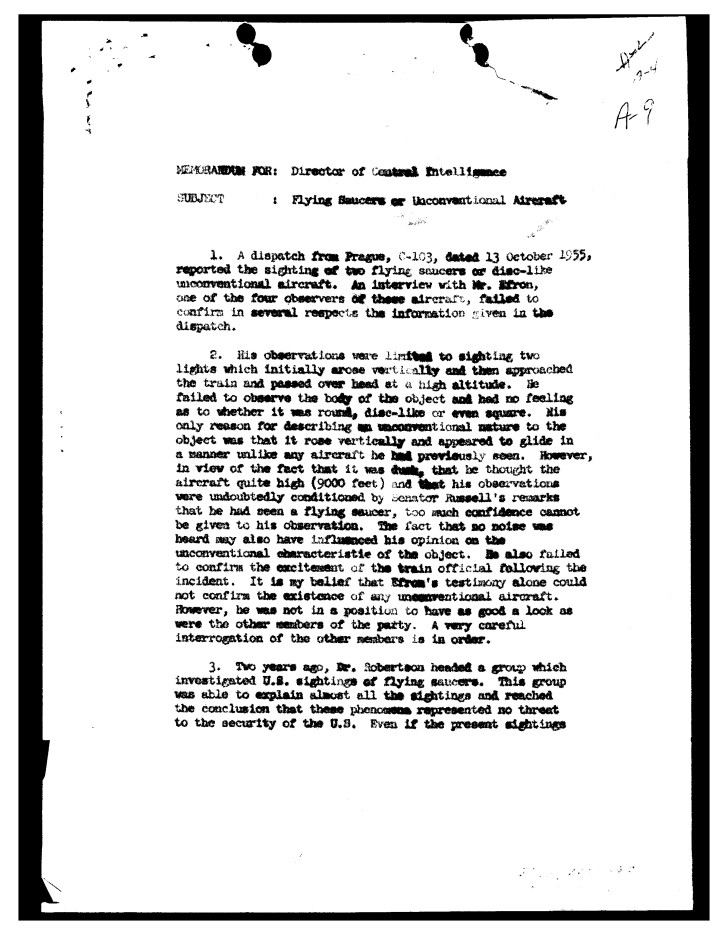
Análisis de la CIA del OVNI visto desde un tren, 1955
Avistamiento OVNI en el Cáucaso, informe USAF, 1955
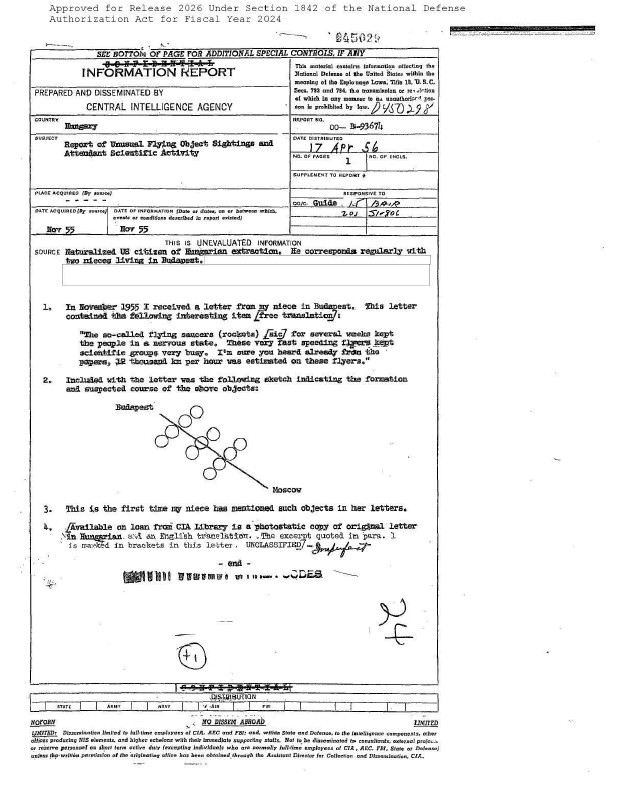
Avistamiento OVNI en Hungría según una carta, CIA, 1955
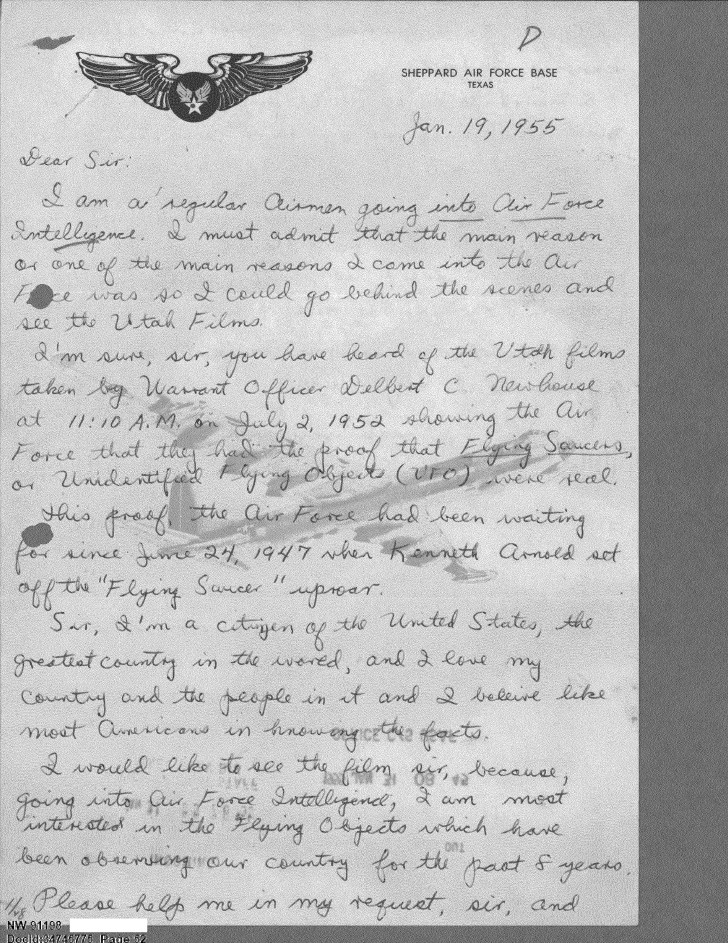
Correspondencia del Proyecto Libro Azul sobre OVNI, 1955
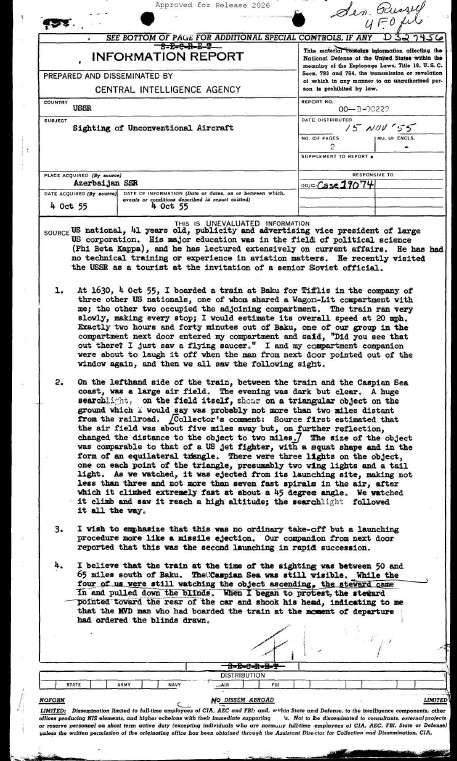
Informe de la CIA: OVNI triangulares en Bakú, 1955

Informe OVNI: objeto naranja en Isla Catalina, 1955
Misma publicación
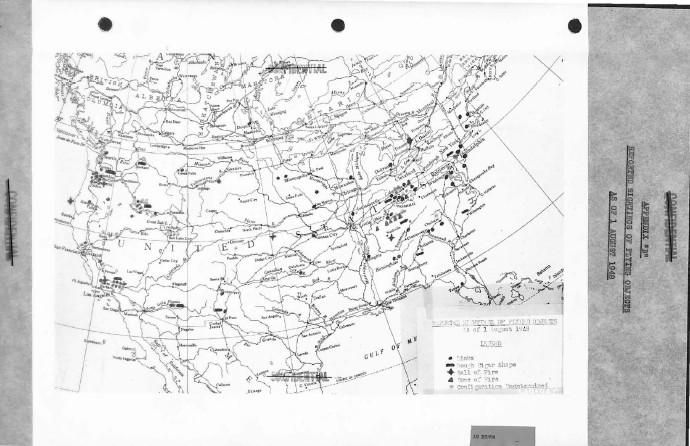
Estudio de la Fuerza Aérea sobre OVNI en EE. UU., 1948
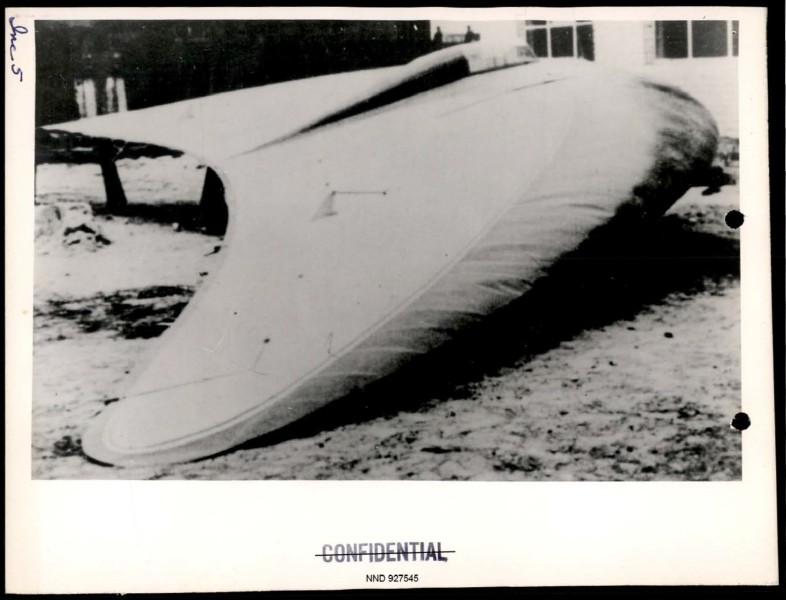
Informe del Proyecto Sign sobre 100 avistamientos OVNI, 1948
Conferencia de Los Álamos sobre OVNI, 1949
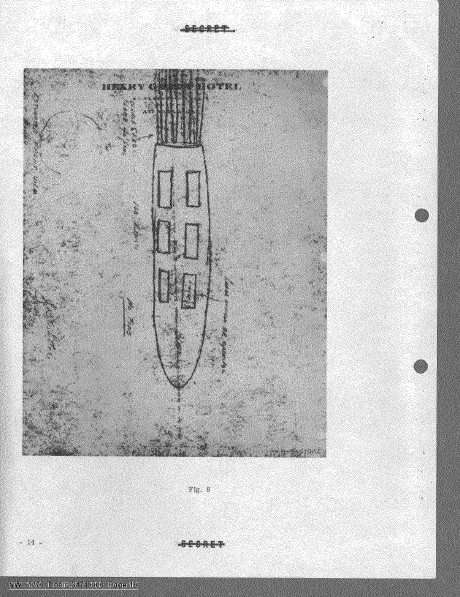
Estudio de la Fuerza Aérea sobre OVNI en EE. UU., 1949
Memorando de la CIA: OVNI visto desde un tren, 1955
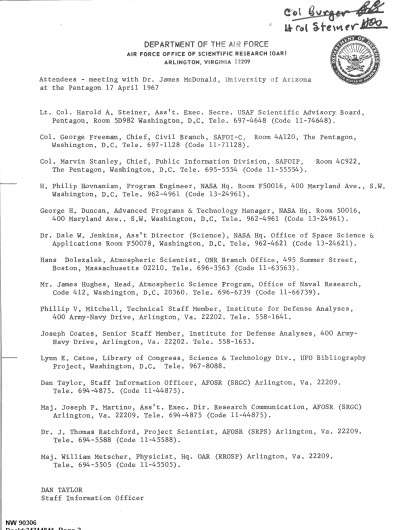
Comité de la USAF sobre OVNI y Libro Azul, 1966-67
Misma agencia
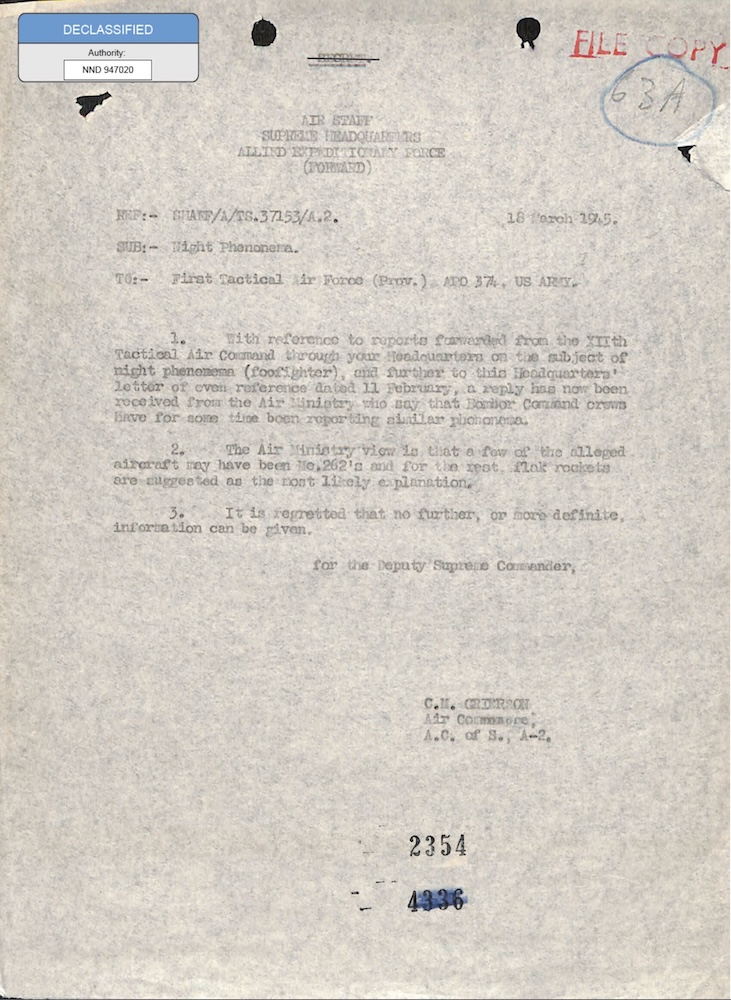
Foo fighters: archivo OVNI del SHAEF, 1945
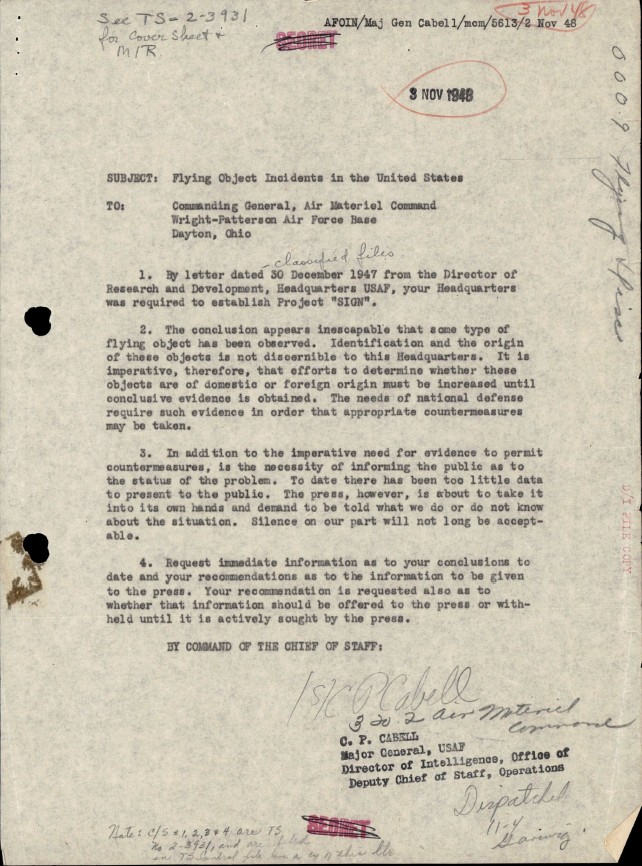
Archivo OVNI del Proyecto Sign: Air Materiel Command, 1948
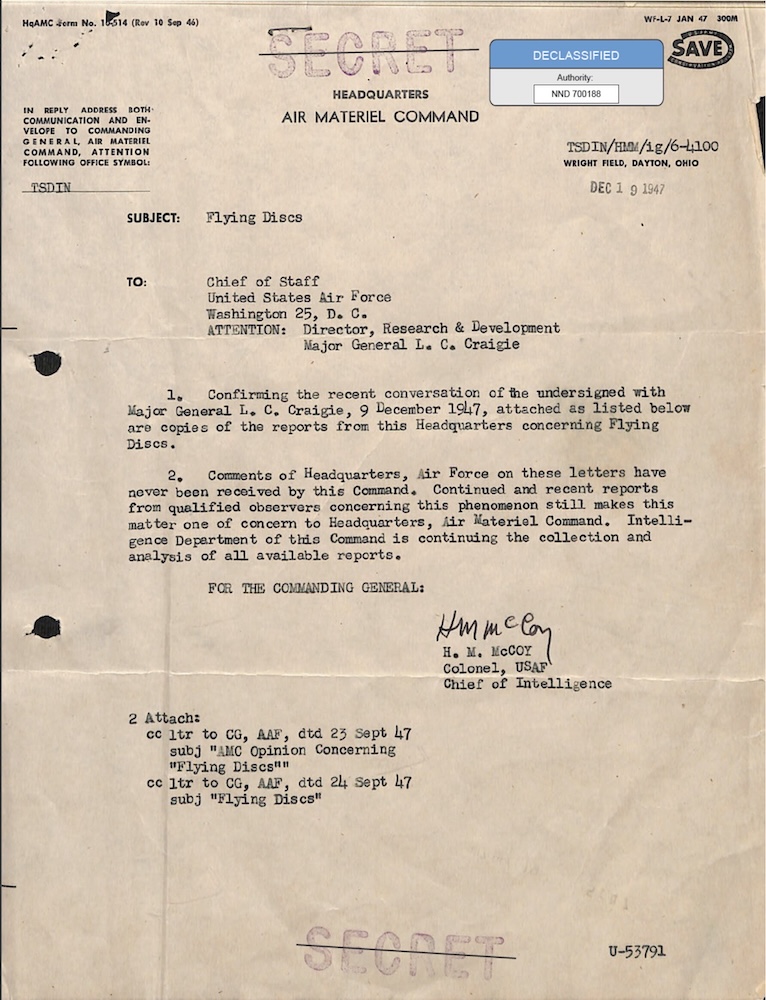
Archivo OVNI Flying Discs: carta de Twining, 1947
Cohetes fantasma sobre Suecia: informe OVNI, 1947
Informe de inteligencia de la USAF sobre OVNI, 1948