NASA-UAP-D016, Debriefing Preliminar da Tripulação da Gemini 4, Parte I, 1965
Dados principais
- ID oficial do arquivo
- NASA-UAP-D16 (citado como NASA-UAP-D016 neste arquivo)
- Tipo de documento
- Documento
- Agência
- NASA
- Publicado em
- R03 · 2026-06-12
- Data do incidente
- 6/9/65
- Local do incidente
- oceano Atlântico Norte
- Coordenadas
- 40, -40
- Páginas legíveis
- 340/340
- VIRIN
- 260508-O-D0360-1121
Descrição oficial
Este documento é uma transcrição preliminar (Parte I) derivada de gravações de voz do debriefing da tripulação da missão Gemini 4, realizado a bordo do navio de resgate USS Wasp, em 9 de junho de 1965. O astronauta Ed White relata ter visto “faíscas” durante o voo.
✦ Resumo IA
NASA-UAP-D016 é um extenso (340 páginas) "Preliminary GT-4 Flight Crew Debriefing Transcript, Part I," preparado pela Spacecraft Operations Branch, Flight Crew Support Division, datado de 16 de junho de 1965, que documenta o debriefing bruto pós-voo dos astronautas da Gemini 4, James McDivitt e Ed White (junho de 1965). Este trecho cobre as páginas 1-60 de 340; o documento foi originalmente classificado sob disposições da lei de espionagem e foi desclassificado décadas depois. Ele começa com um sumário detalhado descrevendo a linha do tempo da missão (Voo Propulsionado, Inserção, Voo Orbital —incluindo Manutenção de Posição, Atividades Extraveiculares, Outras Operações Orbitais, Preparativos de Pré-retrofogo, e Retrofogo) e prossegue como uma transcrição literal, atribuída por locutor (rotulada "White" e "McDivitt"), cobrindo a disciplina de comunicações antes do lançamento, a ascensão propulsionada, a separação de estágios, e a separação da espaçonave do propulsor Titan II de segundo estágio. A transcrição chega ao exato início do famoso segmento de Manutenção de Posição da missão: após a separação, a tripulação descreve estar guinando, vendo "todo tipo de detritos flutuando," e finalmente avistando o estágio propulsor gasto atrás deles em "uma atitude peculiar," observando que a combinação espaçonave-propulsor parecia "dobrar-se ao meio" no plano de separação e que foram empurrados para o lado em vez de se separarem diretamente à frente. McDivitt estimou inicialmente a distância do propulsor em cerca de 400 pés, White em "um pouco mais perto," refinando White em seguida a estimativa para 200-250 pés à medida que começavam a manobrar para tentar reduzir a distância. Este é o prelúdio à amplamente citada aproximação da Gemini 4 ao propulsor (durante a qual McDivitt relatou mais tarde ter visto brevemente algo incomum antes de a transcrição, segundo o registro público, avançar para a conhecida narrativa da tentativa de encontro orbital) —no entanto, este trecho específico (páginas 1-60) termina aqui, exatamente quando o diálogo da manobra de manutenção de posição começa, e ainda não alcança o segmento mais adiante no documento que descreve algum objeto específico não identificado.
Gerado com IA a partir do arquivo oficial — pode conter erros.
▸Transcrição(340 de 340 páginas legíveis)
[PAGE 1] Authority 65 NW 91526 I To ur tf Fj~f ft~E By authority of-E---'-:---'--'-=-- Cha ged bY--..£:::%:.:~~!l"~~==-- PRE LIMINARY GT-4 FLIGHT CREW DEBRIEFING TRANSCRI PT ART II Prepared By Spacecraft Operations Branch Flight Crew Support Division June 18 1965 This material contains information affecting the national defense of the United States within the meaning of the Espionage Laws Title Section 793 and 794 the transmission or revela tion of which in any manner to an unauthorized person is prohibited by law Group Downgrade at year intervals Declassified after 12 years NOTIC This document may be exempt from public disclos ur under the Freedom of Infor ma tion Act 552 Requests for its re lease to persons ut si de the U.S Government should be handled under the provisions of ASA Po licy Direct:ve 1382.2 [PAGE 2] [PAGE 3] PREFACE This preliminary transcript was made from voice tape -rec ording3 of the GT-4 flight crew debriefing conducted aboard the recovery ship the USS Wasp on June 1965 and concluded at the Manned Spacecraft Center on June 12 1965 Although all the material contained in this transcript has been edited the urgent need for the preliminary transcript by mission analysis personnel precluded a thorough edito rial review prior to its publication Errors in this transcript will be corrected as soon as possible and an official transcript will be published at a later date Thia document contains a transcript of the second part of the total debriefing A preliminary transcript of the first part was published on June 16 1965 and it contains the crew description of the mission from an operational standpoint [PAGE 4] [PAGE 5] itit 4Fl8E!I I Jlt'& TABLE OF CONTENTS Paragra ph Page number SYSTEMS OPERATION Pl a tfo:r,n AMS RCS 17 Environmental Control System 8.5 CoDlDlunications 68 Electrical System 82 Computer 87 8.8 Crew Station 93 Bio -Medi cat 134 OPERATIONAL CHEDKS Apollo Landmark Identification 144 Apollo aw Orientation 16 One Attitude Thruster Fai ure Check 171 9.4 Horizon Sc ann er Track Check 172 Horizon Scann er Check 173 HF ransmiss ion Recep tion Chec 181 Orbit Navigation Check 182 9.8 Rela tive Humi dity Test 185 9.9 odiacal Light eck 186 10.0 VISUAL SIGHTINGS 10 Cotllltdo\.lll 188 10 Powered ligh 188 10 Orbital light 191 10 Reentry 213 11 EXPERIMENTS 11 Two-Color Earth-Limb Pho tography MSC-10 217 11 Synoptic Terrain and ath er Photography and 219 Simple Navigation with he Sextant 219 11.4 lectrostatic Charge MSC 229 11.5 Proton Electron Spectrometer and Tri-Axis Flus-Ga.te Magn etometer MSC and MSC-3 229 11 Radiation 30 11 Infli ght Exerciser 230 11 Inflight Phonocardiogram 232 11 Extra ehicular Activity 232 11 10 Miscellaneo us 232 [PAGE 6] 12 PRE MISSION LANNING 12.1 Mi ssio lan rajectory 234 12 Fligh lan 234 12 pac ecraft Changes 239 12 Mission Rul 240 12 Experiments 241 12 ra ining Activities 24 13 MI SSION CONTROL 13.1 GO/NO GO 249 13 PLA and CLA Updates 249 13 Consumable 249 13 Flight lan Changes 250 13 Systems 254 14 TRAINING 14 Ge mini Mission Simulator 255 LTV Si ul ation 260 4.3 Centrifuge 261 14 Translation and Docking Trainer 262 Planetarium 26 14 Syst ms Briefings 266 14 Fligh xp rim en ts 267 14 Spacec raf Sys ms Te 273 14 Egress Tra in ing 27 14 10 arachute Training 275 14 11 Launch Si ulation 276 14 Network imul ation 277 13 Zero ligh 278 14 Flight lan Train i ng 279 [PAGE 7] Platform McDivitt White McDivitt White McDivitt 8.0 SYSTEMS OPERATION Actually the first portion of any alinement is to cage the thing The case of caging the thing is much more important than the alinement itself In the daytime I felt that I could cage the plat form to a reference with an error plus or minus about or degrees in all axes Did you think we could do that we Only in the daytime The yaw was a littl problem It took longer to get it but if you kept after it for aw hi I felt that you could get down to just a few degrees Within a couple of degrees The big thing is that you have to stop your yaw rates and then sit there and look outside for awhile and see which way you're going straight ahead or sideways If you are going sideways you rotate around for awhil and stop the rate and then look out a gain Ri ght I felt you could get the thing ca ged quite well We didn do it BEF at all did we We never did cage in BEF [PAGE 8] White McDivitt White McDivi tt I not sure Th caging of the thing with small nd-forward in the daytime was ela ti ve ly easy At night I don't think it would be quite tha simple I think what you would have to do at night time is to point the spa cecr af down at the ground pretty much so you can see the track ac ros the groun I cou ld see which way the land was moving under me I felt--although I never did this --th at if I could do that and then roll around to wh re I had no bank an gl and fac in my yaw irecti on either small- end or blunt- end- forward stop he ro her and pitch up to th hor izon I could cage there with i pl us or minus 10 degrees for sur It was much less accurat at night I fe lt than in the daytime You aren kidding We both felt that on those dark nights when you really couldn see anything on th ground pur star reference for yaw was pr tty rough Pure tar reference for yaw was almost impossible to use That was the only place where that thing we ecided not to take with the view of the stars through the window--m ight have been of some [PAGE 9] White McDivitt use to us We knew the stars along our track but you couldn see enough of them The quickest way to get the yaw reference was to look down at the ground Once we got the platform caged aline ment was quite simple Al you had to do was just hold the needles at zero and the platform alined itself Of course you had to have the scanners on The modes--the SEF and the EEF wer identically the same except the spacecraft is pointing in different directions You tended to null the needles by using pulses and just hold the needles very close to null and the platform alin ed itself through the horizon scanners Orbit Rate was a satisfactory mode I thought As a matter of fact it was very good I liked that Orbit Rate Yes because we finally had a reference where we didn't have to look out and ee the ground It like having the old altitude indicator back in an airplan The only thing was we had the wrong orbit rat in the spacecraf because it was for an orbit rate hat was to take care of I think a 60 nautical mile circular orbit This was to take care of the short period of time between SQ -lii4Q"itsll lM.- [PAGE 10] White McDi itt going to Orbit Rate at and firing the retros at TR We wanted to have exactly the right rate in there so when we did our closed-loop reentry we wouldn have an error As I said I had the most accurate platform in the world with nothing to do with it I think the displays were adequat and the co trols were adequat Aft er he first couple of revs I really didn have any confidence at all in the platform I had done nothing to establish any confidence in it I really didn't get the chance to get the thing alined and I rea ly didn have the view out the window to check it with We were hurrying and scurring through there We finally shut the thing down before I really got a chance to use it very much When we powered it up there on the third day and we saw that thing coming around there -and cage properly we compared the out the window attitudes and that old a ttitude reference was right there That's when I got some confidence in the platform This is where we lost a couple of bets That right We lost a couple of beers on that platform At retrofire I had a lot of confidence in the platform but the first two and a half to [PAGE 11] White 8.2 OAMS McDivitt White McDivitt three days I really didn't have anything with which to establish any confidence It was just an unknown Jim did the majority of the work in this area and I think his comments reflect my opinion also On the pad we did the thruster check that we wanted to We went around one whole cycle and got nothing We went around another whole cycle a nd got nothing until we got to the a st one We were going yaw left pitch-down yaw right pitch-up yaw left pitch down yaw right pitch up When we got to that second pitch-up I heard the thrusters fire for the first time You can hear them It was very distinct That's right And then we went around and yawed left and they fired again We -waited 20 seconds and fired a yaw left again and they fired again These were the bottom manifold jets We said Okay we're ready to go and that was the end of it So it -was a pretty straightforward check The inflight checks--I got my operational checks on the OAMS systems while chasing the booster around I had Direct Pulse and Rate Command in Le FllffiP MxMii a [PAGE 12] White McDiv itt there as I chased it around and those were the only modes I intended to use right then Later on I checked out the Reentry Rate Command and I checked the Rate Co mma nd before we thrusted It did seem to be operating fine Why don you go through the next part Eli All right We going to get into the source temperature and pressure the regulated pressure and the prop llant quantity Let take the temperature first The temperature of our OAMS was 75 degrees all the way down the lin The i ni ial ind ica tions on the pressures were approxi mately 2800 psi for the source and 320 psi for the regulated pr es sur The quantity gage operated all right except that as I mentioned earlier the thing seemed to wander up and down somewhere between and percent depending upon where you were in the mission You read it one time and it would be 60 and you'd read it a little while later and it would be 62 and you ad it a little while ater and it be back about 60 The greatest variation in that thing that ever occurred was wh en I ent to sleep one time with it reading 60 and woke up and [PAGE 13] White McDivitt White it was reading 56 Another hour or two after that it had climbed slowly back up to 60 again I had a long time to look at it in the same position When we ended the cha.sing-around at the end of the first hour we were down to 70 percent indicated and we never got below 50 percent in four days I'll tell you the position it seemed to stay for days and days was 59 to 60 percent We fired in Pulse Mode for a long time with the gage at that position and all of a sudden that one time it dropped down to a bout 55 percent But then it came back up to 60 I guess it did didn it The temperatures all stayed fairly constant If I recall right they dropped down to around 70 degrees It seemed to me they continually decreased throughout the flight I noticed this particularly in the RCS but I guess we'll get to that later The propellart quantity though I think we mentioned earlier ended up on our gaging at about percent at the end We got a little bit of ground information on the 0AMS propellant I felt a little suspicious of the gage when it kept staying there at 59 to 60 [PAGE 14] McDivitt White McDivitt White McDivitt White percent for so long We were pretty miserly with that OAMS fuel We set out to save the fuel and sure did it I think that in futur missions if they permit the crew to use the Pul Mode in a saving-mann er they could do a lot more with the mission if you could use Pulse Mode instead of just free-drifting around In other words line yourself up so you can make some decent observations Shoot We were in Horizon Scan Mode when we got the last da ta and I don think we used any more fue than we were when were in free drift That righ We certainly got more out of the orbit than we did when we were just drifting free I ll tell you one record that we ought to hold We've looked at the earth from more different angl es than anybody else in the world Well mayb not I gue ss the Russians did but we sure got a lot of different views of that earth as we rotated around I th i nk the ground information that they called up on the status of our OAMS wasn't as much as they could have called up to us but I really satis fied that our OAMS was staying pretty constant [PAGE 15] McDivitt White McDivitt White McDivitt So did I The way I felt was that I knew that we had to be as miserly with the fuel as we possibly could so we got as much out of as little fuel as possible There wasn going to be anything to change that velocity We just went along and I really didn't care how they were plottin that fuel on th ground I knew that we were starting to get ahead of the schedule because I was plott ing it roughly onboard the spacecraft I could see we were above the line that we needed to remain above to handle our OAMS retrofir Actually we followed the profile rather closely We leveled off there at first and then when we started using it we we~c right down the profile We were a little below the line and we just held the same fuel level until we walked out across it and got up on top of Then we went on down above it I think the controls and the switches were all satisfactory I think so too The attitude controller worked fine and dandy We didn't have any trouble with it The stick forces weren't too high We didn't get a chance to use it in any other mode besides [PAGE 16] 10 I White McDivitt White McDivitt White McDivitt Pulse It seemed to wo all right in Pulse don't really have any comments to make on the atti tude controller As a matter of fact I didn't se any Rate Command Didn't you really We didn't use the Rate Command I got to use Direct a couple of times I used Pulse a lot Everytime you go to sleep I re a lly have a bal I could tell that by the iggling No That was rea ly great flying that spac ecraft That right and I think Pulse is the mode You ca.n do a lot with it With a little bit of planning you could get to the attitude--if you start out or minutes ahead of time Th at's what we were oing At 10 minutes before I was supposed to be at a certain atti tude I start and one or two little pulses and you'd--boop boop boop boop th€ bad thing was if you were in an attitude where you couldn see the horizon and didn know where you were You would give it a couple of pulses and othing would happen and you have to give it a couple of more puls It ake a lon time sometimes before you would get to where you could see As a matter of fact if at minutes be fore FfDENTI 4ct [PAGE 17] 11 White NcDivitt White McDivitt we were supposed to be at a certain attitude we weren't approaching it I start pulsing a little harder You'd hear a series of about five quick pulses It was a very economical control mode The ma.ne ver controller worked the way it was supposed to What about the deadband Did you think the dead bands and breakouts were all satisfactory Yes just like the one we used in the simulator You've got a lot of slop in it when you're making gross maneuvers because you'r not fixing your elbow and manipulating around tmt point You're fixing your shoulder and your whole arm and it's just like shoveling coal--you've got abo ut that much finesse to it I don't think there's much you can say about it The controls weren't too gross and they weren't too minor The whole thing was adequate We did have an inflight mal function or irregularity We were in Horizon Scanner Mode one time and Fd wanted to yaw around He started to yaw and the thing rolled The Horizon Scanner Mode fired the roll thrusters to level it back off- [PAGE 18] 12 White McDivitt White cD ivi tt McDi itt I couldn get the yaw had a cir cui breaker off Finally after you did that a coup le of times I looked up and sa we had knock ed a circuit break er off That was one thing that we didn't cover in EVA that I hould ave mentioned Ed was a real haza to the sw itch positions in that he was all over with his feet arms and hands I don't think I threw any though Did I Come on now You re not guilty until you re convic ted I don know You kept putting your foot on the HF Reentry Antenna Switch and stepping on it Ha Ha Ha As for the a tt i tude contro modes I mentio ned the Rate Command in OAMS seemed to be tighter than the Rate Command i RCS a though hey us the same electron i cs the sam gyros and the i,,rhol thing It might ha.ve just been my imagination but I felt that the Rate Command system in RCS was a lot looser than it was in OAMS The Reent ry Rate Command operat ed just the way it should It ha a degree de a dband and handled the spacecr a ft very well during reentry Direct had a lot ore a utho ity than I thought it wo ld but it was [PAGE 19] White McDiYitt 13 IDE llM pretty straightforward I think Pulse was the best mode on the spacecraft for the orbit phase We were able to save all kinds of fuel it worked fine and it was just abo ut what the doctor ordered We didn't use the Hor izon Scan Mod during about the first three days of flight except for the second orbit when I think I 18.S in Horizon Sca.n so that I could have the freedom to help Ed prepare for his EVA The last day we used the Horizon Sca.n Mode and I found it to be an excellent mode There was only one case when it broke lock and didn recover Wasn't that it F.d You've got it in the book We've got in the book and we'll check on that The Ho~izon Scan Mode worked essentially for 24 hours without any problem and I think it an excellent control mode It seemed to be very economical on fuel We were doing a lot of yawing around and right at sunrise a.nd suns et it seemed to get a ittle nervous espec ially if we had the horizon scanner pointed within ab out plus or minus 45 degrees of the sun The moon didn seem to affect it at all I noticed that occa sionally we would et some thruster blips with the sun tslf iO Etsll tAIA [PAGE 20] 14 White cDivitt Wh i te McDivitt White McDivitt i Ob FI E1'4 t(il fr pointed toward the hor i zon scann er al th ough we never got an unlock light We wo uld get an unlock light but we et a bun ch of mayb four or fiv thru st er blips right there artic larly at sunrise It would hold I thought the Ho rizon Scan- It was de finitely getting ome pur io us si gn als through but not enough to break it out all the way I thought the Horizon can Mode was an excel ent attitude hold mode Did you notice the water boiler venting Jim Yes I did We ept yawing around to the left I believe it was left I id notice the fact that we we re yawing but not ery much We were yawing a rates that ex tre mely low and it just took a pulse ev ery once in a while to handle the thing As a matter of fact when we were chasing the booster around a lot a the beginning I ever even noticed It was wh en we were i the Pu ls Con trol Mode for a pe riod of time,when we didn do uch thrusting in yaw that I noticed we id start drifting off in yaw So I did notice the water boiler venting [PAGE 21] White McDivitt 15 I didn't think you noticed it earlier when we were working Well I did notice it a little bit in that first orbit but it wasn't distracting at all It would just drift off a little bit and I'd whop it and it would be back At SEX:;0 30 I used the trans lation thrusters to damp the booster-spacecraft rates One of them was a little higher than the other although they were both down in the order of a half of a degree/second I did fire one thruster one time or possibly two times to damp the rate I don't know if it was pitch or yaw You know you are working in spacecraft pitch and booster yaw and spacecraft yaw and booster pitch I was getting my coordinate system transformed around in my mind going from booster coordinate system to the spacecraft I don't remember whether it was yaw or pitch but I did thrust once or twice By the way I could hear those thrusters fire At SEC0 30 I said Thrusting and I started thrusting Separate and Fd punched the SPACE.CRAFT SEPARATE We were in Direct and I thrusted straight ahead for about seconds Then I went back into Rate Command Separat i on was [PAGE 22] 16 White McDivitt just smooth we didn come off with a rotational rate I think one of the things you mi ght commant on Jim is that you fired most of those thrusters during that initial time I ure I fired th upward-firing thrust ers a numb er of times That isn any more difficult to control than he other one Actuall you can fire these thrusters whether you are in Rate Command Direct or even in Pul When you fire them you get a rate and you just damp he rate out with the a ttitu de controller Wh en you ar firing the transla tion thrusters th0 things hat you ea ll hear ar not the trans lation thrusters but the attitude thrusters Those translation thrusters are really tough to hear but the a tti tude thru st ers a re very easy to hear I doh understand why They must be mounted differently because their location isn't that uch different I think I fired the aft-firing thrus ers a couple of tim es and they didn make any more noise than the or ward-f iring thrusters that I could tell The up and down and left and right ones were just as easy to fire as he other ones Our OAMS retro [PAGE 23] I 17 White McDivitt 8.3 RCS McDivitt was 127 feet/second which incidently happened to come out exactly minutes and 40 seconds suspect that we selected OAMS retrofire on the basis of time rather than on the basis of t::,.V Very convenient wasn't it Very convenient It -was obvious there is no more difficulty in timing minutes 40 seconds during our OAMS retrofire than it is during any other thing We had no trouble with it I was convinced that when we got through with it that was really the proper conversion factor between t::,.V and We had exactly 127 feet/second and we sure had the time nailed down The operational checks that we did on the RCS occurred at about TR minus an hour When I checked the system out it seemed like I had a lot less authority and a lot sloppier Rate Command than I had in OAMS The operational check consisted of pitching up and down yawing left and right rolling lef+ and right on each ring in Rate Command and Direct Direct worked as I expected it to In Rate Coremand however as I pitched up and down I noticed that my top le ft yaw thru ter was doing [PAGE 24] 18 White a lot of firing too I started out checking the Rate Command so I thought I might possib ly have one bad pitch thruster that was causing a rolling moment that was bei ng counteracted by the yaw-roll jets When I did it in Direct however it wasn doing that It wasn't rolling either so I felt that it must jus be a very tight deadband that was trying to hold us in there So the operational checks were all right The only thing we had to monitor on the syst em was the temp er ature and the press ure of the propellant It seemed to hold pretty we ll I have some comments on that I kept a running log of them as we went alon The tempera ture started out at 75 degrees and 3000 pounds It eld that way pretty well until about the 65th hour when the temperature gradually went down The temperature ecre as ed to a point where we start ed get tin the RCS heater lights that we noted arl ier got about eight series of RCS heater lights It too about minutes to extinguish the light It was he A-ring,then the ring and then the A-ring I eemed to alt ernate each time back and forth and it came on for about 15 to 20 minute periods of [PAGE 25] 19 McDivitt White time It started right after a night cycle It seemed rather natural to me that there wasn't really something wrong but that we actua lly had a cold RCS thing out there and it did need some heat After heat was applied it did appear to go away I decided to go ahead and set up a slow roll rate in the daytime and I kept that roll rate in for several orbits Whether this actually helped to get the light off or not I don know We didn't get anymore lights after this time I think there ought to be one other comment on the RCS and that is the temperatures and the pressures stayed up pretty well except when we actuat ed the system The pressures then went down further than we had expected them to go They went down to 2400 to 2500 p~i This was a little lower than I expected to see I think the pressures in the RCS A and dropped by about 100 pounds throughout the four-day period They were slightly over 3000 pounds and they got down to slightly under 3000 The lowest temperatures I noted were in the neigh borhood of about 63 to 64 degrees They started ut at 75 degrees [PAGE 26] 20 McDiv itt White McDivitt White McDivitt White McDiv.itt Let me ask you a question Yes Wh en you turned on the RCS heaters did you tu rn on the he ate on both ings or di you turn on the RCS Heater Swi tch and then turn off the ci cu i breaker on the ot er ring I turned the he aters on and then I checked to see which ring it was that was ac tua lly he at ing up by using th circuit breakers The first tim I ent ah ead and left them on and then the other ring ame on I fel that one of them was about as cold as th other so I left the he at rs on both rings throughout the heating cycles Good They were in perfect sequence--A and A and and about 15 inutes ap art The regulari ty was surprising The temperatures at the time when these lights came on were indicating about 63 or 64 degre es and it seemed like it wou ld come up a little bit and then come right back down and pop back on again I felt it was not an act ual temp erature probl em I used Rate Command Reentry Rate Command and Pu lse ontrol mod I didn use Direct They a ll [PAGE 27] -OtslF-tD A:L 21 operated as I thought they should I've already mentioned I thought Rate Command was a little sloppier in RCS than it was in OAMS It certainly did a fine job of holding the retro attitude during retrofire Retrofire attitude control was excellent didn deviate more than about a degree from the attitude we were supposed to hold and I had plenty of authority there From my standpoint it couldn have been any better I was really happy about it I used the Reentry Rate Command with roll rate gyro off so that I had essentially Direct in roll and Reentry Rate Command in pitch and yaw axes It had the typical degree deadband that it was supposed to have It did do rate damping as it was supposed to It performed just the way it should Fd you want to cover that heater-lights thing again I think you've already got that thing pretty much in detail White I have the precise times at which the lights came on It started at about the 64th or 65th elapsed time hour At 06:47 the first light in the A-ring came on At 08:23 the ring light came on again That was the last time During that period of time the A and the B-rings cycled on and off inter MWfiO ftSl;QAJ [PAGE 28] 22 itte tly McDiv i Du ring escent we turned the powe of to see if he drogue ch ute wa unstable It wa sn We turned the power back on and the propell a nt valves of and burned up a of he fuel i the manif olds We ha no fumes after impact 8.4 Environment a Cont rol ystem McDivi tt White Mc ivi tt Whi McDivitt I thought the suit mobility was as good in the pacecraft as it is anywhere else I think these su i ts a re pretty good suits I di dn i nd any trouble with them whatsoever i the spacecraft that I wa sn a lread awa of The pre ss ure held up good I did a pressure check on the suit It bl ed own a bout or psi in about 30 ec onds hich real wasn too bad The tempe rat ure wa a lw ays good It ran between about 50 and 55 degr ees diring the entire flight except wh en we rea ll worked hard I don thi nk it ever got up over 60 Do you Ed No We had reasonably good temperature cont ro The ca bin te perature got up pretty high one time and then it am back down Yes on about the first orbit w,f I [PAGE 29] 23 White McDivitt White McDivitt That's ght It got up to about 90 100 it was We turned the cabin heat exchanger on for just a short time and it went right back on down to 80 degrees It stayed in the area of 82 to 83 degrees the whole flight The humidity in the suit must have been pretty dry because rrry foot dried out I didn't take any wet bulb readings inside the suit The CO stayed at zero all the time It never did go up except when we'd go to High Rate when it would bound off the top peg and fall back down again The comfort and suit controls were pretty reasonable The demand regulator seemed to work all right My umbilicals were short My fingertip lights were lousy Before launch I only had one that worked On rrry right-hand glove one of the bulbs obviously didn't work One of them did work On rrry left hand glove the switch on the batteries would only turn the lights on if it was in one exact position vh.ich wasn't full throw in either direction So I found out I had only one fingertip light that worked However during the flight I didn't use my fingertip lights except one time when I used [PAGE 30] 24 them for a flashlight I had my gl oves off and I reached over and got my gloves and turned the fingertip lights on and shined the gloves on some thing I didn't use them a lot I do want to comment on one thing though since we re talking about the suits here I launched without the plug that goes in the blood pressure port in the suit I don feel we should launch these things with no plug to plug up the blood pressure port in the uit especially when we re going EVA I think that was a mistake The only pressure points I had in the suit were in the helmet Those were just above my ears where I tended to move my head back an forth within the helmet I finally rubbed up a ll the hair so that it was going in the wrong direction When you press against hair for a long time in the wrong direction it becomes very uncom fort a ble At about the end of 3/4 days I took my helmet off for a couple of hours and it felt a lot etter The only problem is that when you have our helmet off there is no place to stow it We had the foot ells full of gear so when I had the he lm et off I just let it float around on my lap an ve in ap There wasn any place to [PAGE 31] 25 put it The micro-meteroid blanket that I had strapped under my right leg wasn't a detriment As a matter of fact since we had no place to stow it I just left it strapped to my leg until reentry Then I felt that if we had to get out in the water I didn't want to have any straps hanging off me that I didn't need So I took it off and threw it on the floor a long with Ed's sleeves I don't have anymore comments on my suit White I wore the ENA suit I think the mobility of the suit was about what I had expected Actually I think the mobility in some respects was a little better and in some respects it was a little less than I had expected I wasn't able to get into the right-hand aft food box as well as I had thought I was going to be able to in zero In fact the position that I had figured out to use which was leaning forward and reaching in backwards with my left arm didn work out well at all I had to actually turn around 90 degrees in the seat and reach in with my right arm This worked out all right I was able to get hold of things in the box The surprise that I got though was that I could get into the right hand aft refuse box much [PAGE 32] 26 McDi itt White Wh ite Mc ivitt Wh ite McDivitt White as ie than I had thought I ever be able to It turned out ra I was able to get into that box ea sier while in orbit by far han- It a rubber covered box It's a rubber covered box on the right hand side I think that box does have the capability of tow ing refuse in it and stowi ng some things prior to aunch in it too Did you try that box during flight Jim Yes I di I di dn find it easy to get into I thought the things we had st ow ed in it wer real good thi gs items that we didn need at all in flight and possibly might not need I use al four defecation bags that I h~d on my side I used them up during flight In fact you us ed one of them Th at rig ht we did have a bag of those def ca ti on ags out It just happened to be over on my side where you could get to it You were asleep I had to get them or wake you up I pre sure checked rey uit I checked it at and it bled down several tenths of a psi I was satisfied with the pr es sure-holding of rey suit [PAGE 33] 27 There was one thing though with the suit that I wasn't too happy with I was hot all the time in the suit It got so that after a while I got used to the normal temperature as being warm I could inc ease the temperature which seemed rather strange to both Jim and me by putting out zey gloves and closing zey faceplate I could go to sleep At that time zey temperature would go up considerably inside the suit It seemed like I coul stay in there only an hour or an hour and 15 minutes and rest before I had to either open up the faceplate or do something else So the temperature got uncomfortably warm in about an hour or an hour and fifteen minutes with the face plate closed the sleeves on and the gloves on The humidity in the suit I thought was quite dry I had quite a tendency for zey lips to crack and nzy- nose to get very dry In fact I noticed zey nose was itching considerably This was an indicator to me every time I would go to sleep I would wake up with zey nose itching and feeling quite hot and uncomfortable zy- lips got to the point where I thought they were going to crack [PAGE 34] 28 and I was trying to be very careful and keep them from cracking and getting anymore uncomfortabl than they were Jim mentioned the CO sensors stayed on zero which I was happy to see I think one th ing that I was fairly happy about was that the suit as bulky as it was wasn depres singly uncomfortable I felt that I did have a pretty heavy suit on most of the time and I was a little bit constrained in my mobility The i ea to have the detachable sleeves that I could take off after the EVA work was I felt a very good decision I felt much more comfortable and I had a much higher degree of mobility around with my arms in the spacecraft It was not as tiring to move around as it had been when I was inside the heavy sleeves So I was quite happy to take them off We took them off I believe shortly after my first sleep I slept with em on the first time and then we took them off think they were quite easy to take off As a matter of fact I think if you went EVA at a later time you could take those sleeves onboard and if they were made just a little aasier to slip on and off over the wrist you could take 14 rte Et<4,t I [PAGE 35] 29 McDivitt White them on and off in flight if you wanted to I don know I'd hesitate to recommend putting them on in flight It might get pretty tr icky I think if you put them on in flight you'd want to put them over all the harness rather than i.mder the harness That exactly what I was going to sey I think if you took the life preservers off you could actually make the slee es big enough so that you could slip them on and velcro them across the back over the harness This might be for the type of operation of throwing equipment in and out I think in the future though a suit as heavy as this might not be required The controls and the switches in the suit I felt were satis factory There wasn anything that I couldn get at in the spacecraft It was easier under weightless conditions for me to operate certain controls In fact I think I was able to get down and unscrew the bellows in the gun hose as well and maybe a little easie than you could Jim At least initially I was able to get down there Of course you weren really particularly trying to do it at that time i-EM-liaJ [PAGE 36] 30 McDivitt White McDivitt White I suspect I probably could have gotten down there as easy or easier than you if I had really gotten around to trying I don remember but anyhow I was surprised with the ease which I had in getting down We were trying to dump the pressure in the bellow before we went EVA with it Right The demand regulator was satisfactory Ivzy umbili cal,I thought,was very easy to use and disconnect I was quite happy to have the micro dot in there One comment on the micro-dot--the first time we exercised the micro- dots on our suit they were pretty hard to operate Mine got progressively easier to use each time I used it The fingertip lights that I had were better than Jim I ha:l lights with Lexan tops on them All my lights worked and felt that their operation was quite satisfactory We had decided to put my lights between the first and second joints for several reasons We thought the EVA gloves would be easier to don and there'd be less tendency to break them I think though the position of the lights was still a little too far forward if it was intended to put them back between [PAGE 37] McDivitt White McDivitt White McDivitt White McDivitt 31 the first and second joints because the lights were resting right on top of my first joint I think if I had worn my glov es anymore I would have gotten a very sore first knuckle If you a re going to move them back I think they should definitely be moved back behind the first knuckle Where were they getting you fili Right on the top of the knuckle You think they ought to be back If they are going to be anywhere they ought to be back here and I'm not too sure that is necessary In fact I think the best place is behind the fingertip and in front of the first joint But with the pl astic covers over the gloves With the plastic cover on the glove and I think we've got the right position for the lights I don't think they should be back behind the first knuckle I think they should be in front of tha first knuckle and behind the fingertip That's a good place for them That's where we've been usin them in the past I think thf Le::mn cover on the light bulb is a darn good idea Yes I think so too Shoot I checked my lights before launch and found out that I al ready had one [PAGE 38] 32 of them out on my right and I wasn too happy about it White I was a li ttle disappointed I think the only discrepancy I found in my suit was that I had no blood pressure plug either A point that I was pretty happy with was that I had no pressure points from my suit at all on my body I had one set of pressure points from my helmet pressing down on the front forward part of my head I lmew why this was I had Joe Schmitt adjust my cables so that I could pull my helmet down to a maximum amount for the EVA work I felt that I just bought this discomfort by having my ca bles adjusted in this manner It was pretty uncomfortable though I checked out the use of the emergency bottles on the EVA equipment and they worked as they were supposed to I was able to regulate the flow Incidently before I went out the reading on the EVA bottles was full-scale 3400 pounds I was happy to see that Al in all I was quite happy with the suit I think it was a very well designed suit and it met the requirements that were levied upon it It was a heavy suit and a big suit to wear for four days but I felt the auit wasn as [PAGE 39] 33 bad as I had expected it was going to be I have one more comment I'd like to comment on the inner liner We decided to go with the inner liner in and I felt this was a good decision The inside of the suit was comfortable and I didn get any pressure points I think one reason why neither Jim nor I got any particular pressure points from the suit was that we had worn these suits a heck of a lot of time I had over 50 hours on my flight suit I don't know how many hours Jim had on his [PAGE 40] 34 McDivitt White Actually Ed had just finished talking about his inner liner I like to comment about the inner liner too I thought about it when he was talking about his I think that was one of the real wi se decisions to go with that inner iner I felt that it offered a lot more comfort than wearing that rubber suit up against my body or up against my underwear I sort of felt that I was really quite comfortable in this suit I didn find my mobility limited by my inner iner at all and I had made sure that it fit I think th at has a ot to do with it I wo rked the suit once for about a four -'hour perio with just the rubber ins i de I did no tice it sticking to me and I didn feel as com fortable After I got inside the suit with pres sure on my body the suit felt pretty darn good I had the knees cut out of my suits The knees are still too short Having been in it for four days I know the dimensions are wrong The di mension from my knee down to my foot is not long enough I not just the inner line but the f¥18~4AL [PAGE 41] 35 McDivitt White McDivitt White McDivi White McDivitt White link net in itself just isn't long enough You wouldn say you had a pressure point though No it was just a constant pull on there all the time Did it bother you very much during the flight Yes it bothered me a little bit So you really did have sort of a pressure point then Yes to some extent in that area I had had that one so much before It had been so extreme in some cases that it really didn't bother me too much Both of us should mention something about the visors I thought you ought to mention something about your visor problem your EVA visor or the other one Well I have briefed the visor on the EVA pretty well The one that I will mention now is the visor that I had on my regular helmet I thought that the vision through it was quite good I noticed no distortion at all through it but I did immediately put a couple big scratches on it [PAGE 42] McDivitt in the beginning when I was unstowing equipment I continued to scratch it throughout the mission When I finished the visor was considerably scratched up as you oul pr obably notice if you lo oked at my suit I don know hat there is to do about this other than to accept a scratchy visor If you ve got the visors down in front of your face you don tend to scratch it up as ch I think it was really worn out because you started opening up your visor and leaving it up over your head a lot earlier than I did At about the two and a half or three day mark I looked at your visor and it was really a mess I took the helmet off and cleaned the visor because it was dirty on the inside and the outside I looked at my visor and had very few marks on it I had a few ittle scratches but very minor Then I started putting my vi sor up more and mo be cause hey ante us to stay open Because I a lot taller than you are I really started beat i ng mine up In the last day I think I caught up with you and maybe even surpassed you in the [PAGE 43] White McDivitt White McDivitt 37 amount of marks on it I'll say another thing I'm sure glad we didn go in for those Lexan visors that they wanted us to fly with cause the distortion wou have driven me batty in about the first six hours I think you must insist on perfect optically clear visors That right Yo ve got to have good optics I took my helmet off about three times and I didn leave it off ery long I took mine off about two times I took it off one time for an hour because my hai right above my ears was really bothering me I didn bother getting a light weight headset out and when any body called me I had the thing sitting in my ap and I cou ld hear it I took one of the and pulled it back and I hollered into the mike Ha ha till I could hear it I s~id I ve got my he met off Unless you got something im portant to tell me don't bother me Ha a And he said Okay It was one of those passes you know here you only talk to one guy for about an hour Then I took it off one other time for about a half hour to rub my ears I as quite t8l!lttfif 1Aif:r [PAGE 44] White McDivitt comfortable with my he lmet on for two days Do you want to know something that kind of strange I was more comfortable with my helmet on than off I fact I kind of got used to those pressure points on the top of my head with the helmet on When I took the helmet off and moved my head around I felt a little dizzy from not having these res tra ints I didn feel as comfort able as I did with my helmet on The times I had my helmet off ere when I was running I ran the Experiment several times with my helmet off so I'd have better use of my se tant I took it off one other time near the end when they indicated they would like to have every thing off I idn feel particula rly comforta ble with my helmet off any more I got so us ed to having that thing on that I put it on so I could talk better with the stations They were ca llin me from time to time and I thought it would be a little better Before I forget I think the portable headset is really a lousy design I concur I think it ought to be thrown out [PAGE 45] 39 White McDivitt I've seen the ones they've got in the MCC and they're good plain old headsets I don't see any reason why we can't get one that stays on your head and stays in your ear You put this thing on and it pops off about two minutes later It's not built to stay on my size head and I noticed it didn't stay on Jim's very well eit~er I think the portable headset idea is a good idea but we ought to have a good headset for it Okay As we mentioned earlier the cabi pressure relieved at about and held that way during launch It went back down to 4.9 or 4.8 and this is where it stayed for the re mainder of the mission I think that they prob ably overshot their zeal to correct the cabin pressure that John and Gus had had on GT-3 and put ours down so that it was actually relieving lower and sealing lower than it would have been desirable I was expecting it to seal up around 5.5 or 5.7 like it was advertised I checked my suit gag against the cabin pres sure g-age and my suit €8,ge read higher than the cabin pressure gage by about of a pound [PAGE 46] 40 White McDi itt White McDivitt White McDivitt White Yes mine was right on it though I know You checked your suit gage against the cabin pressure and yours read just about on it didn it as it a tenth of a pound higher or was it right on it Right on Okay So mine was reading a little higher indicating to me that possibly the cabin pres sure was higher But since Ed's read with it I don know here we were Well the pr essure at which it relieved at went right into th problem of the temperature pres sure relief in the cryogenic oxygen system so hat those two problems kind of lashed together The venting in the system was set at around 970 967 I think the poop sheet said Well it was about 967 or 970 We had the pos sibility of losing oxygen in a steady manner out of the spacecraft if we let the pressure rise up above- -well the ground felt 960 and I concurred with that figure So throughout the flight we had to keep venting our system [PAGE 47] 41 McDivitt White down so the pressure wou remai down belo 960 They initially told us to vent it to keep it at 930 to 960 Then they told us to vent it on down to about 890 From then on we vented it down in the neighborhood of between 890 and 93 depending upon who was asleep and who wasn't asleep It sure seemed to be an unsatisfactory solution to two problems one of the cabin hold ing at a higher pressure than they wanted it to on GT and also the problem of the system venting outside of the pressure gage In the oxygen system I think the solution to putting the venting down at 967 was a poor solution to the problem of having a poorly designed ga ge I think the gage was aga i poorly designed and it should be designed to read about 1200 pounds Re ief should be up in that area I they really went ahead and jacked down the relief pressure to et it on the gage I think that is one heck of an approach to an engineer ing problem I think that a gross thing to do and if they did that deliberate I th i nk they deserve a [PAGE 48] 42 McDivitt White cDivitt White McDivitt White McDivitt very black star for that one They need their heads examined I guess we beat that one around pret ty well didn we Yes The way that we were venting the cabin was by going to High Rate and venting the oxygen out through the cabin vent or going to cabin repress and using up the oxygen through the cabin and through the cabin vent valve that way I was quite satisfied with the cabin temperature It started out and got pretty hot at one time early in the flight and went up to 100 as you noted,and then it went back down into the 80 I think it actually dropped into the 70's a time or two That right It was in the 70's most of the time Right Let's get the data book The dry bulb tempera ture was 80 80 the first time we tood it Then it was 79 79 79 Then it was 75 75 75 and then they stayed between 75 and 77,I OQ\il Ii [PAGE 49] White McDivitt White McDivitt White McDivitt think the rest of the flight No here it is down as low as 72 So it ot down to around 72 late in the flight and here we are with a whole bunch of 70's to 73's and a couple of 76 So I guess that 75 was the average temperature throughout the whole flight I think our cabin temperature gage was reflect ing a little higher temperature than these No let's see It was down around 75 It went down to 74 at one time I remember Yes I think 75 was a good average cabin temp erature for the whole flight I thought this was a pretty satisfactory cabin temperature The suit temperatures were also down They stayed down from about 52 to 54 most of the flight I thought that was a pretty satisfactory temperature there I believe that there was a difference in suit temperatures be tween Jim and me because I was continually hollering about being hot I think that temp erature-wise Jim was relatively comfortable I was vecy comfortable and as a matter of fact when I went to sleep I tended to get just a [PAGE 50] 44 White McDivitt White little bit cool especially if I had rinated all over myself I don remember one time during the flight during which I was cool in the suit I think I was hot most of the time in the suit I got used to i after a while The only time that it was not satisfactory as far as I was con cerned was when I was tryi ng to sleep The humidity data that we got doesn't go along with what everybody was expecting No not by a ong shot No not at all Our i tt le ga ge seemed like it was working properly We didn have any visible moisture at any time at any pl ace in the spacecraft It seemed to be indicating down around 62 to 63 percent relative humidity hich was a big surprise to myself With this type of data I began going open faceplate and open gloves fairly early in the flight about a day or a day and a half and continued in this manner just about throughout the flight We used the wrist dams quite a bit of the time But I had my faceplate open with my wrist dams CiO 10 E._ffd [PAGE 51] McDivitt White McDivitt on a great deal of time also I think you had your faceplate closed a little more than I did There at the end we were both going to an open-faceplate and open- gloves all the way Yes we were especially going open-faceplate at the end just to see if we could jack up the humidity I actually preferred to have my faceplate closed as opposed to having it ope I went ahead and left it open trying to get the humidity up We never really did get it up over 60 perc nt That seemed to be where it was going to stay We were happy to see that the CO sensor gage stayed down low the whole flight It would pop up any time we turned the High Rate on and go up to a pretty hi gh reading and then settle back down to zero I didn't notice any particular discomfort versus day versus night No as a matter of fact I didn't either We took some temperature readings on the cabin window frame and they varied by about or 10 degrees at the very most [PAGE 52] White Mc ivitt White McD iv itt White Yes I don think there was any discomfort associated with the day-ni ght cycle We didn't use the cabin fan as we planned during the flight We did neglect to turn it on initially during the preparation for retro We noticed that we weren cooling off in the cabin as much as we would have liked to So we turned the fan on and immediately the temperature dropped down about 10 degrees,if I remember right Yes that cabin heat exchanger and that cabin fan really do the job It really cooled it off Early in the flight when we got the tempera ture up to 100 we turned the fan on and the temperature went down to below 80 in about 20 minutes or so It really did the trick The cabin pressure relief valve was venting just a hair abouve 5.4 We checked this out very many times Every time we filled the cabin up with High Rate it vented,or if we used the repress l•ever the cabin ould vent [PAGE 53] 47 McDivitt 3@>rNfff Ettl IM Here we had an environmental control system that was supposed to protect us We found out that the darn thing was overpressurizing The first couple of times to keep the ECS bottle from venting we vented the cabin it self I found myself sitting in there vent ing this thing with my gloves off and my face plate open It began to dawn on me that the pressure went down inside the cabin at a tre mendous rate If this thing ever stuck open and I had my gloves off and my faceplate open I would be a dead man So we made it a proce dure to suit up when we were going to dump this thing This meant that every four hours we had to put our gloves on and put our face plates down and lock them and get all suited up just in case this vent valve didn reseat Frankly as much of an inconvenience as it turned out to be I think that was a wise maneuver I would never suggest that anyone vent that cabin again without being fully suit ed I th i nk there is such a risk involved that you would be fool hearty to do it For [PAGE 54] 48 White McDivitt White GO ifli itl tct that reason I think that we ought to make an effort to get the ECS tank vent and the ECS tank pressure gage compatible and at a ot higher pressure than they are This suiting up and unsuiting every four hours is for the birds I thoroughly agree with you Jim There are two things I want to know I want to know if they deliberately lowered the venting pressure for the system down to 967 to solve the problem on GT-3 I would also like to know if they deliberately lowered the cabin venting down to 5.4 I'd like to know the answer to those two questions I think the combination of those two situations make what I feel is an unsatisfactory situation in our flight It occupied far more time- That's right we were screwing around with that ECS That's something we never had touched It was a eage that we should have monitored instead of a thing that we manipu lated all the time Right Okay the cabin pressure regulator [PAGE 55] 49 McDivitt White McDivitt White McDivitt I didn't have any comment on that Neither did I It seemed to be doing a good job I felt the cabin vent valve was set lower than I had thought it was going to be I thought it was supposed to be set up around 5.7 I'd like to know if it was cha.l'lged in tentionally The manual vent valve worked fine When we wanted to vent the cabin it vented The cabin repressurization valve worked fine I was very happy to see how well it worked also with my chest pack Any comment on that No I don think so I don't think the cabin repressurized or overpressurized when we were trying to vent it Since you were repres surizing it and venting it at the same time I think the vent valve actually overcame the repressurization hich is a good thing if you're trying to vent it and it is not a good thing if you're trying to keep it from venting Going back a little farther to my other state ment in case that vent valve sticks open [PAGE 56] 50 White McDivitt White McDivitt White and you are not suited,I don't think you're goi ng to have time to get suited I takes me too long to put those gloves on Okay the cabin air inlet valve worked fine We vented the cabin with it when we went EVA It apparently worked all right when we used it down on the water I rave no further com ment on that Neithe do I It seemed to work fine The cabin air recirculation valve worked as it was supposed to As advertised Okay that primary system gets another black star I think this is the area that I want to know the answer to for sure I want to know whether that was deliberately set down into the range of the gage to solve the complaint on Gemini I think that if this was the case this is a prime example of poor engineering As far as monitoring the system though as long as their reading was down be low 960 the system worked pretty well I felt fairly confident that the pressure wae [PAGE 57] 51 McDivitt White McDivitt White That right The way that the thing was set up we could sure monitor it because we knew it was going to vent without being on the ga ge I think they compromised the whole system so we could monitor it As a matter of fact we monitored it very thoroughly and spent about 100 times as much time on his SJs em as we should have John Young been complaining about this point and I think that it a very poor thing They ought to dig up the money and put a gage in there that will do the job Very strong point The quantity measuring system,I thought was all right I thought it was pretty good I thought it was excellent as a matter of fact It was a very readable gag It had tremendous sca on it but shoot you could read the thing to a percen I don't know why it was a:ny mor readable than the other ones but I thought it was pretty good The flow rates I don't have a:ny particular comment on that I thought the flow rate on N4sl f.1Dfl~T1A [PAGE 58] 52 McDivitt White McDivitt White McDivitt that repress valve into my suit was satisfactory to keep me in a pressurized state and keep me vent i lated enough under normal operations Under tough operations though the flow rate's too low and you really heat up Yes I think since it was an open loop system you had to keep from dumping all the oxygen overboard and had to go high enough to keep it from dying from the heat I think it was a compromise system I thought it was well set up I have no com plaints there Primary temperature didn't have any comment on that No neither did I The manual heater--I think that you used the manual heater twice during EVA Twice during EVA for about five to six minutes each time It responded all right but it didn't go overboard It got the temperature right back up there and I shut the thing off again I FI DE~iilA [PAGE 59] White McDivitt White cDivitt White McDivitt White 53 We were able to turn the automatic part of it off quite early in the flight particularly since this was the problem we were having We were getting- That was something I wondered about You know the hing is marked and we were always instructed that when the thing got down below 38 percent we didn need the heaters any more We shut the heaters off at 42 perce nt Right 0bviously,the guy that told us to shut the heaters off at 40 percent knew what he was talking about because we never needed them again I think again I am very suspicious of McDonnell on the fix on that gage and on setting that pressure on 970 and I'm going to get to the bottom of it es but I think though,that the pressure would have still built up even if we had the relief set at 1050 or so It would have still built up It might have built up and stabil i zed [PAGE 60] 54 McDivitt White McDivitt White cDiv itt White 1'1cDivitt White because it a cryogenic system and it could have stabilized out around 1000 or 1050 But on the other hand it could have continued to build right on up Su.re it could But I sort of suspect that the--well I don't know It's different from this other problem where we were told that the thing didn't require heaters below 38 percent and we found out that it really didn require them below 42 percent We turned them off at 42 percen Right The secondary system I thought those performed admirably In fact they had more oxygen in them than I thought they could hold Jim was up to around 5500 pounds shortly after launch It re ma in ed up there and drizzled out about 100 pounds throughout the flight Actually they increased by 100 psi each right after launch Right at the first mode of flight Then they drizzled back down and stayed at 5400 I think right on down through the flight The lowest [PAGE 61] 55 McDivitt White McDivitt White McDivitt White McDivitt White mine got was about 5250 maybe Did you notice by chance what they were at land ing No I didn check them Neither did I That was the last thing I had on my mind to tell the truth I thought the quantity measuring was fine It was a little questionable that we might have overpressurized on your system but I guess they had plenty of margin in that respect The secondary flow rates were satis actory as far as I was concerned I think so I was amazed that secondary flow was such that I really didn get too hot in i Yes I was not as uncomfortable as I had been at other times You know after awhile you hit yourself in the head so long that it finally stops hurting It like that big heavy suit after awhi le you begin to feel good I know the average guy on the street probably wouldn't like the flow rate but it didn't seem to be too bad It wasn too objectionable [PAGE 62] 56 White McDivitt White McDivitt White McDivitt White I think we jumped into something else We were in secondary system and we weren on flow rate The only time we had the flow rate on that was during reentry The flow rate there was sat isfactory The pressure obviously was satisfac tory but we didn't check it at the end The control--r.de put an extra detent on that control I think the control was a positive one and we were able to keep it in the detents where we wanted it I had no p~oblem there Right I think that the way it's rigged up now is excellent We designed it It had better be ha ha Right Okay the CO partial pressure The gage has been discussed prior to this time.It stayed down satisfactorily Yes it never got off zero Okay the coolant- the radiator operation config uration--I don't have the times in front of me right now that we went onto the radiator but I think it was about 40 minutes 40 minutes We went on the radiator about 40 minutes and we [PAGE 63] McDivitt White never had to come off it again We didn get any abnormal operation of the radiator at any time One time they called up to me and mentioned some thing about the radiator and the coolant loop and I didn get any clarification I lost contact at that time and I thought just maybe that I had a failure of some type in my primary cooling system So just for caution sake I turned on the secondary coolant pump and waited till I got con tact with them again They asked me why I had the secondary pump on and I said I thought maybe I had a problem in the primary system They asked me why I thought that and I said I thought they were telling me something about it when I lost contact with them I did it just to be sure But that was the only time that I thought we even might have had a problem in it and I turned it off We used double coolant loop early in the mission,and after we turned the secondary system off we did not use it a.gain until the teentry Prior to the reentry we turned it on That's right That coo lan system rea ly worked Okay here is one at which we'll get at them [PAGE 64] 58 McDivitt White McDivitt White McDivitt White McDivitt White the water management system I think you have a few thousand words you'd like to say about launch I think you actually already hit on most of them anyhow Man I sure do The l'brmal mode Drink Mode and Fl ush Mod We ot the water mana gement thing kind of goofed up Let's just take the drinking thin first The drinking nozzle was attached to the management panel by a hose and the hose looked like it was made out of rotten rubber The first time I tried to drink out of it I stuck the thing into my mouth- The first bad moment of the ight I pushed the button in and no water came out I almost had a heart attack I said to Ed Ed this is going to be the shortest four day flight in history Ha ha Jim said Guess what The water doesn work Ha a But you alr ady had a drink out of it though hadn you No I hadn Oh hadn you You handed it to me [PAGE 65] 59 eeJm rDEMff McDivitt White McDivitt Oh so I handed it over to him and then he took a drink out of it and didn have any problem at all What happened was the hose was wound in the helix It came out to the gun in a straight line When I drank out of it on my side this thing always crimped like it was an old rotten piece of rubber that had been bent over in that position many times before It looked like something that came out of a 1890 steamboat or something instead of a It looks like your old oxygen mask hose That's right It looks like my old rotten oxygen mask hose So I think that we ought to get at least a decent piece of hose in there The next thing is the water gun that you drink from You push the button in and a litt le spigot would come out and the wa er would start running out of it This worked great You could always get the wa ter to come out when you didn have your hose bent It got worse and worse and worse and worse and worse As far as returning it towards the end of the flight I almost drowned a couple of times because I get that thing out and I couldn't [PAGE 66] 60 White McDivitt @ONFl0Et'4Tl=At get it back in I finally ended up actually using two hands to operate the water gun so that I could get the button back out The button definitely did get more friction in it as the flight progressed It seemed like it was all scored up and it kept getting worse and worse and worse as the flight went on This could have been a major disaster too If we had that gun squirting water inside the spacecraft you'd have had water all over the place I'll be the first to say that we made a real effort to keep the water out of the space craft We wanted to get four days out of the flight I felt one of the major probierns would be the humidity in the spacecraft As it turned out it wasn't a problem We didn't know it right off the bat and we were really concerned about the water The last thing I wanted to do was to have an open water nozzle running into the spacecraft So I think that takes care of that I think the whole water management panel ought to be clarified before we fly GT-5 We were arguing about what position the waste Mmagement Switch was going to be in during the countdown to launch I think this i w@f'f to Ef'IT trA [PAGE 67] White McDivitt White McDivitt 61 certainly not the time to be deciding what the heck the position these switches were going to be in We were always briefed that this thing would be in OFF We were going through the switch positions and they'd ask me to check in the count a about T-45 minutes or so And I couldn see that one You couldn see that one and you asked me to look down at it I saw the thing was in EVAPORATOR so I question the STC He checked around and they had a big flap about what position it was supposed to be in Pretty soon we got a call back and he said if I could get unstrapped and reach the thing I ought to turn it over to OVERBOARD We thought it should have been in OFF They had it in EVAPOR ATOR so we finally decided we ought to go to OVER BOARD to keep the thing venting I was already strapped in the spacecraft I undid my shoulder harness and reached around in the spacecraft and flipped a little valve over to OVERBOARD where it should be and then got strapped You sure they didn have you put it OFF No we went to OVERBOARD [PAGE 68] 62 White McDivitt White McDivi tt Whi te McDivitt I remember they argued I thought they had it on EVAPORATOR firs It went from EVAPORATOR- That seems like the least likely of any position to put it in That right We went from EVAPORAT OR over to OVERBOARD So I think a comm ent that I like to make right now about the whole water management panel is that it's a simple thing It's got three mobs and each mob only got three or four positions We had the ECS engi neers at Mc Donnell give us a briefing on this simple water management panel We had about seven guys there ith seven different versions of how it was de signed how it operated and what the different positions we were supposed to be in They got us so screwed up that when we left the we didn have any idea in the world whatit was supposed to do I think those designers didn either They didn either and it was pretty obvious that they didn We went through a lot of discussion ith that ater management pane Finally I think [PAGE 69] that the four of us got it pretty well squared away Then just before launch we found out down at the Cape that because they had gotten those switches in the wrong position we pumped 32 pounds of water out of the adapter used up all the pressurant for the water system and pumped all the water into the lithium hydroxide canj.,3ter If it hadn't been for one last minute check in the data we would have lost the lithium hydrox ide canister full of water and nothing to drink with So we would have had about an hour flight if we had gone that long I think that before we fly another flight we ought to have all the people at McDonnell and NASA who are respons ible for this thing get it squared away and figure out just where the heck they want these switch posi tions.and get them there If there are a lot of switch positions on that panel that aren't useful anymore we should just go ahead and block them off We decided between the four of us that there were--I don't even know what they call those switches- White Condensate Valve and Water Valve [PAGE 70] McDivitt White McDivitt White McDivitt --and the Wa ter Valve should be put in NORMAL NORMAL.and lef there That was xa.ctly what we did and we knew how to work the waste management valve We didn't screw it up but I not sure that if with a little trying we couldn't have We never had to use the Evaporator Fill Mo de The Flush Mode,or the waste management portion of the thing,had a couple of different positions In the normal OVERBOARD position and in using the Preheat and Flush switch over on the side we managed to dump a large number of urine dumps through this We dumped both our launch day urine bags which were full I probably urinated eight or ten times and you probably about five or six i mes About five times About five times So we had a lot of dumps through this thing At 92 hours it stopp ed work ing Ed had filled up the bellows pretty ell just before this I was the man in charge of dumping urines it seemed like The Urine Dumper I was the only one who could reach the knobs and swit ches It nerally went down in spurts I Dt=P,.ff I rA [PAGE 71] I 65 About haliwny through the dump it started slowing down Then it just went in very slowly the last two or three inches Then I urinated in the thing and had a bellows full of a mixture of air and urine It started dumping It looked like it went down about halfway and then it stopped I wouldn't be a bit surprised if it wasn't the air going out of it It w.ent very slowly for ju.st a short time and then it stopped completely Nothing else would go out of it turned off the Flush Switch and I went from OVERBOARD to EVAPORATOR,and it flushed through the evaporator We had one more urine dump through the evaporator and this worked all right Well I sure glad that we had those two ways of work ing it All the way through the flight after I dumped the urine through this thing I kept say ing w-ell McDonnell finally designed this thing so it works after about 30 or 40 attempts and redesigns But I guess I was over-optimistic be cause it did drop out just before the flight It finally got to work for 88 hours We didn't use the E~aporator Film Mode Okay Ed why don't [PAGE 72] 66 White McDivitt White McDivitt Whi McDivitt Wh i te McDivitt White you take over I extended my wrath I just had a feeling you wanted to say something about that Jim ha After having messed around with that thing for 96 hours trying to make it work I think you expressed my feeling too Did I leave anything out No no I had the same feelings I thought you might have had them a little stronger since you were the one who discovered the water gun was not working I really serious about that simple panel being able to screw up the whole flight If we don get that th ing figured out we ought to stop fly ing space missions One of the worst moments of the prelaunch down there was when I found out they had that two gallons of water in the system somewhere and idn know where it was That's right The humidity sensor I thought if the readings are right it worked very well and pr oved the point that the humidity in the spacecraft is [PAGE 73] 67 McDivitt White McDivitt White McDivitt relatively low and that the water problem is not quite the problem we had it cracked up to be I ll make a comment on the sponge material on the ide of the spacecraft at this point since we re talking about humidity I didn think the sponge material was a very good idea to beg in with but once it was in there and we flew with it I think it was- It was a real bad mistake Ha No I thought it was all right in there The only thing wrong with it was what they had it treated with for fire proofing I thought that part of it was unpardonable There is no excuse whatso ever for having those ammonia vapors and the hy dro gen sulfate or whatever those other things were that we had permeating around the spac ecraft We smelled bad enough but it was no contest when it came to comparing ourselves with the spacecraft It smelled worse If there was any moisture it grabbed it all I don't really think there as any moisture for it to grab I don think so either Ed I kept feeling that [PAGE 74] 68 White Communicati ons White McDivitt White McDi itt White McDivitt r1ecr thing and it was dry as could be There was no moisture that I could notice lhe sponge stuff on the side wasn objectionable to me but the odor that obviously came from it was very very objectionable The readings we obtained I thought were easy to take The stow age of the unit was not a problem It was easily stowed in the spacecraft while we were using it Okay I have a few comments on the communications which we ought to go on to We ll take them in sequence Okay why don you go along I'll express my com ments I think the interphones worked pretty we I noticed one thing though as we progressed along lf'he volume requirement on both my side and on Jim side needed to be increased all the time to get No Ed I launched with all my volumes full up Is that right Anyhow in my interphone I pro gressivel raised it as the ight went on Yes I started off with mine almost all the ay up On the UHF it was absolute all the ay up C04 4~t!li [PAGE 75] 69 White McDivitt White McDivitt White and I flew with it almost the whole flight I don't think it was all the way up The one thing though think the interphone operation and quality were quite good Yes I thought so too We were ready to communicate back and forth It was just the way I would liked to have done it I thought it was very good The UH performance at the countdown was satisfactory and just after we got int orbit we felt that we had a bit of a communication loss We switched to UHF No Later during the flight we used both UHF sets and didn't have any difference in performance from either one During the recovery you were using the UHF primarily I think you had as much com munication as you could expect That right I think so too I do think though that we had a very bad UHF situation in the first eight or nine orbits It was really lousy As a matter of fact I was getting concerned th at maybe we were going to have to land because we were going to run out of communications You were actually working more on this problem [PAGE 76] 70 McDivitt White McDivitt White McDivitt than I was You were communicating during the FNA work and also after I went to sleep I heard you working on the Communications Check and that's when you ent to the reentry antenna That's right when we ran through these checks it finally became apparent to everyone that the reentry antenna was doing a better job than the adapter antenna And then later on I switched back to the a dapter antenna for some reason which I can't remember right now We ran a couple of more checks and it seemed to be- I know wh at we did We ran an HF check Jim and we switched back to the a ap ter so we could use the HF antenna back there We got just as good U1IF transmissions at this time as we did on the r.eentry a.ntenna When they checked them out again they said they still thought the stub antenna was better So we went back to reen try antenna We used ee ntry just about 95 percent of the flight That's right In the last 55 orbits it was great In the first eight it was lousy I was really [PAGE 77] 71 White McJ)i itt White McDivitt White McDivitt White concerned about having to come down because we didn't have any radios One thing that I'd like to say is I would give a good gold star to the controllers down there I thought their voice procedures were excellent and their methods for giving us information were all good I had no comment whatsoever other than I thought it was all very good That's right I had no objection I thought there was no time in the flight in which we got a cluttered voice from anybody Yes I think that is pretty good when you have that many people working the loop I think so too Okay the voice tape recorder -let me vent my wrath on this one Get em Ed get em Right This is another thing that should be fixed before the next flight I think we're going to end up being very very sorry We're going to end up losing valuable data from time to time This will be due to no reason other than a voice tape recorder which is poO'r on all accounts [PAGE 78] 72 EiOt rt"Ef lt/.L McDivitt Wh ite We ve already lost some ery va uabl data from this flight We could have tape he entir EVA and brought those communications back down As it was we couldn tape them becaus we had to put the thing in UHF so that we coul transmit to the ground We los all of he bl es ed stuff going to the ground anyway There are certain systems in here th at I think are very poorly designed I think hi is about the poorest of them all It oca ted in such a position that you can not see the opeati on li ht when it is on The light is in an ar ea where you normally would put things Things get put on top of it so that if you look down there you can't see the light The light is such a small insignificant thing when it comes Unl es you conscious bend your head down an ook down below your right elbow you can not see whe her the light is on or not The switc is se so ha you have to go in either RECORD Ul!F HF or INTERCOM and you can not be in RE CO RD whi le you'r on UHF or INTERCOM This is a ve ry un sati sf a ory method of hav ing a tape reco rder Th tap corder [PAGE 79] 73 MoDi vi tt hite should be set up so that it can record conversa tions on normal UHF HF and INTERCOM type oper a tions As Jim pointed out in our flight alone I think we ost sets of valuab information During launch we weren able to tape anything onboard We weren't able to tape the work during EVA We coul have taped some of the work dur i ng he re ndezvous part of the flight I don be lie ve we tape i though The w~y it's set up you wou ldn't eave i on i at manner We both had requirements to communicate over UHF This was our normal mode of operation If we have a tape recorder it shoul have a separate switch If ere is an hour lim ita tion on the tape there should be a light that oomes on and is easily visi ble on the front somewhere That's right It ought to go right on the VCC That's right That really where the light be longs I think that it wou be desirable and important to have a voice a pe of what going on throughout the flight I wouldn't have any ob jection to having a tape recorder with the capa bility of recording more than the one hour at a CO l"Et tTI.Q:t [PAGE 80] 74 McDivitt White McDivitt White time that we have now I'd like to see us record ing a great deal of the flight It'd be nice to have a switch to turn it off from time to time if you did want to discuss something that you didn want to go on tape I don't think we ought to put the whole flight on tape If we flew a week-lon flight it would take a week to go through the tape You wouldn't want long periods of nothing on there I think the way we wanted to operate it this time would have been all right if we could have just opera ted it that way There were certain periods where we put a tape on and ra.n it all the way through Well that was the tape that covered a certain experiment or something On our Experiment we used it Yes that's where we used a whole tape on it Then there were periods that were questionable when you were eeping and I wasn I doing anything or I was sleepi ng and you weren't doing anything If you carried adequate tapes and you had adequate warning when the th i ng went on and off you would not have the same situation we had on the [PAGE 81] 75 McDivitt White McDivitt White McDivitt White Experiment You could have the tape stop in the middle of the experiment and be lying on your back looking out with the sextant You haven't got any idea in the world the tape's run out on you Right I think that it's a ve-ry vezy unsatisfactory sys tem It ranks right up along with the top ones and we ve already hit on some of them already The digital command system I thought worked very well I thought the light in there gave a good indication of several things It gave us an indication of when the station was about to come on and communicate with us We used this as a clue to turn on our UHF to warm our transmitter up so we would be ready when the transmission came up I think updates from the groun came up in a ve-ry orderly fashion I don't have any objec tion about that or any further comments Do you Ed I thought it was very good Handled in a very good manner I think so The only update that I have an objection to is [PAGE 82] 76 i8MftDl McDivitt White McDivitt ha they updated our ime reference system and had it inaccurately updated by a second Yes I think there is a big fl a about that I like to find out about that too The eal time-transmitter delayed time transmitte stand by transmitter- they seemed like they all worked pretty well We had no use for the standby transmit er and we used the re a time and delayed time tr a nsmitter throughout he flight You don have any comments on this do you I got one comment Whe we came over Guaymas after our computer went out and we already fouled the thing up I know they said they wanted us to come right side-up for a critical tape dump So I did and I got a message from the ground say i ng Put your Tape layback to CONT I NUOUS So I put the Tape Pl ayback Switch to CONTINUOUS Pretty soon they called up and said Do you have our TM switch to REAL- TI ME and DELAYED-TIME I said No I don't have You re going to have to put it down there They didn bother telling me that ey didn have any command capability hatsoever I went ahead and put the Tape Pl ay back to CONTINUOUS which means that you dumping [PAGE 83] 77 all that tape If you don have the eal time delayed-time transmitters on you're just dump ing it into noth!e!lg You're erasing So we got some pretty inadequate communications there They should have said don have any command capability Will you please place your tape recorder and your TM switches so we can receive it We knew how to work the thing It just that the instructions we got conflicted with the normal procedures Consequently we dumped all this tape that really was critical I'm not sure how much of it they got on the ground I'm not even sure if they ever got any of it on the ground because we got some not only inadequate but really erroneous instructions White Okay communications---we covered them in coordin ation with the ground a little earlier I think that the flight controllers handled our flight in a very good manner I think that when they had something to say they said it and when they knew that we wan ted to talk to them they'd talk to us When they didn't have something to say it was ke pt in a good manner I thought it was a very profes [PAGE 84] 78 McDivitt White McDivitt White McDivitt White McDi vi tt Yes I thought that they were to be commended As a matter of fact wh en we have our wo rld -wide network debriefing or whatever the heck we re going to have I really intend to appla ud them loud and long I thought the teamwork between the spacecraft and the communicators on the ground was outstand ing It was really good No adverse comment on anytime dur in the ight Shoot if you wanted to talk to them they were more than ha ppy to talk to you A lot of times they come on and say This is Gu.aymas We have your TM solid We don't have anything for you If you have anything for us we be standing by And that would be it They were really good I thought We've about covered procedures Right I think we've hit that too Okay the communication controls and switches oice control center- -I'v always been pretty happy with that One other thing I want to comment on is the voice control Center If we had carried that idiotic [PAGE 85] White McDivitt White 79 contraption that McDonnell had designed to keep the moisture out of that thing we would have had one more hunk of junk in the spacecraft with us It would have been a completely useless thing because of the nwnber of times that we switched switches on that VCC Heck we switched switches on the VCC more than all the other switches on the spacecraft put together I think if we would have had to pull off that big piece of plastic every minute it would have gone on the floor and stayed there That's right That was a very poor fix to try to sol ve a bad design Okay why don't you talk about that sleep config ur ation Okay ith the sleep configuration we lmew right aw ay we had bought a weenie The first time I tried to go to sleep we tried to rn everything off We tried turning all my vo lum es down to zero We turned to PUSH.JIIO.JI'ALK only and I could still sit there and hear it about a one by one level It was just enough so I could hear audibly what as going on and under stan if I paid attention [PAGE 86] 80 McDivitt White McDivitt White McD ivit to it If you really listened you could hear Th at's ri ht If you were very close to going to sleep and something went on that was interesting you could hear just enough to wake you up and pull your interest to it It made sleeping rather difficult We didn want to disconnect ourselves from the system a lto gether We like to have a way to actually tum the volume all the way down and provide the ast ronaut that awake the capability of controlling the voice ntrol cc nt er volume so that he can turn the sleeping astronau volume up and talk to him anytime That ri ht I think what we really need in there is an ON OFF switch for each half of the vcc So you can effectively cut him off and turn him back on That right You just reach over there and you br ea he communications with a simple ON-OFF switch Then if you ve got to get to it in a hurry you ust i the thing back on and then [PAGE 87] 81 White McDivitt White McDivitt White talk to him I don't know here on the VCC you mount it I think they can solve that problem pretty well It might not be in that manner but I think they can solve it so you've got it definitely on or off That's right T.hey need a simple way of disconnect ing the man from the c©mmunicat i ons ce nter wi thout disconnecting his I'd say that this was a very unsatisfactory con dition When we finally went to get some rest we disconnected the communications cord at the hel met I think this is an extremely unsatisfactory mode If we should go pressurized at any time and have to pressurize our suits just los communications between each other This would be a very very unsatisfactory situation I believe that this should be corrected prior to the next flight The Jieacon Control Adapter and l:\eentry- no comment Those were all right Yes that was excellent The TM control transmitter and antenna-- I don't have any comments on them McDivitt No they were pretty well designed I thought [PAGE 88] 82 White That right Okay the electrical system Electrical System White Okay he system monitoring I thought it was satisfactory We went through and monitored the systems every time for the GO/NO GO checks and qui a few times along the line in addition to this So I thought the method of monitoring was satisfactory I don't believe we really had any way of monitoring the electrical power remaining McDi itt Yes that a draw back and we all know it I guess White igh That an unsatisfactory conditio nmd I don know what we're going to do about it I think it's too much of a job to try to think that you re going to sit in there and calculate all the things you have on,and try to keep an onboard plot of what electrical power you have remaining McDivitt Yes I think this is a ground function I don't think that we can realistically do it onboard the pacecraft White I don't believe we got any indication of how our electrical power was going from the ground,except [PAGE 89] McDivitt White McDivitt White 83 for one time when they called us up and told us we wer 190 amp hour I think it was 190 amp hours over- That was after we turned the computer off I anted to find out hy we turned the computer off and if we ere really short on electrical po er Then they told me we were 160 amp-hours over the 200 amp hours cushion I almost went throught the overhead I think I'd like to have had a little more infor mat i on from the ground on the status of our elec trical system The ma i batteries--I have a com me nt on them They started out with a charge of about 24 volts and progressively decreased to the point where I was a hair concerned about them They progressed down to the 22 reading and began to shade lo er than that near the end of the mission I was using the parallax to be sure I had a satisfactor reading on he gages each time I noticed they ec eased down to a minimum of 22 Maybe it got to 22 but it was getting ne ar he end of th ission Ha ha Maybe 22 Just the wa I le an my head I could get the [PAGE 90] McDivitt iii blBO E~I JA reading the way I wanted it Ha ha The squib batteries--our electrical briefing I thought wa.s very good Everything behaved just the way they told me The squib batteries sta ted out pretty high around 27 or 28 volts and they progressively decreased in voltage as we went through the mission The main batteries--every time I checked them they always checked out at about as far as the amps were concerned The adapter batteries--I was glad we'd had the brief ing on them because I realized that knees on the adapter batteries were in operation during the launch when we got a high reading on the left stack ammeter up around 27 or 28 amps and we had a reading of around,I believe,14 amps on the right one I didn't alarm Jim with this information because it was still below my cut-off point of about 30 amps or so I felt that it was due to the knees in the adapter batteries causing unequal loadings of the main batteries with respect to the adapter batteries Hold it I want to make some comme ts about the electrical system and the power as we used it [PAGE 91] 85 When we powered down we turned of.f the a power he QA.MS power he ACME biag power the rate gyros the horizon scanner the IMU the computer both FDI and the attitude indicator lights We operated with as little in the way of cockpit lighting as we possibly could It got less and less and less as the flight progress In earlier orbits we had a the lights on in the cockpit the over the middle light and the two side lights Then £or the night time passes as the flight progressed we got around to using the red lights We finally got around to making the night-side passes generally with one ed light on or one white light on as we got more confidence in the spacecraft I think we save quite a bit power that way They were surprised that we were 160 amp-hours ahead and I don think that we got that way by accident White I ve got a comment to make on that We were both watching the loadings and I could read them a litt bette over there We started out operat ing aro urd 14 maybe a i ttle better The reading on the com bi ne amp-ho ur ow ly decreased down [PAGE 92] 86 McDivitt White McDivitt and near the end of the mission we were down to 12 or 13 amp-hours on unpowered down configuration That was as low as I saw it go down around 12 Another thing that we did was that when we we en't actually planning on transmitting on one of the radios we were always putting the mode control switch to INTERCOM which would then cut the trans mitter off the line You could actually see the ammeter go down a little bit So I think that by really powering down the spacecraft and getting all the non-essential items off the line we helped ourselves a lot We got this 160 amp hour cushion because we really worked at it not because it just happened like that This takes a little diligence Yes not because it was a miscalculation on the guys who were planning the flight but just the fact that we really worked at keeping the lights off keeping the radios off and keeping those little bitty things down You know you only have to save two amps per hour We ran on a single suit fan almost the entire flight except when Ed was getting warm when he was sleeping we ha to [PAGE 93] 87 White McDivitt Com uter McDivi tt White McDivitt White go to two suit fans Right When it got so uncomfortable that I couldn't sleep we would go over We really did do that too much No we didn't We made a re al effort to keep the electric al load down I think that it sort of showed up there towards the end of the mission when we really had enough spare power to run the IGS through the last day--uselessly of course but at leas we ran it In the launch we had the computer in ASCENT F.d was reading out the errors during launch I read ou the rates which didn require an;y information from the computer I was readi~out the lack of errors most of the time Lack of errors right Why don't you discuss the error status I think we discussed it earlier and I'll just go briefly through it We didn't have any rr or that I feel would be worth repeating during Stage I At guida nce initiate we got a ful}-scale-down indi cation This indication I had been told [PAGE 94] 88 McDivitt fairly routine and it appeared routine to me too as it began to steer into zero and steered right on into zero As we approached iSEXJO the error started to increase a little bit and in creased out to a little less than a degree in pitch-down on the error needle Aside from that we didn have as far as I can see any other error that was worth talking about during launch Okay at SECO 20 the IVI counted up as we separated,rolled around and did all the maneuvers we were supposed to The IVI's acted as they should When I got turned around and was faced toward the spacecraft,I was in a hurry to get all these things done I started thrusting and I went from Ascent to Catch Up and then hit the Start Comp button I lost a couple of feet/second here but this was sort of insignificant at the time The IVI's counted up in the Catch-Up Mode and they operated properly throuehout the rest of the chase phase of the mission We were getting the kind of information that we needed right there early in the flight Ed had 52 punched in and it read out at 30 feet/second I think he sa id earlier [PAGE 95] 89 White McDivitt White McDivitt White McDivitt Yes I picked that up later on because I wasn't even concerned with it since we had a good orbit Once we had a good orbit that kind of information wasn't that important Do you want the IVI readings at this time Yes you might just as well read them out The IVI readings at the time we decided to read them zero zero zero on the attitude indi cator~- 20 forward right 11 down The attitudes weren't really what they should have been because we had a good insertion and we had to go right then and we had to get turned around and get at that booster I didn't fool around with getting the spacecraft at.exactly the right attitude to read out the IVI's I thought that was of a i.demic interest It would be great for post-flight analysis but it asn going to help the flight at all So I didn do justice to those things I'm sure that we can go back and resurrect this thing to find out exact ly what it was It wasn't very meaningful at the time The orbit maneuv ers consisted of really just chasing the booster around and reading up the IVI as they came out We received all our updates difi)~~FIDE~~ll Auw [PAGE 96] 90 White McDivitt White McDivitt White McDivitt properly We got the computer on and got it loaded The DCS updates were going in and they were gett Lng fJ dfication on the ground One time I remember we didn't g6t the DCS light As a matter of fact they sent the load up again and we sti.l.l iid.n get the DCS light They verified on the ground that it was going in Well the funny thing we.S when the computer wasn on we got a DCS light The DCS lights come on when they get set up for the TX and send out a r.ealbti me command,too Well mRybe the TX when they sent up- They kept telling us that they got a good load in it and I had no light I really didn quite bel ieve them Neither did I As a matter of fact we had it verified at the next station Okay And that where the onboard computer thing ends I might go through what happened to the thing were over the States and h!;',,d the onboa rd computer on for getting a new load in it I got just about over Florida He said okay I could turn the [PAGE 97] White McDivitt 91 tffiFIDEr-4TIAL computer off I turned the switches off and nothing happened The comp i ght stayed on and I don even think the malf uncti on light cam on did it No it didn't So I said Well that interesting that the darn thing doesn't go off So we flicked the IGS power of and back on quick and told them on the grotmd that it didn't look ike I could get the computer to go off and stay off I think you told them you thought you had a failure in the switch Yes I told them it looded to me like I probably had a failure i the ON-OFF Switch or the ON OFF switchi qsfunction And they said okay So I said Wha do you want me to do here I knew we could a ways rn it off by urning the IGS off but I wasn too keen on that So they sai Stand by We re going to have the experts check it So we flew on out of communication with them I think they talked to me over Bermuda too but nothing of much importance They said to stand by they were still checking it Then we got ove Tananarive and I got this message to turn the GQt FIDE~~TIAk [PAGE 98] 92 switch to the ON position but to turn tie a power to ACME,which was going to power down the computer whether we wanted it to or not It was a voice relay station but we weren't getting the voine relayed We were just getting a message sent up from somebody on the g~ound I quite sure we didn't have any controllers at Tananari ve I don't ally know who was talking to me Pr bably SOUl COM TECH So not being able to discuss the thi.ng with them and not knowing what the status of my total electrical p,wer was at the tim I went ahead and t·..1.r.ned them off The comp light or the ma lfunction light came on and then it sort got dim H,nd wen-f ut Then I sort of figured that the end of the ACPU So we put the thing back on over Carnarvon and back off again and it wou dn't come on It was dead,of course So that's the life story of the computer Then we played a lot of games afterward trying to ml'l.kc a dead an come back to lif A I have nothing else on the computer I sure wished I'd have had it though 1F1DfJM+IAit [PAGE 99] 93 8.8 Crew Station McDivitt White McDivitt Controls and displays- -okay I 11 talk about that The s,equential Telelights all operated properly,--came on in the proper colors and punched off and everythi.ng The event timer operated properly The IVI operated properly The flight director indicator operated properly I would like to discuss the GLV fuel and oxidizer pressure gages here for a minute We got about a $25 million vehicle think,that depends almost entirely on a launch We've got an onboard manual ietection system or something like that Ma lfunctio de tection system Malfunction detection system An integral part of the malfunction detection system are the fuel and oxidizer pressure gages for both the first and second stages This is one of the abort criteria I On the sca of these gages down below the glass is a beautiful beantiful set of lines and numbers and hash marks tha.t are wrong They updated the GLV inform ation and found out that these things were in error by quite a bit No to take and fix these gages would have taken a couple thousand bucks I don't know exactly how much or how [PAGE 100] 94 long but it would have taken a few dollars In stead we decided it would be simpler and cheaper and a lot quicker to go ahead and paste some paper decals over the top of the glass The parallax with these things is horrendous The deca were pasted on over he top of the glass in such a manner that they completely obscure the inside-the lass readings.They also obscure the center needles which are not only the clue to what the taz1k pressures are but a clue to whether you have any APS power which is also critical When you cut these things back so that you can see the inside needles you see the inside gage too I think this nickel-dime fix to our multi million dol ar vehicle is ridiculous I think that we ought to get those inside gages painted the way that they re supposed to be painted I think we ought to end this Mickey Mouse gage routine right now and get going on GT-5 fuel and oxidizer gages for both stages It's ridicu lous the way they are right now The a timeter worked as advertised I mentioned that it went down and back up again at around 00,000 feet [PAGE 101] 95 White McDivitt White McDivitt The rate of aescent seemed to be all right The accelerometer was okay The switches and circuit breaker panels-- had no comment We knocked a couple of switches and circuit breakers off dur ing the course of the flight We always caught them and got them back on quickly or maybe we didn't get them back on quickly We got them back on quickly enough because nobody ever said much to us about it They commented one time Two times,I think they asked us if we turned some thing on or off I remember that One as over on my side Was one the A pump on the econd ary loop or the pump on the secondary loop,or did you turn that on No I think one of them was up there and I for get how we got it on Maybe we just bumped it Yes there was another one over on your right-hand side and there were a couple of them in the center circuit breaker panel One time I know I bumped one on the left hand side circuit breaker panel I thought it was the-electronic timer It was one right above FlDWTlA IJ [PAGE 102] 96 White McDivitt White McDivitt White McDivitt that I almost had a heart attack when I saw that thing go down because it would have messed up the whole time reference system I thought the switches and circuit breaker panels were very good I have no complaint about it I think that's a well designed coc kpit The mirrors were fine and the swizzle stick was a real life saver I can't reach the circuit breakers and switches over on the right-hand side unless I use the swizzle stick I had to do a lot of switching when Ed was sleeping This swizzle stick was the real answer I been always telling you to get some long arms ha I didn use the swizzle stick very much Yes but you don't have to reach over and get those switches all on the left-hand side I found the swizzle stick was quite useful for unstowing items out of the center stowage box That right It was really good there I used that every time when I unstowed It a good piece of equipment Okay lighting do you want to ting Ed GiQ f>.~tfit [PAGE 103] 97 White Okay I think that the lighting to me was sur prisingly good I think that at one time there was a press to put two white lights on either side on the instrument panel I think the lights on the instrument panel should remain just as they are I think we used the red light much more than we used the white light There was quite a bit of time when you had to do a lot of out-the window operation at night and you wanted to have some reference inside The red light doesn't seem to destroy your nigh eference at all So I think the instrument lights the two on either side above the panel are satisfactory I also thought the de etion of the red light in the cabin light and the substitution of a bright white light was certainly good There were several times when I wanted to get a reading on something right away and I didn't want to fool around with dim lighting I would switch on the big bright light and I was almost always able to get good readings Now when the sun was really bright in you face there was a period of time in which your eyes had to adjust to the instrument panel before you e@t'4FIDEMTIAL [PAGE 104] 98 McDivitt White McDivitt White McDivitt White could make the readings I think you could put spot lights in there and not get by that pro lem That's exactl what I was go ing to say Lights aren't going to solve that problem No it's just plain bright outside When you look back in eve though you have your lights on it's fairly dark inside I personally wasn tro ub led by this very many times during the flight Were you Jim No I wasn I didn't feel that was too bad actually I felt that the lighting although not abundant was adequate I think the actual ligh ing of the instruments would certainly be nicer if we had individual instruments lit up Oh ene thing several times I would like to have had a flash Eght in there something where I could direct a real beam of light The little side light& I thought were close to being useless I di dn use my little side light the auxiliary light very muc at al As a matter of fact I didn either Very seldom I think that if we're going to have Gl>J~LOiMIWs [PAGE 105] 99 McDivitt White McDivitt White McDivitt a little auxiliary light like thatl it ought to be a light- It ought to be a big auxiliary light Ba Pa a directed beam This goes right back to something that we forgot to point out in water management I think we ought to point it out right now loud and clear I think that we have to have a system in which we can gage the water outflow I think the medical people feel fairly strong about this also I know that I restrained from drinking because I didn't want to drink all the water out of there prior to the end of the four days I got a feeling Jim was doing the same thing That's right I was doing exactly the same thing I didn't drink abundantly at any time during the flight except perhaps right before the r3entry I felt I was taking quite a bit of moisture with my reconstituted food I felt that if I overdid it he first part of the fligh we wouldn't get through the last part because water is so critical That's right We've got a number of expendp.~les like OAMS and we've got a couple of gages for [PAGE 106] 00 White McDivitt White p=rr,aq l¥A the ropellants We ve got the EGS oxy gen We ve got quantity gages for that We ve got electrical po er and we ve got ways of measuring tha from the ammeter We've got food and we can a ways count that ut when we get down to ater hich is just as critical as all these other things in flyir.g long duration mis sions here not a single way in the world we can measure how much we've gotten or how much i we ve drunk I think it im pe rati ve that we get some method of measuring this hing before we try to fly anot er lo ng du ration flight The whi te light on the little utility light was not satisfactory We tried to look to see if we could find out what we had in the cabin bottle Water tank And that wa sn satisfactory I think we ought to have some yp of a metering system which would enable us to actually determine the water that we ve utilized and in some ay koow that we re getting it out of he a dapter I don know We need to look into the whole water metering system wh ich is non- existent and see ic!o~{Bt some kind of system FNilAt [PAGE 107] 101 McDivitt White McDivitt White McDivitt White You lmow even if we can get something that they can pipe into the spacecraft at the very least we ought to TM the pressura.nt pressure down to the ound and back up again or something and get some sort of calibration curve- So that we'd lmow what we have remaini ng in the a dapter We could at least call the people down at the ground and say How much water do we have left That right And I think we ought to be able to tell what our bottle has inside of it in the spacecraft Yes I 1:h:ink they're really two separate things I think first of all you got to know the total water that you've got left and the ate that it's going down I think the second thing th at Ed's pointing out is that we don't even have a:n:y way of telling what the water supply is in the spacecraft The first clue that you get that you're out of water is you just run out of water The lighting on the ater management panel I think is just about non-existent You can see it in the daytime If you know the position of the [PAGE 108] 102 McDivitt White switches and lmow where they're supposed to be you can make sure they re located properly and on the proper indication but I can read anything down in that area at night The lighting is very poor in that area One thing that I'd like to comment on here a li tt le bit is that amber light that I insisted that they put on the Prehe at- Flus sw itch over back of the water management panel I felt it came in real handy Two times during the course of the flight I left the Preheat switch on after I flush ed it for short periods of time to make ure we didn't have any ice left in the lines I did it on every occas ion but two times the thing that ca lled my attenti on to the fact that I still had the thing on was the fact I could see that orange li ght -amber light-shining up be tween the food box and the front of the spacecraft I could tell that I had another light on in the back And so I think the left panel center panel right panel ped estal and console are not lit abundantly but are lit what I call adequately and perhaps [PAGE 109] McDivitt Wh ite a little marginal in some cases I had no diffi culty in reading the des i gnations on the switch breaker panels I think they were lighted ade quately also I'm not going to say they're lighted well because I don think the lighting is real good in the spacecraft The water management panel isn lig ted proper I not sure we real have to have it i ghted too well The utility lights I ink,as they are now are very close to being useless It's like taking a match and trying to use it to find your ay around It doesn provide enough light From time to time I would ha ve liked to have had a light hich ad a little stronger ou tput of light available so that I coul I severa times wanted to look behind my seat for things at night and I like to look down into the area in the water management panel light Yes I think probably the wattage on those bulbs should go up an order of magnitude to make them effective You use it so seldom that it wouldn be a big po er use You only use it when you needed it [PAGE 110] 104 McDivitt White McDivitt White McDivitt It wouldn't be something you use very often I'll tell you what it all is,though When you want it you want something that you can see You just can see with those things at all I don particularly understand what the interior and exterior lights mean Do you I think the exterior lighting is probably the lighting that could probably be used for docking We didn't have any exterior lights I thought the intensity control of the lights was an absolute necessity and I think it was satis factory I think the fingertip lights are quite useful and were commented on already They should have the Lexan covers and we've also commented that they should be located between the finger tip and the first joint The onboard data--now here we come to a very useful piece of equipment Ha ha I believe I made a considerate effort three times to update that thing and I never got up with it any one of those times We had three positions on our flight plan strip We had launch,the first five minutes-- t'he next time I tried to get it was 23 hours The next [PAGE 111] 105 White McDivitt White McDivitt White McDivitt White McDivitt White position was 88 Ha ha And neither time did I catch up really where we were I turned and turned and turned and then got distracted into something else Quite frankly the only things I ever saw in that flight plan roller were the 23- hour and the 88 hour times and I never even read what it said I idn't quite agree with- 84 it was I'm sorry It wasn 88 it was 84 And Ed wrote something on here He wrote my parachute-deploy time I wrote your times during eentry on there It would have been much more useful if there hadn been anything on it at all Yes we put a few times up there I couldn't read those things which were the only numbers that I really was interested in at all 40CK 38 Ghute 12+ The only two that I thought you really needed were those two I put them on there I diat thoroughly believe Gus when he said you ought to take the thing out throw it away and leave a hole in the instrument panel But I inclined to agree with him ight [PAGE 112] 106 McDivitt White McDivitt White McDivitt White McDivitt White McDivitt White Now You ought to take it out throw it away and leave a hole in the instrument panel But honestly what I do think ought to go up ere is a good digital clock readout I don think an analog clock in that position would do you any good though They both have a high degree of parallax Yes the parallax would make it use ess I think if it goes in there it ought to be digital Yes a one second clock I not really sure that we're going to get a digital clock in because of the complexity and the weight and all that jazz Let talk about the clocks right now Jim Okay let talk about the clocks I ll hit mine and then you hit yours and then there should be a conclusion that we co uld come to Very good I think the clock on my side is unsatisfactory I wouldn recommend flying it on another flight It's difficult to read There are two hands going aroun keeping track of minute and some ou read the wro minute hand The one FtDEf>ffl [PAGE 113] McDivitt White McDivitt 107 that keeping your hack-¼t's easy to mistake for your minute hand The way the face is marked it difficult to read the minutes out The hours interfere with each other The whole readability of the clock is unsatisfactory and the readability of the hands is unsatisfactory SQ I think the clock is out in all counts as far as I concerned I kep watching Jim's clock over there and I think I could get a better Greenwich Mean Time off of his clock than I could on mine on my side of th instrument panel Hey let me comment on mine I thought the reada bility of hat Accutron 24 our clock was excellent The accuracy of it was lousy It lost four or or ive seconds every day or more I reset it about every 24 hours My Omega wrist wat ch that I had set on GMT never lost a second except I forgot to wind it one day and it ran down It stopped Ha ha I was guilty of the same thing But the Accutron clock on my si de of the instru ment panel that they put on as sort of an afterthought was indeed a fine clock as far as [PAGE 114] 108 ee rrAL White McDivitt White readability It didn have any chronometer func tion to it at all It had strictly a second minute and hour hand on it It told you GMI and it didn't tell you anything else It told you GMI in a way you could read it You could read out the minutes you could read out th hours and you could read out the seconds I really didn't have any trouble with it at all It had a nice thin second hand which I find to much more us eful than those great big blunt hings with huge arrows on the end of them I hat to lose the chronometer feature on that right-hand side but I do think that the readability of this thing as far as the GMI is concerned is so much superior to that other clock that it isn even comparable I'm not ur that the chronometer function on that side is really too important Don you No I would be perfectly happy to go ahead and take that out and put a good clock on there in Greenwi ch Mean Time Now I got some further comments on- [PAGE 115] McDivitt hite 109 CO f\J ID Ef\lTlA I guess what you end up with is two clocks that aren any good Either one of them aren any good You rather end up with one clock that was good Yes the way it combined together right now it really not too good I hacked your OAMS burn on my watch I work with two clocks on my left arm and it worked out eal well fo me I had elapsed time on one and I had Greenwich Mean Time on the other I used the elapsed timer as the one on which I made my hacks So I feel we got adequate backup If one poops out you can use the other one to make your time on So I think we should have a good clock to keep track of the time in the spacecraft on the instrument panel Now I'd like to get back on the clocks again I think that elapsed time is the only kind of time that we ought to have in the spacecraft I think that we ought to have a good method of keeping track of elapsed time I think probably a ten-hour clock that keeps track of each ten-hour incement that you pasa to a high degree of accu racy is the ind of clock that we need I don't [PAGE 116] 110 0Gb liUailJJlAL McDivitt know what we're going to do about wrist watches Maybe they ll design us a ten hour wrist watch that we can wear I don't see any reason why they can't They can design twelve our ones just as easily We going to go to this in Apollo We should face up to it and go ahead and spend the money to get ourselves a proper imin piece of equipment and get our ranges and stuff operating on elapsed time In long flights this is the kind of thing that going to be of interest It was confusing to me to tell you the truth to operate on Greenwich Mean Time and elapsed time through- out the flight I was constantly adding and sub tracting They'd call us up Greenwich Mean Times and I'd want to convert them to what I was using on my flight plan I found this a gr eat incon venience I concur with what Ed said I ran the whole flight plan using elapsed time except for the times where they called a specific GMT time to perform a function I did it off of a twelve hour face wrist watch I added up all my twelve -hour incements and came to whatever I wanted If I [PAGE 117] 111 White McDivitt White McDivitt had something like 83 hours and 15 minutes I had to figure out that that was six times around the clock and another 11 hours and another 15 minutes Obviously,not the best way in the world to do it but the only way that was practical from the standpoint of the flight plan Well to tell you the truth Jim I feel strong enough about that elapsed time that I would be happy to go with that type of a system of timing and just go ahead on elapsed i me all the way and se twelve-hour incements They would call up your time and elapsed time and use your own clock to keep track of it I felt it was simple enough also to do it in this manner But I feel that this is ini'erior to having a good elapsed timer and ten hour digital incements I tell you I hate to see us get involved in some thing where you gpt a clock thats so difficult to read,where you've got to add up twelves and- Now you're on the other side of the fence now No I think that we ought to do things like retro fire time a.~d that ort of thing in a standard time that you can use- something like GMT [PAGE 118] 112 g?t 1~18 Et fFt,-,L White McDi itt Wh ite McDivitt White McDiv i tt White McDivitt Wh i te cDiv itt Well you really need -elapsed time If we had elapsed time If we had a good elapsed timer onboard the space craft I would say that there no do bt about it Elapsed time I thi nk we ought to start working on it rig ht now Elapsed time is the way we should go I don hink that with the timing systems we ve got available for the Gemini that we want to go to elapsed time for the whole mission Trying to get our data back from this ight is going to be a horr ib le mess because of those two timing systems I know it I agree Before we lai.mched we knew that we wanted to run it in elapsed time and there wasn any doub't about it I think maybe if we make the point st ong enough maybe they get busy on it You re right l,,J,e'll get going on it Okay why don you take the checklist cards Jim The checklist cards We had two complete sets of ca ds that ere broke up into wo gr oups We Qt@ tffl4f11D8JWA [PAGE 119] 113 C9f<JFIIDE~~IJAl had the launch insertion M:>de II and M)de III aborts EVA the suit check and all the things that we were going to use in the first five orbits of the flight on one set of cards We had another set of cards from Pre-Retro Checklist down to the post landing and emergency egress The cards included all the plots that were needed to do all the retrofire and to make corrections to take care of all the non- nominal things that might happen to us during the retrofire We also had in this group of cards a card that we used to con tain the final retro information such as with OAMS or without OAMS burns time to reverse bank and all the other things that we had It was a format something that cou1d be easily held in our hands and was actually used during the launch during insertion and during reentry We actually had these cards out so we could check them off White I thought the only thing we would have out during these wo critical busy periods of time were these two easy to-hold easy-to-operate hand-held card checklists The rest of the stuff was all stowed away I 1.>6hlil4'.L [PAGE 120] 114 McDivitt White McDivitt McDivitt White McDivitt We got every checklist that was required to make the spacecraft run on these two sets of cards which together were about 3/4 of an i nch thick I feel that we had a real workab solution to the problem These things were the same size as those carried on GT They were much more ex panded than what GT had We had the whole how-to-operate the spacecraft routine on these cards The preparation and availability of them-- is this from a training standpoint That i later in the brief Well anyway we actually received our cards at about 8:00 the night before the launch That the thing that I was hollering about the loudest not to have happen and it happened understand why it happened but- We had so many changes in the flight plan and nobody was working on turning this stuff out Our time was so filled with over a ll ra i ing and the change in flight plan that we just didn have time to go-- We did not have time to go through the checklist over and over When we did 00-lstEtDEtJIJA I [PAGE 121] 115 White McDivitt White McDivitt go through them it took too long to get the thing back to us Dick Benson came down to the Cape and did an absolute marvelous job I think in getting these things turned out I think he did too I thi nk we all owe him a real vote of confi ence That's right He did an outstanding job I think the biggest confidence builder that you had Jim was when we started getting these books That right Shoot I was worried about us get ting ready for the flight because I didn think we would be able to get all this stuff together Finally he show ed up and really went through it but it doesn change the fact that these check list cards and data books didn arrive until 00 the night before the flight We had a few changes that had to be made I guess I went to bed about 30 Dick Benson and Martin Miller were still in our conference room making changes to our books So a lot of hese things we didn see until we flipped them out in flight I think our data books as we had the laid out couldn have been better Well I shouldn't say that [PAGE 122] 116 White McDivitt White McDivitt White McDivitt White McDivitt there is always room for improvement Yes I think we could organize them a little better for utility and use We had so many changes in so many things that got put in at the end It got so that they were put in in a bit of a helter-skelter manner but certainly they were easy to find Well I don know I was really q_uite pleased with the outcome I think that the genera ar rangement of one data book and two-- whabever we ought to call those other books- What did we call those other books Two Experiments and Spacecraft Procedures and Flight Plan uks- Two procedures and one data Yes two procedures books and one data book One thing I would have changed I would have expanded the flight plan and made maybe two or three times as many pages as we did We could have written a the notes right in it and had enough room to make it intelligible Because it turns out tha:t!s where we really kept all of our notes Yes Right on the flig ht plan 8t-tftfl~E ffi l-A [PAGE 123] 117 White McDivitt White McDivit White McDivitt White McDivitt White About the way they had it initially was pretty good Maybe that a little more than we need but No I don't thin it is Ed I think that is the way it should be This is a whole hour on one page Really Yes So later on you see they went from one hour dovm to six hours on a page Maybe if they cut that in half and made two or three hours on a page--this is probably about the- Two hours on a page for our flight would have made 50 single sheets or 25 double pages That would not have been bad That probably would have been just about the right length We'd have gotten a lot more out of our notes I think because we found ourselves scribbling in places where it was pretty hard to determine where you were he requirement to mak changes i-n the bo0k after the flight goes on is ab5o;tut-ely nil So I th i nk [PAGE 124] 118 McDivitt White McDivitt White McDivitt White McDivitt that rings should be replaced with something that doesn't come undone My rings came undone sev eral times during the flight and luckily only one at a time came undone It would have been a real mess if a:ny of these books would have come apar because it would have destroyed numerical sequence So I think something other than rings ought to be used I tell you one thing I found.- -that size boo.k and that concept that we had I think was really good That was just the right size It just the right size Their sheets are big enough where you can write a.lot on them They re easy to handle They re small enough so they re easy to handle They re easy to stow They fit into the flight suit When we launched I had both flight sets of data cards in my right lower pocket and the big data book and my procedures book in my left hand lower pocket I had all the checklists right on my spacesuit I had one procedure book and both my cards And both your cards So that between the two of PIDE~4TIA1 [PAGE 125] 119 Whi McDivitt White McDivitt White McDivitt us we had all the data books right on the flight sui which was just right where we wanted them Another thing we did -we hand carried this equip ment down to the spacecraft to be sure it was there on aunch The maps overlays and star charts we should lump all together along with all the other junk that we carried in the data case Let's start with the star charts That's easy I thought the star chart was satisfactory I think you used the one with less stars on it than I had Yes I used my own one that fly with all the time and I was quite happy with it I think l.is is exactly what you need and I don't believe you need to overla two times around but that wasn't for the chart Yes and really the flight chart the one that was actually designed for the spacecraft was de signed 30 that this swiveling out the window dis play fit on it It was a certain size to take care of that and had a lot of dead space out on the [PAGE 126] 120 White McDivitt White McDivitt White McDivitt White McDivitt White McDivitt C~'4fFIDE~~TIAl edges I would have rather seen the stars ex panded more so that we could tell it We used two polar plots of stars that were put out for the Apollo thing that we picked up on our training We actua ll ew with one of the trai ning things I took one out of my brief case Those weren't put out by Apollo Those were put out at Oll<r request Remember We asked for a Yes but I thought they came from the Apollo office No they came from our own Flight Crew uppart I know we requested them but I thought that's where they dug them up No they got them from Okay See what they did is they added on all the Apollo navigation stars They came from our own boys in FCSD Those polar charts are really the cat meow All those charts are pretty good So I thought the star charts sure gave us a ll the information we eeded The maps and overlays- I think we really ought to cover the maps and over lays by the experiments The map with the sliding [PAGE 127] 121 White McDivitt White McDivitt overlay of the orbits I thought was a real good tool Very easy yes Yery easy to use and I am sure gl ad we came up with that I think also carrying pre-plotted orbits on the maps was also useful and stayed pretty That right Right at the last second we decided to take four maps that were glued back to back ao we had two sheets They were on a sticky back which made them reasonably thick and durable One of them had no orbits on it one had one to 22 another one had 22 to 44 and another one bad 44 to 66 You could look through there and you could get a quick reference of where you were going to be at a certain time The times did get off but you were only off a little bit [PAGE 128] 122 White McDivitt White McDivitt White McDivitt White cDivitt You can keep track of how far you're off You knew about where you re going to be As Ed sa.ys,as the time went on you could tell a.bout where you re going to be just by knowing the cor rection It didn't change much So we found these to be pretty useful We didn't really get to start using them until the second day I didn know you had them in there We took them out I guess one time when you we re sleeping just for the heck of it and my gosh they started working pretty well I used them almost exclusively once we got them out Yes We had a ot of other information onboard and I don't know wheth er we should go into a ll that stuff now Oh yes I took schematics of all the systems right out of the GOH I didn ever have to use them but I thought it was worthwhile having them along Everybody was getting so screwed up on the water management panel and I too my notes on the water management panel with me I ha a ce~~Fl0 ENJJAL [PAGE 129] corsiFJO Efff lAL 123 couple of drawings McDivitt I had what happened when I put all those valves in a lot different positions You know when you compare something like that digital computer with the water management panel you certainly think the computer would be more difficult to operate But after the million conflicting descriptions we had on the water management panel,I think we all agree that it was the worst in the spacecraft Stowage White Well I guess I was the chief stower and unstower McDivitt All I did was take the food out White I thought the stowage in and out of the center stowage box was probably the easiest place to get in and out of The boxes were easy to sli de in an out and the stuff was easy to put in and out I felt that the right -hand wing box was tough to get in and out of Getting in to get the bags full of equipment took a little bit of time When I got to actually stowing the refuse back in the right hand box it was easy enough for me just to reach over my left shoulder and put the items in without even turning around It was [PAGE 130] 124 McDivitt White McDivitt pretty easy to use as a trash can The stowage of the items of equipment in the footwell to me was not objectionable at all during launch and reentry The ventilation module which was stowed on the left side of the right footwell was well out of my way during these times and offered no impairment to me whatsoever Something that was a bit of a surprise to me was all he equipment we had in there that we were not able to jetti son after EVA I knew we were in for a bit of a problem with so much equipment I think the stow age of the miscellaneous pieces of equipment underneath your legs back up in the heel in back of the stirrup area is pretty good torage for almost all of the loose items during flight Jim and I had the a ea just chucked full This was not any big su£prise Remember how we were talking about how we were going to put all that stuff up We were going to put a big refuse bag in there We decided that the most like ly place to put these big items would be back underneath the seat be cause we we ren going to keep our legs back [PAGE 131] 125 White McDivitt White McDivitt White McDi itt White White there We never did get them back there Ther was no possibility to put them back there once we filled it up Yes but even if we wanted to I don't think there was any big desire to put them back there It would have been nice to stretch but that's just about all That would have been from time to time That's right I found that actually the thing that I appreciated the most was having a lower seat so I could actu ally stretch my legs out forward than actually behind and bending my knees Yes I was more interested in straight"ening my legs out than bending them back more I couldn have done that if they hadn corrected that seat I was able to get in and use the stow age in the refuse box on my side fairly easily This is the rubber covered box Jim said his wasn quite as easy to get into I had to get into a certain position to get back there but it sure surprised me I thought it would be just about useless [PAGE 132] 126 McDivitt White White McDivitt White McDivitt White McDivitt Well I got things out of it I got a defecation bag out one time and I got another little bag out I don't know what else I had back there The right hand box with the clamp ock was easy to get in and out of I stored things from time to time in there Yes I found that the most useful storage area that I had was the right-hand little velcro cov ered container right down by my right knee I kept all the slides for the cameras and the mis cellaneous little pieces of equipment in it I felt that was a very useful container Is that the one with the canvas cover on it Yes I really used that one Yes that was pretty nice The periscope container I didn't use much at all I really didn't need to use it I kept the blood pressure adapter in it throughout the whole flight The left-h8Jld aft food box actually had food in it It was pretty difficult to get the first piece out It was a long hard struggle but I finally got one piece out Once I got one piece out~the rest of it was a real snap They had the cbN~?fA!t [PAGE 133] White McDivitt things taped together I eft the door open the whole flight after we once unstowed it I would leave a meal floating out so that when I wanted to get a meal I would reach up and grab the meal that was floating loose I would pu the tape out until I got a hold of the tape so I could force another meal out of the box Then I wou cut the first meal off and we'd eat it I managed to get all the food out of the box ithout getting out of my seat The left-hand side box had the film stowed in it and it was easily accessible I think the most useful stowage place that I had in the spacecraft was the little Volkswagen-type bag that we had made up and bolted on the center pedestal Oh that was a jewel We kept our ch ecklists maps data books and procedure books in it When we went to sleep and had a change of command and we wanted to get to one of the pieces of equipment that the other gu:y had we almost invariably stuck it in that little pouch I really thi nk the most useful i8t~Fi8 [PAGE 134] 128 White McDivitt White McDivitt White McDivitt McDivitt thing that we had put on that spacecraft were those little pouches Yes I think the pouch could even be made a little bit bigger I think it could too Then it could receive a little bigger item and perhaps have a little more volume that it could expand out to I think that it was a very useful item We used that as storage area more than any other That's right I used the long khaki refuse bag on the side for various things but the main thing I use it or once we got the flight going was a refuse ca I would put all my refuse in there until I got a full container of it Then I would package it up and put it back in the right 1.a.nd box I thought it was very useful I used it for all kinds of things I stored your Mae West in it and I had some of the camera equipment in it when we were doing EVA When I got all the good pieces fished out of it I finally started putting trash in it [PAGE 135] 129 White McDivitt White McDivitt White McDivitt White McDivitt We both have an interesting item on this Well I emptied mine out all the way but I think you ente ed with it full of trash I reentered with that bag full of trash and it didn't tear off It wa in pretty good shape It was light-weight trash Papers and things like that I have a comment on the other little trash bag I never used it Neither did I I would get them out and I did not even know where they were Yes I think it just too small es it just too small and I think that Volks wagen pouch can be improved upon I think both right and left canvas st rage bags we~e very adequate and should be continued I think i t's satisfactory just the way it is They could make the -Velcro strips on it a little longer 8Jld the Velcro strips attached to the spacecraft a little longer so that it didn have the big ur ls on the edge It tended to ur i and make an opening I ever co ul get the thing [PAGE 136] 130 se Belts White The bel worked satisfactorily McDivitt es mine wor ked ver good 8.8 Harness McDivitt Ha rness Oka White The harnes was at isfa to ry Life Vests McDivitt Life vests Very go od White Very ood McDivivitt I mi ght comment on th se i fe ve ts I nev er took my life vest off my straint harness the whole time It wasn't i the way at all and I was amazed that I didn't po them I always pop th em in the simulations White I was waitin for you to pop one But I was sur pri se wi th the ease I could ake em of and ut th em on eightless Ther just no compa ri son at a That's an easy task 8.8 Waste Disposal Syst em White I tho ught the defecat i on bags worked as ell as anythin we had Ther isn't anything you'r goin do to mak it go to the bottom of the [PAGE 137] 131 McDivitt White McDivitt bag when you use it I think you should be familiar with how to close th bag I on ly used one ba and I think you were a two bag man I was a two ag man The stuff didn't float out of the ba or anything I would permit he thing to remain open while I used the paper I actually used the pa.p er as kind of a charging n.echanism to push he stuff on down in the bag Y)u 1mow like loading the cannon Then I sealed it up on top Th ere was a ten dency for the fecal material to be up on the sticky part which m5de tle closing not quite as nice as I would like i to be but I was able to close it up all right I broke wo of the disinfectant bags and I it the bags There were two different kinds of dis mfectan tJ One of them came in a ba inside a bag an the other jus came in a bag was a little suspicious of that one so I cut it first and I think you did that too I did that to a couple of mine I still think that those ba break too ha I hate to have to cut those things before I st i ck them in the re I cu one and the darned thing floated back out aga in and I didn't notice it I ha the bag just C8MFIDE~~TI Asl I [PAGE 138] 132 White McDivitt White McDivitt White McDivitt White C~MFIDE~~TIAb about sealed up when I noticed this thing float ing around inthe spacecraft I had to push it back down in there When I cut it I got the stuff on me and a little bit around The two that I broke that were contained inside the plastic bag seemed to work all i ght On the whole I was satisfactorily pleased with the defecation bags I felt also that the liquid was easy to work into it I think that a satisfactory syst em You really have that knack of kneeing One thing it is just like oleomargarine was a ha A little different in coloL Ha ha One thing at I want to comment on was the toilet paper with the darn wax job I did not think the toilet paper was satisfactory It had a waxy back so that it was like the back side of a Sears Roebuck Catalog That was not the side you were supposed to use I know it but the other side had such a small amount of absorbency This is why you always used so darn ch paper im McDivit Ha ha [PAGE 139] 133 McDivitt White McD i vitt White McDivitt White I found that the tissues that we ca ried in the little containers were very satisfac ory for the purpose I think they can leave the paper out of those bags and provide us with adequate tissues Whi we re talking about these tissues let go into the container Th at right The container Yes the container failed Both of them failed in a similar manner We had tissues just loose They were tucked in around the spacecraft The zippers that went aroun these tissue bag holders ripped out completely Actually they just separated a lmost immediately as soon as we took them out of the bag And both in a similar manner right off the bat So we had a bunch of tissues that were not con tained in anything I think the containers were ver:y good containers The method of dispensing would be fine but they a fell out the side That the way I used mine for the rest of the time I used those tissues for all kinds of things I cleaned my window with them I cleaned the camera lenses ith them I [PAGE 140] 13 sa McDivitt White cD i vitt White Bio edica cDivitt 19 TI AL cleaned my isor with them I got my vi or so full of sa lt pray Remember wh en I got that salt spray all over them during the ENA and my visor was dir,ty I cleaned everything all up I substituted it for he toilet paper in the defecation bags I think this is another thi ng I am certainly glad we requested We started out by requesting lense i ssues and as it ended up th i is what we got We wanted one little bag and ended up with two bi bags and I think we could have used another one I sed eve ry bit of mine I think I could have used them more proper if I had a good dispenser system I grab too many Those big towels eren too bad either They re great for sopping up the urine and stuff Yes they were great urine mops If we had had a big spill of some kind hat's what you'd ant to use because you could use i it would dry out and you could use it again We have already discussed this in great detail with the docto so I think we can go over it briefly The Medic al Data Pass Type as not an inconvenience It got the data down to the [PAGE 141] 135 White McDivitt White McDivitt White McDivitt White doctors quickly I think it made them happy It wasn't a big drag on us Medical Data Pass Type was only about half of the Type It wasn bad and the doctors got some use out of that The food ev aluation was discussed with the medics so we can just summarize I think we should put a big gold star on the food I think it was one of the most important parts of the mission That right It was really good Both morale wise and just keeping your strength up It was a good picker pper when you felt lousy The chow tasted good The thing I didn't like about it think it gave me a to ch of the GI I think it tended to loosen you up a little bit I think now as I look back,I would prefer to have maybe two of the items in one of those plastic containers and two hard items Gee I thought he way they we re mixed up was ret good Sometimes though you'd have four rehydrat ed and nothing crunchy One time I had one that as all [PAGE 142] 136 White McDivitt White McDivitt White McDivitt White McDivitt White McDivitt White McDivitt crunchies just about It had one drink in it Every bag that I had except one that had any form of an orange drink in it leaked Mine started leaking too as soon as you mentioned it I only had one other bag that leaked or maybe two other bags that leaked I think that the rate of leakage was just i.macceptable I think those bags are going to have to be fixed No toast We didn't open up the toast Well I ate that one thing of cinnamon toast I ate the cinnamon toast because you discovered that it had a coating on it and it didn crumble so much I guess there was only the one cinnamon toast Overall I thought the food was good and there wasn too much of it That peanut stuff also kind of crumbled Yes I think we ought to include more meats I think the bacon was outst1J.11ding Oh that bacon was absolutely great C.Qt~.f10EMTIAL [PAGE 143] 137 White McDivitt White McDivitt White McDivitt White McDivitt White I could have had that everyday Ed doesn't even like bacon I could have had that kind of bacon That was kind of a smoked bacon It really was good When I ate it I got to thinking that I don understand why we don't have more meats in the smoked capacity That's what I was thinking smoked beef and smoked barbecue Yes that's very good tasting,and it salty It makes you drink wate and drink water is what you should do But I think we ought to look into some of this Another comment too is that Jim had thrown the sa sage out prior to this time and the sausage that I got was a completely different breed of eat It was in one of those water bags I never did get a:ny shrimp Boy I bet it was in that last day's meal The sausage was pretty good There was one thing that I didn't eat,and that was one chicken bite because it coated my mouth I actua ly ate two or three of them [PAGE 144] 138 McDivitt White McDivitt White McDi itt White McDivitt White McDivitt The only thing I didn't eat was the bacon and egg bites either I think if I had my druthers I'd take bacon One of the bigges problems on the whole flight was the lack of sleep I don't really feel that I got more than six hours of good sleep or even six hours of medium sleep in the whole 100 hours we were up there I think if I estimated my sleep time I might est imate more I got that one five hours That was good Fil had one real good one and there wer a couple of them where I didn wiggle aro und for about five hours,but never did I sleep more than two hours You wer en soundly asleep I just sat there and I rested I had one one-hour period right there at the end that was pretty good sle ep a.nd I had another good two-hour period That mike was one of the reasons we were getting poor rest I think there were two reasons One was the radio was feeding into our headsets all the time during the first half of the flight The second half [PAGE 145] 139 White McDivitt White McDivitt White McDivitt of the flight we had the darned OAMS thrusters going so much-- BANt- BANG BANG BANG BANG I was just too hot some of the time Yes Early in the flight the ammonia fumes kept me awake The first time I tried to go to sleep they kept me awake I don't even lmow if they kept me awake I really noticed it then I think we really need a leep pe riod longer than the four-hour eep period First of all we always fooled around and never really got the sleep that we wanted If we had gotten a four-hour sleep period everytime it was scheduled we would have been in great shape I think we ought to schedule a longer one on the order of six hours Ed and I talked about this earlier What I suggested is that we schedule four six-hour sleep periods if there are n't a lot of experiments that have to be done together Where two of these sleep periods come together you can make that a dual awake time so that the people could be up As a matter of fac you could modify it in such a way that if you [PAGE 146] 140 White McDivitt White want ed two people to be up at the same time you could really have three periods during the day You could take two of these six-hour sleep periods and really make them sacred so that not hing could touch them Then you could just take those other two six hour sleep periods and maybe chop periods off each end of the thing~in such a manner that you be able to get one good sleep period and some rest periods in between I think during a six-hour sleep period you ought to plan to be in a drifting flight and not do any experiments really think there ought to be one long sleep period with no radios and no thrusters firing Then you've got a real chance You might be able to put i in Horizon Scan Well even then it goes THUMP THUMP THUMP every once in a while you know I think you could almost do this by ear If it was bothering the gu:y you shouldn't do it In my opinion I think we're pretty close to the same thing I had originally told Chuck I thought that the four-hour sleep period wasn't satisfactory We should have one period of six hours of sleep I [PAGE 147] 141 McDivitt White McDivitt with another rest period scheduled in there some time of several hours This would be satisfactory I felt we were really productive when we were both up I would like to see periods of time in the day where each of the guys are up at the same time and doing actual experiments and work When you are working together like that it seems you are complimenting each other,and I think you get more productive observations Some of the experiments require two guys is going to require two guys requires two guys and to adequately do it to get the pictures we want,you just need two guys up Let me modify that position of mine even further If you scheduled a six-three and then the other guy with a six-three that would leave you six hours up together everyday I think that might be adequate You should also al ays try to schedule your eating periods so you ar en eating during this up time You should schedule your eating when the other guy is sleeping Right [PAGE 148] 142 White McDivitt White McDivitt White McDivitt Go ahead and eat when you just get up and the other guy is asleep Eat just before you go to sleep and don eat simultaneously Eat while the other guy is sleeping I think you should spend all the time while you are up together working on productive experimentation Yes I think you should keep these two six-hour periods inviolate and then make the other ones really flexible where you could move those sleep ing periods around If you got tired you could go on and take four hours for sleeping If you needed it you would go on and take longer If you only needed one or two hours you could go ahead and take that I didn't feel as strongly as you about being tired You said I was tired You commented on it a number of times during the flight and also you looked like you were tired Several times I missed a rest period I think we got fouled up a couple of times on it I did get tired before I took that five hour rest I knew I was tired You had that one really good sleep right around [PAGE 149] 143 85 hours or so that really seemed to pick you up White It helped me a lot When I came out of it I really felt groggy until I had had a ew minutes to wake up I think this pick~d me up consider ably and probably this gave me a itt gain on you as far as the rest of the flight goes McDivitt That right During the time you were sleeping I fell asleep I saved one night cycle out a went to eep Ha ha CO l'!t fit)fNffAl [PAGE 150] 144 i MF t0f Ar 9.0 OPERATIONAL CHECKS 9.1 Apollo Landmark Identification McDivitt Whi te The equipment we carried onboard the space craft really didn't apply exactly to We didn't have a Questar lens The 200 mm lens that we carried did not have the periscope mounting for it It did not have any way you could aim it with a telescope so the only aiming device that we had onboard the spacecraft was the gunsight mounted in the left hand window The cameras that we used for this experiment were the 16 mm movie camera with.:5 mm telephoto lens on it and the fixed mounted 35 mm Co ntarex with the 200 mm lAns The fixed mounted Contarex was in the right-hand window and the 16 mm camera was in the le ft-hand window It was kind of interesting since we ere in free drift and they told us to go ahead and run a tracking task But the first one that I ran was Apollo Run No which was over the junctio of the Blue Nile and the White Nile in the middle of the delta of the Nile River I Qffl'JfNf [PAGE 151] 145 Whi te Th is as i dent i fica tion and acquiring it and seeing how ell the charts that yo had equippe you to identify specifically the landmark in consideration The first one I had was the junction of the Blue Nile and the White Nil and mor specifically it was a little island in therA,and it as the northernmost tip on th island I ealize as we came aroun that I was going to be in pretty good shape in this free drift to be able to see the targets As we cam aro'.llld I looked out in the general di rec tion that I had been ins tru ct ed from the ground and the firs th in that I noted as the major Ni coming down to the i~tersection I as able to follow it pr etty clearly down to the intersection as we got ough ly 20 or 25 df gre es from the ve rt ica I was able to pic up the lit tl island in the junction of the Wh it and Nile River and I was abl to follow i all the way through as we passed over As we got to the 90 degree point overh ea it was quite easy to track with rny eye I wasn't actually track ing it It was northeast [PAGE 152] 146 I McD i vitt Whi te cDiv Ht of my track 92 miles so it was really te far awey even hen I was at the 90 degree point reported that I thought this was a very good landmark It as very easy to see and I felt if I ha a higher powe telescope I could have tracked it quite adequately I classed this landmark as being satisfactory and I classified the charts that I had used to identify it for me as ein quit satisfactory Incidentally I believe that this of all th landmarks we had as probab the easiest one of the al to locate being right out in the middle of the desert pointed out by two rivers converging rom a major river It was a very good lan dmark Okey You ran some more just Apoll an mar ks It asn really a tracking task proble Didn you run o~e off of Puerto Rice too or was his the onl andmark that we really ran This as the only real Apollo Landmark I ran I an some:1 Landmarks ay Fine I think the next one that we an as a or er pass on El Paso di you run on Te1 Aviv before that @MFIOEt'<JTIAL [PAGE 153] 147 White McDivitt White McDivitt Whi te McDivitt White I'm not sure exactly the sequence in there Okay I think before that though I did run a series on Targets 11 12 13 and 18 Ok1:1.y Why don you go ahead Shall I discuss those Yes Okay 11 was Adagier Morocco 12 was Wheelis 13 was Alexandria and 18 was Dhyran They gave me all these four targ~ts a-id I realiz ed ri ght awa3 that I cou ld possi bl handle this many of them and do it adequately This was the first time we'd been give go- ahea for some tracking on which we could use OAMS I electe to J.Se ulse as a fuel conservation method I selected to try Wheelis and Alexa.nd:riu since I thought that I coul locate them quite easily and that they were sufficiently far apart to track adequately As we came up on Wh eel is I'd been stationed there prior to this timei I k~ew pretty ell exactly where it wa As it turned out there ere sc.n high clouds over Wh eelis and I wasn't able to observe it No 13- I picked up Alexandria and took manual IOEtiTIAL [PAGE 154] 148 McDivitt pictures with the 200 mm ontarex Since I was actually ta~ing the pictures I had to divert my at;tention a littl bit to the camera so I didn I actually oo down and I didn I actually see the airport But I had seen it prior to that ti me and I di see it many times afterwa-rds as we passed over Th recommendation that I made from this was that the targets should be fa en ough apart to allow ade quate set-up to go from one ta-rget to another I thought the updates ware good and the general lo cation of the wi th respect to my orbits was good And the next one is El Paso Int;ernational Jim Okay This wa the fi:- tracking task that were going to do with the telescope th 16 mm m:>vie cam1;!ra and the fixed 20 m:n ens on the Contarex sta=t;;d o,1t with a time of closest a pproach and a time we should have been able to see the target The only kind of identification assist that we had at this time was a piece cut out of a WAC Chart that show ed El Paso International~and the world chart with a gigantic scale on it This made it a little bit difficult from an acquisition standpoi~t cet•Fto 4TIA [PAGE 155] 149 But later on we ound that these same wo types of information -the world map and the small WAC Cha were a.dequo.t for other types of target The WAC Chart showed of course the range of mountains just west of El Paso and the White Sands and the Rio Grande Riv er We came across Southe rn California and I could see the Salton Sea I didn track them but I looked out the front and I could see the mountains of New Mexico and Arizona An I sa a bunch of white places down below us any o~e of which co~ld iave been the Wh ite Sands I I coul have really picked out the White Sands by themselves and unf ortunately they were off the WAC Ch art that I had I think the contact would have been good enough for me too pick up El Paso As it was the only features I had that would have been of great importance were the river which was the Rio Grande Rive -'3.rld at that point was not very noteworthy and the mountain range which from the al titude of arou..~d 90 miles or more couldn be picked up I think that this type of a topographical or geographical feature like a valley or a mountain is not adequate [PAGE 156] 150 Ei0HFIBE~TIAL for this kind of task You need a contrast in color as you get from the White Sands to the surrounding 9sert The best of all is a ater lan interface or border As we came across the United States I think we picked up El Paso just as we were over i but we weren pointed down at the town We were still pointed well out in advance The only clue that we were over El Paso was that I could see the Gulf Coast I knew that hen I saw the Gu lf Coast we were probably too far al ong to pick up El Paso Rather than just scrub the run we went ahead and made a run on a pair of sand spits with a channel between the in the vicinity of Corpus Christi We pick ed up a target ell in advance and as I started tr-JLag line up on the target I found out that the gunsight had a light intensity and the gunsight was inadequate for a ayti tracking task because as you pointed the sight down and had a background of cl ouds you just absolutely could not see the sight I didn have any idea in thA orld where it as i.nting When you put it on the ark lan it seemed to be adequate but I thin we [PAGE 157] 149 But lat er on we found that the se same two types of information -the world map and the small WAC Chart- -were adeque r.e for oth er types of targets The WAC Chart showed of course the range of mount ains just west of El Paso and the White Sands and the Rio Grande River came across Southern California and I coul see the Salton Sea I didn track them but I looked out the front and I could see the mountains of New Mexico and Arizona And I saw a bunch of white places down below us any one of which co~ld ave been the White Sands I I could have really picked out the White Sands by themselves and unfortunately they were o!'f the WAC Chart that I had I think the contact would hav been good enough for me too pick up El Paso As it was the only features I had that would have been of great importance were the river w'nich was the Rio Grande River-:-9lld at that point was not very noteworthy and the mountain range which from the altitude of arou..~d 90 miles or more couldn be picked up I think that this type of a topographical or geographical feature like a valley or a mountain is not adequate [PAGE 158] 150 for this kind of task You nee a contrast in color as you get from the White Sands to the surrounding se rt The best of all is a ater land interface or border As we came across the United States I think we picked up El Paso just as we were over i.t but we weren't pointed down at the town We were still pointed well out in advance The only clue hat we were er El Paso wa that I could see the Gulf Coast I lmew that wh en I saw the Gulf Coast we were probably too far along to pick up El Paso Rather than just scrub the run we went ahead ind made a run on a pair of sand spits ith a channel between them in the vicinity of Corpus Christi We picked up a target ll in advance and as I started t:q.L:lg to line up on the target I found out that the g-~nsight had a ligh in tensity and the gunsight was inadequate for a daytime tracking task because as you pointed the sight down and h9.d a backgroan.d of clouds you just absolutely coul not see the sight I didn have any i ea in the world where it wa i.nting When you put it on the dark land it seemed to be adequate but I think we t0et s1I IAJ [PAGE 159] 151 I can increase the intensity of th gunsight by q·..1i te a bit During the night time you can turn it down and he brightness is just abo-1 what you need We made this ru on this pair of sand pits and he racking ask was q,.j easy Now I jus happened to pick something that was obvious me and tracked on this and picked it up 11ile we got on at abo lt 30 degr es u.nt il I got to the vertica and then I tcacked it out to about 45 degrees past the vectical This was-a a real tracking task in that I didn select a target before I got ther But just stuck with whatever target I happened be pointing at and ran the tracking task I think we learned something from this pass in tha we want to be very careful about picking ut targets in the mi ddle of an area where there aren any good water lmd borders there ar any good contrasting colors There wasn a really prominent feature that I co ld star from that worked down to the city and ev ntually to the airport So I think that on this parti cular pass although we didn get any pictures of our intended ta~get we learned quite a bit CC!t'(f.fii&E [PAGE 160] 152 White McDivitt White McDivitt White from it I don't believe I ha.ire any other comment on that pass Do yoa No I was quit surpris ed hen we missed El aso Remember we thoaght Boy this is one we I re g01ng nai fl Anrl the unny part of all this is that we had both flown in a~d out of El Paso International Airport no less than a hundred times We w,~re pretty well assured of wh ere we ware going and what it looked like But we didn find it early eno-:.1gh We progressed too far before I eal sa the toi,m s.nd wen then I didn see the airfield beca use I as sure I was over the right tovn U!1.til I wa over it And then it was too late to lo:->k q,t the airfield I think that the point that you re making is going to be well brought up in wh at I'm going to say next Okay Why don yo'.1 you made the next pass I think on Tel -Aviv The next pass was Run No Target 15 The informatio I got was adequat to lJcate i It turned out that this target had the essentials hat Ji;n as oo kin fo and mentioned on his las [PAGE 161] pass I had a nice body of wa ter Th8 ead Sea was a good l~cation and actually the city itself as located at the end of the Me di te rran an so I felt that landmark ise I had a pretty good ta get to track I came in and the first target I picked up was Jaffa and I as on it so we ll at I ecided to go ahe n.d and track Jaffa At irst I had thought it as Tel Aviv and 1.1 few seconds lat er I relized tha- it wa.s the city 10 o:r 20 mileo north of l'el- Aviv The reaso:i I picked it up so easily is becaus there was a littl spi of i i.nd t~1at jutted out into the wat er and it sat right in this little natural basin I looked down and I sa Jaffa and I a0tual ly saw the ittl round cir,:ul airport in Jaffa I also saw Tel Aviv and I saw the airport that I as really looki ng for but I ec ided I go aheaci and track Jaf a and tak a fe pictures of Jaffa as we wen over You ha 1re to real i ze that I wasn usi ng a gunsight on my side and I was also con olling the sp raf and firing the camera at the same time So the tracking i probabl a lit tle rougher than it would be rom the left-h md side en IW t0f MT1 [PAGE 162] 154 But I did get a good indication of the cap9.bili.ty to tt'ack a target anci to pick a target up and I think tha I as quite surprised the ease at which you could track I also concurt'ed with Ji:n conclusion that a goo,l promine nt landmar.k primer preferabl;f a body of W9.ter somewhere to nail do·,m your target is the most desirablA eature I also feel that an important thing that the next cre going up could do would be to spend a lo of t.ime on jnst pla Ln map study fr the 30 degrees north to 30 degrees sou.th and try to p·L up the prominent es to permit them to become quickly adj usted to wh at they can see and wh at they can I see own below I think that a 1-i.;;tle concentrated map study prior to the flight woulci help a lot with the Also a concentrated study on the targets themselves wo·..lld be quite beneficial This is s~rmething that we really ever got to do The origin al 243 argets were too voluminous even to onsider time to atudy each one and whe we got the final 19 targets it wa pretty late in the fligh to be working on i exp-::riment that asn even on our flight Even C1"Jt~FI El IA [PAGE 163] 155 McDi ri with the limited knowledge t~at we had of the targ I felt that acquisi ti.on and tracking of the targ f,b'1 a lot i than I had tho-.i.ght it was going to be I guess thats I all The next target that we had was Ywna Tnternatinna1 Airpo:d Here again we had a tar.get that not a very prol'.linent la l'l d.nri rk The time of closest apprJach and acquisi tio time and the aimi ng 1.1n gles were adequate It gave a good idea of what I should be looking f,:n- a,..'1d hen I should be looking I used the same maps again I used the cutout of a WAC Chart plus a great big world c~'lart I1here was qui a discontinuity in the s0ul of thes two maps ut I I not really sure that we co 1ldn I have done t:'le job wlth just those two I think tnat wh at we probably needed was a world map that showed a little more detail and a WAC Chart that showed a little bit more area What we prob 1bly coul::l ha"e used most of all as a phot grap1 if le ar a As I came in across the Califoraia coast I icked np the Sal ton Sea and El Centro just below the Sa ton Sea and then I mew that Yuma was on the Colorado l@)NflDEl'JTLll [PAGE 164] 156 River which should a few miles to the east of the Salton Sea The re was a nice big bend in the ColoraJr River Unfortunately the Colorado although it is a reasonably good sized body of water i just plain do(-)Sn show up that w-all It was a little difficult to see but I finallJ pi~ked it up I saw the bend in the river The river doesn actually go through the town of YumA so I started looking for Yuma and I d:id w:1nder aro~d a little bit before I finallJ found the town Then I was unable to find the airfield within the tow~1 When I was just a::>out ectly over the a.i.rfi8ld I picked it up Here is whe re I think the photog::-aph wo ld have been a lot of help because the t.h:it I had just showed a yellow bl,)b indicating the city with a circle to indic te where the airfield ws.13 It sho,1ed the airfield to be to the s,>t Jf the town What I as looking at was a rge group of buildings the to i.;self Then as I ent to the south I saw even more buildings and I wa sn sure wh ether the airfie ld was south of tha built -up area As it turned arc o~~FIDE~TIA [PAGE 165] 157 White McDivitt Wh ite out it as south of the main built-up area that actual had another large group of bui dings south of it I did pick up the airport itself at just about degrees before the nadir and I tracked over to the tar ge pr obably just at the nadir and just shortly past I had the 16 mm movie camera going with the telescopic lens on it I had he gunsight on bright I used Pul se ontrol ode I got right on the targ et and I managed to fly the spacecraft in such a manner that the gunsight never de viated from the target by more than a half a degree I feel if it deviated that much I think it was considerably less than that But there asn any great difficulty in the tracking task and I managed to control in all three axes and hold the target just about whe I wanted it Here again we had a problem with the contrasting target the water-land mass was quite some distance aw ay In this case how ar is it from El Centro to Yuma I don I know Jim 150 miles Yes [PAGE 166] 158 McDivitt White McDivitt White McDivitt It was a reasonable distance probably something on the order of 150 miles or m~be only 100 miles but the problem was that between Yuma and El Centro there weren any identifing masses that led you toward Yuma And I had not up till this time looke down to try to find where the Yuma airport was,because we been saving fuel So this was the first time that I'd seen Yuma airfield from orbit As I get into the next target I think you'll see what I'm leading up to Having a first look at a target like this be i ng able to identify the city but then essentially wasting time before I found the airfield within the city I thin cost some valauable time and consequently cost some good pictures because the best picture is going to be that picture which is taken exactly over the airfield That wouldn happen again though wo ld it No You probabl have it pretty we nailed No it wou dn So the next target I had as Cairo Ca iro In ernational Airport Now we'd been over Cairo quite a few times before MJ(1tf F10 8'1Tli [PAGE 167] this and I had ooked own to fin Cairo I think we had had an Apollo Landmark or type of thing where we were supposed to loolc down and just acquire the target but not actually track it or take any pictures When we did come by we coul actually look down and find the city of Cairo the first time we came by Later I found the Cairo Airfie and Ed and I were discussing Cairo Airfield and Alexandria Airfield We both had one in sight When I picked up the Cairo Airfield(I was told to pick up the Cairo Airfield),it had all the ingredients that I think is necessary I had seen it beforE I knew where it was with respect to the local lan dmark The local andm arks were the Mediterranean on one side the Red Sea on the other side the Suez Canal connecting these two arge bodies of water and a river leading rom near the Suez Canal over toward the city and the airfie Then knowing the position of the airfield with respect to these landmarks since I al ready seen it I came in over North Af rica along the Mediterranean Coast with no pl at orm on just in Pulse Mo no [PAGE 168] 160 attitude reference found the Mediterranean on my left pointed the spacecraft on ahead determined the direction I was going picked up the Red Sea picked up the Suez Canal between the Red Sea and the Mediterranean and followed the river in I started this quite a distance out I knew just about where the airfield was but it wasn't coming into view Finally,at about 20 degrees before the vertical the airfield finally came into view I tracked on the airfield about 10 degrees before the nadir I was trac ing the area in which I believed the airfield to be so that I had already had the pitch rate set up that I required of my spacecraft As I got on the targe I still had to track in multiple axes but I already had he rates built up and I tracked rom about 10 to 20 degrees before the nadir to 45 degrees past I think this will probably be the best tracking exper i ent that I did Later on I had another one Later on I ha another tracking task against Basra in Iraw on the Per i an lf Here again we had the ingredients that ere necessary to pick up the target had a arge eel fF tBE~~TIAL [PAGE 169] 61 f3JS FIOE~J body of wa ter a rive lea ding up to a la ke and then the a irfi ld sticking out in a very prominent way Now I never seen the Basra Airfield before I ied to take th i picture But the land arks near it were suf fici ent so that finding th locat i on of it as not difficult There wer en any towns aroun It as pretty obvious from the bodies of wa ter where I should look for the airfield~and I picked it up also 20 degrees before I got to the nadi and as on it by the time I got to the nadir I tracked it from there out to about 45 egrees past Once again I had a reasonably good acking task I ink that on the tracking task on Yuma Cair and as a I anag ed to keep the ar get within the center half degree ci rl of the sight I used the 16 mm movie camera with the 75 mm telephoto ens on eac one of these cases Did you have any other targets Ed Wh ite No McDivitt I don believe you di I think the ig thing here is that you ve got to be able to have a landmark that tands out long before you get to the ta rget You hav to hav a lo of contrast [PAGE 170] 162 White McDiv i White McDivitt Or some real technique or type of familiarity with the target I think if you were really familiar with the area you might pick up things that we don't pick up now but we could with a little more map study and study over above That right I think hat the first thing though that you need to help you find the target is a really contrasting thing Now the next thing is that you've got to be familiar with the target as Ed said Now if you have never been there on he ground and don't know what it looks like from there I think what you need are a few passes over the target to study it from the air and look for it from the air,and try to pinpoin in your mind the loca terra i features and local contrasting features that will help lead you to the airfield Because it looks to me like it easiest to find a target when you're exactly over it Boy you re right There a point when you pass over the top where everything really is clear The big thing is either a lot of target study on [PAGE 171] COt~F~DE~fflA the ground or a previous pass across the target so that wh en you go across it you not only lmow the general area th Rt yo u're supposed to point into but the exact spot where that target is and some identi fyin eatures that il lead you to this target So ith the initial things like a lot of contrast to get you in the area and then a lo of detail gathered either from target study or from a previous pass across the target,I think that you could go ahead and find it Once on the target th tracking task in the Pulse Mode is not difficult at all I think you can track within just tenths of degree of the target without too much difficulty whatsoever in multiple axes And I found that without av ing the platform up every tracking task I did was in multiple axes and although you're going through some very peculiar maneuvers it very instinctive to track up and down left and right using the gunsight itho ut any regard to what your attitude with respect to the local horizontal is In air to -ground gunnery you sometimes find that you ve got to pick your attitudes up from the O~~FIDf [PAGE 172] DEt~TIAL ground Th ey sort of tend to be a constraint on what you can do but that not the case in this kind of a task White The hiug that really amazed me Jim>is the first time I saw an airfield from up there irs time I saw one I saw it directly from overhead I was amazed at the clarity I could see of ield Although,of course,I saw no airplanes sitting on it I fel ha I was seeing down to a resolution of 50 eet or better with my own eye wh en there was a contrast of some type available to me In general I thought the clarity of things that you saw was far better than it is from just fl ying at 40 000 feet Things a re mu9h smaller bu+ they a.re much cl earer to me Also at night things are much clearer And over one town we passed in Australia the lights were very ery clear down there to me I think that with some type of an optical aid we can see a great deal I think that with cameras with higher power and more capability can take pictures of a lot more down belo I think ha the only icture I ve seen so far that I thought would be nice [PAGE 173] 165 from a tou rist standpoint is the one I took of he Cape which everybody see ms so excited about righ now That one that was taken wi th the sun on the window and at roughly a 30-d egree angl·e down from the hori zon tal which indicates you'r hooting th rough a lot more atmosphere than necessary The clarity was quite sur rising even to me You can count he launch pads and see sizes of bui dings Bec ause of the oblique angle you can actually measure the sizes of ese bu i ldings I think we ve got a tremendous amount of pho togr aphic potential from in space I think that Jim and I me nt i oned a littl bit ar le that he area ca pac ity inside the spacecraft limits the capability to carry a good size tele scope or a very big piece of camera equi pm ent I think that coupled it he EVA capabili ha we have we can carry some equip ent back in the adapter -some nice sizab le cameras and telesc opes--and build mounts on the outside of the spac ec raf We can go EVA pick these pi eces of equipment up bring hem out and mount them on the sides of the spacecraft so hat we can ta ke a series of [PAGE 174] 166 McDivitt pictures and use really good big higher powered telescopes for obs ervati ons If we do mount them out there of course we should mount thems omewhere so that if we had a failure of some kind and had to come right in or weren't able to open up the hatch again we could separate them by some type of pyro But I think that is the one way we can combine our EVA operations wi th the esire to bring up big pieces of equipment and oper ate them with our spacecraft I agree I think that the possibilities of viewing things on the ground from space are practically un li mited and I was quite surprised at the ease with which you can control the spacecraft and take pictures and I was surprised at pictures you get We ve got an awful lot of work hat we can do in this area I thin the technique of acquiring these indivi du al targets needs a lot of work I feel that the best way to do it if you're going to be limi ted to one pass over the site is to use a photograph of it made from some previous time I feel that the need for a large landmark nearby especially a water landmark is pretty great I thought [PAGE 175] 167 White Mc-Divitt that the information that we got from the ground of what time we would be over the target and what time it ould be 30 degrees below the horizontal were excellent pieces of information It certainly contributed a lo to finding the target I think there an awful lot of work that we can do in this particular area You have anything else there Ell No Oh this is one thing that I have been bubbling about the ast week or so wanting to tell somebody and haven't been able to tell anybody I couldn't,of course,tell it in the press conference I really idn want to talk too much about it at the meeting we had before with everybody but I think this is one area in which a trememdous amount of capability exists,and I think we be very foolish if we don work further to exploit it I concur [PAGE 176] 168 9.2 Apollo Yaw Orientation White McDivitt White McDivitt Okay I ll probably go into this a little bit and then we can go over the data on it This was a fairly simple test All we did was start at a zero zero reference and establish rates of degrees second simultaneously in all axes We had a sec ondary objective to see when we established these rates and put them in three axes simultaneously if we got a scanner i gnor li ght And I ll clear that one up rea quick We put them in at wo differen times and neither time di we get a scanner ignore light We di this at night the first time didn't hat was re ally the only time we did it Jus the night one That's righ hat's right We did i once at night I estab lished the rates in hree axes and allowed them to bui up for about 30 seconds Then I told Jim to go ahead and take control of the spacecraft and using visual references to move to a retrofire at titude I did this in Pulse Mode I believe because we were trying to save fuel I think I did it in Direct but I did not do it in Rate Command I did it in ir ec The first th i ng I did was ry to find he horizon so I wou ld have some reference point to fifffD Er>,T IA'lr [PAGE 177] 169 start from This as quite easy I just had to wait for the spacecraft to move so that I could see the horizon in any position and he I went for it The yaw reference though wasn present when I got to the horizon so I ended up level on the horizon upside-down but without a yaw reference I pitched on down well below the horizon so that I cou ld look down at the ground Watching the clouds go by or whatever was down below me I could pick up the direction of my motion So I rolled around such that I was pointing down at the ground probably 45 degrees plus or minus 20 degrees I rolled aroumd until my head came up and all I had to do then was pitch back to the horizon to get to the 30 degree nose-down attitude for retrofire This took minutes and 20 seconds Now I did this trying to save fuel I could have done it much quicker if fuel wasn a constraint Also I think I learned something om this in that I ade a mistake by going first to the horizon I should have pitched down until I was pointed straight down to the ground picked up my yaw as quickly as I could in this [PAGE 178] 170 White McDivitt posit ion rolled around so that I could just pitch straight up and end up at the horizon bl unt end- forward heads up,and wings leveJ I think I could ve gotten it down to about a minute a.nd 20 seconds I felt that I wasted a minute do ing this You ere taking it slow Okay now 11 go through he Apollo Yaw Orientation debriefing here The contro mode as we said was Direct when Ed put me into the condition I used the Direct Mode I believe I damped out the rat without any difficulty at all The orientation I ve already gone through What I should have done was to go nose-down What I did do was that I came to the horizon first tried to find a yaw reference and couldn then went down to the ground I should have gone straight down to the ground The time as I mentioned took minutes and 20 seconds I ee th at I could have done it in a minute and 20 seconds We did not get the sc a nner ignore light due to accel er atio but we did get the scanner ignore light when we finally [PAGE 179] 17 got to a position where we ere outside the attitude constraint of the scanners White There were a couple of things As far as the initial rates were concerned they were 1/2 degrees/second roll right degreed pitch -down second and degrees yaw right/second The final orientation that Ji came to was such that his pitch was on his roll was on and his yaw was off by 18 degrees We found early in the flight that a yaw reference at night on the stars particularly on a dark night was very difficult McDivitt Yes I st ill thought that the quickest yaw re ference was to go to the ground White As far as the day check we decided that the night was by far the tougher case adn it didn't seem to be too dif icult So we thought that since the day was so easy we wouldn't even go ahead and do it The orientation by day was a quite easy ing One Attitude 1'hruster Failure Check McDivitt Okay We'll just go right through the debriefing here It was not difficult to establish the rate as long as we had the roll jets in the other ax es We could damp out th [PAGE 180] 172 rates used the Direct on trol Mode It just pret ty straightforward It identical to the simulato didn learn anything new from this check except th a the imulator was in ee correct Do you hav anything to add White No Tha it was pr etty straight forward 9.4 Horizo Scanner Tr ack Check McDivitt ori zon Scanner Track Check is next The horizon scanner ignor light came on as exp ecte excep he a ttitu de band hrough which the horizon scanner op er ated was consid er ably bro ad er than we had xp ecte The sc anner ignore light went off agai at the prop er attitud8 considering the ac that the scanner ignore ir cu i keeps the scanner ignore light on seco nds after the scanner has relocked So we always had the scanner ignor light go out at a different attitude than here it came on bec a use of the fixed rates ere using We ent th rough the zero bank angle itch -up and pitch down ent throug the zer pitch,bank-lef and bank ight then got to th r0E i th pi tch i.ng Here I only bank ed to he right an pitched up and do wn I didn bank the lef and itch up [PAGE 181] 173 and down We did the pitch with ro ll ing and here I pitched up and rolled left and right but we did not do the pitch-down rolling left and right because of a fuel limitation and a time limitation We had another experiment that had to be done We had to get the platform off and we had a limited amount of time to accomplish this I sort of felt that the check was very well accomplished at this time The data is in the data book I saw no need to waste time doing the other two maneuvers especially since we were so limited on time and fuel Did you have any thing to add to that Ed White No I think that the remark that the data is in the book is adequate Horizon Sc a nner Check McDivitt The first one is the sun I think the best wasy to do it is to have Ed read out the comments that we wrote in the data book as we did this We started with the blunt end into the sun White We started blunt end into the sun and we got the scanner igno light momentaril as the sun [PAGE 182] 174 McDivitt White McDivitt White McDivitt hit the scanner head It went right out again It went out in seconds like it was supposed to Hight It was just a momentary light and seconds later it was off again Going back around to the 180.degree position we didn get the scanner ight again Again in here we got a scanner ignore light when we were faced right into the sun wit the nose and it ent out a gain and cam on once more a nd then stayed out So sequenti ally we started with the blunt end in to the sun and started a yaw to the left As soon as we came around into the sun we got the scanner ignore light and it went out a short time later We came around righ into the sun and at this time the scanner ignor light came on wen out and came back on again Is that correct Yes and then finally st ayed out And st ayed out Then we yawed back around till were blunt -end to the sun again and yawed back into the sun and back around blunt end to th sun again and we did not get any more [PAGE 183] White McDivitt Wh ite McD ivitt McDiv:i:tt 175 scanner ignore lights The next step is the Hoon Scanner Check We did this with the moonset and Ed you might add the time that we did the Sun Scanner Ch eck The Sun Scanner Check was at Greenwich Mean Time of 11 50 We 11 have to correlate that la er I thin that we were supposed to be in the blunt end to the sun configuration at 11 54 and star+- re but I not really su re about th a Ok ay the moon check was performed just abo ut like he sun check We st ar te blunt end to the moon and made wo cycles Blunt end small-end and back to blunt end and small-end back to blunt end Ed go ahead and read the data Okay On the moonset we started with the moon qu ite high so we had a good moon start ed at 12 17 We had no scanner ignore lights for the fir st 80 degrees and,ac tually,throughout the next cycle had no llll'llocks or a ny lights for two cycles So this was completely normal The Thruste rs Check No --we turne the spacecraft since the thruster iri ng wouldn't influ ence the orbit except to change it [PAGE 184] 176 White cD ivi tt White McDivitt OO~~FIDEt-4TIAL slightly and we ent ahead and fired he forward firing hrus ters for sec ond didn get any change in our scanner ignore light configuration It was out and it st ayed out during the entire thruster check So I guess that it operated all ri ght ll summarize all of our scanner comments at thi time You wa nt me to read some of these Yes Why don you read off some of the commen ts you have in there They re in your writing You might re ad the first page and I ll read the secon since they I re in mine ent to Horizon Scan Mode of control for about the last day of flight and left it in that mode just about until we retrofired I like to read out om of the comments that I made here as los the scanner wh en we ot the scanner ignore light At 16 03 Greenwich Time or atout 72 hours lap sed tim I turned on the Horizon Scan Mod in about a 27degree nose down attitude wi th a pitch up rate of about de gr ee second The ori zon Scanner Mode added puls es GO~~FIDE~~TIAt [PAGE 185] 177 to the pitch up rate and increased my a tes to something considerably above that but then as we came up into the Horizon Scanner Mode dead.band it started pulsing rapidly and ki led off this rather arge pitch rate and held the sp a ce raft right in this attitude we had a very good acquisition of the mode from a somewhat undesirable condi ion At the first sunset the scanners were pointed right at the sun but did not break lock We did not get any scanner ignore lights at this time Later on at 17 04 about an hour later at sunrise the scanner ignore ight came on with the space craft pointed in such a manner that the sm a ll end of the spacecraft was pointed about 45 egrees to the right of a line drawn directly between the spacecraft and the sun So th a essentia ly the sun was shining on the horizon canners at about a 45- degrel angl The scanner ignore lights stayed on for 10 or 15 seconds and then went out There were no false pulses from the jets at all At 55 just at sunse again in about the same position I was 45 egrees to the right of a ine dra wn between the spacecraft and J..Gt.qf:IDEt~JIAL [PAGE 186] 178 the sun The scanner broke lock We started pulsing down for two or thr ee pulses then stop ped but the scanner ignore light stayed on lo nger than seconds and then it ent out pulsed up on or two tim es to start recovering from th ese initia two or th ree pulses that start ed us down and then the i ght came on a gain It was only off for about or sec on ds jus a very short time We were at about 30 degrees pi tch down at this ti We then started pulsing pi ch-down rapid ly with the scann er ignor light on We pitched down and did a 360-degree man euver in pitch we started jus about horizontal pitched down till we were lookin at the gr ound continued pitching down with respect to the spacecraft until we ere horizontal upside down now faceing the opposit dir ction th an we started and co nt inued pitch ing down wi th es pec to the spacecraft The small en en ded up str a ight up and we co tinu ed pitching down again until we started coming back back down to the horizon did not at any time during this maneuver attempt to control the spacecraft The pitch down I [PAGE 187] White 179 thr sters con ti nued to fire throughout he maneuver at interv al like there was indeed a signal coming from the Horizon Scan Mode As the spacecraft starte back down toward the horizon I thought sure that the horizon scanner would catch the horizon because a this time the sun was no longer right on the horizon However we eveloped a slight amount of roll during the a st 20 to 150 degrees of pitch and as we went down through the horizon we were out of limits in roll and Horizon Scan did not pick up the horizon I then took over the sp a cecraft an maneuvered back to a position from which the Horizon Sc an ode could ea cquire and put it in his condi ion It ayed locked on Ed has a fe notes here We ll have him read his About the only notes that I ma.de on the scanner was th a at sunset and sunrise it had a tendency to break lock I have a note her€ that at 22 22 at sunset with the sun right on the scanner i 90 degrees to the spacecraft the scanner bro ke lock three different times At 22 58 a sunrise the scanner put in spurious inputs but as abl control and didn lose loc [PAGE 188] 180 McDivitt McDivitt Sunrise seemed to be the time at which he scanner had th largest tendency to br ea loc and if it didn break lock it would at east put in spur i ous inputs which were obviously not required othe than due to the confusion factor that the sunrise was causing on the scanne Again I have one at 11 58 at sunr is the scann er 60 degrees to the sun broke lock once and pul sed quite a fe im es ext aneously but caught itself and continued to track I think on the whole that the scanner worked rea well So do I As a matter of fact I be ieve in the last 20 or 24 hours however long we had the Horizon Scan Mode on that we only real los control of the spacecraft that one tim here did the pitching maneuver I've already discussed I thin in every other instance a lthough it pulsed needlessly two or three times at sunset if the scanner was pointed toward the sun it never really lost loc and it certainly never ost control The light ould come on every now and then but it would But I don th i nk that the light came on more than three or four ti me in ose as 24 hours C8NFtDE~~TIAl [PAGE 189] 181 White No They sure didn't McDivitt And even though he light wasn't on it seemed like we would get an extraneous puls every once in awhile at sunrise or sunset But I thought that the Horizon Scan Mode worked very well It certainly proved to me that it was an excellent attitude-hold mode or pilot-re ief mode HF Transmission Reception Check McDivitt I think th at I like to start out wit No in this case We received an update to start and stop our checks and had no difficulty doing this I thin that the transmission and recep tion No and No under this major heading are covered in our data book and I like to have Fd summarize them at this time White We ran a one day and one night-long test on it in which we attempted to have all stations contact us The data in the book I think the dat a wi ll point out that the HF is a rather unsatisfactory mode of reception It was difficult for us to evaluate our transmission that av to be done from the data from the stations But as far as reception was [PAGE 190] 182 60~~FIDE~~TIAL concerned we got a little bit during the night and just about nothing during the day ran also a sunrise and sunset check and we made the long counts as indicated and listened for any return on all our HF tests from Thule and Elmendorf We could hear Elmendorf qalling us but they were at one time barely rea dabl and most of the time you could hear somebody trying to call but they were very broken and difficult to read ore detailed data is in the Flight a ta Boo Orbit Na vigation Check McDivitt Following the format in the ebrie ing guide I think that the maps and overlays that we had were excelle nt I elt that the concept was a very good concept It gave us a good check on where we were throughout the flight as far as accurate times went We use a times the other track charts th a were printed before the flight found that these were off some fair amount although they furnished good info rma tion also ce had the tim error that could apply to times listed on he map we found that we were abl to use hes quite well also I think ha the map and he overlays th a we used in our [PAGE 191] Orbit Navigat ion Checks was a very good scheme The control mode we used was Pulse and the timing was just the GMT timing we had in the spacecraft I like to ave Ed discuss a little of the technique now White Actually we had a form in our book that we had made up to make these tests but I think it became apparent to both of us as we came along that this is a fairly simple thing to do If you want to just try to update your map without having an update from the ground it was quite simple to point the spacecraft straight down to the earth and get a point which you could recognize on the gro und and actually plot this right out on your orbit map I think we could probably make checks in this manner and update our map almost as well as we could by having a longi tude and time called up from the ground I like to make a comment right now that I thought the littl map that we had ith the orbit plot on it was very useful but it was weak in one respect I was always wanting more detai on what I was seeing doWlll there We,fortunately,carried a map with about two to [PAGE 192] 184 McDivitt White three times the detail of the section cut out of a Mercator Chart which I found very useful By prop erly folding a map I think I would prefer to have a map of even higher detail with me It didn't seem to me to be a drawback to have a large map in the cockpit as long as you ke pt it gelded down in the proper manner Do you have any comments on that Well I agree ith lli I thought that this as a relativ ely simple task I felt it ould have been ch eas ier to do if we had the platform up so we could point the spacecraft down using inertial ref erence and using the platform but it wasn't diffi cult to do it just visually It only took a short time to plot up a couple of points and run back and determin your own ascending node You kn.o another thing that I found very interesting was wh en they called up plot points and the give you 30 degrees right down 45 degrees Even without the platform those meant a lot to me I could visualize very easily where I was going whether I was small end-forward or blunt end forward I could visualize quite well withou a platform 30 degrees down and yaw 30 degrees over looking for a point It seemed I could check points nearly as well wi th COt'4FIDE~~TIAL [PAGE 193] 185 co~~FIDEl'JTIAL or without the platform It wasn't hard to orient McDivitt I think th at's probably true I do think th at th is is a good scheme I like see us ontin ue it on future spa cec raf Whi te Yes I ake it agai if I had 11\Y druth rs What do you fe el about a bigger map McDivitt I th ink for this kind of thing thi rbi Navi gation C.1ec the map and the ov er 1ay we hud were about the right size but wh en we got aroun to lookin for things on the gro und I hought the maps and ch arts we had were pretty in adequa te I lik to see us get something with mor et ail on i just the way Ed says and I think we will cover this in bett er et ail when we get over to the Apollo Landmark thing Rel ativ umidity Te st McDi itt Another operational check that I li ke to iscuss at this time is th Relative Humidi ty Test th a we id dur ing the flight All da ta is in the da ta book but the ing hat I like to say most of al is th at the re lativ humidity wa consider ably ess th an anyone had ever expected The abi temperature was less than anyone had ver expecte an although we ere instructed to CO~~FIDE~~TIAL [PAGE 194] measure the cab in wall temperature with a thermistor th a was on the end of our el ative humidity gage I found th at th is was pretty difficult to do since they covered the entire inside of the spacecraft wi th the sponge rubber We couldn find a good plac wh re there was just bar metal I took some measurements on he inside of the left hand side food box I took on or wo readings off of the metal frame that went around the window Those are the only wo plac es I was ally able to contact spac ec raf metal Do you hav anything lse th a you wan to add to tha Ed White No he data is pretty well la i out in the data book I don think there is anything else It did surprise me and it was a very pleasant sur prise because I wa interested in taking my gloves off and putti ng my visor up I sure did as soon as I found out i wasn going to get wet Zo diacal Lig ht Check McDivitt I lik to have Ed describe this White Okay did this one on the fourth day at 22:42 Zebra and i was one on which procedures were called up What they wanted to do was find out if the thrusters firing could cause any inter [PAGE 195] 187 ference on some odiacal ight photography that was planned on late fl ights The first test was to pitch straight down toward th earth open the shutter on the Contarex camera in a ctuate the pitch up with the shutter open Then we'd ta ke another picture and actual open the shutter again and activate the pitch down thrusters to see if these two thrusters would cause some type of light inter erence to the photography On the pitch-down part of the phase we waited till the moon had set and as we were pointed down toward the earth we came upon an area fa±rly i ear of clouds But,unfortunately,there were a few oa ttered lights from homes or cities down bel ow us which might have caused some interferenc I don think so They were very very sc a ttered The pitch-down test was sa tisfactory The next one was the one in which we were actu a lly level with the horizon Again Jim opened the shutter I actuated a pitch up and closed the shutter He opened it again I ac tuate a pitch own thruster and he closed the shutter It was a pretty simple test We to ok fou pictures [PAGE 196] 188 FIDEt'~TIAL 10.1 Countdown McDivitt White 10.2 Powered Flight McDivitt 10.0 VISUAL SIGHTINGS During the countdown the visual sighting I had was a multitude of wasps sitting on the Rand section and crawling all over the windows Aside from that the sky was cle ar and I didn see anything else except the gantry going up and down That about it It app eare to me the wasps were somewhat confused They felt that the RCS nozz le was a very large beehive for them The first topic is lift-aff At lift-off I was looking at the instruments and didn -see a thing I think Ed got something here White From the li fk-!£-- I cou1d actually feel whe we lifted off the vibrations decreased a great dea McDivitt White What about visual sightings 11 get to th at As we started to move I felt I could see the relative motion We had a clear blue sky above us there werentt any clouds but I could see the motion in the sky I could also as soon as the roll program started EO~~FIDE~~TIAt [PAGE 197] 189 McDivitt White McDivitt definitely see the rotation of the booster and spacecraft combination As we continued on up I was watching within the spacecraft and outside also I could see the pitch program initiated I could hear Jim call it out and I could actually see it on my instruments and also see it out the window BECO's the next topic Why don't you go through that I think I just looked out one time to see the horizon for just a second Why don you go through the rest of those there and read them off Okay at BECO I was looking in also I was waiting for the staging and I had my attention inside and I didn see the big sheet of flame that John and Gus described coming from around the separation of the first stage So there wasn't anything other than the normal feel ing of the separation As far as visual aight ingt- were concerned I didn see anything else at staging As we started to nose over I saw the horizon coming up and I called that out to Jim I think that might have been hen I looked out I but Im not really sure I could see anything at COt-4FIDE TIAL [PAGE 198] 190 White McDivitt White White McDivitt White the time I had to say something It is quite an impressive view when you re up there the very the first time you look out and you see it I looked out and all I could see was the horizon and the blue down below us You probably couldn't because as I think of it now we were on the side I could see the horizon and you couldn All you could see was the sky Right So I could see a little of both I coul see the clouds the water and the whole smear The first time I saw that out the window I called that out to Jim and it was quite an exciti ng view Engine No ignition- I didn't see anything that had to do with lighti ng the second engine off The horizon view I just discussed At SECO there was a lot of debris going by That was at spac ec raft sep wasn't it rather than SEGO You re right You re absolutely right At SEGO I didn't see anything other than that the accelera tion profile went down to zer At COl'JrlDE~~TlAL [PAGE 199] 191 McDivitt White McDivitt White McDivitt 10,3 Orbital Fli ght White spacecraft separation I think Jim and I both noticed a lot of stuff coming by the spacecraft Right Just plain debris was all it was Just pieces of wh i te junk came by Probably little bitty pieces of the adapter there In fact when I got out and looked later on at the spacecraft separation plane there were pieces of the same kind of white stuff still back there attached jaggedly to the adapter section Fairing jettison I couldn't see that Did you see anything on the fairing jettison When I jettisoned the fairings I saw the I horizon scanner fairing go whipping off but I couldn't ok at it and the nose fairing both I only saw the one go but there were some more pieces flying all over the place and they went just as soon as I punched the Fairing Jettison Bit ton Boy We've been talking about these things for he last ten days The irst one is geographical [PAGE 200] McDivitt White EO~~FIDEl>-JT.IA Yes Geographical We could see wakes of ships We could see roads We could see towns Although I never saw any individual houses I could see an industrial area with what looked like oil tanks and a few other things We could see canals very well We could see the Suez canal very well from the air I don't think I ever saw an individual ship I never saw any individual cars or airplanes but you could see runways very well But the thing that you could see best of all were long lines I'm sure that if you had a road that was 50 eet wide or however wide you make roads and it was long you could see it Whereas if you had the same thing and it was just a square down there,I doubt very seriously that you could see it unless you were looking for it,specifically I think perhaps also there is the contrast between the colors The things that I saw with very high clarity were runways As you looked d~un at the runways you caught a high contrast between the green or the brown or whatever the color that it was laid out in You could see it very clearly I was impressed by how clear you could [PAGE 201] 193 McDivitt White McDivitt White see things They were sm all there no question that things don get any bigger when you re looking down at them but in my opinion things were much clearer I could see with a higher detail than I could when I fly over in a normal airplane a far as the object itself being clearly defined I also noticed this at night when I looked down on it In the cle ar stretches the city lights were much finer defined than the lights are in a city when you're flying over at 40 000 feet Things are small but have a much higher definition I think it would be interesting to find out in-mu- photographs the degree of resolution that you have I feel that the resolution if you have the proper contrast would go down to 50 feet or below Yes I agree with you there Geographically there were just so many things that we could see I think that we took pictures of most of the things that we thought would be interesting I dying to look at those pictures Me too I agree ith Jim that if you look at a city particularly if you look a a city in a esert FJD.E~JTIAL [PAGE 202] 194 McDivitt White McDivitt area where the houses ar brown and the surrounding terrain is bro~m everything kind of small and it all blends together Unless there was some type of contrast between them it pretty darned hard to pick up a city right out in the middle of the desert We had trouble when we came to El Paso in finding it and Cairo blended right in with blended right in with everything You could see the air}!urt at Cairo--I not sure if I ever did really see the city I think I could When I was looking in that area at Jaffa as soon as I saw that airfield out there and was concentrating on looking at it I saw more detail Yes The thing of it all is that geogra ph ically you have to have a real large feature to be able to see it very far out in ront of you like the Red Sea Now when I was trying to find Cairo one 1;ime I looked out I was having trouble finding the Red Sea Pretty soon I found the Red Sea about 30 degrees below the horizon or maybe a lit tle more As I got closer of course the Re Sea stood out very well As we get closer iK FIDE~~TlAL [PAGE 203] 195 White McDivitt White McDivitt White and closer and closer these things really sta standing out but when you re looking from up around 125 or 150 miles and you out 60 degrees you re a long way from your target It just that you can see that far through all that atmosphere I guess I think one more comment on the geographical is tha I think we re eal going to see some things own there when we get some type of magnification Yes a telescope is what you really need If you can get some kind of telescope to help I think we can really see something I wonder if there isn some way that while we know we can't carry some things inside the spacecraft we can work with something outside the spacecraft camera equipment or some kind of optical equipment that we might be able to have mounted on the out side We can store it somewhere and mount it on the outside after we get up there --mo unt a te escope right through with the eyepiece on the inside Boy that would be great Wouldn't it And then when it comes time to come in you just punch the thing off and forget about it But [PAGE 204] 196 McDivitt while you re up there you ve got this thing with the long eyepiece I think we can do this with EVA Stow the thing back in the adapter go back and get it mounted up get back in and you ve got yoursel just ab out as long a telescope as you want to put up there Same way with cameras I think you can tak cameras up We can take some of these big cameras that we ve been wanting to use We can have a sighting device so that we can mount this thing on the outside of the spacecraft after we get up there and then point it with a pointing evice at the ground and get some of these pictures that we ve been wanting to take I think we've got some possibilities there Okay Celestial I think in the nighttime you can see the stars without any difficulty In the daytime you just can see the stars if there any sunlight ha tsoever on the wind ow or if the nose of the sp a cecraft is in the sunlight or if the horizon is in the sunl ight or if some of the earth is in the wind ow I think all these things tend to limit your night vision They cre a te c_Q FID £:hlIIAL [PAGE 205] 197 White McDivitt an optical barrier practically between you and the stars he difference between the day sky up in orbit and the day sky her is as far as we were concerned was practically nil because those just weren any stars visible It didn't have anything to do with the atmosphere it just had to do with he optics of our window and the nose being shiny We couldn't see any more stars in orbit than we could here in the daylight but it wasn because of the atmosph ere up there It was just because we had that coating on the window th a reflected the sunlight,and because the nose reflected sunlight into the windows and he same thing with the horizon or the ground When it was lit up it reflected light into the in dows Actually you had to get that window in total darkn ess almost before you were abl to see anything Pull the shades Pull the shades And then when you did that you were abl to see some stars On a few occasions wh en I got the spacecraft into this particular attitude I was able to see some stars in the [PAGE 206] 198 White McDivitt White McDivitt White McDivitt daylight How about you Ed Were you able to see any stars Yes I ca lled them out a few times You did have to maneuver just as ca refully That right You had to be just exactly in the right spot Let go into the magnitude of the stars We had set ourselves with the Corona Australis as a kind of calibrator for us and this was composed primarily of fifth order stars That was very clear and I could see without a:ny difficulty tars of lower a gnitude than that I could see without question stars to the seventh a gnitude And that exactly the same magnitude I ould guess You could probably see th~m down to a magnitude of seven Now another thing though was that the sky wasn any more ull of stars to me there than it is when I flying at about 40 000 feet on a real da night No as a matter of a ct it didn't really seem to be as full of stars co~~FIDE~ffiAL [PAGE 207] 199 White McDivitt White McDivitt White McDivitt White McDivitt White No On the night when we were flying with that eclipse of the moon I sa more stars than I ve ever seen in the sky Yes and as a matter of fact I wouldn doubt that we could go out here and fly tonight and see seventh order stars I bet we could see lower than that That right What I leading up to say is that I don think we could see as many stars i orbit as we could flying around in an airplane at 40 or 45 000 feet That exactly my conclusion a.J:so You could see down to the seventh order stars Yes and I thin the reason for this is the coating on the windows don't you I think so I felt like there was just a little shield of what I was really seeing If we just gotten that coating off we'd have been in great shape I also noticed a tremendous difference if I turned those lights off in the cockpit It was just like turning those stars on on the outside and I don think we should take those red lights out C¼MftDE~~TIAb [PAGE 208] 200 McDivitt White McDivitt White McDivitt White McDivitt White McDivitt White €Ot'4FIDE~~TIAL No I don't think so either You know the thing that did look brighter to me was that planet right over by the sun When the sun set that planet would really stand out I noticed another thing on the planete I didn't notice--which one is in Leo now I don know It Mars Mars is around Leo now and it didn look as orange To me it looked roughly the same color as Venus did and remember I remarked on that up there which is a very interesting thing now I presumed that the color should stay the same I didn't notice any difference between it up there and here on the gTOund It didn't have to me the characteristic orange color that it has when I look at it from down here It looks more like a regular old A regular old star huh No it looked likr the planets and remember I remarked on that I think you did now that you mention it And we probably went on doing somethi ng else and forgot about it Let talk about the air glow co~,FIDE TIA [PAGE 209] 201 McDivitt White McDivitt White McDivitt Why don I iscuss hat thing that I saw those two times at night Yes I aw it too so you eren seeing things This phenom en on occurred in the dark and I think it a.S near Au stra.l.ia each t.iine ut I not really sure We ve got it recorded on the voice tape,so we can go back to the vo ice tape and see wh ere it was They were just para el unning lines of lights radiating from the ar th up toward us but at a distance away and i sort of looked like a curt a in All of these lights rays seemed to be sor of parallel each the They looked a lot like th Aurora Bore alis exce pt that they ere down below us and they were coming up to ward us Th first one we saw wa considerably brighter th an he second one and i was so rt of wiggly It probably had five or six curves in it at least and I th oug ht it ent lik this a couple of times and was bent up around like this Ho about in the air glow layer Was it in the air glow lay er No I don't think it was in the air glow lay er It looked like it was down underneath it looked like it Cilt-lFIDEt;JIAL [PAGE 210] 202 White McDivitt McDivitt hite was right over land and was considerably closer to us than the horizon was It was maybe half way between us and the horizon I got the impression that it was a lot closer to us and it was definitely not in the airglow layer Both times I had this impression It ooked like it was coming up out of some clouds I could see the clouds down on the ground and I had the impression that this was coming out of them but it only got to an altitude of maybe half of ours That would be up to 50 or 60 miles This is the impression I got I too some pictures of it too didn't I I had the feeling that the first time you took it you had the wrong setting You had about 250 at an f11 I don know what you did the second time I don't remember either This thing was in motion too It wasn a stationary thing It continued to move the way the lights on neon signs do It was wiggli ng back and forth When it came around over to ward my side it was to me closer to the horizon and it looked more tlP-ifFIDE TtAt [PAGE 211] McDivitt White McDivitt White McDivitt White McDivitt 203 CO~~FIDE~~TIAL like it -was below and in the air glow It looked lik it was in the air glow to you When I saw it it definitely wasn't in the air glow It was a lot closer to me Of course it started on your side and you talked about it for or minut es or so Then as we drifted around it went over I guess to my side It was irregular shaped and it was out toward the air glow layer Well the second time it was a lot less bright Are we going to talk about the air glow layer now Okay We re going to talk about the air glow layer but it comes under horizon Let's talk about that under horizon Okay Do we have any other celestial observations The fire flies that we had around the spacecraft con tinua.lly--Sometimes you'd be able to look out and only see one and you couldn't see them too well at all at times You could see them in the daylight occa sionally but I don't think you could ever see them at night But the place where you could really see them wa at sunrise and sundown because here you had a black background of the sky a.nd you had the GQ~~ElDE -~TIAL [PAGE 212] 204 GOl>~FIDE~~TIAL White McDivi tt White McDivitt sun shining on them They picked the sun up They picked the sun up and reflected the rays They eflec ed he just as bri ght as stars I thought idn they Well you kn ow the thing that was most interesting to me was the time I called you and said the sky was full of stars and you said it wasn't the sky We were poi ntin own at the ar th That wa my first exposur to having your window in he daylight and mine in the da rk At this time we had a the fuel particl es from the fu el from the boosters sp ewing out all over and my whole view out he win dow was ust comp letely full of these reflecting particles They looked kind of lik one of the ar fi lds we had pas off on us as star fields It looked kind of like a star field but it lo oked kind of unreal too That's xactly what it was One of the prettiest things was when we had a urine dump at eunset,because we just had mi lions and millions and millions of th se fireflies or par icles outside Wh en you ut them all out like that with the sun shining on the m,as we entio ned earlier with the black backgr oun it just oo ked marvelous As a matter of fact we took some movies of them RFIDE~~TIAE [PAGE 213] 205 White McDivitt White McDivitt Wh ite and I think we might have taken some stills but I'm not sure I hope it came out Yes it was al ly spectacular So we could just about mak our own stars wh en we wa nted to Is that all on celestial That all I can thin of Jim I couldn't see the zodiacal lights I couldn't see the r~genschein and I could not see the burst of zodj acal lights that you get just as the sun sets Go ah ea Ed Okay I saw one ur ing the las few sunrises I wa tched the sun very carefully trom the time it first started to come up till it finally popped up I was look ing all the time for that shoot of light that supposed to come up just before the sun pops up Well I could never see that All I could see as th glow as it ca up and a very rap id ris as the sun did come up There something that I did see that was quit interes ting Se veral minutes before the sun came up there would be a shaft of light that would shoot up and I watched it on two [PAGE 214] 206 cer~FI McDivitt White McDivitt White McDivitt White McDivitt different occasions It was during your last sleep I was taking a few final movies and I was watchin for this very phenomenan It was the first time I saw it It would be a litt le shaft of white illumination and it was a long time be fore the sun came up I don't know whether that's what they were seeing before or not But when the sun itself ac tua lly came up I didn't get much of a big ball of light--just some big bright lights coming up from behind the earth That's all I was getting I didn't see this other thing I saw quite a few shooting stars Oh yes They seemed to fall and burn up considerably below our altitude They looked a half or a thir as high as we were when they ere act ually being consumed and being burned up I never saw one abo ve us did you No Okay cloud coverage- There was a lot of it There was lots of it There were a lot of times when there wasn't any I don't guess there's much we can sal about this co~~IDE~~TJAL [PAGE 215] 207 White McDivitt I think we took some good pictures of the clouds Yes Well throughout the four days we had cloud coverage over things we wanted to take pictures of Other times we didn't have any at all It was a variable thing and w.e just got a lot of good cloud pictures I hope Horizons Well at night there was a definite dark horizon which I assume is the earth horizon And then there a dim band and then above that there's a br ight band that is much narrower than the dim band and above that it is clear and then nothing I guess there are really three horizons There's the top of what I think is the earth There's a top of the dim band and then there a top of the bright band In the daylight you don't see these dim and bright bands I t's just a gradua decreasing in intensity of light It starts out with a very light blue at the horizon and just gradually goes out to the dark blue and it finally ju st goes black Right at sundown,if you're poin ti ng 90 degrees to wh er the sun is you can see he light blue of the day sky coming [PAGE 216] 208 McDivitt White GQ fiJDEN JA down lt much much higher than the air glow that you see at night If you're looking over at the daylight side it looks i ke the light tl..:ie goes up probably three times as high as the air glow does What do you thin about that Let me go into my impressions of the air glow in the evening I saw the same thing you did of course and it looked like to me that the dark part was roughly wo or three tim es as thick as the lighter air glow layer belo it We were both impressed with the phenomenon of the apparent rise in the air glow as you go from the daylight to the dark and as soon as you get out in full daylight the earth layer is all gone But as you transition between the daylight and the dark you see the layer start out and narrow down to what you see as you get into the dark side as the air glow layer And when you initially get into the dark area th air glow seems to disappear for a moment and then the air glow layer pops out when you get into full dark very clearly [PAGE 217] 209 McD i vitt White McDivitt White McDivitt White McDivitt White I agree Okay Do you have anything else That horizon isn't very good on the daylight side either No the horizon isn't very good on the daylight side The horizon's not very good anywhere really We ll go more into that on You could see the lights of the attitude thrusters and it didn't seem to make any difference which ones you were firing at night They weren't blinding by any stretch of the imagination hey looked like lightening maybe Little flashes The attitude thrusters lit up the sky a little but not a great amount They weren't blinding either Not much to say about that Okay I want you to discuss ad apter separation that you saw Okay On the adapter separation Jim and I agreed to separate the electric and the OAMS and then pause between the adapter separation so that we could dwell a little bit on the separation and absorb as much as we could about it When it did separate we got a very clean feeling of separation bet een the wo and a very definite feeling that the adapter and the spacecraft had separated There wasn much question in my mind Was there much in yours Jim i-O~~FIDE~fftAt [PAGE 218] 210 McDivitt White McDivitt White McDivitt White McDivitt White McDivitt White CQ FIDEt~TIAL No not at all There were a few pieces that came around from it but not as much as there was at spacecraft separ ation after insertion Did you see anything No I didn see anything off the adapter All right The equipment adapter I just saw it off of the retro adapter Why don't you go to retrofire then Okay Do you have anything else on the adapter epa ation No I don't think so I was impressed with the cleanness in the feel and I didn even want to look around I just happened to be looking over at Jim window at that time and as I said I could see pieces go around and I could especially see pieces to this side What I saw looked like a mount with two round things on it I had been briefed on this thing by John Young and he said it loo ed like two pump packages So I said it lo oked i ke two pump packages too Loo ed like just what I expected it to And there was lots of debris around it as it whistled [PAGE 219] 211 McDivitt White McDivitt White off to the side and then it went out of my view Okay On retrofire there weren't any sightings to observe Did you see anything outside F.d Did you see any flames or anything like that No I didn't I don't think there was much there The retro pack jettison -we didn't see it jettison but shortly after that we had rolled upside down and we were flying in and I saw the retro adapter floating around on the left side It had turned around so that it was small end-forward rather than blunt-end-forward You could see the whip antenna sticking out the side the four retrorockets cross-beams and the plumbing around the edges It was quite a sight It drifted out behind us until it got out a couple or 300 feet It started glowing a little on the leading edge It started fading farther and farther behind us as we reentered It finally went from a dull glow to a bright one and finally you could see the leading edge of it eroding away Finally it vre.s just a ball of flame back there I thought that was quite a sight too It kind of set the modus for our reentry of observing [PAGE 220] 212 McDivitt White McDivitt White very interesting things all the way down including ourselves We didn't observe anything in particular that happened at 400 000 feet he ionization was where we really started picking up the fire I think we kind of timed that ith wha you were talking about the retro adapter up there You said Hey look at it starting to burn 11 and about that time we were starting to th row a sheath around us to That right It looked ike to me that it ent from pink to orange and then went out to a reddish-orange and then in the mids of the reddish-orange you could see little tongues of green occasionally It was quite pretty I think another thing about it too is that there wasn't as much of it as I thought there would be I can say that I was disappointed in not seeing more fire but when I first heard about John Glenn's reentry I envisioned more fire coming out In this case you might call it just a sheath That's right There wasn a big blaze by a McDivitt C0~51FIDE~JIAL [PAGE 221] 213 White 10 Reentry McDivitt White McDivitt White McDivitt long shot It was almost like a veil of silk There as no flame Well in -:reentry we olled We didn't have any trouble in seeing the horizon as we went around but we were rolling all the way down We did see ourselves crossing the ground since wE'.l were heads-up a fair amount We could look out and could see anything we wanted to see saw the Gulf Coast and then out a cross Florida A little bit of dizziness was associated ith the rolling reentry as far as the visual- Yes It wasn't real ly dizziness It was just he fac that you could te ll that you were going around in a circle at a relatively high rate It didn't bother us It's just hat you could feel it The spacecraft didn't oscillate very much during reentry Anything else th ere Ed No When we deployed the dr ogue it really made the ride interesting I couldn't see the drogue very ell Ed could see it probably better than GO FI Ef'~T IAb I [PAGE 222] 214 McDivitt White McDivitt I could At this time I didn't mow where the sun was We oscillated back and forth on the drogue probably as much as plus or minus 40 degrees I never did see the drogue dereef I couldn't see up to the top to see if it was reefed or not I don think there's much else about wha we could see on the drogue Can you think of anything I could see it up there whipping back and forth and I was sure hoping that it was going to hold on and not pull the front end of the spacecraft off the way we were oscillating At Ra nd eparate I saw parts of stuff out in front My window was pretty well clouded over and I couldn see that well I did see something separate and I did see the chute start off It wen all he way up At main chute deploy I saw it come out in a reefed condition I checked the chute and I didn see any panels missing I checked he little circle in he middle in the parachute and it seemed to be in fine shape I was expecting that we had a good chute It [PAGE 223] 215 White McDivitt White McDivitt finally just dereefed and we had an excellent chute It popped out and came back in About a quarter of it along the edge folded back in and then popped back out again and we had a beautiful chute Do you have anything else on the main chute No I couldn't see it until it started to de reef From the dereef on I could see the chute and was very happy to see it During our descent to landing I could see the Rand can with both the drogue and the ilot chutes attached to it floating off to one side After we landed I noticed that there was steam coming out of the RCS thrusters This steam didn't last very long I could see the sea dye marker in the water I could see the parachute in the water I think you also ought to indicate that the windows steamed up quite a bit I could see out a little better than you You couldn't even see 50 feet out in front of you on your side No I sure couldn't There was a hole down [PAGE 224] 216 at the bottom of the window that I could see through F.d wasn't having too much trouble seeing through his It was real nic to see the heli copter and the sw imm White Both the windows we re pretty foggy though EO~~FIDE~~flA I [PAGE 225] 217 EO FI EISJ TIA 11 EXPERIMENTS 11.1 Two-Color Earth--L imb Photo graphy MSC-10 White McDivitt Whi te McDivitt White This is one in which we had our first example of poor flight planning They scheduled our MSC-10 experiment so that it actually confl i cted wi th some Horizon Scan Tests that we had to make And since our Horizon Scan tests ere being made in conjunction with the platfor which was only going to be up for a limited period of time we had to inte rfere on the tail end of MSC-10 to go ahead and start work ing on the Horizon Scanner Check Anyhow we went ahead on the MSC-10,starting at 11 04 and went through eight series of pictures This was the time that we had trouble ith the event indicator Didn't we have ten series I hought we had ten I ve only got ei ght indic ated here Oh yes wa it a minute it says 10 1/2 runs I only have eight recorded here and a final one being run at 11 57 We should have 1/2 runs Yes We should have 1/2 runs and only nine were [PAGE 226] 218 GO FIDE Tf AL McDivitt White McDivitt White required We should have it all On the firs th ree runs the event indicator wasn't used be cause I was having trouble with the Hassel blad shutter working prop erly in conjunction with the eve nt indicator About 11 19 I got the event in icator work ing all right and the rest of them were run pretty well he early runs ere taken pretty much in night conditions I doubt if much will come out on that one The next one at 11:09 as taken with the sun right on the horizon right into the camera so I doubt if that one will be too much more than a big washed-out mess The rest of them ere all taken ith the horizon in the proper position and utilizing the ring sight The last part of the experiment was interrupted by the Horiz on Scanner Tes ts In other words we didn't get to the sunset I think actually the sunset would have be en one mor series of pictures I would think so Okay I guess that's all for MSC-10 Okay Do you have any comments on that [PAGE 227] 219 cQ Fl DtTIAt McDivitt No I don't have any comments I think we logged the time and the weather along the route such as it was and we got all that into the book 11 ic Ter rai and Weather Photography and McDivitt White McDivitt White I think we had a lot of unusual and significant subject matter and it's all in the pictures We had one camera that wouldn't wind the film too easily but other equipment operated fine We didn't get the data reviewed properly--too late And we used the voice recorder as often as we could record I don't believe we have all of this and photography recorded I think ss we go over them tho"Ugh the ones we didn't record will be pretty obvious Yee I think that those two experiments are really in the photographs The Hasselblad camera operated fine except we had one magazine that didn't wind up too well but it never did jam up completely I guess that sort of covers it Wouldn't you say Ed I would too All the data that we got for it is recorded in our data book Let's see Simple Navigation with the Sextant Ha 11.3 Sim le Navigation with the Sextant McDivitt I we might as well cover it fJ a~T IAb [PAGE 228] 220 White McDivi tt White McDiv itt White Well in the Air Force portion of it we can start right off by saying that the stars they wanted Ui to run the operatio on I think Series No No that was the last one They gave us Serie to start wi.th --wh ich was the daylight he daylight operations didn't prove feasible at all We couldn see the stars and if we could have we didn have a good horizon to un them on So it became apparent to us that that run was lo right in the beginning,wh en we first came out of the darkn ess and lost a ll the ars We also got he ig picture hat he sex ant was not going to be too easy to use It was going to be impo ssible to use with out using some fuel and it wa goin to be dam hard to use wh en we used just pulses of fuel We needed ome kind of stabi li za tion At least I thought so We might say that the lightbulb in the cormter readout for the angle was burned out That burned out within wo seconds a fter we got up there I think [PAGE 229] McDivitt White McDivitt White McDivitt White McDivitt 221 COt'4FfDEt~TIAL Did it ever light Fi rst time I turned it on it lit and it went fli and then the light just went bzzz-bzzz I didn't know it ever lit It lit and then the light went out Okay So we lo st the lightbulb in the angle readout which made all the rest of the measure ments very difficult And the Air Force portion in daylight was completely unusable You couldn't see the stars and the hor izon at any time In the night portion,we initially had great large angles between the stars and the horizon and we found that about 25 degrees was the maximum star-horizon angle that we could handle Would you concur with that lli Sure do As we mentioned when we were talking about the horizon and the air glow We really had three horizons We had the true earth horizon We had the top of the dim air glo layer and we had the top of the bright air glow layer I think that I always used the top of the bright air glow layer except where I specifically called out in our [PAGE 230] 222 White McDivitt White notes Ed tended to use different types of horizons dependent upon the type of filter he had on Why don't you discuss that a little bit I te nded to feel that the bottom of the bright air glow laye gave me a little finer defined horizon for a no-filter operation When I put the lue filter on though I didn have much horizon at all When I put the green filter on it gave me as far as the top of the air glow is concerned a better horizon to measure to I thought that the horizon was certainly not a very defined point to measure to and I think accuracy would be lost in trying to measure to a horizon like this It just pl ain hard to take a fuzzy old horizon and try to make an accurate measure to it That exactly the kind of horizon that you've got at night I concur her must have been at least a couple of minutes of fuzziness in that horizon and I don't think that you would ever expect to measure to the horizo within a couple of minutes Do you No You'd have to calibrate yourself down pretty COt~FIDE~~TIAL [PAGE 231] McDivitt White 223 GO FI Et'4 TI close to measure You know it would be just pure luck if you kept measuring properly to it Yes the thing of it all is that even if Ed got himself calibrated so that he would always measure the same angle between the star and the horizor--it wouldn't be consistent between One person and another I'm not really sure how you would ever go about measuring to this horizon with any accuracy at all unless you had some way that you could-instead of attenuating the light build it up in some way and then filter out one particular line that happened to be an extremely sharp line The horizon I like to measure to best was the top of he dense air glow layer with no filter The next horizon I liked was the top of the dense air glow layer with the green filter I liked least of all the blue filter because it just completely eliminated the horizon Yes I don think the difference between the clear and the green was enough to argue over a preference between I thought maybe I had a clearer one in the green but I tended to take far more measurements with the clear one so Cetctf lDE~~TIAL [PAGE 232] 224 McDivitt White perhaps they are so closely matched that it really didn't make too much,.- difference Yes I did most of mine with the cle ar one For the runs in the Air Force portion I found out that the stars had too big of an angle between the star and the horizon To actually follow the format for the runs as given turned out to be too diffic ult We did make runs on stars and horizons if we took the time on it and took the measurements It seemed like the angle was fairly well limited between 20 and 25 degr ee This was due to the limit ed maneuver apability impo ed upon us and the lack of having enough window space If you get behind the sextant behind the window and try to make a measurement you might be able to theoretically measure something out to 50 to 60 degrees Theoretically this may be possible but you must can get yourself up above the console circuit breaker pan el or down into the foot well area which would be required to ake measure ments of this magnitude There were definite [PAGE 233] McDivitt 225 Cet-«:IDE~~TIAL limitations on hitting the side of the spacecraft and trying to make a sighting and losing the object out of the upper window as you cranked the periscope down to bring the star down to the horizon In trying to accomplish the Air Force portion of the experiment we found ourselves completely unable to do the daylight star-horizon measurement So to get some insight into the operational use of the sextant we took a great number of star to horizon measurements at night They are in the book in quite a bit of detail As we mentioned earlier the helmet was an impediment to use with the sextant so on occasion we had to take the helmet off The greatest angle that we ca~ld normally get was about 25 degrees between the horizon and the stars but on occasion we got up to 30 degrees This meant a certain alinem ent of the spacecraft was necessary so that you could get the largest piece of glass between the star and the horizon and still get the [PAGE 234] 226 sextant in there We found out that to do the star to horizon measurement you had to be right side-up If you tried to do it upside down the filter blanked out the star and not the horizon I think that there are a great number of measurements in here but I do feel that the Air Force portion of the Experiment was more qualitative than uantit a tive Maybe I ought to talk about the Apollo portion We made one Apollo run where we used two st a rs I held the spacecraft fixed to within about plus or minus degrees and Eld took a great number of measurements Ed made a great number of measurements between two stars And we got our 30 runs on one pair of sta that were quite close together Then we started out with about anothe 20 sight ings on another pair of stars that were further ap a rt White They were all in Scorpi I think they were a bout 12 degrees on the first one and about 22 degrees on the second one There were Antares and orpi i the second er ies and it was [PAGE 235] 227 McDivitt White McDivitt Scorpi and the third star up in Scorpio in the fi first series Aga in we found that the angle that we had selected to operate between was too large and we ran our first group of stars in about 12 1/2 degrees and for the second pair we tried to pick stars that were farther apar so ha we could get a better feel for arger angles This pa ir of stars was a little over 21 degrees apart We were too optimistic about the angle between stars that we could see by looking through the spacecraf window What do you think about the vo ice eco rde sage during this experiment F.d I don't know why we had to do i No we actually hand-recorde most of he infor mation here The one hing that certainly delayed the experiment was the loss of the lightbulb within the readout We changed the batteri es and bulbs from the cross-hairs and never could get [PAGE 236] 228 i 0t~FIDE~~TIAL White McDi itt White McDivitt White McDivitt White McDivitt this particular light to come b~ck on Did you ev8r flgure out why we needed to hand ecord all these things-why we had to record them on the recorder--the times and all that jazz No we h~d to ecord the angles some place and we h.ad to correlate it to a time Well it says to prepare sextant and photo-eve nt indicator for meas,.1rem<'!•1ts What do ey mean by pho to event indicator The pho to-event indicator wa to get the exact time Remember when you ere doing star to horizon measur~me~ts you had to have- No but this is just for the star I don't understand the photo- cvant indicator I think that just clobbers up our data That right Yes that Wlisn't applicable at all It didn't make any difference wha time it as at all In fact wh en I made a second run on this while you were asleep one time I didn't put the photo event indicator on No there wasn't any need to put the pho~o-event indicatoc- on this [PAGE 237] 229 11 Elect ostatie Cha ge MSC-1 cDiv itt I think what we could say here is that we turned MSC-1 on and off when it said in the flight plan and when directed by the people on the ground 11 Proton Electron Sp ectrometer and Tri Axis Flus-Gate Ma gn etometer MSC and MSC McDivitt We turned off MSC-2 and acco rd ing to real time flight planning from the ground and when ever the fligh plan in he air called for it White We had one time when I ran a double small-end forward se of runs through the Anomaly The i rst time I fe that the heading had not been accurate enough for the small-end-for ard requirement We were doing it without the platform on the stars and the first time through I wasn satisfied ith it I called down to the ground and told them that I asn satisfied wit the run and that I make a repeat run the next time This I did and I left the equipment on throughout both runs and for an hour after that So we effectively have two small-end rtms through the South Atlant i Anomaly [PAGE 238] 230 COt~FIDE~~TIAL McDivitt White McDivitt 11 Radiation McDivitt White McDivitt Okay We didn have any operational problems with it Did we use the voice recorder with it Yes I guess we did It should all be recorded on the voice recorder If not we've got backup times in the book Ou voice recorder was our prime means and our book was just a backup Right I think one time you ere sleeping and you didn get it that pass but you got it the second pass didn't you We ll we got them logged when we did it They can go back and get it Right Ther were no operational problems We did use-the voice recorder to record the infor mation 11 Inflight Exerciser McDivitt White McDivitt We didn't have any stowage problems with it bes ides those is assoc iated ith all the other equipment rhe outside thin rubber layer broke on the exerciser about the end of the irst day Yes I've got a co mm ent or two Go ahead Ed CO I FI E~~TIA [PAGE 239] 231 White McDivitt White I had the feeling that my capacity and my desire to do strenuous physical exercise decreased during the flight Actually,it kind of decreased to a point and stayed at that point for the whole flight Shortly after I got up there I really didn't have any big desire to do a great deal of physical exercise I did do the exercises as indicated and I did about eight extra series of exercises with the exerciser but I noticed a definite lack of interest in doing heavy physical exercise I concur with hat Ed said although I'm not really sure this came about because of the small amount of sleep that we bad or just a.n effect of the zero thing I did use the exerciser to do other exercises I used it to exercise my arms not oql.y in the manner that was de.mon@trated but by holding on to one end and pul ling the other end with the other band I used it to exercise my legs also I did a few other exercises just with the exerciser I yanked around a little bit on it as Jim indicated But I also did some exercises in which I pressed pretty bard up against the MFIDE~~TIAL [PAGE 240] 232 COt'iiflDE~~flAL front end of the spacecraft I tried to tense my legs and tense my stomach and arms and I tried to exercise in this condition I probably did that a lot more than I did anything with the exerciser 11 Inflight Phonocardiogram McDivitt To the best of my knowledge we didn't have any equipment problems About the end of the second day my sensors started itching a little I don't know if it was my phonoca rdiogr am or my other sensors 11 Extravehicular Activity McDivitt Ext ravehicular activities have been covered in great detail earlier in the debriefing I don't think we have to go over that again 11 OMiscellaneous McDivitt In the external observations I did observe three satellites but I think that these were covered in detail earlier and I don't believe we need to go over that again here White I think that we'll comment again we've commented on this point before that the tape recorder is the most im por tant piece of equipment that we have onboard the spac ecraft to record our ob- COf',FIDeNTIAL [PAGE 241] McDivitt 233 serva tions times and other information concern ing the experiments I think the one we have onboard wi th the light located down underneath the pilot's right elbow is entirely unsatisfactory I feel hat we lost some in formation on our fligh due to the light 9oming on and not being observed We were going ahead with information for the tape but were losing it in this manner I think we ought to correct this deficiency prior to the next flig ht I concur heartily [PAGE 242] 234 CO f'J IDE f'J +IA 12.0 PRE MISSION PLANNING 12 filssion Plan Trajectory McDivitt 12.2 light Plan McDivitt It is pretty difficult to debrief this pre-:-mi ss ion planning because we had so many pre mi ss ion pl a ns that we couldn't keep track of them all I think that we started too late on the mission planning for GT-4 because everyone was concent:r:ating on GT-3 Then in the two and a half months that we had to do the mission plans we changed it about three or four times drastically We nqt only changed the trajectory but we changed the altitudes of insertion a one time we were hooting for a 87 145 orbit and then a 87-161 and then we changed it from 90 degree launch azimuth to a 72 deg:cee la unch azimuth We changed how we were going to handle the decay of the orbit All in all I think our mission plan changed just too often Same ith the flight plan We ept han gi ng it around and changing it around and changing it around It was al ly unfortunate until about ten days before the flight we were really prepared for ab out two different flights and finally we got COt>~FFDEt-~TIAl [PAGE 243] White McDivitt 235 the flight plan nailed down I think our r.light though was somewhat different than other flights in that we did have some real major changes about two and a half months prior to the flight Con sequently we had to expect these things So,I think I'd be the first to admit that I lived with these changes because I had a great desire to do the mission that we set out to do We both kind of got to the point wh ere we knew that we had a mission to do and we knew it was going to be tough as far ae getting a good flight plan was concerned a.nd we were just trying to get the the best we could and go That's right I think that the situation that we fin ally ended up in was that we tried to have a very good launch and first couple of orbits and a good last orbit or two All the stuff in the middle we knew we were going to have to handle re&l-ti.me I finally found myself forced into the situation where I couldn't even worry about the middle fl~ght plan We had to lay it out in general and expect a great number of changes This is exactly what we did We handled it in real-time I'm not suggesting that we do tnis for future flights £or €0f'~FIDE~~TIAL [PAGE 244] White McDivitt I really hate to see us go right on down until the last minute before we get this information prepared I think it too bad but I think on our flight a ot of this just couldn be helped because of the drastic changes in the flight plan in the last two and a half months I don't fee we ve got a big beef coming to any body I lmow a lot of people were work ing pretty ha.rd That right There were a few things on our checklist that could have been done earlier but I think the total miss ion plan as such was mod i fied at a late date to change the objectives by a great amount We in the crew agreed with the change It almost doubled the amount of work that we had to do in those last couple of months but I think that by accepting it and trying to make the thing work we were ab to overcome the pr oblem and it -wa indeed a major problem A situation that I hoped wouldn occu and did occur on our flight concerned the checklist the data books the pro cedure books the map for the orbit navigation and our charts and graphs We didn't receive the check list and the pr ocedure and data books for our flight ie¥ Fl NTIA [PAGE 245] 237 to look at until 00 o'clock the night before the flight Consequently we didn't have a ot of time to go through them the way we should have We should have had these books and charts in our hands no later than two weeks before the flight Here again there were some extenuating circumstance but I not sure that the circumstances were really that great I still think that we should have gotten these out earlier The people down at the Cape doing these things worked themselves to the bone night and da1 pra ctically to get these things done I have nothing but he highest praise for the people from FCSD that came down to do this job I just sort of suspect that we should have gotten started on it earlier and that maybe we should have had a few more people down there doing it Any comment on this F.d White No This is the thing that I think I was harping about a long time before the flight because I saw the same thing happen on GT-3 when the heckl ist came in at the last minute In fact the last night before the flight I remember John walkin down the hall looking at hie flight plan and his check list an commenting on this surprise and that [PAGE 246] 238 flDE~-.tTIAL McDivitt White surprise a.nd there wer a few surp ises in urs I wouldn say there was much we didn know about be cause we had gone over it pretty thoroughly But all our experimental procedures a our books- re partially to blame in some re pects also because we were running the show and knew xactly what we wan ted But I concur very he artily ith Jim recommendation hat we get these t·ni.ngs ma.d i up at least wo weeks ahead of time so th~t we can use them in he simula tor and that we 1se the little han d-h eld checklist exclusively in the simulator that we are going fiy wit if yo11 could get the iled fown th~t we ll ahead of time That what I would have lik ed h~ve done That wha we didn do tbo1igh Yes I don really see any excuse for dragging it out to th last day If hese things would hfl.'l been ight hours later than they were they ouldn't evBn h.~ve mad the flight I think l.'1,1t er thing too is hat right now we've got a good set of books and ch ec klist I recommend heartily unless the cr ew that comes beb-ind som8 very strong diverse opinions that they use som thing similar so that they can get somebody star te mak in em early enough to be useful C~EIDEl'4TI/\Lr [PAGE 247] McDivi tt White McDivitt White 239 -COtslFIDE TI Al I concur wholeheartedly They may not like everything about them but I think that they proved their value with us in our flight I sure would rather use something,and use it el than use something that may be a little bit better and use it poorly Okay I think that covers the flight plan topic don't you Yes sir 12 Spacecraft Changes McDivitt White Here again we had some changes that were brought abo ut by the change in flight plan but I think we handled all of these adequate ly I just don't think that we ought to use GT-4 as an example as to what should be done on a flight as far as no change and things like that I feel that if we don't have the equipment onboard the spacecraft checked out and ready for service by the time the spacecraft leaves St Louis they shouldn't fly on the flight I ve felt like that since the time I got assigned to this flight and I still feel that that's the way to do it unless yo have a maj or change for a worthwh ile ason I was sur wondering ig ht to th very end if they [PAGE 248] 240 McDivitt White McDivitt White 12 Mission Rules White McDivitt White were going to get these final changes in that were required for our flight They sure waited a long time to put them in Yes two or three days before the flight we still had a lot of things missing In fact when I got into the spacecraft about the first thing I noticed was that the velcro wasn't around the ball About 30 minutes later while we were lying there waiting for the launch El looked up and pointed at the 8-ball at the pl ace where the velcro was not Yes there wasn't velcro in several places where I had wanted it and in several places where I had actually drawn in the lines where I wanted them to put the strips Inst~ad they put them 90 degrees to where I had the lines I can believe they would do something like that I'm not really complaining I think they did a pretty good job Do you have anything else on spacecraft chan ges No I thought this was one of the smoother points What Mission rules Mission rules [PAGE 249] 241 McDivitt White 12 ExPerim ents Mc Di vitt White So do I I don really have any comment I think we had a very good set of mission rules and I don't have much else to say about it I concur I think we set a record on running through the mission rules review and I have one recommendation to make I recommend highly that the crew review their rules thoroughly prior to the meeting and send their disagreements to Flight er a tions Division so that they can either concur with them and incorporate them.or isa gre and then iron the differences out on the major things before you come to the mission rules meeting Then you ll find that you sail right through in just the first meeting and this is exactly what we did I think we had some pretty good pre missi on pl anning on our e:xperiments cept and I think the people in FCSD specificall fe down on the job They did not prepare the ns.rget quisition Fo lders that we needed They arrived down at the Cape about two weeks be fore the launch i th a foot thick pile of maps for us to me mo ri ze They had a WAC Chart of every place that we were going to fly over the who 30 degree no rth to [PAGE 250] 242 McDivitt White cDivi tt 30 degrees south and that sure isn what we needed I think that there wan't any imagin ation used here I just feel that the people who were responsible for perfonning thi duty fell down on the job complete ly and did nothing whatsoever but alk about it When we really got around to fly ing his thing they didn have a thing for us It turned out tha he peopl who finally ginned up the maps for us were the peop le rom th Department of Defense Off ice here who were monitor ing the thing from the technical standpoint I sort of felt that this targe acquisition stuff was a function of FCSD and as a matter of fact the people who were concerned with it led me to believe this When we got around to flying the flight we found that there wasn't any way to acq uire these targets They hadn done any ork with it at all so I think hat this is a real low point in the FCSD They didn't even have what I ould consider a satisfactory method of calling the i nfonnatio up to us No to put it bluntlY it was screwed up and un worked upo I think the planning for all the other experi ent was adequate [PAGE 251] 243 White cDi itt White McDi itt White cD i vitt We had one area where we were a bit too ambitious and this was in the stars for the Air Force We reviewed this also so there was no lack of pl anning It just turned out that using thes stars in the sequence that we had for them with the type of fuel constraints that we had imposed upon us we just couldn't effectively run the ex periment without using a great deal of fuel Yes And I think that this came about just because of a lack of lmowledge on every ne's part on just what we could handle in the spacecraft and the rates that the stars move through the skies ha was something hat we learned on this flight I think so I think that's part of the qualita tive da ta that we brought back for but I do feel that th pr -flight planning for was completely inadequate Anything else on a:n.y of the oth er ex periments No I think the other experimen ts were we ll briefed to us We understood them quite ell and I think the procedures were well taken care of That's right Let me clarify one thing I hink hat the technical aspect of was one of the best briefed of all the experiments The DOD peop le [PAGE 252] 244 who were responsible for it had some of the most detailed and thorough briefing guides and forms for us on the equipment and we were more briefed on the equipment It was just the procedures that were lacking White Yes I felt that I knew the equipment and its assembly end usage on the backwards and forwards Procedures for conducting the experiment were quite clear to me but the only thing that we didn't have was a good method of passing up the targets and target acquisi tion once we got up there Also just handing me 243 targets was a pretty simple -minded approach in trying to solve this problem I thought McDivitt I don think I have anything else on experiments White Nope [PAGE 253] 245 12 Training Activities McDivitt White McDivitt Well I ouldn do anything differently Jim I ouldn't either That one of the highlights I think of our mission that we were well trained for it and I felt in all respects we were ell trained I don be lieve I add anything extra and the nothing I think I take out eithe Well I think that the training went along just about as we'd planned it and hoped it ould work I do feel that the simulators didn't prov ide us quite the training that we needed early enough in the program I think the simulator here in Houston was too busy inter facing with MCC and switching from one building to another and updating to configuration and a whole bunch of other things We never really got it the configuration The one down at the Cape took too long too conv rt from the GT-3 to the GT configuration As a matter of fact as ea~ly as about two we eks befor launch I had done four reentires on the im ulator down there [PAGE 254] 246 White McDivi tt Whi te McDivitt White McD ivitt White CO tsl FI Et\JT IA I did four for the whole time Is that right My total reentries wer four I remember I got three that day before the launch I have one thing though Jim that I think that I would do differently Okay what's that Now that I know what kind of checklist I need and what kind of procedures books and data books that I need I'd have those things ready a month ahead of time I use them and get so familiar ith them and iron any little bugs out We still had some bugs in our books That's right It as a little hard to use It was a little hard to locate things in there And if I did anything differently I'd put my emphasis real early on getting my checklist and dat a books up even though I know fully ell that they ll change in some little respects ig ht up to the flight but I get them out so I'd have them We didn't have anything up to a week or eig ht days before he flight [PAGE 255] 247 McDivitt White McDivitt That's right The things like how to do the experiments shouldn change They should stay exactly the same The operational checks should remain the same and maybe he flight plan will change a little but you really could have most of those books done long in advance Then you know exactly what information you re going take up on the igh with you and can get th i la i out ong in advance I hink this is one bi of exper i ence hat we could pass on to the guys coming behind particu arly the ones tha haven't flown before at least in Gemini.-jus wha informat i on we took a ong and the reasons why we took i and what our recommendations would be and what we would want to take now Because remember you and I sat up there the night before th launch and sifted through a pile of stuff and decided just exactly what we really wanted to take Of course on he other hand we knew what we wanted I think we were us looking for i in that pile of junk that we had on the table [PAGE 256] 248 Wh ite McDivitt Wh ite McDivitt Wh ite McDiv itt White McDivitt White es We had hat list of things that we'd made up Decided we were going to take If I had it to do over again I think I'd have this all in mind earlier Yes You and I wo weeks before the flight I don't think ully knew exactly what we anted and it wa sn't ready for us then anyhow Yes You're i ght Matter or fact some of the stuff we ook was our own personal stuff i ke those ar charts Yes And hat polar star chart was mine and that Mercator was yours ight co~~FIDE TIAL [PAGE 257] 249 13.0 MISSION CONTROL 13.1 GO/NO GO McDivitt kay Mission Control Mission Control is the ext major topic It says describe and iscuss updating on the status of the spacecraft on the mission GO and NO/GO I thought went pretty well You have any comment on that White No Sure didn't 13.2 PLA and CLA Updates McDivitt PLA and CLA updates I thought ent extremely well You have any other comments on that White No We used the form and they're easy to copy down There sure a lot of information they can get up in a short period of time 13.3 Consumables McDivitt The conswnables we bad White I got some comments on that McDivitt Okay Go ahead White Okay I thought that their monitoring of our electrical system as deficient I don believe they gave any indicati on of hat our electrical consumption had been up till very near the end of the fl ig ht and they informed [PAGE 258] us that we were 130 or 150-- McDivitt 160 E:d White --amp-hours over a.nd I would've liked to know this at discrete times throughout the flight McDivitt I ink really,thi was our fault I think we should ve calle down and asked them When the did give it to us they gave it to us ecause we did call down and ask them White Yes okay Maybe that was but I was look ing or it more often than that Maybe we could have is par of the GO/NO GO and they could say you'r on your electrical profile and your OA.MS profile his might be a part of it to be sure McDivi tt Yes That wou be a good i dea 13,4 light lan Changes White Flight plan changes McDi vi tt Flight plan changes Well we had a few think that i gene ral hey all ca me off where they should I don really have any comment White We had one area in wh ic they wer deficient ith he MSC-10 McD i itt I've already talked to Je rr about that He I [PAGE 259] 251 White McDi it White says that there was a misunderstanding between us They sent up to do the MSC-10 and then they said not to do the MSC-10 Do it later We didn get the message I didn't hear that Yes I thought all the flight lanning was good except in this one instance that we re talking about were directed to do MSC-10 in one pass and then before it was done we were directed to start another check We got this information pretty late before we started the experiment and hence didn't get it We didn check over the times ours lves and I gues we should have So that when we got around to doing it we found ourselves running into he situation wh ere we ere supposed to be doing two experiments at the same time Fo rtun ately I think we wer able to accomplish all the objectives of both experiments but there as no need to hurry when we were up there for our days Jim I'v got another one too I've thought a lot about it I thought about this one before [PAGE 260] 252 EO~~FIDE~~TIAl McDivitt White the flight and I think about it right now And I thought about it during the flight I think it's time to start a crusade I think it's time to start a crusade on the elapsed time Get us a clock It's going to cost money but I think we ought to get ourselves a good elapsed time clock inside the spacecraft Get FOD to start going on elapsed time And here's another funny sounding one but I don see why we couldn do it--why we couldn't have a flight watch in ten-hour in crements Let som ebody build a ten-hour watch with a counter on ten hour increments And then we'd have the timing system that we need on the spacecraft What do you think of that I know you and I have talked about this before but I think it's time- Yes We were forced to run our mission using both elapsed time and Greenwich Mean Time and it's almost an insurmountable problem I think it's really got our data all fouled up right now too I think we'l unsnarl it all right but boy if we could've been putting all our times into those tapes and on our data books in str~ight elapsed-time increments and even [PAGE 261] 253 FID Et'4TrA McDivitt White McDivitt White McDiv itt White wh en it gets into long time you lmow fourteen day flights you can still put in 430 and 20 seconds as well as you can the regular Greenwich Mean Time Yes I thin that it wouldn't cost us any more to have Omega make us a ten-hour watch and fix these dials up on it so that we could keep track good elapsed time You've got to leave the minutes and seconds alone the re Well let's not argue that here or even discuss it I think what Ed says is right We ere forced to run the mission in both elapsed and Greenwich Time and don think that was the way to do it I think we ought to really start after this elapsed time thing quickly and get on with it Right It's time to get on with this I think it's time to make a crusade on it I think everybody ready for it Yes xcept the few people that are fighting it and I think we can overcome them [PAGE 262] 254 13 Systems McDivitt White McDivitt White Okay Mission Control System I think the Mission Control on this flight was nothing sh ort of excellent We got all the information from the ground that we needed We didn get bothered by them unnecessarily I don believe They were there when you needed them They ere there when we needed hem That right I have nothing but praise for the ground control on this flight How about you Ed I did too and I had the feeling up the that I had confidence in what they we doing down there and in the decisions that wer being made I felt that when I neede informatio that the source was available down there and I could al ays get it That's a very good feeling GO~~FIDE~TIAL [PAGE 263] 255 14 TRAINING 14.1 Gemini Mission Simulator McDivitt Okay Over on Training now The first topic is Gemini Mission Simulator and I think we touched lightly on this subject already I think that it's an excellent trainer for pro cedures system knowledge launch orbit retrofire reentry and crew stations I think he big problem with it is that it takes too long to turn it around I think that we'r fool ing around with it too much c~mmitting it to supporting other functions besides flight crew tra ining The simulator at the Cape was sup posed to have been turned around at roughly two weeks after GT-3's launch and about six weeks after the launch it still w~en't doing it~s job When we ent down there to start flying this completely checked-out simulator we found that the launch phase worked the orbit phase did not work and the reentry phase did not work After we got the orbit phase squared away we found out that we kept losing reentry eomm;:i.nd system We couldn use Direct Control Mode in anything We never did fly reentries OOi'IFIO Ettl JiA [PAGE 264] 256 co~~FIDEr~TIA White McDivitt White McDiv itt until shortly before the actual flight at which time I think I had four total reentries about a week before the flight Ed said he only fl ew four reentries on the simulator at the Cape in total I probably flew fifteen I would guess That total so I think that the Gemini Mission Simulator fell down completely in preparing us for this flight Well not quite that bad Jim Well Okay We did get a lot of training from it but I think that the tum -around time is completely inadequate It made the job for the flight crews a lot tougher than it should have been I don know really wha the problem is but I think the people down there are working hard and when things were working right the train ing was outstanding But gee there just too much time when things weren't working right That's right I think that's a good point to make People down at the Cape try very hard and I don't think it their problem The program for the Cape Simulator wa done here co~~FIDE~~T I At [PAGE 265] 257 COt'4FIDE~~TIA When it arrived down at the Cape it was com pletely inadequate for the job and I can understand why that program was checked out in better shape when it went down there White I think also they re caught as second- rate ci tizens as far as keeping their simulators up to date and getting the latest spacecraft changes in them They seem to be way behind he space craft and indicated to me that the system did not permit them to update the simulator wit he speed with which it ought to be updated to rain the crews properly The things that were characteristic of Gemini were being inc or porated in the simulator down there in he last two or hree we eks whe they should have been incorporated in the first two or three we eks after the changeover from GT-3 to GT-4 I think we just have to work on a faster processing of the changes in getting the pi eces of equipment and the changes out to the simulator so that they can be incorporated in it Once they got the changes down there they got them incorpor ated into the simulator seemed like pretty -CO IS~F IO EI\IT I AL [PAGE 266] 258 McDivitt GO~~FIDEt~TIAL ast As long as hey weren there they couldn upda te that simulator Another th i ng that I ll,for the life of me never understand is wh er in the world the food boxes were for that simulator down there I think somebody shou ld explai just why it to ok about one month to locate a pair of food boxes and put them on the simulator down here It was the only way that we could actually work on the storage of the pieces of equipment for our flight and we didn't get a chance to look a that until what I consider too short a period of time prior to launch Yes It seemed like ese food boxes were ordered a year in advan ce and they never showed up It looked like there was a complete lack of follow up on somebody part here Then it turned out that they did find the food boxes but didn release them to the ap sim ulato quick enoug I came home here to Houston and found that we had a complete set of good food boxes in the Houston simulator whereas,the one down at the ape did not have any at all This sort [PAGE 267] 259 of goes along with putting the following missions in front of the mission that about eady to go One last comment that I ould like to make on the simulator is that we made a mistake in building it so that it t-JOuld only tilt up 30 degrees This lying on your back in a simulator is for the birds You can sit up in it a lot lon ger than you can lie on ou back Also eve ry thing that you have to do when you lying on your back is about five times hard er than it is wh en you sitting up- nothing at all like zerc I feel strongly that we should look into some method of making this simulator go all the wa up to a 90 egree point White Here here One other thing on this simulator too whil we're thinking about it I think there no question in my mind the most effective trainer we have is our mission simulator I think it could be made about a thi rd more effective if we had a decent out the-windo horizon prov ide didn have anything that I ca ll satisfactory availa ble to us prior to co~~FIDEt~TIAL [PAGE 268] 260 McD ivitt 14.2 LTV Simulation Mc Div itt White McDivit Wh ite McDivitt fligh I agree LTV Simu lation I think that on the wo trips that we made to LTV to do the a bor simul atio ns we got as much for a.n hour of time sp ent as we did in any other part of ur aining We ere able to do a great numbe of run in a ery sho rt period of time and we got all our abor procedures down pat in just a ery shor per iod of tim I think that I can say enough for this I certainly il be glad when we get this type of a simulation i MSC so that we don't have to travel out of town to get this kind of training I hope hey can get it so it orks as ell as i does up her down her be cause one thing that im press ed me was that you could go up there and be able run 70 runs That's right In a day And not sit aro und waiting for hings to get i xed all he time I th in on the one day we ent up ere Ed GOE Ii IE HilUI [PAGE 269] 261 White 14.3 Centrifuge McDivitt White and I together in one day,had about 160 runs Yes Pretty close to that Centrifuge I think that he centrifuge contributed very li ttle to our mission I sort of feel that once you ve been on the centrifuge and you ve learned what the effect of g's are and how to counteract their effect that there's not a great deal more to be gained I didn't really feel that I got that much out of the centrifuge ime How about you Ed I thi nk that your orientation in the centrifuge is very impor tant In other words I think that it does give you a feeling for what the are going to be li ke and what the on the lift off and reentry are I don believe there any necessity for beating your head on a centri fuge over and over running it up there I certainly wouldn't wan to go run a series of runs just before the mission so I know how it going feel on launch because Ialready know how it going to feel on launch The first time you run a few runs on a ce~trifuge you [PAGE 270] 262 know pretty well what it feels like I ink that it good in moderation but I certainly don think that you should over-train on it It's not something that you need to train on every time for eve ry flight 14,4 Translation and Docking Trainer McDivitt Translation and Docking Trainer I thought that the rans lation and Docking ra iner was an excellent trainer for the pass that we did the Apollo Tr acking Pass I think that the simulation that we set up at Martin Denver was also an excellent tracking task or this and I so rt of felt that we got the techniques from these two ra iners that we needed to successfully perform this experiment White I have a couple of comments on that I felt the same way Of course we didn have this trainer used too much for the docking phase but I thought it was quite good for the tracking aspects and also for thruster failure McDivitt That ight It gave you a dynamic simulation of a thruster failure and what you could do and what you could notice when you actually have a [PAGE 271] White McDivitt White 14 Plane tar ium McDivitt Whit thruster that fai led I used it qu ite a bit short ly before the flight to pract ice he dock ing and the station ee ping that we never ea lly got a chance to perform in flight I felt that it was quite valuable for this Yes I thin that it a very good simu la tion too of the actual way the spa ec raf really ov ed Yes I think it is oo I hink it is too Anything else on Transl a tion and Docking rain er No Planeta ium I think it's ve valuable training We used this one down her in Houston and we used the More ea lanet arium There not a bit of question in my mind which one you ought to use and it Morehea dy because the displ ay of the stars is about as close as you can get to the eal stars out in the sky wherea in the one down in Houston the projection of the stars just doesn't have the quality to provide the [PAGE 272] 264 cDiv itt vfhi te McDivitt f,g[p IIITffl informati on that you want to get I have one other comment tho ugh as far as the stars are concerned I think that probably we got as good training with our stars during our night flights as we got during the planetarium work I ee that's true too You've got to go to those planetariums to see all the stars in the sky but the night flying we did with our ttar chart was probably th thing that really imbedded the location of these stars in my mind I kept looking at them night after night after night af ter night and when we flew I was convinced hat I could go up ere and find all those stars that I needed find I think I had no trouble at all finding them Yes We saw every one that was out a night I think we saw them a ll I think we can come back wit good i den tifi cation on them and what ver informat i on they wan us to te ll about them,we can tel them That's right And where we di dn't know the exact name of a particular star in a constel lation,we could always tell which star it was in [PAGE 273] 265 White McDivitt White the constellation and be able to find the name of the star after we got back here to the ground But I do think that the star training we had was worth every minute of it Yes I'd go back some more too I'd go back to the planetarium some more That's right It one of the things that you really have to keep at all the time because you can never go out at night and loo at al the sta rs in the sky You can only see a certain restricted area and it takes a lot of lookin to see the whol sky By the time you look long enough to see the whole sky i six months since you've seen certain stars unless you want to stay up all night Spacecraft orientation I think the little devices they ginned up at the Morehead Pl anetar ium are real good in this respect You can sit there and they can imulate your orbit They can put you up in the barber chair and you look out and see approximate ly the number of stars you can ee out the spacecraft and I thought that's abo ut what I could see out of the spacecraft When I [PAGE 274] 266 actually got up close to the indo when we wer up flying I could see more sta rs as I thought I could I th ought that the training we received was good McDivit Yes No doubt about it that was all time well spent 14.6 ys te ms Br iefi ngs McDiv itt Sys ems Briefings We actually had briefings on every system in the spacecr af and there are quite a number of them The sc edule was such that we had a general briefing here at Manned Spacecraft Center on each and eve ry one of these systems I think we had a second briefing here at the Manned Spacecraft Center on certain systems like the ECS before we went to the altitude chamber We had a number of briefings on the systems again up at McDonnell by McDonn ell engineers in St Loui We we nt dovm to the Cape we had another general bri efing by the McDonnell engineers at the Ca pe probably six weeks before the flight and then about ten days before the flight we had a final systems briefing where they just discussed any changes El [PAGE 275] 267 that had been made since the previous briefing and brought us up to date on some of the things that had occurred dur i ng this spacecraft systems testing I thought every one of these systems briefings was worthwhile and I think without each and every one of them we would have been much worse off than we were I think that if I had it to do all over again I'd schedule them just exactly the same manner we did this time One or two here at the Manned Spacecraft Center then again up at the contractor then a couple of them down at the Cape Any comment on that White No I iiked the manner in which they were presented as a buildup of details as we went along The final ones down at the Cape were just certainly not systems briefing They were details of the system briefings 14 Flight Experiments McDivitt Right Flight Experiments Simulations We didn have to do any simulations on MSC-1 and They were just throwing switches The medical experiments the Calcium Deposit Experi ment and the Bone Demineralization Experiment required that we have a number of rays taken t•tJFQ I [PAGE 276] 268 I and we did indeed go make a couple of dry runs and a couple of wet runs on the x-ray table to make sure that we could get it done quickly think this paid off We never had any del ay due to these x-rays We certainly all knew how to use the exerciser And the phonocardiogram needed no practice and did not equi any training here on the ground because these were supposed to be photographs from orbit That thing was impossible to simulate on the ground The required no simulation so it boiled down to and as the exper i ments that required simulation prio to flight As we said ea rli we felt that the ra nslatio and Docking Trainer and the Martin Denver simu lation for the experimentwAre very va lu ab They gave us the techniques that we nee ded to perform this thing in space Gemin i Mission Simulator was invaluable to for everything- for experiments operational checks and fo the whole mission White As far as any really work though with the simulator all we could go hro ugh wer kind of [PAGE 277] McDivitt Wh ite McDivitt 269 cursory procedures There was no star field or anything to utilize which I think would be useful If we had a decent star field we could use it out of th GI'1S Also on the GMS did not provide us anyt hing we could use Th er were procedures righ And like you said the ranslation and Docking was all righ for but practically we had no simulator anywhere that gave us any thing that I could get out for Okay Are we through with he briefings We had a real major briefing that lasted hree or four days here at the Manned pacecraft Center about four months prior to the flight Wasn it Ed Yes Well as it that long It as in March or April- March wasn it Some where around there I hought it was later than that We had our first real major briefing three months before the flight,on the 8th of March and we had th experimenters come to Hous on and go over their exp eriments in great detail to explain what they anted and how they anted us to go about get [PAGE 278] 270 ting it I thought this was very good We had another briefing on experiments in the flight plan review about six weeks before the flight and we had another experiments review about ten days to two weeks before the flight Again I felt that each and every one of these was certainly time well spent I think that probab ly the first experiments briefing might have taken place a little sooner White I've got a comment on here Ten days before the flight they came in with the info mation for and said How do you want to run the tracking on and send the info mation up This was not the time to bring up this type of information or try to make this type of decisions These decisions should have all been firmed up at the six weeks briefing and this is what the six-weeks briefing was for It was to tell us how we were going to run our experiments After that time there ere supposed to be any changes to the procedures and 10 days before the flight as just to incorp orate any last -minu te changes a.nd solidify [PAGE 279] McDivitt White McDivitt 271 any things that might not be understood too well in the procedures So this is where I think that he people giving this information in never were with it--as far as get ing the informatio rea dy for us for it Very good I concur completely In the future I think the experiments should be firmed up by six weeks prior to flight and the procedures should be well in hand at that time They shouldn drag on and be dragging on right on down to a few days before the launch which is exactly hat happened on Okay Equipment We had some of the equipment a vailable to us as early as six or eight months before the flight Oth er equipment kept dragging in until the very last day just about I don bel i eve that you can get the training equipment avai able to the crews too early We found our selves in many cases with the training equip ment locked up out at the Cape for safe keeping- so safe that we couldn even get to it and we didn get a chance to use it the way we should ha ve I thin only by a lot of noise ma.king I [PAGE 280] 272 White McDiv itt White guess were we able to ever break this stuff loose Training equipment is just what it says-- it should be used for training and it shouldn be kept under lock and key away from the crews I had that same feeling down there Jim I think we both kind of got on this one It seemed like they'd want to get all the aining equipment all together and say Ha ha we've got it all together We're all up to snuff There's all of our training equi pment It's all in that locker over there That not the way it ought to be The training equipment shouldn't be in that locker at all It should all be out to the crew In he hands of the crew And I think up in the crew quarters is where the training equipment belongs and down in the simulator It should be out and being used think that one of the keynotes to our success in having a decent amount of photography taken on the flight was that we took the cameras that were available whether they were flight type or the commercial types of cameras that we car I [PAGE 281] 273 ried and became ve ry very familiar with them in the months efore the flight I recommend very highly that crews that follow in the fut re get the equi pm ent and utilize it so that it becomes second nature to them prior to the flight McDivitt Okay I don't think we need any more on that do you 14,8 Spacecraft Systems Test McDivitt I think that we learned quite a bit from our pacecraf Systems Tests We had a great number of them in St Louis and then down at the Cape I think that the amount that we learned and the time we spent was a little low I think the rat i of what you got for your hours spent was lo but I do feel that it's a neces sary thing and that you really should participate in this spacecraft test ing here were long periods of time when we learned nothing absolutely nothing but on the other hand we got a feel for our spacecraft and saw how a lot of the systems were working and the only way you can do this is to actually partic i pate in [PAGE 282] 274 White McDivHt 14 EgTess rajning McDiv itt the tes ting You know it doesn't seem to fit in here anywhere else but I think maybe at this point we ought to indicate we attended every one of the management eetings up there at McDonnell while our spacecraft was up there progressing along through the assembly line I recommend that all crews in the future have representation at all those meetings That right The most important meetings I've ever gone to in my life at least since I've come here to the Manned Spacecraft Center were those Gemini management meetings up at McDonnell I can't express Pnough the need for a represent~tive of the flight crews to be there at t}).e meetings Egress Training I thought the briefings were excellent the flotation tank work was excellent the Gulf exercise was excellent and the survival gear briefing was excellent I can't say how glad I am that we've had this training when we plopped do wn out in th Atlantic Ocean and we were sitting there Even though we were about to be rescued I knew that even if they didn't rescue EL&liffilBf!.t [PAGE 283] 275 us right then I elt fully confident about being able to take care of mys el out the re in that wa te White were well prepared in this area 14 Parachute rain i ng McDi vi tt rachu ra ining I thought hat th parachute training that we had was good I thought that he parachute training into the wa ter wi pressure suits on was by far the bes hat we had It was the most reali stic and it was the kind of training that we wo uld need during actual flight White And I recommend highly that all cre ws do this and they go in suits as close to the same kind of con dition th at you re going to plop down in that water it and go through the full in flation and no skimp on a thing McDivitt You get all tangled up in a parachute jus the ay you're going to get all tang led up in the parachute wh en White That's righ Inflate the lif rafts and inflate the Mae Wests and inflate the whole works every time And if we don have enough life raft [PAGE 284] 276 to do it every time see to it hat we get it 14 Launch Simulation McDivitt White Mc Di vi tt Wh ite Ok ay Launch Simul ation I think that the launch simu la tions were excellent I think hat was the first place that we really had a chance work with the people who we re going to be controlling us during the flight I think we got a lot out of it and I thi nk they got a lo out of it What we really had do wa learn I guess espect for each other and I guess the only ay we could do thi was to see how each of us was going to handle a situation that aros I don have any ot her comment on it except tha I think hat it wa certainly wor th wh ile I got a comm ent Not on hat but a thing hat its righ in hoot I think that the reentry simulations that we did should be made a regular par of the preparations for flight It's just as important to me as the launch simu la tion I hink her should be regular reentry simulation for the preparat ions prior to the fligh in the same manner as the [PAGE 285] 277 launch simulations McDivitt I think so too I think those reentry simula tions we did that day were certainly worthwhile We only had to do a few of them to learn the procedures for getting the information back and for th We tried one one day and it as so horribl that I certainly glad that something like that didn't happen during flight But after we had done a couple of more it smoothed out I had no doubt in my mind whatsoever that we were going to be abl to pass the in formation back and forth White That's right I felt that they we re equally as important as the launch simulation 14.12 Netw ork Simulation McDivitt The Netw ork Simulation We didn't actually participate in the Network Simulations and I don't think we missed a thing I thin though that something that was equi ed was a iscus sion wi th the Network Controllers We came back to Houston to tell them our points of ie and explain to them the kind of info rma tion we anted passed back and forth and the fo mat of hl an te this info mation given to us tiltRf11l I [PAGE 286] 27 White 14 13 Zero- Fl i ght McDivitt White i ilat think that during the flight it certain proved that it was worthwhile because that as the way we got it and we wer able to get this information in a usable manner in a short time We didn have to go over and over and over I don have any other comment on that F.d No The zero flights are the next topic I sort of feel that the zero-g flights ere one of our most valuable training tools es pecially since we ere going to do the extrave hicular activity portion of he flight Without this we wouldn't have had the confidence in ourselves in getting in and out of the spacecraft and opening and closing the hatch that was required so that we probably wouldn't have even done it F.d do you have any othe comments on that Concerning the little bit of a hatch problem that we did have I think that the work ha I had done on the ze ro airplane su prepared el to meet the problem hat we had I recommend ery highly that for any egress ork in wh ich we re going in and out of the space JJit;FAO [PAGE 287] 79 craft zero-g that you get up there and work the procedures out thoroughly between not only the guy getting in and out but between the two guys that are sitting in the seats This is the way we flew it We didn't go up there and fly ju st one go.y jumping in and out the batch We went up there and flew wi the gu:y in both seats whether the man in the left seat actually worked all the time or not There were imes when he had to elp and in our flight it paid off because there was a time when Jim had to help and he knew exactly what the probl ms were and was able to give the help necessary McDivitt Anoth er thing that might have helped here as that I ve been in and out of ha right-hand hatch almost as many times as F,d had White So we knew just what the pro blems were McDivitt So we knew exactly what the problems ere 14 14 Flight Plan Trainin McDivitt Next to ic is Flight Plan Training I think we had such a great number of changes in our flight plan that it really no fair to discuss this in any gr eat detail The approach that we did take as I mentioned earlier was hat we ould i::ut IFl ti [PAGE 288] 280 fr llliE White McDivitt White have a good launch and first few orbits a good retro-preparation and a good retro and eentry with the center of the mission being taken care of by doing the experiment or doing the operation a check by itself ithout regard to wha ent before or what went after I thin this is the kind of training you really need on these long duration flights Anything else there Ed No I concur heartily I think that practicing it piecemeal is the only way you can do it You have any concluding comments I think we've been ma.king conclusions all day long I hink to try to conclude them all we'd never get them [PAGE 289] [PAGE 290] [PAGE 291] 283 Fl0ENTIA White McDivitt White McDivitt over because if we were going to be nnypl a we were going to be short I j".1st wanted to get ver a.nd get in a good attitude So I ol led the thing upside down got the- One th ing- on the Post retro Ch ec klist we dedded this time to use Reentry Rate Command rather than Direct Th at ight Th at a deviati on on our checklist When I got the th i ng upside dow:n I was still in Rate Co!llllla.nd I held the lift vec or up heads down until I got do wn to about minutes and 15 seconds I got my minu te time hack from the ground I got my clock counting up a minutes At about minutes and 15 seconds I started th0 roll Wha I did was I put in aoout 15 degrees/second and th en we tu rn ed off the roll gyro I just left the thing rolling I controlled the pitch and yaw inside the rate deadba.nd which was plus or minus degrees just you would i Direct still had the rate deadba.nd ta ke care of any wild pertubations ha we got into NFl0ENllAL I [PAGE 292] 04 White McDivitt White Mc Divitt White McDivitt White McDivitt We didn even have a time for 04 g's did we No We d.id:a h:we 1.ny-th in like that We started rolling reentcy at 400 000 feet except that I didn start it until ah-.ut 45 seconds after that to make sure that I had good at ti bd9 I started the thing around the way I wanted it Just i,lxmt this tim we saw the retro adapter start floating back past us I figured the other day that thing was small-end forward rather than blunt -end- fo rwar I'd sa:y it was front-end forward too We saw the sphe ri cal end of the retrorockets Remember Yes All four of them All fo·..1r of them We didn see the nozzle It had done a 180 -degre turn small-end forward and it was as stable a rock We could see the whip antennas sticking out to the side Exa ctly the position it should go to That's the heaviest end I would presume It would tend to trim that way too Except that EONi;,IDENTIAL [PAGE 293] 285 CONFtDENTl ttt- I didn think there would be any aerodynamics at 400 000 feet But it was turned around 80 degrees and was perfectly stable with the whip antenna sticking out which at that iime was up to the right White Yes McDivitt We were upside down It sure was a funny look ing sight White It sure was It was really pretty McDivitt And it was as stable as a rock and very slowly t'ift ing behind us As a matter of fact for a while I thought that our opening velocities were too slow and I thought it would just come back and hit us But it just stayed out there a nd we started our rolling reentry the re We were coming on down and we were rolling around and before I got any noticeable at all--Is that right before we got any notice able it arted burning White Okay We saw the reddish pink layer come a round the spacecraft McDivitt Well didn we see the retropack start burning before the -CONFtDENllM [PAGE 294] 286 White McDivitt McDivitt White McDivitt White cDivitt White t>J FI l;)f NT IAi Whichever way we saw it it's on the tapes because we discuss ed it prett thoroug ly That right as we were doing it But I sort of vaguely recall that watching the retros after us as we s]!lllrl around it started glowing a little bit and then you could see his ig spray com off the front shock or someth ing I looked like it was just melting and corning away It just looked like a great big orange mushroom back there and that's wh en it really started falling behind us We hadn felt any at all Ha you felt any I gs Not that time I sure that I hadn felt any I was wondering why we ere so light were looking down at Florida had watched Florida go by and commented on it Shoot we rea ly made a low al titu de pass across the States We should have probably filed a DD 175 to get clearance We had to come through the control zone you know at Eglin The y're kind of sensitive about [PAGE 295] 287 McDivitt White McDivitt White McDivitt White McDivitt White cDivitt White McDivitt CONf-H~ENl-lAL lower altitudes started glowing and burning and it was as stable as a rock as long as I could see it Did you ever see it tumbl No never did Okay It was behind us and it looked lik it just ate the fr ont tight off and I guess when we first saw it it was on the order of 200 feet maybe Yes And the last time I saw it it looked like it was about 3/4 That was about the position that I saw th booster for the first time I think you re right I guess we could see the dome on it and all that stuff As a matter of fact it was a pretty good reentry shape It lo oked stable as a rock I stabilized right out So we finally saw it drop behind us and burn up As it finally started drawing behind us started to get The first thing I saw was the orange flam the CONFl0ENTl~t [PAGE 296] 288 White McDivitt White McDivitt orange or pinkish flames coming out It looke like the flame was coming up around my side of the spacecraft li ke this Was it doing that on your side too Yes It looked like it was almost coming from three points Okay Probably what it was doing was corning around both sides because of the angle of attack and going out this way But I definitely could see the orange fire come up around the eft hand side of the spacecraft and out in front of the window and pretty soon I saw some green fire Coming out of the to Oh is that wh ere you saw it I didn't I saw the green fire down close to the left hand side coming up over the nose inside of the red fire and then it was all swirling around there Then while we were coming down we were coming down in a oll but wit our relatively high L/D we were in a great big roll with a big wallow guess this is really indicative of how much lift we had FfDl:NrtA I [PAGE 297] 289 White McDivitt White McDivitt White It looked to me ike we were getting a lot of lift out of it It looked to me we were getting an awful lo of lift out of it It was really whipping around there And we ere going around at a pretty good rate The needle was off to the left That right It moved out sl owly slowly and got out about degr ees and it just held there The spacecraft was as stable as a rock I damped the thing a couple of times in pitch and yaw and it just stablized right on down there I don think I even ouched the pitch again I think I maybe touched the pitch four times all the way down and the yaw maybe six or seven times What I was looking at was just a huge portion of the sky I cou ld see the groun then I could see the sky and I really saw a lot of the country as we came rolling by What surprised me is how much it was I knew why it was doing it but I thought it was eeNFtofNllAL [PAGE 298] 290 arc was that this thing cut out That thing was a real lifting body You re really getting a lot of lift initial and if you roll around there you kill it all off and your aero dynamics is such that you really can't tell because the stability is so loose right there White You know you're going to get some lift if you have an offset CG but you couldn't tell where it was going McDivitt You re in the area where you're getting a lot of lift so i you do a roll you've lost that range right off the bat We came down on this great big spiral and here I think we ought to get into 6.4 Acceleration Profile McDivitt the acceleration at retrofire I called down on the ground and told them that we had four retros We got automatic We got auto retro We got all four in sequence We got auto retro Auto- retrofire appeared to be about a second and a half early In the acceleration profile I said Well here come the Ed and I felt the going up He said yes [PAGE 299] 91 White McDivitt White McDivitt White McDivitt White McDivitt White I said Yes There are two of them aren't there Yes and then we waited a while longer and- I said Gee there nothing on the meter I said The g-meter must be broken so that why I reached up and reset it It actually went down a little bit So we went a little while longer and I said Ed I feel a lot of and he said So do I Then he said must be up between three and four If felt like that And I said Yes I think we're up about that high too And the g-meter was still reading zero for al pratical purposes Pretty soon it started building up slowly It went up to and I called out at and I called out at and I called out at and I think I called out at About the time you called out the I knew we had been had Yes It's just that we we re super-sensitive to g's and the load pulling us into the seat was on the order of a tenth of a It true CONFIDENTIA [PAGE 300] 292 McDivitt White cor~FtOENr So we had 1/10 and we thought we had And we both felt this way The went up to a bout 1/2 They told us we ould probably get coming down When we got the instrument positions back from the spacecraft the post landing switch positions they had the meter marked at 1/2 and I suspect that probably about as high as it went Now I telling you this was really a piece of cake I thought that maybe 1/2 aft~r being out there for so long would be tough but I di.dn even have to breathe hard to get any air I just la there and relaxed and enjo yed th whole thing and I really got a big kick out of that reentry We chatted back and forth We talked through the hole loa and I was watching outside and inside I was looking out quite a bit of the time when things were going so smoothly particularly the load When you get to the high g's you might as ell look out because you re not going to do anything about it and I noticed no dimming in vision Everything was as clear as a bell Not a speck I could see -CONfJDENTIJXt [PAGE 301] 293 c:G NFIDEN JIAL McDivitt White McDivitt White White everything on the instrument panel and I could see things very clearly outside Th ings ere going so sm oothly on the inside that I looked out too I enjoyed the scene ry on the ay down Once you get in that position and you get the high you re not going to do anything inside In the amplitude of the oscillations all the simulations show that they tend to decrease as you get to high and the equency picks up So the only th ing you could do is hurt things if you start scre ing around it it except we didn have any oscillations anyway It was just as stable as a rock I think at this point I like to put something in I like to find out when they analyze the data whether the upper right-firing thrusters on my side were firing a whole magnitude more than the right -hand upward-fi ing thrusters In fact they very early in the pr ofile became a che rry re and just st ayed red hot even a little bit white ot all the way down There was no frequency to it at all It appeared to me they were firing continually and I think ONFIDEN IAl [PAGE 302] 294 McDivitt maybe this might associate itself in some wa;y with something in the system prior I think it was prior because we were in Reentry Rate Command and we started the roll Then the yaw needle drifted on out and it looked to me like it never got over about egrees/second I was trying to read the 0.1 degree/second seal It might have gone on to degrees/second with the roll rate we had in there and the jets just kept right on firing constantly What I had done when we started was to leave the roll gyro on and I rolled the thing over till I got almost full deflection on the needle Then I put the roll gyro off so I'd have 15 degrees and we wouldn tend to overrate the thing so ha the Reentry Rate Command was firing all the time What I think happened was that as we ent on down the yaw rate needle tended to drift on out I don't know if you noticed it or not but it tended to drift out It started at aro und degrees/second and it drifted on out slo wly until it got to about degrees I thought it never got out to more than degrees second Later on wh en we started oscillating CO ftOENf~AL [PAGE 303] 295 CONFt DENTiA-1 White McDivitt McDivitt White McDivitt around like we did if the thing were out at degrees and started banging back and forth at all the yaw thrusters would be on constant ly and also that the side that they'd be on It would have been on the right-hand side Are you sure that it was red that hi gh up or did it get red when we started getting down where we got all those oscillations Because there I sure it as firing all the time It was red for a long time Jim Was it I as actually watching it waiting for one of them to bust loose because it was really firing a lot more than I thought it was out there Jim asked me about the frequency of it and I could n't tell whether it was on or off It was ed a ll the time The other one was hardly heated up at all Shoot There wasn't any need for an kind of firing then It would be interesting to see if the other yaw thrusters were el it ll be interesting wh en they cut these things apart to see what kind of life cycle IQl'IFIDENJIAL [PAGE 304] 296 White I really had a good workout 6.5 Spacecraft control McDivitt McDivitt White 6.6 100 000 feet McDivitt Spacecraft control was like a dream A good en gineering description There weren't any oscillations It was as stable as a rock I don't think we need to say much more abo ut that It wasn like any failure simulation we've seen It was the easiest thing to control easier than any simulation I seen Shoot A baby could have done it We started getting oscillations around then and the Reentry Rate Command fired a few times and I d~mped it in pitch and yaw here really wasn't any control problem to it at all I didn feel Did you think there was No I would have been watching closer if I had thought th ere was The altimeter was at 96 700 feet thro ughout the entire flight It started on down,and we were still at about or when that thing started on down It went on down to about 92 000 feet and then the g's started off and the altimeter started back up again [PAGE 305] 297 McDivitt 6.7 50 000 feet McDivitt It went all the way back to about 96 000 feet again and then it started down again The second time it started down it really started down in a hurry and I was sure that we were still at 100 000 feet So I waited until the level got about which is around 80 or 90 thousand feet I started slow ing the roll rate there I wanted to get the thing to a zero roll rate by the time we got to 40 or 50 thousand feet certainly by the time we got to 40 We started gyrating around some more but I didn't think it was exceptional The Reentry Rate Command started firing As a matter of fact I said!'H?re comes the Reentry Rate Command and then I was firing on top of it so that we really weren't oscillating too much Then we got to 40 000 feet and I put the drogue chute out and that's where things really got exciting I put the drogue out at 40 000 feet We were nice and stable as we went down We were a heck of a lot more stable than we were when we put the drogue chute out [PAGE 306] 298 White McDivitt White Mc Divi tt White That right by several orders of magnitude When we put he drogue chute out we were concerned about the thing destabilizing rather than stabilizing So I intended to put the drogue out and leave the con tr ol at Reentry Rate Command This I did and we oscillated all over the sky We estima ed pl us or minus 40 degrees and I hink we were at leas every bit of that We were and hen the drogue chute came out I was right in the sun so I couldn see i and I didn't know whether we had one or not You called it out and about he ime you ca led it out I coul see it up there gyrating wildly around I nev er could tel whether the thing dereefed or not I had a lot of goop on my window and the sun as out and all I could see was the shape of the dr ogue up there and it really was fluttering around We wer plus or minus 40 degrees to it without any doubt and I oul dn be a bit sur pri sed if we wer en plus or minus 60 degrees to it wer ea ly getting tosse around It was just je king a around It as fast but I don hink it as that big a GOMftB Et'4TIAt [PAGE 307] 299 McDivitt White McDivitt White White McDivitt White White McDivitt EON Fl0ENTIM magnitude McDivitt is making a noise to des cribe it About like that I was really surprised the thing held on there to tell you the truth So was I I was expecting the drogue chute to fall off any minute I was too It worked all right It held us together If I went through it again I'd be perfectly happy sitting there riding through it to tell you the truth The way I looked at it it was rather interesting I hadn't quite expected that Neither did I I know that Gus said that he had a pretty wild ride and he thought the thing was destabilizing him He had a scheme where he just turned off the propellent valves to stop the propellent flow That meant that he had to wait about 10 or 15 seconds to get the propellent valves back open again to get the jets firing Well I wasn't going to do that I thought the thing to do was to turn off the electronics COMF1 0cNTIAt [PAGE 308] 300 White McD ivi tt White McDivitt White OOt FIDE~rtAL and see if the thing was going to become unstabl his is wha I did I turned off the RCS ele tronics The thing as that they didn't get any worse It didn ge any worse I watched it I cou ld see enough of it to tell that we were n't becomi ng wistable It was unstable to a point and then it stabilize out in this oscillation That right It was really gyrating around By that time we were down to 20 000 feet and I called 20 tho sand feet Pull down the handles or something to that eff ect You called out 28 Is that what I aid And then I pulled the propellant valves as I had planned to do and turned the oontrol node to Rate Command rather that Re en try because I wanted to burn up all the fuel that I could out of those manif olds As a matter of fact I as interested in bur ning up all the fuel I could bef ore I got to the ground I have a question I thought you put it in Rate Command before you turned ff the va lv es and it pretty we ll damp ed itself out on the €QtqftDENffM [PAGE 309] 301 McDivitt White McDivitt White McDivitt Whi te McDivi tt drogue No I don't think I did kay I don think I did I think I left it i Reent ry Rate Co mman until I turned it off and then turned off the power I went from ACME to OFF on both rings It didn get any orse I think what I might have done is I might have gone fr om OFF to ACME to Rate Command to turn the propellant valves off rather than going from We ll I know it damped out there in th end considerably I think it was wh en the Rate Co mmand or whatever it was was firing ell Reentry Rate command was going all the time We were going at a heck of a lot faster rate than degrees/second Well we cut down our oscillations considerably after you did something over there I thought you had put it in Rate Command I did put it in Rate Command but I didn leave the propellant on This was why I wan te to get id of all the propellant onbo ard he spacecraft if I could But I didn't want €0NFJDEN+1Al [PAGE 310] 302 to let those things fire for a long time and maybe eat up he drogue chute and find ourse ves wi thout propellant and ithout drogue chute too So once we got the drogue chute out I let the things fire for a while and turned the electronics off Maybe I turned it back on and went to Rate Command and ff with the prop ellant valves I not really sure White I think you had it in Rate Command for a little while --i)robably while you were firing out the fuel McDivitt Yes that what I did I went to Rate Command and let all the fuel fire out just as we had planned So that I was sure that the rates were high enough hat we were going to fire out the fuel withou disturbing the thing on the drogue So we fell on down Ed got the snorkel on the vent valve about 28 to 27 thousand feet We came on down I watched the altimeter go through 11 ooo Main Chute Deployment McDivitt At 10 600 I punched out the main chu te I saw it go out with a lot of crap and corruption flying ff the nose It went out and came out in a reefed condit i on and I saw and I sai we had a good reefed chute I don guess you -@!ONftiJEN IAL [PAGE 311] 303 White McDivitt 6.9 Conununications McDivitt White McDivitt White McDivitt could see that too well could you No I couldn't see the chute out I saw it finally when it deployed I saw the thing hanging up there just the way it was supposed to and then the thing de reefed came billowing out just the way it should and said We ve got a good chute One edge of it collapsed and came back in and collapsed about a third of the chute We've seen a lot of movies of these chutes corning out so I wasn't really worried about the thing collapsing It went in and came back out There weren't any communications that I could tell were there Maybe we received some trans missions on the drogue but I'm not really sure As soon as we deployed the main chute the antenna came off So we couldn't talk to anybody after that I don't think we got anyth i ng on he drogue I not really sure that we did I don't think we did Shoot We were getting thrown ar ound so that we couldn't have heard anything anyway 8t--.J·F ID-ENT IA I I [PAGE 312] White McDiv i tt -cot FIE>Et~TIAl They tried to communicate with us a couple of times after we came out of the blackout and before we put the drogue out I didn't hear exactly what he was saying He wasn't hearing anything I as saying either as far as I could tell He wasn a cting like he heard what I was saying He gave us our blackout times of 5+23 and 9+21 and there really wasn't too much we could do to check these out After we got the main chute deployed I told Ed Quick Take your blo od pressure The chute came out around 7500 fee or so and wh en we finally got the thi ng dereefed we ere floating down nice and gen tly F.d tarte taki ng he lood pressure and it seemed like it took an eternally long time By the time we got down around 5300 feet or so I said F.d get the lood pressure done because at 5000 feet we're going to go to a two-point attitude He fooled around and fooled around and fooled around Fina ll we got down to 5000 feet and I said Ed you ve got about three or four more seconds and we re going to two- point attitude It was a itt le ow I don know why White [PAGE 313] McDivitt Whi McDivitt 10 Sin gl Poin Wh ite McDivit Wh ite McDivitt White McDivitt 305 I didn't ant to trust that altimeter Ed kept fooling around ith that blood pressure without getting any air out of it and finally I said ka Ed we're going to go to two point I guess by then he had th blood pressure completed I thi nk we got a good blood pressure So just li ke we always pr act iced I said MARK and punched th single-point re leas R~lea se We both had our heads braced up on our arms We had our arms up on the windshield and my head wasn't exactly on my arm Was yours My head was on the arm and pressed over to the side of the spacecraft I was well wedged in I felt So was I My head went forward a litt le bi back a lit tle bit then back up forward ag ain and it didn hit anypl ace Did yours No I had my head pressed on my arm the whole time I don't believe it left the arm very much because I actually had it wedged from behind too So I thought going to two-point was a lot less violent than the ide oniihe d:t'ogue CO 1\1 FI i E~~TI At [PAGE 314] 306 Wh i te I agree with you I think we ve got a good operational procedure of braci ng your head on your arm up against the window--a satisfactory procedure for this 6.11 Postmain Check list Items White McDivitt White McDivitt White We took the blood pressure on the main chute too I went through what I call the reinforcement items on the checklist hat I wanted to get off righ away and hen I sat back and pumped off another blood pr essure About this time you we re making your calls to the recovery force Right I started calling the recovery forces as F,d was taking his blood pressure We got some response from Omnibus right away Good old Omnibus Yes And we went righ on down We stowed the D-ring covers We stowed the D-ring cover between deploying the main chute and going to two- oint just as we had planned We didn want the ring to flop around there and once you go to two- point it's too late to eject anyway I cal ed Jim to unstow his D-ring at 35 000 feet and he took his out at that time I pulled his €Ot<IFIBEt<ITIAt [PAGE 315] 307 McDivitt White McDivi tt White McDivitt CO~~FID[tqffAL right arm lift up and I saw him pull his left one up No I didn't get my left one up I made three passes and I said to heck with it I thought you got it I struggled with mine end finally got it up I had both of mine up and you wen on and completed the checklist I knew Ed wa nted me to get my D-ring out because I was the guy that was going to have to bail us out Again I'd come down with this big bag of stuff resting on my legs up against the bottom of the seat and as we approached 35 000 feet I pulled this up in my lap and just held it We had agreed that Jim would do the ejection if we had to and I would just take the ride I didn't W1stow my D-ring I just sat there That why I made pretty sure that Jim got his out After we got on the main we went through and turned off all the switches just as we were planning on doing it I turned off all the switches on the middle circuit breaker panel except the ones on the last couple of rows I [PAGE 316] 308 White McDivitt White McDivitt White McDivitt White €0141 IDEP:~TIAL turned off the IMU the rate gyros the horizon scanner and those switches on the cen er pedas- tal I di dn't turn off any over on the left hand side exce pt the an ding Attitude Circuit reaker May I ask you a question Did you think it was a shorter time from 7500 feet down to the ground than i was in the simula or Yes as a matter of fact I did I thought it was a considerably shorter period of time Yes we went from 5000 feet to the ground in nothing flat You're not kidding nothing like we go down in that simulator I would be curious if we have any data that tells us what our descent indicator was telling us on our descent It was jumping around It was between 30 and 40 feet/second like it does in the simul a tor It seemed like we went down awfully fast I would already finished turnfog off everything in the simulator with quite a bit of margin but of course I did take the two blood pressures in here I got all the essential [PAGE 317] 309 McDivitt White McDivitt White McDivitt White McDivitt White --CO~~FiDE~4TIA-L switches off and started turning off nonessential ones when you called out a thousand feet At a thousand feet I said to get ready to pull out the water seal That right You got the water seal out at about 700 feet I pulled it about 500 feet We pulled it lower than we usually do because usually we're sitting there waiting to go through a thousand feet Right We got down to about 300 feet and I said let's prepare for landing Right €0-t~FIDft~fl.U [PAGE 318] 310 CO Fie Et~Tl,1 Im act McDivitt White McDivitt vfuite McDivitt Whi LANDING AND RECOVERY We got down to about 300 feet and I said I guess we ought to get ready for landing But as John Young says How will you get ready for landing this thing So as he did we just sat there and we went thro ugh ero feet I believe on the altimeter We hit very close to the water with zero on the al timeter I think we hit at about minus 100 feet or so Any way we really plunked down in the water We hit ten times harder than I expected to hit The altimeter was set at the lift-off setting I didn fool around with setting it That an inte res ting point They ought to give you an alt imeter setting for the landing area I don think that would do any good I wouldn trust that altimeter within a th ousand feet No but I rather have my reading on it that much more accura te You've got a ship sitting out the re that could give you the exact a ltime+.er setting Here we had an alt imeter that we hadn't set for GO FJOPiT I7't [PAGE 319] cDiv itt Whi Mc ivitt Wh ite McDivitt Wh i te McDivitt White McDivitt 311 CONFID-E-WllAL fou days I hadn't thought about this The a st time that altimeter does an good is whe I go through 10 600 Well I guess I use it down to about five or six thousand when I ying to get the two- point suspension It usefu there too It was a good indication that we were coming up to 1000 feet and to get ready for landing Jim Yes Like I said earlier how do you get ready for andi ng All we did was sit there We got to stop throwing switches Yes I guess so I think it would be a good procedure to go ahead and get an altimeter setting I suppose it would It only takes you a second to cr ank the thing in Yes It there We ought to use it Well we hit the water with a real wallop Then I sort of felt that we went into about a 150-degree roll to the left and were dragged backward We were almost upside-down going through the water backwards Now the CAG here saw us hit He saw us fr om about 100 feet on down He said it looked like to him that we came down and hit the water COt<lflC,Et'<ITIAL [PAGE 320] 312 White Divitt White McDivitt COl>JFJE>ENflAL and tilted the thing up over the top He said we were going blunt-end forward but we were actually ti lted over the top We then did a p~tch_down maneuver about 180 degrees in the water I was surprised that we were being dragged backwards but I got the sensation that I was going backwards and almost upside-down I had he kind of feeling that we went in and touched over a little bit and that's about all the feeling that I got I don't believe we got dragged very much No but I just felt that was the way that I was going I was being pressed back in my seat like I would be if I were being dragged and I was thrown over to the left like I would have if we had rolled over this way I got the left roll and I also think that I had less water in my window than you did I had a lot of spray and stuff Did you have solid water in your window I really didn't look that closely I didn't look at the window to see what I saw there I saw nothing but water sloshing all over the thing We really seemed to hit hard harder than I thought EO Flt,Et~TI.A"L [PAGE 321] 313 White 7.2 Checklists McDivitt White McDivitt we would but it really wasn't too hard To put everything in a comparison the ride on the retro was more than I expected the drop to a two point suspension was less than I expected and the impact was not as much as I had experienced on the drogue but more than I had expected In other words the biggest surprises I had in order of agnitude were the ride on the drogue the impact and I didn't think that I had much surprise at all in the two-point I was expecting a big jolt and got not as much as I had expected We'd gone over the normal Water Egress Checklist in flight before we came down We did this in that three-hour period while we were preparing for retrofire I read it over to E:l while he was stowing things and we went over it in detail again as to what we would do Also we went over the emergency egress in case we had to do that So we had it fresh in our minds We turned everything off that wasn needed after landing Ed had the Post-Landing Checklist and he read it out to me--the things that I had to do The only [PAGE 322] 314 I White McDivitt White Communications McD i vitt thing that I didn do was to take my helmet off and stow it I did get my arm restraints down didn put my drogue mortar pins in unti I was getting out and I never did put my seat pin in It doesn say on the checklist to put it in I put your seat pin in lli put my seat pin in for me Now we'd got all the switches in the right positions I think except one I forgot to put my FDI to the OFF position I think all other switches were all right All our pyrotechnics were safed I talked on UHF I talked with Omnibus and I finally was talking to Inkspot 64 the helicopter I talked to him and I heard him and we established excellent UHF communications I heard Gus coming through the auto cap two times I think very weak almost unintelligible I think he was asking how we were or if they had us yet I kept making transmissions in the blind to him I don think he was ever getting any of them Ed operated the HF and what do you have to say about that Okay I put the antenna out and turned the HF on White [PAGE 323] 315 McDivitt White McDivitt I went through one call a.nd then I went through a short count on the HF I heard nothing and received nothing from anybody else This was about minutes or so after we had been on the water that we ac tually made the HF check Maybe it wasn't even that long As soon as I got all the switches where I wanted them I went ahead and- I saw you put the antennas up and you went ahead and put in a transmission pretty quick Right I didn't make another check on the HF I hadn't been too impressed with the operation of the HF up to this time and things were getting pretty busy Five or 10 minutes later we had the recovery people on I guess we're going to get to that I heard them say we had a helicopter almost overhead They called just after we retrofired I think and before we got to blackout--called and said that they should have a helicopter over us in minutes We didn't get any onboard data The ground information that I got was as I said from Gus Then right after we hit Omnibus said I got them in sight I'm 48 miles out on TACAN radial something or otl- er So I figured we [PAGE 324] 316 -COt FIDE ffl A,b were 48 miles from the ship Well anyway I was pretty sure we were 48 miles from the ship Then I heard them calling back and forth saying the helicopters were only 15 or 20 miles away and they were there in just a.bo ut nothing flat We had a good status report on where everybody was They were on our frequency and I could hear them dumping their swimmers into the water and standing by and hrowi ng smoke bombs out and seeing the dye markers and we ha.d more activity than the fourth of July yst ems Configuration McDivitt Okay as we hit the water Ed closed the inlet snorket to make sure we didn get any £umes in as I punched the farachute Jet ti son Shortly after that when we decided for sure that we wouldn't see any fumes-~ve sort of talked about it a little bit and I peeked out and I guess you peeked out Didn't see anything ut steam coming out of the thrusters and then saw the dye marker out there- I reached up and re-opened the inlet snorkel White That's right McDivi tt I put the recirc valve at 45 degrees White Actual ly shortly after we got on the water I [PAGE 325] McDivitt Whi te McDivitt White McDivitt GO~~FID9-~llA 317 noticed the acrid smell that we were to have for the rest of the time we were out in the water On the ECS system I could actually feel the relief that the pumps and the snorke1-open position were giving us It did provide some flow I really didn think tmt the heat was oppressively hot to tell the truth No neither did I It vJS.S uncomfortably warm--I'll put it that way- and very stuffy but I wouldn't say it was over bearingly hot It wasn't as hot as I thought it was going to be in the spacecraft I thought the worst thing about the whole thing was the smell Whatever was burning later was the heat shield I guess because I went out and smelled the spacecraft later on when I was onboard the carrier and it smelled the same way Thi terribly nauseating acrid smell was still all over the spacecraft and it seemed to be worse at the he at shield So I assume that's what we were smelling inside How was the control Jim Spacecraft control in the wat er is lousy I couldn't take out the motions The rates were terrib co1qflf)fN l~A-L [PAGE 326] 318 COl<IFI0Et TIAt White McDivitt White uncontrollable Why don you discuss the electri cal It was over on your side there Fd Well there wasn really much to discuss about it I turned off the No and squib batteries and left No on and the main batteries on and everything performed as designed We also had carried along two adapters and about the time Jim said He where my adapter I reali zed where it was It was stowed underneath a whole pile of trash on the right-hand side So we went to Plan Bravo which was our original plan before Chuck Berry sneaked on the extra adapter on the last day before the flight which is a rather sneaky thing because we'd agreed at breakf~et trat morning that if the adapter were on the spacecraft we wouldn kick about it But Chuck conversely agreed that if the adapter wasn on he wouldn't kick about it either We later found OUL that he ran to Chuck Mat thews and- No as a matter of fact he didn run to him Chuck Matthews said tra.t he decided that on his own Chuck Berry never- All right I 11 have to apologize to him because I have been falsely accusing him ever since -EOt\lFI0~l'1tl>tl [PAGE 327] 319 McDivitt White McDivitt White McDivitt White Anyhow we had an extra one on and it was stowed very neatly under a great deal of trash on the right hand outside stowage box and I felt that we could more readily use the time of switching back and forth So we switched the a eromedic al adapter back and forth and with the microdot con nector it was a pretty asy operational procedure I don't think we missed any radio calls and I think we got probably more blood pressur es ther than one every 15 minutes Yes we would probably get one every or minutes We were back on the carrier in 45 minutes and I'm sure we had two or three blood pressure there on the wa ter You even got the lightweight head -set on That right I very dutifully put the lightweight headset on with my helmet off I felt better with my helmet off and I think you felt better with your helmet off I felt a lot better with my helmet on and my visor closed because I didn't like the smell of that stench there I was so hot over there I felt better with it off J3OMf10ENllAL [PAGE 328] 320 O~~FIDEt TIAL McDivitt White Sp acecraft tatus McDivitt White McDivitt We did a lot of work when we first landed We were fiddling all over and getting things out of boxes and stuff like that We probably did more concentrated manual labor in those first minutes after we got on the water than we had done at any other time during the flight except try ing to get the hatch closed I think at this time I was completely drenched with weat I said it wasn't hot earlier but with he combination of the suits and the fairly warm climate that we were in I was sweating pretty heavy I looked over at Jim and he was pr~tty sweaty too I think We didn't have any RCS fumes We didn't see any RCS colored smoke which is supposed to be red and purple or yellow or something like that We didn't see any fumes at all I saw a little steam I saw steam I saw a little steam coming out of the RCS thrusters and I was sure that there wasn't any RCS propellant in those manifolds because at the rate we were gyrating around with that tight deadband on at Command if we hadn't burned all that fuel up by COt'4FIDEt~TIAL [PAGE 329] White McDivitt White McDivitt White McDivitt White 321 IFIOEmr~r then we never would have gotcen it out But we turned the RCS thrusters off at about three or four thousand feet So they definitely weren't on That right And we turned all the circuit breakers off on the RCS thrusters so they shouldn have been firing from shorts The prop valves had been off at about 25 000 feet So we had everything the way it was supposed to be and we didn se a nything leaking I'll comment on this window I saw the main chute floating right to the left of us I think my window might have been a little clearer than yours I ju was going to comment on the windows rt window was terrible I couldn see at all Remember the helicopter was hovering around in front of us about 200 feet away and I never even saw it You said Look at the helicopter He was a lot closer than 200 feet He was right smack-dab in front of us I never saw the helicopter I couldn't see through the window I'd estimate he was not farther out than 50 feet from us [PAGE 330] 322 McDivitt White McDivitt White McDivitt White I had a couple of little holes right down at the bottom where I could see swimmers down there and I could the nose but I couldn see up at all We were talking about the main chute there I saw the drogue chute floating down right next to it- drogue chute and the pilot chute with the can floating down right next to it They were coming down through about -1et see We were on our backs then weren't we We still hadn't gone to two- point I don't remember I don remember either I was so busy taking blood pressures had the drogue chute and the pilot chute floating down with us for a long time just off to one side going do'Wl'l about the same rate I thought that they were supposed to go down slower but I guess it doesn I guess what probably happened was we saw them at single point but when we went to two-point we lost sight of them Okay We didn't have any leaks that I could tell We had electrical power I didn check to see what the secondary pressure was Did you F,d No I didn [PAGE 331] 323 McDivitt White We turned off all our electrical equipment and couldn read the gages We left the hatches closed We were in moderate seas but I wasn't about to open those hatches up and take the chance of any water getting in that spacecraft So we elected to stay in the spacecraft until they got the collar on and kept all the hatches battened down Okay we both discussed this together and decided that the way we like to leave the spacecraft was in our suits and we felt that rescue was com ing pretty quick We decided to go ahead and stay in our suits I think this was a reasonable decision [PAGE 332] 324 et>r<4FIDEN I Al McDiv i tt White We both ook our gloves off to get th hings out of the spacecraft that we wanted I left my he lme on and Ed lef hi helmet off When we got ready to leave we dec ided that we would put our gl ov es back on ak our helmets off pu our neck dams on inflate our May We ts and hen get out That what we did The sea condi ion was just like they sa id it was- hree to four feet hree four feet in that thing is like 2000 foo waves to an aircr a ca rier We were bobbi ng aro und but we had a lot of experience bobbing around be fore so it wasn ha bad I might add th at the egress training in the Gulf of Mexico really made me fe el real confident when I was out ther in that water all by myself When we get to that training I really going to give some gold stars out -COt\JFIDE~ilAL [PAGE 333] 325 eeNFIDEt~'fl·At- McDivitt Yes 7.6 Post-L a nding Ac ivities McDivitt White 7,7 Comfort McDivitt White McDivitt White As I mentioned we stirred around the cockpit and got out a bunch of l.i ttle bi tty things that needed We did a lot of work but we were doing all right We got awfully hot I guess we really can't say much about the post-landing activities It went long as we expected it to just the way we want it to Ed do you have anything I think we've covered it I was hot I think Ed was hot We were both perspiring a lot I think we could have lived in it for a lot longer than we did Don you Yes Did we cover the point where they called and asked what kind of rescue we wanted No I didn't Why don't you I was just plugging in the b,io-med connector and I heard them call you We could either have a heliocopter pickup in about 20 minutes or we could have a pickup by the carrier in the spacecraft in about an hour EO~FIDENfht\b [PAGE 334] 326 1\1 FI El~T IM and 40 minutes To me it was very clear McDivitt It took Ed a long time to decide about two or three milliseconds White That right I felt that I knew my buddy well enough and made the decision that we take the heliocopter pickup I saw that he was actually on the radio at the time and he rogered the decision So we waited for the heliocopter pickup Recovery Force Personnel McDivitt White McDivitt We had good communications with the recovery forces They were on our frequency We heard all the transmissions that were going back and forth Shoot we probab knew more about the recovery than anybody else around They got the flotation collar in the water in a hurry and came over and put it right on I saw this thing around the spacecraft and I saw it start inflating I was really elated when I saw that hing pumping up I had the i rst contact with the real live man That right He looked in Ed wind ow to see if we were alive I guess C0~4FIDEt\JTIAt [PAGE 335] 327 White Very good sight The best sight boy was seeing that yellow thing around the spacecraft I guess I knew we were going to be able to file out pretty quick 7.9 gr ess McDivitt As I menti oned ea lier we had decided to go out with our gloves back on and our neck dams on I stood up in rny seat disconnected our survival landing gear rny other hoses were disconnected so that I could stand up inflated both of the May ests snapped them together in the front and I just jumped right over into the life raft I landed right on my can just like I had planned it It was so good to get out of there F,d got out He jumped in too White When I got out I actually leaped in before I inflated rny May West and I think either you or McDivitt I told you As a matter of fact when we talked it over in the spacecraft about getting out F,d said Aren't you going to inflate your May West And I sa~d Okay and then he got out without inflating his White I was so happy to see that raft I jumped right -CONFID WIJAL [PAGE 336] 328 €0t4PIDcl~T1Al 10 Survival Gear McDi itt 11 Crew Pi cku McDivitt Whi McDivitt Wh i te over the si de We didn use any of our urvival ge ar We di dn pull it out We just left i exactly where it was I isc onnected the anyard so wouldn inadvertly pull it out As soon a F.d got into the lif raft a heliocop er come over toward us and I mo ioned for Ed to get i nto he sling and go on up He didn wan to He wanted to be the las man up and I wasn going to lea ve my sinking ship He wasn getting up with he captain going first so he went up last No Ed got in the sling and got a nice pickup I got a Gulf of Mexico pickup He drag ed me out of he water bumped me up agains he hea shie and he spacecraft but it wa a good pickup hough Shoot I was so happy to be out there in that nice cold salt water blowing in my face I was dipping my hands in it and slinging it over my head Di you notice the stability of that heliocopter COt~FIBEP.~+JAL [PAGE 337] 329 I never knew they were so stable McDivitt Yes He must have had a good stabilization system They got us picked up safe and sound [PAGE 338] [PAGE 339] [PAGE 340]
Gerado com IA a partir do arquivo oficial — pode conter erros.
Tradução automática — o documento original está em inglês. Ver em inglês →
Fonte: Departamento de Guerra dos EUA / AARO — domínio público · war.gov/ufo
Entidades neste documento
Casos conectados
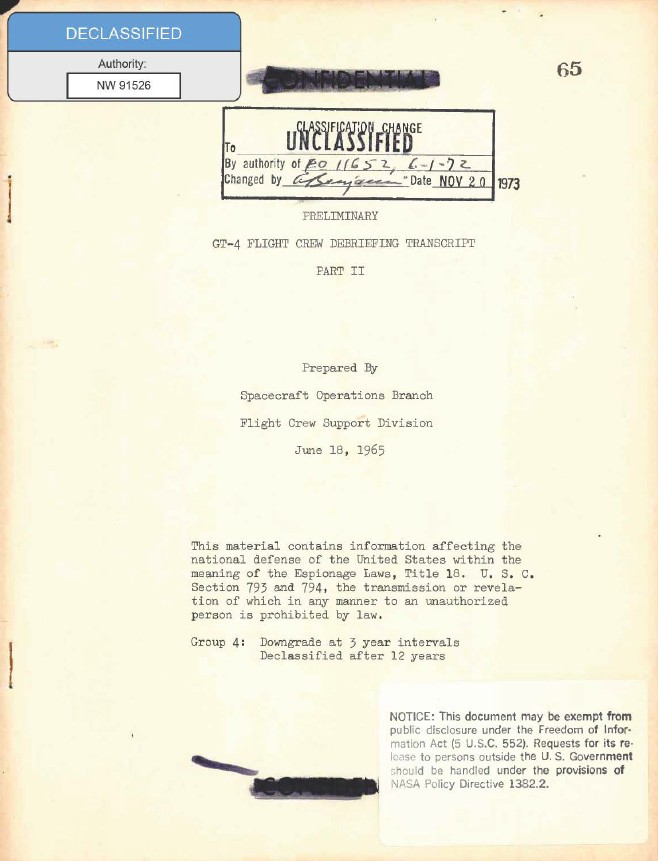
NASA-UAP-D017, Preliminary Gemini 4 Crew Debriefing, Part II, 1965
NASA-UAP-D018, Gemini 4 Experiment Debriefing, 1967
USG-UAP-D001, Congressional, White House, UFO-related Constituent Correspondence, 1998
NASA-UAP-D014, Mercury-Redstone 4, July 21, 1961
Casos relacionados
Mesmo local
Mesma série de arquivos
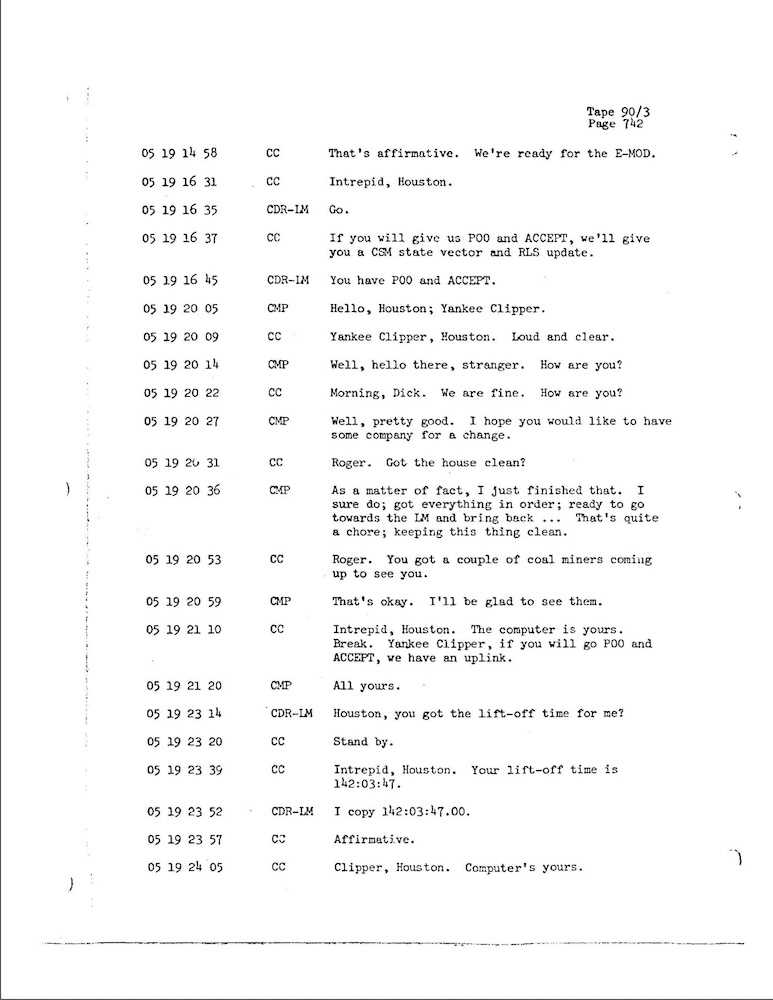
NASA-UAP-D001, Transcrição Apollo 12, 1969
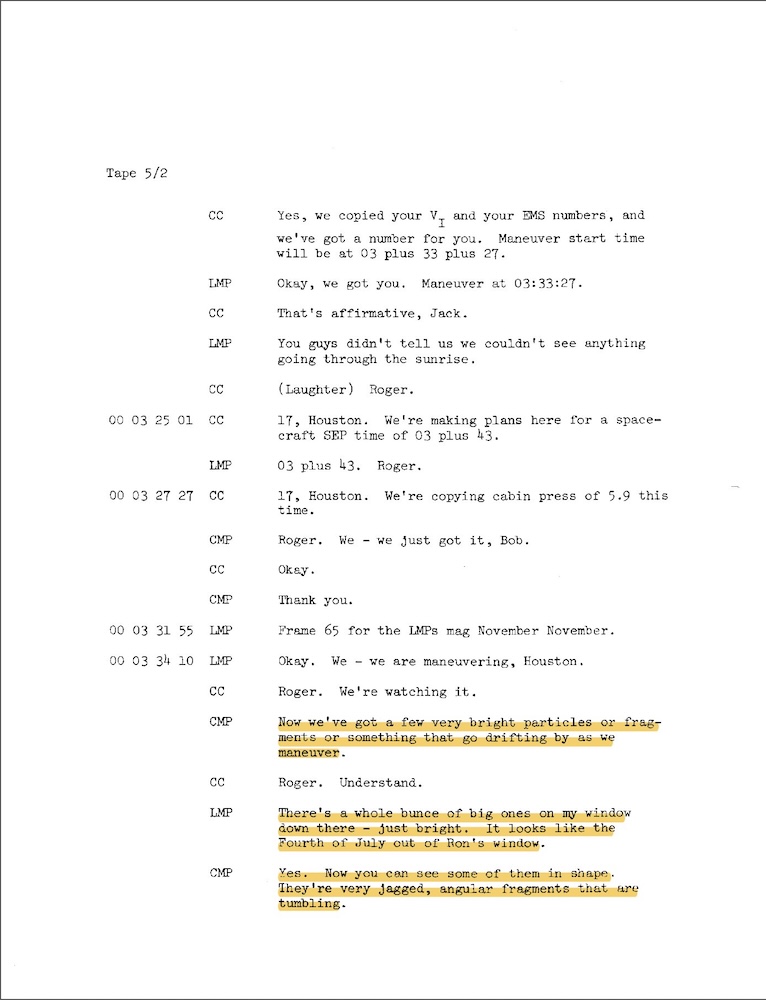
NASA-UAP-D002, Transcrição Apollo 17, 1972
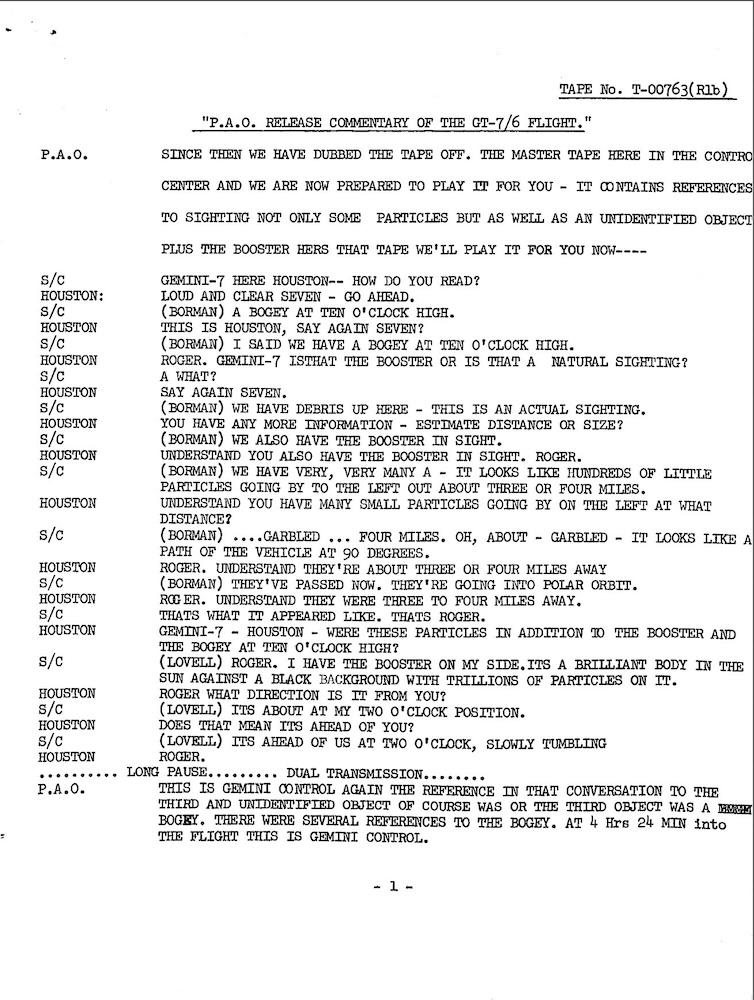
NASA-UAP-D003, Transcrição Gemini 7, 1965

NASA-UAP-D003A, Trecho de Áudio Gemini 7, 1965
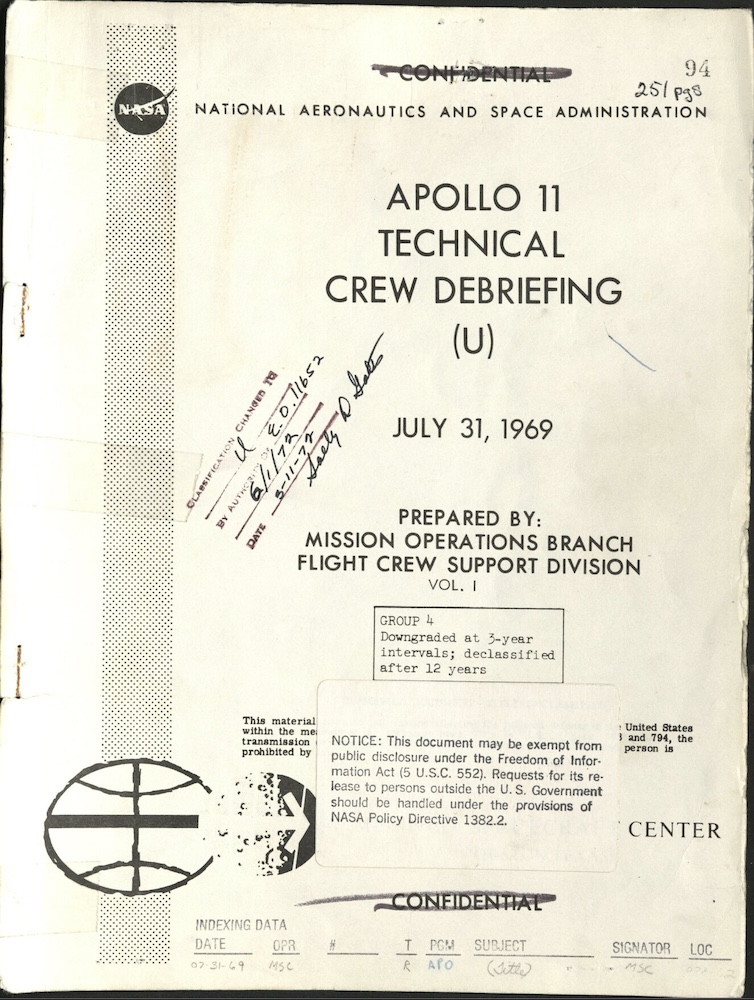
NASA-UAP-D004, Entrevista Técnica da Tripulação Apollo 11, 1969
NASA-UAP-D005, Entrevista da Tripulação Apollo 17 para Ciência, 1973
Mesmo período
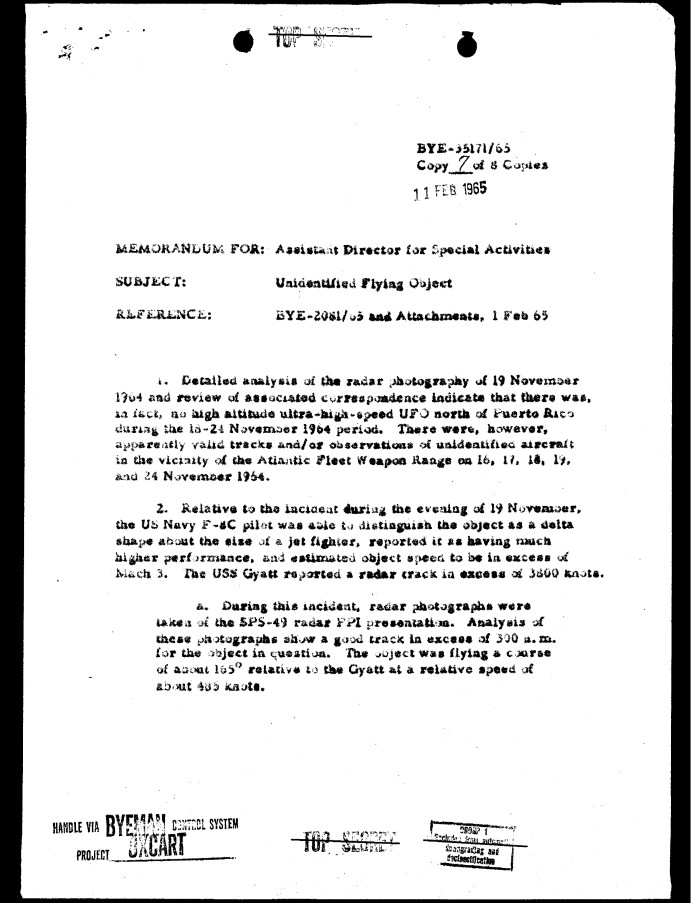
CIA-UAP-D022, Objeto Voador Não Identificado Relatado nas Proximidades de Porto Rico, 1965
NASA-UAP-D018, Debriefing do Experimento da Gemini 4, 1967
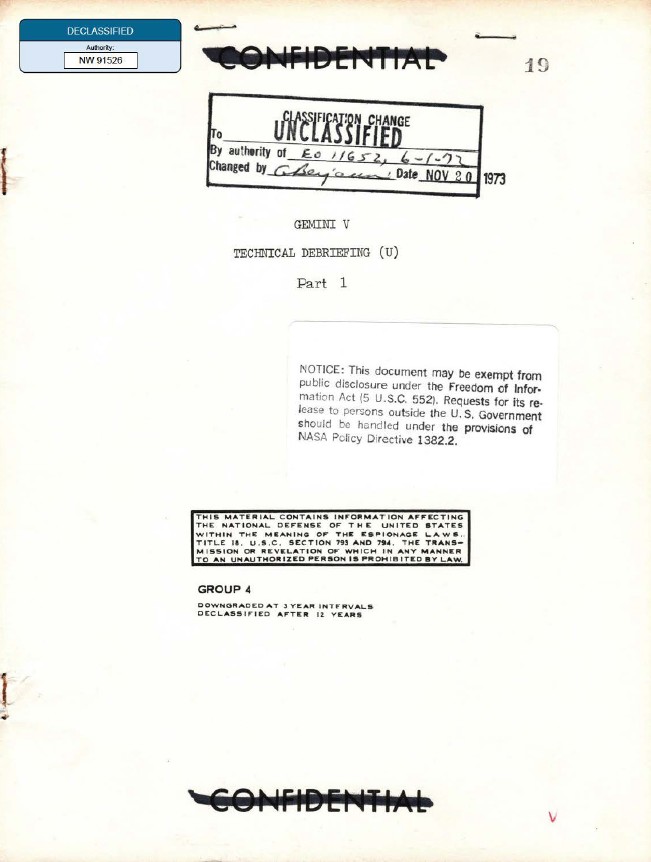
NASA-UAP-D019, Debriefing Técnico da Gemini 5, Parte I, 1965
NASA-UAP-D020, Debriefing Técnico da Gemini 5, Parte II, 1965
NASA-UAP-D021, Debriefing Técnico da Gemini 7, 1965
Mesmo release
FBI-UAP-D011, Encaminhamento de Correspondência D/FBI, 1949
CIA-UAP-005, Artigo de Cientista Alemão sobre "Discos Voadores"
CIA-UAP-002, Painel Consultivo Científico sobre Objetos Voadores Não Identificados, Relatório, 1952-1953
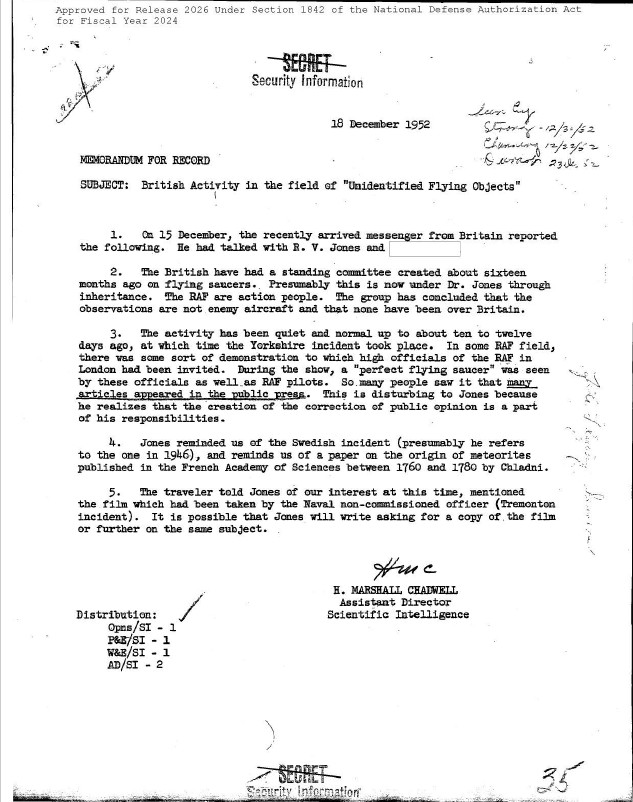
CIA-UAP-014, Atividade Britânica no Campo dos "Objetos Voadores Não Identificados"
FBI-UAP-D012, Escritório de Campo de Newark, 1952-1967
FBI-UAP-D013, Investigação de ‘OVNI’ no Estado de Washington, 1952-1960
Mesma agência
NASA-UAP-D012, Trecho de Áudio Mercury Atlas 8, 3 de Outubro de 1962
NASA-UAP-D013, Mercury Atlas 7, 24 de Maio de 1962
NASA-UAP-D015, Debriefings Científicos de Astronautas, 1962-1963
NASA-UAP-D023, Trecho de Entrevista com o Astronauta Gordon Cooper, 1962
NASA-UAP-D010, Trecho de Áudio Mercury Atlas 9, 15 de Maio de 1963