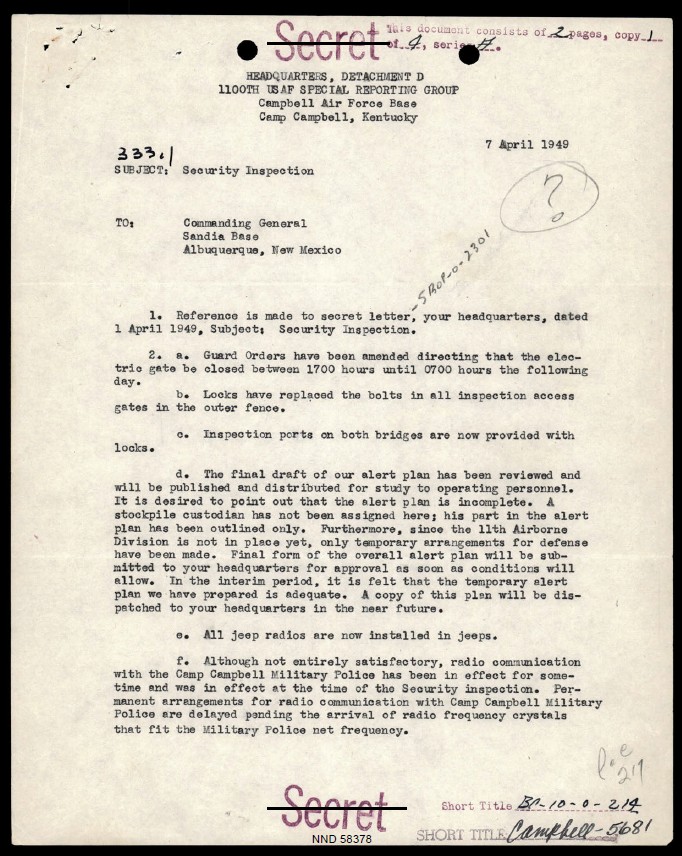
Lettre du sénateur Harry Reid sur AAWSAP et OVNI, 2009
Fichier officiel: DOW-UAP-D183-Correspondance du sénateur Harry Reid, juin 2009
Publié le
Faits essentiels
- ID officiel du dossier
- DOW-UAP-D183
- Type de document
- Document
- Agence
- Department of War
- Publié dans
- R08 · 2026-11-20
- Date de l'incident
- 6/24/09
- Lieu de l'incident
- Washington (district de Columbia)
- Coordonnées
- 38.8950982, -77.0363849
- Pages lisibles
- 4/4
- VIRIN
- 261120-D-D0360-1177
Description officielle
Cette lettre de juin 2009 du sénateur Harry Reid (D-NV) au secrétaire adjoint à la Défense William Lynn III demande que certaines parties de l’Advanced Aerospace Threat Identification Program (AATIP) soient placées sous un Special Access Program (SAP) restreint, assorti d’une liste d’accès strictement contrôlée. La lettre indique que le Sénat avait chargé la DIA d’évaluer les menaces aérospatiales avancées étrangères à long terme, décrit des travaux techniques en cours correspondant aux domaines du programme AAWSAP et affirme que le programme avait déjà produit plusieurs conclusions non conventionnelles très sensibles. Sur cette base, Reid déclare que les pratiques ordinaires de traitement de l’information classifiée, et même les procédures SAP conventionnelles, seraient insuffisantes pour protéger certaines parties de l’effort, en particulier celles touchant à la méthodologie de collecte, à l’application technique, à la participation de l’industrie et à l’identité du personnel spécialisé. Le document joint propose une structure SAP préliminaire, comprenant une liste d’accès « bigoted », un calendrier provisoire du programme jusqu’à l’exercice budgétaire 2013 et le maintien de rôles pour le personnel du gouvernement et de BAASS.
À propos de ce type de document
Ce document est un dossier administratif ou programmatique relatif à l’Advanced Aerospace Weapon System Applications Program (AAWSAP), un programme administré par la Defense Intelligence Agency (DIA) et actif de 2008 à 2012. Le périmètre officiel de l’AAWSAP définissait 12 domaines de recherche technique liés à des menaces aérospatiales potentielles sur un horizon de plus de 40 ans. En tant que dossier administratif, ce document retrace la manière dont l’AAWSAP a été défini, organisé, mandaté, financé ou décrit à un moment donné.
Voir le glossaire →✦ Résumé IA
Il s'agit d'une lettre de quatre pages datée du 24 juin 2009 du sénateur Harry Reid du Nevada, alors chef de la majorité, au secrétaire adjoint à la Défense William Lynn III. Reid écrit que le Sénat avait chargé la Defense Intelligence Agency d'évaluer à long terme les menaces aérospatiales avancées étrangères, avec des études techniques sur la portance avancée, la propulsion, les matériaux non conventionnels, la réduction de signature, l'armement et les effets sur l'humain. Il affirme que l'Advanced Aerospace Threat and Identification Program (AATIP) avait produit plusieurs résultats aérospatiaux non conventionnels très sensibles et demande à Lynn son aide pour établir un Restricted Special Access Program (SAP) avec une « Bigoted Access List » (formulation du document) pour certaines parties de l'AATIP. Il énumère les parties à protéger : la méthodologie, l'affectation du personnel, le soutien et la supervision, ainsi que l'application et l'ingénierie, en citant la mécanique quantique, la science nucléaire, la théorie électromagnétique, la gravitique et la thermodynamique. L'annexe 1 donne des détails sur le programme (FY09-FY13 préliminaire, catégorie Renseignement et acquisition du DoD) et une liste d'accès préliminaire pour l'exercice 2010 qui nomme Lynn, Reid, le sénateur Daniel Inouye, Robert T. Herbert et trois postes de sous-traitants de Bigelow Aerospace Advanced Space Studies ; les autres noms sont remplacés par des marqueurs.
Généré par IA à partir du fichier officiel — peut contenir des erreurs.
▸Transcription(4 des 4 pages lisibles)
[PAGE 1] HARRY REID NEVADA MAJORITY LEADER United States Senate WASHINGTON, DC 20510-7012 June 24, 2009 Honorable William Lynn III Deputy Secretary of Defense 1010 Defense Pentagon Washington, DC 20301-1010 Dear Secretary Lynn: Beginning this past September, the U.S. Senate has mandated that the Defense Intelligence Agency assess far-term foreign advanced aerospace threats to the United States. The scope of program interest covers from the present out to forty years and beyond. In order to further our effort in recognizing emerging disruptive aerospace technologies, technical studies are being conducted in regard to advanced lift, propulsion, the use of unconventional materials and controls, signature reduction, weaponry, human interface and human effects. Since the Advanced Aerospace Threat and Identification Program (AATIP) and study were first commissioned, much progress has been made with the identification of several highly sensitive, unconventional aerospace-related findings. Given the current rate of success, the continued study of these subjects will likely lead to technology advancements that in the immediate near-term will require extraordinary protection. Due to the sensitivities of the information surrounding aspects of this program, I require your assistance in establishing a Restricted Special-Access-Program (SAP) with a Bigoted Access List for specific portions of the AATIP. In order to support this national effort, a small but highly specialized cadre of Department of Defense (DoD) and private sector individuals are necessary. These individuals must be specialized in the areas of advanced sciences, sensors, intelligence/counterintelligence, and advanced aerospace engineering. Given the likelihood that these technologies will be applied to future systems involving space flight, weapons, communications, and propulsion, the standard management and safeguarding procedures for classified information are not sufficient. Even the use of conventional SAP protocols will not adequately ensure that all aspects of the project are properly secured. Although not every aspect of AATIP requires Restricted SAP read-on, the following portions should be maintained at the Restricted SAP level: • The methodology used to identify, acquire, study, and engineer the advanced technologies associated with AATIP. o Specific methodologies used to study unconventional technology may require nuanced approaches that will undoubtedly be of significant interest if not a top priority for adversarial Foreign Intelligence Security Services (FISS). [PAGE 2] o Undue attention by government, or private sector entities, not involved in AATIP or any international interest will directly or indirectly interfere with the daily AATIP mission and perhaps threaten the overall success of the program. • Allocation of personnel, support, and oversight. o Due to the highly specialized nature of the personnel involved with AATIP, the overt acknowledgement of their participation in the program will lead to an unnecessary security and counterintelligence risk. o Occasional assistance from specialized individuals within DoD, the scientific community, or academia may be necessary from time to time based on demonstrated subject matter expertise. Adequate protection of their identities or affiliation is critical to avoid unnecessary scrutiny. o Without the appropriate Restricted SAP protection, the cost associated with a compromise would be significantly higher than the cost associated with a properly administered Restricted SAP. o Protection of industry partnerships and participation is critical. Public awareness of an industry's AATIP affiliation may discourage that industry's further participation with the U.S. Government in this program. • Application and engineering. o The nuanced manner in which some of these technologies will be collected, engineered and applied by the U.S. may require senior level government approval. These decision makers must be afforded the necessary time to make strategic decisions by restricting access to the "big picture" or overall intent of the program to those on a strict Bigoted List. o Associated exotic technologies likely involve extremely sophisticated concepts within the world of quantum mechanics, nuclear science, electromagnetic theory, gravitics, and thermodynamics. Given that all of these have the potential to be used with catastrophic effects by adversaries, an unusually high degree of operational security and read-on discretion is required. Due to the expertise required to carry out the objectives of this program, we will require a small, specialized group of DoD personnel, who are dedicated to performing the SAP-related functions and executing programmatic requirements within the program. It is essential that the Government & military personnel who are already involved with this program are assigned to further support this program in a Restricted SAP capacity (see Attachment 1). These individuals all currently possess the appropriate security clearances and are already providing unique support to AATIP. [PAGE 3] Ultimately, the results of AATIP will not only benefit the U.S. Government but I believe will directly benefit DoD in ways not yet imagined. The technological insight and capability gained will provide the U.S. with a distinct advantage over any foreign threats and allow the U.S. to maintain its preeminence as a world leader. Thank you in advance from your time and consideration of this request. If you or your staff have any questions, please contact [1843(a)(2)] of my staff at [1843(a)(2)] Sincerely, [signature] HARRY REID United States Senator HR:[illegible] [PAGE 4] Attachment 1 Sponsoring Agency: Undetermined (DEPSECDEF) Component-level SAP Central Office: Undetermined (DEPSECDEF) Unclassified Nickname: Advanced Aerospace Threat Identification Program (AATIP) Program Length: FY09-FY13 (Preliminary) Program Funding: FY09-O&M, FY10-FY13-TBD SAP Category Designation: Intelligence, DoD Acquisition FY 10 Preliminary Bigoted List of Government Personnel: 1. Honorable William Lynn III, Deputy Secretary of Defense (Gov't) 2. Honorable Senator Harry Reid of Nevada (Gov't) 3. Honorable Senator Daniel Inouye of Hawaii (Gov't) 4. Robert T. Herbert (U.S. Senate) 5. [AAP Person 1] (Gov't) 6. [AAP Person 2] (Gov't) 7. [AAP Person 91] (Gov't) 8. [AAP Person 92] (USN) 9. [AAP Person 93] (USMC) 10. [AAP Person 3] (Gov't) 11. [AAP Person 94] (Gov't) FY 10 Preliminary Bigoted List of Contractor Personnel funded under the AATIP: 1. [AAP Person 4] Bigelow Aerospace Advanced Space Studies LLC (BAASS), (CTR) 2. [AAP Person 7] BAASS (CTR) 3. [AAP Person 57] BAASS (CTR) This document contains information exempt from mandatory disclosure under the FOIA. Exemptions 1 and 5 apply.
Généré par IA à partir du fichier officiel — peut contenir des erreurs.
Commentaire de l'AARO
Dans le dossier administratif entourant ce programme, l’« Advanced Aerospace Threat Identification Program » (AATIP) apparaît dans certains documents comme un autre nom du même effort AAWSAP sous-jacent, et non comme un programme entièrement distinct. Dans ce contexte, le sénateur Reid a employé ce terme dans sa correspondance publique à la place du nom du programme AAWSAP.
Traduction automatique — le document original est en anglais. Voir en anglais →
Source : Département de la Guerre des États-Unis / AARO — domaine public · war.gov/ufo
Dossiers reliés
65_HS1-834228961_62-HQ-83894_Serial_164

DOW-UAP-D110, AAWSAP Statement of Objectives, July 2008

DOW-UAP-D111, AAWSAP Solicitation and Original Order, September 2008

DOW-UAP-D112, AAWSAP Contract Modification P00001, September 2009

DOW-UAP-D113, AAWSAP Contract Modification P00002, February 2010

DOW-UAP-D114, AAWSAP Contract Modification P00003, May 2010
Affaires liées

Programme AAWSAP sur les OVNI : cahier des charges, 2008

AAWSAP et OVNI : note sur le sénateur Reid, mai 2009

Programme AAWSAP sur les OVNI : accès spécial, nov. 2009

Note de la DIA sur AAWSAP et OVNI, janvier 2009

Programme AAWSAP sur les OVNI : livrables, oct. 2009
Même lieu

Briefing de la CIA sur soucoupes volantes et OVNI, 1952

Évaluation de la CIA : OVNI, soucoupes, août 1952

Journal officiel de la CIA sur les OVNI, 28 oct. 1952

Note de la CIA : OVNI et sécurité nationale, oct. 1952

Note de la CIA sur les OVNI : guerre psychologique, 1952

OVNI et CIA : proposition de panel scientifique, 1952
Même série de dossiers
Rapport de mission OVNI, golfe Persique, 2020
Rapport de mission OVNI, golfe Persique, 2020
Rapport de mission OVNI, golfe Persique, 2020
Rapport de mission OVNI, golfe Persique, 2020
Rapport de mission OVNI, golfe Persique, 2020

Rapport de mission OVNI, Djibouti, 2025
Même période
AAWSAP et OVNI : note sur le sénateur Reid, mai 2009

Affaire Colares, OVNI : rapport mensuel BAASS, 2009
Contrat OVNI AAWSAP : modification P00001 (2009)

Étude OVNI AAWSAP : Matière programmable (DIA, 2009)

Étude OVNI AAWSAP : Verres métalliques (DIA, 2009)
Note de la DIA sur AAWSAP et OVNI, janvier 2009
Même publication

Rapports OVNI : Glendale et Los Angeles, juin 1949

OVNI près d'Agoura et de Point Mugu, Californie, 1953

Observation OVNI à Avalon, île Santa Catalina, 1955

Lumières OVNI près de Fontana et La Jolla, Californie

Observation OVNI : objet rouge à Fontana, août 1956

Rapport USAF : OVNI au radar, pilotes F-86D, Japon, 1956
Même agence
Foo fighters : dossier OVNI du SHAEF, 1945
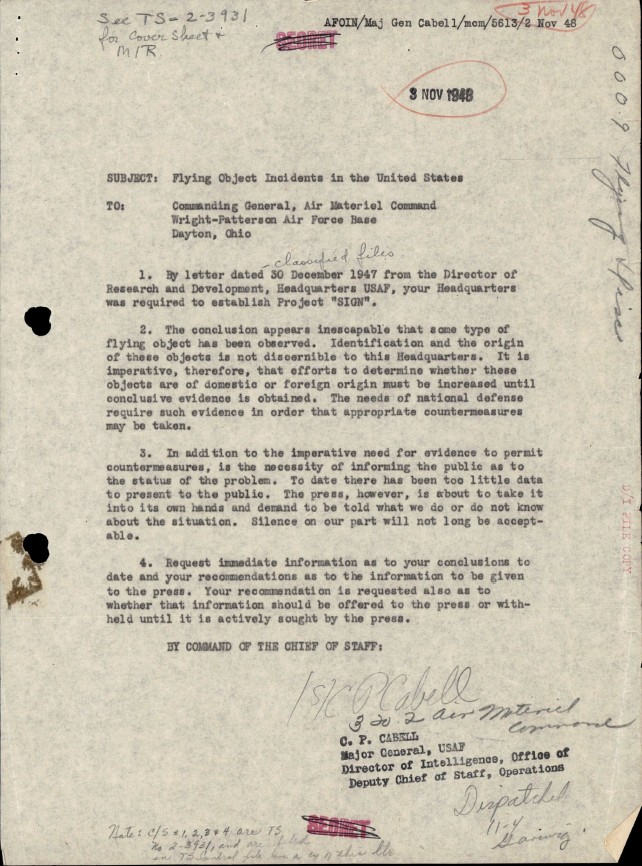
Dossier OVNI du Projet Sign : Air Materiel Command, 1948
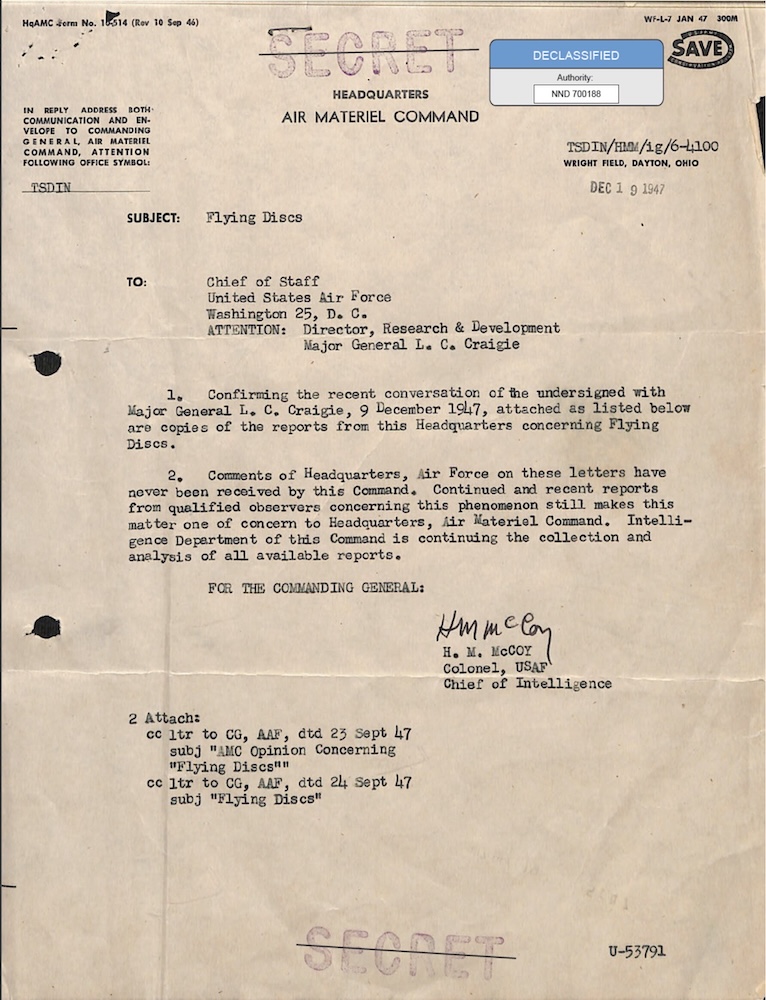
Dossier OVNI Flying Discs : lettre Twining, 1947
Fusées fantômes en Suède : rapport OVNI, 1947
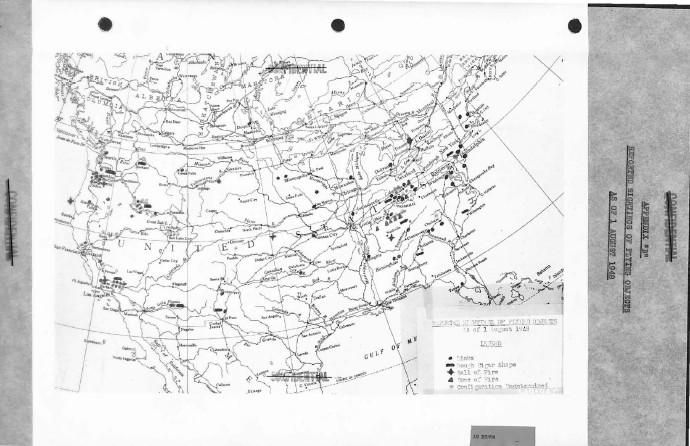
Étude de l’US Air Force sur les OVNI, 1948