Diário oficial da CIA sobre OVNIs e discos, 1952
Arquivo oficial: CIA-UAP-D029, Registro de Diário Oficial sobre “Discos Voadores”, 1952
Publicado em
Dados principais
- ID oficial do arquivo
- CIA-UAP-D29 (citado como CIA-UAP-D029 neste arquivo)
- Tipo de documento
- Documento
- Agência
- CIA
- Publicado em
- R08 · 2026-11-20
- Data do incidente
- 10/28/52
- Local do incidente
- Washington, D.C.
- Coordenadas
- 38.8950982, -77.0363849
- Páginas legíveis
- 2/2
- VIRIN
- 261120-O-D0360-1177
Descrição oficial
Este registro de 28 de outubro de 1952 em um diário oficial da Central Intelligence Agency (CIA) documenta uma discussão sobre novas informações a respeito de “discos voadores”. O Sr. Clark relatou que a CIA havia recebido informações adicionais, incluindo relatos de objetos observados do solo por pessoas que o registro caracterizou como relativamente confiáveis. O registro observa que a ausência de ruído ou de chamas nos relatos de certos casos representava uma dificuldade teórica para sua interpretação. Afirma ainda que vários cientistas haviam apresentado artigos descrevendo um possível método de propulsão que não envolveria ruído nem chamas. O Dr. Clark propôs um briefing sobre o assunto e recomendou levar as informações ao conhecimento da Força Aérea dos EUA e do Conselho de Pesquisa e Desenvolvimento; o autor do diário concordou.
✦ Resumo IA
Trata-se de uma entrada de duas páginas do «Official Diary» (diário oficial) TOP SECRET da CIA referente à terça-feira, 28 de outubro de 1952, aprovada para divulgação em 2026, que registra um dia de assuntos administrativos e de coordenação em sua maioria não relacionados. O único item sobre discos voadores aparece na página 2, item 9c, em que o Sr. Clark informa que foram obtidas informações adicionais sobre discos voadores, em particular relatos de avistamentos em solo por observadores relativamente confiáveis. Observa que uma das principais dificuldades teóricas dos avistamentos era a ausência de ruído e de clarão, e que vários cientistas haviam apresentado recentemente trabalhos indicando um possível meio de propulsão que não envolveria ruído nem clarão. Propôs um briefing sobre o assunto e levar a informação ao conhecimento da Força Aérea e do R&DB, e o autor do diário concordou. As demais entradas tratam de um documento da OTAN, um briefing sobre guerra eletrônica, cursos internos de treinamento e o Project VICTOR. Vários nomes e itens estão censurados, e a entrada não chega a nenhuma conclusão sobre os avistamentos.
Gerado com IA a partir do arquivo oficial — pode conter erros.
▸Transcrição(2 de 2 páginas legíveis)
[PAGE 1] Approved for Release 2026 TOP SECRET Security Information Official Diary Tuesday, 28 October 1952 BEST COPY AVAILABLE 1. Passed to DCI Contact Division information received from [redacted] and [redacted] respecting their future plans, and secured his approval to having this information restricted to CIA only. 2. After my talk with Mr. Noyes, I felt that he was not fully informed as to the activities of Paul Nitze [redacted] and called this to the attention of Fisher Howe. It subsequently developed that Mr. Noyes had been fully informed. 3. Attended PRC. 4. Discussed the case of [redacted] and Shef Edwards. It was agreed that she should be put on sick leave and this was done. Col. Edwards undertook to assist in any way possible. 5. Dr. Craig consulted me respecting the NATO paper which was produced as a result of the recent [redacted] meetings. Kermit Roosevelt was interested in this meeting and Craig had requested it from General Porter who had not delivered. Dr. Craig inquired whether he might look at the paper in CIA. I stated that we would be unable to permit this, since not only would Pentagon approval have to be obtained, but also CIA was not officially represented in the meeting which produced the paper. 6. Dr. Craig informed me as to his plan to have Admiral Kirk briefed on electronic warfare matters which would involve a Mr. Clark, who is a member of the President's Committee on Telecommunications. I approved, with the understanding that Mr. Clark, in doing this, would not be representing CIA, but would be acting in his capacity as a member of the Presidential Committee. 7. Talked with Mr. Amory about the possibility that Alton Jones was feeling hurt because he had not been invited to speak to DCI. I explained that I had checked with the Office of the DCI and learned that an appointment had been cancelled by Mr. Jones, who would call DCI as soon as he could come to Washington to have a talk. 8. Told Mr. Amory that I would request General Porter to give us a copy of the NATO paper resulting from the [redacted] Conference. I later did this, and was informed by General Porter that a copy of the paper was sent to CIA. Asked Mr. Drain to follow up. 9. Mr. Clark consulted me on the following: a. [redacted] This document is part of an Integrated file. If separated from the file it must be subjected to individual systematic review. Security Information [PAGE 2] Approved for Release 2026 TOP SECRET Security Information Official Diary 28 October 1952 b. Dr. Clark inquired as to the best manner to brief DCI in his capacity as Chairman of PSB, on the Telecommunications Committee paper on electronic warfare. I suggested that this should be done through [redacted] who was the DCI's briefing officer on PSB matters. c. Mr. Clark informed me that additional information had been obtained on flying saucers, particularly reports of sightings on the ground by relatively reliable observers. He noted that one of the primary theoretical difficulties with sightings thus far reported was the lack of noise and flare. Several scientists have recently delivered papers indicating a possible means of propulsion which would not involve noise and flare. He proposed to have a briefing on this general subject and to call the information to the attention of Air Force and R&DB. I concurred. 10. Discussed with Dr. Stout, and later with Matt Baird, the Director of Training's program of lectures for incoming trainees. I indicated my general approval of the course he suggested, and that it be kept flexible. It should be arranged with ADs that incoming personnel need not take the course as soon as they come on board, where there was an emergency and immediate need for their services in the Office; further, all personnel would not require all portions of the course. I felt that this was a matter for Training to work out on an individual basis with our offices. Dr. Stout and Col. Baird indicated that they agreed with this position and would talk with the ADs, and would have a talk with me after this had been done. During the course of my discussion with Col. Baird, he discussed the over-all activities and mission of training. I indicated that, as far as I was concerned, I felt that all matters could be resolved between Training and all our Offices. I felt that they could afford us very helpful services, but that this would have to be [struck out: carried into] [handwritten: coordinated with] the activities of the various Offices. When Col. Baird raised some question about O/RR's internal Office training, I pointed out the necessity that his Office, with its broad charter, be relatively liberal in giving a license to the various AD's to accomplish results within their own Office, where that was the logical place to do the job. I did not feel that there was any magic in having a course under the auspices of training personnel reporting to the Director of Training. I was primarily interested in results. I really feel, however, that Col. Baird understood this and will proceed along these lines. 12. Conferred with Mr. Bundy as to a number of matters pertaining to Project VICTOR. [handwritten initials] TOP SECRET Security Information
Gerado com IA a partir do arquivo oficial — pode conter erros.
Tradução automática — o documento original está em inglês. Ver em inglês →
Fonte: Departamento de Guerra dos EUA / AARO — domínio público · war.gov/ufo
Casos conectados
65_HS1-834228961_62-HQ-83894_Serial_164

DOW-UAP-D110, AAWSAP Statement of Objectives, July 2008

DOW-UAP-D111, AAWSAP Solicitation and Original Order, September 2008

DOW-UAP-D112, AAWSAP Contract Modification P00001, September 2009

DOW-UAP-D113, AAWSAP Contract Modification P00002, February 2010

DOW-UAP-D114, AAWSAP Contract Modification P00003, May 2010
Casos relacionados

OVNI e a CIA: proposta de painel científico, 1952

Memorando da CIA sobre OVNI: guerra psicológica, 1952

Avaliação da CIA sobre OVNI e discos voadores, 1952

Briefing da CIA sobre discos voadores e OVNI, 1952

Memo da CIA: OVNI e segurança nacional, outubro 1952

Programa AAWSAP sobre OVNIs: escopo de trabalho, 2008
Mesmo local
Avaliação da CIA sobre OVNI e discos voadores, 1952
Briefing da CIA sobre discos voadores e OVNI, 1952
Memo da CIA: OVNI e segurança nacional, outubro 1952
Memorando da CIA sobre OVNI: guerra psicológica, 1952
OVNI e a CIA: proposta de painel científico, 1952

Arquivos OVNI: cartas sobre fragmentos espaciais, 1962-64
Mesma série de arquivos
Arquivo OVNI: relatório da CIA sobre a URSS, 1973
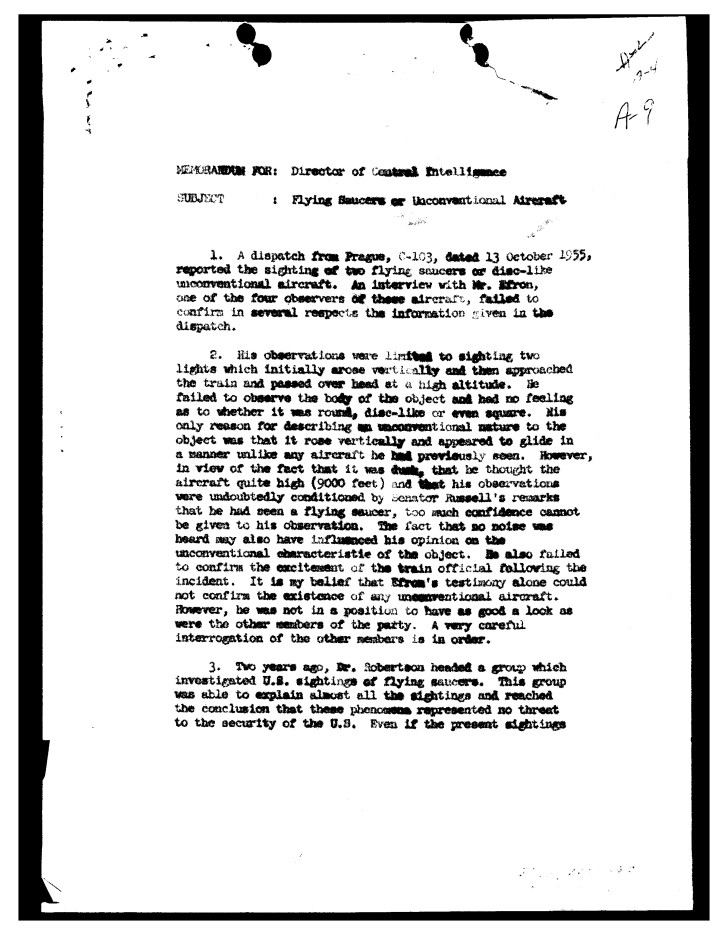
Memorando da CIA: OVNI visto de um trem, 1955
Análise da CIA do OVNI visto de um trem, 1955
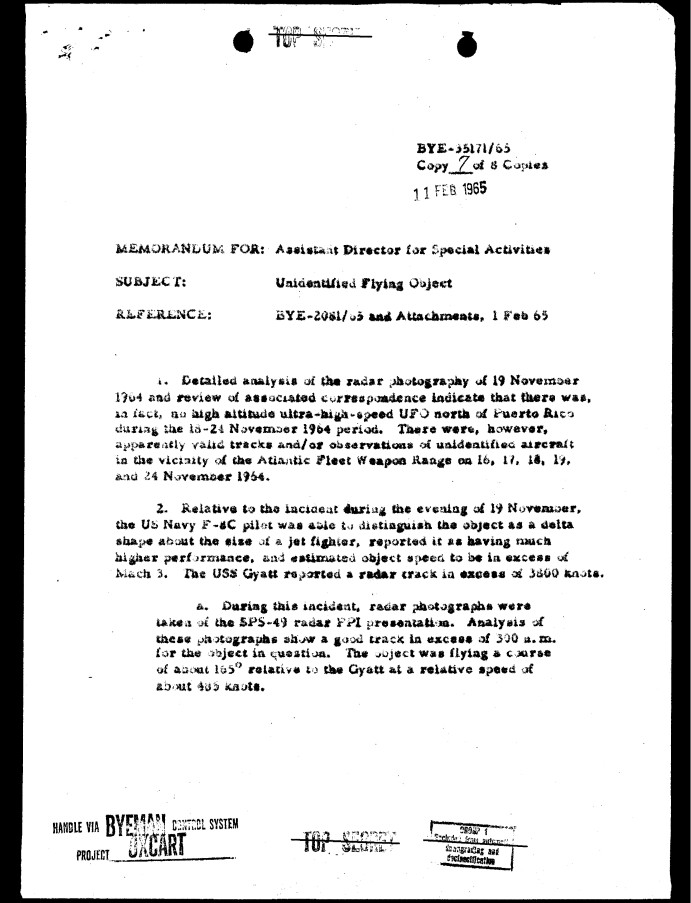
Memorandos da CIA sobre OVNI em Porto Rico, 1964
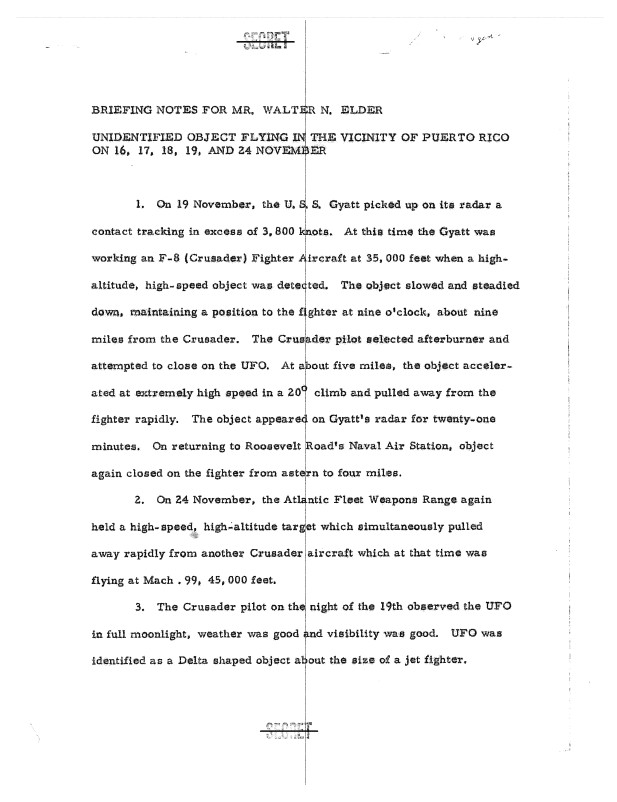
Briefing da CIA: OVNI em Porto Rico, USS Gyatt, 1964
Mesmo período

Arquivo «Flying Discs» da USAF: OVNI, 1952
Arquivo do FBI de Newark sobre OVNI em Nova Jersey, 1952
Arquivo Flying Discs do FBI: OVNI em Washington, 1952-60
Áudio OVNI: Ruppelt e o Projeto Livro Azul, 1952

Briefing OVNI de Ruppelt, Projeto Livro Azul, 1952
 ▶ 70s
Filme OVNI de Tremonton, Utah, 1952 (Newhouse)
Mesma publicação

Relatórios de OVNI: Glendale e Los Angeles, junho 1949

OVNI perto de Agoura e Point Mugu, Califórnia, 1953

Avistamento de OVNI em Avalon, Ilha Santa Catalina, 1955

Avistamento de OVNI: objeto vermelho em Fontana, 1956

Luzes de OVNI perto de Fontana e La Jolla, Califórnia

Relatório USAF: radar e OVNI, pilotos de F-86D, Japão
Mesma agência
Teoria OVNI de cientista alemão, relatório da CIA, 1950
Memorando da CIA sobre investigações OVNI britânicas, 1952
Painel Robertson: relatórios OVNI da CIA, 1952-53
Memorando da CIA sobre o projeto OVNI da USAF, 1953
História do U-2 e OXCART da CIA, com capítulo OVNI