Relatório de dez meses da BAASS (AAWSAP) sobre OVNIs, 2009
Arquivo oficial: DOW-UAP-D172, Relatório de Dez Meses da BAASS, julho de 2009
Publicado em
Dados principais
- ID oficial do arquivo
- DOW-UAP-D172
- Tipo de documento
- Documento
- Agência
- Department of War
- Publicado em
- R08 · 2026-11-20
- Data do incidente
- 7/30/09
- Local do incidente
- Las Vegas, Nevada
- Coordenadas
- 36.1674263, -115.1484131
- Páginas legíveis
- 524/538
- VIRIN
- 261120-D-D0360-1175
Descrição oficial
Este arquivo contém um relatório do programa produzido pela Bigelow Aerospace Advanced Space Studies (BAASS), resumindo seu trabalho sob o contrato do AAWSAP até 30 de julho de 2009, além de incluir uma discussão substancial voltada ao futuro sobre trabalhos planejados ou propostos. Inclui questões internas de processo não resolvidas e avaliações comparativas de opções de equipamentos. Além de documentar a produção de uma série de artigos de pesquisa técnica, o relatório descreve pesquisas arquivísticas e documentais sobre incidentes históricos relatados como envolvendo fenômenos anômalos não identificados. O relatório também documenta investigações da BAASS sobre fenômenos parapsicológicos e paranormais, incluindo atividades de pesquisa em um local em Utah com um histórico relatado de atividade anômala.
Sobre este tipo de documento
Este documento é um registro administrativo, programático ou produzido por um contratado, relacionado ao Programa de Aplicações de Sistemas de Armas Aeroespaciais Avançados (AAWSAP), um programa administrado pela Agência de Inteligência de Defesa (DIA) ativo entre 2008 e 2012. O escopo oficial de trabalho do AAWSAP identificou 12 áreas de pesquisa técnica relacionadas a potenciais ameaças aeroespaciais em um horizonte de tempo de mais de 40 anos. Como parte do registro mais amplo do programa, o arquivo documenta como o AAWSAP foi delimitado, organizado, direcionado, financiado, executado ou descrito em um determinado momento.
Ver o glossário →✦ Resumo IA
Este é o Ten Month Report da Bigelow Aerospace Advanced Space Studies (BAASS), datado de 30 de julho de 2009, sobre o trabalho realizado sob o contrato HHM402-08-C-0072, adjudicado em 22 de setembro de 2008, que incumbe a BAASS de pesquisar tecnologia aeroespacial avançada em 12 áreas técnicas; muitos nomes estão tarjados segundo as isenções 1843(a). A Seção 1 descreve a criação da organização: uma instalação em Las Vegas na 4975 South Polaris Avenue, um cofre subterrâneo planejado, cinco edifícios de escritórios em escrow, 47 funcionários em tempo integral, credenciais Top Secret processadas com ajuda do patrocinador e as divisões de Análise, Tradução, Segurança, Pesquisa Científica e Investigações Especiais. A Seção 2 relata o andamento até 23 de julho de 2009 de nove projetos (Physics, Engagement, Cooperation, Campus, Database, Oral History, Blue Book Materials, Northern Tier e Colares) e dos contratos concedidos à MUFON, Documatica e Earthtech. Inclui também implantações de campo da BAASS e dois relatórios militares preliminares: um incidente da Marinha em novembro-dezembro de 2004 com um objeto em forma de «Tic Tac» na área de operações SOCAL (grupo de batalha do USS Nimitz) e o incidente de 12 de janeiro de 2007 com radar e rádio de F-15C em RAF Lakenheath, no qual o piloto líder disse que o objeto poderia ser um balão. Outras seções tratam do Data Warehouse (237.331 registros de nove bases de dados), da revisão das liberações do Canadá, Dinamarca, França (GEIPAN) e do Ministério da Defesa britânico, de casos do Northern Tier nas bases aéreas de Malmstrom, Minot, Wurtsmith e Loring em 1975, de uma viagem ao Brasil sobre os eventos de Colares de 1977, da visita de três militares a um rancho em Utah em 30 de junho e 1.º de julho de 2009 e de um plano estratégico para 2010. Os apêndices contêm um organograma e procedimentos de investigação de campo.
Gerado com IA a partir do arquivo oficial — pode conter erros.
Locais mencionados no documento
Outros locais a que o documento se refere, além da sua localização oficial.
- Lincoln City, Oregon, USAInvestigação · 2009
Case: 090330-01 Date: March 18, 2009 Incident Type: CE4 Location: Lincoln City and Portland, Oregon
- Portland, Oregon, USAInvestigação · 2009
Location one was in Lincoln City and location two was in Portland, Oregon.
- Trout Lake, Washington, USAInvestigação · 2009
hosted by Paranormal Research Society (PRS) at the Sattva Ranch in Trout Lake, Washington.
- Ak-Chin Indian Reservation, Maricopa, Arizona, USAInvestigação · 2009
to meet with witnesses in reference to strange lights and a possible landing of a craft near the Ak-Chin Indian Reservation.
- Lake Havasu City, Arizona, USAAvistamento · 2009
They described seeing an elongated craft with glowing amber lights about 600' high over a local golf course.
- Buffalo, Oklahoma, USAInvestigação · 2009
BAASS Investigators responded to Buffalo Oklahoma to investigate the possible landing or low hovering of an unknown object.
- Marathon, Texas, USAIncidente · 2009
they were traveling on Hwy. 385 southbound approx. 50 miles south of Marathon, TX.
- Liberty County, Texas, USAIncidente · 2009
Aircraft was above the Liberty County area at the time.
- SOCAL Operating Area off San Diego, California, USAIncidente · 2004
unknown aerial phenomenon incidents that occurred in the SOCAL Operating Area southwest of San Diego, CA during November and/or December 2004.
- Lakenheath, Suffolk, United KingdomIncidente · 2007
amateur radio enthusiasts in England made a recording of airborne U.S. Air Force F-15C aircraft stationed at RAF Base Lakenheath, United Kingdom.
- Utah Ranch (Skinwalker Ridge), Fort Duchesne, Utah, USAInvestigação
A 480 acre ranch located in the Uinta Basin, in NE Utah was chosen for the main location for these studies.
- Colares, Pará, BrazilIncidente · 1977
the Brazilian island of Colares and the surrounding area of the Amazon delta were visited by flying objects of an unknown nature
- Phoenix, Arizona, USAAvistamento · 1997
[Actual case, Phoenix Arizona the night of March 13 1997]
- Carteret, New Jersey, USAAvistamento · 2001
Location: Carteret, New Jersey Date: July 15, 2001 Summary: For a half-hour period in the middle of the night, numerous witnesses
- San Carlos de Bariloche, ArgentinaIncidente · 1995
Location: San Carlos de Bariloche Airport, Argentina Date: July 31, 1995
- Coulommiers, Seine-et-Marne, FranceAvistamento · 1994
Location: Coulommiers, Seine et Marne, France Date: January 28, 1994
- Esbjerg, Southern Denmark, DenmarkAvistamento · 1978
The second report was witnessed by a person in Esbjerg, identifying the object as 4 pieces, sharp in color with long fire tails, emitting no sound.
- Struer, Central Denmark, DenmarkAvistamento · 1978
The third report was witnessed by a person at 7600 Struer, identifying the object as a light, oblong shape and had a tail of a star.
- Holstebro, Central Denmark, DenmarkAvistamento · 1978
The fourth report was witnessed by a person at 7500 Holstebro, identifying the object as oblong and light in color, emitting no sound.
- Aalborg, North Denmark, DenmarkAvistamento · 1986
At 0400 hours the witness was at the Aalborg Railroad Station. The witness reported the object was in the North to Northeast about 60 degrees above the horizon.
- Aarhus, Central Denmark, DenmarkAvistamento · 1986
an unidentified married couple reported they observed from their residence, an object in the East sky over the town of Aarhus.
- Vester Hassing, North Denmark, DenmarkAvistamento · 1986
an unidentified person from an address in the town of Vester Hassing reported observing in the Northeast sky, about 20 degrees up to 60 degrees, a white ball
- Ploërmel, Brittany, FranceAvistamento · 1985
Ploermel, Region 1 Date: July 22, 1985 A Gendarmerie officer on his day off observed an unusual flicker of light at his home.
- Brest-Guipavas, Brittany, FranceAvistamento · 1981
drivers on a rural road saw a red/orange ball hovering over a field near the local airport.
- Fleury-sur-Andelle, Normandy, FranceAvistamento · 1994
On January 4, 1994 at 11:50 p.m., while watching television, a 33-year-old man noticed an orange light outdoors making a to-and-fro movement.
- Trans-en-Provence, Var, FranceInvestigação · 1981
Included in this selection of cases is the landmark Trans-en-Provence sighting (paragraph 53.d below).
- Calvine, Perth and Kinross, Scotland, United KingdomAvistamento · 1990
The reported sighting took place on August 4, 1990 at 9:00 P.M. near Calvine, Scotland which is 20 miles north of Pitlochry in the Scottish highlands.
- Lydd, Kent, United KingdomAvistamento · 1991
a missile which crossed in close proximity to their position near Lydd airport in Kent.
- Malmstrom Air Force Base, Montana, USAIncidente · 1975
Malmstrom AFB, Montana received seven radar cuts on the height-finder radar at altitudes between 9,500 and 15,500 feet.
- Lewiston, Montana, USAIncidente · 1975
Radar tracked the objects over Lewiston, Montana, at a speed of 7 knots.
- Moore, Montana, USAAvistamento · 1975
object location would be 10 miles south of Moore, Montana, and 20 miles east of Buffalo, Montana.
- Harlowton, Montana, USAAvistamento · 1975
SAC advised that the LCF at Harlow, Montana, observed an object which emitted a light which illuminated the site driveway.
- Stanford, Montana, USAAvistamento · 1975
SAC site C-1, 10NM SE of Stanford, Montana, reported visual sightings of unknown objects.
- Helena (25 miles NW), Montana, USAIncidente · 1975
a. October 18, 1975; 25 miles NW of Helena, MT 12:30 A.M. [redacted] (1843(a)(2)) was driving his truck when he noticed a large object
- Priest Butte, Montana, USAAvistamento · 1975
a couple living on a ranch near Priest Butte, Montana, reported that they had seen a UFO about half a mile from their home
- Monarch, Montana, USAAvistamento · 1975
c. November 1, 1975; Monarch, MT Time not given. UFO hovered 75' away, one foot off ground.
- Raynesford, Montana, USAAvistamento · 1975
d. November 5, 1975; Nr. Raynesford, MT 4:10 A.M. At least six UFOs near ground.
- Vaughn, Montana, USAAvistamento · 1975
MAFB Wing Security reports that a helicopter is hovering over India 10 at Vaughn.
- Fort Shaw, Montana, USAAvistamento · 1975
b. August 17, 1975, 2:15 A.M., Fort Shaw, MT. [redacted] (1843(a)(2)) observed a set of red lights close to the ground.
- Bowman's Corner, Wolf Creek, Montana, USAAvistamento · 1975
e. October 10, 1975, Bowman's Corner (Wolf Creek, MT). [redacted] (1843(a)(2)) observed a white light in the sky with a red light on the left side.
- Conrad, Montana, USAAvistamento · 1975
#24 sights object over Conrad area, and #24 is instructed to go to MAFB, as radio coordinator.
- Fort Benton, Montana, USAAvistamento · 1975
Object is seen moving between Fort Benton and Chester area.
- Chester, Montana, USAAvistamento · 1975
Cascade County Sheriff's receive a relay from Chester, that an object with green and blue lights is seen 10 miles southwest of Chester.
- Highwood Mountains, Montana, USAAvistamento · 1975
who resides on the road to the Highwood Mountains. [redacted] (1843(a)(2)) said that on October 17, 1975, around 10:30 P.M., she saw a large craft travelling over her house.
- Stockett, Montana, USAAvistamento · 1975
q. November 8, 1975, Stockett, MT. [redacted] (1843(a)(2)) reported seeing a bright light Sunday, November 2, 1975 at about 9:30 P.M.
- Fairfield, Montana, USAAvistamento · 1975
r. November 12, 1975, 4:04 A.M., Fairfield, MT. [redacted] (1843(a)(2)) [redacted] (1843(a)(2)) reports a UFO sighting 15 degrees east of Fairfield.
- Choteau, Montana, USAAvistamento · 1975
Choteau, MT. (The following appears to be a message from Teton County S.O. to Cascade County S.O.) A few weeks ago, an object was spotted by Chester and Shelby
- Kevin, Montana, USAAvistamento · 1975
Shelby Co. S. O has reports of UFO in Kevin and Dienkirk area.
- Grand Forks Air Force Base, North Dakota, USAAvistamento · 1975
reports of UFOs over nuclear weapons storage sites were repeatedly made at Loring AFB, Maine; Wurtsmith AFB, Michigan; Grand Forks and Minot Air Force Bases, North Dakota
- Minot Air Force Base, North Dakota, USAIncidente · 1975
The third primary event is an incident reportedly occurred on November 10, 1975 at the Minot Air Force Base.
- Max, North Dakota, USAAvistamento · 2009
There was a reported event photographed on 4 April, 2009 in Max, ND.
- Lampasas, Texas, USAAvistamento · 1976
there was reported sighting of a UFO in the Lampasas area of Texas on 29 Dec. 1976.
- Wurtsmith Air Force Base, Michigan, USAIncidente · 1975
On October 30, 1975, at approx. 2010 hrs, WAFB Security Police, located in the vicinity of the family housing area gate, reported seeing what appeared to be
- Loring Air Force Base, Maine, USAIncidente · 1975
In October 1975, United States Air Force Loring Base personnel witnessed several unidentified aircraft which seemed to be concentrated on the weapons storage facilities
- Caribou, Maine, USAAvistamento · 1975
on-duty Caribou, Maine Police Officer was witness to the unknown aircraft after receiving multiple reports from concerned citizens.
- São Domingos do Capim, Pará, BrazilIncidente · 1977
Alleged UAP landing - Municipality of São Domingos do Capim, Brazil, December 17, 1977
- Santo Antônio do Tauá, Pará, BrazilAvistamento · 1977
and his son saw a UAP on November 19, 1977 near Santo Antônio do Tauá, Brazil.
- Fortaleza, Ceará, BrazilAvistamento
He described collecting it after he had witnessed a UFO on one of the beaches in Fortaleza.
- Itatira, Ceará, BrazilAvistamento
recent cases reported through the media of the lights being hostile to people, terrorizing the 17,689 citizens of Itatira, causing physical effects
- Sobral, Ceará, BrazilAvistamento
He stated that one morning traveling west on a road in Sobral, he saw a bright light hovering over his truck.
- Varginha, Minas Gerais, BrazilIncidente · 1996
Varginha, 1996. He believes the reports are absolutely true. He is convinced because of the hundreds of witnesses
- São Paulo, São Paulo, BrazilAvistamento · 1986
feels that the "Night of the UFOs" in Sao Paulo, 1986 is the most significant case in Brazilian history because there is vast amounts of documentation
- Capão Redondo, São Paulo, BrazilAvistamento · 1991
(3) Cabao Redondo, Sao Paulo, ≈1991. This case involved a boy who made a video recording of a small ball of light that maneuvered around the outside of his house.
- Iporanga, São Paulo, BrazilAvistamento · 1990
He also claims that there has been frequent UFO activity in Vale de Ribeira, near Iporanga, from 1990 to the present.
- Chulucanas, Piura, PeruAvistamento · 2002
in Chulucanas, Piura, place to which he has traveled 17 times and see where he was able to see objects in the sky and balls of light
- Mar del Plata, Buenos Aires, ArgentinaIncidente
has spoken out on the events made public and involving the imprints found in Sierra de los Padres and Parque Palermo, Mar del Plata.
- Chicago, Illinois, USAAvistamento · 2006
the Chicago O'Hare airport case of November 2006 and the Stephensville, Texas UAP case of January 2008
- Stephenville, Texas, USAAvistamento · 2008
the Chicago O'Hare airport case of November 2006 and the Stephensville, Texas UAP case of January 2008
▸Transcrição(524 de 538 páginas legíveis)
[PAGE 1] [Diagram: full-page color photograph of a damaged, burned vertical structure against blue sky with wispy clouds; no text] [PAGE 2] [no legible text — blank or heavily redacted scan] [PAGE 3] [Diagram: cover page with BAASS logo and a background image of a dark triangle with three glowing lights against clouds] BAASS BIGELOW AEROSPACE ADVANCED SPACE STUDIES ® Ten Month Report July 30, 2009 [PAGE 4] [no legible text — blank or heavily redacted scan] [PAGE 5] Table of Contents Section 1: Creation of BAASS Organization and Infrastructure ........................................................................................................ Page 1 Section 2: Project/Research Summary ............................................................ Page SO 2A BAASS Investigations ........................................................................ Page 50 2B BAASS Contract Awarded ................................................................ Page 109 2C Progress on Nine Committed BAASS Projects............................. Page 111 Project Physics ............................................................................ Page 114 Project Engagement ................................................................... Page 158 Project Cooperation ................................................................... Page 185 Project Blue Book Materials ..................................................... Page 190 Project Campus ........................................................................... Page 203 Project Oral History .................................................................... Page 214 Project Database/ Analysis Government Files ........................ Page217 Project Northern Tier ................................................................. Page 308 Project Colares/Brazil ................................................................. Page 391 Progress on BAASS Outreach to South America ..................... Page 453 Section 3: Strategic Plan for 2010 ................................................................... Page 472 Appendix 1 ................................................................. BAASS Org Chart Appendix 2 ........................................................ BAASS Investigative SOP Appendix 3 ................................................................ Capella Users Guide Appendix 4 ..................................................... South American Org Chart [PAGE 6] [no legible text — blank or heavily redacted scan] [PAGE 7] This information is proprietary and cannot be disseminated or used without prior written consent from the Operating Manager of BAASS®. SECTION 1: CREATION OF BAASS ORGANIZATION AND INFRASTRUCTURE (1) Creation of BAASS Organization and Infrastructure September 22, 2008- July 31, 2009. BAASS received notification that contract # HHM402-08-C-0072 was awarded on September 22, 2008. The contract stipulated that BAASS would acquire buildings and ensure that they conformed to regulations concerning the Top Secret security clearances needed to operate AND that the necessary qualified personnel would be hired that would be capable of researching advanced aerospace technology under the rubric of the following 12 designated areas: (1) Lift, (2) Propulsion, (3) control, (4) Power Generation, (5) Spatial/Temporal Translation, (6) Materials, (7) Configuration/Structure, (8) Signature Reduction (Optical/IR/RF/Acoustic), (9)Human Interface, (10) Human effects, (11) Armament (RF and DEW), and (12) Other areas in support of 1-11. [redacted] 1843(a)(2) the BAASS administrator summarized the initial problems associated with correctly choosing the first BAASS facility in the October 2008 monthly report: "I personally spent considerable time checking out numerous possible locations for BAASS, keeping in mind that, certain criteria needed to be met. In addition to this criteria, there were issues of physical modifications that were necessary for all locations. Issues including: who would pay for these changes; the reluctance of landlords to agree (sometimes we could not locate a spokesperson responsible for the landlord) to these modifications; and the glacial pace that this entire remodeling process would take. All choices required some remodeling and the landlords were not very accommodating. Finally, I chose one of my own buildings. BAASS would not have a landlord standing over it, dictating every remodeling move or preventing some important change. Also, very Page I [PAGE 8] This information is proprietary and cannot be disseminated or used without prior written consent from the Operating Manager of BAASS®. important, was eliminating the possibility of any landlord (surprise) inspections, as well as, having absolute control over who else might the landlord rent to in any adjoining offices with a preference for none." The new BAASS facility was located at 4975, South Polaris Avenue, Las Vegas 89118 and was judged to be in a location that was secure. The BAASS building was located in the middle of a complex of buildings owned and operated by other Bigelow companies, hence counter intelligence measures could easily be implemented in the area surrounding the BAASS building without alerting landlords or adjacent buildings. [redacted] 1843(a)(2) During this period, BAASS had no employees save the administrator, [redacted] 1843(a)(2) and senior analyst [redacted] 1843(a)(2) (In September 2008, a BAASS administrator was hired, but shortly thereafter resigned). [redacted] 1843(a)(2) summarized the extensive renovations that were carried out to the BAASS building at 4975 South Polaris Avenue in order to bring it to the standards required to operate under the new contract: "From the end of September to the beginning of November, we added about fourteen offices; all of them have been soundproofed and have electronic locks and deadbolts. All windows in the building were tinted and the building and parking lot were surrounded with an eight foot tall fence. All building names and logos were removed. Alarm systems and cameras are being installed. An Information Technology Management room was constructed and considerable office equipment is being provided in addition to, new computers. Also, furniture throughout was purchased and installed. The building address and phone numbers will not be listed in the city phone directory." On November 10, 2008, [redacted] 1843(a)(2) the BAASS deputy administrator, began work and over the subsequent eight months approximately 47 full time BAASS employees were hired (see Table 1 and Appendix 1; employee list and org chart, respectively). As the number of employees grew, it quickly became apparent that new facilities for the second year of operations were needed. Page 2 [PAGE 9] This information is proprietary and cannot be disseminated or used without prior written consent from the Operating Manager of BAASS®. Progress on New BAASS Facilities: May-July 2009 During the month of May 2009 [redacted] 1843(a)(2) the BAASS administrator, made substantial progress on two major real estate projects in line with anticipated future BAASS needs (see below). (1) Underground Vault: The need for a highly secure underground vault operated by BAASS became apparent in line with a BAASS priority to pursue and acquire recovered hardware and biological samples from the corporate world and/or from private individuals and groups located elsewhere, including Brazil. It was recognized by the BAASS administrator that there was no highly secure facility at BAASS to store exotic material or tissue that the organization could obtain. Accordingly, the BAASS administrator designed an underground facility to be located in North Las Vegas at the Bigelow Aerospace facility. The chosen location is exceptionally well protected by perimeter fencing and razor wire, surveillance cameras and 24 hour armed guards who are retired or current military. Further, the BAASS administrator during the month of May designed and created architectural plans for a 5000 sq.ft underground vault with 3 foot thick walls, ceiling and floor with a concrete access tunnel leading to multiple security doors, at least one of which comprises a thick vault steel door. The entire facility will be located underground at the Bigelow Aerospace facility with over 15-20 feet of earth above the structure. Any surface structures protruding from the ground will be extensively camouflaged. It is anticipated that subject to building permits, the new underground facility will be capable of being occupied by late 2009 or early 2010. More details on this project will be reported in the August 2009 BAASS monthly report. (2) New Buildings Purchased for BAASS: Because of the extremely rapid pace of BAASS personnel expansion (see previous section), the Page 3 [PAGE 10] This information is proprietary and cannot be disseminated or used without prior written consent from the Operating Manager of BAASS®. organization is close to outgrowing the current BAASS facility. Accordingly, the BAASS administrator began planning for this eventuality late last year (2008) and in the past several months has personally visited and inspected close to fifty separate buildings for sale located in different areas of the Las Vegas Valley with a view to purchasing a new facility for the rapidly expanding organization. This lengthy, time consuming process culminated in the purchase of five new office buildings which will be customized for BAASS personnel use. As of May 31, 2009 these five buildings are now in escrow. It is intended that the buildings will include a 5000 sq ft laboratory and secure physical evidence storage facility and a second building will contain a secure conference room (SCIF) and adjacent office space for multiple personnel. The architectural designs for each of the five buildings have gone through multiple iterations and as of July 2009 are complete. These new buildings should be capable of being occupied by BAASS personnel by the end of 2009. (2) PROGRESS ON HIRING BAASS PERSONNEL A lengthy process beginning in September 2008 covering ten months, involving advertising in multiple simultaneous Internet outlets has resulted in BAASS reviewing an average of 500 resumes per month which in turn, has resulted in over 300 telephone and face-to-face interviews. This has resulted in the hiring of a dynamic team of 47 BAASS full time employees, including scientists, engineers, investigators (military AND law enforcement backgrounds), analysts, translators, researchers and security guards. Page 4 [PAGE 11] This information is proprietary and cannot be disseminated or used without prior written consent from the Operating Manager of BAASS®. Table I: BAASS Employees [redacted] 1843(a)(2) | Administrator [redacted] 1843(a)(2) | Deputy Administrator Fulltime BAASS Employees (names redacted 1843(a)(2)): Senior Analyst level V Lead Program Manager Lead Program Manager Senior Project Manager Senior Project Manager Senior Project Manager Mission Analyst Mission Analyst Mission Analyst Mission Analyst Lead Scientist level V Lead Scientist level V Engineer Specialist Lead Engineer Engineer Specialist Lead Engineer Lead Scientist level IV Subject Matter Expert I Subject Matter Expert I Subject Matter Expert I Lead Scientist level I Subject Matter Expert I Mission Analyst Mission Analyst Mission Analyst Subject Matter Expert I Mission Analyst Mission Analyst Mission Analyst Mission Analyst Mission Analyst Mission Analyst Significant Part-time BAASS Employees (names redacted 1843(a)(2)): Senior Engineer level III Executive Assistant RTB Corporate Attorney Accountant Subject Matter Expert IV Page 5 [PAGE 12] This information is proprietary and cannot be disseminated or used without prior written consent from the Operating Manager of BAASS®. [redacted] 1843(a)(2) | Mission Analyst Mission Analyst Executive Secretary Receptionist Director of security Security Officer Security Officer Security Officer Security Officer Security Officer Security Officer Security Officer Utah Ranch | Security Officers (3) PROGRESS ON OBTAINING CLEARANCES FOR BUILDINGS AND STAFF A. Building Clearances During October-December 2008, there were multiple communications and information exchanges between BAASS administrative/legal support staff with officials from the Defense Security Service (DSS) regarding requirements for attaining facility Security Clearances. This culminated in BAASS receiving a letter from DSS on January 29, 2009 saying:"Reference is made to our earlier correspondence regarding the eligibility of your facility for a Department of defense security clearance. I am pleased to advise that the necessary processing has been completed and a security clearance at the TOP SECRET level is hereby granted your facility". Further, following a DSS inspection in May 2009, BAASS received a letter, dated June 3, 2009 from DSS indicating that BAASS was in compliance with all requirements of the National Industrial Security Program Operating Manual (NISPOM). Page 6 [PAGE 13] This information is proprietary and cannot be disseminated or used without prior written consent from the Operating Manager of BAASS®. B. Staff Clearances Because of the highly sensitive information that BAASS is tasked to procure and research, the sponsor facilitated the expeditious granting of TS/SCI security clearances to the individuals listed in Table II. Table II: Summary of BAASS Security Clearances (July 23, 2009) Individual | Relationship to BAASS | Clearance Level [redacted] 1843(a)(2) | Administrator | TS/SCI [redacted] | Deputy Administrator | TS/SCI [redacted] | Senior Analyst Level V | TS/SCI [redacted] | Lead Program Manager | TS/SCI [redacted] | Lead Program Manager | TS/SCI [redacted] | Director of Security | TS/SCI [redacted] | Senior Project Manager | TS/SCI [redacted] | Executive Assistant | TS/SCI [redacted] | Director of IT | TS/SCI [redacted] | Contractor to BAASS | TS/SCI [redacted] | Contractor to BAASS | TS/SCI [redacted] | Contractor to BAASS | TS/SCI *In final stages of processing In addition, beginning in July 2009, all BAASS employees (see Table I) are currently being processed for Secret security clearances through DSS. Page 7 [PAGE 14] This information is proprietary and cannot be disseminated or used without prior written consent from the Operating Manager of BAASS®. BAASS DIVISIONS AND ORGANIZATIONAL SUMMARY This aggressive pace of hiring has resulted in a fully staffed organization capable of researching advanced aerospace technologies in the United States and in some foreign countries. BAASS (see organization chart Appendix 1) is organized into several separate divisions each with its own specific tasking. They are: Analysis Division, Translation Division, Security Division, Scientific Research Division and Special Investigative Division (SID). Analysis Division A project of central importance for BAASS operations is the creation of a data warehouse eventually involving up to a dozen separate data streams, all of which have to be closely scrutinized and formatted into the BAASS "Capella" format (see section 2C7 for a more complete description of the Capella database structure). The BAASS analysis division has two main assignments: (a) the close scrutiny of all data that need to be imported into the BAASS database and the actual accomplishment of that importation, categorization and reformatting task and (b) to analyze the content of thousands of files concerning the performance of advanced aerospace vehicles that have been recently made available on the Internet by the governments of the United Kingdom, Canada, France, Denmark, Brazil and others. The BAASS analysts carefully analyze and categorize the reports and then transfer the reports into database "Capella" format. For a full description of this activity, see section 2C7. Scientific Research Division BAASS has PhD scientific talent from both the biological and physics/ engineering disciplines. Page 8 [PAGE 15] This information is proprietary and cannot be disseminated or used without prior written consent from the Operating Manager of BAASS®. Physics: A primary requirement for the in house physics division is to query the BAASS database from the perspective of all 12 technical topics in order to glean the maximum content regarding performance of advanced aerospace vehicles in United States airspace and the airspace of other countries. The BAASS physics division is also tasked with creating the highest quality research and analytical SOPs for conducting research on advanced aerospace vehicles. This includes researching and procuring state of the art instrumentation for measuring the magnetic field, electric field, electromagnetic radiation, ionizing radiation, optical, acoustic "signatures" of UAP. In addition the BAASS physics division is tasked with bringing all baseline data, standardization protocols and measurement parameters on these topics inside BAASS. Thirdly, the physics division is tasked with studying the twelve technical areas as closely as possible and constructing a set of information-rich questionnaires for BAASS investigators so that they may question eyewitnesses in the field in such a way as to yield the maximum level of productive, technical information. This information in turn, when databased in the Capella format, will yield valuable physics and engineering clues regarding the performance of these exotic aerospace vehicles. Fourthly, in the event that BAASS acquires exotic hardware, the physics division will be intimately involved in the design of analytical protocols for novel materials. Biology: Since UAP field effects on biological organisms (soil bacteria, insects, plants, animals and humans) all have widely disparate methods of being detected, the BAASS biological division is tasked with researching the best available methodologies for gleaning information on the effects of UAP fields on biological organisms. These research protocols include (a) new ways of analyzing soil bacteria, (b) instrumentation for quickly delineating the trace element composition of soil, foliage or animal tissue in the field, (c) new non-invasive ways of detecting the biological consequences of ionizing and non-ionizing radiation on a variety of plant, animal and human species. Page 9 [PAGE 16] This information is proprietary and cannot be disseminated or used without prior written consent from the Operating Manager of BAASS®. Further, the biology division is tasked with researching the physiological and pathological consequences of UAPs on humans, including researching all documented effects on humans (physiological and pathological) with a view to learning additional parameters on the technology originally used to cause the these changes. Translation Division As briefly described above, the governments of France and Brazil have recently released considerable UAP case files onto the Internet. In addition, BAASS has a strong interest in expanding some nascent relationships with several South American countries. The BAASS translation division is firstly concerned with the translation (and sometimes the analysis) of said documents. Secondly, BAASS has on occasion been able to deploy investigative teams to other countries. The translation division is tasked with assisting with these deployments whether as in situ interpreters, telephone translators or as analysts of cultural and sociological norms in a target country. Security Division On March 16, BAASS hired a full time Director of Security who has the responsibilities to lead a team of security guards at multiple BAASS facilities and the corporate headquarters. The BAASS security division is responsible for: • Develop, implement, and oversee policy for facility, physical, information systems, and personnel security programs for SCI and collateral facilities in accordance with company and US Government regulations. • Developing procedures in compliance with US Government and corporate policy and regulations for accountability of classified documents and corporate sensitive documents. • The subject matter expert regarding Operations Security (OPSEC). Page 10 [PAGE 17] This information is proprietary and cannot be disseminated or used without prior written consent from the Operating Manager of BAASS®. • Develop an OPSEC and security program for BAASS. • Educate and train staff on security procedures in accordance with US Government policy and regulations. • Process BAASS personnel for SCI and collateral security clearances. • Maintain security clearance status for BAASS and corporate personnel. • Establish and maintain BAASS COMSEC accounts with US Government agency. • Maintaining director liaison and interact with US Government agencies ensuring compliance with regulations and ensuring positive relations with the different agencies. • Track security clearance investigations and perform administrative support functions to include Joint Personnel Adjudications System (JPAS) and eQIP administration. Investigative Division SPECIAL INVESTIGATIONS DIVISION Purpose: The purpose of the investigations division is to conduct field and in-house investigations targeting technology that is represented by, or associated with, Unidentified Aerial Phenomena (UAP). Clear investigative processes and techniques, as well as established and validated evidence collection procedures are used. Scientific and evidentiary rigor is used in a consistent manner to ensure effective and reliable investigations. Organization: Currently the Investigations Division is organized into Senior Investigators and Field Investigators, with one Program Manager-Investigations (Chief Investigator). There are four Senior Investigators and twelve Field Investigators. The Investigations Division will be reorganized into four teams, each headed by a Team Leader (Senior Investigator). This ensures positive span of-control for supervisors, as well as an effective chain-of-command structure for all personnel. It is anticipated that this re-organization will facilitate a more Page 11 [PAGE 18] This information is proprietary and cannot be disseminated or used without prior written consent from the Operating Manager of BAASS®. efficient command structure and investigative processes. The BAASS SID organizational chart is included in Appendix 1. Field Investigations Field Investigations are conducted by Senior Investigators and Field Investigators. Both national and international investigations have been conducted to date. Investigative personnel all have an investigations background, derived from civilian law enforcement, U.S. military, the intelligence community, and in some cases, a combination of these abilities. Standard Operating Procedures: BAASS SID (Special Investigations Division) has established an SOP (Standard Operating Procedure) so that Investigators will conduct themselves in a consistent manner while conducting investigations. The SID SOP is not intended to be an all encompassing set of procedures, simply a basic guideline for the conduct of field investigations for Bigelow Aerospace Advanced Space Studies (BAASS). Assigned investigators should use this information as a basic starting point in the conduct of a field investigation. This will be an ever evolving set of procedures/guidelines (ie. "living document"). Investigators, in concert with other BAASS employees, should always bring suggestions for changes to the attention of the Special Investigations Division (SID) Chief, Senior Investigators, and/or senior BAASS management. One of the most important aspects of the BAASS Investigative mindset must be to maintain an open minded and, above all, unbiased mindset toward the investigative process. Ensuring that all investigative personnel pursue each investigation in a thorough, unbiased, finder-of-the facts manner is imperative to the success of the BAASS Mission. The BAASS SID SOP is included in this document as Appendix 2. Page 12 [PAGE 19] This information is proprietary and cannot be disseminated or used without prior written consent from the Operating Manager of BAASS®. Report Management System (RMS) In the development phase of the Bigelow Aerospace Advanced Space Studies (BAASS) Investigations Division, it became apparent that a report management system would be needed. We researched local Law Enforcement agencies to determine the types of systems that were currently being used. Several outside sources were contacted to include Motorola, Crime Star, and Nine Eleven Software, to name a few. Due to the nature of our business, the Report Management System (RMS) needed to operate in a secure environment, and not be accessible to the general public. The issue with most systems is that they are strictly written or hard coded for Law Enforcement agencies or other governmental agencies. Since we needed a system that could be modified to fit our specific needs, Nine Eleven software was chosen. This package was chosen based upon our desire to modify a typically hard coded system to accomplish our objective of creating a complete system to encompass BAASS protocols. The Report Management System is comprised of a Computer Aided Dispatch system (CAD), Record Management System (RMS), Electronic Report Writing, Electronic Evidence, Property Room Management, Case Imaging, Work flow Management System, Mapping Capabilities, and a Human Resource System. Introduction: The RMS is an electronic report management system that includes a report approval process that is also capable of producing statistical reports in order to manage case investigations. It is installed on an Intranet based web server that is located in a secure network established for BAASS. This web service is ONLY accessible from within the secure BAASS network and is not accessible through the public internet. The system allows BAASS Investigators to create electronic reports through a secured web interface. The finished report goes through an approval process before being locked into a finalized report. The secured intranet web based system gives authorized users the ability to access the system from any computer with internet access from any location. This is very critical for efficiency of case reporting for Investigators in the field. Page 13 [PAGE 20] This information is proprietary and cannot be disseminated or used without prior written consent from the Operating Manager of BAASS®. A. Computer Aided Dispatch (CAD) 1. The CAD system contains two sets of tables. One set is dedicated to live calls to insure the smallest dataset possible for quick data response. The other set contains the historical closed call information allowing for closed case recall. 2. It contains an extensive system journaling that records and saves all modifications to a case or call. B. Record Management System (RMS) 1. The records management section contains a master name index. 2. The master name system will automatically search for an existing record when any new (person) information is added. This allows for a comprehensive data base of witness information, involved parties, and known associations. C. Electronic Report Writing 1. The electronic report gives the capability of remote report writing in the field. The investigator is able to conduct the field investigation and complete the report in the field giving the approving party the opportunity to review and approve in real time. 2. The system creates a permanent record of every report and is viewable through Microsoft Office. 3. The reports can be set for "RESTRICTED ACCESS" only allowing authorized viewing. 4. Incident factors can be customized in order to track items of specific interests. Page 14 [PAGE 21] This information is proprietary and cannot be disseminated or used without prior written consent from the Operating Manager of BAASS®. 5. Scanned documents, images, notes and audio/video files can be uploaded to a case file and viewed in a single source location. D. Property Room Management 1. This gives Investigators the ability to enter evidence/ property electronically while in the field. This will be accomplished through an electronic barcode system. 2. The Property Room Management system keeps track of all the items that have been entered into the system. 3. You can see at a glance if an item has been checked out, sent to a lab, returned to owner, or if it has been viewed and by who. 4. Keep track of where an item is located in the property room. 5. Detailed monthly reports can be generated showing the status of items in the property room to include BAASS purchased equipment. E. Human Resource System 1. The HR system contains employee information, photos, emergency contact information and personnel information. 2. This information can be marked as private and viewed only by authorized personnel. Page 15 [PAGE 22] This information is proprietary and cannot be disseminated or used without prior written consent from the Operating Manager of BAASS®. CONCLUSION: The purpose of the Records Management System (RMS) is to manage case files in an efficient and effective manner, which would enable authorized personnel the ability to track documents, the chain-of-evidence process, and cases of special interest. Case files will include investigative reports, witness statements, photos, videos, scanned documents, and forensic/scientific results of analysis. The RMS gives us the opportunity to coordinate investigations in real time with the ability to communicate directly with authorized personnel within the Chain of Command. BAASS is able to define forms and processes within this Report Management System, as compared to other hard coded systems that do not allow modifications. This will allow authorized personnel the ability to query the system for specific information at any given time. As an added SECURITY MEASURE, the RMS enables SECURE transmissions with encrypted data connections with field personnel/laptops. The encrypted connections SECURITY aspects include over three thousand random access points to prevent invalid data entry and/or retrieval. In addition, there is an internal logging system that lets us know whenever anyone accesses the case file, whose accessing the file, and what they do in the case file. Research and Acquisitions of BAASS Investigative/Laboratory Equipment The research into the recently acquired investigative and laboratory equipment was a time consuming effort on the part of many BAASS employees in order to obtain the latest technology at the most reasonable cost. BAASS scientific staff spent hours investigating the latest equipment in their areas of expertise, and had several on-site demonstrations for the various pieces of equipment they were looking at. A discussion of the scientific equipment will be prepared by BAASS scientists. The investigative equipment was researched mainly BAASS investigators. Page 16 [PAGE 23] This information is proprietary and cannot be disseminated or used without prior written consent from the Operating Manager of BAASS®. The Sony A350 digital camera (with three interchangeable lenses) and the Sony Handy-Cam are high quality amateur grade cameras. While they are both fine for daylight photography, the realization of professional grade equipment with very low light capabilities was underlined after BAASS Investigators completed their first deployment. After extensive research utilizing the internet and interviewing local camera shops, it was learned that the Canon 5D Mark II is currently the best technology for low light still cameras. With a maximum ISO of 26,500, it is possible to take high quality low light photographs in very low light conditions. As we are able to use a faster shutter speed, the images of lights at night come out much more clearly than using the Sony A350 with a long (1 to 2 second) shutter speed. Each of these cameras is equipped with a 24mm-10Smm zoom lens and an f4L 300mm image stabilization lens, which routinely give clear images even if used without a tripod. While researching the SLR cameras, professional grade video cameras were also researched. As the Sony HVR A1U/A1N has been used with good results at the Utah ranch, it was decided to stay with this model in the Investigators kits. The camera comes with a 20X zoom capability, and more importantly has infra red capabilities. While a small IR light is built into the camera, it only has a distance of 15 to 30 feet. This has been supplemented by purchasing 3 two million candle power IR spotlights, which will send an IR beam a minimum of 225 yards. Two brand new Sony A1U/A1N cameras have been ordered, a third is in inventory from NIDS, and the small Sony Handy-Cam will remain as a backup. The process for investigating these cameras was both time consuming and exhaustive. Numerous internet searches of camera sites, photography sites, and videographer sites were conducted. These included manufactures sites, discussion sites, consumer sites, and other to read the pros and cons of all makes, as well as user reports of people already using the equipment. After an exhaustive internet investigation, we visited local camera stores for further information and pricing options. Page 17 [PAGE 24] This information is proprietary and cannot be disseminated or used without prior written consent from the Operating Manager of BAASS®. Along with our research into cameras, the same effort went into choosing our laptop computers, GPS unit and other electronics. We currently have 2 Fujitsu T1010 "Lifebook" laptop computers for field use. These are highly durable units which are capable of being used in the field as well as an office. While our first choice of a laptop was a Sony Toughbook, we found that the Fujitsu is highly rated for durability, ease of use, and priced substantially lower than the Sony. We have had no problems with these units, and are confident in our choice. BAASS GPS is a Garmin Colorado 400t. This purchase was made not only after exhaustive internet comparisons, but also on personal knowledge of the unit. A BAASS senior investigator knows this to be an extremely durable and reliable unit from using its predecessors in both Iraq and Afghanistan. All information can be downloaded via USB into our laptops, and it can be used while on-line. Further, mapping programs are available if the need arises. The remainder of electronics were chosen both for durability and portability. Our printer and scanner (Hewlett Packard H470wbt and Visioneer "Road Warrior") were designed for lightweight reliability. They are easy to pack, lightweight, and affordable. Along with these items, we have two Toshiba HDDR500E03X external hard drives to facilitate additional storage and backup of data obtained in the field. Three small VEHO VMS-001 Microscope cameras have also just been added to our field kits. This enables us to gather data at up to 200X magnification, and save directly to the computer. All equipment is USB compatible, so priority information can be sent to BAASS in a timely fashion. BAASS night vision consists of two generation III ITT binoculars left over from NIDS. Also, we currently have one set of daytime binoculars from NIDS, as well as one Geiger counter from NIDS. Basic Equipment The following is a list of basic equipment sent out on a normal deployment. Page 18 [PAGE 25] This information is proprietary and cannot be disseminated or used without prior written consent from the Operating Manager of BAASS®. • ELECTRONICS o Lap top with reporting software o Portable printer o Portable scanner o Digital camera-Canon 5D Mark II w/24mm x 105mm lens ▪ 300mm lens ▪ Tripod o Video camera-Sony HDR A1N/A1U ▪ Tapes ▪ Tripod o Digital Voice Recorder o Garmin GPS o Stream Light flashlight (2) o IR Spotlight o Extra batteries/charging units o Night Vision o Binoculars o Geiger counter o Compass o Posse Box w/forms o Power supply/converter • EVIDENCE COLLECTION o Collection tubes ▪ Small (10) ▪ Large (10) o Poly jars ▪ 4 oz. (6) ▪ 6 oz. (6) ▪ 16 oz. (3) o Storage boxes ▪ 8"x8"x8" (2) Page 19 [PAGE 26] This information is proprietary and cannot be disseminated or used without prior written consent from the Operating Manager of BAASS®. ▪ 12"x12"x12" (2) ▪ 13"x8"x4" (2) o Storage bags (paper) ▪ 7"x4"x13.5" (25) ▪ 8"x5.25"x15.5" (25) ▪ 12"x7"x17" (5) o Sure seal (plastic) ▪ 4"x9" (25) ▪ 6"x9" (25) ▪ 9"x12" (25) ▪ 12"x16" (25) o Glassine envelopes (clear breathable paper) ▪ 2"x3.5" (25) ▪ 2.75"x4.25" (25) ▪ 5.5"x5.75" (25) o Sterile cotton swaps ▪ 6" (25) ▪ Swab boxes (evidence-25/control-25) o Dial thermometer o Stainless trowel o Bio-hazard labels (roll of 50) o Half face respirator (2) o Respirator filters (4) o Bio-hazard suits (4) o Medical grade tweezers set o Micro flex gloves-powder free (1 box) o Magnetic rulers o Mixing bowls ▪ 1 pint ▪ 1.5 quart ▪ 1 gallon o Casting equipment Page 20 [PAGE 27] This information is proprietary and cannot be disseminated or used without prior written consent from the Operating Manager of BAASS®. ▪ Dental stone (10 lbs) ▪ Snow wax (when applicable) ▪ Sifter o Casting boxes ▪ Footprinti– 19"x12" 3" (3) ▪ Tire – 23"x13"x3" (3) o Casting frames ▪ 7.25"x10"x18" (3) ▪ 12"x15"x28" (3) o Evidence marking flags (100) o Poncho (2) o 6'x9' plastic tarp (1) o Medical grade utility shears o Tape measure (steel-25') o Tape measure (cloth-100) o Pens, pencils, sharpies o Cigarette lighter (sterilization) o Alcohol wipes o Sterile wipes Equipment Review After using out current equipment on the initial deployment to Oregon, we found that most of our equipment served well in the field. Below, are some suggestions as to how certain new equipment or upgrades in current equipment would benefit BAASS investigators. Cameras: The current SONY SLR camera is fine for daytime pictures, but has a low ISO for night time photos. Currently, Sony only makes one 50MM lens that will enhance low light capabilities and this is a 50MM lens for a price of $350.00. This lens would give us 4 times the light gathering ability in low light condition. Bear in mind, however, the Sony has an ISO of only 1600. After making inquiries at local camera shops, I learned of the Canon 5D Mark II camera. Page 21 [PAGE 28] This information is proprietary and cannot be disseminated or used without prior written consent from the Operating Manager of BAASS®. The camera has an ISO of 25,600. Basically, using our Sony at night with a long shutter speed (1.5 seconds) and large aperture opening will give us a fuzzy picture in dark conditions. Due to the high ISO of the Canon, the shutter speed alone (for the same aperture setting) would only be 1/16 of a second for a better quality photo. The Canon camera has a list price of $2800.00. Low light, anti-vibration lenses of 50MM and 300MM cost $400.00 and $1400.00 respectively. A 500MM lens is available for $7000.00. As we are trying to set up 3 Investigator kits, I would suggest buying 2 of the Canon set ups, leaving the Sony as the 3rd. The video camera is also acceptable for daytime operations, but the low light capabilities are also limited. After talking to the staff at local camera shops, they recommended the Sony VX2100 as the best nighttime/low light video camera available without going to a professional grade camera. While professional grade models will produce better sound and video quality, several independent reviews state that the low light capabilities are excellent on the camera. The cost is $1200.00, and it should be noted that the standard battery will give almost 12 full hours of shooting time. Laser Range Finder: This is a necessary piece of equipment not yet in our inventory. We encountered very steep and rain soaked inclines, making it impossible to get accurate distance measurements. Range finders in the long range (1200+yards/meters) start at $400.00 and go up to $2800.00 for a military grade unit capable of distanced of 2600 yards/meters. Optics: The optics we currently have are fine. It was suggested that a telescope or spotting scope be added for the extremely long distances we are likely to encounter in the field. Additionally, some of these instruments can be adapted to cameras for extremely long range photos of filming. Prices range from $120.00 to $1500.00. Evidence Gathering: The kit we currently have set up is more than adequate for a general investigation. It is suggested, however, that unless there is a high probability of gathering large amounts of forensic evidence, a smaller, briefcase size kit be utilized. The current kit weights over 100 pounds as currently Page 22 [PAGE 29] This information is proprietary and cannot be disseminated or used without prior written consent from the Operating Manager of BAASS®. set up, and we feel will not be needed on most assignments. A smaller unit could easily be designed, easier to carry, and most likely could be used as a "carry on" for airline travel. General Electronics: Two or three small power strips should be added to each kit. We found it difficult to charge batteries due to limited outlets in the motel. Vehicle: A full size SUV is mandatory for future assignments. We used a mid-size SUV, and had to leave ½ of the rear seat for luggage/equipment. Also, most full size SUV's have 110 outlets already set up in the vehicle for utilizing/re charging our equipment while on site of an investigation. Recent (June 2009) Acquisition of New Analytical Equipment for Field Deployment and Lab Analysis 1. Veho VMS-001 200X 1.3 Megapixel Digital USB Microscope This instrument is a very portable (4.4 x 1.3 inches) digital microscope which expands the capability of the field investigators. The microscope allows detailed images to be taken at 20X to 200X magnifications. The device connects directly to a laptop and can take still pictures and also video. The instrument comes with imaging software included. The 1.3 Megapixel allows for high resolution images to be taken. Illumination is via 4 built in white LED lights. 2. Celestron 44340 3.5" LCD Digital Microscope This instrument is a bench top digital microscope. The microscope has magnification capabilities of 40-400X extending up to 1600X with digital zoom. Images can be uploaded to a PC or laptop via a USB connection. The instrument comes with a built in digital camera. This would be used in the laboratory in the new facility and would be a less expensive alternative to Page 23 [PAGE 30] This information is proprietary and cannot be disseminated or used without prior written consent from the Operating Manager of BAASS®. traditional microscopes. It comes with its own carrying case and could also be taken into the field if required. 3. Niton XL3t 900S GOLDD Analyzer This instrument is an X-ray fluorescence (XRF) analyzer. The device analyzes the emission of characteristic "secondary" (or fluorescent) X-rays from a material that has been excited by bombarding with high-energy X-rays. XRF is widely used for elemental analysis and chemical analysis, particularly in the investigation of metals, glass, ceramics and building materials, and for research in geochemistry, forensic science and archaeology. The instrument allows for a rapid (15-30 sec) on site elemental analysis of soils and alloys at the PPM (mg/Kg) level. 4. Colibri TTC handheld dose rate meter This instrument package allows for the detection and quantification of alpha, beta and gamma radiation in the field. The ability to accurately measure and quantify these three types of radiation adds another critical level of capability to the BAASS arsenal of analysis. The package come with the SABG-100 Alpha, Beta, Gamma external probe which connects to the meter and allows detection of all three types of radiation and CSPS-R Colibri and probe calibration software. 5. Hand held Spectrum Analyzer Pro Bundle 3 (NF-5030 and HF 60100) These are instruments designed to detect and measure a broad spectrum of electromagnetic (EMF) radiation and high frequency radiowaves. The NF 5030 measures 3-D magnetic fields from as low as background up to 20 Page 24 [PAGE 31] This information is proprietary and cannot be disseminated or used without prior written consent from the Operating Manager of BAASS®. Gauss. Electric fields are measured from 0.1 V/m to 20 kV/m and frequencies from 1 Hz to 30 MHz. This broad range handheld EMF detector easily combines 3 or more detection devices into one compact device. This device is unique in the fact that it combines capabilities of 3 or more necessary field readings and ranges as compared to separate devices with inferior capabilities. The HF-60100 measures high frequency radiofrequencies (RF). BAASS Evidence Collection Protocols Types of evidence that might be collected: • Soil • Plant material • Liquids • Metallic and/or nonmetallic objects/artifacts • Swabs of hard surfaces • Radiation readings (hand held detector) • Elemental analysis (XRF instrument) • Magnetic field readings (EMF detector) • Microwave field readings (RF detector) • Noninvasive animal or human tissue samples (i.e. hair, fingernail clippings, skin surface swabs) Prior to taking any samples, a thorough documentation of the location should be done. Sketch of location (compass headings, structure locations, witness location, location of object relative to witness, location potential landing traces, location of readily visible physical evidence, etc). Identify and note the location of anything Page 25 [PAGE 32] This information is proprietary and cannot be disseminated or used without prior written consent from the Operating Manager of BAASS®. unusual. Examples could be bent or broken vegetation, scorch marks on the ground or vegetation, unusual depressions in the soil, potential artifacts, etc. Use of evidence flags to mark the site should be employed to aid in documentation and as a visual aid in collection of evidence. The site should be documented by photographs and video. GPS readings should be employed to mark all relevant features and the locations of evidence taken. A history of use for the site should be generated provided such information is available. For example, was the site used as a pasture, were crops grown, if so, what types, was there any disturbances such as plowing or earthmoving/backfilling? Samplings should proceed from the periphery and progress inward to minimize contamination and dispersal of potential evidence. Control samples of the same type of material need to be obtained from locations at a minimum distance of 10-15 feet outside of the periphery. For example, if plant material is collected inside the periphery, the same type of plant material must be sampled from outside the periphery. Prior to any physical samples being taken, nondestructive surveying of the site should be taken using the instruments indicated below. In the absence of visual physical evidence (scorch marks, bent or broken vegetation, depressions in the soil), surveying might be able to define the location and dimensions of the site, allowing for more efficient sampling and minimizing unnecessary samples. a. Radiation monitor b. Electromagnetic field (EMF) c. Radiofrequency (RF) d. X-ray Fluorescence (XRF) Should any elevated readings be obtained with the above instrumentation, relevant samples should be obtained before proceeding with the survey. Page 26 [PAGE 33] This information is proprietary and cannot be disseminated or used without prior written consent from the Operating Manager of BAASS®. 1. Radiation The Colibri TTC handheld dose rate meter allows for the detection and quantification of alpha, beta and gamma radiation. The instrument is connected to a hand held probe which the user can toggle between three detection modes: Alpha only, Beta only, and Alpha + Beta + Gamma. The dose rate meter by itself (no external probe) can measure gamma radiation only. 2. Electromagnetic Fields Specific details are in the process of being developed. 3. Radiofrequency Specific details are in the process of being developed. 4. X-Ray Fluorescence The XRF instrument allows for the rapid (15-30 sec) elemental analysis of soils and alloys at the PPM (mg/Kg) level. The device analyses the emission of characteristic "secondary" (or fluorescent) X-rays from a material that has been excited by bombarding with high-energy X-rays. Specific details are in the process of being developed. Sampling Protocols: 1. Soil All soil samples should be maintained as discrete samples and not combined (composited). This will allow for more precise determinations of potential variations at the site. As opposed to the sampling procedures for non-UAP analyses (i.e. environmental and agricultural), the upper layer (~ Page 27 [PAGE 34] This information is proprietary and cannot be disseminated or used without prior written consent from the Operating Manager of BAASS®. 2-3 inches) of soil is of primary interest. At an absolute minimum, three discrete samples from outside of the defined physical site and three discrete samples from within the site need to be taken. More samples can be taken if the site covers an unusually large area. Care should be taken to avoid atypical areas such as especially rocky or areas of poor plant growth. The reason for this is to minimize inherent variation within the site by obtaining samples which are as similar as possible. a. Soil compaction: The use of a device known as a penetrometer can be used to determine the level of soil compaction as might result from a heavy object making contact with the soil surface. Note that excessively dry soils will appear more compacted and wet soils will appear less compacted. If either condition is present, a note should be made. Depending on the type of penetrometer employed, readings will be in either tons/square foot or pounds/square inch. As this is a nondestructive sampling procedure, multiple measurements should be made both within and external to the site. b. Soil cores: The easiest method to take multiple soil samples is through the use of a soil corer. This is a hollow tube typically made of stainless steel which is either pushed or pounded into the soil to the desired depth. Upon removal, a cylinder shaped soil sample is obtained which is then transferred to a suitable container. Plastic liners are available which can be used to ensure the integrity of the soil core. Corers are available in a range of diameters, typically from around 1 to 3 inches. For most types of analyses, a small diameter core size (i.e 1 inch) is preferable as these analyses do not typically require a large sample. Additionally a one inch diameter core sample will fit perfectly within a disposable 50 ml Falcon tube, which will also allow a core length of around 3.5 inches, which is suitable for the majority of laboratory analyses. Using plastic liners also Page 28 [PAGE 35] This information is proprietary and cannot be disseminated or used without prior written consent from the Operating Manager of BAASS®. eliminates the need to clean the inside of the corer between samples, although the outside and bottom cutting edge should be cleaned between samples. This would include removal of adhering soil with a wet paper towel and wiping the surface with an alcohol pad. Samples should be kept cool but not frozen. If available, the samples ideally should be placed in a cooler on ice until shipment to BAASS can be arranged. c. Soil surface samples: In addition to the core cores, surface scrapings should also be collected for analysis of any residues left behind by the object. These samples can be obtained by carefully removing the top ¼ to ½ inch layer of soil with a trowel or spatula. In the case of vegetated areas a lot of dead plant material may be coating the soil. In this case, the sample will consist of the plant material and very little of the soil itself. The sample should be placed into 50 ml Falcon tubes. Samples should be kept cool but not frozen. If available, the samples ideally should be placed in a cooler on ice or in a refrigerator until shipment to BAASS can be arranged. d. Plant roots: In instances where the site is vegetated, root samples should also be taken. This would apply primarily to annual plants as these have less extensive root systems than perennial types of plants. To accomplish this, the use of larger diameter soil corers (i.e. ~ 3 inch) is one option, especially in cases where the soil is extremely hard and/or dry. If the soil is relatively soft, attempts may be made to remove the plant in its entirety using a digging instrument such as a trowel. The above ground portion of the plant should be removed and placed into a separate container, preferably a paper bag. As indicated above, samples should be kept cool but not frozen. If available, the samples ideally should be placed in a cooler on ice until shipment to BAASS can be arranged. Page 29 [PAGE 36] This information is proprietary and cannot be disseminated or used without prior written consent from the Operating Manager of BAASS®. 2. Plant material Plant samples should be obtained from locations internal and external to the site. If possible, different plant species should be kept separate from each other. During the initial visual examination of the site, any plants that were identified to be damaged or unusual in any manner should be sampled and the location documented. These include, but are not limited to: • Bent or broken stems or branches. • Burned/scorched foliage • Chlorotic foliage (no chlorophyll) this is distinct from dead plants • Unusual clump of dead plants a. Above ground plant material: Photo document plants prior to any sampling. Plants should be removed as close to ground level as possible. A sharp knife may be used, but a set of pruning shears or scissors are probably more effective. Be sure to clean the cutting surface with a wet paper towel followed by wiping with an alcohol pad after use. Disposable gloves should be worn and changed after each sampling. Try to keep different types of plants separate. Plant material should be placed in appropriate size paper (not plastic) bags and secured with evidence tape. Samples should be kept cool, but under no circumstances frozen. b. Plant Roots: Plant roots should be sampled as indicated above. 3. Liquids Although not anticipated to occur often, collection of liquids is possible. This could include • any standing water on the site • any other liquids/gels Page 30 [PAGE 37] This information is proprietary and cannot be disseminated or used without prior written consent from the Operating Manager of BAASS®. This would not include any flowing water such as a stream or creek. Samples of water or liquids may be most easily obtained though the use of sterile disposable pipets and should be placed into disposable 15 ml Falcon tubes. In the event that a gel like substance might be encountered, a spatula may be used to carefully place the material into a 15 ml Falcon tube. Be sure to wipe the spatula with an alcohol pad prior to taking the sample. The samples should also be kept cool, preferably on ice or in a refrigerator, but not frozen until shipment back to BAASS. 4. Metallic/nonmetallic Objects: Note location of all objects at the site and record their location. In the case of apparent metal alloys, the XRF device can be used to determine the precise elemental composition of the object. This can indicate if the object is comprised of a commonly encountered alloy or is an unusual or unknown alloy which would necessitate collection. Fresh gloves should be worn when collecting and analyzing the object. The object can be placed in an appropriate sized plastic or paper bag and sealed with evidence tape. The object can be kept at room temperature until delivery to BAASS. 5. Swabs of surfaces: In the event that there are objects in the immediate vicinity of the event that have a hard impermeable surface such as an automobile swabs can be taken from the surface. The vehicle should also be examined for any physical damage (dents, burn marks) or the presence of any foreign material. The taking of samples should be dependent on the time since the event occurred and whether any precipitation occurred that might have washed surface evidence away. a. Small area: For small areas to be sampled a cotton swab (i.e. Q-tip) moistened with water should be used to sample small areas. The swab Page 31 [PAGE 38] This information is proprietary and cannot be disseminated or used without prior written consent from the Operating Manager of BAASS®. should then be placed in a 15 ml Flacon tube and can be kept at room temperature until delivery to BAASS. b. Large area: For larger areas to be sampled, a gauze pad moistened with water should be used to wipe a defined area. The pad should then be placed in a suitable container such as a 30 or 50 ml sample cup and kept at room temperature until shipment to BAASS. The possibility of using the XRF to identify unusual elements may be a possibility and should be evaluated. 6. Noninvasive animal or human tissue samples: Investigators should inquire as to whether noninvasive tissue samples can be collected from the witness and/or any animals which have been present. These would primarily include hair and nail samples from animals, and fingernail clippings from people. Hair samples should be cut as close to the skin surface as possible and placed into 15 ml Falcon tubes. Samples can be stored at room temperature until shipment to BAASS. Nail clippings should be separated according to what hand/limb they were collected from and placed into 15 ml Falcon tubes and kept as cold as possible until shipped back to BAASS. Identification of Laboratories for Independent Analyses Chemical Analysis, Materials Characterization 1. UNLV, Las Vegas Nevada: a. Chemical Analysis, Materials Characterization b. Mechanical Properties c. Microscopy d. Molecular Characterization e. Microbial Services Page 32 [PAGE 39] This information is proprietary and cannot be disseminated or used without prior written consent from the Operating Manager of BAASS®. 2. Metallurgical Technologies, Mooresville, NC a. Chemical Analysis, Materials Characterization b. Mechanical Properties c. Microscopy 3. Evans Analytical, Sunnyvale, CA a. Chemical Analysis, Materials Characterization b. Mechanical Properties c. Microscopy d. Molecular Characterization 4. Impact Analytical, Midland, MI a. Chemical Analysis, Materials Characterization b. Mechanical Properties c. Microscopy d. Separation Science e. Thermal Analysis f. Organic Compound Characterization 5. Silver State Analytical, Las Vegas, NV a. Microbial services b. Chemical Analysis, Materials Characterization c. Metal analysis d. Separation Science e. Organic Compound Characterization 6. Columbia Analytical Services, Tucson, AZ a. Microbial services b. Metal analysis c. Chemical Analysis, Materials Characterization Page 33 [PAGE 40] This information is proprietary and cannot be disseminated or used without prior written consent from the Operating Manager of BAASS®. 7. Legend Technical Services, Inc, Phoenix, AZ a. Microbial services b. Metal analysis c. Chemical Analysis, Materials Characterization d. Separation Science e. Organic Compound Characterization 8. EMSL Analytical, Inc, Westmont, NJ a. Microbial services b. Chemical Analysis, Materials Characterization c. Separation Science d. Organic Compound Characterization e. Molecular Characterization 9. Elemental Analysis, Inc, Lexington, KY a. Metal analysis b. Chemical Analysis, Materials Characterization 10. Basic Laboratory, Redding, CA a. Microbial services b. Radioanalysis Microbial analyses 1. Soil Foodweb Oregon, LLC, Corvallis, OR a. Microbial services 2. BBC Laboratories, Tempe, AZ a. Microbial services 3. Microbial Insights, Rockford, TN a. Microbial services Page 34 [PAGE 41] This information is proprietary and cannot be disseminated or used without prior written consent from the Operating Manager of BAASS®. Electron Paramagnetic Resonance Spectroscopy Analysis of Fingernails This is a technology whereby estimates of a radiation dose (dosimetry) received by an individual can be determined after an event. This is a noninvasive type of analysis which requires only fingernail clippings from the exposed individual(s). A pioneer in this type of analysis is [redacted] (1843(a)(2)) [redacted] (1843(a)(2)) A phone call conversation with [redacted] (1843(a)(2)) indicated that this type of analysis was available for BAASS to contract with a private company startup. Relevant Information: 1. Optimum time interval for sampling: No longer than 3-4 weeks after the event. 2. Sample size: ~ 20 mg minimum (approximately one fingernail) 3. Storage conditions: At least -30°C, (preferably -80°C). Also keep nails dry. 4. Type of radiation exposure: [redacted] (1843(a)(2)) deals primarily with ionizing radiation, UV could possibly give a signal, but [redacted] (1843(a)(2)) is uncertain that radiowaves and microwaves would leave a detectable signal, but it might be worthwhile anyway. 5. Appropriate control could consist of fingernail clippings after new nail growth appears. 6. Estimated cost would run a couple hundred dollars, depending on number of samples to be run. 7. To run analysis, contact [redacted] (1843(a)(2)) to obtain detailed information. The key for this type of analysis is prompt collection of evidence and storage at as cold as possible conditions and avoid exposure to moisture and prompt delivery for analysis. Page 35 [PAGE 42] This information is proprietary and cannot be disseminated or used without prior written consent from the Operating Manager of BAASS®. [redacted] (1843(a)(2)) [large redacted block] In-House Investigations Special Investigation Division (SID) Approach To Cases INVESTIGATIVE APPROACH: The BAASS Investigations Division uses a triage approach to developing case information. All available information is compiled then submitted through various filters. These "filters" include multiple databases, telephone interviews (pre-deployment), as well as investigative analysis. By this triage method we are able to drill down to cases that represent potential valuable leads, information, or evidence. Solid and verifiable evidence, witnesses, and statements are sought after to enhance the possibility of locating technology. During field deployments SID Investigators utilize and expand on information developed during the pre-deployment process. This includes personal interviews of witnesses, location of additional witnesses, and collection of physical evidence (if present). WEB SITE DEVELOPMENT: As part of SIDs investigative process development we have an ongoing website identification project. Web links were compiled starting on May 2009. The initial listing was approximately 14 sites but due to continual researching and information located, that list has now grown to 38 UAP specific sites and 23 related and important sites. In June, the web sites were reviewed to determine which sites allowed for UFO reporting information; this was due to questions that arose about the validity of some of the initial sites listed. Web links on the sites were checked to learn if Page 36 [PAGE 43] This information is proprietary and cannot be disseminated or used without prior written consent from the Operating Manager of BAASS®. UFO reports could be gathered at whatever site were being examined and if there was any information as to the witnesses' identity. Some of the reporting sites would direct the witness to a third site and some would sites would gather various reports from well-known UFO reporting sites and then put those reports on their web page. Various websites are used by Investigators and includes the NOAA web page, Weather Underground (used for obtaining historical weather data), the FAA web page, along with sites listing information on UAV's, obituary notices, and earthquake information. These are all in addition to appropriate UAP websites. News Media Research Engine WESTLAW: Westlaw is a good basic media search engine. It was found that Westlaw did not fully meet the requirements for BAASS to conduct media research. Issues included not timely information, too broad and incomplete information. LOCATEPLUS: Locateplus is more effective for the type of searches the SID is conducting. Locate plus is available to Law Enforcement, Lawyers and Private Investigators only. The general public cannot access this information. Westlaw search database returned a total of 33,664 results for a total of 29 witnesses. Westlaw's search parameters are much too narrow. Westlaw doesn't allow for date/year of birth. Locateplus search database returned a total of 61 witnesses for 23 of the searches and 11,760 witnesses for the remaining 6. Locateplus allows one to search by birth range. (e.g. 1935 to 1945) Utilizing this database would allow the SID to narrow the amount of potential witnesses. LEXIS-NEXIS: Research was conducted for the best sources to search newspapers from all over the country and around the world for up to the minute, published news stories regarding certain topics, specifically "UFOs" or anything related to the topic. After contacting several journalists from large newspapers and inquiring about this topic, it was advised that BAASS contact Lexis-Nexis. They advised Page 37 [PAGE 44] This information is proprietary and cannot be disseminated or used without prior written consent from the Operating Manager of BAASS®. Lexis-Nexis is a subscriber based system that pays newspapers a royalty to distribute their content so most newspapers in the US are available. BAASS made contact with [redacted] (1843(a)(2)) account manager with Lexis-Nexis. After explaining what was needed, he advised Lexis-Nexis will provide that exact service. Lexis-Nexis has access to over 20,000 sources from all over the world including 99% of the newspapers printed in the US, as well as newspapers, business journals, science publications, and many more from around the world. [redacted] (1843(a)(2)) stated an investigator could type in a simple search term such as "swine flu" and would have access to all articles published that day containing those search terms. There is also a capability to search historical records on the subject. An 'ALERT' can be set up by the investigator where he is notified as soon as articles are published with any parameter. Lexis-Nexis is a subscriber based system so BAASS would have to enter into a subscription agreement to access their services. A sample price quote was for 30 users, the cost would be approximately $500.00 per month. [redacted] (1843(a)(2)) sent pricing information as well as a comparison of Lexis-Nexis with Google News via fax for our review and it is attached to this memorandum. Regardless of the comparison of Lexis-Nexis with Google News, research was conducted on the best ways to utilize Google News to get the best results for our time when this service is used. The help areas and help message boards of Google were researched, and several helpful tips we could use were discovered, to make the service more effective. Google News does have access to a large number of newspaper sites and articles. According to most responses from BAASS initiated posts on the Google help forums, a simple search term of "UFO" or "Unidentified Flying Object" should bring up all items with those words. The terms can actually be used together such as: "UFO" OR "Unidentified flying object" with the OR in uppercase letters and without the quotes. If one uses the quotes, Google will only look for the exact word. Page 38 [PAGE 45] This information is proprietary and cannot be disseminated or used without prior written consent from the Operating Manager of BAASS®. Another useful feature of Google News is after a search, the investigator may sort by date or relevance from the right hand column. One may also set up an alert from the search page to alert you whenever an item is posted matching ones criteria. One must create a Google account and sign in to use this feature. While there are other search engines available, according to many professional journalists, Lexis-Nexis is the most complete, one solution option for what BAASS needs to save time and resources in our research. RESEARCH AND TECHNOLOGY PROTECTION PLAN Counterintelligence Support Plan (CISP) The basics of any CISP are to identify those issues or items that are the most critical components to the company goals. These items are referred to as Critical Program Information (CPI). CPI can come in a myriad of forms; it can be technological devices, information, personnel, the basic mission of an organization, or any combination of these things as well as others. As an example; An HP desktop computer is not on its own CPI. It is an off the shelf piece of equipment. However, the method in which it is used, or how it is connected to another device may make it critical. Simply protecting the method used to connect it to another device or preventing unauthorized individuals from discovering it is not being used as a desktop computer would be the CPI. Once the CPI is identified the threat to that CPI must also be identified. As referenced in the National Counterintelligence Executive's (NCIX) Report to Congress on Industrial Espionage FY07 (http://www.ncix.gov/publications/reports/fecie_all/fecie_2007/FECIE_2007.pdf), The United States remains the prime target for foreign economic collection and industrial espionage by virtue of its global technological leadership and innovation. Collectors from across the globe—private businessmen, scientists, engineers, students, and foreign military and intelligence officers—engaged in economic collection activities against the United States in Fiscal Year 2007 (FY Page 39 [PAGE 46] This information is proprietary and cannot be disseminated or used without prior written consent from the Operating Manager of BAASS®. 2007), according to information amassed by the Counterintelligence (CI) Community. While collectors came from a large number of countries, those from fewer than 10 nations, including both allies and adversaries, accounted for the bulk of targeting activity. With the emergence of commercial space interests across the globe, the success of Bigelow Aerospace (BA), the basic mission of BAASS, as well as the anonymity of our sponsors, we are a prime target for foreign and competitive interest, if not direct targeting and collection attempts. Numerous official foreign entities, both friendly and adversarial, have significant interest in all aspects of space and propulsion technologies. Combine this with competitive industrial (private) adversaries and the threat moves higher. Add to the preceding the state sponsorship of many industrial competitors and the threat rises even higher. The simple fact that both BAASS and BA have a research mission adds a level of risk. In order to effectively research and develop new or emerging technologies there has to be some level of scientific exchange. Additionally, the need for BA to utilize foreign partners to launch platforms places an additional burden on the protection of CPI. While many of these risks cannot be completely avoided the challenge will be to identify acceptable, effective and efficient (both in cost and impact) mitigation of these threats. While the capability does not currently exist at BAASS to explore specific sources of threats (i.e.; specific countries, foreign intelligence entities, etc.) we do have the ability to identify our CPI and, in a broad manner, mitigate the threat. The Threat Some definitions of significant importance to this plan: Trade Secrets: All forms and types of financial, business, scientific, technical, economic, or engineering information, including patterns, plans, compilations, program devices, formulas, designs, prototypes, methods, Page 40 [PAGE 47] This information is proprietary and cannot be disseminated or used without prior written consent from the Operating Manager of BAASS®. [Text present — not reproduced verbatim: continuation of the legal definition of "trade secrets" (federal statute wording) — lists the forms the information may take and the conditions that make it a protected trade secret: reasonable secrecy measures and independent economic value from not being publicly known.] Economic Espionage: The conscious and willful misappropriation of trade secrets with the knowledge or intent that the offense will benefit a foreign government, foreign instrumentality, or foreign agent. Misappropriation includes, but is not limited to, the following activities: stealing, copying, altering, destroying, transmitting, sending, receiving, buying, possessing, or conspiring to misappropriate trade secrets without authorization. Section 101(a) of the Economic Espionage Act of 1996 (EEA) criminalizes economic espionage. Industrial Espionage, which is the conscious and willful misappropriation of trade secrets related to, or included in, a product that is produced for, or placed in, interstate or foreign commerce to the economic benefit of anyone other than the owner, with the knowledge or intent that the offense will injure the owner of that trade secret. Misappropriation includes, but is not limited to, the following activities: stealing, copying, altering, destroying, transmitting, sending, receiving, buying, possessing, or conspiring to misappropriate trade secrets without authorization. Industrial espionage is also criminalized under the EEA. Export Control Violations Transfer of dual-use equipment and technology, which includes unauthorized acquisition of restricted US dual-use items (having both military and civil applications) by countries or persons that might apply such items in ways that are inimical to US interests. These items include goods and technologies that might be related to the proliferation of weapons of mass destruction and their delivery and those that could Page 41 [PAGE 48] This information is proprietary and cannot be disseminated or used without prior written consent from the Operating Manager of BAASS®. bolster the military capability and terrorist activity of certain countries. The Department of Commerce's (DOC) Bureau of Industry and Security is responsible for the regulation of exports for national security, foreign policy, and nonproliferation reasons and the enforcement of those regulations. The Federal Bureau of Investigation (FBI) and US Immigration and Customs Enforcement (ICE) maintain concurrent jurisdiction to enforce violations of these rules. According to the Code of Federal Regulations (28 CFR § 0.85(d)), the FBI is to take charge of the counterintelligence (CI) aspects of export cases. These organizations coordinate their investigative efforts to ensure that all prosecutorial options are maintained. Transfer of defense items, which include unauthorized export of defense articles, defense services, and related technical data (collectively known as the US Munitions List). Munitions List items include arms and implements of war. The State Department's Directorate of Defense Trade Controls administers the International Traffic in Arms Regulations (ITAR), and ICE enforces violations of the Arms Export Control Act and ITAR. The State Department maintains a policy of denying exports of items on the Munitions List to proscribed countries. It should be noted that due to a recent ruling in favor of Bigelow Aerospace, the company is unique among aerospace companies in the United States as being currently exempt from several previously onerous ITAR requirements. Foreign collectors continue to target a wide variety of unclassified and classified information and technologies in a range of sectors. According to the CI Community, which has the most detailed information on foreign collection efforts against dual-use, export-controlled, and military items, the most heavily targeted sectors across all agencies include aeronautics, information technologies, lasers, sensors, optics, and armaments and energetic materials. Targets also include the unique manufacturing processes and trade secrets used to produce technological Page 42 [PAGE 49] This information is proprietary and cannot be disseminated or used without prior written consent from the Operating Manager of BAASS®. goods and services. As one can see, BAASS activities cover several of these highly targeted areas. The methods employed by collectors remain as diverse as the collectors themselves. They include direct requests, solicitation and marketing of services, acquisition of technologies and companies, targeting at conferences or other open venues, exploitation of joint research and official visits, and targeting of US travelers overseas. The United States remains the prime target for foreign economic collection and industrial espionage as a result of its worldwide technological and business leadership. Indeed, strong US international competitiveness underlies the continuing drive by foreign collectors to target US information and technology. Analyzing the extent of the threat and tracking it are becoming increasingly difficult challenges. Globalization and the growth of multinational corporations blur the lines between foreign and domestic companies, encourage outsourcing of research and development, and lead to the establishment of foreign bases of operation, all of which present more opportunities for foreign entities to target US information and technologies and mask their collection activities. Enduring Methods The methods employed by collectors remain as diverse as the collectors. The methods most frequently reported by the Counterintelligence (CI) Community include: Requests for information. Solicitation and marketing of services. Acquisition of technology and companies. Official foreign visitors. Page 43 [PAGE 50] This information is proprietary and cannot be disseminated or used without prior written consent from the Operating Manager of BAASS®. Exploitation of joint research and contacts. Conferences, conventions, trade shows. Cyber attack and exploitation. Foreign collection against US travelers overseas. Requests for Information Direct and indirect requests for information continue to top the list of methods most often reported by the CI community. These types of approaches often include requests for classified, sensitive, or export-controlled information that are not sought or encouraged by the target. Defense Security Service (DSS), [redacted] (1843(a)(1)(a)) and Army Counterintelligence Center (ACIC) all report that this technique is the method of choice for both government and non-government collectors. ACIC numbers indicate that over 85 percent of targeting incidents involved direct requests in person or via e-mail, telephone, or fax. DSS reporting shows that 26 percent of its targeting incidents fall under this category. Solicitation or Marketing of Services Foreign companies also seek entrée to US firms by pursuing business relationships that enable them to gain access to sensitive or classified information, technologies, or projects. For example, foreign businessmen submit unsolicited business proposals offering a variety of services such as product design, software, or engineering to US military facilities conducting work involving sensitive technologies. Page 44 [PAGE 51] This information is proprietary and cannot be disseminated or used without prior written consent from the Operating Manager of BAASS®. Acquisition of Technology The direct and indirect acquisition of technology and information via third countries, the use of front companies, and the direct purchase of US firms or technologies are proven methods of acquisition that collectors continue to exploit, according to FY 2007 data. Countries with close ties to the United States that are subject to few US export restrictions often serve as prime locations for companies wishing to divert sensitive US technologies. Foreign collectors further disguise their activity by passing US technologies through fictitious companies, multiple layers of freight forwarders, multiple countries, or Free Trade Zones. They also commingle illicit and legal trade to obscure their activity. Conferences, Conventions, and Trade Shows These public venues are laden with opportunities for foreign collectors to interact with US experts and glean information regarding dual-use and sensitive technologies. DSS notes that collection in these open forums accounted for over four percent of reported suspicious incidents in FY 2007. Official Foreign Visitors Foreign government organizations, including intelligence and security services, also frequently target and collect information through official contacts and visits to the United States. These include visits to US military posts, armament-producing centers, and national laboratories. One example of a local threat to the Greater Las Vegas area is the presence of the Department of Energy (DOE). The vast DOE presence here raises the threat level significantly. Not only is DOE a major target for foreign actors, the vast foreign visitation to DOE facilities is a significant factor. The following figure shows the number of foreign visitors to DOE facilities across the U.S. in FY07: Page 45 [PAGE 52] This information is proprietary and cannot be disseminated or used without prior written consent from the Operating Manager of BAASS®. [Diagram: bar chart of foreign visitors to DOE facilities across the US in FY07, y-axis 0 to 5000; tallest bars China (about 4,600), India (about 2,300), Russia (about 1,800); small bars for France, Israel, Japan, South Korea, Taiwan, Ukraine; Iran shows none visible] Labels: China, France, India, Iran, Israel, Japan, Russia, South Korea, Taiwan, Ukraine. Figure 1: Number of Foreign Visitors to DOE Facilities across the US in FY07 Exploitation of Joint Research Increasingly, frontier research and development is the product of cooperative efforts between US and foreign experts. As noted in a recently released Department of Commerce-sponsored study, "Individual United States firms, along with their international competitors, are building global research enterprises. American universities are establishing campuses abroad, creating joint educational programs with foreign institutions, and partnering with foreign faculty in the conduct of cutting-edge research". DOE reports that scientific exchange is integral to research across the complex of its component laboratories. Although most government organizations and private-sector firms employ mitigation strategies to protect against illegal technology transfers and loss of trade secrets, the volume of joint research underway presents a prime targeting opportunity, either through human-to-human contact or via technical means. Page 46 [PAGE 53] This information is proprietary and cannot be disseminated or used without prior written consent from the Operating Manager of BAASS®. Targeted Information and Sectors Foreign collectors continue to seek a wide range of unclassified and classified information and technologies. DSS found in FY 2007 that foreign collectors attempted to obtain information and technologies from each of the 20 categories on the Developing Sciences and Technologies List. The DSTL is a compendium of scientific and technological capabilities being developed worldwide that have the potential to significantly enhance or degrade US military capabilities in the future. Of particular interest were information systems, aeronautics, sensors, and lasers and optics, according to information amassed by the DSS. (See Figure 2 below) In the same year, ACIC found that aeronautics systems, sensor technology, manufacturing and fabrication technology, and energy and power systems technology were the most frequently targeted by foreign entities. (see Figure 2 below) [redacted] (1843(a)(1)(a)) [large redacted block, probably a figure] The most heavily targeted sectors across all agencies include aeronautics, information technologies, lasers, sensors, and armaments and energetic materials. Page 47 [PAGE 54] This information is proprietary and cannot be disseminated or used without prior written consent from the Operating Manager of BAASS®. [Diagram: 3D bar chart of heavily targeted sectors across all agencies, y-axis 0 to 140, bars in descending order from about 125 (Aeronautics) to about 10 (Directed & Kinetic Energy)] Labels: Aeronautics, Sensors, Laser/Optics, Energetic Materials, Electronics, Space Systems, Manufacturing/Fabrication, Materials, Energy, Signature Control Tech, Directed & Kinetic Energy. Figure 2: Heavily targeted Sectors Across all Agencies BAASS Critical Program Information Identifying CPI for BAASS, while challenging will not be impossible. One key element of this CISP will be to integrate Operational Security (OPSEC) and Communications Security (COMSEC) together with the identification of our CPI. The BAASS mission being to identify and exploit technology discovered through the investigation of Unexplained Aerial Phenomenon (UAP) is directly impacted by the intelligence threat. Many of the technological areas illustrated in the above table have direct applicability to BAASS. These technological areas are heavily targeted by both State sponsored intelligence agencies as well as private enterprise. Page 48 [PAGE 55] This information is proprietary and cannot be disseminated or used without prior written consent from the Operating Manager of BAASS®. Additional Investigative Issues Technical Training BAASS conducts weekly technical training for investigators, researchers, and analysts. The training is designed to educate employees in specific areas of interest and train them on technical information associated with UAP activity. Technical training topics include: Aerodynamics, Conventional Aircraft Operations, Physiological and Pathological Effects, UAP Environmental Impacts, BAASS Data Warehouse, Radiation Physics, Radar Theory and Systems, Radar and UAP Investigations, Environmental Measurements, and Technologies and Physics of UAP. BAASS will continue to conduct training to enhance the professional development for all employees. Additionally, BAASS will continue to host select individuals who are subject matter experts or who have extensive experience on the topic. A highlight of this year occurred in April when [redacted] (1843(a)(2)) presented an eight hour lecture and discussion focused on his previous work investigating and studying various phenomena. Reference Library A reference library has been established and is continuously growing. The original NIDS library was reorganized to accommodate the new BAASS reference library. All the original NIDS books, periodicals, and references have been retained for future potential reference, while providing a space for growth of the new BAASS library. The new BAASS library includes reports previously not retained, updated technical references, new books on the UAP issue, and aerospace periodicals for research and investigative use. In addition, provision for the retention of BAASS physical files has been put in place. This will serve as a repository for physical files when it is not possible to be put into a digital format, and for back up to the digital case files in the Report Management System (RMS). As the RMS comes on-line the physical files will grow in accordance with the digitals files. Page 49 [PAGE 56] This information is proprietary and cannot be disseminated or used without prior written consent from the Operating Manager of BAASS®. SECTION 2: BAASS PROJECT/RESEARCH SUMMARY 2A BAASS INVESTIGATIONS Establishment of Purchase Agreement with MUFON In order for BAASS to best serve the sponsor it needs to become one of the central information sources on UAPs in the United States and around the world. Because BAASS has no publicity and deliberately maintains a low profile, it is essential to receive information from an external source on current UAPs that are occurring in real time in the United States until BAASS has sufficient internal capabilities to attract large numbers of case reports. One way for BAASS to achieve this goal is to contract with an organization that has hundreds of investigators already in place around the United States. The Mutual UFO Network (MUFON) is such an organization. MUFON has been in existence for four decades and currently has approximately 1000 volunteers who can investigate reports of UAP sightings in all 50 states. In February 2009, BAASS executed a Purchase order with MUFON that entitles BAASS to: (a) receive notification of significant reports on UAP sightings from anywhere in the United States within hours, (b) receive timely reports from MUFON investigators regarding investigations of these incidents (c) receive physical evidence (including photographs, digital recordings, samples of soil, insects, plants, and animals) for scientific analysis. BAASS has multiple laboratories that are ready to conduct forensic, photographic, metallurgic, chemical, isotopic, biological and chemical analysis of any specimens that BAASS receives from MUFON. As a result of the purchase agreement, MUFON enhanced their Star Impact Project (SIP) team comprised of over a dozen seasoned investigators. Members of Page 50 [PAGE 57] This information is proprietary and cannot be disseminated or used without prior written consent from the Operating Manager of BAASS®. the SIP team are capable of being deployed to investigate cases anywhere in the United States. As a result of BAASS monthly stipends, MUFON enhanced their team of dispatchers, reorganized their chain of command for investigative cases and assigned Chief investigator [redacted] (1843(a)(2)) as the chief point of contact for BAASS. On average, MUFON receives, through its Internet Case Management System (CMS), about 400 reports of UAP activity per month, of which approximately 12 are deemed of sufficient interest to deploy their SIP investigators to. Through the terms of the Purchase agreement, BAASS has "Read Only" access to MUFON's CMS system, including, for those witnesses who agree, access to witness contact details. Beginning in March 2009, and throughout the purchase agreement period, BAASS and MUFON senior personnel have conducted weekly teleconferences during which logistical issues and problems are discussed and resolved. In addition to, and separate from, the BAASS-MUFON relationship, BAASS has already hired a small team of sixteen high quality top investigators with extensive intelligence and law enforcement investigative experience. These investigators are currently located in Las Vegas and are trained to deploy as "special forces" rapid reaction investigative teams that are deployable anywhere in the United States if BAASS determines that high value UAP cases warrant additional investigations. However this investigative group is still too small to cover the geographic area needed in both the United States and overseas. This team will need to be significantly enhanced during the second year of operations. Page 51 [PAGE 58] This information is proprietary and cannot be disseminated or used without prior written consent from the Operating Manager of BAASS®. BAASS Case Summaries of Deployments to Date (July 23, 2009) 2A2a. Case: 090330-01 Date: March 18, 2009 Incident Type: CE4 Location: Lincoln City and Portland, Oregon On March 18, 2009 BAASS began an investigation into a report of UAP activity, primarily in the Lincoln City and the Portland, Oregon area. BAASS received the initial call from a female identified as [redacted] (1843(a)(2)) who with her husband [redacted] (1843(a)(2)) visited Lincoln City, Oregon in September of 2008. [redacted] (1843(a)(2)) who is a journalist, informed BAASS that she was contacted by a local resident identified as [redacted] (1843(a)(2)) informing her about his experiences with the ongoing UAP activity in Oregon. [redacted] (1843(a)(2)) and husband [redacted] (1843(a)(2)) traveled to Lincoln City to meet with [redacted] (1843(a)(2)). According to [redacted] (1843(a)(2)) took them to a location in the forest where she and her husband saw something she could not explain. [redacted] (1843(a)(2)) described the object as a "craft" and it to be grayish in color and have black octopus type legs. [redacted] (1843(a)(2)) stated the Craft was illuminated by a bright light, which allowed her to see that the craft had three tented windows. [redacted] (1843(a)(2)) described the window shapes to be similar to skylights. On March 30, 2009 BAASS responded to Lincoln City and met with [redacted] (1843(a)(2)) [redacted] (1843(a)(2)) [redacted] (1843(a)(2)) claimed he could lead BAASS to several locations where there was ongoing UAP activity. [redacted] (1843(a)(2)) claimed to have recorded evidence of the activity and could lead BAASS to additional witnesses. At [redacted] (1843(a)(2)) side was another witness identified as [redacted] (1843(a)(2)), who claims to have witnessed the same UAP activity. [redacted] (1843(a)(2)) brought with him a DVD containing footage, recorded by him, of an unidentified location where he and [redacted] (1843(a)(2)) recorded what appeared to be city lights and vehicles traveling on an unidentified roadway. At the Page 52 [PAGE 59] This information is proprietary and cannot be disseminated or used without prior written consent from the Operating Manager of BAASS®. conclusion of the video BAASS spent several hours with both [redacted] (1843(a)(2)) and [redacted] (1843(a)(2)) learning of their events and of additional witnesses later identified as [redacted] (1843(a)(2)) [redacted] (1843(a)(2)) and [redacted] (1843(a)(2)) of Portland, Oregon. Over the next four day [redacted] (1843(a)(2)) took BAASS to two locations where he considered there to be high levels of UAP activity. BAASS spent a considerable amount of time with the witnesses at the two locations without any reportable activity. BAASS also conducted an independent night surveillance at location one without any reportable activity. Location one was in Lincoln City and location two was in Portland, Oregon. • Location 1, Lincoln City: [redacted] (1843(a)(3)) Weather/Terrain Conditions: Cold, Wind, Rain, and Muddy. This location is situated in the Siuslaw National Forest. Surrounding the location is several residential and mini ranch type dwellings. The location is heavily wooded and off a graveled packed maintained road. At the base of the location are several residential and mini ranch type dwellings to include [redacted] (1843(a)(2)) [redacted] (1843(a)(2)) residence, which is a single family dwelling with a separate garage structure behind the residence backing the hillside of the location. • Location 2, Portland: [redacted] (1843(a)(3)) Weather/Terrain Conditions: Cold, Wind, Rain, and Muddy. This location is situated in the Mt. Hood National Forest. Surrounding the location is several residential and mini ranch type dwellings. The location is heavily wooded and off a graveled pack maintained road. To the west of the location are the Government Water Facility, Portland International Airport and several private airfields. About a ¼ of a mile west of the location is a residence, which according to [redacted] (1843(a)(2)) is Page 53 [PAGE 60] This information is proprietary and cannot be disseminated or used without prior written consent from the Operating Manager of BAASS®. for sale and would be a perfect house for [redacted] (1843(a)(2)) to purchase to set up area surveillance. Conclusion: BAASS interviewed and re-interviewed several witnesses, which resulted in conflicting statements. [redacted] (1843(a)(2)) made several statements that he has been offered a lot of money from someone in Hollywood for his story. He also stated several times that BAASS could purchase property and equipment for both locations, so as he could continue with his investigations. While at location one, BAASS met and interviewed a local man later identified as [redacted] (1843(a)(2)), who lives at the base of the sighting area, and has lived at his residence for the past 18 years. [redacted] (1843(a)(2)) stated he has never witnessed anything out of ordinary. BAASS also conducted night surveillance of the area and reported no activity. While at location two, BAASS set up surveillance and reported the only activity was that of the airplanes on approach to the Portland Airport, lights from vehicle, lights from residences scattered throughout the valley and some towers with red beacons fix to them in accordance to FAA guidelines, due to height. This location, according to [redacted] (1843(a)(2)) was considered to be extremely hot and the "grays" were very hostile. BAASS reports no such activity during the surveillance. BAASS concluded that [redacted] (1843(a)(2)) is consumed with the UFO Phenomena, so consumed that he believes the "aliens" transform themselves into light sources, moving vehicles, red beacons on top of towers and even commercial airliners with afterburners. [redacted] (1843(a)(2)) is also looking for someone to finance his investigation to include purchasing equipment and real estate to assist him in his efforts. Page 54 [PAGE 61] This information is proprietary and cannot be disseminated or used without prior written consent from the Operating Manager of BAASS®. 2A2b. Case: 90415-04 Date: April 15, 2009 Incident Type: CE5 Location: Trout Lake and surrounding area to include Yakama Indian reservation In fulfillment of a direct request from the DIA, on May 15 – 17, 2009 BAASS Field Investigators attended "Field Trip #4" hosted by Paranormal Research Society (PRS) at the Sattva Ranch in Trout Lake, Washington. The Investigator's did not attend the events as BAASS Investigators, instead they went as 3 curious people that wanted to witness UFO's, learn about paranormal activity and be around other people with similar interests and experiences. PRS is a TV show on A&E which investigates paranormal activity, such as haunted houses and exorcists. Between 90 and 100 attendees showed up for the 3 day event with high hopes of learning about recent paranormal investigations and to witness UFO's and orbs. Throughout the day attendees would gather in the conference center or other rooms to listen to presentations or attend some type of meditation classes. These events lasted until approximately 2100 hours. The Sattva Ranch is owned and operated by [redacted] (1843(a)(2)). [redacted] (1843(a)(2)) is an author, teacher, ufologist, spiritual counselor, energetic healer, and the founder of the Enlightened Contact with Extraterrestrial Intelligence (www.eceti.com). The property is 70 acres and approximately 13 miles south of the southern face of Mt. Adams [redacted] (1843(a)(2)) claims his property attracts UFO's, orbs, has a portal to another dimension and wild creatures known as "batsquatch" can be found in the woods. [redacted] (1843(a)(2)) also claims that UFO's and UAP's can be seen from his ranch on a regular basis. At 2200 hours the majority of the PRS cast, attendees and other people gathered at the "skywatch" field in Page 55 [PAGE 62] This information is proprietary and cannot be disseminated or used without prior written consent from the Operating Manager of BAASS®. preparation to view the crafts. [redacted] (1843(a)(2)) was outside as well and set up his high power camera and monitor. This monitor was set up in a way so all the attendees could see what he would be focusing on. For the next two nights starting at 2200 hours the investigator's witnessed numerous high flying objects that [redacted] (1843(a)(2)) identified as alien spacecraft. Several of the attendees appeared to agree with all that [redacted] (1843(a)(2)) was claiming to have seen even when they were looking at a different object. Investigators interviewed numerous witnesses (all of whom are listed on the detailed report), reviewed investigative procedures as needed. Investigators took numerous still photographs of the property, attendees and events, as well, they video recorded several events, including the UFO watching and presentations by PRS. GPS coordinates were recorded for future reference. The event started with a group introduction of the PRS crew and [redacted] (1843(a)(2)) [redacted] (1843(a)(2)) speaking on the daily craft sightings and overall power of the ranch to attract extraterrestrial crafts and energies. [redacted] (1843(a)(2)) advised us that UFO sightings usually took place at night around 2200 hours. Approximately 30 UFO's were witnessed each night, but unknown if any of these were extraterrestrial. INVESTIGATIVE ANALYSIS: During this trip numerous unidentified flying objects were witnessed by all three Investigators. Even with the use of night vision and thermal imagers the Investigators could not make a positive identification of the objects. It is the Investigators belief, which is based on their training and experience, the witnessed objects can be explained as satellites, commercial and/or military aircraft. Upon return to BAASS, Investigators researched satellite tracking via the internet and learned that Satellites, Genesis I and Genesis II, belonging to Bigelow Aerospace may have flown over Trout Lake, WA (Sattva Ranch) on these days. In addition, Investigators contacted Bigelow Aerospace Mission Control to confirm the information. This information showed Genesis I and Genesis II had flown directly over our location during the same dates and times the events were taking place. Page 56 [PAGE 63] This information is proprietary and cannot be disseminated or used without prior written consent from the Operating Manager of BAASS®. This ranch is in the vicinity of the Yakima firing range, Hanford nuclear facility and directly within a military training flight path. An additional visit may be necessary to identify the crafts. Some type of high power binocular or telescope would greatly assist in this. It should be noted that several of the attendees participated in the usage of some type of hallucinogenic substance during the séances. This was witnessed and verified by an Investigator. The same people who used the substances claimed to observe the crafts making moves, turns and altitude changes that we did not witness. Page 57 [PAGE 64] This information is proprietary and cannot be disseminated or used without prior written consent from the Operating Manager of BAASS®. 2A2c. Case: 090428-1 Date: April 28, 2009 Incident Type: CE1 (with possible landing) Location: Maricopa AZ (Ak-Chin Indian Reservation) Witnesses: 1. [redacted] (1843(a)(2)) 2. [redacted] (1843(a)(2)) 3. [redacted] (1843(a)(2)) Additional flight training information gained from: [redacted] (1843(a)(2)) (Marine Corps Air Station Community Planning & Liaison) by telephone contact. On May 05, 2009, BAASS Investigators drove to Phoenix AZ to meet with witnesses in reference to strange lights and a possible landing of a craft near the Ak-Chin Indian Reservation. Witnesses state that on April 28, 2009, they saw strange amber colored lights over Estrella Mountain, which is just south of Phoenix. One witness stated that he saw the lights go over his house, and possibly land or get very close to the ground on reservation. The first witness contacted was [redacted] (1843(a)(2)), [redacted] (1843(a)(2)) states that as she was walking home from the grocery store (in Glendale AZ), she noticed 3 amber colored lights over Estrella Mountain. The mountain is several miles south of Glendale, but easily visible and a landmark for local residents. She stated that the lights were stationary for several minutes, but then went behind the mountain. As she is familiar with the area, she said she believes she lost sight of them when they were near the Ak-Chin Reservation. Page 58 [PAGE 65] This information is proprietary and cannot be disseminated or used without prior written consent from the Operating Manager of BAASS®. The second witness, [redacted] (1843(a)(2)), noticed the lights at approximately the same time. He stated that the lights would vary in intensity, and that he originally saw them at an angle of 25 to 30 degrees above the horizon. After a few minutes, the lights lowered to an angle of 5 to 10 degrees, and he decided to drive around in his truck to see if he could get a better view. He saw the lights in what he believed to be a large field about 1 mile behind the Ak-Chin Indian Casino, on reservation land. [redacted] (1843(a)(2)) describes the lights as being at ground level, about 100 yards apart, and the flashing as if lights from an emergency vehicle. [redacted] (1843(a)(2)) was unable to go onto Reservation land, and simply went home at this point. Investigators did make contact with the Ak-Chin Tribal Police Department, and [redacted] (1843(a)(2)) was interviewed. He stated that no reports of any lights were reported to his department. He further stated that if we could get a more exact location of where the lights were witnessed there was a possibility of being escorted to the area. Page 59 [PAGE 66] This information is proprietary and cannot be disseminated or used without prior written consent from the Operating Manager of BAASS®. 2A2d. Case: 090428-2 Date: April 09, 2009 Incident Type: MA1 Location: Lake Havasu City, AZ On Saturday May 9, 2009, BAASS Investigators met with [redacted] (1843(a)(2)) to discuss his sightings of UAP's on March 13 and 18 of this year. [redacted] (1843(a)(2)) states that he didn't actually witness anything on the 13th, but merely reported an event witnessed by two co-workers. They described seeing an elongated craft with glowing amber lights about 600' high over a local golf course. They also noted that there was a "twinkling" or "ember like" trickling down from the lighted portion of the craft. [redacted] (1843(a)(2)) stated he went to the area about 10 minutes after his co-workers told him about it, and even talked to a golf course employee, but did not see anything. [redacted] (1843(a)(2)) was going to have his co-workers submit a written statement to BAASS Investigators, but even after repeated calls, this never happened. [redacted] (1843(a)(2)) states his sighting on the 18th was witnessed by at least 7 others, but as of this writing has not supplied the witness information to BAASS Investigators. He described seeing the object 3 different times during the evening, and showed me a video of the craft. BAASS Investigators found the video to be inconclusive, and [redacted] (1843(a)(2)) never sent a copy for further analysis. The object sighted was described as having several amber lights on the bottom that were in the shape of an oval. He stated that the object made a 90 degree turn, but did not bank as a conventional aircraft would, but instead appeared to turn as a car would. [redacted] (1843(a)(2)) states that he is quite familiar with military aircraft, and that the craft he saw on the 18th was not familiar to him. He did note on his first sighting of the evening, there were two F15 jets in the area. Page 60 [PAGE 67] This information is proprietary and cannot be disseminated or used without prior written consent from the Operating Manager of BAASS®. BAASS investigators made an inquiry to the Marine Corps Air Station in Yuma, AZ, to see if any training flights may have been scheduled on the 18th. BAASS was informed that while nothing should have been over Lake Havasu City, training missions were conducted over Arizona at that time, and that it is not improbable for over flights. Page 61 [PAGE 68] This information is proprietary and cannot be disseminated or used without prior written consent from the Operating Manager of BAASS®. 2A2e. Case: 090518-1 Date: May 18, 2009 Incident Type: Location: Buffalo, AZ On Tuesday, June 09, 2009, BAASS Investigators responded to Buffalo Oklahoma to investigate the possible landing or low hovering of an unknown object. Initial report information was provided to BAASS by MUFON, and is their case #17125. The witness, [redacted] (1843(a)(2)), stated that she was feeding her horses at 0030 on May 18, 2009, when she noticed several strange lights in the sky. Upon stopping her work and watching the lights, she noticed that a white light floated to the ground, and either landed or was hovering just above the ground on the far side of the corral. She stated that the light was very bright, made no noise, and she was unable to see if there was any sort of structure associated with the light. After watching the light for several seconds, the witness became afraid and left the area in her truck. Of note, said corral is not located close to the Witnesses place of residence. Upon looking at the area where this event occurred, we determined that the light was approximately 100 feet north of where the witness was standing. As [redacted] (1843(a)(2)) showed us the exact spot, she said that when she came to the spot and looked in the daylight, she thought at first the areas of flattened grass looked like deer beds. Samples of the grass and dirt of both the supposed landing site and surrounding area as control samples were taken by BAASS Investigators. During the time spent with [redacted] (1843(a)(2)), she seemed sincere about this sighting, and her story never varied. When asked about the event in different contexts, the answers were always the same. The witness credibility for this event is good. During the course of our investigation, we learned that at one Page 62 [PAGE 69] This information is proprietary and cannot be disseminated or used without prior written consent from the Operating Manager of BAASS®. time, she was [redacted] (1843(a)(2)) and that she was a good employee and never showed signs of being other than a normal, functioning adult. Local residences were interviewed in an attempt to corroborate witness story, unfortunately no other persons witnessed the event. The evidence that was collected will be analyzed by BAASS scientists in the near term as analysis equipment arrives. Page 63 [PAGE 70] This information is proprietary and cannot be disseminated or used without prior written consent from the Operating Manager of BAASS®. 2A2f. Case: 090527-3 Date: June 9, 2009 Incident Type: CE3 Location: Marathon, TX FINAL REPORT (with follow-on Supplement) NOTE: SINCE THIS MULTIPLE WITNESS DAYLIGHT CASE REMAINED WITHOUT EXPLANATION AFTER THE INVESTIGATION AND BOTH WITNESSES WERE DEEMED RELIABLE, THE ENTIRE REPORT IS BEING INCLUDED. REPORTING PARTIES/WITNESSES [redacted] (1843(a)(2)) [large redacted block] WITNESS STATEMENT On Tuesday, June 09, 2009 at approx. 9:30 p.m. BAASS investigators conducted an interview with [redacted] (1843(a)(2)), one of the reporting parties in this case. Investigators conducted an interview with [redacted] (1843(a)(2)), the other witness involved in this case. Both interviews were conducted at the same time at the IHOP restaurant in Houston, TX. In reference to this case, [redacted] (1843(a)(2)) stated essentially the following: My friend, [redacted] (1843(a)(2)) and I were driving up to Big Bend State Park and we were near Marathon, TX when this thing happened. I was driving and we had the radio on and a/c was running. As I was driving along on hwy. 385 southbound, I Page 64 [PAGE 71] This information is proprietary and cannot be disseminated or used without prior written consent from the Operating Manager of BAASS®. saw a shadow fly over the hood of the car. I thought it was just a bird flying over the car. Almost immediately after the shadow flew over, I saw something out of my peripheral vision to my right. It looked like a huge extremely bright white light. We were in the desert and it was around 12 noon, not a cloud in the sky, and this thing was really bright. It was coming straight toward the car on the passenger side. It first put me in mind of a train with a large headlight or maybe a motorcycle with an extremely large headlight. There are no train tracks out there and this wasn't a motorcycle though. Anyway, this thing came at us and right before it hit the car, I could see something that looked like arms waving. I don't think they were arms waving, that's just what it looked like. There was no sound and I couldn't make out a distinct shape. It hit the car and came inside for I don't really know how long. We had the windows up but this thing came inside and then you couldn't hear anything, not the radio, not the a/c or anything. I couldn't see anything either. It was like you held a piece of white paper up to you (sic) face and covered you (sic) eyes with it. Everything was just white. I couldn't see [redacted] (1843(a)(2)) either and I was looking in the direction of the passenger window. After what seemed like a few seconds, and I can't be sure how long it was, the light left the car out the driver's side. I noticed the cross I had hung on the rearview mirror was swinging back and forth so I reached up and grabbed it to stop it. I said to [redacted] (1843(a)(2)) "Why are we doing this?" I looked to the left but didn't see anything [redacted] (1843(a)(2)) said "What the hell just happened?" The car certainly was impacted by something and I was looking around and in my mirrors to see what we hit. I couldn't see anything anywhere that would have hit us. I just kept driving because I didn't want to stop. I felt threatened by it and then mad because I felt like someone or something was doing this to us. While this thing was in the car I couldn't move and felt like I was being held, not physically, I just couldn't move on my own. I couldn't tell what this thing was, I couldn't see a distinct shape, couldn't tell how it was moving or how fast it was going. Page 65 [PAGE 72] This information is proprietary and cannot be disseminated or used without prior written consent from the Operating Manager of BAASS®. There was no damage to the car and we had no injuries from this thing. It was weird though that the light was so bright and I didn't have vision spotting like you would have when you look at a very bright light. I had been driving around three to four hours and wasn't really tired. I wasn't on medication and we weren't drinking or on drugs. This was a long and empty road and we didn't see any other traffic. There were a couple of weird things about this day. About half hour before this happened; I stopped to take pictures of some prairie dogs along the side of the road. When I was out of the car starting to take the pictures, for some reason, I started feeling very weird and uneasy so I got back in the car without taking any pictures of the dogs. I can't explain why I decided not to take the pictures even though I was out on the road, no one else around with camera in hand. I just felt threatened from something other than the prairie dogs. Then, when we got to the campground after this happened, we saw a guy in a heavy motorcycle type jumpsuit, riding a newer BMX type motorcycle and he was talking on a black and yellow cell phone. The thing is there was absolutely no cell phone coverage in the area. We don't know how he was talking on that cell phone. He had a really small tent and was alone. We thought it was strange he would come all the way up here alone. The next morning when we got up he was gone. We didn't hear him leave. After [redacted] (1843(a)(2)) recounted the incident, a series of questions were asked regarding physiological effects the parties may have experienced regarding the event, before, during, or after. [redacted] (1843(a)(2)) reported only that during the event, he felt cool and not free to get up or move on his own. He felt no effects before or after the event. [redacted] (1843(a)(2)) advised the vehicle he was driving was rented from Hertz car rental at Hobby airport. GENERAL HEALTH OF [redacted] (1843(a)(2)): [redacted] (1843(a)(2)) [Text present — not reproduced: personal health information of a private individual, continues onto the next page] Page 66 [PAGE 73] This information is proprietary and cannot be disseminated or used without prior written consent from the Operating Manager of BAASS®. working longer hours and not necessarily from the event. [redacted] (1843(a)(2)) stated that the night before the incident, he had a good night's sleep and felt well rested and in good physical condition. [redacted] (1843(a)(2)) advised he did not drink any alcohol on the day before or the day of the incident. He further denies the use of any illegal narcotics, and is not taking any prescription medication. PHYSICAL AND BODILY EFFECTS ON [redacted] (1843(a)(2)): The following questions were asked of [redacted] (1843(a)(2)). 1. Think carefully and please describe any physical or bodily effects in the 15-30 minutes prior to the event. [redacted] (1843(a)(2)) stated he recalls nothing unusual prior to the incident except the uneasy feeling he got when he got out to take pictures of the prairie dogs. 2. Think carefully and please describe any physical or bodily effects during the event, including when the light was in the car. [redacted] (1843(a)(2)) reported only that during the event, he felt cool and not free to get up or move on his own. He remembers not being able to see anything other than a very bright white light, nor hear anything including the radio or a/c. 3. Think carefully and please describe any physical or bodily effects in the 30 minutes after the event. When the light left the vehicle, [redacted] (1843(a)(2)) stated he felt threatened by it and then mad because "I felt like someone or something was doing this to us." 4. Describe any physical symptoms in the hours and days after the event. Page 67 [PAGE 74] This information is proprietary and cannot be disseminated or used without prior written consent from the Operating Manager of BAASS®. [redacted] (1843(a)(2)) stated he has been more tired lately but thinks it has more to do with his job than the event. VEHICLE INVOLVED: [redacted] (1843(a)(2)) stated they were driving a 2008 Nissan Rogue, black, 4 dr., which they had rented from Hertz. No identifying information was available for the rental car. DESCRIPTION OF OBJECT/LIGHT: [redacted] (1843(a)(2)) advised he could not provide a good description of the light other than extremely bright and white. It had what could be described as arms waving as it approached the vehicle. EVIDENCE: On Tuesday, June 9, 2009 at approx 11:00p.m, at the IHOP restaurant located at 2515 Southwest Fwy. Houston, TX, [redacted] (1843(a)(2)) was asked to provide samples of his fingernails. [redacted] (1843(a)(2)) provided investigators with samples of all his fingernails. These fingernail samples were collected into vials by [redacted] (1843(a)(2)) and marked as evidence. Also provided by [redacted] (1843(a)(2)) were photos from Google Earth showing the approximate location of the occurrence and copies of receipts which shows a timeline of when they were in the area. These last two items will be included in this case file. ID Data: [redacted] (1843(a)(2)) Additional information: Page 68 [PAGE 75] This information is proprietary and cannot be disseminated or used without prior written consent from the Operating Manager of BAASS®. The parties provided photos of the general area where they believed this incident occurred, however they were not able to pinpoint the exact location. The best they could do is say they were traveling on Hwy. 385 southbound approx. 50 miles south of Marathon, TX. If that is correct, according to Google earth, the roadway in that is between 2700 and 2900 feet in elevation. It should be noted that this area does have low level military training routes and is close to Marfa, TX. When questioned about these items, [redacted] (1843(a)(2)) insisted these were not involved in this incident as he is familiar with military aircraft and this was not what this was. Also the Marfa lights only appear at night and this was around noon on a clear day. The 3 (Figures 3-5) photographs on the following pages are provided by [redacted] (1843(a)(2)) and are of the approximate location of the occurrence. Page 69 [PAGE 76] This information is proprietary and cannot be disseminated or used without prior written consent from the Operating Manager of BAASS®. [Diagram: Photograph of desert scrubland with dry grass in the foreground, low hills on the horizon and clear blue sky.] Figure 3: Incident location, Marathon TX Page 70 [PAGE 77] This information is proprietary and cannot be disseminated or used without prior written consent from the Operating Manager of BAASS®. [Diagram: Photograph of a two-lane paved road with a white edge line and a yellow center mark, dry scrubland alongside and clear blue sky.] Figure 4: Incident location, Marathon, TX Page 71 [PAGE 78] This information is proprietary and cannot be disseminated or used without prior written consent from the Operating Manager of BAASS®. [Diagram: Photograph of a two-lane paved road receding toward a mountain on the horizon, with a white edge line, yellow center dashes, dry scrubland and clear blue sky.] Figure 5: Incident location, Marathon, TX Page 72 [PAGE 79] This information is proprietary and cannot be disseminated or used without prior written consent from the Operating Manager of BAASS®. CASE#: 090527-3 (Marathon, TX) Supplemental Report WITNESS [redacted] (1843(a)(2)) WITNESS STATEMENT [redacted] (1843(a)(2)) On 6-9-09, 2100 hrs., writer interviewed [redacted] at an IHOP restaurant located at 2515 Southwest Fwy., Houston, TX. [redacted] (1843(a)(2)) declined to have his statement recorded, but agreed to a verbal statement. [redacted] (1843(a)(2)) related that on 4-22-09, prior to 1239 hrs. (CST), he was the passenger in a vehicle that was being driven by his friend [redacted] (1843(a)(2)). They were travelling southbound on Hwy. 385 in the area of Marathon, TX. They were headed to Big Bend State Park to do some camping. About 15 minutes prior to the incident, they had observed a prairie dog sticking out of a hole in the middle of the road. [redacted] (1843(a)(2)) is into photography and they decided to pull off the road to take pictures. As they watched the prairie dogs on the side of the road, [redacted] (1843(a)(2)) prepared to take some pictures. [redacted] (1843(a)(2)) decided not to take pictures, and told him to get back into the car so they could leave. [redacted] (1843(a)(2)) thought that this was unusual for [redacted] (1843(a)(2)) not to take pictures, but got back into the car and they continued on. [redacted] (1843(a)(2)) stated that he was looking at the scenery to his right, when in his peripheral he saw what appeared to be a bright light, with some sort of mass under it. This light was about 300 yds. away from them, and coming at about a 45 Page 73 [PAGE 80] This information is proprietary and cannot be disseminated or used without prior written consent from the Operating Manager of BAASS®. degree angle to the vehicle. Because this light had an appearance of a bicyclist type helmet, his first thought was 'what is a bicyclist doing way out here'. He watched the object and at about 150 yds., it appeared to 'condense' itself, similar to a bicyclist 'crouching down' to gain speed, the light also got brighter. Within seconds, the light hit the vehicle in the area of the right front fender/wheel area, and though there was no sound to the impact, he felt the car "rock back and forth". The interior of the vehicle became very bright, like a solid white color. He has no idea how long the light was within the vehicle, but remembers that he could not hear anything. He also could not see anything in or out of the vehicle. He could not even see [redacted], he just saw white. The light then disappeared from the vehicle, and he looked over to [redacted] (1843(a)(2)). [redacted] looked very pale and had small beads of sweat about his forehead. [redacted] (1843(a)(2)) asked "Why are we doing this?", and he responded by saying "What the hell just happened?". [redacted] (1843(a)(2)) also stated that [redacted] (1843(a)(2)) had a cross hanging from the interior vehicle mirror, and this cross was now moving in a circular-like motion. As they drove on, [redacted] (1843(a)(2)) related that he looked out of the window to try and see if there was any damage to the vehicle, and he observed none. When they finally decided to pull over at a gas station, he again checked the vehicle and saw no damages. [redacted] (1843(a)(2)) remembers that right after the incident, he noted the time on the car clock as 12:39 p.m. When they stopped at the gas station, he noted that the time on the receipt showed 3:14 p.m. He can't explain exactly why he feels this, but he thinks he may have lost about 1 hour of time. He feels that from the location of the incident, to where the gas station was, should only have been about 1 ½ hr. drive. But, he can't be sure. [redacted] (1843(a)(2)) said that after reaching their destination, Chisos Basin Campground, they set up their camp. Later, a male on a motorcycle came up to them and Page 74 [PAGE 81] This information is proprietary and cannot be disseminated or used without prior written consent from the Operating Manager of BAASS®. started talking. [redacted] thought this was 'odd', and it seemed that the male was almost 'forcing' a conversation with them, asking things like who they were, and where they came from. This male later set up a small tent not far from them. [redacted] (1843(a)(2)) stated that he later saw the male talking on what he believed to be a cell phone. He could hear the male talking, but does not know what was being said. He again felt this was strange, as earlier, both [redacted] and [redacted] (1843(a)(2)) had tried to check their cell phones, but had no signal. The next morning, they noticed the motorcycle rider was gone, though they did not hear the motorcycle leave. GENERAL HEALTH OF [redacted]: [Text present — not reproduced: personal health details of a private individual (vision and hearing), two paragraphs; the witness states he was not wearing corrective lenses at the time of the incident and that he did not ask the interviewer to repeat himself during the interview] [redacted] (1843(a)(2)) said that the night before the incident, he had a good night's sleep and felt well rested and in good physical condition. He denies the usage of any alcohol on the day before or the day of the incident. He further denies the use of any illegal narcotics, and is not taking any prescription medication. PHYSICAL AND BODILY EFFECTS ON [redacted] (1843(a)(2)) [redacted] (1843(a)(2)) was asked to think carefully and please describe any physical or bodily effects in the 15-30 minutes prior to the event. [redacted] stated he recalls nothing unusual prior to the incident. Page 75 [PAGE 82] This information is proprietary and cannot be disseminated or used without prior written consent from the Operating Manager of BAASS®. [redacted] (1843(a)(2)) was asked to think carefully and please describe any physical or bodily effects during the event, including when the light was in the car. Literally, just seconds before the light impacted the vehicle, [redacted] (1843(a)(2)) stated he became fearful, as he knew the light was going to collide with them. While the light was in the car, he recalls having no emotions, and the loss of hearing. He remembers not being able to see anything other than a very bright white light. [redacted] (1843(a)(2)) was asked to think carefully and please describe any physical or bodily effects in the 30 minutes after the event. When the light left the vehicle, [redacted] (1843(a)(2)) stated that he could feel his heart was 'racing' and that he felt clammy. He also had 'goose bumps'. He felt extremely relieved, knowing that whatever the light was, it was now gone. He also felt it unusual that the light being so bright, there were no 'spots before his eyes', after the incident. [redacted] (1843(a)(2)) was asked to describe any physical symptoms in the hours and days after the event. [redacted] (1843(a)(2)) stated that after the incident, up until about one week after 4-27-09, every time they would talk about the incident, he would have a lot of anxiety. He can't explain all the feelings, but stated that he would get real 'worked up' about the whole incident. [redacted] (1843(a)(2)) stated that the best way he could describe the feeling was that he felt he 'needed to just stop talking about it'. [redacted] (1843(a)(2)) also said the he was a little more 'moody' during that time also. VEHICLE INVOLVED: [redacted] (1843(a)(2)) related that at the time of the incident, he was in a 2008 Nissan Rogue, black, 4 dr., which they had rented from Hertz. [redacted] (1843(a)(2)) does not recall the license plate number of the vehicle. Page 76 [PAGE 83] This information is proprietary and cannot be disseminated or used without prior written consent from the Operating Manager of BAASS®. [redacted] further stated that at the time of the incident, the windows were up and the A/C was on. He also said that the car radio was on, and that they were listening to a David Bowie song through his Ipod, hooked up to the car radio. The music was not real loud, but louder then 'normal'. DESCRIPTION OF OBJECT/LIGHT: [redacted] described the object as white and shiny. He said it resembled a bicyclist-type helmet, or the shape of a motorcycle gas tank, and its size similar. It was like flat on the bottom with a rounded top. Through the middle of the object (front to back), he recalls seeing a silver 'line' almost like mercury. Writer asked [redacted] what he meant, and [redacted] stated that it seemed 'fluid' like how mercury is. The back of the object, appeared to have 'like streams of lights' coming from it, and under it, was just very bright white light. The white light seemed to have extended all the way to the ground. [redacted] said that he heard no noise coming from the object. He further related that as the object neared the vehicle, it 'condensed'. Writer asked [redacted] to elaborate on that, and [redacted] said it was like how a bicyclist would 'hunch down' to gain momentum or speed. EVIDENCE: [redacted] was asked if he would voluntarily give writer samples of his fingernails, and [redacted] replied that he would 'if he had any'. [redacted] stated that he has always been a 'nail biter'. This was visually confirmed by writer, that [redacted] had no length to his fingernails. On 6-9-09, 2300 hrs., at the IHOP restaurant located at 2515 Southwest Fwy., [redacted] (1843(a)(2)) was asked by this writer, if he would agree to give samples of his fingernails. [redacted] (1843(a)(2)) responded that he would give samples, and this was witnessed an Investigator. [redacted] (1843(a)(2)) then clipped each of his fingernails one at a time, catching same onto a white piece of paper. Vials were provided to [redacted] (1843(a)(2)), who then placed each sample into an individual vial, which was then sealed by this writer. Each Page 77 [PAGE 84] This information is proprietary and cannot be disseminated or used without prior written consent from the Operating Manager of BAASS®. vial was then marked, so as to indicate which finger the sample was obtained from. On 6-15-09, writer completed an Evidence Report. CASE : 090527-3 DATE OPENED : 4-22-09 [Diagram: Hand-drawn sketch on a spiral notebook page of an elongated oval object with a dark line along its length, a tail of radiating streaks at the right end and curved lines beneath. Handwritten labels: "White + Shiny" and "seemed fluid" (arrow pointing to the object's front end).] Figure 6: [redacted] provided the above drawing of the object he saw. Page 78 [PAGE 85] This information is proprietary and cannot be disseminated or used without prior written consent from the Operating Manager of BAASS®. 2A2g. CASE: 090602-1 Date: May 29, 2009 Incident Type: CE1 Location: Liberty County, Texas SYNOPSIS: On 5-29-09, approx. 2020 hrs., a commercial airlines had just departed Bush Intercontinental Airport out of Houston, Texas. This flight was bound for South Carolina. Pilot of the aircraft reported to the Control Tower, that at around 11,000 feet, an object had passed within 150 feet of the craft. Aircraft was above the Liberty County area at the time. On 5-30-09, two witnesses in the Liberty County area reported seeing the incident to the Liberty County Sheriff's Office. CONTACT WITH FAA: On 6-3-09, 1335 hrs., writer made telephone contact with the FAA office [redacted] (1843(a)(2)). All questions regarding this incident was being referred to the Liberty County Sheriff's Office. FAA is one of the Agencies looking into this matter and any request for reports from the FAA, would have to be requested through FOIA. At this time, because it is a 'active' investigation, copies of reports or other information, is not being released. OTHER AGENCIES INVOLVED WITH INVESTIGATION: It was learned that the F.B.I. and Homeland Security are also involved in this investigation. Writer has made no attempt to contact these Agencies. MEETING WITH LIBERTY COUNTY SHERIFFS OFFICE: On 6-10-09, 1100 hrs., writer met with [redacted] (1843(a)(2)) of the Liberty County Sheriff's Office. [redacted] (1843(a)(2)) related that because this is an 'active' criminal investigation, no copies of their reports would be released, this included the names of witnesses or other parties involved. However, [redacted] was able to release certain information. Page 79 [PAGE 86] This information is proprietary and cannot be disseminated or used without prior written consent from the Operating Manager of BAASS®. SUMMARY OF INFORMATION OBTAINED FROM [redacted] (1843(a)(2)) 1. Similar incident occurred in May of 2008, involving a Continental Airlines flight. That case is also 'active', and no copies of reports are being released. 2. In the May 2009 incident, [redacted] is fairly confident, that the 'object' was in-fact a rocket, as described by the Pilot of the aircraft. [redacted] also related that there was no apparent 'system guidance' for the rocket. 3. Incident, though reported to Liberty County Sheriff's Office, actually occurred over Chambers, Texas. 4. There is one Rocketry Club in Liberty County, however, their 'launch site' is located behind and away from the flight path of the aircraft. 5. To date, no launch site has been determined, and no retrieval of the rocket has been made. Page 80 [PAGE 87] This information is proprietary and cannot be disseminated or used without prior written consent from the Operating Manager of BAASS®. BAASS Investigations of Two Cases Involving US Military The following two cases, labeled "Tic tac" and "Lakenheath", in addition to the descriptions of the BAASS deployments cited above, are examples of cases involving the interactions between United States military pilots and advanced aerospace vehicles. When initially investigated, both cases were deemed of potential national security interest. BAASS Investigation Tic-Tac The following preliminary report of unusual incidents in late 2004 is summarized by BAASS Lead Program Manager [redacted] (1843(a)(2)) who was Commanding Officer of VMFA-232 at the time of the incident. This incident is considered a sentinel case for BAASS in that it directly intersects national security issues; the case is being exhaustively and aggressively investigated by a team of BAASS collaborators, located on the East Coast. A full report on this investigation will be forthcoming. Report on Events Occurring in SOCAL Operating Area, November-December 2004 This report summarizes unknown aerial phenomenon incidents that occurred in the SOCAL Operating Area southwest of San Diego, CA during November and/or December 2004. Exact dates are unknown. The details in this report are from my recollection and from a telephonic discussion with the pilot of the lead aircraft, [redacted] (1843(a)(2)) who visually observed the unidentified aerial object. I was Commanding Officer of VMFA-232 – the Red Devils. VMFA-232 was an F/A-18C squadron and the only U.S. Marine Corps squadron assigned to Carrier Air Wing 11 (CVW-11). The other squadrons assigned to CVW-11 were VFA-14 (F/A-18E), VFA-41 (F/A-18F), VFA-94 (F/A-18C), VAQ-135 (EA-6B), VAW-117 (E-2C), Page 81 [PAGE 88] This information is proprietary and cannot be disseminated or used without prior written consent from the Operating Manager of BAASS®. HS-6 (H-60), and VRC-30 Det 3 (C-2A). CVW-11 was assigned to Carrier Strike Group 11 (CSG-11) – the USS Nimitz Strike Group. The ships that were part of CSG-11 were the USS Nimitz (CVN-68, nuclear aircraft carrier), USS Princeton (CG-59, Guided Missile Cruiser), USS Chafee (DDG-90, Destroyer), USS Higgins (DDG-76, Destroyer), and USS Louisville (SSN-724, Los Angeles-class nuclear submarine). I am not sure if all of the ships listed above participated in the at-sea training period in which the events below transpired. I know the Nimitz and Princeton participated, and believe the Chaffee was also at sea. During the last few months of 2004 and the first months of 2005, CVW-11 and the Nimitz Strike Group were preparing for an upcoming deployment to the Arabian Sea. The Strike Group trained in the military operating area off the coast of Southern California on multiple occasions. The events of interest took place in November and/or December 2004. According to my flight log book, and my memory of the type mission I was flying, I believe the events occurred on November 12, November 14, or December 8, 2004. [redacted] (1843(a)(2)) believes that the visual sighting occurred in December 2004. I was flying a single-seat F/A-18C that launched from the USS Nimitz around 10:30 a.m. local time (daylight). I was flying without any wingmen as the purpose was to execute several checks of the aircraft after it had undergone some significant maintenance. The day was a beautiful day for flying – no clouds and unlimited visibility. After about 30 minutes airborne, I received a radio call from my controller (no other aircraft operating on my frequency) asking me if I could investigate an unidentified airborne contact. [Note: It was not abnormal to receive requests or direction to investigate either unidentified airborne or surface contacts.] I informed them that I could after the completion of my current check. The controller subsequently gave me a vector to the southeast for approximately 30-40 miles. [The reference point for the incident was approximately North 31 degrees 20 minutes, West 117 degrees 10 minutes with an error radius 30 nautical miles to the west or 10 nautical miles to the east. The reference point is about 70nm south of the U.S.-Mexico border, and 30nm off the Baja (Mexico) coast. I could see the coastline as I was being vectored southeast.] I proceeded Page 82 [PAGE 89] This information is proprietary and cannot be disseminated or used without prior written consent from the Operating Manager of BAASS®. southeast at maximum conserve speed (250 Kts indicated or approximately 400 Kts ground speed) at medium altitude (15,000-25,000 ft). The controller asked me if I had any ordnance onboard, and I replied that I did not. I thought this was very odd since no controller had ever asked me this during a situation of identifying an unknown contact in U.S. or international territory. The controller informed me that the unidentified contact was at slow speed and low altitude – near the surface. About 25 miles away from the reference point, I gained radar contact of what I believe to be two F/A-18Fs that were approaching the reference point from the west at low altitude (500-5,000 ft). I did not observe any other traffic on radar. The controller informed me to remain above 10,000 ft as there was other fighter traffic at low altitude investigating the unidentified contact. As I approached approximately 15 nm from the reference point, descending through approximately 15,000 ft, I could see a rather large disturbance in the ocean surface. I remember the seas surprisingly calm that day with rolling swells, but no surface waves. At first I did not associate the disturbance with the unidentified contact, but subsequently correlated the position of the ocean disturbance with the location of the two radar contacts that were maneuvering at the same location. When I was about 5-10 nm away from the reference point, my controller told me to "skip it" and return to my operating area. ["Skip it" is a communications brevity term to cease executing the assigned mission.] Since I was close, I elected to fly over the disturbance and see what was causing it. The ocean disturbance appeared to be between 50-100 meters in diameter and close to round. It was the only area that any type of whitewater activity could be seen and it reminded me of images of something rapidly submerging from the surface. Like a submarine or a ship sinking. It also looked like a possible area of shoal water – where the swell was breaking over a barely submerged reef/island. I overflew the disturbance and then turned back to the northwest. As I was flying away, I could see the disturbance clearing and I could no longer identify the place where it occurred. I did not see any object or vessel associated with the disturbance – above the surface, on the surface, or below the surface. I also never made visual contact with the other fighter aircraft that were vectored to Page 83 [PAGE 90] This information is proprietary and cannot be disseminated or used without prior written consent from the Operating Manager of BAASS®. the location or the unidentified contact. I returned to my operating area and loitered until recovering back aboard the USS Nimitz around noon local. Note: I believe my controller was physically operating from the USS Nimitz, but may have been on any of the ships. I am not sure, but assume the controller saw the unidentified contact on his radar screen. I never spoke to any controller again regarding this event. After landing, I removed my flight gear and reported to CVIC (the carrier intelligence center). [This was standard operating procedure even during routine training during carrier operations. Aircrew would provide intelligence personnel with reports of what they did during their mission to allow the intelligence personnel to train on taking pilot reports and subsequently writing reports.] As soon as I arrived in CVIC, my Intelligence Officer, [redacted] (1843(a)(2)) (assigned to CVIC while deployed at sea) asked me if I saw "the supersonic Tic Tac?" As I told him I didn't know what he was talking about, he then took my post-mission report. I told him about the vector to the unidentified contact, the disturbance in the water, and other unrelated events during the flight. He then told me that two F/A-18Fs (two-seat Super Hornets) from VFA-41 observed the unidentified contact and reported it as a "supersonic Tic Tac- lookinga" object. He said that the other ships' radars (USS Princeton and possibly others) had been observing an unidentified radar contact in approximately the same location at the same time for several days. But since we had been conducting afternoon and night flying the previous week, they did not have any aircraft to investigate the unidentified contact. At that time [redacted] (1843(a)(2)), Commanding Officer of VFA-41 came into the area of CVIC that my Intel Officer and I were in. I asked him who was out there that saw the object. He told me that it was him leading a two-ship and he proceeded to tell me the following story. [The following details are supplemented by information provided by [redacted] (1843(a)(2)) during a phone conversation on January 6, 2009.] He said they were airborne conducting 2v2 intercepts when he received vectors for an unidentified airborne contact and was told to investigate. As the Page 84 [PAGE 91] This information is proprietary and cannot be disseminated or used without prior written consent from the Operating Manager of BAASS®. two-ship of F/A-18Fs proceeded toward the contact, [redacted] (1843(a)(2)) observed a disturbance in the water around the location they were being vectored to. As his flight descended to low altitude (5,000 ft to 500 ft.) and approached the disturbance, he visually observed an object unlike any airborne object he had seen before. He asked his Weapon Sensor Officer if he saw the object, and the response was yes. He detached his wingman (2nd F/A-18 in the formation) to a high cover/trail position. Subsequent radio communication confirmed that both aircrew in the wing aircraft visually observed the object also. The object was described as the shape of a "Tic Tac" breath mint candy. The object appeared to be about the same size as an AV-8B aircraft – 46 ft. in length – and proportional like a "Tic Tac." The object did not appear to have any aerodynamic surfaces – it looked smooth. The object was observed at ranges from approximately one to three nautical miles. [redacted] (1843(a)(2)) two-ship did not gain a radar or sensor track on the object, nor did they attempt to once they saw the object visually. Additionally, [redacted] (1843(a)(2)) and the other aircrew were not recording their "Helmet Targeting System" when the object was observed. As they first saw it, the object was either on the surface of the ocean or just above the surface. As he approached the object, he started a turn to orbit the area. He said as he got closer, the object appeared to hover just above the surface of the ocean. Then it climbed to co-altitude with them as they started their turn. It appeared to turn with them and maintain exactly opposite their "turn circle" for approximately 180 degrees of turn. Then the object accelerated, climbed and departed away from them at acceleration rates that he could not conceive. He stated the object was doing at least 600 knots shortly after it started climbing away from them. His impression was that the object was definitely reacting to their ownship maneuvers. Within seconds, all four aircrew lost visual contact with the object. As [redacted] (1843(a)(2)) was reporting what they observed over the radio to their controller (their controller was an Airborne Intercept Controller in an airborne E-2C Hawkeye), the controller reported "You aren't going to believe this... the object is at your CAP." [The CAP was [redacted] (1843(a)(2)) flight's navigation point to Page 85 [PAGE 92] This information is proprietary and cannot be disseminated or used without prior written consent from the Operating Manager of BAASS®. originate their intercept training.] Apparently, the E-2C was able to track the object with their onboard surveillance radar. At that time, another two-ship of F/A-18Fs was vectored to investigate the unidentified object since they were now geographically closer than [redacted] (1843(a)(2)) flight. [redacted] (1843(a)(2)) was one of the aircrew in the F/A-18Fs that were vectored toward the object. I am not aware whether [redacted] (1843(a)(2)) flight was being controlled from a shipboard controller or an airborne controller. [redacted] (1843(a)(2)) was able to gain a radar contact of the unidentified object with his APG-73 in search (range is unknown by me or [redacted] (1843(a)(2))). According to [redacted] (1843(a)(2)), once [redacted] (1843(a)(2)) commanded the radar to single target track the object, the radar displayed jamming indications and was unable to maintain track. [Jamming indications observed are above the classification of this document.] However, [redacted] (1843(a)(2)) was able to gain a track of the object with the Advanced Targeting Forward Looking Infrared (ATFLIR) sensor. As they flew toward the object, [redacted] (1843(a)(2)) aircraft maintained ATFLIR track of the object for 2-3 minutes and recorded the ATFLIR display. Prior to visually observing the object, the ATFLIR broke track, and the object was not observed by any additional aircraft sensors. According to [redacted] (1843(a)(2)), the ships' radars observed the object for several days prior to the visual observation, and continued to observe it randomly over the next few days. [redacted] (1843(a)(2)) states that he was never officially asked about the incident from anyone other than the people he reported it to on the USS Nimitz. Additionally, he was never told not to discuss the incident. [redacted] (1843(a)(2)) VFA-41 Executive Officer, believes that Commander, CSG-11, [redacted] (1843(a)(2)) made phone calls to commands ashore regarding the incident. However, none of us know if there was an official report of the events released by CSG-11, USS Nimitz, or any other commands. Word of the incident spread through the USS Nimitz rather quickly. When I entered CVIC later that afternoon, I saw several of the intel personnel wearing aluminum foil hats with antenna on the top. Everyone seemed to be enjoying the Page 86 [PAGE 93] This information is proprietary and cannot be disseminated or used without prior written consent from the Operating Manager of BAASS®. story. For the next several days the ship's crew played stereotypical UFO movies on the closed circuit television. The incident was significant enough that I believe everyone in CVIC or in a leadership position in CVW-11 or CSG-11 will remember its occurrence for the rest of their lives. Page 87 [PAGE 94] This information is proprietary and cannot be disseminated or used without prior written consent from the Operating Manager of BAASS®. BAASS Investigation: Lakenheath RAF Lakenheath F-15C Incident Executive Summary On the afternoon of January 12, 2007, amateur radio enthusiasts in England made a recording of airborne U.S. Air Force F-15C aircraft stationed at RAF Base Lakenheath, United Kingdom. The recording is a 4 minutes and 32 second audio clip which captures two USAF F-15Cs that had numerous radar tracks and a few visual sightings of an unidentified object. The radio enthusiasts released their recording to UFO enthusiasts in London. The event was first publicly reported by the "BuryFreePress" on March 27, 2007. Subsequently, three internet reports have been found that discuss the event. The History Channel's television series "UFO Hunters" mentions this event on one of their shows. A phone conversation with the former Commanding Officer, 493rd Fighter Squadron, and a face-to-face interview with the lead pilot involved in this event confirmed that the recording is authentic and the event did take place. Although the internet news articles reported that London military air traffic control contacted the flight of F-15Cs after a UFO was picked up by military air traffic control radar, this information is incorrect. The F-15Cs were the first to detect the unidentified object via their airborne radar. Summary of the F-15C pilots' radar and visual contact: • Two separate F-15Cs tracked the object on radar numerous times. • The F-15C pilots reported the unidentified object to their military air traffic controller, who also had intermittent radar contact on the unidentified object, but was disinterested. Page 88 [PAGE 95] This information is proprietary and cannot be disseminated or used without prior written consent from the Operating Manager of BAASS®. • Two separate pilots visually acquired the object. • The object was seen or tracked between 17,000 and 18,000 feet mean sea level, and apparently "not falling." In retrospect, the lead pilot believes the object was traveling with the prevailing winds (west to east) at slow speed (less than 60 knots). • The object was described as looking like a "rock" and "a very small black object" which "did not look like a bird." • The object was "softball to watermelon" sized. • The object was black and "did not appear to be uniform" (smooth or symmetrical) and "may have had a red dot or discoloration." • The flight made (at least) four passes by the object to try and identify it. • The squadron or pilots did not officially report the incident to any U.S. or DoD agencies, except their air traffic controller. • A British UFO enthusiast made a request for information through the UK government. The lead pilot was aware of this, but did not recall if he spoke with anyone about the request for information. • The lead pilot, in retrospect, believes the object may have been some type of a balloon because it had a velocity closely associated with normal wind speed. During the event, he did not think that the object was a balloon. The object the pilots observed may have been some type of balloon. Potential for further investigation includes trying to obtain records of weather balloon flights from British sources, and attempts at obtaining information about the request for information to the UK government. Even if information is received from both of these sources and the object Page 89 [PAGE 96] This information is proprietary and cannot be disseminated or used without prior written consent from the Operating Manager of BAASS®. remains unidentified, it is unlikely that any additional technological information will be acquired regarding the observed object. Page 90 [PAGE 97] This information is proprietary and cannot be disseminated or used without prior written consent from the Operating Manager of BAASS®. RAF Lakenheath F-15C Incident Primary Points of Contact • Lead Pilot: [redacted] (1843(a)(2), 1843(a)(1)(B)) o [redacted] (1843(a)(2), 1843(a)(1)(B)) • Wingman Pilot: [redacted] (1843(a)(2), 1843(a)(1)(B)) • Former Commanding Officer, 493rd Fighter Squadron: [redacted] (1843(a)(2), 1843(a)(1)(B)) o [redacted] (1843(a)(2), 1843(a)(1)(B)) RAF Lakenheath F-15C Incident Detailed Report of Interview with Lead F-15 Pilot On April 18, 2009, [redacted] (1843(a)(2)) and [redacted] (1843(a)(2)) of BAASS interviewed [redacted] (1843(a)(2), 1843(a)(1)(B)) regarding the events that transpired on or about the afternoon of January 12, 2007 near RAF Lakenheath, UK. The following details the events that occurred according to [redacted] (1843(a)(2), 1843(a)(1)(B)). [redacted] (1843(a)(2), 1843(a)(1)(B)) was stationed at RAF Lakenheath, UK and assigned to the 493rd Fighter Squadron in January 2007. [redacted] (1843(a)(2), 1843(a)(1)(B)) openly stated that he does not believe in UFOs. [redacted] (1843(a)(2), 1843(a)(1)(B)) believes the sighting event occurred in January or February 2007. [The audio recording of their radio transmissions was reportedly made on the afternoon of January 12, 2007.] [redacted] (1843(a)(2), 1843(a)(1)(B)) was Page 91 [PAGE 98] This information is proprietary and cannot be disseminated or used without prior written consent from the Operating Manager of BAASS®. leading a formation of two F-15C aircraft on a routine training flight. [redacted] (1843(a)(2), 1843(a)(1)(B)) wingman (number two aircraft) for this event was [redacted] (1843(a)(2), 1843(a)(1)(B)). The flight was conducted in the East Anglian MTRA (Military Temporary Reserved Airspace) – over land and just north of RAF Lakenheath. The flight used RAF Lakenheath as their "bullseye" reference point. The flight was monitoring "London Mil" – an air traffic control agency – on their primary radio; and was operating on a discreet frequency assigned by London Mil on their auxiliary ("aux") radio. The F-15Cs had APG-63v1 Suite 4 – a modern, mechanically scanned pulse-doppler radar. Once the flight arrived in the airspace, [redacted] (1843(a)(2), 1843(a)(1)(B)) separated the two aircraft with him going west and his wingman going east. While they were separating, [redacted] (1843(a)(2), 1843(a)(1)(B)) gained a radar lock of unreported traffic approximately 15 nautical miles in front of him. Because the velocity of the track was very slow (less than 60 knots), he thought it was a spurious lock with no valid target similar to chaff. [redacted] (1843(a)(2), 1843(a)(1)(B)) stated this was not unusual for the radar to falsely display contacts or tracks that are not valid. [redacted] (1843(a)(2), 1843(a)(1)(B)) executed a bump acquisition (break lock and attempt re-lock) to validate the target. The radar reacquired the track indicating something at 17,700 feet mean sea level (MSL) and low speed. [redacted] (1843(a)(2), 1843(a)(1)(B)) maneuvered his aircraft to fly near and attempt to visually identify the track. [redacted] (1843(a)(2), 1843(a)(1)(B)) flew an intercept profile and visually acquired an object which he estimates he maintained approximately 500 feet of separation with. This is when the recording of the radio transmissions on their auxiliary radio begins (a discreet frequency that only the two aircraft are operating on). [redacted] (1843(a)(2), 1843(a)(1)(B)) stated the object appeared to be a single object with one main body and no discernible attachments. The object's size was between that of a softball and a watermelon. The shape did not appear to be uniform – not necessarily jagged, but the edges did not appear to be smooth or symmetrical. The object was black and may have had a red dot or some reddish discoloration. The object did not appear to be highly reflective. The object looked like a "meteor rock." Page 92 [PAGE 99] This information is proprietary and cannot be disseminated or used without prior written consent from the Operating Manager of BAASS®. [redacted] (1843(a)(2), 1843(a)(1)(B)) and his wingman subsequently made at least three additional passes by the object. On two of those passes, [redacted] (1843(a)(2), 1843(a)(1)(B)) was able to visually acquire the object. The wingman visually acquired the object on one pass. The object was tracked on radar by both aircraft multiple times using "auto guns" mode to achieve the lock – a medium pulse repetition frequency (medium PRF) mode. The radar tracks appeared stable, with no real swings of the vector stick and no memory cues. On each visual sighting, [redacted] (1843(a)(2), 1843(a)(1)(B)) believed the object appeared to look like a small black rock that was not falling. The object was always seen and tracked between 17,000 and 18,000 feet MSL. [redacted] (1843(a)(2), 1843(a)(1)(B)) recollection is that the object was moving east-north-easterly at less than 60 knots. [Prevailing winds are typically east-south-easterly in that location with velocities of 15-45 knots, but excursions exist to 100+ knots.] [redacted] (1843(a)(2), 1843(a)(1)(B)) did not believe the object reacted to their aircraft maneuvers. [redacted] (1843(a)(2), 1843(a)(1)(B)) reported the sighting of the unidentified object to London Mil on their primary radio. This transmission is not on the recording since it is on a different frequency. However, these transmissions were most likely also overheard leading to the media reporting that "F-15s were scrambled to intercept a UFO." [redacted] (1843(a)(2), 1843(a)(1)(B)) stated that the London Mil controller had intermittently observed the object on their radar, but the controller seemed disinterested. No further discussion occurred with the London Mil controller. [redacted] (1843(a)(2), 1843(a)(1)(B)) was recording his cockpit displays and radio transmissions during this flight, but recorded over them using the same tapes on his next mission. No authentic cockpit media exists today. [redacted] (1843(a)(2), 1843(a)(1)(B)) listened to the copy of the recording that is available on the internet. He believes that version has been edited because it does not contain all of the transmissions he believes were made. However, [redacted] (1843(a)(2), 1843(a)(1)(B)) does not recall any transmissions he might have made that Page 93 [PAGE 100] This information is proprietary and cannot be disseminated or used without prior written consent from the Operating Manager of BAASS®. are not on the recording. Indicative of probable editing, there does not appear to be time available during the recording when [redacted] (1843(a)(2), 1843(a)(1)(B)) was talking to London Mil on the primary radio. After the flight returned to base, neither [redacted] (1843(a)(2), 1843(a)(1)(B)) nor his wingman reported the sighting to anyone. A couple of months after the event, the local media reported the intercepted radio transmissions. At which time, [redacted] (1843(a)(2), 1843(a)(1)(B)) reported that they were his radio transmissions to his squadron-mates. The predominant discussion among squadron personnel was of "ridicule" and "teasing" of [redacted] (1843(a)(2), 1843(a)(1)(B)) regarding his UFO sighting. [redacted] (1843(a)(2), 1843(a)(1)(B)) was aware that someone did make an official request for information about the event to the UK government. However, [redacted] (1843(a)(2), 1843(a)(1)(B)) was not sure if he spoke with anyone about this request for information. He believes he might have been interviewed regarding this, but is not sure. He does not know if it was government or military personnel, or UK or US personnel that were handling the request for information. [redacted] (1843(a)(2), 1843(a)(1)(B)) now believes that the object he observed was most likely a weather balloon. His belief is based on his understanding of the size of weather balloons and that the object appeared to be traveling with the wind, and no other logical explanation exists for the sighting. [redacted] (1843(a)(2), 1843(a)(1)(B)) was asked whether he was aware of whether any procedures were in place to report UFO sightings via the military. [redacted] (1843(a)(2), 1843(a)(1)(B)) replied that he was not aware of any military procedures or processes for reporting UFOs. When he was informed that procedures did exist in the Flight Information Handbook, he was not surprised that he was not aware of the procedures. Some of [redacted] (1843(a)(2), 1843(a)(1)(B)) current recollection does not appear to correlate with the information transmitted during the recording. However, [redacted] (1843(a)(2), 1843(a)(1)(B)) did appear credible and openly willing to discuss all details Page 94 [PAGE 101] This information is proprietary and cannot be disseminated or used without prior written consent from the Operating Manager of BAASS®. associated with the sighting. Items that are contradictory between his current statements and the radio transmissions recording include: • The recording indicates that all radar contact by the aircraft was not a radar track – that the object was also picked up in search mode. • The recording indicates that the radar tracks were not always stable tracks – that the vector stick was sometimes erratic. This is not abnormal or unusual for very slow speed targets (less than 100 knots). • The recording indicates that the radar did break lock without him commanding bump acquisition. Again, this would not be abnormal for very slow speed targets and does not necessarily indicate any unusual conditions, such as jamming. • The recording states the radar depicted the object traveling at 80 knots at times, and [redacted] (1843(a)(2), 1843(a)(1)(B)) recollection was that the object never exceeded 60 knots. • During the interview, [redacted] (1843(a)(2), 1843(a)(1)(B)) stated he did not recollect speaking with anyone after the request for information to the UK government. In a previous phone conversation, [redacted] (1843(a)(2), 1843(a)(1)(B)) stated he was interviewed by someone, but didn't recall who that person was or what agency they worked for. Page 95 [PAGE 102] This information is proprietary and cannot be disseminated or used without prior written consent from the Operating Manager of BAASS®. RAF Lakenheath F-15C Incident Investigator's Report of Interview Date: 17042009 Time (24 Hour): See Remarks Incident: Sighting by F-15 Pilot near Lakenheath, UK Location: East Anglia MTRA, United Kingdom R/P: [redacted] (1843(a)(2), 1843(a)(1)(B)) Witnesses: 1. [redacted] (1843(a)(2), 1843(a)(1)(B)) Synopsis: While on a routine military training flight in the East Anglia MTRA, in January of 2007 (NFI) [redacted] (1843(a)(2), 1843(a)(1)(B)) observed an object at approximately 17500 feet. He described the object as black with no discernable shape. Narrative: On 17 Apr 09 [redacted] (1843(a)(2)), BAASS Senior Investigator and [redacted] (1843(a)(2)) BAASS Program Manager, interviewed [redacted] (1843(a)(2), 1843(a)(1)(B)) provided essentially as follows: In early 2007, Jan or Feb, he was assigned to an F-15 Fighter Squadron at RAF Lakenheath, UK. [redacted] (1843(a)(2), 1843(a)(1)(B)), along with his wingman [redacted] (1843(a)(2), 1843(a)(1)(B)) were flying routine intercept exercises in the military training airspace known as East Anglia MTRA. [redacted] (1843(a)(2), 1843(a)(1)(B)) described the Page 96 [PAGE 103] This information is proprietary and cannot be disseminated or used without prior written consent from the Operating Manager of BAASS®. weather conditions as clear with a West to East jet stream at approximately 60 knots. Along with the intercept training, [redacted] (1843(a)(2), 1843(a)(1)(B)) was flying an F-15 with three external fuel tanks checking the feed of fuel from the tanks. At one point in the flight the two jets separated from each other. [redacted] (1843(a)(2), 1843(a)(1)(B)) indicated the Auto Gun radar on his jet signaled a lock on an unknown target; however, the lock was quickly lost. Based on the short duration of the lock [redacted] (1843(a)(2), 1843(a)(1)(B)) ignored it. As he continued to fly he received a second lock from the Auto Gun radar. At this point he decided to check the area in an effort to identify what may have caused it. [redacted] (1843(a)(2), 1843(a)(1)(B)) stated he was flying at approximately 17K feet. He then observed an object; he estimated was approximately 500 feet above his jet. He described the object as black in color with definitive shape. [redacted] (1843(a)(2), 1843(a)(1)(B)) stated there may have been a red mark (NFI) on the object; however, based on his speed he was not sure. He likened the object to that of a "meteor type rock." He estimated the size as between that of a softball and a watermelon. Due to the configuration of his jet, [redacted] (1843(a)(2), 1843(a)(1)(B)) was only able to slow to a speed of 300 knots. He stated after the initial sighting, and notifying [redacted] (1843(a)(2), 1843(a)(1)(B)) of the object, he made a series of turns in an effort to further identify it. He related it appeared to be following the jet stream and was traveling at about the wind speed at the altitude. At one point during the sighting [redacted] (1843(a)(2), 1843(a)(1)(B)) did contact the London Military Air Traffic Radar controllers and advised them he "had a lock" and asked if they had seen it. The response from the controllers was that they had "intermittent hits on an object in your area." [redacted] (1843(a)(2), 1843(a)(1)(B)) emphasized that was the only contact with the controllers he can recall during the sighting. [redacted] (1843(a)(2), 1843(a)(1)(B)) said his wingman, [redacted] (1843(a)(2), 1843(a)(1)(B)), also got an Auto Guns lock on the object; however, he did not know if [redacted] (1843(a)(2), 1843(a)(1)(B)) got a visual sighting of the object. [redacted] (1843(a)(2), 1843(a)(1)(B)) said the F-15 he was flying that day used an APG 63 V1, Suite 4, radar. During the sighting [redacted] (1843(a)(2), 1843(a)(1)(B)) did not switch modes on his radar, nor did he think of activating the video capability in his helmet. The Heads Up Display tapes of the flight were recorded over on a subsequent mission. [redacted] (1843(a)(2), 1843(a)(1)(B)) also described the flight path of the object as stable, definitely not erratic. He stated in his opinion the object was likely a weather balloon. Page 97 [PAGE 104] This information is proprietary and cannot be disseminated or used without prior written consent from the Operating Manager of BAASS®. [redacted] (1843(a)(2), 1843(a)(1)(B)) indicated the main reason for tracking and following the object was to ensure it exited the airspace so he and his wingman could continue their training. At no time did he observe the object make any erratic movements or alter its path. During the sighting there was no Electromagnetic Effects, he did not detect any type of jamming of his aircraft systems, and there were no effects on him. [redacted] (1843(a)(2), 1843(a)(1)(B)) indicated there was no official inquiry into the incident, or any official reporting. [redacted] (1843(a)(2), 1843(a)(1)(B)) was not aware of any official requirement to report this type of incident within the USAF. Page 98 [PAGE 105] RAF Lakenheath F-15C Incident Radio Communications Transcript This 4 minute and 32 seconds recording is widely available on the World Wide Web. This transcript was made from the recording published on a web site titled "Internet Archive." The audio file is a 642 kb Wave file titled "F15sANDUFO(2)", available at the following link: http://www.archive.org/details/UsafF-15UfoInterceptionOverNorthSea Statements made in brackets [ ] are not part of the radio transmissions. Information within brackets is intended to give a general interpretation for people not familiar with military aircraft communications. Ellipsis (...) are used to indicate inaudible portions of radio transmissions. [redacted] (1843(a)(2), 1843(a)(1)(B)), the flight lead is indicated as "Pilot A." The wingman, [redacted] (1843(a)(2), 1843(a)(1)(B)) is indicated as "Pilot B." The radio transmissions on the recording state: [Text present — not reproduced verbatim: first radio transmission of Pilot A (widely published recording transcript) — Pilot A tells his wingman he flew over a position and got a slow radar hit that looked like a rock rather than a bird, advises caution near 17,000 feet, and will try to pick it up again. An explanatory bracket defines "bullseye 008 for 20" as a bearing/range from RAF Lakenheath.] Page 99 [PAGE 106] This information is proprietary and cannot be disseminated or used without prior written consent from the Operating Manager of BAASS®. miles. A radar "hit" means a radar contact from a search mode – not a radar track.] [Text present — not reproduced verbatim: continuation of the widely published radio transcript of the two F-15C pilots — the wingman moves into trail position; the lead says he has the object again at 17,700 feet, three miles ahead, describes a very small black object that flew right over him and estimates about thirty knots; the wingman reports eighty knots (bracket note: the callsign is the lead pilot's personal callsign); the lead says his radar showed thirty to sixty knots, the object is not falling and he does not think it was a bird; the wingman asks whether it was a manual or auto guns lock.] Page 100 [PAGE 107] This information is proprietary and cannot be disseminated or used without prior written consent from the Operating Manager of BAASS®. [Text present — not reproduced verbatim: continuation of the widely published radio transcript of the two F-15C pilots — the lead says he gets the contact with auto guns every time and it shows basically no airspeed; the wingman reports a radar lock at about 18,000 feet; the lead climbs slightly, says the object passed over him at about 17,000 feet and slows to around 220 knots; both pilots give position calls relative to bullseye and the wingman reports no visual contact while approaching line abreast about two thousand feet high. Two passages are marked as inaudible (both pilots transmitting at once).] Page 101 [PAGE 108] This information is proprietary and cannot be disseminated or used without prior written consent from the Operating Manager of BAASS®. [Text present — not reproduced verbatim: continuation of the widely published radio transcript of the two F-15C pilots — the pilots exchange altitudes and relative positions (about 18,000 to 19,500 feet, six o'clock about ten miles); the wingman asks whether they are clear on the auxiliary radio; the lead says the object stayed between 17,000 and 18,000 feet and he is not certain of its location; the wingman says he saw it that time but could not make out what it was; the lead plans to circle back, notes another aircraft is now in the airspace, and the wingman reports seeing nothing. Bracketed explanations of the terms "Aux", "One's blind" and "Visual" are included.] Page 102 [PAGE 109] This information is proprietary and cannot be disseminated or used without prior written consent from the Operating Manager of BAASS®. RAF Lakenheath F-15C Incident Media Reporting From: http://www.buryfreepress.co.uk/mildenhall/UFO-mystery-at-RAF-Lakenheath.2145459.jp UFO mystery at RAF Lakenheath Published Date: 27 March 2007 [Text present — not reproduced verbatim: Bury Free Press news article, 27 March 2007 — reports claims that US Air Force F-15s from RAF Lakenheath were sent to intercept a UFO on January 12; air traffic control denies making the call; a UFO Data Magazine writer (name redacted, 1843(a)(2)) says an FOI request to the Ministry of Defence is pending; an audio file is being analysed, alleging an intercept at 3,000-4,000 ft and passes at 17,000 and 17,700 ft.] Page 103 [PAGE 110] This information is proprietary and cannot be disseminated or used without prior written consent from the Operating Manager of BAASS®. [Text present — not reproduced verbatim: continuation of the 27 March 2007 Bury Free Press article on the RAF Lakenheath F-15 claim — pilots allegedly described a black rock-like object that sometimes halted; UFO Monitors East Kent (name redacted, 1843(a)(2)) gives no location or time; London Military Air Traffic Control says no intercept request on or around January 12 is recorded; a link to an audio file is given.] Page 104 [PAGE 111] This information is proprietary and cannot be disseminated or used without prior written consent from the Operating Manager of BAASS®. From: http://www.ufocasebook.com/raflakenheath.html [Diagram: browser screenshot of a ufocasebook.com web page titled "RAF Lakenheath, Suffolk, UK: F-15s And Possible UFO Encounter", with an illustration of a flying saucer over water; small body text is mostly too small to read reliably and is redacted in places (1843(a)(2), 1843(a)(1), (B)); it appears to repeat the 12 January 2007 F-15 intercept claim and mentions UFO Monitors East Kent, Folkestone, Kent UK.] From: http://secret-teachings.blogspot.com/2008/01/raf-lakenheath-ufo.html Wednesday, January 16, 2008 RAF Lakenheath - UFO On Friday, January 12th 2007, London Military Air Traffic Control contacted a flight of US Air Force F-15s out of RAF Lakenheath, Suffolk, UK, to intercept an unknown target they had picked up on radar at 3000 to 4000ft altitude. The F-15s, call-sign [redacted] 1843(a)(2), 1843(a)(1), (B) went to investigate, and got a solid radar-lock on the unidentified target. Page 105 [PAGE 112] This information is proprietary and cannot be disseminated or used without prior written consent from the Operating Manager of BAASS®. [Text present — not reproduced verbatim: continuation of the 16 January 2008 blog post "RAF Lakenheath - UFO" — the F-15s made two passes at 17,000 and 17,700 ft and described the object as black and unlike any aircraft; a pilot exchange is quoted; UFO Monitors East Kent and UFO Data Magazine analyse an audio file and pursue FOI requests (writer's name redacted, 1843(a)(2)); the blogger notes the event is officially unconfirmed and that UFOs may be terrestrially made.] Page 106 [PAGE 113] This information is proprietary and cannot be disseminated or used without prior written consent from the Operating Manager of BAASS®. From: http://www.unexplained-mysteries.com/forum/index.php?showtopic=92107 UFO mystery at RAF Lakenheath Latest Mildenhall news 27th March 2007 [Diagram: Royal Air Force Station Lakenheath crest with crown, eagle on a column, and motto "UT AQUILAE VOLENT"] [Text present — not reproduced verbatim: forum repost of the 27 March 2007 Bury Free Press article — claims that jets from RAF Lakenheath were called to intercept a UFO on January 12 based on an online recording; air traffic control denies the call; a UFO Data Magazine features writer (name redacted, 1843(a)(2)) says an FOI request to the Ministry of Defence has been made (text continues on next page).] Page 107 [PAGE 114] This information is proprietary and cannot be disseminated or used without prior written consent from the Operating Manager of BAASS®. [Text present — not reproduced verbatim: continuation of the forum repost of the 27 March 2007 Bury Free Press article on the RAF Lakenheath F-15 claim — audio file under analysis, alleged intercept of an unknown target at 3,000-4,000 ft with passes at 17,000 and 17,700 ft, pilots describing a black rock-like object, UFO Monitors East Kent (name redacted, 1843(a)(2)) unable to give location or time, and London Military Air Traffic Control saying it has no record of an intercept request around January 12.] Page 108 [PAGE 115] This information is proprietary and cannot be disseminated or used without prior written consent from the Operating Manager of BAASS®. SECTION 2B BAASS CONTRACTS AWARDED MUFON Two contracts have been awarded to MUFON: • 081006-1: To prepare four papers each focusing on the following four technical areas: 1. Lift, 2. Propulsion, 3. Control and 4. Human Effects. • Purchase Agreement Feb 20, 2009. Information purchase on MUFON cases, investigations, eyewitness contact details, data, database information. DOCUMATICA Two contracts have been awarded to Documatica: • 081110-1: To prepare a plan of action that shall describe technical approaches to the classification, codification, and retrieval of civilian and military sightings possibly representing breakthrough technologies along the lines of "Project canella" submitted by [redacted] on September 8, 2008 1843(a)(2) • 090109-1: To deliver 668 case NIDS database with case classifications to BAASS, to spend 8 days at BAASS training BAASS personnel on Project Capella, to deliver the full case summaries of the [redacted] 1843(a)(2) database, to initiate contact with CNE-GEIPAN with a view to gaining access to their UAP database. EARTHTECH INTERNATIONAL Four contracts/purchase agreements have been awarded to Earthtech: • 080930-1: To provide 12 overview papers on the 12 BAASS technical areas. • Letter of Engagement with [redacted] 1843(a)(2). Work on directed projects as specified by BAASS administrator. Effective Jan 5, 2009. • 090105-1: Purchase Agreement for 24-30 position papers that will be based on the 12 BAASS technical areas. Page 109 [PAGE 116] This information is proprietary and cannot be disseminated or used without prior written consent from the Operating Manager of BAASS®. • 090615-1: Purchase Agreement to independently review 10 of the submitted 26 papers pertaining to the BAASS 12 technical areas. TRANSLATOR CONTRACTS • 090115-1: Purchase Agreement with [redacted] 1843(a)(2) to accurately translate 200 pages of documents and graphs from Portuguese into English. • 090302-1: Purchase Agreement with [redacted] 1843(a)(2) to accurately translate 329 pages of reports from Danish into English. Page 110 [PAGE 117] This information is proprietary and cannot be disseminated or used without prior written consent from the Operating Manager of BAASS®. SECTION 2C: PROGRESS ON NINE COMMITTED BAASS RESEARCH PROJECTS Introduction In November 2008, BAASS Management submitted a Project Management Report (PMR) comprising nine overview projects that were focused on and included the scope of the final report (due in September 2009) for the twelve following areas outlined in contracts# HHM402-08-C-0072: (1) Lift, (2) Propulsion, (3) control, (4) Power Generation, (5) Spatial/Temporal Translation, (6) Materials, (7) Configuration/Structure, (8) Signature Reduction (Optical/IR/RF/Acoustic), (9)Human Interface, (10) Human effects, (11) Armament (RF and DEW), and (12) Other areas in support of 1-11. Short summaries of the nine projects and their roadmaps as originally described in the November 2008 BAASS PMR are as follows. Project Physics was mandated to study and report on the current state of the art research in North America and elsewhere on all twelve technical areas (see paragraph above). A Purchase Agreement Contract was signed between BAASS and Earthtech whereby Earthtech would solicit 26 scientific leaders from around North America, Europe and elsewhere who constituted world authorities on aspects of the 12 technical areas of interest to BAASS. Earthtech then signed and executed a series of subcontracts with these leading technical experts for the delivery of 26 high quality summary papers that encompassed different technical sub-specialties with the 12 technical areas. The subcontract stipulated that these high quality technical papers would be delivered to BAASS on or before July 31, 2009. Page 111 [PAGE 118] This information is proprietary and cannot be disseminated or used without prior written consent from the Operating Manager of BAASS®. Project Engagement was to locate and secure small geographic areas that experience very frequent displays of advanced aerospace vehicles. The purpose is to directly observe and engage with advanced aerospace vehicles and their pilots. A ranch in Utah was chosen as the primary location for these preliminary studies. Project Cooperation required the full cooperation between the DIA sponsors and BAASS and lays out the expected frameworks and specifics of this cooperation. This necessitated the help and cooperation from the DIA in assisting BAASS to obtain the high value film, hardware, relevant materials and information that are essential to the successful completion of this project. Project Campus sought to stimulate, motivate and encourage the senior levels of the academic community in the United States to seriously study advanced aerospace vehicles and their performances. Secondly, the intent of this project was to engage the academic community in seriously studying the political, national defense and sociological consequences of interaction between human societies (and their attendant belief systems) with advanced aerospace technology. Project Database sought to bring together existing data from multiple separate databases on advanced aerospace vehicle performances in the United States, and ultimately in other countries for the past 60 years into a newly designed data warehouse, located at BAASS headquarters in Las Vegas, Nevada. The intent was that this new data warehouse would be searchable by keywords that address all twelve technical areas. Project Oral History was to contact and record interviews with dozens of highly placed individuals from industry and the military who have had direct knowledge of film evidence, physical material evidence, hardware itself, biological tissue and other material as they pertain to advanced aerial technology in the United States over the past several decades. Project Blue Book Materials intended to obtain the case files and associated trace materials with the help of DIA of multiple high value cases Page 112 [PAGE 119] This information is proprietary and cannot be disseminated or used without prior written consent from the Operating Manager of BAASS®. involving advanced aerospace vehicles that were never included in Project Blue Book presumably because they were deemed too sensitive. In addition, the full Project Bluebook archived cases was to be acquired by BAASS. Project Northern Tier committed to obtaining information and case files pertaining to dozens of cases in which advanced aerospace vehicles flew over restricted air force bases containing nuclear weapons, hovered over weapon storage depots and interfered with functional integrity of ICBM missile systems during the 1960s and 1970s. All of these cases potentially provide evidence of a threat to the national security of the United States. Project Colares outlined a plan to obtain materials and case files, with help from the DIA, from an extensive series of advanced aerospace incidents, many of which caused death and injury to indigenous inhabitants, occurring on Colares Island in the Northern area of Brazil in 1977. The Brazilian Air Force conducted an investigation and obtained multiple photographs, instrumented detection and eyewitness testimony, much of which pointed to potentially hostile activity by the advanced aerospace vehicles. The intent was also to expand beyond the Colares area and to study the impact of advanced aerospace technologies on the entire country of Brazil. In the following sections, which constitute the main body of this report, BAASS will report individually on the progress, as of July 23, on each of the nine separate projects briefly summarized above. Page 113 [PAGE 120] This information is proprietary and cannot be disseminated or used without prior written consent from the Operating Manager of BAASS®. 2C.1 PROGRESS ON PROJECT PHYSICS By July 23, 2009 Earthtech International had received 26 papers that were focused on differing subdivisions of the following 12 subject areas (outlined in contract # HHM402-08-C-0072: (1) Lift, (2) Propulsion, (3) control, (4) Power Generation, (5) Spatial/Temporal Translation, (6) Materials, (7) Configuration/Structure, (8) Signature Reduction (Optical/IR/RF/Acoustic), (9)Human Interface, (10) Human effects, (11) Armament (RF and DEW), and (12) Other areas in support of 1-11. The following are the author's names, affiliated institutions and abstracts from all 26 papers. Page 114 [PAGE 121] This information is proprietary and cannot be disseminated or used without prior written consent from the Operating Manager of BAASS®. STATE-OF-THE-ART & EVOLUTION OF HIGH ENERGY LASER WEAPONS [redacted] 1843(a)(2) Abstract The laser was invented in 1960, only 49 years ago, and (along with the light emitting diode) has evolved into an essential part of our modern every-day life in ways which could not have been foreseen. On the military side, there have also been incredible advances in laser and beam control technologies although no deployment of any high energy weapons. Many concepts have been developed and pursued, only to be discarded or deferred due to technical immaturity, expected production cost, lack of apparent utility, or logistics concerns. The most significant technical impediment to deployment may have been the large quantities of expensive and hazardous chemicals that were required by the only available high average power lasers. This is now changing with recent advances in electrically powered lasers (both solid state and FELs). As these devices mature over the next few decades, they will enable practical military weapons at power levels ranging from kilowatts to MWs. This evolution may be somewhat slowed or limited in the United States if there are policy concerns about the use of new types of weapons or about the weaponization of space. As an example, the Department of Defense developed a microwave device, called Active Denial, for crowd control which has been shown to produce temporary pain without any injury. However, DoD was precluded from deploying it due to policy (not legal) concerns. Other countries may not exhibit similar restraint as Page 115 [PAGE 122] This information is proprietary and cannot be disseminated or used without prior written consent from the Operating Manager of BAASS®. evidenced by the open marketing of laser-blinding weapons despite a 1980 Geneva Convention prohibiting their development or use. Space offers the ideal environment for laser beam propagation; there is no atmosphere to either attenuate or spread the beam. As a result, large distances could be bridged quickly with range being limited by the size of the transmitting telescope and the potential damage mechanisms being limited primarily by the laser's output power. Initial spacecraft laser weapons are conceivable within the next twenty years with the potential for follow-on power and transmitting telescope growth. Transmitting telescope size would be limited by the spacecraft size and competing demands for weight and volume. Laser power could grow into the MW range as solid state and FEL technology matures but the major limitation to a spacecraft's weapon capability may prove to be its ability to generate and store the energy required by the laser as well as its ability to store and dissipate the resultant waste heat. Page 116 [PAGE 123] This information is proprietary and cannot be disseminated or used without prior written consent from the Operating Manager of BAASS®. THE SPACE-COMMUNICATION IMPLICATIONS OF QUANTUM ENTANGLEMENT AND NONLOCALITY [redacted] 1843(a)(2) Abstract We review quantum entanglement and nonlocality and consider the possibility that the phenomenon could be used for sending observer-to-observer signals. Such a demonstration would break several quantum "No-Signal Theorems" in the physics literature. Nonlocal quantum signaling would have far-reaching implications, in that it would be an enabling technology for superluminal and retrocausal signaling. Scenarios that might lead to nonlocal quantum communication are described, and applications to retrocausal signaling and real-time space communication are considered. We also consider briefly the nonlocal communication implications of nonlinear quantum mechanics. Page 117 [PAGE 124] This information is proprietary and cannot be disseminated or used without prior written consent from the Operating Manager of BAASS®. SPACE ACCESS WHERE WE'VE BEEN WHERE WE NEED TO GO [redacted] 1843(a)(2) When one considers the development of commercial access to space by our budding space-faring civilization, there is a straightforward effort that is propulsion and reliability dominated. The initial focus should be on schedulable, dependable access to and from LEO (low Earth orbit). It is a matter of skill, hardware and operational systems, not necessarily technology. The means to accomplish such a task has been known for years but has lacked a dedicated organized effort. The key requirement is to develop a robust infrastructure, not necessarily a low-cost one. Without an infrastructure commercial exploitation of low Earth orbit and the Moon will not be possible. What is required is operational hardware based on durable, reliable and demonstrated components. To move beyond the Moon within practical time scales, however, is a function of technology development. Therefore, technology discovery and developments are necessary for future space travel beyond the environs of the Earth. Here we address these issues by providing a running account of the historical details associated with the development of the myriad systems proposed and tested to provide access to space. Page 118 [PAGE 125] This information is proprietary and cannot be disseminated or used without prior written consent from the Operating Manager of BAASS®. ANTIGRAVITY FOR AEROSPACE APPLICATIONS IN 2050 [redacted] 1843(a)(2) Abstract Antigravity effects can be implemented by the manipulation of spacetime. In this report we review several different theoretical approaches for exploring the possibility of controlling gravity via generating forces that counteract, or otherwise modify, gravity for the purpose of aerospace propulsion. Einstein's General Theory of Relativity is the theoretical framework guiding this study. However, other antigravity approaches via the interaction of quantum theory with gravitation are reviewed. We also explore the question of which method or technique is best suited for aerospace applications and evaluate the make or break issues that limit them. Page 119 [PAGE 126] This information is proprietary and cannot be disseminated or used without prior written consent from the Operating Manager of BAASS®. TRAVERSABLE WORMHOLES, STARGATES, AND NEGATIVE ENERGY BREAKTHROUGH CAPABILITIES & FEATURES IN 2050 [redacted] 1843(a)(2) Abstract Implementation of faster-than-light (FTL) interstellar travel via traversable wormholes generally requires the engineering of spacetime into very specialized local geometries. The analysis of these via Einstein's General Theory of Relativity plus the resultant equations of state demonstrates that such geometries require the use of "exotic" matter. It has been claimed that since such matter violates the energy conditions FTL spacetimes are not plausible. However, it has been shown that this is a spurious issue. The identification, magnitude, and production of exotic matter is seen to be a key technical challenge, however. These issues are reviewed and summarized, and an assessment on the present state of their resolution is provided. Page 120 [PAGE 127] This information is proprietary and cannot be disseminated or used without prior written consent from the Operating Manager of BAASS®. TECHNOLOGICAL APPROACHES TO CONTROLLING EXTERNAL DEVICES IN THE ABSENCE OF LIMB-OPERATED INTERFACES [redacted] 1843(a)(2) Abstract Since the advent of modern interactive control of computers, technologies have been sought to directly connect the biological and the physical to form a seamless entity. While science fiction explores the possibilities of shared consciousness between brains and mainframes, real-life scientists work toward an equally fantastic, but more pedestrian goal of eliminating required electromechanical human-machine interfaces (HMI). Such technologies promise integration of thought and computer-controlled action, without the need for a limb-operated device to translate intent from physiological networks to physical circuits. In this treatise, underlying neural structure, function, and activity is first briefly reviewed to provide a background of the type of signals, and the scale of temporal changes, that arise from conscious control within the nervous system. A short primer on brain machine interfaces (BMIs) is included at the end of the background material. A survey follows of the state-of-the-art detection and stimulation technologies available utilizing non-invasive and invasive methods, including several studies that exemplify research paths currently being undertaken. Discussion brings together elements of the technology survey, application limitations, timeline for useful commercial deployment, and predicted future research directions. Two technology research paths are highlighted as the most probable to produce functionally useful devices in the near and far term, Page 121 [PAGE 128] This information is proprietary and cannot be disseminated or used without prior written consent from the Operating Manager of BAASS®. where functionally useful is defined as nearly equal or even superior to the control capabilities of current HMIs. The technology endpoint sought in this treatise is thought-based operation of remote machinery during normal human activities without mechanical device interaction. That is, control of external devices without the need to go to a specified location such as a shielded room, without the need to remain perfectly motionless to reduce signal noise, and without the need for interaction with a normal electro-mechanical device such as an i-Phone or other handheld device with buttons and trackballs. Data transfer rates, described below, as sought to exceed 5-10 bits/sec to be useful for operation of complex devices – this rate range and above are referred to as high-bandwidth BMIs. Response time for a 1 of N selection of commands is targeted at 300 ms or less. These are the operational parameters assumed for final implementation unless some limitation or super-capability is described. It is concluded that non-invasive electrical monitoring of neural activity primarily reading combined action of muscles and neurons is the most promising commercial technology in the near term. Inherent limitations in the non-invasive electrical approach require future development of different research paths. It is argued, mainly from the elimination of other approaches, that the most probable technology in the long-term involves invasive single-neuron-based direct cortical connections to form a network of high-bandwidth duplex communication pathways. The current most promising technologies for robust construction of such an interface are optical stimulation, gating, and sensory devices, and chip-based electrode arrays that have been encased in ex-vivo engineered neural tissue. Page 122 [PAGE 129] This information is proprietary and cannot be disseminated or used without prior written consent from the Operating Manager of BAASS®. ANOMALOUS ACUTE & SUBACUTE FIELD EFFECTS ON HUMAN BIOLOGICAL TISSUES [redacted] 1843(a)(2) Abstract This paper is one of a series in the ADVANCED AEROSPACE WEAPON SYSTEM APPLICATIONS PROGRAM. First, it relates, summarizes, and analyzes evidence of unintended injury to human observers. Second, an argument is made that the subsequent work can inform (e.g., reverse engineer), through clinical diagnoses, certain physical characteristics of possible future Advanced Aerospace Systems from unknown provenance that may be a threat to United States interests. The evidence discussed includes scientific material that has been peer-reviewed, contained in recently declassified government documents, and early emergent clinical medical analyses also underway in companion research studies, supported by the Sponsor and Affiliates. ■ Based on historical cases, humans have been found to have been injured from exposures to anomalous vehicles, especially airborne, and when in relatively close proximity. ■ The primary mechanisms of injury are related to electromagnetic radiation field effects (EMR field effects). ■ The biophysical characteristics of the injuries are well understood. ■ The energy related propulsion systems are not well understood. Page 123 [PAGE 130] This information is proprietary and cannot be disseminated or used without prior written consent from the Operating Manager of BAASS®. ■ The potential deployment of systems is thus, important to understand. ■ Sufficient incidents/accidents have been accurately reported, and medical data acquired, as to support a hypothesis that some advanced systems are already deployed, and opaque to full US Intelligence understanding. ■ Amongst the most important pathophysiological effects are: o Heating and burn injuries ■ Ionizing and non-ionizing ■ Thermally induced o Neurological effects ■ Cognitive/ Central Nervous System ■ Neuromuscular / Central & Autonomic Nervous Systems ■ Sensory/ Peripheral Nervous System ■ Neuropsychiatric / Neuroendocrine o Auditory/ Cranial Nerves VII & VIII ■ Communication & disabling effects ■ Noise and central neurocognitive ■ Analysis of Clinical Diagnostic Codes together with environmental conditions observed during anomalous events are clustered in meaningful ways ■ The medical analyses while not requiring the invention of an alternative biophysics, do indicate the use of (to us) unconventional and advanced energy systems. Page 124 [PAGE 131] This information is proprietary and cannot be disseminated or used without prior written consent from the Operating Manager of BAASS®. ON THE ROLE OF SUPERCONDUCTORS IN GRAVITY RESEARCH [redacted] 1843(a)(2) Abstract This essay is an historical survey of the role that superconductors have played in the recent search for laboratory-scale manipulation of gravity. The invention of superconductors and in particular the recent development of high-temperature ceramic superconductors has provided the impetus for pursuing a connection between gravity, electromagnetism and in particular, magnetism and matter in the solid state. The discovery of YBCO ceramics able to superconduct at liquid nitrogen (LN2) temperatures allowed many laboratories around the world to fabricate these superconductors in various experimentally useful sizes and obtain true Meissner repulsion by cooling them using relatively cheap LN2 rather than liquid helium (LHe). For the theoretician, the possibility of considering the superconductor being a macroscopic quantum object as a reality rather than a fantasy suggested several avenues for the development of theories connecting gravity and gravity-like forces to engineerable matter. For the experimentalist, extrapolations from these theories suggested that there might actually be gravitational disturbances in the laboratory which would be amenable to measurement, assuming that all necessary precautions were taken to exclude artifact. Page 125 [PAGE 132] This information is proprietary and cannot be disseminated or used without prior written consent from the Operating Manager of BAASS®. MAVERICK INVENTOR VERSUS CORPORATE INVENTOR: WHERE WILL THE NEXT MAJOR INNOVATIONS ARISE? [redacted] 1843(a)(2) Abstract Technological innovation has been advanced by several sectors of human society and via a diverse set of circumstances. In the early part of the 20th C, the solitary maverick inventor was responsible for the bedrock of most of today's industrial and commercial enterprise. As these enterprises became larger, they could afford research and development departments of their own. These departments were tasked with developing products and processes aimed at increasing the market share of the parent company. Generally speaking, as time went on these types of enterprises became less hotbeds of true innovation, but rather places where improvements to the current technologies were tightly managed. Such management became stultifying for many inventors wishing to produce true innovation and these mavericks shunned the commercial research agencies and went off to carry out their own brand of research. Another institution where true innovation is fostered is the university. University research as we know it today only started in Europe in the 18th C. The bulk of the discoveries in science leading to technological innovation came from university research laboratories in the 19th and early 20th centuries. Currently there is considerable controversy concerning the degree to which research at universities is free from external influences either from within the university, Page 126 [PAGE 133] This information is proprietary and cannot be disseminated or used without prior written consent from the Operating Manager of BAASS®. the greater scientific community, or public and/or private agencies that fund the research. As university salaries and expenses go up, there is increasing reliance on external funding sources and the majority of these sources wish to exert some influence over the type of research they are underwriting. It is due to human aggression and human needs that two additional areas of innovation were initiated. As governments became embroiled in conflicts, they found the need to fund "think tanks" for the purposes of stimulating scientific developments which could aid war efforts. As well, the needs of their constituents for food, shelter, health care, energy, economic development, space exploration and so forth demanded the establishment of government-funded agencies whose job was to perform research and produce policy. To be effective, military planners needed access to the most innovative technologies in all areas of endeavor, not just armament, and so established their own research and development departments. Circumstances determine the temporal requirement for innovation. Modern versions of The Four Apocalyptic Horsemen (wars, pestilence, lies, famine/death: read conflict, environment, economy, health) pretty well sum up the major stimulants that foster innovation. Fortunately, human society has a remarkable propensity for inventing methods of overcoming seemingly insurmountable obstacles, at least so far. In this essay, we will concentrate on two areas of technological innovation where solutions have been particularly hard to come by, namely energy and propulsion, in particular aerospace and space propulsion. It is now the case that new and exotic materials and their dimensions are driving the quality and quantity of energy and propulsion innovations and preventing the average inventor from contributing new and useful forms and assemblies. The capital outlay required to probe the limits of current high technology in search of a new breakthrough is also beyond the means of the vast majority of lone inventors. These are the major reasons for the shift in focus from the lone maverick Page 127 [PAGE 134] This information is proprietary and cannot be disseminated or used without prior written consent from the Operating Manager of BAASS®. inventor to the "corporate inventor", the latter being a part of a large organization. This essay will underline the roles of the maverick versus the corporate inventor and provide some insight as to where to expect the required innovations in the areas of energy and propulsion. Page 128 [PAGE 135] This information is proprietary and cannot be disseminated or used without prior written consent from the Operating Manager of BAASS®. METALLIC GLASSES: STATUS AND PROSPECTS FOR AEROSPACE APPLICATIONS [redacted] 1843(a)(2) Abstract Metallic glasses combine some of the advantageous mechanical properties of metals – strength, stiffness, and, in some cases, toughness – with the processing flexibility usually associated with thermoplastic polymers. The absence of crystalline defects allows metallic glasses to be much stronger than conventional alloys, but also means that they have near zero tensile ductility and poor fatigue resistance. In structural applications, therefore, metallic glasses are most likely to be useful in the form of composites consisting of ductile crystalline dendrites in a metallic glass matrix. These dendritic composites sacrifice some strength but can have exceptionally high fracture toughness as well as good Page 129 [PAGE 136] This information is proprietary and cannot be disseminated or used without prior written consent from the Operating Manager of BAASS®. fatigue resistance, and could replace high-strength steels in certain load-limited structural components in aerospace vehicles where space is limited. Because they are true glasses, thermoplastic forming near the glass transition temperature affords metallic glasses tremendous flexibility in processing. For instance, metallic glass components can be formed in a single step (e.g. by injection molding) in complex geometries that would be difficult or impossible to produce with conventional alloys. In addition, metallic glass foams can be made with relative ease, raising the possibility of making structural foams with high strength and stiffness. Finally, because they lack a crystalline grain structure, metallic glasses can be used to form nanoscale features with high fidelity. This may make metallic glasses useful in a variety of micro-electromechanical systems (MEMS) applications. Metallic glasses also have significant limitations for aerospace applications, however. Foremost among these is a lack of good glass-forming alloys; in particular, there are no good aluminum-rich glass-forming alloys, the known titanium-based alloys are either relatively dense (due to high concentrations of alloying elements) or contain beryllium, and the known magnesium- and iron-based alloys are all quite brittle, with low fracture toughness. Although metallic glass matrix composites can have outstanding properties (particularly strength and fracture toughness), the number of good composite systems known at present is also quite limited. Therefore, in order for metallic glasses (and their composites) to be of broad utility in aerospace structural applications, progress in the following areas is required: 1. Development of new lightweight alloys and composite systems, preferably by computational and/or combinatorial approaches rather than trial and error; 2. Understanding of mechanical behavior, especially a. The effect of alloy composition and structure on plastic deformation Page 130 [PAGE 137] This information is proprietary and cannot be disseminated or used without prior written consent from the Operating Manager of BAASS®. b. Microstructural design of composites for optimal toughness; and 3. Development of processing techniques, including thermophysical processing of complex and/or nanoscale features as well as production of metallic glass foams. It is highly likely that continued work over the next 20-50 years will result in significant advances in all of these areas and that metallic glasses and metallic glass matrix composites will see increasing acceptance as structural materials. Whether or not they achieve widespread use in aerospace applications, however, depends critically on the development of new, lightweight alloys. Page 131 [PAGE 138] This information is proprietary and cannot be disseminated or used without prior written consent from the Operating Manager of BAASS®. THEORY AND EXPERIMENTS OF INVISIBILITY CLOAKING [redacted] 1843(a)(2) Abstract The idea of invisibility has fascinated people for millennia, inspiring many myths, novels and films. In 2006, invisibility cloaking has become a subject of science and technology. This study describes the important current theoretical and experimental developments and tries to project into the future. Page 132 [PAGE 139] This information is proprietary and cannot be disseminated or used without prior written consent from the Operating Manager of BAASS®. AN EASY INTRODUCTION TO THE STATISTICAL DRAKE EQUATION [redacted] 1843(a)(2) Abstract In the field of SETI (Search for Extraterrestrial Intelligence) the standard metric for the estimation of the likely number of intelligent civilizations in, say, our galaxy is the classical Drake Equation first proposed by experimental radio astronomer Frank Drake. The Drake equation consists of a product of seven numbers, each an estimate of a key factor such as the number of stars in the galaxy under consideration, the fraction of stars that have planetary systems, the number of planets in a given system that are ecologically suitable for life, the fraction of otherwise suitable planets on which life actually exists, etc. A corollary issue for which the Drake equation finds application is an estimate of the distance to the nearest ET civilization. Here we provide a statistical generalization of the Drake equation. From a simple product of seven numbers, the Drake equation is now turned into the product of seven random variables. The key advantage of the generalization is that a distribution and an error bar can now be associated with each variable in the classical Drake equation. Statistical analysis then provides estimates for questions of interest (such as mean distance to a signaling civilization) on the basis of such statistical distributions with associated error bars. For the Milky Page 133 [PAGE 140] This information is proprietary and cannot be disseminated or used without prior written consent from the Operating Manager of BAASS®. Way galaxy, for example, under reasonable assumptions the statistical approach leads to a mean distance to a signaling civilization of 2670 light years with an error bar of +/- 1309 light years. Page 134 [PAGE 141] This information is proprietary and cannot be disseminated or used without prior written consent from the Operating Manager of BAASS®. THE IEC FOR FUSION POWER AND SPIN-OFF APPLICATIONS [redacted] 1843(a)(2) Abstract This report is intended to provide the reader with an overview of the basics, the current experimental status, supporting theory, and potential applications of Inertial Electrostatic Confinement (IEC) fusion. Emphasis is placed on work in these areas at the University of Illinois (UIUC), although some other materials are brought in. It is shown that the IEC is a unique approach to fusion in that it offers a number of "spin-"off" applications such as a small neutron source for Neutron Activation Analysis (NAA) on the route to fusion power. Regarding fusion power, it is shown that the IEC is one of the few potential approaches that, due to it characteristic non-Maxwellian plasma dominated by beam-like ions, can potentially burn aneutronic fuels like p-B. That ability, combined with its simple mechanical structure and small size make the IEC reactor, if achieved, an ideal fusion power unit. Present experimental devices are 4-5 orders of magnitude below breakeven energy gain for p-B11. However, it is argued that the ability to study the physics in very small volume plasmas makes it possible to rapidly investigate scale-up to a power producing device. As an example, the report concludes with a conceptual experiment proposed for demonstration of breakeven conditions for p-B11 using a hydrogen plasma simulation. Page 135 [PAGE 142] This information is proprietary and cannot be disseminated or used without prior written consent from the Operating Manager of BAASS®. The author has purposely tried to avoid use of equations in this report to make it readable and stress concepts rather than analysis. However, considerable analysis is provided in various of the references so readers interested in that should consult original articles.1 Page 136 [PAGE 143] This information is proprietary and cannot be disseminated or used without prior written consent from the Operating Manager of BAASS®. ADVANCED SPACE PROPULSION BASED ON VACUUM (SPACETIME METRIC) ENGINEERING [redacted] 1843(a)(2) Abstract A theme that has come to the fore in advanced planning for long-range space exploration in the future is the concept that empty space itself (the quantum vacuum, or spacetime metric) might be engineered so as to provide energy/thrust for future space vehicles. Although far-reaching, such a proposal is solidly grounded in modern physical theory, and therefore the possibility that matter/vacuum interactions might be engineered for space-flight applications is not a priori ruled out. Given the current development of mainstream theoretical physics on such topics as warp drives, traversable wormholes and time machines that provides for such vacuum engineering possibilities, we provide here from a broad perspective the physics and correlates/consequences of the engineering of the spacetime metric. Page 137 [PAGE 144] This information is proprietary and cannot be disseminated or used without prior written consent from the Operating Manager of BAASS®. METAMATERIALS FOR AEROSPACE APPLICATIONS → ENERGY HARVESTING, SUB-WAVELENGTH IMAGING, OPTICAL DEVICE MINIATURIZATION, AND NON-RECIPROCAL OPTICAL DEVICES [redacted] 1843(a)(2) Abstract While it is difficult to pinpoint the exact applications that metamaterials will find in advanced aerospace industry, metamaterials possess several features that unique suite them for aerospace applications. First, they enable miniaturization of a variety of optical components. Making space-born device small and light-weight is essential. These opportunities have been covered in Section 3. Second, metamaterials enable new modalities for sub-diffraction imaging: super-lenses, hyperlenses, and far-field superlenses. Those modalities dispense with the near-field scanning microscopes: complex, slow-scanning, large devices that are not appropriate for advanced aerospace platforms. These applications are described in Section 2. Harvesting infrared photons, whether from coherent laser sources on Earth (for guidance, energy recharging, etc.), from thermal Earth glow, or from the stars, is likely to be important for aerospace platforms. Metamaterials offer unique opportunities for making efficient wavelength-tunable wide-angle absorbers as described in Section 4. As you will find from numerous examples in Page 138 [PAGE 145] This information is proprietary and cannot be disseminated or used without prior written consent from the Operating Manager of BAASS®. this Report, metamaterials are going to revolutionize the way light is captured, manipulated, and used for imaging. Although metamaterials are still an academic area of research, these examples illustrate that there is great potential for their practical applications. Page 139 [PAGE 146] This information is proprietary and cannot be disseminated or used without prior written consent from the Operating Manager of BAASS®. POSITRON AEROSPACE PROPULSION [redacted] (1843(a)(2)) Abstract Antimatter is considered an extremely attractive fuel for aerospace propulsion because of its enormous advantage in energy density over all other known sources of energy. Yet, due to the fact that antimatter does not occur naturally and is unstable in the presence of matter, no vehicles have ever flown. We present a detailed analysis of turbojets and turbo-ramjet missiles, as well as rockets for manned interplanetary missions. New methods of producing and storing large numbers of anti-electrons, or positrons, are discussed, including costs with comparison to antiprotons. Finally, we consider the prospects for the first, modest demonstration of positron propulsive flight in the foreseeable future. Page 140 [PAGE 147] This information is proprietary and cannot be disseminated or used without prior written consent from the Operating Manager of BAASS®. BIOMATERIALS: A SURVEY OF THE PRESENT FIELD [redacted] (1843(a)(2)) Abstract The performance of biomaterials underlies the success of many medical devices that must be acceptable to body tissues. These materials often serve critical, perhaps life-and-death functions and so require large amounts of money and time to rigorously test. This seems to be the reason the biomedical industry is slow to produce and accept new materials. Thus existing materials for implants are generally based on materials that have been available for more than 20 years. Biodegradable materials, particularly the polylactide and glycolide, have a long history of safe and effective use. Building on this solid foundation, most of the innovation is occurring in devising new ways to embody the materials and apply them to new applications. Thus the markets are expanding for biomaterials, and physicians can look forward to new products that will help speed patient recovery. Page 141 [PAGE 148] This information is proprietary and cannot be disseminated or used without prior written consent from the Operating Manager of BAASS®. BIOSENSORS AND BIOMEMS: A SURVEY OF THE PRESENT FIELD [redacted] (1843(a)(2)) Abstract MEMs are characterized by small dimensions, enabling new applications of physical principles to make sensors and actuators of superior characteristics. Physical properties like surface tension and electrostatic charge dominate the operation of the devices, and new fabrication approaches are required to make them. The economic driving forces for this miniaturization are strong for health care and biology. Advanced fabrication processes are still being discovered to further miniaturize electromechanical systems and to bring us into the realm of nanomechanical systems (NEMS). The new class of NEMS devices are expected to provide a higher performance in applications such as sensors, medical diagnostics and in the electronics industry. Some devices will enable experiments on the structure and function of individual biomolecules. This field is expanding rapidly. Searches of the scientific literature show new ideas being developed in a number of laboratories throughout the world. Page 142 [PAGE 149] This information is proprietary and cannot be disseminated or used without prior written consent from the Operating Manager of BAASS®. METALLIC SPINTRONICS [redacted] (1843(a)(2)) Abstract The semiconductor industry has distinguished itself by a long-term trend known as Moore's law [97] that foresees an exponential increase in transistor density on a chip, doubling approximately every two years. Continuing at this pace the transistor density will reach ~ 10^13 cm^-2 by 2035, that at clock speeds of ~10 GHz would result in ~40 MW/cm^2 of power dissipated on a chip. Unless the energy dissipation from transistor switching can be reduced dramatically, the thermal load associated with 40 MW/cm^2 will exceed that in a rocket nozzle. The failure of thermal management on a chip might end the continued progress of semiconductor industry well before 2035. The International Technology Roadmap for Semiconductors (http://www.itrs.net) has termed this imminent collapse the "Red Brick Wall" where "Red" indicates that there are no "known manufacturable solutions" (of reasonable confidence) for continued scaling in some aspect of the semiconductor technology. The above scenario motivates the search for signal-processing devices that dissipate very little energy when they switch. The emerging spintronic technology might offer such devices where information is carried by spin, in contrast to CMOS transistors where it is carried by charge, since spin has an inherent advantage over charge when it comes to energy dissipation. Therefore if a Page 143 [PAGE 150] This information is proprietary and cannot be disseminated or used without prior written consent from the Operating Manager of BAASS®. reliable way can be found to control and manipulate spins, spintronic devices could offer higher data processing speeds, lower electric consumption, and many other advantages over conventional chips including, perhaps, the ability to carry out radically new quantum computations. A spintronic device calls for efficient methods to generate, conduct, process, and detect spin-encoded signals. We have reviewed the physics and emerging applications of two principal spintronic phenomena – Giant magnetoresistance (GMR) and Spin-Transfer-Torque (STT)o- which provide means to detect (GMR) and manipulate (STT) the spin signals. GMR has already spawned major technological change in the information storage industry with the usage of GMR sensors and read heads and, along with Tunneling Magnetoresistance (TMR), is expected to continue its domination in the detection of spin-encoded signals. STT is a more recent development in spintronics, which provide an efficient means to control and manipulate spin distributions on the nanometer length scale as well as the picosecond time scale, thus positioning STT as the method of choice for fast processing of spin signals in nano-devices. What is the future of spintronic applications? A number of new spintronic devices based on GMR and STT have been proposed. These include high-frequency (GHz) oscillators, sources, and detectors, and magnetic field sensors, e.g., in non-volatile memories like Racetrack and STT Magnetic Random Access Memory (STT-MRAM). In the foreseeable future, a great deal of fundamental work remains to be done before we see commercial applications of these devices. For memory industry, development of these spintronic applications may lead to a universal memory which would combine cost benefits of DRAM, speed of SRAM, and non-volatility of Flash RAM. Potentially all logic operations on a chip can be carried out by manipulating spins in metallic systems instead of manipulating charges in semiconductor transistors, as in conventional microchips, and, moreover, could be combined on-chip with a universal memory. This would result in a new scalable and radiation resistant electronics, computers, etc. The resistance to radiation would be of particular interest for aerospace applications, because the radiation in space is known to severely damage conventional Page 144 [PAGE 151] This information is proprietary and cannot be disseminated or used without prior written consent from the Operating Manager of BAASS®. electronics by building up a destructive charge in transistors. Long space trips which expose onboard electronics to years of radiation would benefit from radiation resistance of metallic spintronic devices and also from their reduced power consumption, e.g., like a non-volatile memory that can retain the stored information even when not powered. More generally, the impact of reduced power consumption in electronic devices is hard to overestimate as we rely on such devices in almost every aspect of our everyday life. On a final note, metallic spintronics and its applications discussed in this report are all based on already well established physical phenomena like GMR and STT. As the field of spintronics is still in a relative state of infancy, new and more exciting phenomena are likely to be uncovered in the future. Page 145 [PAGE 152] This information is proprietary and cannot be disseminated or used without prior written consent from the Operating Manager of BAASS®. PULSED HIGH POWER MICROWAVE (HPM) SOURCE TECHNOLOGY [redacted] (1843(a)(2)) Abstract I believe this paper provides a good look at the current state of HPM sources and the technologies that drive their development. There are several areas where advancement is clearly needed for progress. Advanced cathode materials, computer codes for more predictive ability in electron beam generation and propagation, high speed switching at high power, and low loss insulation techniques to name just a few areas. Advancements in PCSS and other solid state switching and sharpening devices seem to finally be reaching a level of development such that they may be of use in actual high voltage systems soon. PCSS research seems to be maintaining funding or at least has not been effected as drastically by recent funding cuts as other areas of pulsed power and HPM research. If PCSS switching devices capable of higher operating voltage and extended lifetime are made available, variations of the phased array will become the HPM source design of choice, given the inherent advantages. More compact antennas are greatly desired however, the physics of the radiation process requires structures sized to be on the order of one half wavelength of the lowest radiated frequency. With demanding levels of directivity and gain also as requirements, compact UWB antenna designs will continue to be difficult if not impossible to realize. Lack of funding for research in these areas has slowed Page 146 [PAGE 153] This information is proprietary and cannot be disseminated or used without prior written consent from the Operating Manager of BAASS®. progress to almost a standstill and marginalized the talents of many good engineers and scientists during the last decade. We can only hope that the next few years see improved funding. Page 147 [PAGE 154] This information is proprietary and cannot be disseminated or used without prior written consent from the Operating Manager of BAASS®. MATERIALS FOR ADVANCED AEROSPACE PLATFORMS [redacted] (1843(a)(2)) Abstract This article has attempted to review a range of materials that may have promise for all aspects of aerospace platforms. The breadth of this topic has led to focusing the discussion on opportunities and the associated risks, but with little technical detail. Practical issues such as manufacturing capabilities, cost and availability of materials also have been addressed where appropriate. The other recurring issue is the ability to achieve better design efficiency through a design synthesis process that concurrently treats form, fit and function; manufacturing capability and materials capability as equally important design constraints. Until now, this approach has not been successfully used for a major high performance structure project. Engineering is nearing a state of development where this approach now may be feasible. If the Shuttle is used as a benchmark, it is clear that numerous opportunities exist for improvement in structural efficiency. This possibility reflects the progress that has been made since the Shuttle and the Shuttle engine were designed. Improvements in durability and reduced operating cost also are possible. The long lead time issue holding back these improved design methods is most often the timely availability of new attractive materials with a level of maturity that they can be used in a system without increasing the risk of failure. The materials Page 148 [PAGE 155] This information is proprietary and cannot be disseminated or used without prior written consent from the Operating Manager of BAASS®. community is actively using and developing computational models and simulation methods to address this concern. Progress is being made but further advances are required to bring computational materials engineering to the desired level of maturity. Page 149 [PAGE 156] This information is proprietary and cannot be disseminated or used without prior written consent from the Operating Manager of BAASS®. ADVANCED NUCLEAR PROPULSION FOR MANNED DEEP SPACE MISSIONS [redacted] (1843(a)(2)) Abstract If large scale manned spaceflight has any future, a high specific impulse – high thrust propulsion system is needed. The only known propulsion concept with this property is the nuclear bomb propulsion concept. However, since large yield nuclear explosions are for obvious reason undesirable, the nuclear explosions should by comparison be small. But because of the "tyranny of the critical mass" (quote by F. Dyson), small fission bombs or fission triggered fusion bombs, become extravagant, with only a fraction of the nuclear material consumed^2. In the original Orion bomb propulsion concept, the propulsive power was through the ablation of a pusher plate. There the energy is delivered to the pusher plate by the black body radiation of the exploding bomb. The propulsion by non-fission triggered fusion bombs not only has the advantage that it is not ^2 The same is true for nuclear fission gas core rocket reactors, where much of the unburnt fission fuel is lost in the exhaust. Page 150 [PAGE 157] This information is proprietary and cannot be disseminated or used without prior written consent from the Operating Manager of BAASS®. subject to the "tyranny of the critical mass," but the propulsive power is there delivered by the kinetic energy of expanding hot plasma fireball repelled from the spacecraft by a magnetic mirror. This is in particular true for a pure deuterium bomb, where in comparison to DT more energy is released into charged fusion products. In a DT bomb, 80% of the energy goes into neutrons. While in a fission explosion most of the energy is lost into space by the undirected blackbody radiation, much more propulsive energy can be drawn from the plasma of a pure deuterium fusion bomb explosion, in conjunction with a magnetic mirror. Manned space flight requires lifting large masses into earth orbit, where they are assembled into a large spacecraft. While this can be done with chemical rockets, it would be much more economical if it could be done with a chain of small nuclear explosions. Without radioactive fallout this can be done with a chain of laser ignited fusion bombs, with one laser for each bomb, where the lasers become part of the exhaust. Ignition cannot be done by infrared chemical or CO2 lasers as it was suggested by the Los Alamos team [18], but rather by the kind of an ultraviolet laser driven by high explosives, as suggested by the author [9]. Looking ahead into the future with deuterium as the nuclear rocket fuel, widely available on most planets of the solar system and in the Oort cloud outside the solar system, this would make manned space flight to the Oort cloud possible, at a distance at about one tenth of one light year. Page 151 [PAGE 158] This information is proprietary and cannot be disseminated or used without prior written consent from the Operating Manager of BAASS®. WARP DRIVE, DARK ENERGY AND THE MANIPULATION OF EXTRA DIMENSIONS [redacted] (1843(a)(2)) Abstract The idea that a sufficiently advanced technology may interact with, and acquire direct control over, the higher dimensions is a tantalizing possibility, and one that is most certainly worthy of deeper investigation. Control of this higher dimensional space may be a source of technological control over the dark energy density and could ultimately play a role in the development of exotic propulsion technologies; specifically, a warp drive. Page 152 [PAGE 159] This information is proprietary and cannot be disseminated or used without prior written consent from the Operating Manager of BAASS®. Of course, this may not be actualized until many years in the future, but consider the many spectacular physical phenomena that we believe to be true at this early point in the 21st century. We believe that an energy field called the Higgs boson permeates spacetime and that the interaction of matter with this field is what is responsible for particles acquiring mass. We believe that an exotic ubiquitous energy source, unimaginatively named dark energy, is responsible for the current accelerated expansion of the universe based on observation of supernova in galaxies billions of light years from Earth. We also believe that the universe may not consist of the three spatial dimension of length, breadth, width, and one of time, but that, in fact, there may be as many as seven additional compactified dimensions assuming the topology of a Calabi-Yau manifold, and that the fundamental building blocks of the universe are, in fact, extended string-like entities. Modern physics is full of many exciting and marvelously imaginative creations. Because we understand these curiosities, we could potentially harness these elements of nature for our own technological ends. This is by no means a certainty, but if we may make predictions based on the innovative history of scientific pioneers of the past, then it seems entirely possible that the creative minds of the future may indeed find ways to accomplish what, to us, may seem like magic. Page 153 [PAGE 160] This information is proprietary and cannot be disseminated or used without prior written consent from the Operating Manager of BAASS®. HIGH-FREQUENCY GRAVITATIONAL WAVE COMMUNICATIONS STUDY [redacted] (1843(a)(2)) Abstract • Fourteen laboratory High-Frequency Gravitational Wave (HFGW) generators (or transmitters) have been proposed in the past 45 years in peer-reviewed journal articles. • The most promising laboratory HFGW generators are those that utilize very large numbers of sub-microscopic radiation elements. • The Piezoelectric Approach to HFGW generation is best for the proof-of-concept test and the proposed IR-excited Molecules Approach is best for an operational communications HFGW transmitter. • Ten different HFGW detectors (or receivers) have been proposed since 1978, reported in peer-reviewed journal articles, and three of them actually built. • Several different HFGW receivers can be utilized for communication; but the proposed Li-Baker detector (plans & specification development in Page 154 [PAGE 161] This information is proprietary and cannot be disseminated or used without prior written consent from the Operating Manager of BAASS®. Appendix A) shows the most promise (underlying concept in Appendix B). The Li-effect, upon which the Li-Baker detector is based, is not so new that it is untested in the literature. At least nine peer-reviewed research publications concerning the theory have appeared following the initial peer-reviewed article by Li, Tang and Zhao (1992). • Because HFGW communications are carried on an extremely narrow beam directly through the Earth, there is a very low probability of interception (LPI). • Theoretical results confirm that the Li-Baker Detector is photon-signal limited, not quantum noise limited, i.e., the Standard Quantum Limit is so low that a properly designed Li-Baker detector can have sufficient sensitivity to observe HFGWs of amplitude A ≈ 10^-32 m/m. • Utilizing the IR-excited Molecules HFGW generator approach and the Li-Baker detector, the theoretical information-transfer rate over 7,000 km of distance, beamed directly through the Earth, is about 1.9 × 10^6 bits per second (bps). • A means of propagating a Frequency Time Standard (FTS) may be one viable early low-bandwidth application for HFGW communications. • HFGW sources on Earth, on the Moon, and on Mars may act as reference standards for interplanetary navigation with the advantage that they cannot be shielded or shadowed by planetary masses. Plasma interference seen at planetary entry would be eliminated and precise charting of Lagrangian points possible. Page 155 [PAGE 162] This information is proprietary and cannot be disseminated or used without prior written consent from the Operating Manager of BAASS®. CONCEPTS FOR EXTRACTING ENERGY FROM THE QUANTUM VACUUM [redacted] (1843(a)(2)) Abstract We review concepts that provide an experimental framework for exploring the possibility and limitations of accessing energy from the quantum vacuum. Quantum electrodynamics (QED) and stochastic electrodynamics (SED) are the theoretical approaches guiding this experimental investigation. This investigation explores the question of whether the quantum vacuum field contains useful energy that can be exploited for applications under the action of a catalyst, or cavity structure. This is similar to the same technical problem at about the same level of technology as that faced by early nuclear energy pioneers who searched for, and successfully discovered, the unique material structure that caused the release of nuclear energy via the neutron chain reaction. However, it will be shown that due to the theoretical limitations of SED and QED it becomes less clear that energy can be extracted using either approach as presently formulated. Finally, a review of recent experimental and theoretical work on the structured quantum vacuum demonstrates that there are newer approaches for vacuum energy extraction or conversion even though the question of extracting useful energy is still not settled. Page 156 [PAGE 163] This information is proprietary and cannot be disseminated or used without prior written consent from the Operating Manager of BAASS®. AEROSPACE APPLICATIONS OF PROGRAMMABLE MATTER [redacted] (1843(a)(2)) Abstract This report reviews the present state-of-the-art and future development of Programmable Matter smart materials and their application to aerospace. Programmable Matter is a new genre of dynamic materials called smart materials, which can self-repair, self-assemble, shape-shift, change function, perform programmed functions over a wide range of electromagnetic or other environmental conditions. Smart materials can be designed to function as a variety of electronic or electromechanical devices such as sensors, filters, emitters, photovoltaic solar panels, etc. And when these are made of Programmable Matter smart materials, the solution to a component failure or new mission requirement might be as simple as a software update. Other advantages of dynamic materials include advanced energy management, and energy scavenging from a variety of local environmental sources such as outer space. Smart materials can even create new defensive capabilities such as chameleon-style camouflage, deflection of laser beams, and even outright invisibility. If it becomes possible to change the properties of certain materials on demand, based on remotely triggered instructions, the benefits for spacecraft, both crewed and autonomous, will be considerable. This report is intended to serve as a primer on the principles behind smart materials, and their possible aerospace applications over the next 50 years. Page 157 [PAGE 164] This information is proprietary and cannot be disseminated or used without prior written consent from the Operating Manager of BAASS®. 2C.2 PROGRESS ON PROJECT ENGAGEMENT Background: The goals for Project Engagement are to deploy high value resources including (A) carefully chosen human personnel, (B) remote viewing capability and (c) sensors into areas where recurring evidence of advanced aerospace vehicle activity had been documented. In particular Project Engagement seeks to focus on how human consciousness/awareness can interact with the technology involved with advanced aerospace vehicles. A 480 acre ranch located in the Uinta Basin, in NE Utah was chosen for the main location for these studies. The ranch, owned by the BAASS administrator, has had a multi decade history of anomalous phenomena witnessed and experienced by dozens of independent witnesses including law enforcement personnel, security guards, scientists, ranchers and others. In fact the Uinta Basin itself, beginning in 1951 has a well documented record involving thousands of witnessed events over a five decade period interacting with a plethora of vehicles of advanced aerospace design (many of the events that were reported in the Uinta Basin have been published in a book entitled: The Utah UFO Display by [redacted] (1843(a)(2))). The 480 acre property was intensively studied by deploying scientific personnel and sensor equipment between 1996 and 2002. This six year study resulted in the documentation of about seventy different anomalous incidents, including sightings of several different types and shapes of flying objects, multiple colored orbs, unexplained death and disappearance of dozens of animals, poltergeist phenomena, discarnate voices, unusual creatures and assorted paranormal activity. Many of the events on the Utah ranch appeared to provide evidence of anomalous interactions with the consciousness of observers. Page 158 [PAGE 165] This information is proprietary and cannot be disseminated or used without prior written consent from the Operating Manager of BAASS®. Since 2002, a more low key investigative approach has been adopted with the removal of the majority of the technology that had been deployed on the property. Instead, emphasis has been on deployment of a small number of individuals who have been tasked with observation and unobtrusive photography. Hundreds of photographs of apparent anomalies have been cataloged between 2004 and 2008. Simultaneously, multiple attempts at subtle engagement of the ranch phenomena have been initiated. Finally, more recently, during 2008 and 2009, a significant number of new witnesses have reported anomalies, many of which appeared to have to involve human consciousness associated anomalies. The sum total of these events over many years has prompted BAASS to focus Project engagement on the Utah ranch. (A) Reports on deployment of three military investigators on Utah ranch June 30 - July 2 2009. Utah Ranch Report Note: This report was written and submitted by one of the three military participants at the Utah ranch June 30-July 2, 2009 Strange Light on the Horizon On 30 June 09 at approximated 2145L, an advisor was scanning the horizon with the Gen 3 Night Vision Goggles (NVGs) when he noticed a strong light source at the 1 o'clock position from the deck of homestead 1 (Figure 1). The NVG's showed a bright light source, however no light source could be seen with the naked eye. The source appeared to be at the highest peak. It was not visible to the naked eye and could only be seen with the NVGs. The light source was slightly Page 159 [PAGE 166] This information is proprietary and cannot be disseminated or used without prior written consent from the Operating Manager of BAASS®. above the peak, approximately six feet, based on the fact that open sky could be seen below the light source. The sky behind the source was overcast. We ruled out any celestial body, as any object would have been completely hidden by the cloud cover. Additionally computer based software containing star maps confirmed that no celestial body should have been visible in that area of the sky. The object was completely stationary. The NVGs were passed to six different personnel and all six witnessed the object over about a five-minute period. After approximately 5 minutes the object disappeared and was not witnessed again during the evening or the duration of the stay. [Diagram: Photograph of a dirt road and a rocky hillside under a cloudy sky, with a red arrow pointing at the sky just above the hilltop.] Figure 7: Position of the unknown light/object Given that the light could only be seen using the NVGs it is possible that it was an infrared reflector or another but much larger night vision device. It is possible that someone was using a tripod mounted night vision device from the Page 160 [PAGE 167] This information is proprietary and cannot be disseminated or used without prior written consent from the Operating Manager of BAASS®. top of the mesa. The location of the light would be an outstanding high point for reconnaissance of a majority of the property. In order to test this theory, Advisor 4 went down range using his night vision scope. From the deck of homestead 1, we did see the light from his scope at approximately 500 meters out; however, the light source was smaller and moving. We demonstrated that no matter how hard one may try to hold the device still there is still detectable movement supporting the need for a tripod. Additionally Advisor 4 held an IR reflector known as 'glint tape', which could not be seen at 500 meters from our NVGs. This was expected, as the third generation NVGs used do not have an IR Illuminator. These tests demonstrate the previous conclusion that the source may have been a larger night vision device; however, based on the size of the light it would have to be a very large, tripod mounted, source which would be very difficult to get up to the top of the mesa and most likely too expensive for a local amateur observer. During the daylight hours on 1 July, Advisors climbed up to the point where we saw the light. We confirmed that it is an excellent reconnaissance point. Additionally we found fresh cigarettes (two different brands indicating likely multiple persons), and empty energy drink cans indicating the effort to stay awake and alert at night. Advisor 5 located boot prints leading down to horse tracks on the back side of the mesa leading us to believe that unknown persons are riding horses as far as they can then walking up to the reconnaissance point. Based on the terrain it is our opinion that it would be very difficult to get large and heavy equipment up to the observation point. The trespassers likely travel light and use handheld equipment. During the day while discussing the event we learned an interesting and unexplainable aspect to the event. As noted previously the NVGs were passed to six different personnel and all six witnessed the object over about a five-minute period. Based on our discussion of the event we learned that each of us witnessed a different shape for the light source. Two persons saw a distinct rectangular shape, two saw a perfect circle, one saw an oval or egg shape, and the final saw a diamond shape. There was no doubt in any persons mind that the Page 161 [PAGE 168] This information is proprietary and cannot be disseminated or used without prior written consent from the Operating Manager of BAASS®. shape they observed was undoubtedly the shape they described the following day. Unexplained Experience Near Homestead 2 On the night of 30 June, Advisors set out on foot down the road in the direction of homestead 2. All advisors had previously read the book 'Hunt for the Skinwalker' and were aware of various events that have occurred on the ranch throughout the years. Also given the military experiences of all three advisors they were not bothered by the possible danger but simply pressed forward in hopes to find something. They made multiple comments to each other to ensure that the mood was positive and purposefully maintained a sense of humor about the situation. This is a very common tactic to break stress when heading out on a patrol when you don't really know what to expect. Regardless the advisors felt like they were ready for anything they encountered. Moving at a casual pace the three advisors rounded the road to the right around the mesa towards the second homestead. The half moon was very bright and was casting shadows. Approximately 50 meters away from the long line of trees running north to south splitting the property (figure 2), the advisors felt a distinct drop in temperature estimated to be approximately 5 degrees Fahrenheit. The temperature change seemed directional coming in from about the 10 o'clock position while walking westerly on the road. It was noticeably warmer behind them. They stated that one could actually step in and out of the 'cold zone'. The advisors simultaneously felt the change in temperature. One Advisor asked, "isn't that a poltergeist like effect"? Another advisor responded "yes, it is believed they can pull the energy out of an area". At that time another remarked that "the hair was standing up on the back of his neck and his legs felt heavy" as if his body was warning him. The other advisors also verbalized the same feelings. As previously mentioned the half moon was casting shadows. The shadow from the large tree at the end of the north to south line of trees placed a line across the road. The advisors used that line as the target for forward movement. It was as if something Page 162 [PAGE 169] This information is proprietary and cannot be disseminated or used without prior written consent from the Operating Manager of BAASS®. didn't want them to cross that line. One advisor moved forward approaching the line with an increasing sense of foreboding and even heavier legs. Using his night vision scope he stated that he thought he saw a shadowy figure near the homestead but there was no other sign of activity. The lead advisor recommended that they all stay there for a few minutes to see if the feeling dissipates and if there is any change in the temperature. After a few minutes of standing and talking the feeling did not change. The lead advisor made the decision to walk back towards homestead 1 to see if they sparked any interest and if something might want to follow them back. Walking back to homestead 1, there was a noticeable increase in temperature as they moved away from the cold zone. The unusual and foreboding feeling also dissipated. The advisors returned to the homestead with no further observations. They remained at the homestead for approximately one hour with no changes or activity. After a little over an hour the advisors set out again up the road. As they neared the same point where the temperature changed before there was no change in temperature. Additionally there were no unexplained feelings and the advisors pressed all the way to the end of the property with no observations or activity. Page 163 [PAGE 170] This information is proprietary and cannot be disseminated or used without prior written consent from the Operating Manager of BAASS®. [Diagram: Oblique Google Earth satellite image of a hillside and dirt road with a red arrow pointing to a spot on the road near a building marked "Homestd2".] Labels: Homestd2; Run2; Google; Image State of Utah; © 2009 Tele Atlas; 102 m; Imagery Date: 2006; 40°15'25.99" N 109°53'59.49" W elev 1534 m; Eye alt 1.87 km; [illegible] date stamp at top left. Figure 8 : Location of the Cold Zone Page 164 [PAGE 171] This information is proprietary and cannot be disseminated or used without prior written consent from the Operating Manager of BAASS®. Interesting and Unexplained Photos [Diagram: Photograph of a large bird with outstretched wings seen from below against a clear blue sky, with a small faint grey blur beneath it.] Figure 9: Unknown Object under the Bird Page 165 [PAGE 172] This information is proprietary and cannot be disseminated or used without prior written consent from the Operating Manager of BAASS®. [Diagram: Photograph looking up at a wooden utility pole with power lines and two dome cameras mounted near its base, against a clear blue sky, with a faint pale round blur in the upper left.] Figure 10: Daylight Orb over the Pole Page 166 [PAGE 173] This information is proprietary and cannot be disseminated or used without prior written consent from the Operating Manager of BAASS®. [Diagram: Photograph of a scrubby hillside with a dead tree stump under a blue sky, with a tiny dark speck in the sky near the center.] Figure 11: Unknown Object on the Horizon Page 167 [PAGE 174] This information is proprietary and cannot be disseminated or used without prior written consent from the Operating Manager of BAASS®. [Diagram: Photograph of a dark night sky with a single small, dim yellowish-white blob at the center.] Figure 12 : Strange Orb High in the Sky (Moon was not visible) Page 168 [PAGE 175] This information is proprietary and cannot be disseminated or used without prior written consent from the Operating Manager of BAASS®. [Diagram: Dark night-sky photograph with a small curved yellowish-white streak near the upper right.] Figure 13: Orb jumping off the 'Bull Trailer' (B) Deployment of Remote Viewing Capability 1. Introduction and Background on Remote Viewing On the basis of a Request for Proposal (RFP), Statement of Objectives, Advanced Aerospace Weapon System Applications Program, Solicitation No. HHM40208R0211, dated August 22, 2008, it is understood that Federal authorities had become increasingly concerned about, and have now established a program with BAASS^3 to address, the broad issue as to whether the continuing display of exotic aerospace technologies by others constitutes in the long term a threat to our nation's security. Therefore, it is considered imperative to determine what can be learned, analyzed and evaluated with regard to energy sources, propulsion mechanisms, cloaking, human interface, and so forth, displayed by such technologies. Given that the President and CEO of one of the BAASS subcontractors,^4 [redacted] (1843(a)(2)) was the Founder of, and a decade-plus Program ^3 Bigelow Aerospace Advanced Space Studies ^4 EarthTech International, Inc., Austin, Texas Page 169 [PAGE 176] This information is proprietary and cannot be disseminated or used without prior written consent from the Operating Manager of BAASS®. Director for, the intelligence community's multi-decade SAP STAR GATE Program that employed a human faculty called "remote viewing" (see discussion following) to obtain critical intelligence data with regard to foreign activities and sites of concern, we are well-positioned to consider the possibility of its application in support of the BAASS program. 2. Broad Overview - Project STAR GATE [redacted] (1843(a)(2)) founded the remote viewing (RV) program in the spring of 1972 as an SRI contractor.^6 After circulating a report on results from some preliminary experiments, based on his previous intelligence background (NSA) he was approached by the CIA to set up a program to widen the investigation to determine whether there was a credible threat to the U.S. from a known large-scale similar effort being pursued in the then Soviet Union. The RV program was built up over the next two decades to both serve a number of clients in the DoD/Intelligence community, and to generate a dense data base for scientific evaluation. With regard to the declassification program begun in 1995 of the work carried out under such codeword project names as SCANATE, PHOENIX, STUNT PILOT, SUN STREAK, CENTER LANE, GRILL FLAME and STAR GATE, to date ~ 90,000 pages have been released. Out of this work also emerged some of the first papers on the remote viewing subject to be published in specialty journals,^7 and in the mainstream scientific journals such as Nature, the Proceedings of the IEEE (Institute of Electrical and Electronics Engineers),^8 and AAAS Symposium Proceedings 57 (American Association for the Advancement of Science). In addition, several ^5 N/A ^6 Remote viewing – a human perceptual ability to access, by mental means alone, information blocked from normal perception by shielding, distance or time. [redacted] (1843(a)(2)) Page 170 [PAGE 177] This information is proprietary and cannot be disseminated or used without prior written consent from the Operating Manager of BAASS®. books summarizing the research for the general public were published, both by the SRI researchers^9 and by government personnel who were involved either as remote viewers^10 or as Program Directors.^11 The previously classified files (~90,000 pages) have recently been released in a 14-CD format by the National Archives (NARA), ranging from transcripts of RV sessions, to memoranda, to detailed reports. 3. Further Project STAR GATE Details Project STAR GATE and its predecessors were the subject of an intense government effort fueled by Cold War concerns as to whether there was a credible threat to the United States from a known, similar large-scale effort being pursued in the then Soviet Union.^12 From an initial small-scale effort at Stanford Research Institute (now SRI International) the program evolved into a highly-classified, special-access program (SAP) carried out under a host of codeword project names, STAR GATE being the last. These names, and the program efforts they covered, only became public knowledge beginning in 1995 as the Cold War wound down and a declassification effort was mounted based on President Clinton's Executive Order Nr. 1995-4-17, entitled Classified National Security Information. That Executive Order reversed to some degree the maxim "when in doubt, keep it classified." On September 6, 1995, the CIA Public Affairs Office publicly admitted for the first time their involvement in setting up the program in a release entitled "CIA Statement on 'Remote Viewing'." And now, as indicated above, some 90,000 pages of documentation [redacted] (1843(a)(2)) ^12 http://stargate.collection.free.fr/PDFs/ParaphysicsRDWarsawPact.pdf Page 171 [PAGE 178] This information is proprietary and cannot be disseminated or used without prior written consent from the Operating Manager of BAASS®. on the two-decade-plus program have been declassified and are available, both at the National Archives and Records Administration (NARA) in College Park, Maryland, and by purchase of a 14-CD "Star Gate Collection" from the Information and Privacy Coordinator, Central Intelligence Agency, Washington, D.C. 20505. In addition, following declassification a concise history of the program, including some of the previously classified results, was published by [redacted] (1843(a)(2)) and is included here as Appendix 2. With the passage of time many additional details of the classified aspects of the program have become public knowledge, sometimes from surprising sources. For example, in response to a question from a student while giving a speech at a university, ex-President Jimmy Carter revealed an incident that was thought never to see the light of day. A Soviet plane went down in Zaire, and spy satellites failed to locate the wreckage. CIA Director Admiral Stansfield Turner then turned to the program's remote viewers who found the plane, and agents on the ground were dispatched to the location in a successful recovery mission. As a result of the program's early successes, SRI was tasked with developing a training program for the Army Intelligence and Security Command (INSCOM) at Ft. Meade, Maryland. Several intelligence officers went through this program and went on to use their newfound skills in operational applications.^13 As recently as 2001, an assessment of the use of remote viewing under asymmetric warfare conditions was the topic of a Marine War College thesis.^14 Of some interest with regard to the political aspects, it was a pleasant surprise to find that the higher the level of the officials briefed (and this included congressmen, military leaders, National Security Council staff, and ^13 See, especially, Footnote 8. [redacted] (b)(3):50 USC 3024(h), 1843(a)(2) Page 172 [PAGE 179] This information is proprietary and cannot be disseminated or used without prior written consent from the Operating Manager of BAASS®. various Agency Directors), the more acceptance there seemed to be. Perhaps the intuitive capacities of high-functioning executives predispose them to be more open to the concept of extraordinary human functioning. Certainly it makes them more enthusiastic for practical applications of such functioning, if verified. Or there may be some support for the idea often expressed in psi research that those who make it to the top in our hierarchical societal structure may, at least unconsciously, tap into "psi" reserves of their own when they have to make key decisions based on insufficient data. In any case, the phenomena seemed time and time again to have struck a resonant chord in these upper echelons. Perhaps one of the most encouraging statements ever made to those responsible for developing the program occurred at the conclusion of a highly classified briefing given to a congressional intelligence committee. [redacted] (1843(a)(2)) and his program colleagues were approached afterwards by one of the congressmen who said "Although I see why we must pursue this as a matter of national security, what is truly most significant about these studies is what they tell us about the human potential." 4. RV Project Applications within the BAASS Program Structure Of significance with regard to potential application of RV talents to BAASS requirements is the fact that from time to time during the STAR GATE program RV detection of exotic events and technologies relevant to the BAASS initiative occurred. These included detection of apparent basing facilities for exotic craft, description of apparent exotic craft accidents, and observation of exotic craft surveillance of military targets, the latter correlated with independent national resource records. Protocols for use of RV as an information-gathering tool responsive to BAASS objectives are well-developed. They include: Page 173 [PAGE 180] This information is proprietary and cannot be disseminated or used without prior written consent from the Operating Manager of BAASS®. • Assignment of RV tasking to previously-calibrated RV team leaders/teams • The use of blind targeting (i.e., RVer kept blind to specific target) so as to minimize "analytical overlay" (imagination artifacts) due to expectations or pre-biases; i.e., no "front-loading" • Generation of complete RV session records in the form of tape recordings, drawings, etc., to be made available for later independent analysis • Integration of data from multiple RV sources, if available • Independent evaluation of data stream by analyst(s) • Follow-up efforts to provide for independent V&V (verification and validation) on the basis of "ground truth" reality whenever feasible. 5. Proposed BAASS Program Structure It was decided to set up an in-house program with expertise/oversight by EarthTech being provided on a consulting contract. In anticipation that such a program may be established, [redacted] (1843(a)(2)) at EarthTech contacted two leaders of now-private remote viewing groups, both of whom were RV participants in the Army INSCOM program [redacted] (1843(a)(2)) [redacted] (1843(a)(2)) as well as one of the original developers of the SRI/DIA RV Training Program, [redacted] (1843(a)(2)).^15 Without providing any details, they were simply asked whether they would consider participating in further work in this area under non-public-disclosure conditions, and all said yes. Some details as to budget estimates, the willingness to sign NDAs, etc., were discussed as well. Pending further discussion with the sponsor group as to structure and budget, it appears that such an initiative is quite feasible, and ^15 The Training Manual developed for the DIA Program is available at http://rviewer.com/crvmanual/ Page 174 [PAGE 181] This information is proprietary and cannot be disseminated or used without prior written consent from the Operating Manager of BAASS®. therefore it is recommended that negotiation toward the establishment of such a program be pursued. SENSORS Development of an Integrated Sensor Package to Detect Evidence of Advanced Aerospace Technology. There are two separate approaches to development of an autonomous sensor package for BAASS: The first approach is being developed as an informal collaboration between Earthtech subcontractor [redacted] 1843(a)(2) [redacted] multiple years of experience in detecting signatures from advanced aerospace technology) and an engineering team located at Bigelow Aerospace. The second approach towards developing such a system is being developed by a group of Measurement and Signals Intelligence (MASINT) and sensor experts that are associated with the sponsor. The latter team has multiple years of experience in MASINT and associated technologies. (a) Bigelow Aerospace (BA) Approach: The following is a short summary of the terms of reference and initial specification by which the BA engineering team began designing an autonomous sensor package. The project began at the conceptual stage with a team meeting in late January 2009. • Overview o The team met at the aerospace facility for a kickoff meeting. We restated design requirements based on the morning meeting to ensure we all understood the scope of the design problem. We then discussed possible implementation paths based on COTS hardware and software the group has worked with in the past. Where an immediate COTS solution was not clear, research topics were Page 175 [PAGE 182] This information is proprietary and cannot be disseminated or used without prior written consent from the Operating Manager of BAASS®. assigned. An overall group task assignment list was also created. Individual progress reports are scheduled to be submitted to the program manager by 10am Friday, January 30th. • Design Goals – These are the design goals as we listed them based on the discussion at the 9am meeting. o Device will operate unattended ▪ Autonomous data collection ▪ Survivability – weather, vandalism, critters o Portable – "Two men and a truck." o Limited power ▪ No reliance on AC power ▪ Must be sized for full nighttime operations o Sufficient communications ▪ May use WiFi, satellite phone, cellular phone transmissions as situation warrants. o Internet appliance for remote connection o Short range sensing (<20ft.) o Long range sensing (up to 5 mile planar radius, indeterminate altitude) o Internal clock – GPS or network time based o COTS or very near COTS components only o Reduce on-site maintenance to minimum possible o Camouflage based on geographic location Page 176 [PAGE 183] This information is proprietary and cannot be disseminated or used without prior written consent from the Operating Manager of BAASS®. o Sensor Suite ▪ Visual, IR, near-IR, and UV spectra ▪ Microwave band detection ▪ Radio band detection ▪ EMI detection in electronics emission band ▪ RADAR ▪ LIDAR (Light Detection and Ranging) ▪ Audio ▪ Radiation (gamma, beta, alpha) ▪ Gravimeter (per [redacted] e-mail) [redacted] 1843(a)(2) • Design Flowdown Charte– This design flowdown is what I have identified as the order of design process. Work can only start on the next level once requirements and design of the previous level have been defined. The following (figure 14), represents a first level iteration of the design of the sensor package. Additional iterations have produced changes and subsequent removal of some hardware items from the package. The initial designs are included here as a good summary of the iterative engineering process. As of July 30, the design is nearing completion. Page 177 [PAGE 184] This information is proprietary and cannot be disseminated or used without prior written consent from the Operating Manager of BAASS®. [Diagram: Figure 14 design flowchart. Boxes: Sensors; Logistics; Power; Computers; Packaging; Communications; Test; Data Processing; User Interface, connected by arrows (Sensors to Power and Computers; Logistics and Power to Packaging; Computers to Communications; Packaging and Communications to Test; Communications to Data Processing; Test and Data Processing to User Interface)] Figure 14: Design Flowchart for sensor package • Preliminary Implementation Ideas o Sensors we most likely can support in a first generation design. ▪ Visual, IR, near-IR, UV– Cameras can be found for each of these spectra. Fish-eye lenses can provide a full 180° half-sphere of coverage. Steerable cameras provide higher local resolution and can include optical zoom. These can be computer controlled to quickly move to an area of interest. ▪ EMI / Radio-band Detection– Laboratory test equipment can provide quick solutions for short-range sensing. Increased range and wider frequency bands increase complexity and cost and limit COTS availability. Page 178 [PAGE 185] This information is proprietary and cannot be disseminated or used without prior written consent from the Operating Manager of BAASS®. ▪ LIDAR – Commercial packages are becoming increasingly available. This would be an alternative to RADAR that would not need government approval and can range any type of object, metallic or otherwise. ▪ Audio – Omni-directional and directional microphones can be fully supported. Omni-directional microphones paired with steerable cameras can provide cleaner data for a particular area of interest. ▪ Radiation – Dose rate counters can be had as COTS products. This would not provide wide area coverage, but could be used to trigger other sensors active. Steerability is an option as well. o We are researching microwave band, RADAR, and gravimeter sensing. Microwave band may be supportable in a first gen device. RADAR will take considerable time to get approvals and certainly at this early stage, is not considered practical. We are looking into the details of this effort. LIDAR may still be an acceptable substitute; however, it will not be able to distinguish metallic from non-metallic objects and there are potential problems with the range. Gravimeters do not appear to be available as COTS products, though we are continuing to research this. Building our own would not be possible in the short term. Commercially available digital accelerometers could be substituted, but would not have the same fidelity. o Power is going to be a major concern for this device. Our battery supplier for Other BA projects, K2 Energy, builds a commercial 12.8V, 16AHr battery and charger pack. There is a packaged ruggedized version of this available as well by a third-party company. We are looking to this as well as other battery vendors as a power option. The battery must be sized to provide adequate power for all operations throughout night-time observation. This also implies that Page 179 [PAGE 186] This information is proprietary and cannot be disseminated or used without prior written consent from the Operating Manager of BAASS®. the power generation system must be sized to allow daylight operation and battery recharging. o The computer system will be responsible for autonomous operation of both mission and maintenance functions. A separate computer for sensor control, data storage, and device maintenance is recommended. Additionally, Ethernet switches and routers will be needed to allow the computer systems to connect back to the mission control office. Data logging will be done within the device with downloads being perform via the connection with the mission control office. o We are looking to using the Cisco Mobile IP routers we have selected for Other BA projects to be used as the primary communications data link. These can be outfitted with a variety of radios to best fit the operational situation. After several months researching optimal COTS equipment, the following series of sensors was decided upon: Page 180 [PAGE 187] This information is proprietary and cannot be disseminated or used without prior written consent from the Operating Manager of BAASS®. Table III: Proposed COTS sensor suite to measure signature of Advanced Aerospace Vehicles. Manufacturer | Model Number | Description | Vendor Agilent | N9340B | EM Spectrum Analyzer hand-held outdoor. 100kHz-3GHz | Newark Agilent | U2004A | EM Spectrum Power Meter-USB, 6GHz | Newark Knowles | MR23151-000 | Omni-directional microphone - audible frequencies | Newark TDK Lambda | SWS1000L-12 | Power Supply- 12V 1054W AC to DC | Allied Electronics Conxall | 17282-2SG-300 | DC Power Connector - 2-pin, female, circular, bulkhead | Allied Electronics Conxall | 16282-2PG-315 | DC Power Connector - 2-pin, male, circular, plug | Allied Electronics B&B Electronics | ADAM-6066 | Six Channel Ethernet Power Control Relay | B&B Electronics E-Linx | EIR308 | Ethernet Switch-Environmentally Rugged 8-port | B&B Electronics B&B Electronics | ENSAM315 | Industrial Ethernet Connectors - plug, male | B&B Electronics Woodhead | RJBG17946 | Industrial Ethernet Connector - bulkhead receptacle, female | B&B Electronics McMaster-Carr | 6409A39 | Electronic Suitcase- Water and Dust Sealed with wheels and handle. | McMaster-Carr McMaster-Carr | 7160K65 | AC Power Connector - female, plug | McMaster-Carr McMaster-Carr | 7140K55 | AC Power Connectoro male, receptacle | McMaster-Carr McMaster-Carr | 7140K22 | AC Power Connector - female, extension connector | McMaster-Carr McMaster-Carr | 7140K21 | AC Power Connector - male, plug | McMaster-Carr Memsense | IM02-0150C050T00 | Inertia Measurement Unit for gravitational and magnetic fields sensing | Memsense Advantech | UNO-2182 | Embedded Computer | Advantech Batbox | Batbox Duet | Ultrasonic Microphone - heterodyne and freq. division up to 120kHz | Batbox.com LaCrosse | WS2308AL | Weather Station with Rainfall/ Wind/ Pressure/ Humidity/ Temperature | WeatherShop.com Sony | VC-CA-IP1100 | Outdoor IP Infrared Camera | HomeSecurityStore.com Great Plains | NT005 | Industrial Crate Wagon - 1200lbs capacity | Handtrucks.com Page 181 [PAGE 188] This information is proprietary and cannot be disseminated or used without prior written consent from the Operating Manager of BAASS®. The specifications for the above sensor suite are summarized in Table IV: Sensing Capabilities Sensor | Range EM Spectrum Analyzer | 100kHz to 3GHz EM Power Meter | upto 6GHz Gyroscope - 3-axis | +/- 2g in each axis Magnetometer - 3-axis | +/- 1.9 gauss in each axis Accelerometer - 3-axis | +/- 150 deg/sec in each axis Temperature | -21.8°F to 157.8°F Pressure | 4.35 psia to 15.94 psia Humidity | 10% to 99% Rainfall | 0.0 in. to 98.4 in Wind Speed | 0 mph to 112 mph Audible Microphone | 20Hz to 20kHz Ultrasonic Microphone | 17 kHz to 120 kHz (converted) Day/Night Cameras for 360° self observation | 80 feet w/IR illumination Table IV: Specifications of the sensor suite [redacted] 1843(a)(2) [redacted] an Earthtech subcontractor and engineer offered the following suggestions, critique and discussion on the BA team COTS instruments. [redacted] 1843(a)(2) [redacted] in addition to being an accomplished engineer, also has spent decades thinking about and designing sensor packages for capturing data from these events. As such, [redacted] 1843(a)(2) [redacted] discussion is included as an example of the thinking necessary behind the design of instrumentation for capturing fleeting and ephemeral performances of advanced aerospace technologies: Magnetic/electric fields: The Tek SA2600 appears to fill the requirements for a wide-band electric and magnetic field meter. I say electric >and< magnetic because depending on the design of the antenna, you can measure primarily the electric field "E" using one type of antenna (eg an electric dipole field using a simple dipole or whip appropriately sized for the frequency range of interest), and magnetic "H" using another type of antenna (eg an electrostatically-shielded loop antenna of appropriate dimension for the frequency band of interest). Page 182 [PAGE 189] This information is proprietary and cannot be disseminated or used without prior written consent from the Operating Manager of BAASS®. One problem here is that typically you need different "sized" antennae for different frequency ranges, that is, unless the signal is really strong you might miss a signal at 450 MHz (which you would have picked up with a 100MHz - 1GHz antenna installed) if you have the antenna for 10KHz - 30MHz installed. Another problem is that, although rare, the signal might only be "broadcast" with the H component, thus if you have only the E antenna, you might miss the H component of the field. This naturally argues for at least 2 spectrum analyzers, typically one for the H field at one frequency range and the other for the E field at another frequency range. You should also be aware of the how wide a frequency sweep can be covered in a single displayed sweep. Some models can only display a small portion of the full spectrum you might wish to cover. You'd have to look at the SA2600 specs for that. Also there is the question of how much data you can handle during one unattended recording session. There is a lot of data that these things can produce - can your computer cache handle the flow if it is "on" 24/7? In addition, you have to make some judgments about the level of detail you wish to record. If the signal of interest is very narrow in frequency range, eg it only spans from 145.3 MHz to 145.7 MHz, you may miss it completely if the spectrum analyzer (or radio receiver for that matter) is set to very wide span, eg 1 MHz to 1 GHz. Also the temporal nature of the signal is important - if it is only transitory or repetitive, is your data collection sampling rate able to handle this? I would also recommend a hand-held scanning receiver which can be quickly set to a particular frequency that is seen on a spectrum analyzer eg the Yeasu VR 500, see http://www.universal-radio.com/catalog/widerxvr/0500.html. This allows an audible signal to be heard if it is able to be demodulated. Spectrum analyzers do not measure DC signals. These would be measured by magnetometers and electrostatic meters. For DC H field measurements, the total field magnetometer is the best choice if the structure of the field is not known. Typical systems are seen at http://www.gemsys.ca/ and look at the archaeology application area, for instance. These are rugged portable devices Page 183 [PAGE 190] This information is proprietary and cannot be disseminated or used without prior written consent from the Operating Manager of BAASS®. with digital output and lots of bells & whistles if required (eg GPS). For DC E field measurements, I would investigate the Campbell Scientific device http://www.campbellsci.com/electric-field-meter. For ionizing radiation, I'd suggest the Radalert or Digalert, see http://www.geigercounters.com/index.htm. The Memsense device appears a good choice but its temperature coefficient should be noted. Also it may be able to replace the total field magnetometer if the specs are more or less the same. As of July 23, 2009, the current project is in the final stages of software integration, prior to testing of the complete package. (b) Conceptual design of sensor package from East Coast team. These details are still a "Work-in-Progress" and will be available for a future report. Page 184 [PAGE 191] This information is proprietary and cannot be disseminated or used without prior written consent from the Operating Manager of BAASS®. 2C.3 PROGRESS ON PROJECT COOPERATION Project Cooperation was to engage with the DIA in assisting BAASS to obtain high value film, hardware, relevant materials and information that are essential to the successful completion of the project. The following is a list of initiatives begun in late 2008 and early 2009 by the DIA sponsor. • Since the inception of contract, [redacted] 1843(a)(2) [redacted] the program manager, has brought together an informal advisory team of scientists, military intelligence officials, MASINT experts and other high value individuals that currently serve as a high level team on the East Coast with broad ranging and deep expertise in many of the areas that BAASS wishes to study. This team originates from multiple divisions and departments within the intelligence and armed forces communities. The team has high level motivation and interest in garnering the highest quality information regarding human interactions with advanced aerospace technologies. The gathering and engagement of this expert team, by the sponsor, which functions autonomously from the Las Vegas based BAASS operation, even at this early stage, is judged to be a major programmatic success. • As BAASS's ten month anniversary of operations approaches, it has become obvious that in order to expedite some of deeply sensitive goals inherent in the mission, it will be necessary to alter the official programmatic status of the BAASS operation. This change is already underway and will afford the BAASS organization deeper cover to pursue the projects that are deemed more sensitive. Additionally, it will afford individuals with high levels of knowledge, who are interested in participating with the BAASS operation, the necessary privacy to perform their tasks without important need to know (NTK) restrictions. • A search of the databases and records of the DIA was planned for any records, documents, manuscripts, files or otherwise that pertains to information on the historical performance of advanced aerospace vehicles. Page 185 [PAGE 192] This information is proprietary and cannot be disseminated or used without prior written consent from the Operating Manager of BAASS®. A computerized search of library facilities at DIA using several search terms for files pertaining to the subject of Advanced Aerospace Vehicles was conducted during the month of January 2009 by [redacted] 1843(a)(2) [redacted] but resulted in no files whatsoever being produced. This was a surprising result since it is common knowledge that the DIA has been involved in collating data on this topic for decades. In particular, a cursory search by Earthtech of open source information on DIA derived UAP (Unidentified Aerial Phenomena) material yielded hundreds/thousands of pages of declassified files released through the Freedom of Information Act over a couple of decades. Hence, it can be surmised that a DIA initiated search for files on this topic in its own buildings, if they exist, will necessitate the use of alternate search criteria or specific codeword searches. After several attempts, the following narrative emerged from DIA regarding the location of paper files at the agency [redacted] 1843(a)(2) [redacted] informed BAASS that during the early 1990s as a part of transitioning from paper to electronic files, the DIA had destroyed thousands, perhaps millions, of paper files (some of which doubtless pertained to reports on the performance of advanced aerospace vehicles) around the United States and around the world. Even more surprising, electronic copies were made of only a small minority of these files prior to their destruction. Since it is independently known, as a result of large releases of documents through the Freedom of Information Act (FOIA) that for decades DIA had been in receipt of thousands of reports from all around the world pertaining to advanced aerospace vehicle performance, the loss of this reservoir of potentially important information for BAASS is significant. In addition, it also became apparent that other agencies that had stored information on advanced aerospace vehicle performance (CIA and NSA) had also likely destroyed millions of documents during the transition from paper to electronic files. It is currently not known whether any files of UAP-related information from these two agencies survived the destruction. Page 186 [PAGE 193] This information is proprietary and cannot be disseminated or used without prior written consent from the Operating Manager of BAASS®. • Los Alamos files: As a result of painstaking investigation and networking over two decades [redacted] 1843(a)(2) [redacted] and his team located multiple historical files pertaining to advanced aerospace phenomena in a specific secure installation at Los Alamos National Laboratories. In January 2009, [redacted] 1843(a)(2) [redacted] contacted Los Alamos Labs to obtain entry to the location where the files were stored in order to assess which files could be copied. Unfortunately, the Los Alamos authority refused entry and agreed only to copy those files that were enumerated and specified by [redacted] 1843(a)(2) [redacted]. Hence, an opportunity to assess which additional files of interest were possibly located at the secure installation was lost, not to mention the ability for BAASS cleared staff to revisit the facility in the future to obtain further information. When the files were eventually released to the DIA, preliminary analysis by DIA and by BAASS staff indicated 600 pages of Project Grudge Reports which, though interesting historical documents, contained nothing of substantive value. Subsequent investigation showed that in fact the majority, if not all, of this 600 page batch of files had been de-classified and were available on the Internet. The discrepancy between the original allegations on the contents of the LANL files versus what was actually found in the files released from LANL appears substantive. This discrepancy is currently being investigated by BAASS. • According to their website, North American Aerospace Defense Command (NORAD) is a bi-national United States and Canadian organization charged with the missions of aerospace warning and aerospace control for North America. Aerospace warning includes "the monitoring of man-made objects in space, and the detection, validation, and warning of attack against North America whether by aircraft, missiles, or space vehicles, through mutual support arrangements with other commands". Aerospace control includes "ensuring air sovereignty and air defense of the airspace of Canada and the United States". Coincident with their defense role, NORAD is also the reporting organization in the United States for JANAP 146—the regulation that mandates military pilots to report UAP encounters to an official Page 187 [PAGE 194] This information is proprietary and cannot be disseminated or used without prior written consent from the Operating Manager of BAASS®. agency. Given NORAD's important status, BAASS agreed that it was a high priority for the sponsor to approach NORAD with a view to obtaining any data on JANAP 146 reports for the past decade from military pilots. Accordingly, in March 2009 [redacted] 1843(a)(2) [redacted] approached NORAD to inquire about procedures for obtaining data on JANAP 146 reports. [redacted] 1843(a)(2) [redacted] was told that no such data exists. Further, [redacted] 1843(a)(2) [redacted] was told that in spite of a clearly written regulations on the books that mandated the reporting of unusual encounters with advanced aerospace vehicles by military pilots, no such reports had been received by NORAD. • During the 1970s, with the highest activity reported during mid to late 1977, the Brazilian island of Colares and the surrounding area of the Amazon delta were visited by flying objects of an unknown nature (see full report in section 2C9). Several different types of unidentified airborne objects were seen – some big, some small, saucer-shaped, cigar-shaped, barrel-shaped, luminous or not. The aerial objects arrived generally from the North and were sometimes observed originating from underwater. Fairly regularly, Colares area inhabitants were targeted by the objects beaming strange "lights" at them, and many were badly hurt with a few reported deaths. The Brazilian Air Force (Força Aérea Brasileira, FAB) conducted an on-site investigation from September through December 1977, and possibly through 1978, which was titled "OPERAÇÃO PRATO," or OPERATION PLATE (SAUCER). The investigation supposedly generated over 1,000 pages of documents, logs, sketches, and maps; over 500 photographs; and fifteen hours of motion film. Over the years, 206 pages documenting the Brazilian Air Force's investigation were leaked to the public. Because of the high value associated with Project Colares (for an extensive background and discussion of BAASS involvement with Project Colares and wider Brazil investigations, see section 2C9), it was deemed necessary for the sponsor to directly and officially contact the Brazilian Air Force to try to secure official Air Force documentation and photographs and film Page 188 [PAGE 195] This information is proprietary and cannot be disseminated or used without prior written consent from the Operating Manager of BAASS®. pertaining to the military investigation conducted in 1977 (Operation Prato). Accordingly, contact was established with two Brazilian attaches in Brasilia, who in turn briefed the Brazilian ambassador, on the request from the DIA for documents, photographs and film obtained from the Operation Prato investigation. After an initially promising first round of contacts, due to staff replacements at the level of Brazilian attaché level, further cooperation was abruptly terminated. Page 189 [PAGE 196] This information is proprietary and cannot be disseminated or used without prior written consent from the Operating Manager of BAASS®. 2C.5 PROGRESS ON PROJECT BLUEBOOK BAASS Acquisition of Project Bluebook Materials From 1947 to 1969, the United States Air Force investigated Unidentified Flying Objects under Project Blue Book. The project, headquartered at Wright-Patterson Air Force Base, Ohio, was terminated Dec. 17, 1969. According to the official USAF factsheet on Project Bluebook, out of a total of 12,618 sightings reported to Project Blue Book, 701 remained "unidentified". This number of "unidentified" is disputed by many authors and researchers. The general consensus is that the number of cases that survived USAF scrutiny without garnering a prosaic explanation was actually in the thousands. For example, researcher [redacted] 1843(a)(2) [redacted], who has spent decades studying the Project Blue (BB) files, wrote: "Much more disturbing are the indications from my limited review of BB cases that there may be as many as possibly 4,000 Unexplained UFO cases miscategorized as IFO's [ identified Flying Objects] in the BB files. [Atmospheric scientist and PhD physicist [redacted] 1843(a)(2) [redacted] similarly stated in 1968 at his CASI lecture that from his review of BB cases he estimated that 30-40% of 12,000 cases were Unexplained, or about 3,600 to 4,800. These are mostly military cases and many involve radar. [redacted] 1843(a)(2) [redacted] argued with [Air Force consultant [redacted] 1843(a)(2) [redacted]] [redacted] 1843(a)(2) [redacted] on a number of occasions from 1966 onward that the number of Unknowns in the BB files was in reality "about an order of magnitude" greater than what the AF claimed (so instead of 500-600 Unidentifieds possibly as many as 5,000-6,000)." Regardless of the outcome regarding the true number of "unidentified" out of the 12,618 sightings, Project Blue Book remains the last official scientifically based investigations by the USAF into UAPs. In the years following the cessation of the project (January 1970), all 12,618 sighting reports have been released to the National Archives in the form of 94 rolls of 35mm microfilm. The following is the official inventory of the contents of all rolls of microfilm that BAASS purchased in March 2009: Page 190 [PAGE 197] This information is proprietary and cannot be disseminated or used without prior written consent from the Operating Manager of BAASS®. CONTENTS Roll Description 1 Case Files of Individual Sightings Index, 1-54; Summer 1947-7/9/47; Information File– Midland, MI 2 55-179; 7/24/48; Grand Falls, New Foundland – AL 3 180-271; 7/26/48-December 1948; Chamblee, GA – Kirkland AFB, NM 4 271-342; December 1948s– 4/9/49; Kirkland AFB, NM – Rockford, IL 5 343-443; 4/9/49s– 6/26/49; Toledo, OH – Pennsylvania, OH 6 444-599; 6/27/49-11/25/49; Kirtland AFB, NM – Mt. Palomar, CA 7 600-848; 11/27/49 – 12/6/50; Macintosh, NM – Ft. Myers, Fl 8 849-1011; 12/9/50-12/9/51; London, England – Andrews AFB, MD 9 1012-1187; 12/10/51-5/7/52; Riverside,CAs– Rio de Janeiro, Brazil 10 1186-1376, 5/8/52-7/1/52; 31.20N 70.00W (Atlantic) – Phoenix, AZ 11 1377-1494; 7/2/52-7/19/52; Tremonton, UT – Elkins Park, PA 12 1495-1673; 7/19/52-7/28/52; Rock Island, ILs– Washington, DC 13 1673-1836; 7/28/52-8/5/52; Washington, DCs– Westover AFB, MA 14 1837-1999; 8/5/52-8127-152; Malaya – Birmingham, AL 15 2000-2167; 8/27/52-10/15/52; Baltimore, MD – Bay of Bengal 16 2168-2300, 10/16/51-12/27/52; Korea – Canadian, TX 17 2301-2505; 12/28/52-3/19/53; Albuquerque, NM – Harmon AFB, Newfoundland 18 2506-2615; 3/19/53-7/2/53; Crystal Lake, OH – Tinker AFB, OK Page 191 [PAGE 198] This information is proprietary and cannot be disseminated or used without prior written consent from the Operating Manager of BAASS®. 19 2616-2792; 7/3/53-11/16/53; Fremont, WI – Catalina, CA 20 2793-3024; 11/17/53-5/24/54; New York, NY – Richmond, IN 21 3025-3287; June 1954-10/29/54; Mooresville, IN – Azores 22 3288-3499; 10/31/54-4/16/55; Calcutta, India – Los Angeles, CA 23 3500-3740; 4/17/55-9/1/55; Burtonwood, Englande– Hawthrone, CA 24 3741-4025; 9/2/55-3/20/56; Sequin, WAe– Fairhaven, MA 25 4026-4291; 3/20/56-8/13/56; 3/20/53-8/13/56; Andrews AFB, MD – Staunton,VA 26 4292-4541; 8/13-56-11/27/58; Hermanville, MI – Dayton, OH 27 4542-4751; 11/28/56-5/7-8/57; Washington, Dce– Macon, GA 28 4752-4960; June 1957-9/20/57; Uruguay– Montauk, NY & Benson, PA 29 4961-5169; 9/20/57-11/6/57; San Antonio, TX – Unites States, 21 reports 30 5170-5385; 11/6/57-11/21/57; Seoul, Korea – Houm, AL 31 5386-5631; 11/21/57-1/14/58; Silver Springs, MD – Dayton, OH 32 5632-5810; 1/14/58-5/14/58; Houston, TX – Farmington, MD 33 5811-6057; 5/15/58-9/11-13/58; Caracas, Venezuela – Japan &Western States 34 6058-6219; 9117158-12/13-14/58; 35.00N 48.00W (Atlantic) – East Coast US(Atlantic) 35 6219-6335; 12/13-14/58-4/16/59; East Coast US (Atlantic)e– Kunsan AB, Korea 36 6336-6522; 4/16/59/59-9/24/59; Tuba City, AZe– NC & VA 37 6523-6679; 9/25/59-3/20/60; Burlington & Proctor, VT – Monroe, WI Page 192 [PAGE 199] This information is proprietary and cannot be disseminated or used without prior written consent from the Operating Manager of BAASS®. 38 6680-6854; 3/22/60-7/18/60; Hawaiian Islands – Mineral Wells, TX 39 6855-6938; 7/18/60-8/31/60; Verona, Italys– Chicago, IL 40 6939-7128; 8/31/60-11/26/60; Glenview, ILs– Midwest U.S. 41 7129-7321; 11/23/60-Spring 1961; Kansas City, KSs– Kemah, TX 42 7322-7508; 3/14/61-7/19/61; 3/14/61-7/19/61; San Diego, CAs– Hamilton, OH 43 7509-7641; 7509-7641; 7/20/61-9/20/61; 39.30N 125.5SW (Pacific)s– Lincoln,NH 44 7641-7818; 9/20/61-2/25/62; Lincoln, NH – Kotzebue, AK 45 7819-7970; 2/26/62-July 1962; 9.14N 90.32W (Panama Canal)s– North Brunswick, NJ 46 7971-8180; July 1962-10/22/62; Glenside, PA -65.20N 28.50W (Atlantic) 47 8181-8366; 10/23/62-5/26/63; 60.14N 13.36W (Atlantic)s– Gulf of Mexico 48 8367-8512; 5/28/63-8/13/63; Philadelphia, PAs– Borger, TX 49 8513-8700; 8/13/63-2/23/64; Smithland, IAs– Philadelphia, PA 50 8701-8848; 2/24/64-5/30/64; California & Oregon – CO 51 8849-8968; 5/30/64-7/25-26/64; Orangeville, CA – Hamilton, MT 52 8969-9148; 7/27/64-10/30/64; Norwich, NY – Yorkshire, England 53 9148-9312; 10/30/64-3/12-13/65; Yorkshire, England – Brooklyn, NY 54 9313-9426; 3/13/65-7/4/65; Rochester, NY – Taiwan 55 9463-9647; 7/4/65-8/2/65; Bloomsburg, PAs– Albuquerque, NM 56 9448-9786; 8/2/65-8/15/65; Florence, AZs– Thackery, OH Page 193 [PAGE 200] This information is proprietary and cannot be disseminated or used without prior written consent from the Operating Manager of BAASS®. 57 9787-9902; 8/15/65-9/4/25; Dayton, OH – Pittsburgh, PA 58 9903-10043; 9/4/65-10/27/65; Ketchikan, AK – Newton Center, MA 59 10044-10216; 10/27/65-3/1/66; Cloverdale, OH – Stafford Springs, CA 60 10217-10345; 3/1/66-3/31/66; Beloit, WI – Uttica, NY 61 10346-10479; 3/31/66-4/22/66; Rehoboth, MA – Middlebury, VT 62 10480-10622; 4/22-29/66-6/5/66; Leeburg, FLt– Dexter, OH 63 10623-10764; 6/6/66-7/19/66; Sahanna, OHt– Houston, TX 64 10765-10870; 7/19/66-8/18/66; Del Paso, Hts CAt– Xenia & Dayton, OH 65 10871-10982; 8/18/66-10/1/66; Duluth, MN – Dayton, OH 66 10983-11106; 10/2/66-10/30/66; Colorado Springs, CO – Youngsville, NY 67 11107-11245; 10/30/66-12/66; West Chester, PAt– Additional Sightings 68 11246-11357; 1967-2/12/67; Los Angeles, CAt– Duluth, MN 69 11358-11468 ½; 2/12/67-3/1/67; Cheltenham, MD – Additional Sightings 70 11468 ½-11593; 3/1-4/67-4/1/67; Additional Sightings – Tucson, AZ 71 11594-11699; 4/1/67-4/30/67; South Wellington, TX – Newburg, NY 72 11700-11801; 4/30/67-6/20/67; Austin, TXt– Denver, IA 73 11802-11909; 6/20/67-6/31/67; Dayton, OH – Indianapolis, IN 74 11909A-112010; 6/31/67-9/21/67; Indianapolis, IN – Nashville, TN 75 12011-12082; 9/21/67-10/24/67; Additional Sightings – Blytheville AFB, AR 76 12083-12170; 10/24/67-12/5/67; Greenville, OH – Additional Sightings 77 12171-12270; 12/12/67-3/6/67; Tyler, TX – Traverse City, MI Page 194 [PAGE 201] This information is proprietary and cannot be disseminated or used without prior written consent from the Operating Manager of BAASS®. 78 12271-12328; March-April- 4/21/67; Additional Sightings, Kettering, OH 79 12329-12381-E; 4/23/67-July 1967; San Bernardino, CAt– Dayton, OH 80 12381-F-12452 ½; July 1967-7/15/68; Dayton, OH – Yellow Springs, OH 81 12452 ½-12545; 7/15/68-10/26/68; Yellow Spring, OH – Manchester, NH 82 12546-12628; 10/26/68-2/10/69; Boone, NC – St. Louis, MI 83 12629-12733; 2/10/69-8/24/69; Pine Bluff, ARt– Dayton, OH 84 12712-1275; 8/26/69-December 1969; Dayton, OH – Round Lake, IL 85 Project (Administrative) Files Administrative Files: Box 1 Technical Report, "Unidentified Aerial Objects, Project SIGN, "Feb. 1949: 74pp. Technical Report, "Unidentified Flying Objects, Project GRUDGE," Aug. 1949: 408 pp. Final Report, Project TWINKLE, 27 No. 1951: 25 pp. Status Reports and Special Reports, GRUDGE – BLUE BOOK Report 1: 33 pp. Report 2: 29 pp. Report 3: 11 pp. Report 4: 19 pp. Report 5: 17 pp. Report 6: 20 pp. Report 7: 28 pp. Page 195 [PAGE 202] This information is proprietary and cannot be disseminated or used without prior written consent from the Operating Manager of BAASS®. Report 8: 40 pp. Report 9: 46 pp. Report 10: 81 pp. Report 11: 34 pp. Report 12: 35 pp. 86 Administrative Files: Box 2 Staff Study – 1952 [redacted] 1843(a)(2) [redacted] 49 pp. AISS folder (Miscellaneous dates); 58 pp. AFCIN Plan on UFO's (May 1957 – Feb. 1958): 11 pp. Staff Study, Dec. 1958: 36 pp. FTD UFO Panel (1959-1960):25 pp. Review of Motion Picture "Unidentified Flying Objects" (1960): 17 pp. plus newspaper clippings Staff Study, 28 Sept. 1959: 58 pp. Proposed Transfer to SAFOI (Dec. 1959 – April 1960): 20 pp. Proposed Transfer to ARDC (Feb. 1960 – April 1962): 15 pp. Deputy Director File, Jan. 1961: 39 pp. Untitled folder containing copies of Air Force Regulation 80 -17 with Revisions (1966-1968): 11 pp. Summary to Project BLUE BOOK (Jan. 1956): 3 pp. Page 196 [PAGE 203] This information is proprietary and cannot be disseminated or used without prior written consent from the Operating Manager of BAASS®. First Status Report: Project STORK (Preliminary Work for Special Report #14) April 25, 1953: 102 pp. Special Report No. 14 (May 5, 1955): 315 pp. Correspondence and miscellaneous file relating to Special Report No. 14: 54 pp. Administrative Files: Box 3 [redacted] 1843(a)(2) Reports (April 1949): 17 pp. USAFE "Aids to Identification of Flying Object" (1957): 57 pp. Untitled folder of photographs, containing about 50-60 photos, mostly of USAF personnel, with many duplicates Advisory Panel on the Scientific Use of Balloons Meeting, 15 No. 1965: 78 pp.Sub-Committee Hearing, March 1966 (USAF SAT): 40 pp. SAT and Recommendations, 1966: 31 pp. USAF Test Group: UFO Material, 19 Sept. 19 Foreign Technology Division: "Soviet Effort to Contact Extraterrestrial Life," 3 Feb. 1967: 67 pp. 87 Project BLUE BOOK (USAF SAT, 3 Feb. 1966): 137 pp. Administrative Files: Box 4 ANTIC UFO Briefing 1 April 1952: 44 pp. Press Conference – [redacted] 1843(a)(2) [redacted] 1952: 42 pp. [redacted] 1843(a)(2) [redacted] ADC Briefing 24 Jan. 1953: 29 pp. Standard BLUE BOOK Briefing 9 Feb. 1953: 18 pp. Page 197 [PAGE 204] This information is proprietary and cannot be disseminated or used without prior written consent from the Operating Manager of BAASS®. Indoctrination D/T Representatives, 18-19 Feb. 1957: 2 pp. [redacted] 1843(a)(2) [redacted] Sub-Committee Hearings, Feb.–Mar. 1958: 4 pp. 20 June 1958 Briefing, [redacted] 1843(a)(2) [redacted]: 16 pp. 8 Aug. 1958 [redacted] 1843(a)(2) [redacted] Sub-Committee Briefing: 30 pp. Proposed Hearing 1961 (Including [redacted] 1843(a)(2) [redacted] Visit): 17 pp. 11-15 July 1960: Congressional Briefings [redacted] 1843(a)(2) [redacted]: 21 pp. Eglin AFB Briefing by [redacted] 1843(a)(2) [redacted] (27 April 1960): 39 pp. Briefing AFIT by [redacted] 1843(a)(2) [redacted], 9 Feb. 1961: 6 pp. UFO Briefing – Troy, OH, 14 March 1961: 6 pp. UFO Briefing, 29 Oct. 1962"– 30 Jan. 1963: 40 pp. FTD Correspondence Folder, 10 July – 1 Aug. 1962: 27 pp. The UFO Program to the American Society of Newspaper Editors, 22 April 1967: 21 pp. Briefing 7 July 1967 to [redacted] 1843(a)(2) [redacted]: 24 pp. August 1952 Air Intelligence Digest Article [redacted] 1843(a)(2) [redacted]: 34 pp. AVRO Car Folder: 8 pp. UFO Policy Meeting, Feb. 1959: 27 pp. (Note: All materials this folder marked "For Official Use Only"). ATI School Training Lecture, "The UFO Program" (1957): 54 pp. Armstrong Circle Theater, "UFO: Enigma of the Skies." Broadcast of 22 Jan. 1958: 78 pp. Page 198 [PAGE 205] This information is proprietary and cannot be disseminated or used without prior written consent from the Operating Manager of BAASS®. [redacted] 1843(a)(2) [redacted] Radio Interview, Dec. 1960, on "Washington Viewpoint": 13 pp. Committee on Science and Astronautics (1961): 150 pp. publications @ 2 pp.per reproduction; 6 pp. other material Library of Congress Legislative Reference Service: "Facts About UFO's" 5 May 1966: 48 pp. D.O.D. News Release and Fact Sheet (1952-1966): 185 pp. 88 Inspector General, USAF Office of Special Investigations (OSI) Chronological Files, 9/9/48-8/31/49 89 Chronological Files, 9/14/49-10/5/62 District Files, 1949-67 District 1 – Westover AFB, MA District 2 – New York, NY District 3 – Harrisburg, PA 90 District Files, 1949-67 District 3 – Harrisburg, PA District 4 – Bolling AFB, DC District 5 – Wright – Patterson AFB, Dayton, OH District 6 – Robins AFB, Robins Field, GA District 7 – MacDill AFB, Tampa, FL District 8– Maxwell AFB, AL District 9 – Barksdale AFB, LA District 10 – Kelly AFB, Kelly Field, TX Page 199 [PAGE 206] This information is proprietary and cannot be disseminated or used without prior written consent from the Operating Manager of BAASS®. District 11 – Tinker AFB, Oklahoma City, OK District 12 – Scott AFB, IL District 13 – Offutt AFB, Omaha, NE 91 District 14 – Lowry AFB, Omaha, NE District 15 – Great Falls AFB, MT District 16 – Hill AFB, Hill Field, UT District 17t– Kirtland AFB, NM District 18 – USAG Specialized Depot, Maywood, CA District 19t– Fairfield–Suisun AFB, Ca District 20t– McChord AFB, WA 92 District 21t– Langley AFB, Langley Field, VA District 22 – Griffiss AFB, Rome NY District 23 – Carswell AFB, Ft. Worth, TX District 24t– Chicago, IL District 25 – Selfridge AFB, MI District 26 – No Records District 27 – Ramey AFB, PR Overseas Commands, 1949-68 Alaskan Air Command Caribbean Command Far East Air Forces Page 200 [PAGE 207] This information is proprietary and cannot be disseminated or used without prior written consent from the Operating Manager of BAASS®. USAF in Europe Military Air Transport Service Newfoundland Base Command 93 Photographs Case File Nos. 10-4715, 6/24/47-5/2/57 94 Case File Nos. 4750-12615, 5/2/57- February 1969 OSI Files BAASS analysts are currently examining the Project Bluebook files with the intent to categorizing these cases and inserting them into the BAASS data warehouse in the Capella format. For a preliminary summary of progress on this project, see section 2C7. Advanced Aerospace Vehicle Files at Los Alamos Laboratory As a result of networking over two decades, [redacted] 1843(a)(2) [redacted] and his team at Earthtech International were informed that certain historical files pertaining to advanced aerospace vehicles during the Project Grudge and Project Bluebook era were located in a specific secure installation at Los Alamos National Laboratories. An informant who had personally secured the files at LANL and had kept them safe over many years until his retirement described an "inventory of artifacts" associated with advanced aerospace vehicles in one of the reports. In January 2009 [redacted] 1843(a)(2) [redacted] contacted Los Alamos Labs to obtain entry to the location where the files were stored in order to assess which files could be copied. [redacted] 1843(a)(2) [redacted] did not succeed in gaining access to LANL. Instead, the LANL staff agreed only to copy those files that were enumerated and specified by [redacted] 1843(a)(2) [redacted]. Once delivered to DIA, a preliminary analysis by DIA and by BAASS staff indicated 600 pages of Project Grudge Reports which, though interesting historical documents, contained nothing of substantive value. The files that were detailed by the LANL informant were not present in those given to DIA. Page 201 [PAGE 208] This information is proprietary and cannot be disseminated or used without prior written consent from the Operating Manager of BAASS®. Further investigation revealed that the majority if not all of the Grudge/Bluebook packet given to DIA had in fact been declassified in the previous few years. The discrepancy between the report from our original informant (who claimed there was evidence of "artifacts" and UAP physical evidence in the form of an inventory in the 600 page files that he originally stored in a safe at LANL) versus the actual documents that were released from LANL to BAASS is still being investigated. Page 202 [PAGE 209] This information is proprietary and cannot be disseminated or used without prior written consent from the Operating Manager of BAASS®. 2C.5 PROGRESS ON PROJECT CAMPUS The overarching objective of Project Campus was to stimulate, motivate and encourage the senior levels of the academic community within the United States to involve themselves in study and research of very advanced aerial spacecraft that is presently considered phenomenological. In this effort, it was this program's intention to lay the seeds for serious exploration of this topic within the national academic community at its highest levels. After six decades of overt, blatant conspicuous and obtrusive global performance by very advanced anomalously behaving spacecraft, the academic community is still successful in maintaining the posture that these spacecraft either don't exist or are not worthy of serious research and study. Foundationally, there still remains a giggle factor which has been instrumental in squashing serious consideration and thought. The second objective is to extract from this large untapped body of resource information not previously obtained. The third objective is to stay ahead, or worse, catch up to the similar efforts that may already be underway in foreign countries. It is BAASS's opinion that such research efforts conducted on a significant scale in foreign countries could/would eventually pose a threat to US national security. Such a significant program would/could provide a serious positive stimulus to academic research in science and math thus furthering the military capabilities of those countries. Our concern is that the top universities/technical institutes in some foreign countries MAY take this subject more seriously than we do in the United States and hence MAY already have devoted significant resources to their study. Project Campus aims to help ameliorate this putative technological gap. As a "test case" in creating a model infrastructure for other universities and centers of excellence in the United States with which BAASS could communicate, BAASS senior management approached the senior leadership of UNLV. Page 203 [PAGE 210] This information is proprietary and cannot be disseminated or used without prior written consent from the Operating Manager of BAASS®. Progress on BAASS-UNLV initiative After multiple telephone calls and face to face meetings, including a two hour Powerpoint presentation by BAASS senior management to UNLV senior management, BAASS acquired full support from then [redacted] 1843(a)(2) [redacted] 1843(a)(2) [redacted] The following are a small number of scenarios with which UNLV faculty teams will be tasked with studying consequences to the media, economy, department of defense, political groups, science, the general public, religion, public health and academia in the United States. Needless to mention, within these general sociological groupings there are dozens of sub-categories of effects for each one of these scenarios. (1) The United States Government releases documentary unclassified information on their investigations of UAP activity 1947-2008. The information release involves thousands of cases and is akin to the recent releases by the UK, French, Canadian and Danish governments. (2) The following foreign governments rapidly release their (unclassified) data on the UAP topic: Germany, Russia, Spain and Brazil. Since UK, French, Canadian and Danish governments have already published their unclassified cases, the latest releases means that eight governments have released their documents on UAPs in 12 months. (3) Approximately 20-30 people located at a variety of vantage points in a rural setting report seeing a 1 mile in diameter, round shaped UAP flying slowly. [This was an actual case]. (4) Multiple high altitude UAPs are spotted over Washington DC on 2-3 consecutive nights. The objects are also detected by radar. Fighter Page 204 [PAGE 211] This information is proprietary and cannot be disseminated or used without prior written consent from the Operating Manager of BAASS®. aircraft were launched in response. Compare the consequences of these events in the actual incidents in 1952 versus the consequences if these events happened in 2009. (5) A giant UAP (>800 meters) is seen for two successive nights over a city of 4 million people. [Actual case, Phoenix Arizona the night of March 13 1997] (6) Multiple day and night sightings of UAPs are seen by multiple witnesses over a small size town. They are detected on radar and at least ten F-16s are scrambled in response. The UAPs are detected flying near the restricted air space over the residence of a sitting President of the United States (POTUS). [Actual case September 2007] (7) The United States Air Force releases a statement that the both crashes in 1947 involved spacecraft of non terrestrial origin. (8) A retired NASA administrator, a retired POTUS, a retired head of Senate Intelligence Committee, a retired Speaker of the House, a retired head of the CIA and a retired Secretary of Defense hold a joint news conference and say that extraterrestrial craft are real and the United States Government has the evidence. [Similar to the November 12, 2007 National Press Club Press Conference]. (9) Four separate night time sightings of very large (>800m in diameter) UAPs over major cities (populations 3-4million people) occur over a 12 month period. [Has not occurred yet] (10) One 5 minute unambiguous day time sighting of UAP activity (Craft> 800 meters in diameter) occurs over a city of 4 million people. [Has not occurred yet, but could be a tipping event]. Page 205 [PAGE 212] This information is proprietary and cannot be disseminated or used without prior written consent from the Operating Manager of BAASS®. In subsequent meetings with [redacted] 1843(a)(2) [redacted], the following advances have been made: (1) [redacted] 1843(a)(2) [redacted] recruited [redacted] 1843(a)(2) [redacted], who leads a UNLV program in Crisis and Emergency Management, to lead the outreach to UNLV staff on the BAASS-UNLV program. (2) Based on a general outreach email, [redacted] 1843(a)(2) [redacted] received positive responses from: (a) [redacted] 1843(a)(2) [redacted] a Professor of Media and Communications (b) [redacted] 1843(a)(2) [redacted] a historian (oral history of the Nevada Test Site) (c) [redacted] 1843(a)(2) [redacted] professor of Sociology (social movements) (d) [redacted] 1843(a)(2) [redacted] professor of Political Science (global futures and infectious disease pandemics) (e) [redacted] 1843(a)(2) [redacted] Professor of Political Science (comparative politics and law, comparative religions) (f) [redacted] 1843(a)(2) [redacted] Professor of marketing (database marketing) (g) [redacted] 1843(a)(2) [redacted] Executive Director UNLV Inst. For Security Studies Page 206 [PAGE 213] This information is proprietary and cannot be disseminated or used without prior written consent from the Operating Manager of BAASS®. (h) [redacted] 1843(a)(2) [redacted] Director Research and Policy UNLV Institute for Security Studies (globalization, international relations, post conflict societies) (i) [redacted] 1843(a)(2) [redacted] Department of Public Administration (public law, government response?) (j) [redacted] 1843(a)(2) [redacted] Department of English (History of Technical Communications) (k) [redacted] 1843(a)(2) [redacted] Construction Management (Construction Safety, Construction Forensics, Effects on Physical Infrastructure?) (3) A meeting was scheduled for Monday July 6 between [redacted] 1843(a)(2) [redacted] 1843(a)(2) [redacted] and the bulk of the UNLV faculty who have expressed interest in disaster response studies. [redacted] 1843(a)(2) [redacted] formally informed the UNLV faculty about the exotic aerospace vehicle dimension to the proposed studies and he also outlined to them the scenarios that BAASS had previously presented him with. The end result was that [redacted] 1843(a)(2) [redacted] and four others have expressed strong interest in submitting a specific proposal to BAASS by August 2009 Other Project Campus Initiatives Senior officials with Battelle Memorial Institute (Columbus OH), Southwestern Research Institute (SWRI), the Center for American Progress and Sandia National Laboratories (Albuquerque) have been approached with a Request for Proposals (RFP) that is summarized below. The following is the text of the RFP, variations of which were submitted to all four organizations (following NDA signatures): Page 207 [PAGE 214] This information is proprietary and cannot be disseminated or used without prior written consent from the Operating Manager of BAASS®. Should there be interest in your organization to respond to this RFP (see items 1-6 below), what is envisioned is as follows. A study would be undertaken to address the three major issues as outlined above on the basis of a 1-year contract with reporting requirements as follows. Given that the three issues are inextricably interlinked, we require a broad overview of all three, but with emphasis on coming to a satisfactory resolution of the first, to be covered in a first Interim Report. In such an approach, the first major issue of the three is to be addressed in some detail, but with linked referents to issues two and three so that (a) the integrated structure of the three-issue Study is transparent, and (b) those to whom the Interim Report are exposed will anticipate in broad outline directions concerning the final outcome(s). In like manner, a second Interim Report would be due 1 November 2009 in which the second issue is brought to a satisfactory level of resolution, while telegraphing key elements of an anticipated outcome concerning the third issue. A Final Report, due 1 March 2010, with an integrated and realistic assessment of the three issues raised, would complete the evaluation of the trilogy of issues regarding a major factor that is considered to be of vital interest to BAASS in its planned program to establish a thriving space exploration culture. Our planned budget expenditure for this Paper Study is $400,000. 1. Introduction To provide a context for our Request for a Proposal (RFP) from your organization for a proposed Study on a topic of interest to us, BAASS (Bigelow Aerospace Advanced Space Studies) is an analysis group associated with Bigelow Aerospace (BAS), a Las-Vegas-based private entrepreneurial aerospace company. The BAS space program at present has two demonstrator inflatable space stations in orbit, Genesis I and Genesis II, both launched from Russian launch facilities (see www.bigelowaerospace.com). Construction of additional inflatables is under way and a demanding schedule of future launches is planned. Page 208 [PAGE 215] This information is proprietary and cannot be disseminated or used without prior written consent from the Operating Manager of BAASS®. Based on BAS long-range goals with regard to space exploration (e.g., moon habitats, Mars missions by 2050), BAASS was established to explore forefront science concepts relevant to establishing a thriving space exploration culture. It is a given that any program involving human expansion out into space must deal realistically with all issues that impinge on that effort. 2. Background for Proposed Study In planning for the human exploration of space, many factors need to be addressed and are routinely well-covered in the literature – space sickness, the potential hazard of radiation damage to the human organism, the need for compact, long-life power sources, and so forth. One factor not treated, however, but which for our purposes we consider needs to be addressed, is the continuing observation of advanced aerospace craft of unknown origin, craft whose technological attributes cannot be traced to known sources, domestic or foreign. Though in both popular and scientific cultures considerable debate is ongoing as to whether the observations are veridical, and, if taken to be so, whether they constitute observations of natural phenomena or engineered devices, for the purpose of the proposed Study we sidestep this debate and assume the latter. Our reasons are many and based on compelling evidence from credible military and intelligence sources, but discussion of them is beyond the scope of this RFP. For the purpose of the proposed Study we take the presence of such advanced exotic aerospace craft as a given. 3. Issues to be Addressed by Proposed Study Based on the ingoing premise that advanced aerospace craft (UFOs, if you will) traverse the skies at will over all parts of the globe, BAASS wishes to commission a Study that addresses three major issues, each in turn. Page 209 [PAGE 216] This information is proprietary and cannot be disseminated or used without prior written consent from the Operating Manager of BAASS®. First, based on an in-depth analysis of historical records, current data, and political will, what is the likelihood that by 2050 there will be confirmation to the public by the U.S. government and its military authorities that aerospace craft whose technological capabilities are beyond those of our own most advanced military craft do indeed exist and traverse our airspace at will? What are seen as the pre-conditions for such confirmation, and the probability that they would be met? In response to such a question we wish to emphasize that simple second-tier acknowledgement by various sectors of our government or the military as to the probable reality of such advanced craft, seemingly intelligently controlled, as has occurred in the past [1-3] would not meet the criterion we set for truly unequivocal confirmation. Rather, the criterion proposed permits no ambiguity in such a confirmation. Second, under an assumption that such confirmation does occur by 2050, what would be a recommended course of action as to an optimum format for such confirmation? What realistically could be expected to be its effects, first on the military sector that is charged with defending our nation's airspace against intrusion by craft of unknown origin, and secondarily on the U.S. body politic in the areas of commerce, religion, international relations, academia and so forth? Are denial and/or chaos to be expected, or is a publicly-accepted official stance of acknowledgement and co-existence with the phenomenon, especially in the absence of offense or threat from the source of such technology, a more likely outcome? In the consideration of the above issues, discussion of the parameters under which various outcomes are likely are to be addressed, since such parameters could usefully be taken into account in the policy planning stages for such an announcement. Third, if in the above analyses it becomes clear that, even in the timeframe approaching 2050, official (and especially military) consideration of a stance of publicly-acknowledged mutual co-existence is almost certain to Page 210 [PAGE 217] This information is proprietary and cannot be disseminated or used without prior written consent from the Operating Manager of BAASS®. remain fraught with conflicting, irresolvable viewpoints inimical to formulation of clear and effective policy – grid lock, as it were - what steps might be taken in the interim in the public sector by influential leaders and by organizations to ameliorate the potential deleterious effects of possibly unforeseen culture shock, to "soften the societal blow," so to speak? We recognize that predicting the future is of course problematical at best. Nonetheless, given the realities of BAS/BAASS' space exploration business, advanced preparation for response to various scenarios that take into account the above issues unquestionably appears to us to constitute an optimally prudent policy. As a result, our decision to commission a serious Study of the issues raised, that includes an assessment of the attendant consequences thereof and recommended strategies to handle same, is seen by our organization to be not simply a curiosity-driven academic exercise, but rather a reality-driven requirement that needs to be addressed, and this in spite of whatever cultural or philosophical issues might be raised by such an inquiry. [4] 4. Terms and Conditions Should an agreement between our two organizations be negotiated to our mutual satisfaction with regard to a commissioned Study as outlined above, our requirements are that that the final product (a) be in a Report form that can be publicly distributed, (b) be identifiable as a Study performed by your organization, and (c) acknowledge the support of BAASS. In the case that during the study it is determined that certain materials required to meet the objectives of the study in full require the use of classified information (which BAASS is certified to handle), then both a classified report and a sanitized version of the report approved for public distribution, are to be submitted in fulfillment of the contract. With regard to this latter point, access Page 211 [PAGE 218] This information is proprietary and cannot be disseminated or used without prior written consent from the Operating Manager of BAASS®. to classified information to fulfill the Study objectives, if relevant and value- added, would be welcomed. 5. Contact If there is interest in your organization to respond to this RFP, for further details (anticipated level of effort, projected timelines, and so forth) please contact [redacted] 1843(a)(2) [redacted] 1843(a)(2) References [redacted] 1843(a)(2), 1843(a)(1)(B) [2] Symposium on Unidentified Flying Objects: Hearings before the Committee on Science and Astronautics, U.S. House of Representatives, Ninetieth Congress, 2nd Session, July 29, 1968 (U.S. Government Printing Office, 1968). [redacted] 1843(a)(2) [redacted] 1843(a)(2) Page 212 [PAGE 219] This information is proprietary and cannot be disseminated or used without prior written consent from the Operating Manager of BAASS®. BAASS has not yet received a reply from CAP or SWRI regarding the RFP. Sandia National Laboratories volunteered that they did not have the expertise for the project and Battelle Memorial Institute declined the RFP. Page 213 [PAGE 220] This information is proprietary and cannot be disseminated or used without prior written consent from the Operating Manager of BAASS®. 2C.6 PROGRESS ON PROJECT ORAL HISTORY Project Oral History is possible because of the result of decades of initiating and maintaining careful relationships with a coterie of highly placed individuals who have served in leadership capacities in the United States Government and in industry and who have personal first-hand knowledge of the programs involving material obtained from advanced aerospace vehicles of unknown origin. These relationships have been formed by the upper levels of BAASS management and by some BAASS contractors. Already, there has been substantial progress made in obtaining of these high value oral histories by BAASS contractors, however, the following points should be taken into consideration by the DIA sponsors before proceeding forward with this very sensitive project. Preamble: Over past decades a number of high-level individuals in the military, intelligence, and even political sectors of our government have had various level of exposure/access to the UAP subject area. This has included agency directors, members of the JCS and very senior individuals in the Executive Branch. To this can be added select members of the government contractor community in the electronics and aerospace sectors. As part of its mission BAASS is committed to compiling a comprehensive archival database to provide an historical legacy for the future. Oral histories from individuals of the caliber referenced above are critical to this mission. However, except for long-term trusted colleagues, such individuals are understandably reluctant to discuss such sensitive matters with others, regardless of clearance level and NTK. Over the decades several of us on the BAASS team, separately and together, have been privileged to establish such trustworthy relationships with a number of very senior individuals. We have learned much in the process, but have in each case been warned that unauthorized disclosure of the information, along with attribution of source, would be vigorously denied. This leads to a quandary with regard to obtaining on record oral histories Page 214 [PAGE 221] This information is proprietary and cannot be disseminated or used without prior written consent from the Operating Manager of BAASS®. concerning significant information that deserves to be archived as part of the historical legacy. Following are some suggestions as to how to break the gridlock involved in this conundrum. • The negative factor for the source, logically, is the loss of control over who might obtain access to the information, and the potential for consequent blowback to the source, political or otherwise – issues sepairate from the parochial concerns over matters of security. By contrast, a positive factor is that such key sources are in general very responsible individuals or they would not have risen to the positions of authority or leadership that they occupied. Consequently, such individuals are able to discern the importance of contributing their knowledge base for the long-term historical record, as well as the significance of the loss should it not be archived. As executives who have had to make critical decisions on the basis of insufficient information, they would understand well the ethical need to avoid hampering a future decision maker by withholding critical data. • What is clearly required is a structure that permits each of their unique contributions to be filed with the historical archive without prejudice to their individual concerns with regard to privacy, loyalty and security issues. • We propose that the following strategy be used. The individuals of interest would be approached with a brief description that a program is in place to build up an historical archive of all that is known about the UAP issue. Its purpose is to assist in addressing the long-range national and global security issues that need to be faced as our species transitions into a future where intercourse with extraterrestrial species becomes part of the fabric of the human species development. As part of this process it is considered of primary importance to collect oral histories, especially from those key individuals of high rank and leadership position whose exposure to the subject is certain to be of unique character. Page 215 [PAGE 222] This information is proprietary and cannot be disseminated or used without prior written consent from the Operating Manager of BAASS®. • Given the sensitivities involved in requesting such oral histories, of paramount concern is the establishment of appropriate conditions of confidentiality under which those providing data for the archives could be satisfied that the attendant conditions meet their specific requirements for participation in such a collection endeavor. In addition to providing for TS/SCI archival database storage separate from other similarly secure BAASS databases, such conditions can range over (1) the need to protect the identity of the source by granting anonymity in the records, restricting knowledge of the identities to a single core oversight group of a few; (2) placing an embargo on general access to such records during the lifetime of the source, if requested; (3) meeting conditions negotiated with the source such that a safe sanctuary for complete disclosure is established to the satisfaction of the source. An underlying thread throughout the negotiations would incorporate respect for the individual and his concerns, while at the same time maintaining an emphasis on an intrinsic duty to provide a complete record for future generations which would otherwise be lost over time. The above considerations are being put forward not in the abstract: To date, several BAASS team members have had access to such individuals and their information on the basis of mutual professional respect and trust, and consequently are highly sensitized to the challenges of establishing conditions conducive to candor in the production of detailed and comprehensive oral histories. To maximize the potential of the Oral Histories Initiative, we request that some form of high-level executive authorization be granted to empower the BAASS interview team with an appropriate Need-to-Know status and formal legal authority in the context of developing long-range National and Global Security strategies. It can be summarized that as of late July 2009, changes to BAASS sponsorship are now underway in order to accomplish the NTK parameters described above. Page 216 [PAGE 223] This information is proprietary and cannot be disseminated or used without prior written consent from the Operating Manager of BAASS®. 2C.7 PROGRESS ON PROJECT DATABASE Data Warehouse and Foreign Releases Executive Summary BAASS Data Warehouse. BAASS has developed a Data Warehouse to support research on unidentified aerial phenomena (UAP) and related anomalies. BAASS has titled this Data Warehouse Project CAPELLA. The BAASS Data Warehouse is revolutionary because it includes several new databases developed by BAASS, databases from other sources which have never been collectively analyzed, and incorporates a format that covers all layers of information associated with UAP events. The Data Warehouse currently consists of nine separate databases containing over 237,000 UAP events. The Data Warehouse is designed to facilitate sophisticated analyses and data mining to improve our understanding of the extent, structure, and frequency of unusual aerial phenomena, as well as their potential correlation to known physical, environmental, biological, or socio-political factors. UAP events within the Data Warehouse are categorized using the [redacted] 1843(a)(2) Classification System. The percentage break down of UAP events contained in the Data Warehouse depicts: • 48% of reports are considered "flyby" (FB) events where the observed object(s) travel without discontinuity • 30% of reports are considered "close encounters" (CE) where object(s) are observed on or near the ground • 15% of reports are considered "maneuver" (MA) events where observed object(s) display a discontinuous trajectory Page 217 [PAGE 224] This information is proprietary and cannot be disseminated or used without prior written consent from the Operating Manager of BAASS®. • 7% of reports are considered "anomalies" (AN) events which includes sightings such as amorphous lights, and other unexplained anomalous activity These four categories are further divided into classifications that define whether the events were associated with lasting physical effects, living entities, reality transformation, or physical injuries. Foreign Releases. During 2009, several governments around the world have released information pertinent to their country's government or military investigations and research associated with UAP events. BAASS has analyzed information released by five foreign countries: Brazil, Canada, Denmark, France, and the United Kingdom. These foreign releases vary as to the information made available to the public. Some countries only released information directly related to UAP sighting events and their associated investigations. While other countries include UAP sighting reports, reports of investigations, analysis of UAP events, government and military policy statements, and randomly collected information associated with UAP subject matter. The significant aspects of these releases are listed below: • Brazil Military Files o These files are analyzed in Section 2C9 Project Colares/Brazil. • Canadian Files o The Canadian government initiated the release of their UFO files in February 2009. o The files contain information from 1947 through the Canadian government's decision to stop investigating UFOs in the early 1980s. o The files include initial reports of UFO sightings, UFO investigative files, policies on the development of the Canadian UFO investigative program, policies defining governmental sections responsibilities, and reporting procedures. Page 218 [PAGE 225] This information is proprietary and cannot be disseminated or used without prior written consent from the Operating Manager of BAASS®. o BAASS has reviewed 618 case reports and investigations, and over 4,000 pages of documents. BAASS has completed review of all case files from 1984 through 1973 (working in reverse chronological order). o Of the cases reviewed thus far, 47% are classified as Flybys; 28% are Close Encounters; and 23% are Maneuvers. o Some of the Canadian Cases are directly relevant to the BAASS Project Northern Tier. • Danish Air Force Files o The Danish Air Force released their UFO files on January 29, 2009. o The Danish Air Force released 329 pages of partial reports collected between 1976 and 2002. The files include questionnaires, letters from Air Tactical Command (ATC), news clippings, and a few reports from police and the Scandinavian UFO Information Organization (SUFOI). o Because there is missing documentation to include photographs, witness contact information and their detailed statements, portions of the files are either still classified or lost. o There has been no discussion or indications of additional releases by the Danish government or military. • French GEIPAN Files o The French government initiated the release of their UFO files in March 2009. o The files contain approximately 100,000 pages documenting over 1,650 investigations of UFO cases from 1977 through 2007. Page 219 [PAGE 226] This information is proprietary and cannot be disseminated or used without prior written consent from the Operating Manager of BAASS®. o The files include only initial reports of UFO sightings and their associated investigative files. No government policy files have been released. o The French National Police investigate every reported UFO sighting, and GEIPAN conducts analysis with assistance from scientists and various government agencies and civilian organizations. o BAASS has translated and analyzed 68 of the 205 Category D cases – the cases that remain unexplained after thorough investigations. • United Kingdom Ministry of Defense Files o The UK MoD began releasing their UFO files in May 2008 and will continue releasing them in increments through 2010. o Thus far, over 8,800 pages have been released containing UFO incident reports, internal MoD correspondence, and correspondence between the MoD and private citizens. o Examination of the files revealed that two separate divisions within the MoD maintained their own identical files on UFOs. o Approximately one-third of the released files have been analyzed and 624 UFO cases have been input into the BAASS Data Warehouse. o Of the cases reviewed thus far, 66% are classified as Flybys; 25% are Maneuvers, and only 6% are Close Encounters. o The overall quality of the reports appears to be low – both in terms of the information included and the legibility of the reports. Page 220 [PAGE 227] This information is proprietary and cannot be disseminated or used without prior written consent from the Operating Manager of BAASS®. Data Warehouse and Foreign Releases 1. Introduction a. Data Warehouse. BAASS has developed a Data Warehouse to support research on unidentified aerial phenomena (UAP) and related anomalies. BAASS has titled this Data Warehouse Project CAPELLA. The BAASS Data Warehouse is revolutionary because it includes several new databases developed by BAASS, databases from other sources which have never been collectively analyzed, and incorporates a format that covers all layers of information associated with UAP events. The Data Warehouse currently consists of nine separate databases and their associated supporting documentation, such as witness interviews, photographs, videos, recordings, sketches, analytical reports, etc. Each of the databases contains UAP sighting events that relate to the purpose of that particular database, although some of the reported cases do overlap. Two of the databases will continue to catalogue current and future sighting reports. Two of the databases have been completed and fully integrated and populated with all pertinent information captured by the CAPELLA format. BAASS will continue to develop and populate all of the data fields associated with the CAPELLA format in the remaining databases. BAASS intends to continuously expand the Data Warehouse with additional databases and unusual aerial phenomena information. The nine databases currently included in the Data Warehouse are: (1) NIDS Database (2) [redacted] 1843(a)(2) Pilot Database (3) Sign/Grudge/Blue Book Database Page 221 [PAGE 228] This information is proprietary and cannot be disseminated or used without prior written consent from the Operating Manager of BAASS®. (4) UFOCAT Database (5) MUFON Case Management System Database (6) Project Colares Database (7) Canadian Release Database (8) United Kingdom Release Database (9) BAASS Database The Data Warehouse is designed to facilitate sophisticated analyses and data mining to improve our understanding of the extent, structure, and frequency of unusual aerial phenomena, as well as their potential correlation to known physical, environmental, biological, or socio- political factors. b. Foreign Releases. During 2009, several governments around the world have released information pertinent to their country's government or military investigations and research associated with UAP events. BAASS has analyzed the information released by the following countries: (1) Brazil (2) Canada (3) Denmark (4) France (5) United Kingdom Page 222 [PAGE 229] This information is proprietary and cannot be disseminated or used without prior written consent from the Operating Manager of BAASS®. Each foreign release varies as to the information made available to the public. Denmark and France only released information directly related to UAP sighting events and their associated investigations. Some of the released cases have thorough and complete reports of investigations, while others include only the original witnesses' sighting report. The released information from Canada and the United Kingdom include UAP sighting reports, some reports of investigations, some analysis of UAP events, government and military policy statements, and randomly collected information associated with UAP subject matter. The United Kingdom has been releasing their files in batches and will continue to release files through 2010. Brazil has only released a small portion of their government and military UAP files. Most of which are directly related to military investigations of specific UAP events. Analysis of the Brazilian released information is included in Section 2C9, titled Project Colares/Brazil. 2. BAASS Data Warehouse. Several organizations and ufology researchers have developed and maintained databases that track UAP. Some of these databases are designed to simply track reporting on UAP; others are designed to assist in tracking specific details of cases learned through investigations of UAP. Previously, there was limited or no sharing of the various databases between ufology researchers, scientists, and organizations. 3. BAASS has developed a Data Warehouse to support research on UAP and related anomalies. BAASS has titled this data warehouse Project CAPELLA. The BAASS Data Warehouse is a repository for historical, ongoing, and future UAP reporting and investigations. The data warehouse is designed to easily facilitate sophisticated analyses and data mining to improve our understanding of the extent, structure, and frequency of UAP, as well as their potential correlation to known physical, environmental, biological, or socio-political factors. Page 223 [PAGE 230] This information is proprietary and cannot be disseminated or used without prior written consent from the Operating Manager of BAASS®. 4. The CAPELLA database format is based upon the "Six Layer Model for Anomalous Phenomena" identified by [redacted] 1843(a)(2) This six layer model encapsulates all of the potential characteristics of UAP events that can be studied. It includes: 1) The Physical Layer – those physical characteristics associated with a UAP event; 2) The Anti-Physical Layer – the patterns that conflict with those predicted in modern physics; 3) The Psychological Layer – the psychological impacts to the witness(es) and the social conditions that surround them; 4) The Physiological Layer – the effects perceived by humans; 5) The Psychic Layer – the effects commonly found in parapsychology literature; and 6) The Cultural Layer – the primary and secondary effects upon society. Additionally, the CAPELLA format captures administrative details associated with the UAP event, such as witness information, location, date, time, duration, etc. The information presented in each CAPELLA data field is described in depth in the BAASS produced CAPELLA User's Guide, Appendix 3 of this report. 5. The Data Warehouse currently consists of nine databases and their associated supporting documentation, such as witness interviews, photographs, videos, recordings, sketches, laboratory and analytical reports, etc. Eight of the databases contain historical reporting information. Two of the databases will continue to catalogue current and future sighting and investigative reports. The Data Warehouse currently contains approximately 237 thousand sighting and investigative reports on UAP events that occurred. The nine databases currently included in the data warehouse are: the NIDS Database, [redacted] 1843(a)(2) Pilot Database, the USAF Project Sign/Grudge/Blue Book Database, the UFOCAT Database, the MUFON Case Management System, the Project Colares Database, the Canadian Release Database, the United Kingdom Release Database, and the BAASS Database. 6. BAASS is aggressively expanding the Data Warehouse to further catalogue UAP activity. Current expansion includes broadening the information contained within Page 224 [PAGE 231] This information is proprietary and cannot be disseminated or used without prior written consent from the Operating Manager of BAASS®. the historical databases on each sighting, and building databases that encapsulate reports and investigations conducted by foreign governments and militaries. Two of the databases have been completed and fully integrated and populated with all pertinent information captured by the CAPELLA format. BAASS will continue to develop and populate all of the data fields associated with the CAPELLA format in the remaining databases. Details of each of the nine databases are presented in paragraph 4 below. [redacted] 1843(a)(2) [redacted] 1843(a)(2) 7. [redacted] Classification System. Every UAP sighting event in the Data Warehouse is classified by the [redacted] Classification System. The system categorizes UAP events by the behavior of the phenomenon and does not associate classifications [redacted] 1843(a)(2) with the position of the observer(s). [redacted] uses four categories, each possessing five levels of classification. The twenty classifications are defined below. Category Acronym Definition [redacted] 1843(a)(2) Flyby FB [redacted] A [redacted] classification used when the observed object(s) travel without discontinuity FB1 A simple sighting of an unexplained object "flying by" in the sky without discontinuity FB2 A flyby with physical evidence, such as a recorded sound or radar tracking Page 225 [PAGE 232] This information is proprietary and cannot be disseminated or used without prior written consent from the Operating Manager of BAASS®. FB3 A flyby where report of an object is accompanied by the observation of beings on board FB4 A flyby in connection with which the witness claims he or she has undergone a transformation of reality FB5 where witnesses of a flyby suffer serious injuries [redacted] 1843(a)(2) Maneuver MA A [redacted] classification used when observed object(s) display a discontinuous trajectory, leading to the determination of specific ground locations where actions occurred MA1 An object with a discontinuous trajectory such as a drop, a maneuver, a hovering stop, or a loop MA2 The cases that give rise to physical effects in addition to a discontinuity in trajectory MA3 The cases of objects with discontinuous trajectories Page 226 [PAGE 233] This information is proprietary and cannot be disseminated or used without prior written consent from the Operating Manager of BAASS®. when beings are observed on board MA4 Instances of maneuvers accompanied by a sense of transformation of reality for the percipient MA5 When permanent injury or death is related to a maneuvering object [redacted] 1843(a)(2) Close Encounter CE [redacted] A [redacted] classification used when object(s) are observed on or near the ground CE1 Objects seen on the ground or close to the ground CE2 Close encounters where physical effects or traces were reported CE3 Close encounters where "occupants" or "entities" were present CE4 Close encounters with abduction reports in which the witness claims not only to have seen occupants but to have extensively interacted with them inside their Page 227 [PAGE 234] This information is proprietary and cannot be disseminated or used without prior written consent from the Operating Manager of BAASS®. vehicle or craft CE5 Close encounters in which the witnesses have suffered permanent injury or other physiological or pathological effects [redacted] 1843(a)(2) Anomalies AN A [redacted] classification used which includes sightings such as amorphous lights, and other unexplained anomalous activity AN1 Anomalies like amorphous lights or unexplained explosions in the sky, that do not have lasting physical effects AN2 reports involve lasting physical effects, such as poltergeist phenomena, anomalous photographs, flattened grass or "apports" AN3 Anomalies with associated entities -- could involve reports of ghosts, yetis and other instances of crytozoology, or elves or spirits Page 228 [PAGE 235] This information is proprietary and cannot be disseminated or used without prior written consent from the Operating Manager of BAASS®. AN4 Anomalous reports in which witnesses describe personal interaction with entities in the reality of the entities themselves AN5 Anomalous injuries or deaths are reported, such as unexplained wounds or spontaneous combustion 8. Data Warehouse Statistics. The following is a statistical compilation of all nine databases comprising the Data Warehouse: Total Records: 237,331 Event Timeline: 593 B.C. - Present Statistics: [redacted] 1843(a)(2) Records not yet assigned [redacted] Classification: 80,695 Records by [redacted] Classification (total number in category, percentage of assigned reports): AN1: 3501 2.2% FB1: 68327 43.6% MA1: 18085 11.5% CE1: 20370 13.0% AN2: 1778 1.1% FB2: 5883 3.8% MA2: 5646 3.6% CE2: 12253 7.8% AN3: 3784 2.4% FB3: 228 0.1% MA3: 110 <0.1% CE3: 9325 5.9% AN4: 603 0.4% FB4: 56 <0.1% MA4: 61 <0.1% CE4: 4102 2.6% AN5: 780 0.5% FB5: 59 <0.1% MA5: 72 <0.1% CE5: 1612 1.0% [redacted] 1843(a)(2) Total Records in each [redacted] Category: AN: 10,446 6.7% FB: 74,554 47.6% MA: 23,974 15.3% CE: 47,662 30.4% Page 229 [PAGE 236] This information is proprietary and cannot be disseminated or used without prior written consent from the Operating Manager of BAASS®. [Diagram: pie chart "Data Warehouse Records [redacted] 1843(a)(2) Categories" — Flyby (FB) 47.6%, Close Encounter (CE) 30.4%, Maneuver (MA) 15.3%, Anomaly (AN) 6.7%] Figure 15. Data Warehouse Records – [redacted] Categories [redacted] 1843(a)(2) • Approximately 1.9% of cases were reported by military personnel • Approximately 0.6% of cases were reported by police officers • Approximately 0.3% of cases were reported by pilots • Approximately 0.8% of cases reported physical traces • Approximately 0.5% of cases reported physiological reactions by witnesses • Approximately 2.1% of cases reported entities or lifeforms • Approximately 0.6% of cases reported sightings with correlated radar data • Approximately 0.6% of cases reported electro-magnetic effects 9. Data Warehouse Databases. The BAASS Data Warehouse currently consists of the following nine databases: a. NIDS Database Page 230 [PAGE 237] This information is proprietary and cannot be disseminated or used without prior written consent from the Operating Manager of BAASS®. Summary: Database developed by National Institute for Discovery Science containing reports on the full spectrum of anomalous activity. This database is complete and fully integrated and populated with all pertinent information captured in the CAPELLA format. Only cases considered possessing high strangeness were input in full CAPELLA format. The other cases only include original NIDS database information. The cases that were not fully input in CAPELLA format are FB1, MA1, and AN1 cases that were not determined to be of [redacted] 1843(a)(2) high strangeness to [redacted] and did not contain evidence of electromagnetic effects. Format: CAPELLA 11-Screen Total Records: 1570 Event Timeline: 1946-2004 Statistics: [redacted] 1843(a)(2) Records by [redacted] Classification: AN1: 50 FB1: 499 MA1: 393 CE1: 488 AN2: 2 FB2: 4 MA2: 10 CE2: 46 AN3: 2 FB3: 0 MA3: 0 CE3: 24 AN4: 0 FB4: 1 MA4: 1 CE4: 23 AN5: 2 FB5: 0 MAS: 0 CE5: 5 Page 231 [PAGE 238] This information is proprietary and cannot be disseminated or used without prior written consent from the Operating Manager of BAASS®. [Diagram: pie chart "NIDS Database Records [redacted] 1843(a)(2) Categories" — Close Encounter (CE) 37.8%, Flyby (FB) 32.5%, Maneuver (MA) 26.1%, Anomaly (AN) 3.6%] Figure 16. NIDS Database Records – [redacted] Categories [redacted] 1843(a)(2) Multiple Witness Events: 819 Electro-Magnetic Effects Events: 101 Ground Traces Events: 40 Landing Events: 78 + 3 Possibles Physiological/Pathological Events: 96 Radar Events: 4 Lifeform Events: 44 Animal Reaction Events: 91 Consciousness Events: 50 [redacted] 1843(a)(2) b. [redacted] Pilot Database Summary: Database of international reports of anomalous activity observed by pilots. Database was filtered to contain only unexplained phenomena. This database is complete and fully integrated and populated with all pertinent information captured in the CAPELLA format. Format: CAPELLA 11-Screen Total Records: 485 Event Timeline: 1942-2007 Statistics: Page 232 [PAGE 239] This information is proprietary and cannot be disseminated or used without prior written consent from the Operating Manager of BAASS®. [redacted] 1843(a)(2) Records by [redacted] Classification: AN1: 6 FB1: 130 MA1: 161 CE1: 1 AN2: 8 FB2: 64 MA2: 115 CE2: 0 AN3: 0 FB3: 0 MA3: 0 CE3: 0 AN4: 0 FB4: 0 MA4: 0 CE4: 0 AN5: 0 FB5: 0 MA5: 0 CE5: 0 Page 233 [PAGE 240] This information is proprietary and cannot be disseminated or used without prior written consent from the Operating Manager of BAASS®. [Diagram: pie chart "[redacted] Pilot Database Records [redacted] Categories" — Maneuver (MA) 56.9%, Flyby (FB) 40%, Anomaly (AN) 2.9%, Close Encounter (CE) 0.2] Figure 17. [redacted] Pilot Database Records – [redacted] Categories [redacted] 1843(a)(2) Multiple Witness Events: 335 Military Events: 230 Electro-Magnetic Effects Events: 51 Radar Events: 150 Interacted with Aircraft Events: 174 Flight Safety Events: 185 Physiological Events: 13 c. Sign/Grudge/Blue Book Database Summary: Database of all cases reported as part of U.S. Air Force Operations Sign, Grudge, and Blue Book. This database has been transformed to CAPELLA format, but only contains data that was populated into the original database data fields. Reviewing individual case files to populate the remaining CAPELLA data fields is an ongoing project. Format: CAPELLA 10-Screen Total Records: 13,123 Event Timeline: 1942-1969 Statistics: Page 234 [PAGE 241] This information is proprietary and cannot be disseminated or used without prior written consent from the Operating Manager of BAASS®. [redacted] 1843(a)(2) Records by [redacted] Classification: AN1: 1 FB1: 4876 MA1: 72 CE1: 171 AN2: 3 FB2: 256 MA2: 371 CE2: 52 AN3: 0 FB3: 0 MA3: 0 CE3: 10 AN4: 0 FB4: 0 MA4: 0 CE4: 5 AN5: 0 FB5: 0 MA5: 1 CE5: 1 [redacted] 1843(a)(2) Not yet assigned [redacted] Classification: 7304 Page 235 [PAGE 242] This information is proprietary and cannot be disseminated or used without prior written consent from the Operating Manager of BAASS®. [Diagram: pie chart "Blue Book Database Records [redacted] 1843(a)(2) Categories" — Flyby (FB) 88.2%, Maneuver (MA) 7.6%, Close Encounter (CE) 4.1%, Anomaly (AN) 0.1%] Figure 18. Blue Book Database Records – [redacted] Categories [redacted] 1843(a)(2) Military Events: 732 Airfield Events: 667 Military Aircraft Events: 31 Nuclear Events: 57 Note: Event statistics may change as reports are analyzed and input in CAPELLA format. d. UFOCAT Database Summary: Database initiated at conclusion of Project Blue Book to continue cataloging reports. Duplicate reporting from various sources occurs within this database. This database has been transformed to CAPELLA format, but only contains data that was populated into the original database data fields. Reviewing individual case files to populate the remaining CAPELLA data fields is an ongoing project. Format: CAPELLA 11-Screen Total Records: 203,805 Event Timeline: 593 B.C. - 2008 Statistics: Page 236 [PAGE 243] This information is proprietary and cannot be disseminated or used without prior written consent from the Operating Manager of BAASS®. [redacted] 1843(a)(2) Records by [redacted] Classification: AN1: 2565 FB1: 58912 MA1: 15384 CE1: 17827 AN2: 1668 FB2: 5468 MA2: 5073 CE2: 11989 AN3: 3717 FB3: 180 MA3: 89 CE3: 9122 AN4: 569 FB4: 0 MA4: 28 CE4: 3917 AN5: 765 FB5: 51 MA5: 58 CE5: 1592 IFO: 4550 Unknown [redacted] Classifications: 60,276 [redacted] 1843(a)(2) Page 237 [PAGE 244] This information is proprietary and cannot be disseminated or used without prior written consent from the Operating Manager of BAASS®. [Diagram: pie chart "UFOCAT Database Records [redacted] 1843(a)(2) Categories" — Flyby (FB) 46.5%, Close Encounter (CE) 32%, Maneuver (MA) 14.8%, Anomaly (AN) 6.7%] Figure 19. UFOCAT Database Records – [redacted] Categories [redacted] 1843(a)(2) Contact Events: 614 Occupant Events: 526 UFO Crash Events: 60 Physical Traces Events: 1623 Nuclear Site Events: 352 Radar Events: 923 Military Events: 2841 Police Reported Events: 1280 Physiological Events: 740 Animal Reaction Events: 570 Electro-Magnetic Effects Events: 1121 Note: Event statistics may change as reports are analyzed and input in CAPELLA format. e. MUFON Case Management System Database Summary: Database of cases reported to MUFON via their web-based Case Management System (CMS) initiated in mid-2003. These statistics do not contain MUFON's 13,000 reports received from 1969 through mid-2003 (prior to the development of CMS). BAASS has not yet received the base content of CMS to enter into a CAPELLA formatted database. Format: Web-based Database Total Records: 17,281 (as of June 30, 2009) Page 238 [PAGE 245] This information is proprietary and cannot be disseminated or used without prior written consent from the Operating Manager of BAASS®. Event Timeline: 1890 - 2009 Statistics: [redacted] 1843(a)(2) Records by [redacted] Classification: AN1: ≈844 FB1: ≈3330 MA1: ≈1806 CE1: ≈1761 AN2: 97 FB2: 83 MA2: 73 CE2: 139 AN3: 65 FB3: 48 MA3: 21 CE3: 165 AN4: 34 FB4: 55 MA4: 32 CE4: 157 AN5: 13 FB5: 6 MA5: 13 CE5: 11 Page 239 [PAGE 246] This information is proprietary and cannot be disseminated or used without prior written consent from the Operating Manager of BAASS®. [Diagram: pie chart "MUFON CMS Records [redacted] 1843(a)(2) Categories" — Flyby (FB) 40.2%, Close Encounter (CE) 25.5%, Maneuver (MA) 22.2%, Anomaly (AN) 12.1%] Figure 20. MUFON CMS Records – [redacted] Categories [redacted] 1843(a)(2) Hoax Events: ≈831 Events within 500' of Witness: ≈4041 Identified Natural Phenomena Events: ≈446 Events within 20' of Witness: ≈845 Identified Man-made Object Events: ≈690 Entity Events: ≈3988 Identified (Other) Events: ≈867 Insufficient Data Events: ≈3040 Reports from January 1 through June 30, 2009: 2626 f. Project Colares Database Summary: Database developed by BAASS containing all UAP sighting events reported by the Brazilian Air Force during Operation Plate or by other sources that occurred during the 1977-1978 Colares, Brazil UAP flap. This database is still being developed and is not yet complete. Format: CAPELLA 11-Screen Total Records: 179 Event Timeline: 1977 - 1978 Statistics: Page 240 [PAGE 247] This information is proprietary and cannot be disseminated or used without prior written consent from the Operating Manager of BAASS®. [redacted] 1843(a)(2) Records by [redacted] Classification: AN1: 0 FB1: 53 MA1: 51 CE1: 51 AN2: 0 FB2: 0 MA2: 0 CE2: 19 AN3: 0 FB3: 0 MA3: 0 CE3: 2 AN4: 0 FB4: 0 MA4: 0 CE4: 0 AN5: 0 FB5: 0 MA5: 0 CE5: 3 Page 241 [PAGE 248] This information is proprietary and cannot be disseminated or used without prior written consent from the Operating Manager of BAASS®. [Diagram: pie chart "Colares Database Records [redacted] 1843(a)(2) Categories" — Close Encounter (CE) 41.9%, Flyby (FB) 29.6%, Maneuver (MA) 28.5%, Anomaly (AN) 0%] Figure 21. Colares Database Records – [redacted] Categories [redacted] 1843(a)(2) Military Reported Events: 151 Electro-Magnetic Effects Events: 2 Military Observed Events: 94 Photo/Video Evidence: 40 Physiological Events: 23 Lifeform Events: 4 Associated Deaths: 3 g. Canadian Release Database Summary: Database developed by BAASS containing UAP sighting events reported in the Canadian Release of UAP information. This database is still being developed and is not yet complete. Format: CAPELLA 11-Screen Total Records: 264 Event Timeline: 1968 - 1974 Statistics: [redacted] 1843(a)(2) Records by [redacted] Classification: AN1: 16 FB1: 123 MA1: 65 CE1: 38 AN2: 0 FB2: 2 MA2: 3 CE2: 4 AN3: 0 FB3: 0 MA3: 0 CE3: 0 AN4: 0 FB4: 0 MA4: 0 CE4: 0 Page 242 [PAGE 249] This information is proprietary and cannot be disseminated or used without prior written consent from the Operating Manager of BAASS®. AN5: 0 FB5: 0 MA5: 0 CE5: 0 [Diagram: pie chart "Canadian Database Records [redacted] 1843(a)(2) Categories" — Flyby (FB) 49.8%, Maneuver (MA) 27.1%, Close Encounter (CE) 16.7%, Anomaly (AN) 6.4%] Figure 22. Canadian Database Records – [redacted] Categories [redacted] 1843(a)(2) Multiple Witness Events: 130 Electro-Magnetic Effects Events: 9 Police Investigated Events: 30 Radar Events: 3 Day/Dawn/Dusk Events: 38 Animal Reaction Events: 8 Lifeform Events: 0 h. United Kingdom Release Database Summary: Database developed by BAASS containing UAP sighting events reported in the United Kingdom Release of UAP information. This database is still being developed and is not yet complete. The United Kingdom is scheduled to continue their release of UAP files through calendar year 2010. Format: CAPELLA 11-Screen Total Records: 624 Event Timeline: 1950 - 2000 Statistics: Page 243 [PAGE 250] This information is proprietary and cannot be disseminated or used without prior written consent from the Operating Manager of BAASS®. [redacted] 1843(a)(2) Records by [redacted] Classification: AN1: 19 FB1: 404 MA1: 153 CE1: 33 AN2: 0 FB2: 6 MA2: 1 CE2: 4 AN3: 0 FB3: 0 MA3: 0 CE3: 2 AN4: 0 FB4: 0 MA4: 0 CE4: 0 AN5: 0 FB5: 2 MA5: 0 CE5: 0 Page 244 [PAGE 251] This information is proprietary and cannot be disseminated or used without prior written consent from the Operating Manager of BAASS®. [Diagram: pie chart "UK Database Records [redacted] 1843(a)(2) Categories" — Flyby (FB) 66%, Maneuver (MA) 24.7%, Close Encounter (CE) 6.3%, Anomaly (AN) 3%] Figure 23. UK Database Records – [redacted] Categories [redacted] 1843(a)(2) Multiple Witness Events: 207 Electro-Magnetic Effects Events: 8 Physiological/Pathological Events: 2 Radar Events: 5 Lifeform Events: 1 Animal Reaction Events: 3 Consciousness Events: 2 Day/Dawn/Dusk Events: 161 i. BAASS Database Summary: The BAASS database contains all documentation associated with UAP investigations conducted by BAASS. Currently, the number of cases is too small to prepare a statistical analysis. Format: CAPELLA 11-Screen Event Timeline: 2009 - TBD 10. Data Warehouse Example Cases. There are numerous UAP sighting events within the Data Warehouse which are worthy of further investigation and analysis. A few examples of interesting cases include: Page 245 [PAGE 252] This information is proprietary and cannot be disseminated or used without prior written consent from the Operating Manager of BAASS®. a. Location: Carteret, New Jersey Date: July 15, 2001 Summary: For a half-hour period in the middle of the night, numerous witnesses (over 100 from varying locations) reported 12-15 yellowish- orange lights in the sky that moved slowly in formation. At various times the lights were reported to pulsate, hover, and change formations. FAA radar at Newark International Airport detected numerous unidentified contacts without operating transponders. b. Location: Southern Illinois Date: January 5, 2000 Summary: A witness reported to local police regarding an object like "a floating house" with very bright internal lights flying at low altitude traveling southwest. The object was two to three stories high and the length of a football field. Approximately nine minutes later, a police officer responding to the dispatch reported a low flying "massive elongated triangle" emitting intense white light. The object moved within 1,000 feet of the officer and hovered with a slow rotation. The object then suddenly and silently flew at a high rate of speed covering several miles in a few seconds where it was observed by an additional police officer responding to the dispatch. The officer reported a large black triangular shaped craft with several bright white lights on it that hovered, but also flew at a very high rate of speed. The object was observed by a third police officer about 20 minutes later in a neighboring community. The officer stated the object was flying very slowly between 500 and 1000 feet in altitude. The object was very large, shaped like a fat arrowhead, and the rear was concave and appeared to contain dim, white flashing strobes. The object was observed by several civilian witnesses also. Page 246 [PAGE 253] This information is proprietary and cannot be disseminated or used without prior written consent from the Operating Manager of BAASS. c. Location: San Carlos de Bariloche Airport, Argentina Date: July 31, 1995 Summary: During approach for landing, the pilot of an Argentina Airlines B-727 had to make an aggressive maneuver to avoid collision with a strange object. The pilot described the object as a white light which approached at high speed on collision course, then halted 100 meters away from the airliner. After the pilot's maneuver, the object turned and paralleled the airliner. The object looked like an inverted saucer, was the size of an airliner, and changed colors, with two green lights at each end and a flashing orange light in the middle. On final approach, the runway and airport lights went out and control tower personnel reported equipment malfunctions. The pilot discontinued the approach and climbed, still accompanied by the object. When the runway lighting returned, the pilot began another landing approach at which time the object departed at "fantastic" speed. The object was observed by 4 crew members aboard the B-727, an airborne B-747 pilot, a police officer piloting a Gendarmerie aircraft, and two air traffic controllers in the tower. d. Location: Coulommiers, Seine et Marne, France Date: January 28, 1994 The pilot and two additional crew members of an Air France A320 Airbus observed what first appeared as a dark, bell-shaped object several miles away. The pilot reported the object regularly changed shape. As the object flew closer to the airliner, it looked like a gigantic brownish-red disc with fuzzy edges. The object flew in formation, 4200 feet below the airliner for about one minute. Then the object became translucent and suddenly disappeared. The crew members estimated the object was 200-300 meters in diameter and 20-30 meters thick. At the same time, the military Page 247 [PAGE 254] This information is proprietary and cannot be disseminated or used without prior written consent from the Operating Manager of BAASS. radar at Cinq-Mars-La-Pile tracked an unidentified radar contact within one nautical mile of the airliner for 50 seconds. 11. Data Warehouse Ongoing Development. The BAASS Data Warehouse is a living, growing product. Details of revisions to included databases and future development of the databases are listed below. a. NIDS Database. The NIDS database is complete and available in final version. The database includes a NIDS Database Summary document, a copy of the CAPELLA Users Guide, and all scanned records associated with the reported sighting events. 1843(a)(2) b. [redacted] Pilot Database. The Pilot database is complete and available in final version. The database includes a Pilot Database Summary document, a copy of the CAPELLA Users Guide, and all scanned records associated with the reported sighting events. c. Sign/Grudge/Blue Book Database. The Blue Book database has been reformatted from its original structure into the CAPELLA format. Reviewing individual case files to populate the remaining CAPELLA data fields will occur during the next year. BAASS will most likely only populate CAPELLA data fields for reports that are considered unidentified. This project is expected to incur 1200-1500 man-hours. d. UFOCAT Database. The UFOCAT database has been reformatted from its original structure into the CAPELLA format. BAASS is continuing efforts to obtain original case files from the Center for UFO Studies (CUFOS) in order Page 248 [PAGE 255] This information is proprietary and cannot be disseminated or used without prior written consent from the Operating Manager of BAASS. to populate the remaining CAPELLA data fields. BAASS will most likely only populate CAPELLA data fields for reports that are considered unidentified and of high strangeness. This project is expected to incur over 5,000 man-hours. e. MUFON Case Management System Database. BAASS is currently working only with MUFON's web-based CMS. BAASS is continuing efforts to acquire MUFON's root database associated with their CMS. As part of the BAASS-MUFON Purchase Agreement, MUFON is in work entering their pre-CMS case files into an electronic database format. Once that is complete, BAASS anticipates acquiring the electronic database and then will restructure it to the CAPELLA format. This project is expected to incur 1000-1200 man-hours. f. Project Colares Database. BAASS is continuing research associated with Project Colares. As UAP events are identified they are input into the Project Colares database. This will continue until BAASS completes Project Colares research. g. Canadian Release Database. BAASS is continuing to analyze the information released by the Canadian government. As UAP case reports are identified they are input into the database. This will continue until BAASS completes analyzing the Canadian files. h. United Kingdom Release Database. BAASS is continuing to analyze the information released by the United Kingdom. As UAP case reports are identified they are input into the database. This will continue until BAASS completes analyzing the United Kingdom files. Page 249 [PAGE 256] This information is proprietary and cannot be disseminated or used without prior written consent from the Operating Manager of BAASS. i. BAASS Database. BAASS will continue to input records associated with future UAP events reported to or investigated by BAASS. 12. Canadian Release Introduction. In February 2009, the Canadian Government authorized the release of a large volume of files from their official research into reports of Unexplained Aerial Phenomenon (UAP). The release was made available to the public through the Library and Archives Canada official web site. www.collectionscanada.gc.ca/ovni/index-e.html The Library and Archives Canada digitized a considerable amount of data. Much of this is actual investigative files. Also contained in the release are numerous documents and official correspondence regarding the development of the Canadian UAP investigative program, as well as memoranda between various branches of the government spelling out responsibilities and reporting procedures. The release of information spanned from 1947 through the early 1980s. 13. History of Canadian Effort. In 1947, while the war in Europe and the Pacific had ended, Canadians were still looking towards the sky, keeping a watch for enemy aircraft. People remained conscious of the possibility of an attack due to the new threat of a cold war. As a result, the Royal Canadian Mounted Police (RCMP) and the Department of National Defense routinely received reports of UAP. Although sightings in Canada had occurred before, it was at this time that the Department of National Defense and other government agencies began to collect information on UFOs. These reports were routinely reviewed by various organizations; however, there was not a systematic and scientific analysis of the information. Page 250 [PAGE 257] This information is proprietary and cannot be disseminated or used without prior written consent from the Operating Manager of BAASS. 14. In 1950, Project Magnet began operations with the purpose of studying, among other occurrences, magnetic phenomena. The engineer in charge of the project was senior radio engineer [redacted] (1843(a)(2)) from the Department of Transport. The goals of Project Magnet were fuelled by the concepts of geomagnetism, and the belief that it might be possible to use and manipulate the Earth's magnetic field as a propulsion method for vehicles. [redacted] (1843(a)(2)) believed that this technology already existed in the mysterious UAPs that had been sighted so frequently in Canada. He believed that "the correlation between our basic theory and the available information on saucers checks too closely to be mere coincidence." However, in 1954 the Government stopped funding Project Magnet. 15. Collecting UFO data was based on a voluntary submission basis. In 1952 the reports became so numerous a decision was made to seriously consider the phenomenon. A committee was formed under the Defense Research Board (DRB) with members consisting of representatives of all affected Government agencies. This was Project Second Story. Its main purpose was to collect, catalogue and correlate data from UFO sighting reports. As a result of several meetings throughout the early part of 1952, the committee developed a questionnaire and an interrogator's instructional guide. Of significance is that the reporting method used a system intended to minimize the "personal equation." 16. The Royal Canadian Mounted Police (RCMP) was typically the front line for reports of unidentified flying objects. The records of the RCMP at Library and Archives Canada contain reports beginning in 1959. Each record contains the sighting, the location in the sky, witness statements, name and occupation of witnesses, and a credibility assessment. Some of this information is protected by the Privacy Act. A few investigations include sketches and drawings based on Page 251 [PAGE 258] This information is proprietary and cannot be disseminated or used without prior written consent from the Operating Manager of BAASS. witness descriptions. Reports were sent to the National Research Council (NRC) for inclusion into their non-meteoric file. Researchers at NRC frequently determined that sightings were the result of natural phenomena such as fireballs, weather balloons and meteors. Other occurrences defied explanation. 17. Beginning in 1957 with the memo displayed here; and finalized between 1959 and 1960, an agreement was reached between the United States and Canada to institute a joint reporting system of UFOs. The CIRVIS/MERINT reporting system was created "to extend the early warning coverage for the defense of North America . . . and to extend the reporting of vital intelligence during peacetime." Page 252 [PAGE 259] This information is proprietary and cannot be disseminated or used without prior written consent from the Operating Manager of BAASS. [Diagram: Figure 24, photocopy of a typed North American Air Defense Command memorandum, with a received stamp, file number "C 940-10[illegible]", handwritten marginal notes and two redaction boxes marked 1843(a)(2)] NORTH AMERICAN AIR DEFENSE COMMAND ENT AIR FORCE BASE COLORADO SPRINGS, COLORADO OFFICE OF THE DEPUTY COMMANDER-IN-CHIEF 13 December, 1957. Chief of the Air Staff, Air Force Headquarters, Ottawa, Ontario, Canada. Standardized Canadian-United States Communications Instructions for Reporting Vital Intelligence Sightings (CIRVIS/MERINT) 1. On 4 Dec 56 the Canada-United States Joint Communications Electronics Committee (Can-US JCEC) approved a paper containing the Standardized Canadian-United States Communications Instructions for Reporting Vital Intelligence Sightings (CIRVIS/MERINT). Concurrence has now been obtained from all agencies concerned with the exception of the Department of External Affairs. External Affairs recently replied to a letter of inquiry from the Can-US JCEC stating that the document is under active consideration. It has been suggested by USAF Headquarters, and NORAD concurs, that a further inquiry from the Chairman Chiefs of Staff Committee might have the effect of expediting action on this important subject. 2. Attached is a draft letter to the Under-Secretary of State for External Affairs. It is requested that the necessary arrangements be made to have a letter, along the lines of this draft, forwarded to the Department of External Affairs through the Chairman Chiefs of Staff Committee. [redacted] (1843(a)(2)) [Handwritten note, partly legible: "I believe this is yours for action. My apologies for the delay in passing it to you. However [illegible] is due to my [illegible] over ho[redacted] (1843(a)(2))"] [illegible handwritten marginal notes] Figure 24. North American Air Defense Command Memorandum 18. Posters were created to explain that airborne and water-borne objects that appeared hostile, unidentified or that seemed to be acting suspicious, were to be Page 253 [PAGE 260] This information is proprietary and cannot be disseminated or used without prior written consent from the Operating Manager of BAASS. reported immediately. A drawing of a saucer-like object appeared with drawings of missiles and submarines, as examples of hostile objects. The poster produced by the DRB and distributed widely across Canada is pictured below: [Diagram: Figure 25, poster "CIRVIS-MERINT Reporting Procedure" with five numbered sections and a row of five small drawings of the objects to report] FOR EARLY WARNING IN DEFENCE OF THE NORTH AMERICAN CONTINENT CIRVIS-MERINT REPORTING PROCEDURE 1. MESSAGE IDENTIFICATION (a) Reports made from airborne and land-based sources will be identified by CIRVIS (pronounced SUR-VEES) as the first word of the text. (b) Reports made by waterborne sources will be identified by MERINT (pronounced MUR-ENT) as the first word of the text. 2. WHAT TO REPORT Report immediately all airborne and waterborne objects which appear to be HOSTILE, are UNIDENTIFIED or are acting suspiciously. [Drawing captions: "Submarines, surfaced or partly submerged." / "Surface warships positively identified as not Canadian or U.S. Other ships or boats acting suspiciously." / "Aircraft or vapour trails which appear to be directed against Canada, the United States, their territories or possessions." / "Guided Missiles" / "Unidentified Flying Objects or unidentified objects in the water."] 3. SEND TO ANY Canadian Military Establishment, RCMP Post, Department of Transport or Fisheries Representative, Hudson's Bay Company Northern Radio-Equipped Store, or The nearest open Canadian Telegraph Office. (By telephone if necessary.) Use the quickest possible means to make your report. 4. SEND THIS KIND OF MESSAGE (a) Begin your message with the word "CIRVIS" or "MERINT" as applicable. (b) Give the identification of the observer, aircraft or vessel making the report. (c) Describe briefly the objects sighted. (d) Indicate where and when the objects were sighted. (e) If objects are airborne, estimate altitude as "low", "medium", "high". (f) Give direction of travel of sighted objects. (g) Estimate and give speed of sighted objects. (h) Give other significant information. 5. SEND IMMEDIATELY DO NOT DELAY YOUR REPORT DUE TO INCOMPLETE INFORMATION. NOTE There are no charges to the originator in the handling of CIRVIS or MERINT messages. Authorized by Department of National Defence Authorized for display in Post Offices by the Postmaster General Figure 25 . CIRVIS-MERINT Reporting Procedure Page 254 [PAGE 261] This information is proprietary and cannot be disseminated or used without prior written consent from the Operating Manager of BAASS. 19. The Department of National Defense (DND) had been receiving many reports of UFO sightings. As well, DND was asked by various Canadian individuals and organizations about its role in the investigation of UFOs. A memo dated October 18, 1961, to the office of the Deputy Minister of National Defense, outlines the typical questions asked of the department: "Question 1: Are unsolved UFO reports in Canada kept from the Press and general public? Answer: No. While reports are not necessarily offered to the Press in every case, they are never denied." "Question 2: Does the Defence Department share American concern that UFOs pose a possible threat? Answer: The Canadian Government is concerned with any report which might affect national security and, undoubtedly, this would be the attitude of the United States Government also. However, to date, UFO reports which have been investigated by various departments of the Canadian Government have not revealed positive evidence of anything which might affect national welfare and which could not be attributed to possibly natural phenomena or mistaken identity." "Question 3: What is the official RCAF stand on UFOs? Answer: The RCAF position is one of complete open-mindedness. Each reported incident is investigated to the extent that circumstances, such as the apparent reliability and competence of the observer of the incident, seem to warrant." Page 255 [PAGE 262] This information is proprietary and cannot be disseminated or used without prior written consent from the Operating Manager of BAASS. 20. In September 1967, an official memorandum was sent from the Department of National Defense to the Chairman of the Advisory Committee on Scientific and Industrial Research. In the memorandum the Department of National Defense referenced an internal study which recommended transferring all of its UFO files to the National Research Council. In the memo it discusses the method the DND had used to classify their reporting, which was: "Category One: Information that would suggest the type of phenomena associated with fireballs and meteorites." "Category Two: Information that does not conform to the physical patterns usually associated with fireballs or meteorite activity." 21. The memo continues stating "reports classified under category one are forwarded to the National Research Council." Reports classified under Category Two "are either placed on file and annotated that no further action is required; or action is initiated to conduct a formal investigation." According to the memo the investigations up to that date had failed to expose any evidence of a threat to National Security. The memo does state that rather "a number of investigations of the reports suggest the possibility of UFOs exhibiting some unique scientific information or advanced technology which could possibly contribute to scientific or technical research." Additionally, the memorandum discusses the committees formed in both Canada and the U.S. and the conclusion reached by the U.S. group regarding the lack of evidence of a threat to National Defense. 22. As what appears to be additional justification to transfer responsibility to a scientific group, the DND memo mentions the USAF selecting "the University of Colorado, under the direction of [redacted] (1843(a)(2))" to conduct independent Page 256 [PAGE 263] This information is proprietary and cannot be disseminated or used without prior written consent from the Operating Manager of BAASS. investigation of the UFOs. DND also asked to be kept advised of matters that would threaten national security. A copy of this memo is attached below: [Diagram: photocopy of a typed letter, heavily smudged, with a redaction box marked 1843(a)(2) above the addressee] [illegible] Vol 2 (D Ops) Ottawa 4, Ontario September, 1967 [redacted] (1843(a)(2)) Advisory Committee on Scientific and Industrial Research MacDonald Building 123 Slater Street Ottawa, Ontario. My dear Colleague: UNIDENTIFIED FLYING OBJECTS (UFOs) - INVESTIGATIONS A study conducted by this Headquarters has recommended that consideration be given to transferring the responsibility for investigating UFOs to the National Research Council where scientific research facilities and trained personnel are available for carrying out an objective investigation. UFO reports which are referred to this Headquarters for investigation are studied by the Operations Staff who endeavour to classify the information into one of two categories, namely: Category one - Information which would suggest the type of phenomena associated with fireballs and meteorites, or Category two - Information which does not conform to the physical patterns usually associated with fireballs or meteorite activity. Reports which are classified under category one are forwarded to the National Research Council Meteorite Centre for scientific study. Reports which are classified under category two are either placed on file and annotated that no further action is required, or action is initiated to conduct a formal investigation of the report by a military officer. The investigations conducted to date have failed to disclose any evidence which would suggest that UFOs pose a threat to national security. However, a number of investigations suggest the possibility of UFOs exhibiting some unique scientific information or advanced technology which could possibly contribute to scientific or technical research. From information available on UFO activity it would appear that the primary interest lies in the field of scientific and technical research and to a lesser degree to one that poses a threat to national security. .../2 Page 257 [PAGE 264] This information is proprietary and cannot be disseminated or used without prior written consent from the Operating Manager of BAASS. [Diagram: second page of the typed 1967 letter (photocopy, smudged), with two redaction boxes marked 1843(a)(2)] - 2 - It may be of interest to note that in the early 1950s scientific committees were set up in both Canada and the United States, under the defense auspices, to investigate UFO reports. Following several years of study, both committees were able to explain all but a very small percentage of the many thousands of sighting reports made. The American committee concluded its investigation by stating, "that the evidence presented on UFOs shows no indication that these phenomena constitute a direct physical threat to national security". Although not formally stated, the Canadian committee arrived at the same conclusions. The increasing number of UFO reports being referred to official agencies is a clear indication that the general public is becoming more interested in unusual aerial objects which can be neither identified nor explained and are turning to governmental agencies for information. Recently, and probably due to the increasing concern of the general public, the United States Air Force has selected the University of Colorado, under the direction of [redacted] (1843(a)(2)) physics professor, to conduct an independent investigation into UFOs. Many private citizens, many of whom are exceptionally well qualified, are either carrying out personal and independent research studies on UFOs, or have joined organizations established for this purpose. It would, therefore, seem advisable that a governmental scientific agency outside of DND be requested to undertake the investigation of UFOs. Providing National Research Council would be prepared to accept the responsibility for investigating UFOs, this Headquarters would provide such assistance as may be mutually agreed with the understanding that DND would be kept advised on matters of significant importance which would suggest a threat to national security. May the proposal contained herein receive your consideration and this Headquarters be advised accordingly. Yours sincerely, [redacted] (1843(a)(2)) Figure 26. [redacted] (1843(a)(2)) Advisory Committee on Scientific and Industrial Research Memorandum Page 258 [PAGE 265] This information is proprietary and cannot be disseminated or used without prior written consent from the Operating Manager of BAASS. 23. During the beginnings of the Canadian government efforts investigating UAP, various branches of the government were involved. The RCMP, Ministry of Transportation, Department of National Defense, Ministry of Industry all contributed to the effort. While the memo above discusses the DND classification categories, BAASS has yet to see these in our review. As BAASS progresses further into historical files we may come across the DND classification of incidents. The files reviewed thus far (1973 through 1984) have not contained these classifications as the DND was no longer directly involved in the investigations. a. While the DND references "similar conclusions by the U.S." in the memo; and while in regard to their national security assessment matching that of the United States official statements; the comment regarding the scientific value of UAP sightings was not addressed by U.S. authorities. The official investigation into UAP by the Canadian Government continued through the early 1980s. 24. Beginnings at BAASS. On February 23, 2009 BAASS personnel began a review of the Canadian release. During the very early portion of the review the cases noted from the release were limited to those which met BAASS criteria or contained sufficient information to allow for additional investigative steps. These early review cases were recorded in a spreadsheet format, which contains many of the CAPELLA required data fields; however, it is not the "full" CAPELLA format. 25. Only basic information was recorded on these files, and the CAPELLA format was not used. This approach was subsequently changed. BAASS personnel began recording all files using the CAPELLA format. This has been a tedious process due Page 259 [PAGE 266] This information is proprietary and cannot be disseminated or used without prior written consent from the Operating Manager of BAASS. to presentation of the information. The Archives of Canada digitized the records in a JPEG format. This requires each file to be opened and reviewed, then named and saved to facilitate future, more in-depth, review. BAASS personnel also 1843(a)(2) assigned a [redacted] Classification to each case during this process. The process began with the most recently dated files and is continuing back in time. 26. Data Warehouse Entry. Very early in the process it was evident the Canadian Government had made an organized effort to investigate UAP. From the project's beginnings, many branches of the government were tasked with investigating these events. The RCMP, Ministry of Transportation, Department of National Defense, Ministry of Industry all contributed to the effort. A significant majority of the investigations were conducted by the RCMP. a. While referred to as investigations, not all the files contained significant investigative effort. Some contained no more than the initial reporting message from the RCMP Detachment receiving the initial report. A significant number of the files go well beyond the initial report, and include statements taken from witnesses, inquiries forwarded to other organizations (military, civil aviation, etc), as well as analyses by astronomers or other professionals. 27. As of June 30, 2009, 4127 pages of the release have been reviewed. There are 618 cases recorded for additional review. A total of 264 cases have been entered into the BAASS Data Warehouse, in full CAPELLA format. An additional 353 cases are recorded in a spreadsheet, with some level of CAPELLA required data recorded. These files span 1960 through 1984. Page 260 [PAGE 267] This information is proprietary and cannot be disseminated or used without prior written consent from the Operating Manager of BAASS. *NOTE: The dates indicated from here forward are not all inclusive. During the early portion of the BAASS review several folders of information were reviewed which contained a mixture of files; a few from as early as 1960. The years which have been fully reviewed are 1973 through 1984. 28. Preliminary Analysis/Statistical Data. Of the 618 cases mentioned above, a total of 586 were used for the following statistical analyses. The discrepancy of 32 cases, or 5%, is based on those cases having insufficient data (lack of location, missing values, etc) to allow for proper recording in the CAPELLA format until further research. Figure 27 shows the total UAP events, based on the data reviewed by BAASS to date, by Canadian Province between 1973 and 1984*. Note: The data on Figure 27 can be compared to the events in each of the NT Regions between July 1 and November 30, 1975 which is shown in Figures 51 and 52. [Diagram: Figure 27, 3-D bar chart "Canada Sightings by Province", y-axis 0-100. Values: Alberta 96; British Columbia 62; Manitoba 40; New Brunswick 42; New Foundland / Labrador 24; Nova Scotia 63; Northwest Territories 48; Nunavut 1; Ontario 97; Prince Edward Island 12; Quebec 39; Saskatchewan 52; Yukon Territory 10] Figure 27. Canada Sightings by Province Page 261 [PAGE 268] This information is proprietary and cannot be disseminated or used without prior written consent from the Operating Manager of BAASS. 29. Figure 28 shows the [redacted] (1843(a)(2)) classification by category of the UAP events in Canada during the period covered by this report (1973-1984*). Additionally, the breakdown of the [redacted] (1843(a)(2)) Classification by category and level is shown in Figure 29. [Diagram: Figure 28, pie chart titled "[redacted] Classifications by Category". Slices: FB, 273; CE, 166; MA, 132; AN, 16] Figure 28. [redacted] (1843(a)(2)) Classifications by Category Page 262 [PAGE 269] This information is proprietary and cannot be disseminated or used without prior written consent from the Operating Manager of BAASS. [Diagram: Figure 29, horizontal bar chart titled "[redacted] Classifications by Category & Level", x-axis 0-300. Values: MA2 5; MA1 127; FB2 14; FB1 259; CE5 1; CE3 4; CE2 17; CE1 144; AN1 16] Figure 29. [redacted] (1843(a)(2)) Classifications by Category & Level 30. BAASS also looked at the type of witnesses, and their credibility. The cases/files which are considered to have a high credibility are those with the following types of witnesses: Law Enforcement Officers, military personnel, aviation related personnel and those with multiple witnesses. Figure 30 shows the overall witness types; and Figure 31 shows by credibility category. Page 263 [PAGE 270] This information is proprietary and cannot be disseminated or used without prior written consent from the Operating Manager of BAASS. [Diagram: Figure 30, pie chart "Total Witness Types" with a bar-of-pie breakdown of the "Multiple Witnesses" slice. Pie labels: Civilians, 473; Multiple Witnesses (no number shown); RCMP, 96; Military,t34 (as printed); Aviators, 33. Bar labels: RCMP; Military; Aviators; Civilians] Note: As depicted the "Multiple" section includes ALL multiple witness reports, some of which are RCMP, military, aviators, and civilians. Figure 30. Total Witness Types Page 264 [PAGE 271] This information is proprietary and cannot be disseminated or used without prior written consent from the Operating Manager of BAASS. [Diagram: Figure 31, 3-D bar chart "Credible Witnesses by Type", y-axis 0-300, no value labels. Categories: RCMP; Multi RCMP; Military; Multi Military; Aviators; Multi Aviators; Multi Civilians (tallest bar, about 300)] Figure 31. Credible Witnesses by Type 31. As part of this report, BAASS also took a preliminary look at a comparison with UAP events reported in the Northern Tier regions. It may be interesting to note any similarities in timing, description or proximity to nuclear power or research facilities in this area of Canada as well as in proximity to NT locations. 32. Within the regions defined for this report, BAASS identified the Canadian nuclear research, commercial power, as well as uranium mining locations as they correlated to the geographical regions. To identify these locations BAASS considered only those Canadian nuclear facilities which fall under the regulatory authority of the Canadian Nuclear Safety Commission (previously the Atomic Page 265 [PAGE 272] This information is proprietary and cannot be disseminated or used without prior written consent from the Operating Manager of BAASS. Energy Control Board), Canada's official oversight agency and counterpart to the U.S. National Nuclear Security Administration. 33. As BAASS progresses with Canadian Release and the NT project this information can be expanded to include U.S. nuclear facilities (power, research, storage and mining) which could provide a much clearer picture of the association of UAP and nuclear material. While all these nuclear materials are not the same, as the UAP activity in and around nuclear facilities is analyzed, it could produce data of significant interest in understanding any link(s). In doing so, BAASS will limit only those Canadian nuclear facilities which fall under the regulatory authority of the Canadian Nuclear Safety Commission. 34. In order to facilitate this analysis BAASS divided the Northern Tier/Canadian release into geographic regions. These regions and the facilities in each Region are defined as follows: a. Malmstrom Region- From the west coast east to the eastern Montana border; north as far as Edmonton, Alberta; and south to the Montana - Wyoming border (1) University of Alberta - Edmonton Research facility b. Minot Region - Western border of North Dakota east to the border of Wisconsin and Minnesota; and north to the Northern Saskatchewan Nuclear Power facilities; and as far south as the Southern Montana border Page 266 [PAGE 273] This information is proprietary and cannot be disseminated or used without prior written consent from the Operating Manager of BAASS. (1) Northern Saskatchewan Mining Facility (2) Pinawa Power c. Wurtsmith AFB - From the Minnesota/Wisconsin border east to Ottawa, Ontario; north to just south of Hudson Bay; and south to the Saginaw/Bay City area of Michigan (1) Elliott Lake Uranium Mine (2) Blind River Refining Facility (3) Bruce Power Plant (4) Pickering Power Facility (5) Darlington Power Facility (6) Port Hope Nuclear Facilities (7) Peterborough Fuel Processing (8) Ottawa Nuclear Substance Facility d. Loring AFB - Ottawa, Ontario east; north to the Northern border of New Brunswick; and south to the Southern border of New Hampshire (1) Point Lepreau Power Station (2) Bécancour-Three Rivers Quebec, (3) Montreal Polytechnic School, Page 267 [PAGE 274] This information is proprietary and cannot be disseminated or used without prior written consent from the Operating Manager of BAASS. (4) Dalhousie University Halifax 35. The following Figures depict the breakdown of UAP events in the above referenced regions. Note: The following Figures only include data compiled as part of the Northern Tier (NT) project. The data includes only those incidents within 300 miles of a NT location occurring between 1 July and 30 November, 1975. a. Figure 32 shows the number of UAP events which took place within 300 miles of a NT location during the period 1 July through 30 November, 1975 [Diagram: Figure 32, 3-D bar chart "Count of Sightings Within 300 Miles from Base", y-axis "Sightings" 0-70. Bars: Malmstrom, Minot, Wurtsmith, Loring. Data-table row "NT Bases" is faint and only partly legible: Malmstrom 61, Minot 25, Wurtsmith 44, Loring 37] Figure 32. Sightings within 300 Miles from Base Page 268 [PAGE 275] This information is proprietary and cannot be disseminated or used without prior written consent from the Operating Manager of BAASS. b. Figure 33 indicates the percentage of total UAP events reviewed for this report - 1 July through 30 November 1975 - which took place within 300 miles from the NT locations. This may prove interesting as the Canadian review is completed and the NT project progresses to determine if clusters of incidents take place at or near, not only nuclear weapons but other nuclear facilities. [Diagram: Figure 33, 3-D bar chart "Percentage of Sightings Within 300 Miles from Base", y-axis 0%-60%. Bars: Malmstrom, Minot, Wurtsmith, Loring. Data-table row "NT Bases" is faint and only partly legible: Malmstrom 47%, Minot 57%, Wurtsmith 48%, Loring 40%] Figure33. Percentage of Sightings within 300 Miles from Base 36. Another piece of statistical data which may prove interesting as time progresses, is the average distance from a nuclear site, whether weapons, power, processing or mining operation. Figure 34 depicts these average distances from both Canadian Nuclear facilities (power production, research, and mining) as well as from U.S. military installations in the Northern Tier geographic area. Page 269 [PAGE 276] This information is proprietary and cannot be disseminated or used without prior written consent from the Operating Manager of BAASS. [Diagram: Figure 34, horizontal bar chart "Average Miles to Canadian Nuclear Facilities and NT Locations", x-axis 0-600. Bars: Dalhousie U. Halifax, NS 111; Point Lepreau, NB 193; Trois-Rivieres, QC 129; Ecole Polytechnique, Montreal, QC 213; Loring 314; Toronto, ON 111; Port Hope, ON 233; Pickering, ON 25; Peterborough, ON 68; Ottawa, ON 8; Elliot Lake, ON 84 (label partly obscured); Darlington, ON "-" (no visible bar value); Chalk River, ON 121; Bruce Region, ON 143; Blind River, ON 378 (label partly obscured); Wurtsmith 300; Pinawa - Whiteshell, MB 303; N Saskatchewan, SK 46[illegible]; Minot 308; University of Alberta, Edmonton, AB 500; Malmstrom 308] Figure 34. Canadian Nuclear Facilities and NT Locations 37. Canadian Release Summary. No true conclusions can be reached at this point in time. There is a substantial amount of information remaining in the Canadian Release of Information to be reviewed. As mentioned earlier in this document, it is obvious the Canadian Government committed substantial resources and effort to the investigation of UAP compared to some of the other government releases currently being reviewed. Only until the assessment is complete, and all the files have been reviewed and documented in the BAASS Data Warehouse, and BAASS begins to truly analyze the data, will it become evident the value of the information BAASS may have on hand. Page 270 [PAGE 277] This information is proprietary and cannot be disseminated or used without prior written consent from the Operating Manager of BAASS. 38. Canadian Release Way Ahead. BAASS will continue to review the online files and enter them in the BAASS Data Warehouse, in CAPELLA format. At the same time, BAASS will continue to update the Figures contained in this report and remain mindful of new analytical opportunities. 39. Danish Air Force Files Introduction. In February 2009 BAASS was tasked with reviewing the Danish Air Force UFO files. The files were released on January 29, 2009 and were all written in Danish. According to several news articles the Danish Air Force had released some 15,000 reports of UFO sightings covering the past 30 years. These statements were later found to be false and misreported on. The Danish Air Force only released a binder containing 329 pages of partial reports which include questionnaires, letters from Air Tactical Command (ATC), news clippings and few reports from police and SUFOI. 40. Danish Air Force. In 1946 Danish Air Force [redacted] (1843(a)(2)) created form 3622 for the purposes of assisting the air force with documenting all the reports they had been receiving in regards to unidentified aerial phenomenon, or what they thought could be Russian rockets flying through their airspace (Figure 35). The Air Force utilized form 3622 until 2002 when they stopped taking reports and turned the UAP reporting over to the Scandinavian UFO Information Organization (SUFOI). During the release, several media outlets reported [redacted] (1843(a)(2)) of the Tactical Air Command (TAC) stating, the Air Force has for many years taken notes when people have phoned in strange sightings in the sky. The reports also identified [redacted] (1843(a)(2)) stating that the files were never classified as secret UFO files, and that [Diagram: Figure 35, small scanned Danish questionnaire form headed "SPØRGESKEMA" with handwritten entries and sketches; the form text and handwriting are too small to read ([illegible]); name and phone fields are blacked out] Figure 35. Form 3622 developed in 1946 by Danish Air Force [redacted] (1843(a)(2)) and was utilized until 2002 Page 271 [PAGE 278] This information is proprietary and cannot be disseminated or used without prior written consent from the Operating Manager of BAASS. several media outlets in the past have been given the opportunity to review them. [redacted] (1843(a)(2)) went on to say the files were being released because they contained nothing of secrecy, and other than checking with other armed forces to see if they were conducting exercises, nothing was done with the reports. The release also identified [redacted] (1843(a)(2)) stating the Air Force has not normally investigated UFO reports, and if it wasn't a threat against national security it was no longer a concern. The Danish Air Force released the binder to [redacted] (1843(a)(2)) [redacted] (1843(a)(2)) of SUFOI. 41. Danish Air Force Files Content. The Danish Air force released a binder containing 329 pages of sighting reports from citizens throughout Demark and Greenland. The binder covers a time period from 1976 to 2002, about 26 years. The binder is primarily made up of 202 questionnaires identified as Form 3622, 4 police reports, 8 reports sent to the Air Force by SUFOI, 10 letters from Air Tactical Command, and a weather report (Figure 36). [Diagram: Figure 36, photograph of a blue binder with a white spine label (label text illegible)] Figure 36. Danish Air Force UFO File, 329 pages mostly comprised questionnaire form 3622. 42. BAASS began the translation process and shortly realized that the information provided on form 3622 was poorly documented. The information gathered by the Danish Air Force was minimal and no follow up investigation was done. Or if there was further investigation done, those files were not in the release. Due to the release having documentation from SUFOI, BAASS contacted [redacted] (1843(a)(2)) [redacted] (1843(a)(2)) who responded to the Air Force and reported on the release. After several weeks of discussion with [redacted] (1843(a)(2)) he provided BAASS with a revised form 3622, in English, clarifying each of the questions so as BAASS could understand what the questionnaire was asking. [redacted] (1843(a)(2)) told BAASS that the files were poor in quality and the Air Force did not pay much attention to UFO reports. [redacted] (1843(a)(2)) stated the Air Force did not collect enough useful Page 272 [PAGE 279] This information is proprietary and cannot be disseminated or used without prior written consent from the Operating Manager of BAASS. information and that all the witness information had been redacted from the release, making it impossible for future contact. [redacted] (1843(a)(2)) stated that the witnesses for the most part have probably since past. [redacted] (1843(a)(2)) stated the Air Force has not made mention of any future releases, and that the files are complete. 43. Reports of UAPs. BAASS has identified some of the cases in the release that identify multiple witnesses, a possible close encounter, and some reports from police officers and military personnel. Listed are examples of the type of reports in the release. a. On December 31, 1978 between 1905 and 1910 hours, Air Tactical Command received five (5) reports of an unidentified object in the sky southwest of Hammerum, over the ocean. This object was also seen from an unidentified address in Esbjerg, 7600 Struer and 7500 Holstebro. (1) Report 1: The first report was witnessed by 4 people; identifying the object as 2 to 4 light fire balls with tails of fire travelling at a high speed. This was reported on Form 3622 at 1905 hours. (No further details) (2) Report 2: The second report was witnessed by a person in Esbjerg, identifying the object as 4 pieces, sharp in color with long fire tails, emitting no sound. This was reported on Form 3622 at 1906 hours. (No further details) Page 273 [PAGE 280] This information is proprietary and cannot be disseminated or used without prior written consent from the Operating Manager of BAASS. (3) Report 3: The third report was witnessed by a person at 7600 Struer, identifying the object as a light, oblong shape and had a tail of a star. This was reported on Form 3622 at 1906 hours. (No further details) (4) Report 4: The fourth report was witnessed by a person at 7500 Holstebro, identifying the object as oblong and light in color, emitting no sound. This was reported on Form 3622 at 1910 hours. (No further details) (5) Report 5: The fifth report was witnesses by numerous people identifying a big round ball totally lit up with a light tail, moving at jet speed and traveling at the same altitude. (No further details) On January 5, 1979 Air Tactical Command, Kolvraa, Denmark 7470KARupj, sent a memorandum to an unidentified person, stating that they were sending five reports on the above mention unidentified flying objects, that were observed on December 31, 1978 between the hours of 1905 and 1910 hours. Air Tactical Command advised that they had no information on any business that corresponded with the observations. Air Tactical Command further stated they were not disclosing that the above observations were related to a destroyed satellite. (No further details) b. Close Encounter. On Friday October 21, 1983 at approximately 0425 hours a night guard working at a nursing home, along with another unidentified female reported to police they observed a very bright object, at a very far distance over the horizon southeast of the town. The guard stated the object came in close and stayed stationary for about one hour. She stated that at first she thought her eyes were playing tricks on her, but due to the Page 274 [PAGE 281] This information is proprietary and cannot be disseminated or used without prior written consent from the Operating Manager of BAASS. other unidentified female observing the same object; she realized the object was real. She stated that during the hour of the observation, the object moved 40 cm toward the south [sic] and had three people like shapes inside the dome of the object. She described the people in the object to be totally black, with the exception of the person in the middle, which she reported was red with a black head. She stated that the beings appeared to be working on something. She reported while they watched the object and the people inside, she and this unidentified female opened a window; however, she could not hear any sound. She reported the object moved very quickly towards them causing them to run to another room. She reported they looked out again, (assuming through another window), and saw the object stationary again. At 0530 hours she reported the object began to move again, this time upward and then disappeared. She reported about five minutes later the object reappeared in the same location and remained stationary until 0550 hours, at which time it traveled upward at a very fast speed and disappeared. (No further documentation) c. Air Force Personnel. On February 28, 1986 between the hours of 1820 and 1835, an unknown person from the Air Force District Odense took photographs of an object that had strong lights and moved very slow. This person reported that the object made two 90 degree turns. (No further details) d. On September 4, 1986 between the hours of 0400 and 0430, six people witnessed an unidentified object in the sky between 20 and 60 degrees above the horizon in the East to Northeast. The object was described to be white in color and twice the size of the sun. Page 275 [PAGE 282] This information is proprietary and cannot be disseminated or used without prior written consent from the Operating Manager of BAASS. (1) Report 1: At 0400 hours the witness was at the Aalborg Railroad Station. The witness reported the object was in the North to Northeast about 60 degrees above the horizon. The witness reported the object was white in color and grew in about five minutes. The witness also reported that the object was in a half circle shape and grew weaker as the object expanded. (Witness 1, no further documentation) (2) Report 2: At 0400 hours the unidentified witness reported an object in the Northeast sky, two times the size of the sun and filled up the horizon about 60%. The witness also reported the object to be white in color, having sharp edges and stood still while it expanded for about 15 minutes. The witness reported the object disappeared 15 minutes later. (Witness 2, no further documentation) (3) Report 3: At 0420 hours an unidentified married couple reported they observed from their residence, an object in the East sky over the town of Aarhus. The couple reported the object to be about 45 degrees above the top portion of a rainbow with a lot of white areas inside the rainbow. (Witness 3 and 4, no further documentation) (4) Report 4: At 0400 hours an unidentified person from an address in the town of Vester Hassing reported observing in the Northeast sky, about 20 degrees up to 60 degrees, a white ball with very sharp edges standing still for about 15 minutes. The witness reported that the edges were raised and disappeared 15 minutes later. (Witness 5, no further documentation) Page 276 [PAGE 283] This information is proprietary and cannot be disseminated or used without prior written consent from the Operating Manager of BAASS. (5) Report 5: At 0430 hours a police officer from Hostebro reported observing what appeared to be the same object as the above witnesses. The officer drew a picture on Form 3622. The picture, date and time frame are in relation to the other witnesses reports. However the officer did not fill out the questionnaire completely. (Witness 6, no further documentation) 44. Danish Air Force Files Conclusions and Recommendations. While translating the Danish Air Force files, BAASS quickly learned that the files were incomplete. It appears the Danish Air Force did not take the reports seriously enough, which resulted in poor investigations. The files are primarily made up of questionnaire form 3622, which for the most part, only a few questions were even answered. The above mentioned cases are examples of what type of information are in the files. BAASS has made several calls to [redacted] (1843(a)(2)) of SUFOI, who also agrees that the files were poorly investigated and house nothing of value. [redacted] (1843(a)(2)) [redacted] (1843(a)(2)) also added that the task of even trying to locate any of the witnesses associated with the release would be impossible, primarily due to the military would have to get permission from the witnesses to release their information. BAASS has built a rapport with [redacted] (1843(a)(2)) and will continue to follow up with him as it relates to any new information from the Danish Air Force. Due to [redacted] (1843(a)(2)) being associated with SUFOI, in the future BAASS may want to venture into their library of investigations. 45. BAASS will continue to transition the information that is available on the old form 3622 to the new form 3622. Other than this, BAASS will not expend any more resources on the current files until the Danish Air Force releases something of value. Page 277 [PAGE 284] This information is proprietary and cannot be disseminated or used without prior written consent from the Operating Manager of BAASS. 46. French GEIPAN Files. In 1977, CNES (Centre National d'Etudes Spatioles) Director General- the French equivalent of NASA- created a unit to record witness reports of abnormal and unidentified phenomena observed in the sky. This unit, named GEPAN (Group for the Study of Unidentified Aerospace Phenomena) remains active today under the name GEIPAN (Groupe d'Etudes et d'Information sur les Phénomènes Aérospatiaux Non identifiés). GEPAN and its successor GEIPAN were borne out of the efforts of its founder [redacted] (1843(a)(2)), a retired astrophysicist/space research and electronics engineer at CNES. Inspired by the release of U.S. government UFO reports released in the early 1960's and the work of [redacted] (1843(a)(2)) began to investigate official French UFO reports. [redacted] (1843(a)(2)) trained the first GEPAN investigators, teaching them how to conduct official investigations into different kinds of reports, from lights in the sky, to landings with physical evidence, and observation of occupants. 47. GEIPAN's primary goal is to investigate unidentified aerospace phenomena occurring within France, and to make these findings available to the public in hopes that the disclosure would in future reveal truly revolutionary scientific discoveries. After more than 30 years of investigations, GEIPAN has amassed over 100,000 pages-including police and expert reports, witness sketches, video footage and audio recordings. The French government published the first of these releases in March 2007, which can be found on the GEIPAN homepage. http://www.cnes-geipan.fr/geipan/recherche.html 48. Today, GEIPAN is under the direction of [redacted] (1843(a)(2)) who previously worked for the astronomical division of CNES. While the Gendarmerie National (military police) acts as the primary investigative and reporting agency for the program, GEIPAN also maintains a separate auxiliary network of 58 independent investigators who act as regional representatives for the agency. Page 278 [PAGE 285] This information is proprietary and cannot be disseminated or used without prior written consent from the Operating Manager of BAASS. [Diagram: Figure 37, satellite-style map of France with red location pins marking regional investigators; date stamp "25/09/2008"] Figure 37. Location of 58 regional investigators covering the French territories 49. GEIPAN Classification and Statistics a. Classification. GEIPAN reports are classified in two ways: (1) Regional. France and its overseas territories are separated into 23 geographical regions. Page 279 [PAGE 286] This information is proprietary and cannot be disseminated or used without prior written consent from the Operating Manager of BAASS. [Diagram: Figure 38, map of France shaded green with numbered regions 1-22 (bordering United Kingdom, Netherlands, Belgium, Germany, Luxembourg, Switzerland, Italy, Spain labelled), with a legend "Regions of France" (low-resolution text): 1. Bretagne; 2. Basse-Normandie; 3. Haute-Normandie; 4. Norde-Pas-de-Calais; 5. Picardie; 6. Ile-de-France; 7. Champagne-Ardenne; 8. Lorraine; 9. Alsace; 10. Pays-de-la-Loire; 11. Centre; 12. Bourgogne; 13. Franche-Comte; 14. Poitou-Charentes; 15. Limousin; 16. Auvergne; 17. Rhone-Alpes; 18. Aquitaine; 19. Midi-Pyrenees; 20. Languedoc-Roussillon; 21. Provence-Alpes-Cote D'Azur ([partly illegible]); 22. Corse] Note: Region 23 (not shown above) consists of France's four overseas territories: Guadeloupe, French Guiana, Martinique, and Réunion Island. Figure 38. GEIPAN's 23 Regions (2) Strangeness. In addition to geographical classification, each report is given a "strangeness" rating of A, B, C, or D. After full review of the Gendarmerie report, a strangeness evaluation is conducted by a panel of experts (astronomers, scientists, and engineers from CNES) to determine the final strangeness rating. GEIPAN defines the categories as follows: Class A UAP: Observation explained without any type of ambiguity Class B UAP: Observation where the selected hypothesis by GEIPAN is very probable Class C UAP: Observation that couldn't be explained, due to lack of information Class D UAP: Unexplained observations, in spite of the information available Page 280 [PAGE 287] This information is proprietary and cannot be disseminated or used without prior written consent from the Operating Manager of BAASS. Statistics [Diagram: Figure 39, 3-D pie chart "GEIPAN Reports by Classification". Slices: A = 9%; B = 33%; C = 30% (label overprinted); D = 28%. Legend: A - Conclusively Identified; B - Probably Identified; C - Unidentified due to Insufficient Data; D - Unidentified] Figure 39. GEIPAN Reports by Classification ** For the figures below, please refer to the region map, Figure XX [Diagram: Figure 40, bar chart "Number of GEIPAN D - category Cases by Region", y-axis "Number of reported cases" 0-25, x-axis "Region Number" 1-23. The numbers printed above the bars are region labels, not counts; bar heights are not labelled. Tallest bars are at regions 21 and 6] Figure 40. GEIPAN D Cases by Region Page 281 [PAGE 288] This information is proprietary and cannot be disseminated or used without prior written consent from the Operating Manager of BAASS. [Diagram: Figure 41, bar chart "Number of GEIPAN D Cases per Million People", y-axis "No. of reports per million people" 0.0-6.0, x-axis "Region Number" 1-22. The numbers printed above the bars are region labels, not values; bar heights are not labelled. Tallest bar is region 7 (about 6.0), then region 20] Figure 41. GEIPAN D Cases per Million People [Diagram: Figure 42, bar chart "Number of GEIPAN D- category reports Per 10,000 km2", y-axis "No. of reports per 10,000 km2" 0.0-16.0, x-axis "Region Number" 1-22. The numbers printed above the bars are region labels, not values; bar heights are not labelled. Tallest bar is region 6 (about 16), then region 4] Figure 42. GEIPAN D Cases per 10,000 km2 Page 282 [PAGE 289] This information is proprietary and cannot be disseminated or used without prior written consent from the Operating Manager of BAASS®. [Diagram: Bar chart titled "Number of GEIPAN D-category Reports per Year", y-axis "Number of Reports" 0 to 7, x-axis "Year" labelled 1979, 1984, 1990, 1995, 2000, 2005] Figure 43. GEIPAN D Reports per Year 50. Accomplishments to Date. BAASS decided that translating "high value" reports was the priority. For this reason, past and ongoing efforts are concentrated solely to reports falling into GEIPAN categories C and D. Within those categories, translation efforts would proceed in order of region, starting with region 1 and follow consecutively through region 23. Currently, the numerical breakdown of these top priority categories is as follows: D cases: 205 cases for 23 regions. C cases: 323 cases for 23 regions. Note: These numbers may change as GEIPAN updates and releases new cases to the public. 51. BAASS began translating the GEIPAN files in late March 2009. Currently, BAASS has completed work on 68 GEIPAN category D cases (roughly 672 pages). Page 283 [PAGE 290] This information is proprietary and cannot be disseminated or used without prior written consent from the Operating Manager of BAASS®. This includes all the D-class reports in Regions 1 through 6, and some of Region 7. A typical report is about 9 pages long, and a translator can review, analyze, and translate about four cases per week. 52. During this research project, BAASS made contact with [redacted] (1843(a)(2)) the GEIPAN assistant at CNES. She is assisting in correcting the display issues associated with some of the police reports published on the GEIPAN website. 53. GEIPAN High Interest Cases. Among the cases already translated, four examples of reports consistent with current BAASS criteria for "high interest" (i.e. sighting below 600', daytime, physical evidence, etc.) are provided below. Included in this selection of cases is the landmark Trans-en-Provence sighting (paragraph 53.d below). a. Ploermel, Region 1 Date: July 22, 1985 A Gendarmerie officer on his day off observed an unusual flicker of light at his home. The officer decided to take a closer look. Once at the spot, he was not able to see anything, but did find another person who saw the flicker and also came to investigate. While they were talking, to their surprise, the witnesses saw about 200 meters away, a big oval shaped object. The object was 20 meters in length and about 5 meters tall, emitting a rather pale light. An intermittent light seemed to follow the circumference of the object. Another light, of variable intensity was located next to the bigger form. Both witnesses saw the object disappeared and reappear without hearing any noise. Others saw a cylinder-shaped object with changing luminous intensity. From the rear, the object appeared to sweep the sky like a projector. The observation Page 284 [PAGE 291] This information is proprietary and cannot be disseminated or used without prior written consent from the Operating Manager of BAASS®. took place approximately between the hours of 11:15 PM and 3:30 AM, before a sudden and final disappearance. No other information could be collected regarding this phenomenon and remains unexplained. b. Brest – Guipavas, Region 1 Date: November 22, 1981 Between 7:40-8:00 a.m., drivers on a rural road saw a red/orange ball hovering over a field near the local airport. The sun had not yet completely risen but the visibility was good. The object was the size of a soccer ball. It suddenly disappeared and seemed to fall into a field. No sound was heard. Around 8 a.m., two Gendarmes on patrol described seeing a reddish-orangeish luminous ball that moved in the direction of the runway as if about to land. As the ball slowly descended, it became more imposing. A local firefighter warned the control tower of the object approaching, but the object suddenly disappeared. The witnesses heard no noise and no traces on either the field or the runway could be found. Nevertheless, the CRNA (Centre en Route de la Navigation Aérienne; Center of Control of Aerial Navigation) noticed a visible spot on their radar between 7:15 and 8:04 a.m. The incident remains unexplained. c. Fleury sur Andelle, Region 3 Date: January 4, 1994 On January 4, 1994 at 11:50 p.m., while watching television, a 33-year-old man noticed an orange light outdoors making a to-and-fro movement. After getting closer to the window, the witness noticed a bright conical form turning around its axle. There were streaks of different colors around its diameter. The object was stationary, then suddenly moved away very fast to become a single bright point. The object returned slowly towards the house. During the event, the witness felt like he was being watched. Page 285 [PAGE 292] This information is proprietary and cannot be disseminated or used without prior written consent from the Operating Manager of BAASS®. He became frightened, and in darkness of the back bedroom hid under his blanket. The witness also heard noises outside, and saw several flashes of light at regular intervals. He reported seeing his dog becoming frightened and taking refuge under the cover. At this point, the witness felt a muscular contraction in his legs and in his lower back. The whole observation lasted around 3 or 4 minutes. The witness was very upset by his experience. This sighting remains unexplained. d. Trans-en-Provence, Region 21 Date: January 8, 1981 On January 8, 1981, [redacted] (1843(a)(2)) was busy building a protective housing for a new pump on a terrace just above his villa. A faint whistling sound suddenly caught his attention. When he turned around, he saw a circular object fall from the sky and land hard on the ground approximately 10 meters away. [redacted] (1843(a)(2)) described the object as looking like two saucers, one inverted on top of the other. The object was dark grey in color, like zinc. Under the object, the witness saw two kinds of round pieces as it was lifting off, which he thought could be reactors or feet. There were also other circles, which looked like trapdoors. The two reactors, or feet, extended about 20 cm below the body of the machine. [Diagram: Line drawing of a domed disc-shaped object with a rim and four small legs underneath] Figure 44. Drawing of the "device" for a private research group (drawing by [redacted] (1843(a)(2))). Page 286 [PAGE 293] This information is proprietary and cannot be disseminated or used without prior written consent from the Operating Manager of BAASS®. After a few seconds, the object moved away vertically at very high speed. The object left ring-like traces on the ground. When the device lifted off, he saw four openings below, through which neither flame nor smoke were escaping. The circular object was approximately 2.5 meters wide and 1.7 meters high, and had a ridge around its circumference. The event lasted between 30 to 40 seconds. When the witness approached the landing site, he saw an imprint of approximately 2 meters in diameter on the ground, as well as some dark discoloration at several points in the circumference. The next day, the Gendarmerie investigated the sighting. They interviewed the witness, documented the imprint on the ground, and proceeded to take soil and plant samples 10 meters surrounding the imprint. On February 17, 1981, GEIPAN conducted its own investigation and took a new set of samples. The landing imprints were still visible on the ground. GEIPAN sent soil samples to four different laboratories for testing. Each laboratory employed different analytical techniques, but reached the same results. After reviewing the lab results, GEIPAN reached several conclusions. First, GEIPAN found that a strong mechanical pressure, probably due to a shock, was exerted on the surface of the ground. Superficial modification of the structure (striations and erosion) took place. Secondly a heating effect, presumably caused by the shock, caused the soil temperature to rise to 600° Celsius. Lastly, laboratory tests detected the presence of a small quantity of iron oxides over a limestone grain, as a well as a small amount of phosphates, and zinc. These metals present in the sample could have resulted from friction Page 287 [PAGE 294] This information is proprietary and cannot be disseminated or used without prior written consent from the Operating Manager of BAASS®. of the soil with paint coatings. Alternately, these metal residues could have been a product of some sort of combustion process. Biochemical analyses of the vegetation around the site were conducted by INRA (Institut National de la Recherche Agriculture). Tests on these samples demonstrated a degradation of multiple plaints correlated with the distance from the imprint. In most cases the differences appeared on a logarithmic or bilogarithmic function of distance from the center of the imprint. However, the exact cause of the degradation could not be determined. The level of understanding regarding vegetal trauma at the time of the investigation was too fragmentary to draw a single precise conclusion from the results. An alternate theory is the vegetal degradation was caused by an intense electric field. In general, it can be safely concluded that the quantitative results confirmed that a large-size event did take place at the location. The event triggered mechanical deformations on the ground, heating, and perhaps even the depositing of trace materials not commonly found in the area. [redacted] (1843(a)(2)) Trans-en-Provence [redacted] Re-examination. The details surrounding this case still arouse much speculation among scientists and ufologists alike many years after the original investigation. Several alternate theories regarding the cause of the ring-like traces have been forwarded through the years. [redacted] (1843(a)(2)) examined several of these theories in [redacted] (1843(a)(2)) [redacted] (1843(a)(2)) One theory is that the wheels of a tractor maneuvering on the site caused the ring- Page 288 [PAGE 295] This information is proprietary and cannot be disseminated or used without prior written consent from the Operating Manager of BAASS®. [redacted] (1843(a)(2)) like traces. A neighbor had recalled observing a tractor used for drilling on the [redacted] property. Moreover, such drilling work involves the use of materials such as powdered cement, barite, bantonite, and "formamouse" (a lubricating agent) which could have caused the changes in the plants surrounding the rings. [redacted] (1843(a)(2)) returned to the site in 1988. As part of the investigation, he took the original soil samples from the initial investigation and sent them to an American laboratory for analysis. The results of this later analysis were consistent with the witnesses' account of the event and the history of the soil. Furthermore, the failure to detect cement or any of the other construction and drilling materials refutes the tractor theory proffered by skeptics to explain the ring traces. [redacted] (1843(a)(2)) results tend to support the earlier GEIPAN conclusions, as well as the witness' testimony. 54. GEIPAN Files Conclusion. While it is difficult to draw concrete inferences regarding the value of the information contained in the GEIPAN files before they are fully analyzed, two general observations can be made. First, because of their meticulous investigative processes and methodologies, the GEIPAN files contain the most descriptive information regarding the analysis of sighting information released by any country to date. From its detailed witness accounts, to the quality and training of its 58 regional investigators, to the level of support provided for the project by the Gendarmerie, national laboratories, as well as the army of scientists ensure the information collected adheres to rigorous scientific standards. 55. However, the high quality of the GEIPAN files must nevertheless be tempered by the fact that these files involve events that are between 3 and 30 years old Page 289 [PAGE 296] This information is proprietary and cannot be disseminated or used without prior written consent from the Operating Manager of BAASS®. (1979-2006). Among the cases analyzed thus far in the D-category, the vast majority of the cases (80.3%) occurred in the 1980's and 1990's. The relative "staleness" of these reports greatly reduces their "investigational appeal" or potential to become subjects of future BAASS investigations. Notwithstanding the concerns about the age of these files, translation and analysis of these files remains an important endeavor consistent with the BAASS goal of becoming a leader in the study and research of the UFO phenomena in the world. 56. GEIPAN Files Recommendations. BAASS will continue the work of reviewing, analyzing, and translating of the C and D cases released by GEIPAN. It will take another estimated 3,000 man-hours to complete the C and D cases already released by the French government. When the translation of the D-cases is completed, BAASS management should then make a preliminary determination of which C-cases are of sufficient interest to BAASS to merit translation to English. After the category C and D cases are translated, BAASS will input those cases into CAPELLA format for further analysis within the BAASS Data Warehouse. 57. United Kingdom Ministry of Defense Release Introduction. Beginning in May 2008, the government of the United Kingdom authorized the structured release of files collected by the Ministry of Defence (MoD) relating to Unidentified Flying Objects. The MoD has stated that it receives a large number of requests each year for information relating to UFOs, and in response has introduced a system to meet this demand by releasing these files in a structured way. A total of seven releases are planned with three having been released thus far. The rest of the files are currently under review by the MoD and will be available for public viewing through a series of planned releases through 2010. According to The National Archives there are currently a total of 155 files containing information related to UFOs on their website http://www.nationalarchives.gov.uk/catalogue/. The files which have thus far been made available for public viewing have been obtained by BAASS and have been examined to identify potentially credible Page 290 [PAGE 297] This information is proprietary and cannot be disseminated or used without prior written consent from the Operating Manager of BAASS®. reports of incidents and to determine the overall quality of the files. BAASS is also incorporating detailed information from the individual UFO reports into a database to allow for ease of access to the information contained in these reports. 58. Results of Analysis of UK MoD Files on UFOs a. Overall Information on Release Schedules and Content of UK MoD UFO Files. There have been three releases of UK government files on UFOs: one in May 2008, one in October 2008 and one in March 2009. These files contained a total of 8,812 pages containing UFO incident reports as well as internal MoD correspondence and correspondence between the MoD and private citizens. The files are summarized in Table 1 and include the released files, the content of the files, as well as the total number of pages and the inclusive dates of the files. Page 291 [PAGE 298] This information is proprietary and cannot be disseminated or used without prior written consent from the Operating Manager of BAASS®. Table V. Details of released United Kingdom Ministry of Defence files on UFOs Downloaded UK MoD Files | Content | Total Pages | Inclusive Dates AIR 20-7390 | UFO incidents | 22 | 12/11/50 to 11/5/53 DEFE-31-172 | UFO incidents | 145 | 02/12/78 to 01/19/83 DEFE-31-173 | UFO incidents | 445 | 06/21/83 to 03/28/85 DEFE-24-1922 | UFO incidents | 121 | 10/01/84 to 01/31/85 DEFE-31-174 | UFO incidents | 349 | 04/12/85 to 12/18/86 DEFE-24-1923 | UFO incidents | 218 | 01/01/85 to 04/30/86 DEFE-24-1925 | UFO incidents | 347 | 01/01/85 to 05/31/86 DEFE-24-1924 | UFO incidents | 180 | 10/01/85 to 09/30/86 DEFE-24-1926 | UFO incidents | 166 | 09/01/86 to 08/31/87 DEFE-31-175 | UFO incidents | 171 | 12/20/86 to 11/20/87 DEFE-24-1927 | UFO incidents | 207 | 08/01/87 to 02/29/88 DEFE-31-176 | UFO incidents | 489 | 11/23/87 to 07/29/88 DEFE-24-1928 | UFO incidents | 267 | 02/01/88 to 06/30/88 DEFE-24-1951 | UFO incidents | 277 | 06/01/88 to 01/31/89 DEFE-31-177 | UFO incidents | 411 | 08/06/88 to 07/19/89 DEFE-24-1952 | UFO incidents | 216 | 01/01/89 to 08/31/89 DEFE-31-178 | UFO incidents | 234 | 07/20/89 to 12/21/89 DEFE-24-1938 | UFO incidents | 176 | 09/01/89 to 12/31/89 DEFE-24-1939 | UFO incidents | 162 | 01/01/90 to 07/31/90 DEFE-31-179 | UFO incidents | 223 | 01/02/90 to 06/05/91 DEFE-24-1940 | UFO incidents | 158 | 08/01/90 to 01/31/91 DEFE-24-1953 | UFO incidents | 206 | 01/01/91 to 01/31/92 DEFE-31-180 | UFO incidents | 205 | 06/20/91 to 03/10/92 DEFE-24-1954 | UFO incidents | 253 | 01/01/92 to 12/31/92 DEFE-24-1943 | UFO incidents | 47 | 01/01/85 to 07/31/92 DEFE-31-181 | UFO incidents | 373 | 02/20/92 to 04/26/93 AIR2-19086 | UFO policy | 122 | 05/01/70 to 08/31/71 DEFE-24-1929 | UFO correspondence | 279 | 05/01/86 to 09/30/87 DEFE-24-1930 | UFO correspondence | 315 | 09/01/87 to 05/31/88 DEFE-24-1931 | UFO correspondence | 416 | 03/01/88 to 12/31/88 DEFE-24-1941 | UFO correspondence | 248 | 01/01/89 to 07/31/89 DEFE-24-1942 | UFO correspondence | 268 | 06/01/89 to 01/31/90 DEFE-24-1949 | UFO correspondence | 233 | 12/01/89 to 07/31/90 DEFE-24-1955 | UFO correspondence | 317 | 07/01/90 to 08/31/91 DEFE-24-1956 | UFO correspondence | 280 | 08/01/91 to 07/31/92 DEFE-24-1957 | UFO correspondence | 281 | 07/01/92 to 11/30/92 DEFE-44-119 | UFO report | 7 | 06/51 Total: 8,812 Pages As stated above, The National Archives currently (as of July 13, 2009) contain a total of 155 files relating to the subject of UFOs. However, there Page 292 [PAGE 299] This information is proprietary and cannot be disseminated or used without prior written consent from the Operating Manager of BAASS®. is some question as to whether this is a true accounting of all the MoD files relating to UFOs. Prior to the third release in March of 2009, The National Archives listed 142 files on UFOs in its collection, and none of the files in the third release were on this list. It was only after the third release that these files appeared on The National Archives list. Based on this current list, there are still 118 files at The National Archives still to be released, but it is unclear if there are additional files not on this list. b. Overall Quality of UK MoD UFO Files. The released files have been redacted, in which the names of all individuals associated with the files have been blacked out. This includes primarily the names of witnesses and all MoD personnel associated with the UFO reports and all correspondence both internal and external to the MoD. This lack of information seriously impairs future investigation into any credible reports that might be identified from analysis of these releases. The overall quality of the reports is quite low, both in terms of the information included and the legibility of the reports. In a large number of the instances the reports are handwritten and the quality of the writing borders on being indecipherable. Additionally, a significant number of reports have faded completely with few or no details visible. 59. Origin of Files within MoD and Explanation of File Numbering System. The titles of the released files contain either the prefix DEFE or AIR. DEFE refers to records created by the Ministry of Defence and AIR refers to records created or inherited by the Air Ministry, the Royal Air Force, and related bodies. In addition, the titles of the DEFE files contain a 24 or 31 designation corresponding to different divisions within the Ministry of Defence. DEFE 31 corresponds to records of the Communications and Intelligence Division while DEFE 24 corresponds to records of Administrative Departments Division. The third number does not appear to have any significance and may be numbers chosen at Page 293 [PAGE 300] This information is proprietary and cannot be disseminated or used without prior written consent from the Operating Manager of BAASS®. random. For example, file DEFE 24 1957 contains MoD correspondence relating to UFOs compiled by the Administrative Departments Division covering the time period of July 27, 1992 through November 25, 1992. Close examination of the DEFE-24 and DEFE-31 files revealed that they are composed of two sets of different files, covering the same material. It would seem that these two separate divisions within the MoD received the same reports and maintained their own files on UFOs, but it is unclear whether any coordination between the divisions took place with regard to any investigations. 60. Numbers of Reports received by the UK MoD regarding UFO Sightings. Analysis of the files also indicated that in a number of instances more than one report was referring to the same incident/sighting. In a number of communications between the MoD and private citizens, reference was made to the number of UFO sightings reported to the MoD over a number of years. It is unclear whether the numbers of reports the MoD say they received includes multiple sighting events or if they are separate sightings. Given the incomplete state of entry of the released MoD file information into the BAASS database at this time, it is not possible to definitively answer this question currently. Information from one of these letters from the MoD to a private citizen is summarized in Table VI and Figure 45 below. This particular letter can be located in file DEFE 24 1957, page 33-34. Page 294 [PAGE 301] This information is proprietary and cannot be disseminated or used without prior written consent from the Operating Manager of BAASS®. Table VI. Number of UFO sighting reported to MoD Year | Number of Reports 1978 | 750 1979 | 550 1980 | 350 1981 | 600 1982 | 250 1983 | 390 1984 | 214 1985 | 177 1986 | 120 1987 | 150 1988 | 397 1989 | 258 1990 | 209 1991 | 117 [Diagram: Bar chart titled "Number of UFO Sightings Reported to UK MoD 1978 to 1991", y-axis 0 to 800 in steps of 100, one bar per year 1978-1991 matching Table VI] Figure 45. Number of UFO Sightings Reported to UK MoD 1978 to 1991 Page 295 [PAGE 302] This information is proprietary and cannot be disseminated or used without prior written consent from the Operating Manager of BAASS®. 61. Incorporation of Information from UK MoD Files on UFOs into BAASS Database. Currently BAASS has completed transfer of UFO case reports from eleven MoD files into a database format. A preliminary analysis of the entries is provided in Tables VII, VIII, IX and Figure 46 and 47 below. Table VII lists the number of cases currently incorporated into the BAASS database for each MoD file analyzed and the degree of completion of these files. Table VIII and Figure 46 list the number of cases according to time of day. In Table IX and Figure 47, the cases are listed according to the standardized [redacted] classification scheme. [redacted] (1843(a)(2)) Incorporation of information from the case reports into the BAASS database is ongoing and will continue until all released files are finished. It is apparent from this preliminary analysis that the majority of reports are either simple flybys or maneuvers, although there were 39 close encounter reports including four Close Encounter 2 (CE2) reports were encountered and two Close Encounter 3 (CE3) reports. In addition, there were six flyby 2 reports (FB2), and two flyby 5 reports (FB5) identified. In addition, there were 207 reports in which there were multiple witnesses to the event, resulting in an increase of the validity of these particular reports. Table VII. Number of cases in BAASS database from UK MoD UFO files. UK MoDIfiles | Number of cases | Status of analysis AIR 2017390 | 3 cases | Completed DEFE 24-1922 | 71 cases | Completed DEFE 24 1953: | 74 cases | Completed DEFE 24 1953: | 48 cases | Completed DEFE 24[illegible]1954 | 146 cases | Completed DEFE 24[illegible]1943 | 1 case | Completed DEFE 31 181: | 76 cases | Completed DEFE 24[illegible]1955 | 13 cases | Completed DEFE 24[illegible]1956 | 22 cases | Completed DEFE 24[illegible]1957: | 9 cases | Completed DEFE 44-119: | 3 cases | Completed AIR 2[illegible]19086: | 87 cases | In progress DEFE 24 1939: | 61 cases | In progress Page 296 [PAGE 303] This information is proprietary and cannot be disseminated or used without prior written consent from the Operating Manager of BAASS®. Table VIII. Number of cases observed versus time of day in BAASS database from UK MoD UFO files. Time of Day | Number of Sightings Dawn | 8 Daylight | 112 Dusk | 36 Night | 407 [Diagram: Bar chart titled "Number of Sightings Versus Time of Day in BAASS Database From UK MoD Files", y-axis 0 to 500, bars for Dawn, Daylight, Dusk, Night matching Table VIII] Figure 46. Number of Sightings Versus Time of Day in BAASS Database From UK MoD Files [redacted] (1843(a)(2)) Table IX. Number of cases per [redacted] classification scheme in BAASS database from UK MoD UFO files. [redacted] (1843(a)(2)) Classification | Number of cases AN1 | 19 CE1 | 33 CE2 | 4 CE3 | 2 FB1 | 404 FB2 | 6 FB5 | 2 MA1 | 153 MA2 | 1 Page 297 [PAGE 304] This information is proprietary and cannot be disseminated or used without prior written consent from the Operating Manager of BAASS®. [redacted] (1843(a)(2)) [Diagram: Bar chart titled "Number of Cases by [redacted] Classification in BAASS Data Warehouse from UK MoD Files", y-axis 0 to 450 in steps of 50, categories AN1, CE1, CE2, CE3, FB1, FB2, FB5, MA1, MA2 matching Table IX] Figure 47. Number of Cases by [redacted] Classification in BAASS Data Warehouse from UK MoD Files [redacted] (1843(a)(2)) Table X. Number of cases with special characteristics in BAASS database from UK MoD UFO files. Type of Event | Number Multiple Witnesses | 207 Physiological/Pathologic Effects | 2 Lifeform Sighted | 1 Consciousness Effect | 2 Electromagnetic Effect | 8 Radar Involvement | 5 Animal Reaction Effect | 3 62. Identification of Reports Worthy of Additional Analysis. During the initial analysis of the UK MoD UFO files, attempts were made to identify cases which exhibited features which distinguished them from simple sightings. Some of these characteristics included multiple witnesses, witnesses who were pilots, police, military or ex-military, reports in which physical and/or physiological effects were noted, observation of a physical entity, and any reports in which physical evidence such as photographs or video was taken. Employing this screening method a significant number of cases were identified that included at least one of the above characteristics, which marked them as potentially worthy of additional investigation. However, since all the files have had all contact Page 298 [PAGE 305] This information is proprietary and cannot be disseminated or used without prior written consent from the Operating Manager of BAASS®. information of witnesses removed, this makes any subsequent investigation by BAASS or other organizations a pointless undertaking. However, there were two cases which were remarkable not only in the nature of the report but also in the response by the MoD, which very rarely responded officially to any report submitted to them. a. August 4, 1990 (File DEFE-24-1940 page 114-116 and file DEFE-31-180 pages 31-38, 55-57). This particular report involves the sighting of a large diamond shaped object in close proximity to an RAF aircraft. The reported sighting took place on August 4, 1990 at 9:00 P.M. near Calvine, Scotland which is 20 miles north of Pitlochry in the Scottish highlands. The witness reported a large diamond shape UFO hovering for approximately 10 minutes before ascending vertically at high speed. During the sighting, the witness reported an RAF aircraft presumed to be a Harrier jet, made repeated low level passes near the object for 5 to 6 minutes before leaving. Six color pictures were taken and copies sent along with the negatives to the Scottish Daily Record newspaper who forwarded them to the RAF and subsequently to the MoD. The photographs and negatives were received by the MoD on September 10, over a month after the sighting. The internal MoD letter dated September 14, 1990, then goes on to state "(US of S(AF) may wish to be aware that the Scottish Daily Record may run a story regarding an alleged sighting of a UFO near Pitlochrie in early August. For this reason it is felt that US of S(AF) should be made aware of the background and the line adopted by the DDPR(RAF) in responding to the newspaper." The document also states that there is no record of Harriers operating in the area at the time of the sighting. The letter also includes a number of defensive lines to take in response to any enquires or publication made by the Scottish Daily Record about the incident. What is particularly intriguing is the fact that the Scottish Daily Record did not Page 299 [PAGE 306] This information is proprietary and cannot be disseminated or used without prior written consent from the Operating Manager of BAASS®. publish a story on the incident or run a copy of the picture(s), either before sending them to the MoD or after the MoD returned the negatives. The reason(s) behind their decision not to publish is not known. Other than the statement that the jet aircraft in the picture was a Harrier jet, there was no discussion regarding the identification of the diamond shaped craft. On December 17, 1991, the MoD issued a memo authorizing a detailed reproduction of the objects to obtain a sense of scale. The memo also requests "special handling" by a limited number of personnel due to the "sensitivity of material." The continued interest of the MoD in this case more than a year after first receiving the report and pictures is particularly intriguing as this seems to mark a first in which the MoD actually does in depth research into a particular sighting. However, the information ends with this particular memo as no further mention is made of the incident or of any subsequent analysis, particularly of the line drawings. There are a number of pages of newspaper clippings covering supposed experimental aircraft such as the Aurora plane included in close proximity to the photographs, presumably in an attempt to link the diamond shaped craft to these experimental craft. As the copy of one of the original photographs in the MoD files (Figure 48) is of extremely poor quality, enquiries were made to the Scottish Daily record by BAASS investigators to determine if the pictures were still available and if any personnel associated with the incident were still employed by the newspaper. Initial enquiries were unable to determine whether the negatives are in the possession of the newspaper and reporters associated with the incident were not able to be contacted. Page 300 [PAGE 307] This information is proprietary and cannot be disseminated or used without prior written consent from the Operating Manager of BAASS®. [Diagram: Low-quality grainy photograph showing a dark diamond-shaped object in the upper part and a small dark jet-like aircraft with a speckled trail on the right in the lower part] Figure 48. Picture of UFO incident near Calvine, Scotland August 4, 1990 b. April 21, 1991 (File DEFE 24-1953 pages 67-79, 81-86, 88-91, 102 and 123). This particular report involves the sighting of what was reported by a commercial airline pilot of a missile which crossed in close proximity to their position near Lydd airport in Kent. The initial report was made to the Civil Aviation Authority who then contacted additional organizations including the MoD. The CAA report stated that the pilot reported the suspected object as shaped like a missile, approximately 5 meters in length, and brown in color. The object passed the airliner in an opposite direction less than 1000 feet above their position and was visible for approximately 5 seconds. One intriguing aspect of this case is that the object was detected on radar and those images of the radar returns were made available for analysis and were included in the file. In a subsequent MoD Loose Minute dated May 9, 1991, it was stated that "Given the MoD spokesman's published denial of any UK military involvement, I Believe that the radar evidence attached to the report which shows an object in the vicinity of the Alltalia aircraft should be examined (in Page 301 [PAGE 308] This information is proprietary and cannot be disseminated or used without prior written consent from the Operating Manager of BAASS®. the first instance) in the context of an air defence/air safety matter rather than a UFO report." Subsequently there are only two entries that are of an investigative nature. One of these is a report which states that the Vinton (RAF) radar recording camera was unserviceable on the date of the incident. The second states that only one Royal Navy surface to air missile (i.e. Sea Dart) is capable of reaching the altitude (22,000 feet) where the incident took place. The letter also states that there were no test firings of this type of missile over Kent on April 21. Interestingly there was a CAA memo which mentioned that a TV station (Southern TV) had run a short news article about a 14 year old boy who had witnessed seeing a missile on the same evening flying at low altitude before climbing up and disappearing out of sight. No mention was made as to the location or time of this sighting, and this report was not mentioned in any MoD documents. The string of documents regarding this sighting ends with a document from Headquarters Military Air Traffic Operations dated July 16, 1991. In this letter it is stated that those departments involved in the investigation were unable to confirm the identity of the object. However, there was no mention of which departments were involved in the investigation. Additionally, it was stated that the MoD were able to rule out a missile from Army firing ranges in the area, and rule out any space related activity and that the description of the object did not appear to correspond with a weather balloon. The letter ends with the statement that the MoD will treat this sighting like that of any other unidentified flying object and propose that that the occurrence report is closed. Given the amount of correspondence on this matter, this seems to be a rather unsatisfying end to the matter with no real conclusions drawn or even suggested. 63. Condign Report: Unidentified Aerial Phenomena in the UK Air Defence Region. This report, also known as the Condign report which began in 1996 and Page 302 [PAGE 309] This information is proprietary and cannot be disseminated or used without prior written consent from the Operating Manager of BAASS®. was completed in 2000 by the MoD was released to the public on May 15, 2006 prior to the start of the release of MoD UFO files. The report covers UAP (UFO) reports made between 1959 and 1997. The complete report totals 405 pages. The findings and recommendations of this report are as follows. a. AIM. The stated aim of the report was to: "determine the potential value, if any, of UAP sighting reports to Defence Intelligence." It was also stated that "the data has therefore been studied principally to ascertain whether there is any evidence of a threat to the UK, and secondly, should the opportunity arise, to identify any potential military technologies of interest." b. Summary of Findings. The findings are summarized in the report as follows: "Based on all the available evidence remaining in the department (reported over the last 30 years), the information studied, either separately or corporately contained in UAP reports, leads to the conclusion that it does not have any significant Defence Intelligence value. However, the Study has uncovered a number of technological issues that may be of potential defence interest." c. Key Findings of Defense Interest. The report states: (1) "There is no evidence that any UAP, seen in the UKADR, are incursions by air objects of any intelligent (extra-terrestrial or foreign) origin, or that they represent any hostile intent." Page 303 [PAGE 310] This information is proprietary and cannot be disseminated or used without prior written consent from the Operating Manager of BAASS®. (2) "There is no evidence that `solid' objects exist which could cause a collision hazard." (3) "A small possibility may exist, suggested by the low density of past reports, of a head-on encounter with a UAP." "Although the risk, based on all available evidence, is judged to be very low, it cannot be ruled totally out." (4) "Attempts by other nations to intercept the unexplained objects, which can clearly change positions faster than an aircraft, have reportedly already caused fatalities. However, there are no indications that deliberate `UAP chasing' has caused this in the UKADR." (5) "The conditions for the initial formation of and sustaining of what are apparently buoyant charged masses, which can form, separate, merge, climb, dive and accelerate are not completely understood. Nevertheless, the underlying physics may have some military application in the future in the form of active visual, radar and IR decoys and passive electromagnetic spectrum energy absorbers." d. Study Recommendations. Key recommendations included: (1) "It should no longer be a requirement for DI55 to monitor UAP reports as they do not demonstrably provide information useful to Defence Intelligence. Therefore, Hd Sec (AS) should be advised." Page 304 [PAGE 311] This information is proprietary and cannot be disseminated or used without prior written consent from the Operating Manager of BAASS®. (2) "It is recommended that further investigation should be into the applicability of various characteristics of plasmas in novel military applications." 64. UK MoD Files Conclusions. The overall conclusion from the evaluation of the UK MoD files is that there are a number of cases/reports that at first glance appear to have some merit for follow up analysis. This includes cases in which some type of photo documentation was indicated (i.e. photos, video). In addition, there were also a few cases in which physical effects were reported (i.e. cars stalling, plant damage, human physical effects). One limiting factor in the preceding analysis was that no attempt was made to remove irrelevant material from the files. This includes a number of newspaper and magazine article clippings from unknown sources (MoD and/or the public). In addition, letters from obviously unbalanced individuals were also included, often numerous lengthy rambling treatises from the same individual(s). 65. An additional difficulty was that a large number of the files examined contained almost exclusively handwritten accounts of incidents, many of which are difficult to read due to issues of illegibility and fading of print in the case of typewritten reports. Additionally, a large number of case reports contain handwritten comments from different individuals at presumably different departments, many of which are also extremely difficult to read. In a majority of instances the official MoD responses are not in sequence with the letters/case reports, which when combined with all names being blacked out makes correlation of the documents extremely difficult and time consuming, if not impossible. 66. The files which were released cover the time period of approximately 1978-1992. The unreleased files still in The National Archives cover the period of 1963 Page 305 [PAGE 312] This information is proprietary and cannot be disseminated or used without prior written consent from the Operating Manager of BAASS®. through 1977 and 1993-1996 and consist of 188 files. In addition, there are also files on UFOs covering the period from 1997 through 2008 which are not currently listed in The National Archives and which may or may not be part of the scheduled release. 67. UK MoD Files Recommendations. Following the initial analysis of the currently released UK MoD files on UFOs, it is recommended that further analysis is warranted. Initially it was envisaged that only those files that had been determined to fall into a "Best Case" classification would be considered for possible additional investigation(s). However, due to the significant passage of time and the lack of witness contact information, this approach is unlikely to be workable and provide any additional useful information. However, it is recommended that evaluation of the MoD UFO reports for incorporation of information into the BAASS database continue as useful statistical data can still be gleaned from these reports. At the time of this report, only 37 of UK MoD UFO files have been released, and therefore it is recommended that the MoD and The National Archives websites continue to be monitored on a regular basis for future releases of the MoD files. 68. In the future as BAASS continues to expand its presence to include investigations into international UFO reports. Attempts to establish a dialogue with the MoD and/or prominent British UFO research organizations may be worthwhile. This may allow BAASS to obtain access to witnesses and identify cases which meet BAASS standards for investigations. Additionally, at that time it may be worthwhile to enquire if it would be possible to get the MoD to put BAASS on a list of organizations that individuals wishing to make a UFO report can contact to submit their information. This was done in the past by the MoD as indicated in a number of letters by the MoD to individuals submitting reports or making inquires. Another possibility is to contact one or more of the national UK Page 306 [PAGE 313] This information is proprietary and cannot be disseminated or used without prior written consent from the Operating Manager of BAASS®. UFO organizations to see if they would be open to sharing information they might have or get in the future. Page 307 [PAGE 314] This information is proprietary and cannot be disseminated or used without prior written consent from the Operating Manager of BAASS®. 2C.8 PROGRESS ON PROJECT NORTHERN TIER Executive Summary: Project Northern Tier Northern Tier (NT) is a term widely used in U.S. military circles to describe the installations geographically located along the U.S. – Canadian border region; this term was adopted to describe a series of Unexplained Aerial Phenomenon (UAP) which took place on, or very near U.S. military installations. Similarities in these incidents include proximity to nuclear weapons; description; maneuvering; and timing. The initial look at NT, was to examine a series of events which took place in 1975 in Montana, North Dakota, Michigan and Maine; and compare those events to the Canadian Release of information. The scope was narrowed based on similarities, potential for contacting original witnesses, and possibility of developing additional witnesses and/or events. The NT area was divided into regions to facilitate the initial look. Inside the regions Canadian nuclear research, power, and mining locations were identified (Only nuclear facilities under the regulatory authority of the Canadian Nuclear Safety Commission - previously the Atomic Energy Control Board, were considered). The goal is to contact original witnesses and verify their information; identify additional witnesses; identify additional events which may or may not have been reported at the time. The approach was to assign investigators to specific geographical locations to allow for a more focused and thorough investigation into the historical events and in bringing the investigative effort forward. Initial analysis of the data between July 1 and November 30, 1975 showed: 356 UAP events (MA=63, FB=109, CE=128, AN=56) An average of 48% of events took place within 300 miles of a nuclear site Page 308 [PAGE 315] This information is proprietary and cannot be disseminated or used without prior written consent from the Operating Manager of BAASS®. An average of 4.25% of the total events were witnessed by "credible" sources Law Enforcement, Military, Aviation related, or Multiple Witnesses Regional investigations have proven somewhat difficult. The historical witnesses have been difficult to locate. Several have denied knowledge of the events or declined to be re-interviewed. Several have simply referred investigators to their previous interviews. Numerous Freedom of Information Act requests have been forwarded for Government documentation. These are all currently pending. The efforts to identify witnesses continues. Our intent as we proceed is to expand the relationship between UAPs and nuclear facilities will be as data is obtained. We intend to continue the comparison, relating the Canadian information to the NT events. Introduction: 1. Northern Tier is a term widely used in U.S. military circles to describe the installations geographically located along the U.S. – Canadian border region. Over the years this term was adopted to describe a series of Unexplained Aerial Phenomenon (UAP) which took place on, or very near U.S. military installations. This series of events has been studied and written about by numerous individuals over the years. Various hypotheses have been formed as to the possible cause, or making connections based on a wide variety of similarities. 2. As documented by [redacted] (1843(a)(2)) [redacted] (1843(a)(2)) "In a well-documented series of incidents between August and November 1975, nocturnal lights and unidentified "mystery helicopters" visited a wide spectrum of American military bases and missile sites. During this time frame, reports of UFOs over nuclear weapons storage sites were repeatedly made at Loring AFB in northern Maine, Wurtsmith AFB in Michigan, Grand Forks and Minot Air Force Bases in North Dakota, and Malmstrom AFB in Montana." Additionally, "These reports led some to speculate that the intelligences behind UFOs have an interest in nuclear weapons and nuclear power. One feature of Page 309 [PAGE 316] This information is proprietary and cannot be disseminated or used without prior written consent from the Operating Manager of BAASS®. these reports, suggesting a direct link deals with light rays or energy beams being focused on nuclear materials. Multiple independent accounts state that beams of light were directed downward from the UFOs onto the nuclear storage bunkers and underground missile silos, perhaps penetrating them beneath the surface." 3. Many of the similarities revolve around description, maneuvering, and timing. One very important similarity is the proximity to nuclear weapons. The majority of the all NT events took place near missile fields and/or nuclear armed aircraft. For the initial look at NT, the BAASS approach was to look at a series of events which took place in the latter part of 1975 in Montana, North Dakota, Michigan and Maine as well as compare those events to the Canadian Release of information. 4. The Northern Tier area was divided into regions, defined later in this document, for the purpose of this report. Inside those regions BAASS identified the Canadian nuclear research, power, as well as uranium mining locations as they correlated to the geographical regions. To identify these locations, only those Canadian nuclear facilities which fall under the regulatory authority of the Canadian Nuclear Safety Commission (previously the Atomic Energy Control Board), Canada's official oversight agency and counterpart to the U.S. National Nuclear Security Administration. Overview of the Effort 1. UAP events falling under the Northern Tier umbrella are spread over a considerable time frame, some taking place in the mid to late 1960s, and even earlier. Two of the better documented cases took place in 1967 and 1968 near Malmstrom and Minot Air Force Bases. A synopsis of these cases is included in this report. Page 310 [PAGE 317] This information is proprietary and cannot be disseminated or used without prior written consent from the Operating Manager of BAASS®. 2. For the purposes of the initial look by Bigelow Aerospace Advanced Space Studies (BAASS) the initial period was narrowed to the October through November 1975 time. These incidents all took place on or near U.S. Air Force (USAF) installations housing nuclear weapons. Between October 27 and November 10, reports of UFOs over nuclear weapons storage sites were repeatedly made at Loring AFB, Maine; Wurtsmith AFB, Michigan; Grand Forks and Minot Air Force Bases, North Dakota; and Malmstrom AFB, Montana. The scope was narrowed to these events based on the similarities as well as the potential for contacting original witnesses and possibility of developing additional witnesses and/or events. a. Malmstrom at the time, and currently, is home to a strategic missile wing. This organization is responsible for the security, maintenance and readiness of nuclear armed missiles which are spread over a vast geographical area surrounding the base and Great Falls, MT. Over a several day period in October 1975, security personnel as well as missile control personnel reported bright lights approaching and hovering over or nearby missile facilities in fairly remote areas. On at least one occasion USAF fighter aircraft were dispatched in an effort to identify the source of the lights; however these aircraft were unable to spot the source. While the description on these events was not a perfect match to other NT events they were numerous enough and had a significant number of witnesses to be evaluated. 2. In the cases of Loring and Wurtsmith Air Force Bases (Maine and Michigan respectively) there are many similarities making them of interest. In both locations the UAP was observed in or very near a nuclear weapons storage area. In both events the descriptions were that of a "helicopter" style object; capable of hovering and moving in right angles. a. The Wurtsmith event was reportedly observed on ground based radar systems as well as by Security Police personnel at static posts on the base. In addition a KC-135 refueling aircraft, returning from a training mission, Page 311 [PAGE 318] This information is proprietary and cannot be disseminated or used without prior written consent from the Operating Manager of BAASS®. was vectored to intercept, observe and identify the UAP. The accounts provided by the aircrew discussed the ability of the object to move rapidly and maneuver much more quickly than any fixed or rotary wing aircraft of that time. b. As a result of the initial event at Loring AFB, an Army National Guard, and later an Air National Guard, helicopter crew was placed on stand-by to intercept and identify the UAP. During two additional events, the helicopter was dispatched to the scene of the UAP sighting but on their arrival was unable to locate or observe any other flying object. BAASS Investigative Approach 1. The overall goal of the Northern Tier Investigative Team is to, where possible, contact original witnesses to these events and verify their information. During these interviews the Team will endeavor to identify additional witnesses who may not have been identified or questioned at the time of the events. Identifying additional events which may or may not have been reported at the time is an additional goal. During any witness interviews special attention is being given to the twelve technological areas of interest as well as information applicable to the BAASS Data Warehouse and the CAPELLA Format. 2. The investigative approach to accomplish this task was to assign investigators to specific geographical locations. This allowed for a more focused and thorough investigation into the historical events and in bringing the investigative effort forward. This report contains sections for each of the Northern Tier locations and the result of the effort through 30 June 2009 by each area: Malmstrom AFB, Montana; Minot AFB, North Dakota; Wurtsmith AFB, Michigan; Loring AFB, Maine; as well as the comparison of the Canadian files to NT. 3. Based on the release of information by the Canadian government, we are also looking at a comparison with UAP events reported in the southern geographic areas of the Canadian Provinces. It may be interesting to note any similarities in Page 312 [PAGE 319] This information is proprietary and cannot be disseminated or used without prior written consent from the Operating Manager of BAASS®. timing, description or proximity to nuclear power or research facilities in this area of Canada as well as in proximity to NT locations. 4. Within the regions defined for this report, we identified the Canadian nuclear research, power, as well as uranium mining locations as they correlated to the geographical regions. To identify these locations we considered only those Canadian nuclear facilities which fall under the regulatory authority of the Canadian Nuclear Safety Commission (previously the Atomic Energy Control Board), Canada's official oversight agency and counterpart to the U.S. National Nuclear Security Administration. In order to facilitate this analysis we divided the Northern Tier/Canadian release into geographic regions. These regions and the facilities in each Region are defined as follows, and are graphically shown in Figure 49: (1) Malmstrom Region – From the west coast east to the eastern Montana border; north as far as Edmonton, Alberta; and south to the Montana – Wyoming border One Canadian research facility at the University of Alberta – Edmonton (2) Minot Region – Western border of North Dakota east to the border of Wisconsin and Minnesota; and north to the Northern Saskatchewan Nuclear Power facilities; and as far south as the Southern Montana border Northern Saskatchewan Mining Facility and Pinawa Power Page 313 [PAGE 320] This information is proprietary and cannot be disseminated or used without prior written consent from the Operating Manager of BAASS®. (3) Wurtsmith AFB– From the Minnesota/Wisconsin border east to Ottawa, Ontario; north to just south of Hudson Bay; and south to the Saginaw/Bay City area of Michigan Elliott Lake Uranium Mine, Blind River Refining Facility; Bruce Power Plant; Pickering and Darlington Power Facilities; Port Hope Nuclear Facilities; Peterborough Fuel Processing; and Ottawa Nuclear Substance Facility (4) Loring AFB – Ottawa, Ontario east; north to the Northern border of New Bunswick; and south to the Southern border of New Hampshire Point Lepreau Power Station, Bécancour-Three Rivers Quebec, Montreal [Diagram: Google Earth satellite map of southern Canada and the northern U.S. with orange outlines dividing four regions; labelled markers include Malmstrom AFB, Minot AFB, Wurtsmith AFB, Loring AFB and Ottawa; Google logo] Polytechnic School, and Dalhousie University Halifax Figure 49. Northern Tier Geographic Regions Page 314 [PAGE 321] This information is proprietary and cannot be disseminated or used without prior written consent from the Operating Manager of BAASS®. Preliminary Analysis/Statistical Data 1. The period used for the purposes of the following statistical analysis was all incidents between July 1 and November 30, 1975. The data includes all UAP events currently in the BAASS data Warehouse from the National Institute of Developmental Science (NIDS); UFOCAT data; and the Canadian Government Release. 2. The following charts depict the breakdown of UAP events in the above identified regions. The data includes only those incidents within 300 miles of an NT location occurring between 1 July and 30 November, 1975. [redacted] (1843(a)(2)) a. Figure 50 (below) shows the [redacted] classification by category of the UAP events in the NT Regions during the period of this report (1 July through 30 November, 1975). [Diagram: Pie chart titled "[redacted] Classifications by Category" with slices labelled MA, 63; AN, 56; CE, 128; FB, 109] Figure 50. [redacted] Classification by Category [redacted] (1843(a)(2)) Page 315 [PAGE 322] This information is proprietary and cannot be disseminated or used without prior written consent from the Operating Manager of BAASS®. [redacted] (1843(a)(2)) b. The breakdown of the [redacted] Classification by category and level for the period of this report (1 July through 30 November, 1975) is shown in Figure 51. [Diagram: Pie chart titled "[redacted] Classifications by Category & Level" with slices labelled FB3, 3; FB2, 7; MA1, 41; MA2, 22; AN1, 4; AN2, 2; AN3, 23; AN4, 3; AN5, 24; CE1, 75; CE2, [illegible]; CE3, 12; CE4, 19; CE5, 4; FB1, 99] Figure 51. [redacted] Classification by Category and Level [redacted] (1843(a)(2)) c. Figure 52 shows the number of UAP events which took place within 300 miles of an NT location during the period 1 July through 30 November, 1975 Page 316 [PAGE 323] This information is proprietary and cannot be disseminated or used without prior written consent from the Operating Manager of BAASS®. [Diagram: 3D bar chart titled "Count of Sightings Within 300 Miles from Base", y-axis "Sightings" 0 to 70; data table row "NT Bases": Malmstrom 61, Minot 25, Wurtsmith 44, Loring 37] Figure 52: Sightings Within 300 Miles of NT Base d. Chart 53 indicates the percentage of total UAP events reviewed for this report, 1 July through 30 November 1975, which took place within 300 miles from the NT locations. Page 317 [PAGE 324] This information is proprietary and cannot be disseminated or used without prior written consent from the Operating Manager of BAASS®. [Diagram: 3D bar chart titled "Percentage of Sightings Within 300 Miles from Base", y-axis 0% to 60%; data table row "NT Bases": Malmstrom 47%, Minot 57%, Wurtsmith 48%, Loring 40%] Figure 53. Percentage of Sightings Within 300 Miles In using a 300 mile radius from the NT locations, the Canadian facilities are also captured. This may prove interesting, as the Canadian review is completed and the NT project progresses, to determine if clusters of incidents take place at or near, not only nuclear weapons but other nuclear facilities. Additional analytic opportunities may present themselves in the event we identify other patterns or relationships. e. One issue directly affecting the value of the reporting is the credibility of the witnesses. Credible events are those with law enforcement, military, aviation related or multiple witnesses. Figure 54- witnesses by type; Figure 55- number of credible witnesses by type. Page 318 [PAGE 325] This information is proprietary and cannot be disseminated or used without prior written consent from the Operating Manager of BAASS. [Diagram: Pie chart "Total Witness Types" — Civilian, 319; Military, 22; Pilot, 1; Police, 14; Multiple Witnesses (slice labeled; legend: Civilians, Military, Pilot, Police)] Figure 54. Total Witnesses by Type [Diagram: 3-D bar chart "Credible Witnesses by Type" — y-axis 0.0% to 8.0%; categories: Multiple Civ, Military, Multiple Mil, Pilot, Multiple Pilot, Police, Mutiple Police] Figure 55. Credible Witness by Type 3. One piece of statistical data which may prove interesting as time progresses is the average distance from a nuclear site; weapons, power, processing or mining operation. Figure 56 depicts these average distances from both Canadian Nuclear facilities (power production, research, and mining) as well as from U.S. military installations in the Northern Tier geographic area. Page 319 [PAGE 326] This information is proprietary and cannot be disseminated or used without prior written consent from the Operating Manager of BAASS. Note: As the project progresses in capturing and organizing the BAASS and third party databases into the CAPELLA format, this information can be expanded to include U.S. nuclear facilities (power, research, storage and mining) which could provide a much clearer picture of the association of UAP and nuclear material. An analysis of UAP activity in and around all types of nuclear facilities and materials could produce statistics of significant interest in understanding any link(s). For the purposes of future analysis, only those Canadian nuclear facilities which fall under the regulatory authority of the Canadian Nuclear Safety Commission (previously the Atomic Energy Control Board), Canada's official oversight agency. For nuclear facilities in the U.S. BAASS will include only those under the oversight of the U.S. National Nuclear Security Administration and Department of Energy. Page 320 [PAGE 327] This information is proprietary and cannot be disseminated or used without prior written consent from the Operating Manager of BAASS. [Diagram: Horizontal bar chart "Average Miles to NT & Canadian Nuclear Facilities" (x-axis 0 to 600). Bars: Dalhousie U. Halifax, NS 111; Point Lepreau, NB 193; Trois-Rivieres, QC 129; Ecole Polytechnique, Montreal, QC 213; Loring 314; Toronto, ON 111; Port Hope, ON 233; Pickering, ON 25; Peterborough, ON [illegible]; Ottawa, ON 8; Elliot Lake, ON [illegible]; Darlington, ON -; Chalk River, ON 121; Bruce Region, ON 143; Blind River, ON 378; Wurtsmith 300; Pinawa - Whiteshell, MB 303; N Saskatchewan, SK [illegible]; Minot 308; University of Alberta, Edmonton, AB 500; Malmstrom 308] Figure 56. Average Miles to NT and Canadian Nuclear Facilities 4. The final figure illustrates the average miles to nuclear facilities by the NT region. The average distance in the Malmstrom and Minot Regions, while considerably larger than the other two, does not negate the proximity to nuclear weapons or facilities. The missile fields associated with these areas extended over a sizeable geographic area. Page 321 [PAGE 328] This information is proprietary and cannot be disseminated or used without prior written consent from the Operating Manager of BAASS. [Diagram: 3-D bar chart "Average Miles to Nuclear Facilities by Region" (y-axis 0 to 450). Malmstrom/AB 404; Minot/SK/MB 357; Wurtsmith/ON 147; Loring/QC/NB/NS 192] Figure 57: Average Miles to a Nuclear Facility by NT Region Page 322 [PAGE 329] This information is proprietary and cannot be disseminated or used without prior written consent from the Operating Manager of BAASS. MALMSTROM AIR FORCE BASE 1. Introduction Extensive documentation is available from several sources concerning a series of incidents involving UAP in the area of Malmstrom AFB. BAASS focused on the specific timeframe of August to December 1975. After an initial review of the materials in this case, the following report is made. 2. Brief Background MAFB was, at the time, a significant Strategic Air Command (SAC) installation. During the period MAFB housed strategic bombers (B-52s) as well as thousands of Inter-Continental Ballistic Missiles (ICBMs). MAFB maintained alert aircraft resources; B-52 variants maintained at nuclear ready status. Additionally, the ICBM unit maintained a vast number of Launch Control Facilities and Missile Sites. These were spread across a considerable geographic area, more often than not in fairly remote and not easily accessible locations. MAFB continues to be an integral part of this nation's defense. Below is a map showing the location of the MAFB missile fields. Page 323 [PAGE 330] This information is proprietary and cannot be disseminated or used without prior written consent from the Operating Manager of BAASS. [Diagram: Satellite map of Montana (Google) titled "Malmstrom Missile Fields", with green-shaded areas and many small labels for Malmstrom silos and launch facilities (e.g., Silo #A-7, Silo #K-9, Launch Facility #E-1, Launch Facility #L-1); highway markers 12, 287, 212 visible] Figure 58: Map of Montana showing locations of Malmstrom missile fields. 3. Incident Synopsis (Military) The following is a number of incidents of reported UAP in the area of Malmstrom AFB from the time frame indicated. This information was obtained from various documents, as well as published books, investigative files from previous investigations, and responses to FOIA requests from previous investigators. Some sources have been cited. Page 324 [PAGE 331] This information is proprietary and cannot be disseminated or used without prior written consent from the Operating Manager of BAASS. [Diagram: Satellite map of Montana with Malmstrom silo and launch facility labels (e.g., Silo #Q-11, #K-9, Launch Facility #K-1); red pins mark events, clustered mainly in the southern part of the missile field] Figure 59: Military-witnessed events around Malmstrom AFB are shown in red. a. November 6-7, 1975; Lewiston, MT [redacted] (1843(a)(1)(a)) [redacted] (1843(a)(1)(a)) that during the evening hours of November 6 and 7, two adjacent Launch Control Facilities approximately fifty miles south of Lewiston reported moving lights as UFOs. (Source: unknown) b. Late October, 1975; Malmstrom AFB, MT [redacted] (1843(a)(2), 1843(a)(1)(B)) former Minuteman ICBM maintenance technician, 341st Missile Maintenance Squadron, Malmstrom AFB, Montana: [redacted] (1843(a)(2), 1843(a)(1)(B)) states that one night in the fall of 1975, he overheard a two-way radio transmission alerting Air Force Security Police about an unknown craft hovering over Page 325 [PAGE 332] This information is proprietary and cannot be disseminated or used without prior written consent from the Operating Manager of BAASS. the bases Weapons Storage Area. [redacted] (1843(a)(2), 1843(a)(1)(B)) said that the incident was widely discussed at the missile mechanical shop the following day. He later heard additional details about it from a friend, who was a helicopter re-fueler. Apparently, two base helicopters had been scrambled to chase the intruder, which rapidly flew toward Belt, Montana, some ten miles distant. As the pursuing choppers neared the town, the unidentified craft quickly doubled-back to Malmstrom leaving them far behind and again hovered over the WSA for a short period of time before finally departing. [redacted] (1843(a)(2), 1843(a)(1)(B)) states that the object was described as an extremely bright light and was assumed to have been a bona fide UFO because of its superior capabilities. He emphasized, "It flat outran the helicopters." We heard that it zipped out to Belt and back to the base in no time. [redacted] (1843(a)(2), 1843(a)(1)(B)) [redacted] (1843(a)(1)(a)), believes that the incident occurred shortly before he left Malmstrom. [redacted] (1843(a)(2)) c. November 7, 1975; Lewiston, MT Remote electronic sensors triggered an alarm indicating that something was violating site security. Underground, in the launch control area, two officers noted the signal, but there was no television surveillance topside. The normal procedure for detecting what had violated security was to call for a missile security helicopter to check the area. At the same time, Sabotage Alert Teams (SAT), consisting of four to six men, were also alerted to the fact that a violation was taking place and were ordered to proceed to the site. On this occasion, an SAT team drove down the highway and onto a dirt road which led to the K-7 area. About a mile away, the team could see an orange, glowing object over the area. As they closed to within half a mile, they could now see that the object was tremendous in size. They radioed to the Launch Control Facility that, from their location, they were Page 326 [PAGE 333] This information is proprietary and cannot be disseminated or used without prior written consent from the Operating Manager of BAASS. viewing a brightly glowing, orange, football field-sized disc that illuminated the missile site. The SAT team was ordered by the launch control people to proceed into the K-7 site. However, they responded that they refused to go any farther, clearly fearful of the intimidating appearance of the object. It began to rise, and at about 1,000 feet, NORAD picked up the UFO on radar. Two F-106 jet interceptors were launched from Great Falls, Montana, and headed toward the K-7 area. The UFO continued to rise. At about 200,000 feet, it disappeared from NORAD's radar. The F-106's were never able to get a visual sighting of the UFO. All members of the SAT team were directed to the base hospital, where they were psychologically tested. It was determined that no one could identify the object that was seen, but that the members of the SAT team obviously had been through a traumatic experience. Meanwhile, targeting teams, along with computer specialists, were brought to the missile site to check out the missile and specifically, the computer in the warhead that targets the missile. Amazingly, when the computer was checked, they found that the tape had mysteriously changed target numbers! The re-entry vehicle was then taken from the silo and brought back to the base. Eventually the entire missile was changed. (Clear Intent, 27) The following series of events were taken from 24th NORAD Region Senior Director's log during this time and indicates several sightings are all related to this particular event. (1) November 7, 1975; Moore, nr. Malmstrom AFB, MT 3:35 A.M. MST. (Nov. 7, 1035Z) "Received a call from the 341st Strategic Air Command Post (SAC CP) saying that the following missile locations reported seeing a large red to orange to yellow object: M-1, L-3, LIMA, and L-6. The general Page 327 [PAGE 334] This information is proprietary and cannot be disseminated or used without prior written consent from the Operating Manager of BAASS. object location would be 10 miles south of Moore, Montana, and 20 miles east of Buffalo, Montana. Commander Deputer [sic] for Operations (DO) Informed." (CLEAR INTENT, 29) (2) November 7, 1975; W. of Great Falls, MT 3:38 A.M. Whitish gray UFO with blue lights. (NIDS UFO 15) (3) November 7, 1975; Harlow, nr Malmstrom AFB, MT 5:03 A.M. MST. (Nov. 7, 1203Z) SAC advised that the LCF at Harlow, Montana, observed an object which emitted a light which illuminated the site driveway. (CLEAR INTENT, 29) (4) November 7, 1975; Malmstrom AFB, MT 6:19 A.M. MST. (Nov. 7, 1319Z) SAC advised K-1 saw a very bright object to their east is now southeast of them and they are looking at it with 10 x 50 binoculars. Object seems to have lights (several) on it, but no distinct pattern. The orange/gold object overhead also has small lights on it. SAC also advises female civilian reports having seen an object bearing south from her position 6 miles west of Lewiston. (CLEAR INTENT, 29) (5) November 7, 1975; Malmstrom AFB, MT 6:27 A.M. MST. (Nov. 7, 1327Z) L-1 reports that the object to their northeast seems to be issuing a black object from it, tubular in shape. In all this time, surveillance has not been able to detect any sort of track except for known traffic. (CLEAR INTENT, 29) (6) November 7, 1975; Malmstrom AFB, MT 6:55 A.M. MST. (Nov. 7, 1355Z) K-1 and L-1 report that as the Page 328 [PAGE 335] This information is proprietary and cannot be disseminated or used without prior written consent from the Operating Manager of BAASS. sun rises, so do the objects they have visual. (CLEAR INTENT, 29) (7) November 7, 1975; Malmstrom AFB, MT 7:29 A.M. MST. (Nov. 7, 1429Z) From SAC CP: As the sun rose, the UFOs disappeared. Commander and DO notified. (CLEAR INTENT, 29) (8) November 7, 1975; Malmstrom AFB, MT 11:35 P.M. (0635Z, 8 NOV 75). 2335 MST. A security camper team at K-4 reported UFO with white lights, one red light 50 yards behind white light. Personnel at K-1 seeing same object. (Source unknown) (9) November 7, 1975; Malmstrom AFB, MT 11:45 P.M. (0645Z, 8 NOV 75). MST. Height personnel picked up objects 10 - 13,000 feet, Track J330, EKLB 0648, 18 knots, 9,500 feet. Objects as many as seven, as few as two A/C. (Source unknown) (10) November 7, 1975; Lewiston missile site, MT 4:05 A.M. MST. From SAC CP: E-1 reported a bright white light (site is approximately 60 nautical miles north of Lewiston). NCOC notified.. d. November 7, 1975; Malmstrom AFB, MT Time not given. Then, yet another sighting was reported. An off-duty missile launch officer and his deputy had just retired for crew rest in the Soft Support Building (SSB). The deputy went to the window and observed the silhouette of a large aircraft hovering about ten to fifteen feet above the ground and about twenty-five feet outside the Launch Control Facility. He described two red Page 329 [PAGE 336] This information is proprietary and cannot be disseminated or used without prior written consent from the Operating Manager of BAASS. and white lights at the front of the aircraft, a white light on the bottom, and white light on the rear. The craft hovered motionless in this position for about one minute and then departed. The missile launch officer did not personally observe the aircraft, but from its sound, he speculated that it was a helicopter. The deputy also felt that the sounds he heard were those of a helicopter. The deputy's observations were limited by the darkness of the night, which prevented any good description of the craft or its shape. e. November 8, 1975; Malmstrom AFB, MT at 12:53 A.M. MST. (0253 EST) Malmstrom AFB, Montana received seven radar cuts on the height-finder radar at altitudes between 9,500 and 15,500 feet. Simultaneous ground witnesses observed lights in the sky and the sound of jet engines similar to jet fighters. Cross-tell with FAA revealed no jet aircraft within 100 NM of the sighting. Radar tracked the objects over Lewiston, Montana, at a speed of 7 knots. Two F-106 interceptors from the 24th NORAD Region were scrambled at 0254 EST, and became airborne at 0257 EST. At the time of the initial voice report, personnel at Malmstrom AFB and SAC sites K-1, K-3, L-3, and L-6 were reporting lights in the sky accompanied by jet engine noise. (CLEAR INTENT, 30; NMCC Docs751108.pdf) f. November 8, 1975; Malmstrom AFB, MT 1:44 A.M. MST. (0344 EST) Objects could not be intercepted. Fighters had to maintain a minimum of 12,000 feet because of mountainous terrain. Sightings had turned west, increased speed to 150 knots. Two tracks were apparent on height-finder radars 10-12 NM apart. SAC site K-3 reported sightings between 300 feet and 1,000 feet, while site L-4 reported sightings 5 NM from the position. Sightings disappeared from radar at position 4650 Page 330 [PAGE 337] This information is proprietary and cannot be disseminated or used without prior written consent from the Operating Manager of BAASS. N/10920 W at a tracked speed of three (3) knots. (CLEAR INTENT, 31; NMCC Docs751108.pdf) g. November 8, 1975; Malmstrom AFB, MT 2:05 A.M. MST (0405 EST). "At 4:05 EST, SAC Site L-5 observed one object accelerate, and climb rapidly to a point in altitude where it became indistinguishable from the stars. NORAD will carry this incident as a FADE remaining UNKNOWN at 3:20 EST since after that time only visual sightings occurred. " (Note: There is an Air Force term used to describe an incident in which a nuclear device is tampered with. This term is "Faded Giant," a phrase which very appropriately describes the K-7 report. [Clear Intent, 28; (NMCC Docs751108.pdf)]) h. November 8, 1975; Malmstrom AFB, MT at 2:05 MST (0405 EST). Malmstrom receiving intermittent tracks on both search and height-finder radars. SAC site C-1, 10NM SE of Stanford, Montana, reported visual sightings of unknown objects. i. November 8, 1975; Malmstrom AFB, MT 2:20 MST (0420 EST) Personnel at 4 SAC sites reported observing intercepting F-106s arrive in area; sighted objects turned off their lights upon arrival of interceptors, and back on upon their departure. j. November 8, 1975; Malmstrom AFB, MT 2:40 MST (0440 EST) SAC site C-1 still had a visual sighting on objects. k. November 8, 1975; Malmstrom AFB, MT Page 331 [PAGE 338] This information is proprietary and cannot be disseminated or used without prior written consent from the Operating Manager of BAASS. 8:35 P.M. SAT teams at sites K-3 and L-4 were reporting that they had visual sightings on the objects, with K-3 reporting targets at an altitude of 300 feet. As the F-106s arrived at the location, SAT teams reported that the UFOs turned their lights off. The F-106s, in searching for the unknowns, never gained a visual or radar contact at any time because of the low altitude of the UFOs. However, when they left the area, the UFOs would turn their lights back on! At 9:15 P.M., four different locations were reporting that they had the UFOs and fighters in sight. The UFOs seemed to be playing a cat-and-mouse game. l. November 8, 1975; Malmstrom AFB, MT 9:53 P.M. The team at L-5 reported to the Command Post that the unknowns had increased in speed, climbed rapidly, and, at that point, could not be distinguished from the stars. A while later, the team at site E-1 reported at 11:05 P.M. that a bright white light was seen approximately sixty nautical miles north of Lewiston. m. November 9, 1975; Malmstrom AFB, MT 3:05 A.M. SAC crews at sites L-1, L-6, and M-1 observed a UFO. They described it as being a yellowish, bright, round light twenty miles north of Harlowton at an altitude of 2,000 to 4,000 feet. At 3:20 a.m., the SAC Command Post reported the UFO twenty miles southeast of Lewiston. The color of the object was reported as orange-white, and its appearance was round or disc-shaped. (CLEAR INTENT, 31) Page 332 [PAGE 339] This information is proprietary and cannot be disseminated or used without prior written consent from the Operating Manager of BAASS. 3. Incident Synopsis (Civilian) [Diagram: Satellite map of Montana (Google), legend "Civilian witnessed events in yellow"; Malmstrom silo and launch facility labels, Malmstrom Air Force Base, MT and Monarch, Montana 59463 labeled; yellow pins marked a, b, c, d] Figure 60: Civilian-witnessed events are shown in yellow. a. October 18, 1975; 25 miles NW of Helena, MT 12:30 A.M. [redacted] (1843(a)(2)) was driving his truck when he noticed a large object, fifty feet in diameter and twenty-five to thirty feet in the air. The object passed over his truck from the rear and then stopped, and hovered about one hundred yards ahead of him. As the object did this it directed a very bright light at him, causing the truck's lights and engine to go out. The UFO stayed there for about five minutes before moving away. The object made a noise like a big jet and then rocketed straight up into the sky and moved away to the east at an incredible speed. When the UFO Page 333 [PAGE 340] This information is proprietary and cannot be disseminated or used without prior written consent from the Operating Manager of BAASS. disappeared the truck's lights and engine came back on. [redacted] (1843(a)(2)) noticed that his nonelectric watched had stopped for five minutes, the duration of the UFO's appearance. (Reference: [redacted] (1843(a)(2)) CLEAR INTENT, page 33) b. October 20, 1975; Priest Butte, MT 4:30 P.M. a couple living on a ranch near Priest Butte, Montana, reported that they had seen a UFO about half a mile from their home, on the east slope of Priest Butte. Using binoculars, they described it as being egg-shaped, with the large end of the craft on the ground. It had one yellowish-gold light which at first gave off a dull glow and then became brighter. It had two arm-like appendages which came out of the craft, one on each side. The arms made a continual motion similar to a breaststroke. The craft remained stationary for five minutes. Then the appendages retracted into the craft, and it went straight up and out of sight. (Reference: [redacted] (1843(a)(2)) Clear Intent, page 34) c. November 1, 1975; Monarch, MT Time not given. UFO hovered 75' away, one foot off ground. (NIDS UFO 92) d. November 5, 1975; Nr. Raynesford, MT 4:10 A.M. At least six UFOs near ground. (NIDS UFO 14) Page 334 [PAGE 341] This information is proprietary and cannot be disseminated or used without prior written consent from the Operating Manager of BAASS. [redacted] (1843(a)(2)) 4. Incident Synopsis ([redacted] (1843(a)(2)) Files) [Diagram: Satellite map of Montana (Google), legend "[redacted] (1843(a)(2)) files events in orange"; Malmstrom silo and launch facility labels; orange pins clustered mainly in the northwest part of the missile field; Kevin, MT labeled] Figure 61: The location of the events reported to [redacted] (1843(a)(2)) are shown in orange. The following is a number of incidents of reported UAP in the area of Great Falls, Cascade County, Montana, and the location of Malmstrom AFB. These incidents were documented and investigated by [redacted] (1843(a)(2)) a Deputy Sheriff of Cascade County Sheriff's Office during this time. This information is from his files. a. August, 15, 2009, 2:15 A.M., Vaughn, MT. [redacted] (1843(a)(2)) heard very loud noise outside her house. Sounded like large piece of machinery in her back yard. Two beams of light shining in her window, bottom bean was white, top beam was red. It lit up the whole room. Noise reminded her of a street cleaner. After a few seconds, the noise started fading (such as a combine going down a field). Page 335 [PAGE 342] This information is proprietary and cannot be disseminated or used without prior written consent from the Operating Manager of BAASS. b. August 17, 1975, 2:15 A.M., Fort Shaw, MT. [redacted] (1843(a)(2)) observed a set of red lights close to the ground. These were about four miles north of Ft. Shaw and the lights flashed for about one minute and then he was unable to see them anymore. The area where the lights were, there is no road, so they had to be in a field. But they went south and there is no way they could due to a ditch. c. September 14, 1975, 2:30 A.M., Geyser, MT. Mail truck driver [redacted] (1843(a)(2)) and his wife [redacted] (1843(a)(2)) were on the road traveling from Lewiston to Great Falls. They observed what appeared to be two shooting stars coming down and then one going back up. The lights would hover near the ground and were approx. 30 ft in diameter. They were vivid green and had as strange type tail while in motion but when it stops it flashes red, white, and, blue. The lights would go from 6-7 miles in the air to ground level in approx. 10 seconds and would drop at an angle. [redacted] (1843(a)(2)) woke " another truck driver up and he observed the lights. Very misty during the sightings and a smell of sulphur or rotten fish. [Text present — not reproduced: health information of a private individual (symptoms, emergency room visit and treatment)] Lots of Air Force vehicle traffic in area. [redacted] (1843(a)(2)) claims he observed similar " UFO's near Raynesford 2 weeks prior. d. September 2, 1975, 10:25 P.M., Ft. Shaw, MT." [redacted] (1843(a)(2)) observed a funny light. It was blue and white and down the dead end road from his house. The light was about half way up and stayed there about 10-15 seconds then went behind some trees. There was no noise. e. October 10, 1975, Bowman's Corner (Wolf Creek, MT). [redacted] (1843(a)(2)) observed a white light in the sky with a red light on the left side. Page 336 [PAGE 343] This information is proprietary and cannot be disseminated or used without prior written consent from the Operating Manager of BAASS. It would disappear then come back. He figures he was 5 miles from it and it lasted about 5 minutes. The cattle in the area started bawling louder than he had ever heard. f. October 17, 1975, 6:30 A.M., southeast of Malmstrom AFB. [redacted] (1843(a)(2)) observed a very bright light too low to be a star, reminded him of large landing light but was stationary. More people were outside looking at the light. g. On October 19, 1975, 04:20 A.M., [redacted] (1843(a)(2)) called in and stated that they had a UFO in sight. It was moving at an extremely high rate of speed to and from various points, and altitudes fluctuated between 2000 to 5000 feet. Malmstrom AFB was notified and they stated that calls were being received since 9:00 P.M. on October 18, 1975. Both NORAD and Malmstrom AFB indicate that object is not a conventional craft, and request all information on the matter. Object is reported by [redacted] (1843(a)(2)) as having a white light, red flame aft, and green light on top and red lights on both sides. #24 sights object over Conrad area, and #24 is instructed to go to MAFB, as radio coordinator. Object is seen moving between Fort Benton and Chester area. #24 is able to establish from MAFB that Base Ops had nine different sightings on the object, between Eden and Cascade area. NOTE: This event continued until approximately 7:45 am. It is not clear in the [redacted] (1843(a)(2)) files, but it is assumed that [redacted] (1843(a)(2)) and #24 are the same person, and is a civil police officer. It appears that someone named [redacted] (1843(a)(2)) prepared the document that records this incident. h. On October 23, 1975, [redacted] (1843(a)(2)) typed a document indicating that he spoke to a [redacted] (1843(a)(2)) who resides on the road to the Highwood Mountains. [redacted] (1843(a)(2)) said that on October 17, 1975, around 10:30 P.M., she saw a large craft travelling over her house. Page 337 [PAGE 344] This information is proprietary and cannot be disseminated or used without prior written consent from the Operating Manager of BAASS. She related that she was not sure how high it was, but it was about the same elevation that a helicopter flies. She observed this from inside her trailer home, and stated it was about the size of a DC 10, and had lights all around it, and she could not hear any sound coming from it. [redacted] (1843(a)(2)) called RAPCON on October 23, 1975 at MAFB to see if the object could be identified. [redacted] (1843(a)(2)) was informed that Frontier had a Twin Otter coming in from Great Falls about that time at 6000 – 8000 feet, but would not have been in that area, as it uses a different travel path. Also a B52 at 6000 – 8000 feet was in the area that [redacted] (1843(a)(2)) described, but it would not have had lights around the middle of it. RAPCON related to [redacted] (1843(a)(2)) that they could not identify the object that [redacted] (1843(a)(2)) saw. i. On October 23, 1975, [redacted] (1843(a)(2)) spoke to a [redacted] (1843(a)(2)) neighbor to [redacted] (1843(a)(2)). [redacted] (1843(a)(2)) didn't see the object, but her son [redacted] (1843(a)(2)) did. [redacted] (1843(a)(2)) told [redacted] (1843(a)(2)) that sometime Friday evening, between 1930 – 2030 hrs, she and four others saw a green light with a white light behind of it, fly between her house and [redacted] (1843(a)(2)) house. It came over the hill and down the valley by a haystack, and then disappeared. Her husband [redacted] (1843(a)(2)) and [redacted] (1843(a)(2)) [redacted] (1843(a)(2)) also saw it. j. On December 3, 1975, On a Cascade County Jail MEMORANDUM OF REPORT prepared by an individual named [redacted] (1843(a)(2)) the following incident is recorded. MAFB Wing Security reports that a helicopter is hovering over India 10 at Vaughn. #10 and #39 (presumed to be civil police units) were sent to check. At 2:53 A.M., #10 reported sighting a strobe light headed east, but could confirm that it was a helicopter. At 2:57 A.M., Wing Security indicates that they will try and launch an 'interceptor'. #10 talked with [redacted] (1843(a)(2)) who said the craft did not sound like a Page 338 [PAGE 345] This information is proprietary and cannot be disseminated or used without prior written consent from the Operating Manager of BAASS. conventional craft, and had no running lights. MAFB reported that the strobe light was 7 miles east of the base and headed towards the base. It got within 5 miles of the base, and then disappeared. At 3:22 A.M. MAFB reported that object was tracked on radar from MAFB to Gore Hill Towers until it disappeared. k. In association with Incident 10, at 4:35 A.M., Wing Security again reports sighting a UFO with strobe light, near Juliet 5 missile sight. l. Still continuing from Incident #10, at 4:46 A.M., #18 responds to a sighting in direction of Highwood Mountains, but nothing is found. At 5:30 A.M, #18 reports that [redacted] (1843(a)(2)) from his residence, watched object come close to ground, and that it was more yellow then white. As it climbed, it turned white. Object was presently at an unknown altitude, south and east of Great Falls and stationary. MAFB was notified. m. On October 25, 1975, Cascade County Sheriff's receive a relay from Chester, that an object with green and blue lights is seen 10 miles southwest of Chester. At 3:22 A.M., RAPCON relates that nothing is seen on their radar. n. On November 5, 1975, [redacted] (1843(a)(2)) [redacted] (1843(a)(2)) reported seeing several UFO east of Great Falls and one west of Great Falls. He was at Raynesford and saw six objects there and one dropped down nearly to level with his truck. [redacted] (1843(a)(2)) stepped outside with [redacted] (1843(a)(2)) pointed out a constellation to the south. [redacted] (1843(a)(2)) recognized the 'objects' as stars. Page 339 [PAGE 346] This information is proprietary and cannot be disseminated or used without prior written consent from the Operating Manager of BAASS. o. November 7, 1975, 3:38 A.M., west of Great Falls, [redacted] (1843(a)(2)) [redacted] (1843(a)(2)) and [redacted] (1843(a)(2)) reported seeing a UFO while driving toward Ulm. It followed their car a short time when they turned around and headed back to Great Falls. Object described as very bright, whitish grey in color, with intermittent blue lights. The girls stopped and got out of car and the object appeared to move toward them. RAPCON called at 3:45 A.M., negative report on scope. From description and direction given by the girls, this may have been the beacon near cascade. p. November 7, 1975, 4:00 A.M., [redacted] (1843(a)(2)) Malmstrom AFB reports SAC people around Lewiston have two UFO's in sight. #1 is bright white light with whitish beam toward ground; this object appears to be south of Moore and east of Buffalo. #2 is west of Judith Gap. q. November 8, 1975, Stockett, MT. [redacted] (1843(a)(2)) reported seeing a bright light Sunday, November 2, 1975 at about 9:30 P.M. It looked like a headlight; it was visible for about 15 seconds. A cattle truck also saw the light. r. November 12, 1975, 4:04 A.M., Fairfield, MT. [redacted] (1843(a)(2)) [redacted] (1843(a)(2)) reports a UFO sighting 15 degrees east of Fairfield. Described as a very bright light. 4:13 A.M., RAPCON called, negative blip on scope. Area of sighting is the same as that of the planet described in previous reports. s. November 16, 1975, 4:00 A.M., Choteau, MT. (The following appears to be a message from Teton County S.O. to Cascade County S.O.) A few weeks ago, an object was spotted by Chester and Shelby and was followed down the line to Conrad and then to Choteau. Your car #24 responded to Dutton to get some Page 340 [PAGE 347] This information is proprietary and cannot be disseminated or used without prior written consent from the Operating Manager of BAASS. directions on it. We are now observing an object in the same location as before when I lost track of it. It is acting the same way, moving rapidly and changing colors. Would you check with the base and airport, and maybe see if your cars can observe it. It is straight east of our station and looks like it may be over Dutton. RAPCON called: reports negative on radar scope. t. November 18, 1975, 4:31 A.M., apparent report from Shelby Co. S.O. Shelby Co. S. O has reports of UFO in Kevin and Dienkirk area. RAPCON notified at 4:36 A.M. and reports negative contact this far north. Air route traffic control center FAA, 2-3 hours ago a KC135 and a 852 on a refueling mission from Fairchild AFB in Spokane were flying east to west, then west to east, they were flying 23,000-24,000 feet. 5. Previous Investigations a. There have been several previous investigations into the incidents at Malmstrom AFB including [redacted] (1843(a)(1)(a)) [redacted] (1843(a)(1)(a)) [redacted] (1843(a)(2)) National Enquirer, [redacted] (1843(a)(2)) [redacted] (1843(a)(2)) who was a local law enforcement official investigating many reports of UAP in the area during the time of the reports. b. In September, 1977, [redacted] (1843(a)(2)) National Enquirer requested [redacted] (1843(a)(1)(a)) [redacted] (1843(a)(1)(a)) and received some documents related to these sightings. c. Additionally, in March 1967, two documented incidents occurred near Malmstrom Air Force Base (AFB), Montana which illustrates that national security has been compromised in the presence of UAP. The first event occurred on the morning of March 16, 1967 at the Echo Flight Minuteman Intercontinental Ballistic Missile Page 341 [PAGE 348] This information is proprietary and cannot be disseminated or used without prior written consent from the Operating Manager of BAASS. (ICBM) Launch Control Center (LCC) and associated Launch Facilities (LFs) t- missile silos. During this event multiple military eye witnesses reported UAP sightings as all ten of Echo Flight's LFs indicated going "off-alert" status (a "No-Go" condition) within a matter of seconds. This event is substantiated by released military documentation and witness testimony. The second incident most likely occurred on the night of March 24-25, 1967 at and in the surrounding vicinity of Oscar Flight LCC and LFs. During this night, multiple civilian witnesses reported UAP activity and a landing event in the area. Early the next morning, multiple military eye witnesses reported UAP activity in Oscar Flight's area when six to ten of Oscar Flight's LFs indicated going "off-alert" status in rapid succession. In both cases, the ICBMs were out of commission for several hours. Since the termination of Project BLUE BOOK in 1969, the USAF has maintained the position that no reported UAP incident has ever affected national security. If accurate, the events near Malmstrom AFB in March 1967 clearly had national security implications. 6. BAASS Investigative Plan a. Interview [redacted] (1843(a)(2)) regarding his extensive knowledge of the geographic area. Due to [redacted] (1843(a)(2)) extensive knowledge, and his location locally (Las Vegas), he should be one of the first steps. This will help to refine investigative efforts. b. Compile a complete list of witnesses/potential witnesses for the MAFB events Refine this list by: (1) Those individuals previously interviewed Subset of prioritizing those to be interviewed by BAASS Page 342 [PAGE 349] This information is proprietary and cannot be disseminated or used without prior written consent from the Operating Manager of BAASS. (2) Newly discovered potential witnesses and those witnesses independently developed by BAASS c. Begin contacting Witnesses as soon as possible d. [redacted] (1843(a)(1)(a)) [redacted] (1843(a)(2)) [redacted] (1843(a)(1)(a)) e. Consider FOIA requests to HQ USAF for: (1) SAC Command Post logs for the date(s) in question (2) MAFB Command Post logs and records for date(s) in question (3) Any Nuclear Weapons incident reporting (Covered Wagon etc) generated on the date(s) in question Page 343 [PAGE 350] This information is proprietary and cannot be disseminated or used without prior written consent from the Operating Manager of BAASS. (4) Security Police Desk Blotters from the day in question generated by CSC; LED (5) Copies of any DD Form 1569s (Report) generated by the Security Police Wing/Group/Squadron/Flights for the date(s) in question (6) AF Form 1169 (Statement of Witness), AF Form 1170 (Statement of Witness Continuation) for the date(s) in question (7) Reporting generated by the Strategic Missile Wing for the date(s)/incidents in question f. Consider a FOIA request for a roster of personnel assigned to the341 Strategic Missile Wing, 341 Security Police Group and associated Missile Security Squadrons (1) 24 NORAD Region Senior Directors Log for the dates in question (2) All radar information from 8 Nov 75 incident 7. Current BAASS Investigation a. [redacted] (1843(a)(1)(a)) Page 344 [PAGE 351] This information is proprietary and cannot be disseminated or used without prior written consent from the Operating Manager of BAASS. [redacted] (1843(a)(1)(a)) [redacted] (1843(a)(2)) [redacted] (1843(a)(1)(a)) [redacted] (1843(a)(1)(a)) [redacted] (1843(a)(1)(a)) [redacted] (1843(a)(1)(a)) [redacted] (1843(a)(2), 1843(a)(1)(B)) [redacted] (1843(a)(1)(a)) [redacted] (1843(a)(1)(a)) b. On June 11, 2009, a FOIA request was sent to HQ USAF/A7S for the following information: (1) A copy of AF Forms 53, Security Police Desk Blotter, produced by the all sections of the 341st SPG, Law Enforcement Desk; Central Security Control and Alternate Central Security Control, covering the period from 1500, 6 Nov 75 through 1500, 8 Nov 75; (2) Controller Logs for the 341st SPG personnel covering the period 1500, 6 Nov 75 through 1500, 8 Nov 75; (3) Copies of all DD Form 1569s, Incident and Complaint Reports, related to the sightings by members of the 341 SPG and 341 SMW during the period previously listed; (4) Copies of all statements (AF Forms 1169 and 1170) accomplished by personnel who made the sightings during the requested period. Page 345 [PAGE 352] This information is proprietary and cannot be disseminated or used without prior written consent from the Operating Manager of BAASS. c. A vast amount of information has been compiled regarding the incidents of UAP sightings at Malmstrom AFB during the target time frame. From this information, a total of six (6) witnesses have been identified. d. [redacted] (1843(a)(2)) a former law enforcement officer in the area of Malmstrom AFB has been interviewed by Investigator [redacted] (1843(a)(2)). e. Sr. Investigator [redacted] (1843(a)(2)) has attempted to contact two witnesses, OSI investigators assigned to or familiar with these investigations. 7. Summary a. Malmstrom AFB and the surrounding areas was obviously the site of many UAP sighting reports over the years by both military and civilian personnel. The majority of theses sightings appear to be related to the mission of Malmstrom AFB in housing many of this nation's nuclear ICBMs. b. There are vast amounts of information available concerning these sightings. There are also huge amounts of information probably still in the governments possession which has not been released. Based on the information this investigator has reviewed, it appears there were many witnesses to these events that may not have been identified or interviewed by outside investigators. Page 346 [PAGE 353] This information is proprietary and cannot be disseminated or used without prior written consent from the Operating Manager of BAASS. 8. Recommendations a. A comprehensive and detailed review of all available documentation and information should be conducted on these incidents. b. Significant effort should be made to obtain any and all documents still in the government's possession concerning these events. c. A focused approached should be undertaken to identify, locate and interview all witnesses to the events. A thorough investigation into these events may produce significant evidence, identify the UAP, or at least provide a better understanding of what was occurring in the area of Malmstrom AFB during this time frame. Page 347 [PAGE 354] This information is proprietary and cannot be disseminated or used without prior written consent from the Operating Manager of BAASS. MINOT AIR FORCE BASE Introduction: 1. Minot Air Force Base is located in the center of the Northern Tier area of North Dakota and just 52 miles south of the Canadian border. During the years of 1956 to 1975 there were several incidents of possible UFO sightings or events at or near the base and missile silos under the Minot command. [redacted] (1843(a)(2)) BAASS Senior Scientist, compiled a notebook containing documents that included copies of reports from several sources including Rense.com, F.O.I.A. reports from the U.S. Air Force, re-prints of files from NICAP, as well as re-prints from whipnetiorgi Other reports came from re-prints of reports from Project 1947, ufocasebook.com, the Condon reports, totse.com, and also worldofthestrange.com. The last report was a copy of a newspaper article possibly from "Weekly World' news dated October 16, 1979. 2. The following information is partially an estimate due to the fact that some documentation has repeated data listed. The on-line fact sheet states; the 5th Mission Support Group is committed to becoming acknowledged as the leaders in combat and service support... world-class professionals building the best support group in Air Combat Command. The group's 1,600 military and civilian members serve the 5th Bomb Wing, 91st Missile Wing and other assigned tenant units. The number of personnel has probably increased over the years and it's unclear how many personnel were stationed at the base back in the 1960's to 1970's. Page 348 [PAGE 355] This information is proprietary and cannot be disseminated or used without prior written consent from the Operating Manager of BAASS. Background 3. In the early 1950s, as the Cold War was warming up; military leaders feared a possible threat of a northern attack by enemy bombers. The city of Minot, North Dakota, sold the Air Force on becoming a site for a new base in 1954; the groundbreaking took place July 12, 1955, and construction started shortly after. The base started out as an Air Defense Command Base and the first unit was the 32nd Fighter Group, activated on February 7, 1957. a. Minot Air Force Base is located 13 miles north of the city of Minot in the north central part of North Dakota. The base covers roughly 5,000 acres, while the base's Minuteman III missile complex includes an additional 8,500 square miles of public land surrounding the installation. [Diagram: Two maps — a map of the United States with North Dakota highlighted in red and an inset county map of North Dakota; and a black-and-white aerial photograph of an air base showing a diagonal runway and buildings] Figure 62: Minot, ND Figure 63: Minot Air Force Basee- 1995 b. Below is a map of the Minot AFB area showing the extent of the missile fields in the area. The majority of incidents in the Minot area took place within the boundaries of this missile field. Page 349 [PAGE 356] This information is proprietary and cannot be disseminated or used without prior written consent from the Operating Manager of BAASS. [Diagram: Satellite map (Google Earth) of the Minot, North Dakota area with yellow pins and labels for missile sites (e.g., L-2 ND, N-2 ND, A-2 ND, E-9 ND); Minot, North Dakota labeled; pins form a northern and a southern cluster] Figure 64. Map of Minot Missile Fields Incident Synopsis 4. Several of the above reports were from different sources but discussed the same events. The Rense.com report discussed an event that occurred on October 24, 1968. The event was a reported conversation between a B-52 pilot and air traffic controllers directing the pilot to report a UFO sighting. Later in the manual, the ufocasebook.com section re-counted the same event. It appears that the transcript of the conversation came from an identical source and that was Project Blue Book. There are a number of witnesses involved in this incident and apparently some have given some interviews to news personnel. One of the witnesses included [redacted] (1843(a)(2)) who was the co-pilot on the training flight involved in this incident. Page 350 [PAGE 357] This information is proprietary and cannot be disseminated or used without prior written consent from the Operating Manager of BAASS. 5. [redacted] (1843(a)(2)) wrote the Rense.com report and he included the report from [redacted] (1843(a)(2)) [redacted] (1843(a)(2)) who explained the event was the star Sirius that the ground units observed and the pilots may have seen "a plasma ball similar to ball lighting." [redacted] (1843(a)(2)) had taken over the Project Blue Book command in 1963. According to the [redacted] (1843(a)(2)) 1995 TV documentary report called "Seeing is Believing" the B52 crew was interviewed and claim that the Air Force determined that the crew had seen the star Vega. 6. A March 5, 1967 event was reported on the nicap.org web page but it had been taken from [redacted] (1843(a)(2)) report. It was also reported in the ufocasebook.com file and was also attributed to [redacted] (1843(a)(2)) book. These reports included names of people that were interviewed already and excerpts from other books. Reports and articles were documented by [redacted] (1843(a)(2)) as to his sources in his compilation of these events. [redacted] (1843(a)(2)) did not interview any of the people listed in the notebook. Some of the people listed were well known members of Ufology groups that investigate these types of incidents. 7. The third primary event is an incident reportedly occurred on November 10, 1975 at the Minot Air Force Base. This incident was listed in a document found in a F.O.I.A. request from CUFON and was also documented in a Xeroxed copy of a newspaper or magazine clipping. Hand written notes on the copy claim "Weekly World News" dated October 16, 1979 and the words "File: C.I.A." are observed in the upper right hand corner. This incident involved a reported UFO flying over Minot AFB at approximately 1015Z time. The UFO was reported to be as big as a car and was also seen flying over a radar facility around 1120Z time. In the newspaper report it claims that the UFO gave off a buzzing sound but in the Air Force document found by CUFON, it said no noise was heard by the three witnesses. Page 351 [PAGE 358] This information is proprietary and cannot be disseminated or used without prior written consent from the Operating Manager of BAASS. 8. There are other incidents that reportedly occurred at or near the Minot AFB during the 1950's, 1960's and the 1970's with one (near Max, ND) as recently as April of 2009. The most recent incidents that occurred in Max, ND and Jamestown, ND did not specifically involve Minot AFB or the silos. These reports were filed through the web site UFOsNorthwest.com and two reports were filed by the same person. There are photographs included in the reports that show unknown objects in the sky/background. The witness in the related filings has not allowed himself to be identified for interview purposes. 9. Another event that occurred in either 1966 or 1967 was listed in a Histories Mysteries document and excerpts from a book written by [redacted] (1843(a)(2)) (UFO's and Nukes) involved [redacted] (1843(a)(2)). He was stationed in the Echo [Launch Control] Capsule where he performed most of his duties. Sometime in the early morning hours in an unknown month of 1966 or 1967 another Capsule (Alpha) reported some spurious indicators in their missile control console. Their security personnel were observing a large bright object hovering over some of their missile silos. A few minutes later, [redacted] (1843(a)(2)) missile control center started receiving some similar type of anomalous readings in their control panel like the Alpha Center had received. a. [redacted] (1843(a)(2)) claims that the UFO had spent over an hour flying among all of the various Control Centers and their missile silos. The information was passed onto SAC and everyone in each Launch Control facility could hear the news of the sightings. [redacted] (1843(a)(2)) reported that all of the Launch Centers had received these readings – from Alpha all the way to Oscar. Minot's missile field is laid out like the letter 'C'. See the attached photo. Page 352 [PAGE 359] This information is proprietary and cannot be disseminated or used without prior written consent from the Operating Manager of BAASS. Current BAASS Investigation: 10. Attempts have been made to locate other potential witnesses that worked at the Minot AFB during the times of some of these events. Web searches have been utilized in an attempt to locate any personnel rosters of base employees. There are several web sites that allow you to search for people but most have some type of fee involved to locate them. You also needed to have names of people to search for. Other web sites include names of people in the military service but access is restricted to certain information that might lead me to other personnel data. Military.com is a site that you must register with and you have to have a person's name before you could locate them. There are other sites available such as togetherweserved.com but again, you need to know the name of the person you are searching for. 11. One on-line roster was located which has been somewhat beneficial. It was a roster of the AAMS (Airborne Missile Maintenance Squadron) Alumni (http://www.ammsalumni.org/). This roster listed names of personnel that were stationed at Minot AFB along with the dates they served there. Other facts included some addresses, phone numbers, and email address. a. A list of AMMS personnel has been compiled into an Excel program and then researched the web site whitepages.com to try and obtain phone numbers and addresses on the roster names that did not have that information available. 12. BAASS began making phone calls to the persons on the list that were stationed at the base during some of the reported sightings; primarily those events that occurred in 1967 to 1968. Of the 27 people determined to have been Page 353 [PAGE 360] This information is proprietary and cannot be disseminated or used without prior written consent from the Operating Manager of BAASS. stationed on base in those two years, two (2) were now deceased, four (4) had no phone available, four (4) had numbers no longer in service or were no longer at that number. The remaining eighteen (18) were called; and five (5) of those interviewed over the phone. The thirteen (13) attempts ended in answering machines picking up the call or no answer at all. 13. Of the five (5) interviewed, two (2) claimed that they had never heard of rumors of UFO's at the base or at the silos. They denied hearing about any events and said it was never mentioned that UFO's were reported in Minot. One of the men still lives in Minot. The three (3) others said that they recalled some UFO reports happening at the base or in the area during the listed times but never personally saw an event at the base. a. In discussing the events with the three witnesses, it was learned that the Missile Maintenance Squadron dealt with the B-52's and their weapons at the base. These witnesses stayed on the base and never responded to the missile silos. All three witnesses claimed that they never saw any UFO near the base while they were stationed there. The Missileers were the people responsible for the missiles in the silos as well as the Launch Control Facilities. Most, if not all, of the personnel that stood shift in the missile silos are officers. 14. [redacted] (1843(a)(2)) was the final person interviewed and he provided some possible corroborating information about a UFO landing that occurred in 1966. [redacted] (1843(a)(2)) said that he had talked to an MP that he befriended. The MP claims that he and another MP saw a UFO in a field and an entity emerged from the UFO. The information is similar to the report of a UFO landing that was reported to have occurred in the summer of 1966 and was witnessed by an Immigration employee. [redacted] (1843(a)(2)) did not recall the name of either MP. In the other report, Page 354 [PAGE 361] This information is proprietary and cannot be disseminated or used without prior written consent from the Operating Manager of BAASS. no entity was seen emerging from the UFO. [redacted] did state that he has researched information about UFO's and believes he saw one in Texas in or about the year 2000. [redacted] claims that he was returning to his home in Austin from some other property he owns in Lampasas Texas. [redacted] was driving home when he saw a strange craft fly by from his left to his right at approximately 200 feet above him. [redacted] said his wife was with him and saw this event. [redacted] claims that he never reported the incident to anyone. [redacted] said that he has been around numerous aircraft and this was not one that he recognized or believed was ours. In reviewing some of the reports provided by the U.S. Air Force and as a result of an F.O.I.A. request, there was reported sighting of a UFO in the Lampasas area of Texas on 29 Dec. 1976. That event indicated that the multicolored object had lights with colors of red, yellow and green. [redacted] report said the UFO he saw also had lights around it and the colors varied. [redacted] he seemed sincere about his information and he claims that he received this information from the unidentified MP. When [redacted] discussed the UFO landing details, he gave the impression that he may have had first-hand knowledge of the event or it's possible that he had read about this particular event. [redacted] did state that he had an interest in UFOs and has done some researching of his own on them. [redacted] stated that the MP told him that while he was watching the UFO he saw a door on the UFO open on the bottom of the craft. He said it dropped down like an airplane door opens and there were steps on the door interior. [redacted] said that the craft shape was the typical "flying saucer design." The MP told [redacted] that a human looking entity emerged from the craft and was wearing a top coat that looked like a Navy Pea coat. The entity exited the craft, looked underneath it like it was performing an inspection of the craft similar to a "walk-around" inspection of an airplane might be performed. The entity re-entered the craft, the door closed and the UFO took off into the sky shortly after that. [redacted] believes that the time frame of this event was in the fall and that it was cold outside and that is why the entity had the heavy looking jacket on. [redacted] was not certain about that time frame though. I asked if he recalled what year it occurred and he again said he was not certain. I explained Page 355 [PAGE 362] This information is proprietary and cannot be disseminated or used without prior written consent from the Operating Manager of BAASS. that a reported event occurred in the summer of 1966 and he said that it's possible that this event occurred in that year also. 15. On June 11, 2009 attempts were made to contact the base historian of the 91st Missile Wing at the Minot AFB at [redacted] but no one answered except for the answering machine. The 91st Missile Wing is responsible for maintaining the Minuteman III nuclear missiles. 16. Open source searches located the following information on the Minot AFB web page. "The 91st Security Forces Group provides command and control for three squadrons -- the 791st Missile Security Forces Squadron, 91st Missile Security Forces Squadron and 91st Security Support Squadron -- for the active defense of assets vital to national security. The 91st SFG ensures security forces are trained, organized and equipped to secure 150 Minuteman III missiles and launch facilities and 15 missile alert facilities geographically separated throughout 8,500 square miles of the missile complex. All security support, including anti-terrorism, physical security measures and response forces for the 91st Space Wing, is provided for by the 91st SFG. The wing activated as the 91st Bombardment Wing at Glasgow AFB, MT in November 1962 and trained in strategic bombardment and aerial refueling with B-52D bombers and KC-135 tankers. When Glasgow closed in 1968, the wing moved to Minot to become the 91st Strategic Missile Wing replacing the 455th Strategic Missile Wing, which inactivated. This change-over occurred during the middle of these reported events. The personnel did not get transferred; they were absorbed into the 91st Wing from the 455th Strategic Missile Wing. 17. Attempts will be made to try and track down security personnel that served at the Minot AFB during the dates of occurrence. That information has been Page 356 [PAGE 363] This information is proprietary and cannot be disseminated or used without prior written consent from the Operating Manager of BAASS. difficult to obtain and information contained in reports and logs from that time period are being requested via the FOIA. 18. On June 16, 2009 three (3) F.O.I.A. requests were forwarded to various government offices. These were requesting any additional information concerning the events surrounding the sighting near Minot AFB on November 25, 1975. The requests were sent to the US Air Force Headquarters in Washington, the NORAD Command in Colorado Springs, Co and the last request was sent to the Air Combat Command headquarters in Langley AFB, VA. a. Response from Minot was received via email by [redacted] The responses have ranged from "the requests are too broad", to "Minot AFB is not a repository for UFO files." BAASS is in the process of resubmitting these requests, in a much more defined manner to, hopefully, facilitate response. It would seem at this point there is a misunderstanding of our requests by the FOIA point of contact at Minot AFB. b. As of the date of this report no other official responses have been received. 19. There is some documentation listed in an on-line web site that there is some additional documentation (document #10 dated 6/10/86) available for review but for unknown reasons, the HQ USAF/DADF paperwork claims that the document is remaining classified. The link to that information is available at the bottom of the page at www.cufon.org/cufon/foia_002.htmi This document might be related to the 1975 Malmstrom AFB incident in Montana. Page 357 [PAGE 364] This information is proprietary and cannot be disseminated or used without prior written consent from the Operating Manager of BAASS. 20. There was a reported event photographed on 4 April, 2009 in Max, ND. The incident was reported to the web site UFOSNORTHWEST.com and the informant included some photographs. a. The informant was being photographed by a friend and he is standing between some railroad tracks. There are overcast skies and directly above his position, two dark objects are seen in the clouds. According to the informant, neither he nor the friend/photographer noticed these objects during the picture taking. The informant claims that he first saw the objects after he downloaded them onto his computer. The informant claims: "Just keep in mind I live only four miles north from a high security U.S. Air Force missile defense substation." There were two photographs taken seconds apart and one of the objects had moved across the sky in a relatively short time period. It was a cold and cloudy day with winds gusting to 44 mph. At the time frame indicated of 12:30 CDT, the temperature was approximately 30 degrees F and the wind was out of the East at approximately 7 mph. This data was obtained from the website Weather Underground. Com (http://wunderground.com). The informant did not believe these objects to be birds due to their size and the ability of one of the objects to travel across the sky in the short time period. The informant also claims that he also may have captured one of the dark spots in the sky before the clouds moved in but that photograph was not visible [redacted] to me. See the attached photos (Figures 65, 66 & 67) sent to BAASS by [redacted] [redacted] Page 358 [PAGE 365] This information is proprietary and cannot be disseminated or used without prior written consent from the Operating Manager of BAASS. Figure 65 - Untouched photo sent by UFOSNW [Diagram: photograph under overcast sky of a dark figure standing between railroad tracks beside a dark boxcar, with bare trees and a utility pole; no objects annotated] Page 359 [PAGE 366] This information is proprietary and cannot be disseminated or used without prior written consent from the Operating Manager of BAASS. Figure 66 - Untouched Photo sent by UFOSNW [Diagram: second photograph of the same scene (dark figure on railroad tracks, boxcar, bare trees, overcast sky), unannotated] Figure 67 - Objects highlighted from Figure 66 [Diagram: same photograph with two small dark spots in the clouds marked by orange boxes, each with an arrow to an enlarged inset showing a small dark dot] Page 360 [PAGE 367] This information is proprietary and cannot be disseminated or used without prior written consent from the Operating Manager of BAASS. 21. On June 9, 2009 contact was made with [redacted] as the proprietor of the web site UFOsNorthwest and requested he contact the informant in attempts for BAASS to interview him. [redacted] emailed the informant the day before and was waiting to hear back from him about some reported audio tapes that the informant may have had. His phone number is [redacted]. [redacted] [redacted] understood that the audio tapes consisted of recorded conversations between some US Air Force pilots talking to their traffic controllers about some possible UFO's on their (the pilot's) radar screens. The pilots were supposedly told to not discuss the UFO's or include them in their flight reports. [redacted] believed that the tapes were of recent conversations but he has not heard the tapes himself yet. Summary 1. Minot AFB and the surrounding areas was obviously the site of many UAP sighting reports over the years by both military and civilian personnel. The majority of theses sightings appear to be related to the bases mission, housing many of this nation's nuclear ICBMs. 2. There are vast amounts of information available concerning these sightings. There are also huge amounts of information probably still in the governments possession which has not been released. Recommendations 1. A comprehensive and detailed review of all available documentation and information should be conducted on these incidents. Page 361 [PAGE 368] This information is proprietary and cannot be disseminated or used without prior written consent from the Operating Manager of BAASS. 2. Significant effort should be made to obtain any and all documents still in the government's possession concerning these events. 3. A focused approached should be undertaken to identify, locate and interview additional witnesses to the events. A thorough investigation into these events may produce significant evidence, identify the UAP, or at least provide a better understanding of what was occurring in the area of Minot AFB during this time frame. The investigation of all the Minot incidents continues. BAASS is currently waiting response on the FOIA requests forwarded to the various Government agencies. Additional attempts to identify and interview witnesses of historical as well as current events are in progress. Page 362 [PAGE 369] This information is proprietary and cannot be disseminated or used without prior written consent from the Operating Manager of BAASS. WURTSMITH AIR FORCE BASE Introduction: 1. Review of the case file on Wurtsmith Air Force Base (WAFB), MI which is part of Project Northern Tier was conducted. The basis for this incident, is a document entitled: Northern Tier Basesa- 1975, Put on a Security Option Three Alert Wurtsmith Air Force Base. The aforementioned document was prepared by [redacted] [redacted] BAASS Senior Scientist. For the purposes of this report, 'helicopter, craft, object, or UAP' will be used inter-changeably during the report. Background: 2. In 1975, Wurtsmith Air Force Base (WAFB) was located in northeastern Iosco County, and included approx. 4,626 acres. It is located approximately two miles west of Lake Huron in the Charter Township of Oscoda, Michigan. It was a Strategic Air Command (SAC) base, and served as home base for the 40th Air Division and the 379th Bomb Wing. As a result of the 1991 Base Realignment and Closure (BRAC), WAFB was closed down on June 30, 1993. WAFB became a public airport in 1993, and is now known as Oscoda-Wurtsmith Airport. Incident Synopsis: 3. On October 30, 1975, at approx. 2010 hrs, WAFB Security Police, located in the vicinity of the family housing area gate, reported seeing what appeared to be Page 363 [PAGE 370] This information is proprietary and cannot be disseminated or used without prior written consent from the Operating Manager of BAASS. running lights of a low flying craft. At that time, it was thought to be a 'helicopter.' The craft hovered and moved up and down in an erratic manner. a. [redacted] who was the Security Police officer assigned to that area, reported that he saw the object for about five seconds near the perimeter of the Base, due south of his location. [redacted] reported that the object had one while light pointing downwards, and two red lights near the rear. He indicated that the object was heading in a west-southwest direction, and that he could hear no sound coming from it. He was not able to hear the object, because a B-52 was nearby to the north. b. [redacted] who was assigned a Police Unit Seven, was on duty at the Motor Pool. He looked towards the west, and saw several lights near the edge of the Base. Lights turned north and seemed to have lost altitude. [redacted] could hear no sound coming from the object. c. [redacted] who was also at the Motor Pool, saw an airborne KC-135 and a second craft that had a red light. It appeared that the craft travelling slower, but ahead and below the KC-135. He believed that he heard a sound similar to a helicopter. He observed this for about 35 seconds. d. [redacted] Security Police, was at the Main Gate and responded to the motor pool. Upon arriving at the motor pool, he observed some lights. He heard a humming or droning like noise also. Page 364 [PAGE 371] This information is proprietary and cannot be disseminated or used without prior written consent from the Operating Manager of BAASS. e. [redacted] [redacted (1843(a)(1)(a))], was notified and he along with a [redacted] reported to the flight line. It was about that time, 2230 hrs., that Radar Approach Control (RAPCON) also reported low flying objects on their radar scope. This unidentified craft, at that time was 8 ½ miles northeast of WAFB. Simultaneously, a KC-135 was returning to the Base area, and it was vectored to the area of the object. 4. Aboard the KC-135, was a [redacted] [redacted] [redacted] [redacted] [redacted] [redacted] [redacted] [redacted] [redacted] [redacted] [redacted]. It was reported at 2250 hrs, that the KC-135 made visual contact with possibly two crafts, heading south, 21 miles northeast of WAFB. Crafts were reported as travelling approximately 150 knots. KC-135, gained and loss sight of the craft over a period of time. On October 31, 1975, at approx. 0032 hrs., the KC-135 had to land due to being low on fuel. The KC-135 never got close enough to detect any shape to the object, but reported that it had no navigation or anti collision lights. The object would periodically display a dim white light or orange light at irregular intervals, as if signaling each other. Each time the KC-135 attempted to close the gap on the object, it would turn or gain speed to maintain its distance from the KC-135. At one point, it was believed that the craft might have landed. The closest the KC-135 was able to get to the object was about one mile, and altitude ranged from 1500 to 3000 feet. At one time, KC-135 reported craft was doing in excess of 200 knots. a. This incident continued until approx 0106 hrs, early morning of October 31, 1975. b. Based on the various documents reviewed, there is no mention of any equipment and/or weapons malfunctions as a result of the intrusion. Page 365 [PAGE 372] This information is proprietary and cannot be disseminated or used without prior written consent from the Operating Manager of BAASS. Previous Investigations: 5. The following is an approximate time line of some of the past investigations into this incident. a. [redacted] [redacted] [redacted] [redacted] b. [redacted] [redacted] [redacted] [redacted] [redacted] (1) [redacted] [redacted] [redacted] c. December 10, 1978, Parade Magazine publishes an article entitled UFO's vs. USAF – Amazing But True Encounters. d. January 1979, the above media article, prompts Congressman Stratton to look into the matter. It is unclear to this writer, if an actual Congressional Inquiry/Hearing was ever initiated. Page 366 [PAGE 373] This information is proprietary and cannot be disseminated or used without prior written consent from the Operating Manager of BAASS. e. Since 1977, numerous individuals and/or organizations have investigated Northern Tier. BAASS Investigative Plan: 6. Some additional questions, or gaps in information, surfaced while examining the WAFB events. These areas are as follows: a. Attempt to identify a Subject Matter Expert (SME) and ascertain the followings– (1). Are there Air Traffic Control (ATC) (ground based systems) records maintained this long? If so, submit FOIA for these records. (2). Are the Air Craft (A/C) logs (any recorded media) maintained? If so, FOIA for these records. b. Identify a KC-135 SME to discuss 135 capabilities in 1975 (1). What systems were in use in 1975? (2.) What were the capabilities of those systems? c. Was there any local law enforcement involvement? (1). Open Source searching? (2). Attempt to determine what documentation the local Police completed and once identified, requests copies via FOIA. Page 367 [PAGE 374] This information is proprietary and cannot be disseminated or used without prior written consent from the Operating Manager of BAASS. d. Was there any local media involvement? (Open Source searching) e. Initial ground sighting was by LE personnel (379 SPS)– (1). Consider FOIA request to HQ USAF for the following documents: (a) Security Police Desk Blotters from the day in question from Central Security Control (CSC); Law Enforcement Desk (LED); Weapons Storage Area (WSA) and Alert Air Craft (AAA) (b) Copies of any and all DD Form 1569s (Incident/Complaint Report) from this incident NOTE: If these still exist there may be additional info available regarding witnesses etc. Based on time of day there should (could have been) many additional LE and Security personnel witness this incident. No real mention of CSC or Alert Facility or WSA Control involvement. The Alert Facility has an Alternate Central Security Control Tower with a minimum of one SPS member maintaining a desk blotter of incidents inside or directly affecting the Alert Facility. There is also a Gap Guard (guarding the gap in the fence allowing the alert aircraft access to the taxi and runways, as well as an Alert Fire Team (AFT) facility (AFT consists of 5 members) and a minimum of two internal Security Response Teams (SRT) (two man patrols inside the area). No mention of any of these personnel. The WSA is very similar in manning to the Alert Facility. There are a definitive number of two man SRT teams inside the area and mobile at all times. Also, the WSA has an AFT shelter as well with at least one, if not two AFT. Again, there was no mention of any of these personnel in the reporting. There should also be roving SRT vehicles tasked with staying in designated patrol sectors of these two HIGH priority areas. The SAC C-Ramp (non-alert aircraft parking area) is located several hundred yards (opposite side of the flightline and at the Page 368 [PAGE 375] This information is proprietary and cannot be disseminated or used without prior written consent from the Operating Manager of BAASS. midpoint+/- of the runway) from the Alert facility and WSA. There are at least two, two man patrols on the C-Ramp at all times as well as an Entry Controller. Again, there was no mention of these personnel being questioned or reporting the sighting. As mentioned earlier, this incident took place in the general timeframe of shift change. This would indicate an additional 50 to 75 SPS personnel in the general area of the C-Ramp at this time of the incident. 7. [redacted] [redacted] [redacted] [redacted] [redacted] Page 369 [PAGE 376] This information is proprietary and cannot be disseminated or used without prior written consent from the Operating Manager of BAASS. [redacted] [redacted] b. Consider FOIA requests to HQ USAF for (1). SAC Command Post logs for the date in question (2). WAFB Command Post logs and records for date in question (3). Any Nuclear Weapons Incident reporting (Covered Wagon etc) c. Compile a complete list of witnesses/potential witnesses for the WAFB event 1. Refine this list by: (a). Those individuals previously interviewed. (1). Attempt to locate and re-interview. (b). Locate and interview any newly discovered potential witnesses (Those witnesses independently developed by BAASS). Page 370 [PAGE 377] This information is proprietary and cannot be disseminated or used without prior written consent from the Operating Manager of BAASS. d. It is unclear in the reports, if in 1978 or 1979, Congressman Samuel S. Stratton initiated a Congressional Inquiry / Hearing into this incident. Through the House Armed Services Committee, request via FOIA, any and all documents pertaining to a Congressional Inquiry / Hearing on this matter. Current BAASS Investigation 8. Congressional Inquiry/Hearing: On June 30,2009, a letter of correspondence was addressed to the United States House of Representatives, House Armed Services Committee. Utilizing FOIA, a request was made for any and all documents pertaining to Congressman Samuel S. Stratton Congressional Inquirya/ Hearing. 9. Local Law Enforcement Involvement: In reviewing the copies of documents concerning WAFB, provided to BAASS by [redacted] one of the documents indicate that the 'civil police' were asked for assistance. This was due to the fact that the UAP, was said to have landed or come close to the ground just outside of the base perimeter. In the case documents, there are no 'civil police' reports or mention of which local Law Enforcement Agency might have responded to the call. [redacted] Page 371 [PAGE 378] This information is proprietary and cannot be disseminated or used without prior written consent from the Operating Manager of BAASS. On June 30, 2009, 0830 hrs. (PST), BAASS made telephone contact with the Records Division of the Oscoda Police Department. It was learned that the Oscoda Police Department does not keep any records back as far as 1975. Although BAASS was verbally informed that the Oscoda Police Department does not keep records back to 1975, a FOIA request was forwarded to them on July 8, 2009. [redacted] On June 30, 2009, 0850 hrs. (PST), BAASS made telephone contact with the Records Division of the Iosco County Sheriff's Office. They do keep records back to 1975, and any request for those records would have to be made via FOIA. . On June 30, 2009, a FOIA request was made to the above Agency, seeking any and all police reports on the WAFB incident. On July 7, 2009, an e-mail response was received from Iosco County Sheriff's Office. [redacted] [redacted] of the Iosco County Sheriff's Office Records Division, indicated that they could find no records pertaining to BAASS request. Page 372 [PAGE 379] This information is proprietary and cannot be disseminated or used without prior written consent from the Operating Manager of BAASS. [redacted] On June 30, 2009, 0850 hrs. (PST), BAASS made telephone contact with the Records Division of the Michigan State Police. They do keep records back to 1975, and any request for those records would have to be made via FOIA. . On June 30, 2009, a FOIA request was made to the above Agency, seeking any and all police reports on the WAFB incident. 10. HQ USAF/A7S: On June 9, 2009, a letter of correspondence was addressed to HQ USAF/A75, requesting through FOIA, various documents pertaining to the WAFB incident 1975. 11. [redacted] [redacted] Page 373 [PAGE 380] This information is proprietary and cannot be disseminated or used without prior written consent from the Operating Manager of BAASS. 12. Various Witnesses Who Are Deceased a. Congressman Samuel S. Stratton - In 1979, Congressman Stratton was a member of the House Armed Services Committee, and the Chairman of the Armed Services Investigations Subcommittee. Due to an article in the December 1978 Parade Magazine, Stratton addressed a letter to the Air Force, seeking information on the various incidents along the Northern Tier in 1975. It is unclear at this time, if Stratton might have initiated a Congressional Inquiry/Hearing into the 1975 Northern Tier incident. Through an internet search on Stratton, it was discovered that he had passed away in September 1990 at the age of 73. b) [redacted] [redacted] [redacted] [redacted] [redacted] [redacted] 13. Witnesses Assigned to Security Police [redacted] Page 374 [PAGE 381] This information is proprietary and cannot be disseminated or used without prior written consent from the Operating Manager of BAASS. On June 18, 2009, 1420 hrs. (PST), BAASS made telephone contact with [redacted] [redacted] was asked if he would answer questions in regards to the Wurtsmith AFB incident of October 30, 1975, and he agreed. [redacted] started out by saying that due to the passage of time, he doesn't recall a whole lot about the incident. He stated that the last time he talked about it was at least ten years ago, but he does not recall who it was or what organization they were with. And at that time, he had 'all but forgotten about it'. He related that in Oct. of 1975, he was an A1C stationed at Wurtsmith Air Force Base (WAFB), and assigned as a Security Police. He can't remember the exact date or time of the incident, but remembers it was the latter part of Oct. 1975. He was on duty, and was informed by their Dispatcher to check for an unknown aircraft in the area near the POL, which was a fuel storage depot. Looking up, he saw several white lights, which were to the east of his location. He is not sure how far away the lights were, but described it as to the far east border of the base, which would be near or over the Lake. At this time, he doesn't remember exactly how many lights he saw, but they where white and similar to aircraft landing lights. Again, due to the passage of time, he recalls watching the lights for about 5 minutes. They appeared to belong to a low flying aircraft, and he remembers hearing a humming or droning like sound. He never made 'visual' on the craft itself, just the lights. [redacted] stated that was all he could remember in regards to this incident. [redacted] was asked if he ever gave a statement [redacted] some time after the incident, and [redacted] replied that he doesn't think so. [redacted] also asked [redacted] if after the incident, if there was a lot of 'talk' going around the Base about the incident. [redacted] replied that there wasn't, as this was 'not out of the ordinary'. [redacted] stated that although this was a 'no fly zone', the Base would 'periodically' get 'buzzed' by small privately owned planes. It occurred mostly during daytime hours, but occasionally during the night hours too. Page 375 [PAGE 382] This information is proprietary and cannot be disseminated or used without prior written consent from the Operating Manager of BAASS. [redacted] asked [redacted] if he thought the sound he heard was similar to a helicopter. [redacted] related that he can't remember at this time. In regards to the sound of the object, [redacted] did say if it was really unusual, he would have made some sort of notes on it. b. [redacted] (Security Police) As of June 30, 2009, BAASS has not been able to locate the above witness. c. [redacted] Security Police) As of June 30, 2009, BAASS has not been able to locate the above witness. d. [redacted] (Security Police) As of June 30, 2009, BAASS has not been able to locate the above witness. 14. Witnesses Aboard KC 135 a. [redacted] (co-pilot) Page 376 [PAGE 383] This information is proprietary and cannot be disseminated or used without prior written consent from the Operating Manager of BAASS. b. [redacted] (pilot) c. [redacted] (navigator) d. [redacted] (instructor navigator) e. [redacted] (commander) f. [redacted] As of June 30, 2009, BAASS has not been able to locate any of the KC-135 crew members. 15. [redacted] [redacted] Page 377 [PAGE 384] This information is proprietary and cannot be disseminated or used without prior written consent from the Operating Manager of BAASS. [redacted: the upper part of the page is a dense block of redaction boxes (1843(a)(1)(a), 1843(a)(2), 1843(a)(1)(B)) with no legible text] 16. Witness Assigned to USAF/Wing Historian a. [redacted] is the historian, who in January 1979, was instructed to look into the WAFB incident of 1975, due to the inquiry by Congressman Stratton. To date, writer has not been able to locate [redacted] Summary 17. As of June 30, 2009, the following is a summary of this investigation: a. FOIA'S – To date, six (6) letters of correspondence were mailed to different Agencies, [redacted] seeking information under FOIA. Of the Page 378 [PAGE 385] This information is proprietary and cannot be disseminated or used without prior written consent from the Operating Manager of BAASS. six requests, two responses have been [redacted] received. [redacted] [redacted] [redacted] The second response was from Iosco County Sheriff's [redacted] Department, and they indicated that they had no records pertaining to our request. b. Deceased Witnesses – Two of the known twelve (12) witnesses, are now deceased. c. Witnesses located and interviewed – Two of the twelve (12) witnesses, [redacted] have been located and interviewed. d. To date, no new information on this incident has been discovered, that at this time would lead to the identity/ownership of the intruding UAP. Recommendations 1. A comprehensive and detailed review of all available documentation and information should be conducted on these incidents. This review is ongoing. 2. Significant effort should be made to obtain any and all documents still in the government's possession concerning these events. 3. A focused approached should be undertaken to identify, locate and interview all witnesses to the events. Page 379 [PAGE 386] This information is proprietary and cannot be disseminated or used without prior written consent from the Operating Manager of BAASS. A thorough investigation into this event may produce significant evidence, identify the UAP, or at least provide a better understanding of what was occurring in the area of Wurtsmith AFB. Page 380 [PAGE 387] This information is proprietary and cannot be disseminated or used without prior written consent from the Operating Manager of BAASS. LORING AIR FORCE BASE Introduction 1. In October 1975, United States Air Force Loring Base personnel witnessed several unidentified aircraft which seemed to be concentrated on the weapons storage facilities on the outlying areas of the Air Base. These unknown, unidentified aircraft were observed over a course of four (4) days in late October 1975. Background 2. Loring Air Force Base was opened in 1953 as the closest base on the east coast of the continental United States to Europe. Loring had the capacity of housing one-hundred (100) B-36 nuclear bombers. The nuclear weapons storage area at Loring was the first United States military location specifically constructed for the storage, assembly, and testing of atomic weapons. a. In 1991, Richard B. Cheney, Secretary of Defense, upon recommendation of Donald Rice, Secretary of the Air Force, slated Loring Air Force Base for closure. Loring Air Force Base was officially closed as an active military installation on September 30, 1994. The 9,472-acre facility is currently owned and operated by the Loring Development Authority of Maine. The former military installation is currently known as the "Loring Commerce Center" and is marketed as an "aviation and industrial complex and business park" Page 381 [PAGE 388] This information is proprietary and cannot be disseminated or used without prior written consent from the Operating Manager of BAASS. Incident Synopsis 3. The first reported sighting was observed on October 27, 1975. This first encounter with the unknown aircraft occurred on the northern perimeter of the Air Base, near the Priority (Nuclear) Weapon Storage Area. This "aircraft" was observed by several officers with the 42nd Security Police Squad, and confirmed by RAPCON Radar. Security Officers advised they observed this "aircraft" for approximately ninety minutes, before losing sight of the object. Security Officers advised they first observed this aircraft at approximately 1945 hours EST. a. The following evening; on October 28, 1975; personnel from the 42nd Security Police Squad observed unidentified aircraft in the area of the munitions storage area of the Air Base. Security Police personnel stated they first made visual observation of this object at approximately 1945 hours EST and the object remained visible to them for nearly sixty (60) minutes. Witnesses stated the object, during the time of their observation, was approximately three (3) miles away from the perimeter of the Air Base and seemed to be "hovering" at an altitude of 3000 feet. Loring Air Force Base Commander requested and received helicopter support from the Maine National Guard. The alert aircraft was launched on two separate sightings; however the unidentified aircraft had disappeared before intercept. b. These observations were verified electronically by personnel in the Control Tower on RAPCON Radar; which indicated the object was positioned three (3) miles north of the Loring Air Base perimeter. Observing personnel stated the object would disappear from view and reappear; at one point appearing over the end of the runway at an altitude of 150 feet. Witnesses stated they then lost sight of the object as it Page 382 [PAGE 389] This information is proprietary and cannot be disseminated or used without prior written consent from the Operating Manager of BAASS. appeared to turn off its lights, and subsequently reappeared over the Primary (Nuclear) Weapons Storage Area, maintaining the 150 feet altitude. [Diagram: Google Earth satellite image of Loring AFB showing the runway and base buildings; labels "Primary (Nuclear) WSA" (northeast), "Loring AFB" (center), "Munitions Storage Area" (west)] Figure 67: Map of Loring AFB c. Based upon this latest observation/activity of the unknown/unidentified aircraft, priority messages were sent to the National Military Command Center, Air Force Chief of Staff, Air Force forward Operation Division, Strategic Air Command Headquarters, and the 9th Air Force 45th Division. 4. Yet another observation was made the subsequent evening on October 29, 1975; however these observations were made by local civilians and reported to the local law enforcement authorities. These reports were confirmed when an Page 383 [PAGE 390] This information is proprietary and cannot be disseminated or used without prior written consent from the Operating Manager of BAASS. on-duty Caribou, Maine Police Officer was witness to the unknown aircraft after receiving multiple reports from concerned citizens. 5. During the night of October 31, 1975 several reports were received from multiple sources of unidentified aircraft once again over the Primary Weapons Storage Area. These unidentified aircraft had reported altitude from 300 to approximately 5000 feet. These sightings and altitudes were verified by personnel monitoring RAPCON Radar facilities located on Loring Air Force Base. Below is a photograph of the primary (nuclear) weapons storage area, circa 1973. [Diagram: black-and-white aerial photograph of the fenced primary nuclear weapons storage area with roads and rows of storage bunkers] Figure 68: Photograph showing primary nuclear weapons storage area c 1973. a. From November 1, 1975 through November 8, 1975, Command Staff at Loring Air Force Base remained on a Level Three Priority Alert status, Page 384 [PAGE 391] This information is proprietary and cannot be disseminated or used without prior written consent from the Operating Manager of BAASS. continuing air patrols with alert aircraft in attempts to locate the unidentified aircraft observed the previous evenings, however no sightings or contact were made. Previous Investigations 6. Several previous investigations into the UAP incidents at Loring Air Force Base. Investigations have been conducted by [redacted] [redacted] a. BAASS senior analyst [redacted], under color of the FOIA was able to obtain several documents; including sanitized copies of high level communications, mainly from the North American Air Defense (NORAD) Headquarters in Colorado Springs, CO, Strategic Air Command (SAC) Headquarters, Offutt Air Force Base, Omaha, NE and the National Military Command Center, Pentagon, Washington DC. b. While this communication could have been considered routine based on the general threat to SAC/Nuclear resources; the necessity to upgrade all SAC/nuclear facilities to a higher threat level; seems apparent to the acknowledgement of SAC, NORAD and the National Military Command Center as to the seriousness of the incidents. Page 385 [PAGE 392] This information is proprietary and cannot be disseminated or used without prior written consent from the Operating Manager of BAASS. BAASS Investigation 7. A total of eighteen (18) military and civilian witnesses were able to be identified as a result of this investigation; however only fifteen (15) were identified with sufficient identifiable information to allow for further investigation. Additional personnel were present, however were not specifically identified in research documents. Based on various internet and investigative searches these fifteen (15) individuals resulted in over 7,400 potential contacts. a. When filtering out previously identified Loring personnel who were not age appropriate for either military service at the respective time period in question, or could not have attained the respective military rank designation for those known identified parties, this number was reduced to just less than six-hundred (600). b. Of these preliminarily identified six-hundred individuals, fifty-seven (57) have been identified as deceased. Ninety-six (96) were identified as having no viable contact information readily available. Over one-hundred ninety-two (192) possessed either non-working or disconnected telephone numbers. One-hundred fifty-seven (157) were identified as being either the wrong person entirely or individuals who advised they had never served in the United States Air Force or United States military at any point in their respective lives. Finally, over eighty-six individuals have been identified as needing additional information for further investigation to continue for potential future contact. c. We were able to successfully make telephonic contact with two (2) individuals who properly identified themselves as serving within the United Page 386 [PAGE 393] This information is proprietary and cannot be disseminated or used without prior written consent from the Operating Manager of BAASS. States Air Force and were stationed at Loring Air Force Base at the time in question. These two were previously identified in various investigative research documentation. Unfortunately neither of these individuals was able to provide any additional information or insight into the sightings at Loring Air Force Base in October-November 1975. d. One individual initially confirmed his identity and being stationed at Loring Air Force Base for the period of time in question, however when I advised I wished to speak with him further regarding the unidentified aircraft he observed in October – November 1975, the individual advised I had the wrong person, he was never in the Air Force, never stationed at Loring Air Force Base, refused to speak to me and disconnected the call. Several attempts to re-contact this individual have been unsuccessful. e. The other positively identified individual stated given the fact the incidents/observations occurred nearly 34-years ago, his memory is failing him and stated he does not have contact with any of the base personnel during his time he was stationed at Loring Air Force Base. It should be noted, following the observation of the unidentified aircraft on November 1, 1975, there have been no further sightings or incidents reported at the Loring Air Force Base facility. Nor have there been any reported sightings in the nearby communities. Recommendations 8. [redacted] Page 387 [PAGE 394] This information is proprietary and cannot be disseminated or used without prior written consent from the Operating Manager of BAASS. [redacted] 9. Consider FOIA requests to Headquarters United States Air Force, North American Air Defense (NORAD), Strategic Air Command (SAC) Headquarters and National Military Command Center for the following information: a. SAC Command Post logs for specific dates as previously identified as those having verified sightings. Page 388 [PAGE 395] This information is proprietary and cannot be disseminated or used without prior written consent from the Operating Manager of BAASS. b. Loring Air Force Base Command Post logs and records for specific dates as previously identified as those having verified sightings. c. Any/All Nuclear Weapons Incident reports (Covered Wagon) reports generated for specific dates as previously identified as those having verified sightings. d. Loring Air Force Base Security Police desk blotters for specifically previously identified dates as those having verified sightings. Overall Summary: No true conclusions can be reached at this point in time. There is a substantial amount of information outstanding through FOIA Requests and other investigative steps. Our way ahead: We will continue to press forward with the logical investigative steps. Reinterviewing historical witnesses continues to be a priority. If at all possible, identifying previously unknown witnesses and events will be thoroughly pursued. In addition to the comparison of NT and the Canadian release, ultimately we will also look at the wider range of nuclear facilities in the U.S. This would include not only Department of Defense sites, but research and power production as well. Page 389 [PAGE 396] This information is proprietary and cannot be disseminated or used without prior written consent from the Operating Manager of BAASS. There remains a considerable amount of data to be reviewed in the Canadian release of Information. We will continue that review and update the information applicable to the NT project as needed. In addition to the FOIA requests, and with our Sponsor's support, we will continue to pursue the possibility of "in-person" review of appropriate government documents. The Northern Tier Investigative Team [redacted] Team Lead [redacted] – Assistant Lead [redacted] – Malmstrom AFB [redacted] – Minot AFB [redacted] – Wurtsmith AFB [redacted] – Loring AFB Page 390 [PAGE 397] This information is proprietary and cannot be disseminated or used without prior written consent from the Operating Manager of BAASS®. 2C.9 PROGRESS ON PROJECT COLARES / BRAZIL INVESTIGATIONS Project Colares Executive Summary Colares 1977-1978 - Brazilian Released UAP Material/[redacted] 1843(a)(2) Colares Files. This research has focused on the large amount of unidentified aerial phenomena (UAP) activity on Colares Island and in the state of Pará in 1977 and 1978. Hundreds of UAPs were observed by civilians and a Brazilian Air Force investigative team. Many UAPs were observed by multiple witnesses and in many cases there were physiological effects. The Brazilian Air Force investigation was named Operation Plate (Operação Prato). Hundreds of pages of the Operation Plate documents have been leaked or officially distributed by the Brazilian government. One of the most prominent American investigators of the Colares events in Brazil was [redacted] 1843(a)(2). He conducted interviews with members of the Operation Plate investigation team and witnesses of the UAP events in Colares and surrounding areas in 1977 and 1978. Additionally, [redacted] conducted many [redacted] 1843(a)(2) interviews with witnesses of UAP events in other areas of Brazil and in other years. BAASS maintains copies of the transcripts of [redacted] 1843(a)(2) interviews and other material he collected. The Brazilian military documents and [redacted] 1843(a)(2) files have been researched and analyzed for this report. Analysis of the information in these materials is included in the Colares 1977-1978 - Brazilian Released UAP Material/ [redacted] 1843(a)(2) Colares Files portion (Section 2C7 – Project Colares report). Additionally 179 cases from these materials has been input into the Project Colares database in CAPELLA format. The research, analysis, and data input are ongoing and not yet complete. Page 391 [PAGE 398] This information is proprietary and cannot be disseminated or used without prior written consent from the Operating Manager of BAASS®. Brazil Trip. On May 25, 2009 two teams, a north team and a south team, from BAASS were deployed to Brazil. The purpose of the north team's trip was to meet with two Brazilian UFO (unidentified flying object) organizations and leaders, as well as follow up on recent UFO sightings reported by several news media outlets. The north team traveled to three locations in the state of Ceará and met with several ufologists. Relationships were established with the CPU, CSPU and an additional independent UFO investigator located in Cachoeira. The north team was allowed access to copy the CPU files. Although the entire CPU files weren't able to be copied due to time constraints, BAASS was given permission to return and continue the copying process. BAASS obtained approximately 70+GB of information from the ufology groups visited. The analytical process has begun to determine where the information gathered fits in with the BAASS mission. BAASS will continue fostering the relationships developed with the various ufology groups while in Brazil. These ufology groups will be of great assistance in the event BAASS returns to gather the rest of the information or if they inform BAASS of significant current events worthy of investigation. The South Team traveled to various locations in Brazil in order to establish professional relationships between BAASS and several prominent Brazilian UFO organizations and leaders. The trip involved two BAASS Program Managers and occurred during the period of May 25, 2009 through June 3, 2009. BAASS personnel held meetings with several ufologists. The trip was extremely productive as BAASS established a high level rapport that has continued with select Brazilian ufologists and dignitaries. We are confident that BAASS will be informed of highly significant UAP sighting events that may occur in Brazil. Additionally, BAASS' Brazilian contacts can provide direction to BAASS when it elects to further investigate historical Brazilian UAP cases. Should BAASS become aware of potentially significant current or future UAP events, the opportunity remains for BAASS to conduct autonomous investigations, or collaborative investigations with various UFO organizations. The most likely next evolution in Brazil will be a detailed and focused investigation into Operation Plate and the infamous UAP events in the Colares region of northern Brazil. Page 392 [PAGE 399] This information is proprietary and cannot be disseminated or used without prior written consent from the Operating Manager of BAASS®. 1. Introduction. a. Colares 1977-1978 - Brazilian Released UAP Material/[redacted] 1843(a)(2) Colares Files. During 1977 and 1978, the Brazilian island of Colares and the surrounding areas had many reports of unidentified aerial phenomena (UAP). Some of the inhabitants had physiological effects which they associated with strange lights hitting them. The Brazilian Air Force conducted an on-site investigation from 1977 to 1978 which was titled "OPERAÇÃO PRATO" or Operation Plate. Operation Plate purportedly generated over 1,000 pages of documents, logs, sketches, maps, and photographs; and fifteen hours of motion film. Hundreds of documents from Operation Plate have been leaked or have been officially distributed. Additionally, American investigative reporter [redacted] 1843(a)(2) interviewed many of the witness of these UAP events. The research to date has focused on the UAP events on Colares and in surrounding areas in the state of Pará in Brazil in 1977 and 1978. The following topics have been researched and analyzed: the general scope of the events, details of the military investigation, photographs/film, physiological effects, and socioeconomic conditions. b. Brazil Trip – North Team. On May 25, 2009, the north team from BAASS was deployed in the state of Ceará in Brazil for the purposes of meeting with two Brazilian UFO organizations and leaders, as well as to follow up on recent UFO sightings that have been reported by several news media outlets. The north team's plan was to travel to four locations in the state of Ceará. Shortly after arriving in Fortaleza, two of the pre-established contacts backed out on their obligations to BAASS. BAASS then focused its efforts on building a Page 393 [PAGE 400] This information is proprietary and cannot be disseminated or used without prior written consent from the Operating Manager of BAASS®. strong rapport with the leaders of the ufologist groups to obtain as much of their investigative information as feasible. c. Brazil Trip – South Team. From May 25, 2009 through June 3, 2009, two BAASS Program Managers traveled to Sao Paulo, Curitiba, and Brasilia in Brazil in order to establish professional relationships between BAASS and several prominent Brazilian ufologists. Strong relationships were developed with leaders in five different Brazilian "ufology circles." In the future, these ufologists in Brazil can put us in communications with appropriate contacts in the area(s) in which BAASS is interested. Furthermore, several of the prominent Brazilian ufologists will continue to report significant events involving UAPs to BAASS. 2. Colares 1977-1978 - Brazilian Released UAP Material/[redacted] 1843(a)(2) Colares Files. a. Introduction. During the 1970s, with the highest activity reported during late 1977, the Brazilian island of Colares and the surrounding area of the Amazon delta were visited by flying objects of an unknown nature. Several different types of unidentified airborne phenomena were reported – some big, some small, saucer-shaped, cigar-shaped, barrel-shaped, luminous or not. Some objects were observed originating from underwater or flying into water. A number of Colares area inhabitants reported being targeted by strange lights beamed from the objects, with many describing similar ill effects with a few reported deaths. The Brazilian Air Force (Força Aérea Brasileira - FAB, First Regional Air Command) conducted an on-site investigation from 1977 to 1978 which was titled "OPERAÇÃO PRATO" or Operation Plate. The investigation supposedly generated over 1,000 pages of documents, logs, sketches, and maps; over 500 photographs; and fifteen hours of motion film. Over the years, Page 394 [PAGE 401] This information is proprietary and cannot be disseminated or used without prior written consent from the Operating Manager of BAASS®. hundreds of pages documenting the Brazilian Air Force's investigation have been leaked or have been officially distributed. BAASS maintains copies of the original Brazilian Portuguese materials and versions translated into English. Additionally, [redacted] 1843(a)(2) interviewed many of the witness of the UAP events. Transcripts of his interviews and other materials are also maintained at BAASS. The research for this project began on April 16, 2009 and has focused on the UAP events on Colares and in surrounding areas in the state of Pará in Brazil in 1977 and 1978. Using the Brazilian Air Force documents from Operation Plate and [redacted] 1843(a)(2) Colares Files, the following topics have been researched and analyzed: the general scope of the events, details of the military investigation, photographs/film, physiological effects, and socioeconomic conditions. Analysis is continuing as materials are researched. Cases from these materials are being input in the Colares CAPELLA database. Cases are actively being input and the database is not yet completed. [Diagram: Color political map of Brazil and neighboring countries (Colombia, Peru, Bolivia, Paraguay, Chile, Uruguay), with Colares marked in red on the northern coast.] Figure 69. Map of Brazil Page 395 [PAGE 402] This information is proprietary and cannot be disseminated or used without prior written consent from the Operating Manager of BAASS®. b. Brazilian Released UAP Material. Hundreds of pages of documents, photographs, and drawings of UAP sightings have been leaked or officially distributed by the Brazilian government. The following content is an analysis of the material researched to date. (1) Scope of Events. The sheer volume of UAPs observed in a relatively short period of time is one factor that makes the UAP events in Colares and surrounding areas in 1977 and 1978 so significant. Hundreds of UAPs were observed by civilians and the Brazilian Air Force investigation team over a few months in Colares, Brazil and surrounding areas. In the leaked military reports, the majority of the UAPS were described as being bodies of light. Other UAPs were reported such as large, medium, small, disc, cylindrical, round, saucer-shaped, cigar-shaped, barrel-shaped, luminous, and non-luminous. Another feature making these UAP events significant is the amount of physiological effects reported by some witnesses. Some witnesses had first degree burns as well as small holes in their skin that they associated with beams of light. Many UAPs were observed by multiple witnesses. On November 1, 1977 members of the Brazilian Air Force investigation team, a helicopter crew and villagers observed the same body of light UAP. This UAP was observed for 45 seconds and was described as having a dome on the top part. For more detail and the Brazilian Air Force report, see Case Summaries, Case Summary 1. Page 396 [PAGE 403] This information is proprietary and cannot be disseminated or used without prior written consent from the Operating Manager of BAASS®. (2) Military Investigation. A distinctive aspect to the UAP events in Colares was the serious investigation by the Brazilian Air Force - First Regional Air Command while the events were occurring. The First Regional Air Command is based in Belém, Brazil, approximately 100 km from Colares. Operation Plate (Operação Prato) was the name of this investigation that was conducted in 1977 and 1978. Hundreds of pages of documents that were produced during the events of Operation Plate have been leaked to investigators. Additionally, documents from Operation Plate have been distributed by the Brazilian National Archive to CBU (Commission of Brazilian Ufology). Descriptions of over 300 sightings and photographs and sketches of UAPs and flight paths are included in these documents. [redacted] 1843(a)(2) was in command of the 1st Regional Air Command at the time. [redacted] 1843(a)(2) [redacted] 1843(a)(2) was the head of the Second Section of 1st Regional Air Command. The Second Section, or A-2, was the intelligence division of the 1st Regional Air Command. [redacted] 1843(a)(2) [redacted] assigned then [redacted] 1843(a)(2) [redacted] 1843(a)(2) to lead the A-2 investigation team. [redacted] 1843(a)(2) retired as a Lieutenant Colonel in 1994 and died in October 1997. The number of members on the A-2 investigation team has varied depending on the source. [redacted] 1843(a)(2) interviewed [redacted] 1843(a)(2) and asked him how many people Page 397 [PAGE 404] This information is proprietary and cannot be disseminated or used without prior written consent from the Operating Manager of BAASS®. were on his team. [redacted] 1843(a)(2) said that five and sometimes six agents worked with him. [redacted] 1843(a)(2) interviewed [redacted] 1843(a)(2) [redacted] 1843(a)(2) who was also on the A-2 field investigation team [redacted] 1843(a)(2) said that there were no more than ten men on the investigation team altogether and he personally worked with three or four people in the field. Larger numbers of team members have been reported; these numbers possibly could have included support personnel and/or superior officers not part of the field investigation. The names of Brazilian military associated with Operation Plate are listed in the Brazilian Military Associated with Operation Plate UAP Events table. Men who were on the A-2 team are noted on this table. These men were named as A-2 team members in the translated Brazilian Air Force documents that were written during the UAP events in Colares in 1977 and 1978. Nine A-2 team members were noted; generally, sub-teams of three or four members operated in the field. [redacted] 1843(a)(2) numbers are very close to the numbers discerned from the translated documents. The Brazilian Air Force A-2 investigation team interviewed many of the civilians about their sightings of the UAPs. Additionally and significantly, the military investigators observed many UAPs directly. In the Project Colares CAPELLA database 151 of the 179 events input to date were reported by the Operation Plate military team. The military team observed 94 of these 151 events they reported. These counts could rise when additional cases are added to the Colares CAPELLA database. Page 398 [PAGE 405] This information is proprietary and cannot be disseminated or used without prior written consent from the Operating Manager of BAASS®. [redacted] 1843(a)(2) played a major role in the investigation in the field and compiled many of the reports in the military documents that are available. In November of 1977 [redacted] 1843(a)(2) turned in a mission report summarizing and analyzing the situation in Colares and surrounding communities. Some of the UAPs were explained as being satellites or other ordinary phenomena. Nevertheless, he notes a few specific objects that he and his team directly observed that they could not explain. Some of these sightings happened at the same time the magnetic needle of their theodolite vibrated. A theodolite is an instrument for measuring angles. Because of the lights moving at varying altitudes and directions, he theorizes some of the UAPs were driven by intelligent beings. [redacted] 1843(a)(2) concludes by saying that future Brazilian military investigations with better resources would help to better understand what was happening. Reportedly, the formal Operation Plate investigation ended when [redacted] 1843(a)(2) shut down the operation. [redacted] 1843(a)(2) and his second in command, [redacted] 1843(a)(2) compiled a final report consisting of approximately 500-1000 pages of documents, several hundred photos, motion picture films, maps, and numerous sketches of UAPs and their flight paths. Only parts of the final report have been released. The investigation by the Air Force continued for several more months unofficially as evidenced by leaked military documents with dates as late as August 1978. Page 399 [PAGE 406] This information is proprietary and cannot be disseminated or used without prior written consent from the Operating Manager of BAASS®. The newspaper Correio Braziliense published an article in the January 30, 2005 edition that presents part of an interview with Brazilian Air Force [redacted] 1843(a)(2) from the Brazilian Air Force Department for Social Communication. The text reads: "The Ministry of Air Force admits the existence of reports about unidentified flying objects in the archives of the Brazilian Command for Air Defense (COMDABRA), in Brasilia. But none of these has an investigative approach. We have never gone out looking for flying saucers in Brazilian skies." [redacted] 1843(a)(2) summized "An order from the commander of the Air Force [redacted] 1843(a)(2) or from the Minister of Defense, [redacted] 1843(a)(2) is enough to open the archives." [redacted] 1843(a)(2) is the current commander of the Air Force. [redacted] 1843(a)(2) assumed the position as Minister of Defense on July 25, 2007. Page 400 [PAGE 407] This information is proprietary and cannot be disseminated or used without prior written consent from the Operating Manager of BAASS®. Table XI. Brazilian Military Associated with Operation Plate UAP Events [Diagram: Table with columns Name (entire column redacted, 1843(a)(2)), Description, A-2 Investigation Team, Observed UAPs in Colares and/or surrounding areas in 1977-1978, Known Deceased. Rows (Description | A-2 | Observed | Deceased):] Second Sergeant/Technical Sergeant, Aircraft Mechanic (2S Mav)* | X | X | Third Sergeant/Staff Sergeant (3S 5S) | X | X | Sub Lieutenant, Assistant (SO Q AT TS) | | X | Second Sergeant/Technical Sergeantt– Logistics (2G Q IG FI) | | X | Commander of 1 COMAR in Belem from 1971 to 1976, predecessor of Protásio Lopes de Oliveira | | | Lieutenant Colonel, Aviator (T. Cel. Av). Head of Second Section (Intelligence Service) of 1st COMAR. Capt Hollanda's superior at time of investigation. | X | | Sergeant, part of helicopter crew that flew helicopters during Operation Plate | | X | First Sergeant/Master Sergeant, Aviator (1S Q AV) | | X | Lieutenant Colonel, Aviator (Ten. Cel. Av.) | | X | General, Head of Brazilian Center for Ufology Studies - CNEU. Reportedly was briefed regarding all Colares investigations by the Air Force. Shown footage, pics, etc. | | | (CISA BR) (P) | X | X | Lieutenant Colonel, Aviator (T. Cel. Av.), helicopter pilot, brought Camilo to Colares during the flap | | X | First Sergeant/Master Sergeant, Assistant, Transporter (1S Q. AT. MT.) Wrote many of the reports and summaries during for the Operation Prato A-2 Investigation Team. | X | X | X Lieutenant, Aviator (Ten Av), Air Force helicopter pilot that flew helicopters during Operation Prato | | X | retired Lt. Col. in the Brazilian Air Force. Saw four Super 8 films of the Colares events. | | X | Sergeant | X | X | (no description) | X | X | Brigadier, retired as 4-star general, was a pilot and commander of the First Regional Air Command (I COMAR) in Belem at the time of the Colares flap. | | | Sergeant, part of helicopter crew that flew helicopters during Operation Plate | | X | (no description) | X | X | Brazilian Air Force Lead Investigator of Operation Prato, Head of Information Office, responsible for operations of Intelligence Service in Belem. Rank of Captain during investigation. Retired with rank of Lieutenant-Colonel. | X | X | X Lieutenant, Specialist, Aviator (Ten Esp Av) | | X | * Abbreviations in parenthesis such as (2S Mav) are the original Brazilian Air Force rank and rating abbreviations Page 401 [PAGE 408] This information is proprietary and cannot be disseminated or used without prior written consent from the Operating Manager of BAASS®. (3) Photographs/Film. According to [redacted] 1843(a)(2) about 300 photographs were taken by the Brazilian Air Force team as they investigated the Colares UAP events. 122 photographs from Operation Plate are in materials maintained by BAASS. Eight of these photographs, from an older set of materials are in color. 114 of these photographs are from the May 2009 National Archive of Brazil release of information. All 114 of these photographs are in black and white. Since the photographs are black and white photocopies, it is possible that color versions of the 114 photographs exist. BAASS has compiled the information in this paragraph from the translated Brazilian Air Force documents and interviews of the A-2 team by [redacted] 1843(a)(2). In the beginning of the investigation, the team was using cameras with standard sensitivity and telephoto lenses to take photographs of the UAPs. According to [redacted] 1843(a)(2) many of the UAPs did not show up using the standard film. Because of the poor results using standard film, [redacted] 1843(a)(2) asked for filters, infrared sensitive film, and ultraviolet film. Subsequently, in the final phase of the investigation high sensitivity film was used which allowed the UAPs to be better photographed. In addition to the A-2 team, journalists began covering the events and took their own photographs. In one of the cases a witness reported that a UFO had landed. The witness took the military team to the area where he said it landed and the team took photographs of marks on the ground. These photographs are included in the May 2009 National Archive of Brazil release. See Photograph of alleged UAP landing. Page 402 [PAGE 409] This information is proprietary and cannot be disseminated or used without prior written consent from the Operating Manager of BAASS®. Some of the UAPs were filmed with a Super 8 camera by the military team. The National Archive of Brazil released a Super 8 film along with 12 folders of UAP documents to the Commission of Brazilian Ufology (CBU). It is unknown if this film is from Operation Plate. The CBU has the only known copy of this film outside of the Brazilian government. [Diagram: Black-and-white photograph of a patch of bare, disturbed ground among grass and bushes with a wire fence and trees behind; part of the image is redacted 1843(a)(2). Typed caption on the photo: "2-(FJ) - Vista de outro ângulo".] Figure 70. Example Photograph from Operation Plate Documents of Alleged UAP landing - Municipality of São Domingos do Capim, Brazil, December 17, 1977 Page 403 [PAGE 410] This information is proprietary and cannot be disseminated or used without prior written consent from the Operating Manager of BAASS®. [Diagram: Dark photograph showing a single bright elongated oval light against a dark sky; a partial circular stamp reading "2ª SEÇÃO" at the upper right. Typed caption below the photo, partly faded:] 1-O-77/[illegible] - BAIA DO SOL (sobre a Ponta do Machadinho-I.Colares). DATA/HORA 10 Dez 77, às 20:30/20:35[illegible]. [illegible]EQUIPAMENTO- [illegible]ASCHICA [illegible] ELETRO [illegible]35 Lente 400mm 1:6.3 Filme [illegible]-2475 (1000asa) Alt.- 300m Dst.- 3.000/3.500m Obt.- 6.3 1/30seg. Figure 71. Example Photograph 2 from Operation Plate Documents of UAP taken by Colares military team – Colares, Brazil, December 10, 1977 Page 404 [PAGE 411] This information is proprietary and cannot be disseminated or used without prior written consent from the Operating Manager of BAASS®. [Diagram: Color photograph of a single glowing yellow-orange oval light against a dark background.] Figure 72. Example Photograph 2 from Operation Plate Documents UAP – Location and date unknown Page 405 [PAGE 412] This information is proprietary and cannot be disseminated or used without prior written consent from the Operating Manager of BAASS®. (4) Physiological. [redacted] 1843(a)(2) [redacted] in the hospital in Colares during the height of the UAP activity in 1977. She was in Colares from December 1976 to December 1977. The Brazilian Air Force team additionally had a general practitioner and a psychiatrist to help the civilians. During an interview with [redacted] 1843(a)(2) [redacted] 1843(a)(2) related that she treated approximately 40 patients during the Colares events of 1977 and 1978. Some of the patients were treated for nervous breakdowns. Asthenia, dizziness, and generalized tremors were some of the general symptoms described by the patients. [redacted] 1843(a)(2) also observed first degree burns on some patients, as well as micro-drilled marks. She said the burns usually covered an area of 10 to 20 centimeters. The burns were mostly on the chest, like sunburns. The burned skin peeled immediately, looked similar to alopecia, and healed quickly according to [redacted] 1843(a)(2). Irritation, swelling, and redness were other symptoms of the burns. Blood tests done on the patients detected low levels of hemoglobin. Tests were not conducted to see if low levels of hemoglobin were present in the general population of Colares. There were many reports of people being hit by a beam of light that temporarily paralyzed or caused other negative physiological effects. The lights were described as colored red or blue or not specified. The people who reported being hit by a beam of light described symptoms such as temporary paralysis, numbness, and intense pain. The witnesses thought the "chupa-chupa" was attacking them. "Chupa-chupa" Page 406 [PAGE 413] This information is proprietary and cannot be disseminated or used without prior written consent from the Operating Manager of BAASS®. translates to "suck-suck." The witnesses believed that the "chupa-chupa" was sucking blood out of them. Based on examinations and clinical observations, [redacted] 1843(a)(2) thought the burns on these patients could have been caused by lightning or some other type of beam of light but did not believe that their blood was sucked. For an example of an event involving physiological effects, see Case Summaries, Case Summary 2. Twenty three cases with physiological effects and three cases with deaths have been input into the Colares CAPELLA database so far. The input of cases into the CAPELLA database is ongoing, so the number of cases with physiological effects could rise. Very little detail is available of the three deaths that are thought to be related to the Colares events. None of the people who died were under the care of [redacted] 1843(a)(2) when they passed away. One patient who was treated by [redacted] 1843(a)(2) [redacted] 1843(a)(2) in Colares for burns on her chest died hours later from a heart attack in Belem. A man with burns on his chest died of unknown causes according to a government doctor. The third patient died five years after the events in Colares. [redacted] 1843(a)(2) herself saw a metallic cylindrical UAP. The UAP moved in a wavy motion over the Colares beach. She did not report any beams of lights or physiological effects associated with the UAP she observed. (5) Socioeconomic Conditions. The socioeconomic conditions on the island of Colares, Brazil and surrounding areas could have Page 407 [PAGE 414] This information is proprietary and cannot be disseminated or used without prior written consent from the Operating Manager of BAASS®. been a factor in the witnesses' reactions to the UAP events that occurred. [redacted] 1843(a)(2) of the Air Force A-2 team reported that the inhabitants were of low socioeconomic and sanitary levels. According to [redacted] 1843(a)(2) the people were unsophisticated in their beliefs and easily influenced by mass media. He describes the residents as living in a state of mass hysteria; they were amazed and distressed at the appearance of mysterious lights from an unknown source. The population was very unorganized in how they dealt with the sightings. They shot fireworks attempting to scare away the UAPs. Groups of 20-30 people randomly roved around the city. Many people neglected their work and drank alcohol. In general, [redacted] 1843(a)(2) said that the residents added to the chaos by causing more disorder. [redacted] 1843(a)(2) recommended measures to help the people more effectively deal with events. He suggested that the sale of fireworks and alcohol be prohibited. Additionally, he recommended teaching the population a more organized way of conducting night watches for UAPs. No documentation exists that indicates any of these recommendations were implemented. (6) Project Colares CAPELLA Database. The Project Colares database is composed of UAP events that occurred in 1977 and 1978 in Colares, Brazil and surrounding areas. These reports are sourced from the Operation Plate documents and [redacted] 1843(a)(2) [redacted] 1843(a)(2) materials. This database is actively being populated and is not yet complete. These percentages and counts could Page 408 [PAGE 415] This information is proprietary and cannot be disseminated or used without prior written consent from the Operating Manager of BAASS®. change after all reports from all materials are input into the CAPELLA database. Total reports: 179 Event Timeline: 1977-1978 Reports by [redacted] 1843(a)(2) Classification: AN1: 0 FB1: 53 MA1: 51 CE1: 51 AN2: 0 FB2: 0 MA2: 0 CE2: 19 AN3: 0 FB3: 0 MA3: 0 CE3: 2 AN4: 0 FB4: 0 MA4: 0 CE4: 0 AN5: 0 FB5: 0 MA5: 0 CE5: 3 Military Reported Events: 151 Electro-Magnetic Effects Events: 2 Military Observed Events: 94 Photo/Video Evidence: 40 Physiological Events: 23 Lifeform Events: 4 Associated Deaths: 3 Page 409 [PAGE 416] This information is proprietary and cannot be disseminated or used without prior written consent from the Operating Manager of BAASS®. [Diagram: Pie chart titled "Project Colares - [redacted] 1843(a)(2) Classification Percentage" — FB1 30%, MA1 28%, CE1 28%, CE2 11%, CE3 1%, CE5 2%.] Figure 73. Project Colares - [redacted] 1843(a)(2) Classification Percentage. Note: The Project Colares database is not yet complete. These percentages could change after the database is fully populated. Page 410 [PAGE 417] This information is proprietary and cannot be disseminated or used without prior written consent from the Operating Manager of BAASS®. [Diagram: Bar chart "Monthly Count of Colares and Surrounding Areas UAP Sightings, 1977-1978"; y-axis UAP Sightings Count (0-70), x-axis Month. Values: 7-1977: 1; 8-1977: 0; 9-1977: 4; 10-1977: 19; 11-1977: 65; 12-1977: 24; 1-1978: 7; 2-1978: 9; 3-1978: 3; 4-1978: 5; 5-1978: 1; 6-1978: 4; 7-1978: 13; 8-1978: 6; 9-1978: 0; 10-1978: 1; 11-1978: 2.] Figure 74. Monthly Count of Colares and Surrounding Areas UAP Sightings, 1977-1978 Note: The Project Colares database is not yet complete. These counts could change after the database is fully populated. (7) Case Summaries. Summaries of select cases from translated Operation Plate military documents. (a) Case Summary 1. On November 1, 1977, at 19:00, a moving body of light was observed in Colares by members from the Brazilian Air Force investigative team, a helicopter crew, and a civilian in Colares. The object had pulsating lights with a red semicircle on the top. It flew at high speed at an altitude estimated between 3,000 and 6,000 meters. Page 411 [PAGE 418] This information is proprietary and cannot be disseminated or used without prior written consent from the Operating Manager of BAASS®. [Diagram: Boxed excerpt of a translated Brazilian Air Force report, transcribed below.] Nov. 1, 1977, 19:00 hours (2nd time) He watched the movement of the light that blinked and disappeared intermittently. He said that after the FAB helicopter took off, the light began to accompany the helicopter and then turn to the right and disappear. He then sought out the helicopter ground crew and was directed to the Chief of the 2nd Section. At 19:00 hours on Nov. 1, 1977 members of the 2nd Section observed the light for the first time as it moved from SW to NW at an altitude estimated to be under 6,000m, or more precisely 3,000m (observed by [redacted]). DESCRIPTION: Intense light, blue/green; with a red semicircle on the top; pulsating lights; size calculated from a distance was about 8-10cm in diameter; flew at high speed; straight flight path; turned left after passing through most of the visible sky, then became a small red point of light. This was observed by [redacted] 1843(a)(2), [redacted] and soldiers posted near the city cemetery. The members of the team [redacted] 1843(a)(2) who helped with the landing and takeoff of the helicopter (signaling), from their position observed the light along with the crew members- [redacted] [redacted] 1843(a)(2) Soon after we were found by a resident (at the turn off for Lau[illegible] Street) [redacted] 1843(a)(2) [redacted] 1843(a)(2), who said he had seen a light (see statement). (b) Case Summary 2. On October 18, 1977, a witness saw a light run the length of her body. [Text present — not reproduced: health data of a private individual — the paragraph and the boxed translated statement of a 35-year-old woman describe her reported sensations, a medical consultation and a medical examination after the sighting; names redacted 1843(a)(2).] Page 412 [PAGE 419] This information is proprietary and cannot be disseminated or used without prior written consent from the Operating Manager of BAASS®. (8) Brazil UAP Research Materials. BAASS maintains copies of the following material: (a) Brazilian General UAP Materials • Brazilian UFO Incidents The Varginha Case. • Brazil UAP Intrusion Over Sao Paulo, Rio de Janeiro, and Anapolis May 19, 1986. • Brazil Government UAP Documents (documentos)i– Brazilian UAP related government documents obtained from the Commission of Brazilian Ufology (CBU) website. • Brazil National Archive (abertura_1) - November 2008 Material. The National Archive of Brazil distributed documents to the CBU. These documents cover UAP events from 1952 to 1978. • Brazil National Archive (abertura_2) - May 2009 Material. The National Archive of Brazil distributed 12 folders of UAP related documents and a Super 8 film to the CBU. The documents cover a period of ten years of investigation by the Brazilian Air Force and the Department of Political and Social Order (DOPS), from 1970 to 1979. Included in the release are some previously unreleased documents from the Brazilian Air Force, other government agencies, declarations from generals, engineers from the Instituto Tecnológico de Aeronáutica (ITA) [Technical Institute of Aeronautics], and police stations. Page 413 [PAGE 420] This information is proprietary and cannot be disseminated or used without prior written consent from the Operating Manager of BAASS®. (b) Colares 1977-1978 Related Materials. The following materials are related to the UAP events in Colares, Brazil and surrounding areas in 1977 and 1978. These documents have been leaked from the government or officially distributed to the CBU. • Leaked Brazilian Operation Plate Documents. 205 pages of Operation Plate military documents have been leaked from the Brazilian military archives. These are copies of the original reports and sketches and drawings produced by the Brazilian Air Force investigation team at the time the events were occuring. • Brazilian National Archives File ACE_3370.83.pdf. 86 pages of Operation Plate UAP sighting reports, drawings, and maps. This material was a part of the material distributed in November 2008 from the Brazilian National Archives to the CBU. The majority of the material was included in the leaked Operation Plate documents. • The Colares, Brazil UFO Assault – Media Story File. Collection of media stories about Brazilian UAP events compiled by [redacted] 1843(a)(2) • [redacted] 1843(a)(2) and the Colares Brazil UFO Flap. Documents, interviews, and articles related to [redacted] 1843(a)(2) and UAP events in Brazil. • CENDOC_ENVELOPE_10_1978.pdf. This material is a part of the Brazilian National Archives May 4, 2009 UAP information release. The file contains Page 414 [PAGE 421] This information is proprietary and cannot be disseminated or used without prior written consent from the Operating Manager of BAASS®. 136 pages of highly organized information on cases from Operation Prato. These cases are a subset of the previously released cases but in a more consistent, more readable, more organized format. Additionally, this material contains 114 previously unreleased photographs and 10 previously unreleased drawings from the Colares flap. [Diagram: Hand-drawn Portuguese-labelled drawing of a cylindrical object with two small humanoid figures inside and a tube underneath, plus a sequence of smaller cylindrical objects with arrows showing a flight path. Labels: AMARELO / VERMELHADO; AZULADO LUMINOSO TRANSPARENTE; EMISSOR DE LUZ DIRIGIDA; TUBO AZULADO / LUZ VERMELHA; SUBIDA. Text: LOCAL: S. ANT° DO TAUÁ - PA; [redacted] 1843(a)(3); DATA: 12 OUT 77 - HORA: 23:30H.; COND. TEMPO: PARCIALMENTE ENCOBERTO.; DESENHO (ADAPTADO) CONFORME ORIGINAL [redacted] 1843(a)(2).] Figure 75. Example Drawing from Leaked Brazilian Operation Plate Document – Santo Antônio do Tauá, Brazil, October 12, 1977. Page 415 [PAGE 422] This information is proprietary and cannot be disseminated or used without prior written consent from the Operating Manager of BAASS®. c. [redacted] 1843(a)(2) Colares Files. One of the most prominent American investigators of the UAP events in Brazil was [redacted] 1843(a)(2). [redacted] was [illegible] American investigative writer who visited Brazil 14 times between between 1978-2003. He conducted interviews with witnesses of the UAP events in Colares, Brazil and surrounding areas in 1977 and 1978. Additionally, [redacted] conducted interviews with witnesses of UAP events in other parts of Brazil and in other years. BAASS maintains copies of transcripts of [redacted] 1843(a)(2) interviews and other material he collected during his trip to Brazil. [redacted] 1843(a)(2) organized material from [redacted] 1843(a)(2) archives sorted by years of the occurrences. The material researched from these files to date has focused on UAP events in the state of Pará, the state Colares is located in, in 1977 and 1978. Analysis of the information in these materials is included in the Brazilian Released UAP Material section of this report. (1) The Colares, Brazil 1977-1978 UFO Flap - Volumes 1 through 4. These files contain documents about UAP events in Brazil in 1977 and 1978. The majority of the documents in these files are interviews with witnesses of the UAP events in Colares and surrounding areas. All of the documents in these volumes are copies of the original documents. The following types of material are included in these volumes: • Interviews with UAP witnesses • Articles written by [redacted] 1843(a)(2) • Translations of small portions of Operation Plate leaked documents • [redacted] 1843(a)(2) research notes Page 416 [PAGE 423] This information is proprietary and cannot be disseminated or used without prior written consent from the Operating Manager of BAASS®. • Photographs of witnesses and locations of UAP events • Maps with locations of select UAP events marked • UAP report from Brazilian UFO organization Centro De Pesquisas Ufológicas • Medical reports of alleged UAP victims • Brazilian newspaper and magazine articles on UAPs (a) Example Case Summary from The Colares, Brazil 1977-1978 UFO Flap - Volumes 1 through 4. [redacted] 1843(a)(2) [redacted] and his son saw a UAP on November 19, 1977 near Santo Antônio do Tauá, Brazil. [redacted] and his son were fishing and light came toward them. The light shined on [redacted] and he felt very ill. [redacted] 1843(a)(2) was treated in the hospital for three days. Page 417 [PAGE 424] This information is proprietary and cannot be disseminated or used without prior written consent from the Operating Manager of BAASS®. [Diagram: Hand-drawn elongated oval object with a scale bar marked "100M"; handwritten labels VERMELHO (top), PORTA (side), [illegible] "Rio Cu[illegible]" (inside), "Hollbass:" [illegible] (lower right), VERDE (bottom); vertical margin text "Jyrangê Holanda".] Figure 76. Example Drawing from The Colares, Brazil 1977-1978 UFO Flap - Volumes 1 through 4 of UAP observed during Operation Plate – Colares, Brazil, 1977 Page 418 [PAGE 425] This information is proprietary and cannot be disseminated or used without prior written consent from the Operating Manager of BAASS®. (2) Colares II, The Colares, Brazil 1979-1996 UFO Flap - Volumes 1 through 2. These files contain documents related to UAP events in Brazil from 1979 through 1996. All of the documents in these volumes are copies of the original documents. The following types of material are included in these volumes: • Interviews with UAP witnesses • Photographs of UAP witnesses and locations of UAP events • Brazilian newspaper and magazine article on UAPs • Drawings of UAPs • UAP reports from Brazilian UFO organization Centro De Pesquisas Ufológicas (a) Example Case Summary from Colares II, The Colares, Brazil 1979-1996 UFO Flap - Volumes 1 through 2. [redacted] 1843(a)(2) [redacted] 1843(a)(2) and her daughter [redacted] 1843(a)(2) saw a ball of fire-colored light about 400 meters from their house in Carnaubinha, Brazil in 1988. After the light went out they proceeded onward. Suddenly, the UFO appeared again and came down within 10 meters of them. It made a humming noise. Two little men appeared 5 meters away. [redacted] 1843(a)(2) [Text present — not reproduced: health data of a private individual — one sentence about a witness's pregnancy and its outcome days later]. They said a tree was burned. (b) Figure 77 below is an example drawing from the Colares II files depicting an event in Sao Benedicto, Brazil in May 1980. Page 419 [PAGE 426] This information is proprietary and cannot be disseminated or used without prior written consent from the Operating Manager of BAASS®. [Diagram: Hand-drawn circular object with a ring of numbered or lettered segments, radial spokes, a central hub and leaf-like projections around it, surrounded by jagged flame-like outlines; no legible labels.] Figure 77. Example Drawing from Colares II, The Colares, Brazil 1979-1996 UFO Flap- Volumes 1 through 2 of UAP observed in Sao Benedicto, Brazil, May 1990 d. Ongoing Development. BAASS is continuing to analyze the information leaked and distributed by the Brazilian government and [redacted] 1843(a)(2) Colares files. As UAP case reports are identified they are input into the Colares CAPELLA database. This will continue until BAASS completes analyzing the Colares related material. e. Conclusion. BAASS' intent is to examine the relationship between advanced space technology and physiological effects. The UAP events in Brazil in 1977 and 1978 is a subject where this relationship could be studied by researching and analyzing the UAP events that occurred in Colares and the state of Pará in Brazil in 1977 and 1978. These UAP events are significant because of their frequency, variety, Page 420 [PAGE 427] This information is proprietary and cannot be disseminated or used without prior written consent from the Operating Manager of BAASS®. the military investigation, and the reported health effects on some of the witnesses. The topics analyzed in this report were the scope of the events, details of the military investigation, photographs/film, physiological effects, and socioeconomic conditions. Future research will expand on these topics and identify additional topics, cases, and witnesses that merit further research and analysis. Future topics could include lifeforms and unidentified submersible objects. f. Recommendations. In the future it would be beneficial for a BAASS team to take an investigative trip to Brazil to gather more information and materials from specific witnesses and victims associated with the Colares events. [redacted] 1843(a)(2) is one witness in particular that BAASS would like to interview because of her knowledge of the physiological effects related to the events. Other specific witnesses, victims, and locations will be identified in future research. BAASS would like to acquire the entire portfolio of the Colares area investigation, including any official assessments made by the Brazilian Air Force, Brazilian government, or potential foreign military or government evaluation and assessments. There is sufficient evidence that these documents are still maintained in the archives of the Brazilian Command for Air Defense (COMDABRA), in Brasilia. Page 421 [PAGE 428] This information is proprietary and cannot be disseminated or used without prior written consent from the Operating Manager of BAASS®. 3. Brazil Trip – North Team a. Introduction. On May 25, 2009 through June 2, 2009 the north team from Bigelow Aerospace Advance Space studies (BAASS) was deployed in the State of Ceará, Brazil for the purposes of meeting with two Brazilian UFO organizations and leaders, as well as to follow up on recent UFO sightings that have been reported by several news media outlets. The State of Ceará is located in the Northeastern part of the country, on the Atlantic coast. The north team's plan was to travel to four locations to include Fortaleza, Sobral, Corrego do Salgado and Cachoeira which is in the Itatira Region; however, shortly after arriving in Fortaleza it would become clear the mission would change. This was primarily due to two of the pre-established contacts had backed out on their obligation with BAASS. BAASS decided to focus its efforts on building an iron clad rapport with the leaders of the ufologist groups so as to obtain as much of their investigative information covering the past 50 years. b. Fortaleza Ufologists. The first stop was in the city of Fortaleza. Fortaleza is identified as the capital of the State of Ceará. Fortaleza has a population of about 2,431,415 people and is home to [redacted] 1843(a)(2) President of the Centro de Pesquisas Ufologicas (CPU). The north team also met with several other members of the CPU to include [redacted] 1843(a)(2) [redacted] 1843(a)(2). The north team spent several days with [redacted] 1843(a)(2) and his group learning about some of the cases the CPU has investigated. Figure 78. Pictured from left to [Diagram: Photograph area fully redacted 1843(a)(2).] Figure 78. Members of BAASS with the CPU Page 422 [PAGE 429] This information is proprietary and cannot be disseminated or used without prior written consent from the Operating Manager of BAASS®. right are CPU members [redacted] 1843(a)(2) [redacted] 1843(a)(2) BAASS Senior Investigator [redacted] 1843(a)(2) Translators [redacted] 1843(a)(2) and CPU Vice President [redacted] 1843(a)(2) (1) Centro de Pesquisas Ufologicas (CPU). The CPU was first establiished in 1959, first named ACEAOANI – Associacao Cearense dos Amigos de Objetos Aereos Nao Identificados, by [redacted] 1843(a)(2). Since the organization has an approximation of 50 years of experience, they are the most respected and most active groups that study "OVNIs" (UFOs) in northern Brazil. The organization has been recognized by several agencies; however, the most significant would be the Brazilian Air Force Ministry, where [redacted] 1843(a)(2) was presented with an award by [redacted] 1843(a)(2) for the CPU's work in the area of ufology. The center is located in a heavily secured office type structure attached to [redacted] 1843(a)(2) residence. Figure 79. The CPU Headquarter is located in the front lower portion of [redacted] 1843(a)(2) residence in Fortaleza, Brazil. The office is comprised of three room filled with over 50 years of investigations to include 3418 cases. [Diagram: Two photograph areas fully redacted 1843(a)(2).] Figure 79: CPU Headquarters and home of CPU President [redacted] 1843(a)(2) (a) [redacted] 1843(a)(2) who is identified as the president and founder of the Centro de Pasquisas Ufologicas (CPU) is in his early 70s, and due to medical conditions no Page 423 [PAGE 430] This information is proprietary and cannot be disseminated or used without prior written consent from the Operating Manager of BAASS®. longer investigates events, but continues to direct the CPU based on his 50 years of experience. [redacted] 1843(a)(2) has worked in many fields such as pharmaceuticals, sales and currently as a business consultant. He was also at one point an active Mason. He has dedicated all of his free time, money and energy on researching UAP events, but also considers himself to be an amateur astronomer. [redacted] 1843(a)(2) is very well respected by international ufologists and has been personally visited by them to do research or interview him regarding his findings. He has also researched with individuals such as [redacted] 1843(a)(2) [redacted] and [redacted] 1843(a)(2) [redacted] 1843(a)(2) is very proud to say he has researched over 3,418 cases over the years and has never profited from any of his research. He firmly believes that his research will one day help humanity. He is after the truth and refuses to dedicate time and effort on cases which are hoaxes, fraud or attention grabbers. He says that if the story is too good, too detailed or can be described as a perfect interesting case, most likely it will be false. He has written about 6 books regarding the subject of ufology, but has only published 2 or 3 (and mostly abroad in Switzerland) due to the cost of publishing his work. He is also the co-editor of the Brazilian UFO Magazine, which he claims to be part founder, since he was the one who gave [redacted] 1843(a)(2) the idea. He also claims to be the point of reference for any UAP activity that is reported to the media. He says before he comments on any event he must first have his organization research it. He also blames the media and the internet for the misinformation and outrageous reporting that leads the public to believe in exaggerations of extraterrestrial activity, thus causing serious ufologist like himself to be ridiculed and therefore sometimes inhibiting him from conducting proper research. Page 424 [PAGE 431] This information is proprietary and cannot be disseminated or used without prior written consent from the Operating Manager of BAASS®. He has a vast collection of "evidence" ranging from pieces of the moon, alleged spaceship fragments, over 1,800 pictures of veridical cases, rocks, sand and soil collected in areas in which there was a possible landing. These earth elements are ones that were affected by the OVNI either burnt, or had some sort of physical effect from the presence of the phenomenon. Some of the evidence [redacted] 1843(a)(2) had in his possession, which he keeps secured in a different location on the premises are identified below. • Angel Hair: [redacted] 1843(a)(2) claims that he and another ufologist in Australia are the only two people to have collected this sort of Angel Hair. He described collecting it after he had witnessed a UFO on one of the beaches in Fortaleza. He says the UFO was flying at a very low altitude, at a very high speed and as it passed it discharged fibers which were originally of a honey consistency, but solidified as soon as it touched the sand. Figure 80. The angel hair appeared to be small pebble shaped with the largest piece being about 2 centimeters in size. The rest of the angle hair was comparable to that of fish tank rocks, Brown or honey in color. [Diagram: Two close-up microscope photographs of small brown/amber pebble-like fragments on a light blue background.] Figure 80. Angle Hair collected by [redacted] 1843(a)(2) President of CPU. Photo take with Veho USB Microscope VMS-001 at 20x mag. Page 425 [PAGE 432] This information is proprietary and cannot be disseminated or used without prior written consent from the Operating Manager of BAASS®. • Fragments of a crashed spacecraft: [redacted] 1843(a)(2) claims these fragments were collected on a beach where a spacecraft apparently crashed about an hour or so driving time from Fortaleza, about 100 kilometers. Apparently once the spacecraft crashed, the military sealed off the crash site area for a couple of days, almost a week. The area was deemed secure and extremely restricted so that the military could comb through the area and collect and process all the evidence. Civilians were not allowed to pass or see beyond the tarps the military had in place to conceal the area. After the military left and lifted the ban on the restricted area, many Brazilian ufologists scouted carefully looking for any evidence missed by the military. A member of the CPU had the idea of shaking the palm trees, which caused several metallic fragments to fall to the ground. They originally had collected 6 fragments, of which 4 have been lost. Two of those fragments were given to a French ufologist several years ago to be analyzed and to this day the CPU has yet to receive the results. The other two were sent to a lab in the United States to be analyzed, which returned a report of 92% magnesium and 8% aluminum. [redacted] 1843(a)(2) [redacted] 1843(a)(2) reported that to this date the fragments have not been returned. Figure 81. The metal fragments are in two pieces, which are not mates to one another. The larger of the two is approximately 1 ½ inches in length and at the largest end about [illegible]¾ inches in width. The [Diagram: Photograph of two small dark metallic wedge-shaped fragments in an open case lined with white fabric, on a red background.] Figure 81. Fragments from crashed UAP, collected by [redacted] [redacted] and the CPU. Photo taken with Sony camera DSC-H20, on auto zoom. Page 426 [PAGE 433] This information is proprietary and cannot be disseminated or used without prior written consent from the Operating Manager of BAASS®. smaller one is approximately ¾ of an inch in length and the largest end approximately ¾ of an inch in width. Both objects are silver in color, flat on one side and rounded on the other, and have what appear to be scratches throughout. Front Back [Diagram: Two close-up photos, front and back, of a small silver object; caption: Figure 82. Reported to be an "alien" chip implanted in the neck of a Brazilian Military official. Photo taken with a Veho USB Microscope VMS-011 at 20x mag.] • An alien chip implant: [redacted] (1843(a)(2)) claimed this chip was extracted from the lower neck of a Brazilian Military Officer, who was possibly employed in the medical profession. Apparently the officer traveled to the United States, where American doctors extracted the alien implant. The American doctors who extracted the chip placed it in a thumb sized jar with a yellow, thick syrupy liquid that covered the implant. They speculate it could be either some sort of body fluid or chemical like formaldehyde to conserve the chip. They do not have the analysis of the chip since the patient only left the chip with the CPU to be place in their Library in gratitude for their hard work in researching these sorts of events. The officer did not release the medical report or the analysis of the chip to the CPU in order to remain anonymous. They claim to know the whereabouts of the officer and can contact Page 427 [PAGE 434] This information is proprietary and cannot be disseminated or used without prior written consent from the Operating Manager of BAASS®. him in the future. This case is about ten to fifteen years old and according to [redacted] (1843(a)(2)) [redacted] (1843(a)(2)) is after this chip. According to [redacted] (1843(a)(2)) it is extremely valuable and he has been offered over $30,000 US dollars for it. [redacted] (1843(a)(2)) insisted that BAASS tell no one of its existence. Figure 82. This alleged chip is identified as a small tablet size object, approximately 1 centimeter in size and 3.14 centimeters in circumference, yellowish in color with some type of markings on it. The object also appears to have a fleshy type substance attached to it [redacted] (1843(a)(2)) expressed to the team how sad he felt that the science of ufology was being used for financial gain, how it inhibits proper research and leads to evidence being stolen. Therefore he is extremely wary and cautious when it comes to sharing his information and having his evidence analyzed since most of the time he does not obtain the result or the object back. (b)[redacted] (1843(a)(2)) [redacted] (1843(a)(2)) is the current vice-president and field investigator for the CPU. He has been with the organization for over 20 years. He used to be a lawyer, but is not currently practicing, instead he is in sales. He likes sales better because he gets to travel all throughout State of Ceará, which he said also allows him time to investigate unexplainable phenomenon. He has always been intrigued with extraterrestrial beings and their technology and is one of the few who did not just get involved with the organization because he had a personal unexplainable occurrence happen to him. He too is a firm believer that in the right hands all the Page 428 [PAGE 435] This information is proprietary and cannot be disseminated or used without prior written consent from the Operating Manager of BAASS®. research and investigation throughout the years could one day help humanity. [redacted] (1843(a)(2)) has been to Colares along with [redacted] (1843(a)(2)) [redacted] (1843(a)(2)) and stated there are ongoing sightings of strange lights that torment the people in the area. Sometimes there are electromagnetic interferences which shut down equipment, but he says that center of Ceará is the hottest spot to see unidentified flying objects. [redacted] (1843(a)(2)) said he could take us to a location in Ceará to set up surveillance and capture footage of UAP activity, but we would need three solid days and the weather would have to be good. [redacted] (1843(a)(2)) said the best time of the year to conduct investigations would be in the months of July through December. [redacted] (1843(a)(2)) explained that he had a UAP experience 4 years ago, while he was driving back to Fortaleza from a neighboring city. He explained it was already dark on a deserted highway, when to his right hand side he saw a blue orb floating in mid air. Several photographs were taken, with no physical or environmental effects. He observed the orb for several minutes and then it disappeared straight into the sky. No noise was heard, nor did he feel any heat. He described the orb being "about 20 cm in size". This event was reported in the newspapers and no explanation could be found for the blue light. [redacted] (1843(a)(2)) stated regarding the recent cases reported through the media of the lights being hostile to people, terrorizing the 17,689 citizens of Itatira, causing physical effects, such as the overheating sensation the witnesses described and that it only followed people during the night, had been over exaggerated. Page 429 [PAGE 436] This information is proprietary and cannot be disseminated or used without prior written consent from the Operating Manager of BAASS®. (c) [redacted] (1843(a)(2)) [redacted] (1843(a)(2)) is a technical engineer, who works for a television station in Fortaleza. He has been in the CPU organization for over 20 years conducting research and investigations. In addition to conducting investigations he also uses his engineering and scientific background to create and manufacture equipment for the CPU to utilize while conducting investigation. [redacted] (1843(a)(2)) stated he has had several unexplainable events happen to him when he was a young man. [redacted] (1843(a)(2)) stated that is the reason for his interests in ufology and is why he joined the CPU. (d)[redacted] (1843(a)(2)) [redacted] (1843(a)(2)) is in his mid to late 40s. He used to be a salesman, but now is a videographer and photographer. He has been in the organization for over 20 years and has been trying to incorporate more photography and video documentation of events that the organization investigates. He claims that the best time to see an OVNI (UFO) is at night, in a clear sky, and in the summer months between August and December. He stated it is possible to see UFOs under bad weather conditions, but the chances of seeing something truly notable decrease greatly. He also claims that UFOs prefer to appear to small groups of people rather than larger groups of people. [redacted] (1843(a)(2)) is fairly quiet about his UAP experiences; however, he claims that he has seen UFOs in the Colares region between 2001 and 2007. He claims these sighting occurred during four different investigative trips to the Belém region. He like the rest of the CPU group believes that Colares is still an active place to see UFO's, but is no longer reported as Page 430 [PAGE 437] This information is proprietary and cannot be disseminated or used without prior written consent from the Operating Manager of BAASS®. much because it has essentially become part of life. He stated the community has become accustom to the activity. He only spoke of one UAP experience he had had in that region. He stated while in the Belém Region investigating reports of strange UAPs, fairly late in the evening, he witnessed an object fly by, make a sharp maneuver and then disappear in the sky. [redacted] (1843(a)(2)) did not explain in detail much more than that, but did promised BAASS a detailed report of all his sightings. c. Documentation CPU. The BAASS team spent a considerable amount of time with [redacted] (1843(a)(2)) and the members of the CPU. [redacted] (1843(a)(2)) informed BAASS that we could have copies of his entire history of work; however, due to the filing system at the CPU headquarters which consisted of paper files and photographs, it would take several weeks to complete the copying process. The team copied about 70 GB of information to include 12 files from the of area investigation from Colares, Fortaleza and Sao Paulo. BAASS also collected 35 case investigations from the State of Ceará and 67.5 GB of video. d. Sobral Ufologists. The second stop was the city of Sobral. Sobral is the second largest city in the State of Ceará. Sobral is situated northwest of Fortaleza, and has a population of about 157,996 people and is home to [redacted] (1843(a)(2)), President of the Centro Sobralense de Pesquisas Ufologicas (CSPU). The north team also met with two other members of the CSPU, identified as [redacted] (1843(a)(2)) and [redacted] (1843(a)(2)) both reporters for the A FOLA Journal and investigators for CSPU. Page 431 [PAGE 438] This information is proprietary and cannot be disseminated or used without prior written consent from the Operating Manager of BAASS®. (1) Centro Sobralense de Pesquisas Ufologicas. The CSPU was founded in 1999, when [redacted] (1843(a)(2)) and a group of individuals fascinated by ufology met and decided to have a research organization similar to the CPU, which focuses on incidents in and around Sobral. The primary goal for the CSPU is to conduct research on UFO cases reported by the community. The CSPU mission is different from the CPU, as they publish their UAP investigations in [redacted] (1843(a)(2)) journal identified as A FOLA. The CSPU uses a portion of the proceeds from the journal to fund UAP investigation. The CSPU began hosting monthly meetings in October of 2008 for the purposes of discussing the realities and frauds of ufology. The CSPU invites any and all people that have had some type of dealing with the unexplained phenomena, to discuss their events, to learn from and possibly be able to identify the phenomena. The CSPU believes that the phenomenon is real; however, sometimes exaggerated or mistaken for a natural phenomenon. The CSPU possesses material collected through their research such as reports, photographs and proof of environmental effects. Some of the members that BAASS met with while in Sobral are identified below. (a)[redacted] (1843(a)(2)) [redacted] (1843(a)(2)) is the president and founder member of the Centro Sobralense de Pesquisas Ufologicas (CSPU). He is also the founder of the news journal, A FOLA. [redacted] (1843(a)(2)) has been involved in ufology for many decades and used to be an active member of the CPU. [redacted] (1843(a)(2)) is a former police officer for the Sobralian Police Department. Since his departure, He now spends his time focusing on the CSPU and his local Journal. His journal currently has over 3,000 publications and covers local news and ufology. Page 432 [PAGE 439] This information is proprietary and cannot be disseminated or used without prior written consent from the Operating Manager of BAASS®. He has a column designated for ufology, where he publishes his current investigations. [redacted] (1843(a)(2)) shared with BAASS some of his theories which include how planet Venus, which size and brightness becomes more evident several times a year and stands out in the sky, is often mistaken as a UFO. Another theory was that people see a lot of UAP activity following an earthquake. [redacted] (1843(a)(2)) stated that although earthquakes are not common for the area, when they do happen they have an increase in sightings. (b)[redacted] (1843(a)(2)) [redacted] (1843(a)(2)) is in his late 30s and is a professional radio personality, whose show airs every Saturday. He is also an investigator for the CSPU and a reporter for the A FOLA Journal. One of the cases [redacted] (1843(a)(2)) [redacted] (1843(a)(2)) investigated which received media attention was the case where three boys witnessed a Frisbee shaped object land and two beings exited and assaulted one of the boys named [redacted]. [redacted] apparently sustained some lacerations under his armpit. [redacted] was later taken to a doctor where he received stitches and sent home without complications. [redacted] (1843(a)(2)) stated they intend to have the boy undergo several tests to see if all the boy's organs are intact. [redacted] (1843(a)(2)) stated that he wants to believe the boys; however, from a reporter's view he is skeptical. He stated they plan on having [redacted] undergo the testing process soon and will give BAASS a copy of the report and findings. Page 433 [PAGE 440] This information is proprietary and cannot be disseminated or used without prior written consent from the Operating Manager of BAASS®. [redacted] (1843(a)(2)) stated he personally witnesses a UAP on May 24, 2009. He stated this sighting was also witnessed by his wife, during daylight hours and at about 11:45 hours. He stated the object was at a considerable distance about the altitude associated with an international flight (aircraft). He stated what caught his attention was the fact that the object was traveling very fast, the color was dark with bright lights and could be seen when it passed behind the few clouds present in the clear sky. He stated he doesn't normally get excited about aircraft; however, the object he had observed was intriguing. He also talked about and event that occurred about 5 years ago, which sounded like the events surrounding the Varginha incident, where the military came in and captured one or two creatures. He stated the CSPU monitors and records all UAP activity and has a data base of recent sightings. (c)[redacted] (1843(a)(2)) [redacted] (1843(a)(2)) is a reporter for the A FOLA Journal and an investigator for the CSPU. He stated that he has not been able to commit 100% of his time to the CSPU due to family obligation. He stated that he has had one UAP experience in the past 8 years. He stated that one morning traveling west on a road in Sobral, he saw a bright light hovering over his truck. He stated the light did not emit any heat; however, when he tried to speed away the truck stalled and would no longer run. He stated after a few minutes the light intensified and then disappeared. He stated once the light disappeared his truck started and they were able to drive away. The passenger, who he thought was asleep, later conversed about what had happened. [redacted] (1843(a)(2)) [redacted] (1843(a)(2)) is in his early to mid 70s and did not stay Page 434 [PAGE 441] This information is proprietary and cannot be disseminated or used without prior written consent from the Operating Manager of BAASS®. focused on his story; eventually all he talked about was selling insurance. e. Documentation Sobral. [redacted] (1843(a)(2)) made available to BAASS a CD containing that past 2 years of investigations. The CD contained 56 investigative files, 55 CDR Images and 19 witness interviews. f. [redacted] (1843(a)(2)) Cachoeira. Two members of the north team traveled to Cachoeira, which is about three hours south of Fortaleza. Cachoeira is a town of about 1500 people and is in the Itatira Region. The purpose of this trip was to meet with a local man identified as [redacted] (1843(a)(2)) who investigates UAP activity in the region. [redacted] (1843(a)(2)) is a Public Officer for the Municipality of Itatira. His job is to maintain all the governmental building throughout the Itatira Region. In his spare time he investigates all the UAP activity and believes there to be an earthly explanation for all the sightings. He also thinks there is a connection with the sightings and the nearby uranium mine. [redacted] stated that the sightings are really prevalent when the mine is open and being worked. Upon arrival [redacted] agreed to take BAASS to see [redacted] (1843(a)(2)) [redacted] (1843(a)(2)) is an 18 year old female who apparently witnessed a light in the sky over the small village where she lives. [redacted] (1843(a)(2)) took a picture of the object with a Panasonic DMC-LS80 camera. She described the object to be a bright white light with a circle of colored lights at the base. She stated in the middle of [Diagram: Photograph, dark night sky with a small bright spot at upper right and sunlit green tree foliage at left; caption: Figure 83. Photograph of light in the sky taken by [redacted] (1843(a)(2)). Taken with a Panasonic DMC-LS80.] Page 435 [PAGE 442] This information is proprietary and cannot be disseminated or used without prior written consent from the Operating Manager of BAASS®. the colored lights was a beam of light emitting down towards the ground; however, the light wasn't strong enough to reach the ground. She stated the object was stationary and then moved slightly from side to side. She stated she observed the light for a short while and then went inside and in the morning the light was gone. As we asked more indepth questings, [redacted] (1843(a)(2)) became confused and it was clear at this point we were not going to get any further information concerning her sighting. Due to the time constraints, lack of lodging, and the distance back to Fortaleza, BAASS had to conclude the visit. g. Documentation Cachoeira. [redacted] (1843(a)(2)) made available to BAASS a DVD containing investigations he has conducted in the Itatira Region. The DVD contained footage of expiditions to various locations within the Itatira Region, witness interviews, photographs taken by witnesses and media coverage from the O POVO Newspaper. h. Conclusion and Recommendations. The north team was able to obtain a lot of information from the CPU, CSPU and the Public Officer from Cachoeira. The above listed material will have to be translated and analyzed to see where it fits in with BAASS guidelines. There is still a tremendous amount of information at the CPU headquarters in Fortaleza, which is available only to BAASS. Issues with CPU, Fortaleza: • The CPU has investigated some 3418 cases which BAASS has been given permission to access and copy; however, the CPU files are in total disarray. By this I mean all the Page 436 [PAGE 443] This information is proprietary and cannot be disseminated or used without prior written consent from the Operating Manager of BAASS®. case files are mixed together and spread throughout different rooms at the CPU. Total collection would take at least 3 to 4 weeks to copy everything. • The CPU has several items of evidence; however, it is unknown if there is a chain of custody associated with any of the items and at this time the CPU has not authorized BAASS to analyze anything. Recommendation: Since the CPU has opened the entire UAP files investigated for the past 50 plus years to BAASS, the recommendation would be that BAASS maintain contact with [redacted] (1843(a)(2)) and return in the future to retrieve the rest of the files. Issues with CSPU, Sobral: • The CSPU is a commercial organization. They utilize their investigations to sell newspapers. Some of the incidents the CSPU has investigated and reported about, the CPU has identified as false and or misleading as a result of media hype. One of the cases investigated by the CSPU as well as the CPU is the case of the boy that was injured by some beings, where the boy received lacerations under his armpit. The CSPU plans on putting the boy through several medical test and has promised BAASS the report to include the medical findings. Recommendations: BAASS has established a rapport with the director of the CSPU. The recommendations would be that Page 437 [PAGE 444] This information is proprietary and cannot be disseminated or used without prior written consent from the Operating Manager of BAASS®. BAASS stay in contact with the CSPU and monitor what type of reports they are receiving and determine on a case by case basis if BAASS wished to be involved. Recommendations for Cachoeira: A uranium mine is located in the Itatira Region. According to the public officer in the Cachoeira area, the mine in Itatira is going to be re-opened again under a new contractor. Due to the time frame of the sightings, which coincide with past construction at the mine, BAASS may want to stay in contact with the public officer to learn of new sightings. Recommendations for Colares area: Due to the limited statements made by the CPU about the ongoing activity in the Colares area. The recommendation would be that when the weather forecast is good, a team of BAASS investigators deploy to the area to set up surveillance in hopes to capture footage of UAP activity and to interview any eyewitnesses. This task could be accomplished by utilizing members of the CPU as guides. 4. Brazil Trip- South Team a. Introduction. Two BAASS Program Managers traveled to various locations in Brazil in order to establish professional relationships between BAASS and several prominent Brazilian ufologists. The trip occurred during the period of May 25, 2009 through June 3, 2009 and included business meetings in Sao Paulo, Curitiba, and Brasilia. The purpose of this trip was successfully accomplished as BAASS developed strong relationships with leaders in five different Brazilian "ufology circles." For all future operations or investigations in Brazil, BAASS will have the ability to liaise with these ufologists who can put us in Page 438 [PAGE 445] This information is proprietary and cannot be disseminated or used without prior written consent from the Operating Manager of BAASS®. communications with appropriate contacts in the area(s) BAASS is interested. Additionally, several of the prominent Brazilian ufologists have been and will continue to report significant events and occurrences involving Unidentified Aerial Phenomena (UAP) to BAASS. b. Brazilian Ufologists. The BAASS Program Managers conducted meetings with eleven Brazilian ufologists and government dignitaries. The significant events and major accomplishments of those meetings are detailed below. (1)[redacted] (1843(a)(2)) [redacted] (1843(a)(2)) is the president of the Central Brasileiro de Pesquisas de Discos Voadores (CBPDV) and Brazilian Committee of UFO Researchers (CBU), and is the head of Mutual UFO Network (MUFON) for Brazil. [redacted] (1843(a)(2)) is 47 years old and has been studying the UFO phenomena since his early teenage years. When he was 21 years old, he stopped teaching high school and began his career as a ufologist. He makes his living publishing UFO magazines, books, and videos. [redacted] (1843(a)(2)) provided BAASS numerous publications and documents, including an electronic copy of files released by the Brazilian military to the CBU in 2008 and 2009. These files include well over 1,000 pages of military documents, photos, and drawings, including some of the Operation Plate investigation documents. All materials provided by [redacted] (1843(a)(2)) are written in Portuguese and are being translated by BAASS for ongoing and future analysis. The CBPDV regularly hosts and sponsors World UFO Forums which take place in various locations around Brazil. Attendance is open to all interested parties and the CBPDV schedules presenters from around the world. Leaders within the Brazilian military are often included as participants in the forums. Page 439 [PAGE 446] This information is proprietary and cannot be disseminated or used without prior written consent from the Operating Manager of BAASS®. [redacted] (1843(a)(2)) discussed current sighting events in depth. He believes the hottest spot for current UFO activity in Brazil is Serra da Belesa (approximately 100 miles southwest of Rio de Janeiro). [redacted] (1843(a)(2)) [redacted] (1843(a)(2)), one of [redacted] (1843(a)(2)) colleagues, has investigated over 100 sightings at Serra da Belesa. [redacted] (1843(a)(2)) was out of the country and not available to meet with BAASS personnel. [redacted] (1843(a)(2)) thinks that a concerted effort should be made to put electronic surveillance equipment in this area, similar to what has been done in Hessdallen, Norway. His belief is that placing surveillance and detection equipment there would yield significant findings. He also believes there is increased activity in the States of Acre and Amapa (especially surrounding Macapa). [redacted] (1843(a)(2)) believes that Ceará has always been an area of high activity. From his personal research traveling door-to-door and speaking with people, he believes that 9 out of 10 people in north and north-eastern Brazil have personal sightings regarding unexplained phenomena. They use various terminologies other than "UFO" or "OVNI" to describe their sightings. Most of their terminology used describe these phenomena are influenced by their spiritual or religious beliefs. [redacted] (1843(a)(2)) was very excited that BAASS had deployed investigators to Ceará to learn more about recent sighting reports. [redacted] (1843(a)(2)) discussed the events in Colares in some detail, primarily referring to the information contained in the documents he provided. He stated that he and his colleagues were the only people to ever interview [redacted] (1843(a)(2)) before his death. [BAASS is aware of several people who interviewed [redacted] (1843(a)(2)) and is not sure if they are included as [redacted] (1843(a)(2)) colleagues.] He verified every photo they had of the Colares events with [redacted] (1843(a)(2)). [redacted] (1843(a)(2)) [redacted] (1843(a)(2)) stated that [redacted] (1843(a)(2)) team included two to three dozen Brazilian Air Force personnel. [redacted] (1843(a)(2)) says he is close friends with [redacted] (1843(a)(2)) and has discussed and investigated the Page 440 [PAGE 447] This information is proprietary and cannot be disseminated or used without prior written consent from the Operating Manager of BAASS®. Colares events with her on multiple occasions. He stated that [redacted] (1843(a)(2)) [redacted] (1843(a)(2)) told him that she examined over two hundred patients affected by the Colares UFOs. He said that [redacted] (1843(a)(2)) does believe that the extra-terrestrials did take blood from the victims, as indicated by the victims' anemia. According to [redacted] (1843(a)(2)), she theorized that they were using this blood to develop their own immunizations or anti-bodies to earthly effects. Additionally, he stated that [redacted] (1843(a)(2)) [redacted] (1843(a)(2)) believed that the ETs were taking minerals or other materials for fuel purposes. [redacted] (1843(a)(2)) was not aware of any abnormal human or geological conditions that exist in Colares or the surrounding region. Of note, it is unknown at this time if anemia existed in the general population." [redacted] (1843(a)(2)) statements conflict with other documentation that BAASS maintains which claims that [redacted] (1843(a)(2)) [redacted] (1843(a)(2)) only examined approximately 25 patients. [redacted] (1843(a)(2)) stated that several South American militaries are currently actively investigating UFOs. Specifically, he states that the Uruguayan military has been investigating UFOs since 1979, Chilean military since 1997, Peruvian military since 2002, and the Ecuadorian military started investigating in 2008. He hopes that the governments of these countries will be open with their military files. [redacted] (1843(a)(2)) and the fellow members of the CBU have been actively pursuing release of Brazil's military files since 2004. Their primary military source for getting positive results in Brazil's releases is a retired Brazilian Air Force Colonel named [redacted] (1843(a)(2)) currently residing in Rio de Janeiro. Although the CBU has been successful in getting the government to release files in the last year, [redacted] (1843(a)(2)) believes that all of the important military and government UFO files will never be released. He stated "They are only willing to give us peanuts!" He believes there will be several more Brazilian government releases in the next few years, but that none of the releases will contain significant details of the cases he knows the military has investigated. Page 441 [PAGE 448] This information is proprietary and cannot be disseminated or used without prior written consent from the Operating Manager of BAASS®. He does believe that the fact that so many militaries in South America, including Brazil, are actively investigating UFO sightings validates that UFO research is legitimate, and should not be dismissed by serious scientists. [redacted] (1843(a)(2)) is convinced that the Varginha case is the most interesting and significant event in Brazilian ufology. In his opinion all other cases are a distant second. His top cases were: (1) Varginha, 1996. He believes the reports are absolutely true. He is convinced because of the hundreds of witnesses, as supported by testimony from former military members that participated in the search and capture of at least two aliens. (2) Colares, 1977. (3) "Night of the UFOs," Sao Paulo, 1986. [redacted] (1843(a)(2)) is extremely well connected within the ufology community in Brazil. He claims he has contacts throughout Brazil similar to MUFON's structure. Although he does admit that they are not as well organized as MUFON in the United States. (2) [redacted] (1843(a)(2)) [redacted] (1843(a)(2)) for Instituto Nacional de Investigacao de Fenômenos Aeroespaciais (INFA) and is a scientist for the Brazilian Institute of Aerospace Research. [redacted] (1843(a)(2)) is fluent in English. [redacted] (1843(a)(2)) specialty in UFO research is analyzing photograph and video evidence collected during sighting events within Brazil and around the world. INFA previously investigated cases that the organization considered of high interest or high possibility of significant findings. Recently, INFA changed their investigation criteria to only investigating sightings that have photographic or video evidence that could not be explained, and must have an additional form of compelling evidence (multiple witnesses, physical effects, EME, etc.). Since they have changed their criteria Page 442 [PAGE 449] This information is proprietary and cannot be disseminated or used without prior written consent from the Operating Manager of BAASS®. they have done very little field research and investigating. Although [redacted] (1843(a)(2)) claims they are still producing the same quality level of information because they were wasting too much time and resources on investigating sightings that were not significant. [redacted] (1843(a)(2)) believes that Ceará is currently the UFO hotspot within Brazil. Neither he nor anyone within INFA has investigated any recent sighting reports in Ceará. With the exception of [redacted] (1843(a)(2)) and his associates [redacted] (1843(a)(2)) believes there are no quality UFO researchers or investigators in northeastern Brazil because none of them are skeptical enough. He states that researchers and investigators there typically believe and report all witness statements without doing any supporting investigating to substantiate or disprove the witness' report. [redacted] (1843(a)(2)) was biased in his opinion regarding the most significant cases in Brazilian UFO history. The only cases he considered of any significance were cases that included photographic or video evidence. His top cases were: (1) Colares, 1977. He believes these sightings are the most significant since many of them are documented with photographs taken by professional photographers using camera stands. BAASS is in possession of electronic copies of the Colares photographs that have been released. (2) Campo Grande, 1996. This event involves video footage taken at the Campo Grande Air Show while the Brazilian Air Force was flying. Video footage taken while six aircraft were airborne was centered on one of the aircraft. In the background, five objects were observed which were assessed to not be the other Air Force aircraft since they were known to be in the opposite direction. No Page 443 [PAGE 450] This information is proprietary and cannot be disseminated or used without prior written consent from the Operating Manager of BAASS®. witnesses or pilots visually observed the five unidentified objects captured on video. No known forensic analysis of this video has been conducted. (3) Cabao Redondo, Sao Paulo, ≈1991. This case involved a boy who made a video recording of a small ball of light that maneuvered around the outside of his house. [redacted] (1843(a)(2)) could be a valuable source of photographic and video analysis in the future. (3) [redacted] (1843(a)(2)) [redacted] (1843(a)(2)) of Instituto Nacional de Investigacao de Fenômenos Aeroespaciais (INFA). As such, he is focused on UFO sighting photographic and video analysis." [redacted] (1843(a)(2)) is 59 years old, an engineer, and has been studying the UFO phenomena for 43 years. He started analyzing UFO photos and videos in 1984. He claims that 83% of the materials he has analyzed have been explained by physical, chemical, natural or artificial explanations – they do not represent unexplainable phenomena. 15% are believed to be hoaxed. And only 2% do not have any known explanation and are considered to be authentic UFOs. After all of his extensive research, including deposing witnesses, analyzing photos, and studying various physical effects, [redacted] (1843(a)(2)) believes the following theory: "I believe that the UFOs generate three Electromagnetic types of Effects - for propulsion, routine operations, and protection. The external electromagnetic field causes the interference to electronic equipment. The formed electromagnetic field around of the UFOs ionizes the air and generates light. This light is not seen during the Page 444 [PAGE 451] This information is proprietary and cannot be disseminated or used without prior written consent from the Operating Manager of BAASS®. day because the solar light is more intense. At night this light is visible. During the day the witnesses see the UFOs in their real physical form. At night we see only the ionization that generally is spherical. The UFOs create a proper gravitational force. Therefore, the witnesses who have been in space, inside of UFOs, have not floated. On the propulsion, I believe there is an electromagnetic field that acts at the atomic level, speeding up and decelerating all the atoms for equal, of the people and the structure of the UFO. The people who have traveled inside of UFOs have not felt the acceleration or deceleration when in movement. This also explains the maneuvers of 90 degrees in high speed. The UFOs do not suffer damage, and neither do the people." (4) [redacted] (1843(a)(2)) and [redacted] (1843(a)(2)). [redacted] (1843(a)(2)) is the founder and director of the Grupo Ufologico do Guaruja (GUG), an organization that investigates sighting reports near the coastline of Guaruja, Brazil. [redacted] (1843(a)(2)) is in his early 40s and is a manager at the Bank of Brazil in Sao Paulo. [redacted] (1843(a)(2)) speaks limited English and was accompanied by [redacted] (1843(a)(2)) who is a prominent member of the GUG. [redacted] (1843(a)(2)) works for General Electric. [redacted] (1843(a)(2)) started the GUG and investigating UFOs after a personal sighting in 1981. He has personally investigated over 400 sighting reports and claims that his organization follows the scientific method as strictly as possible. They have collected numerous pieces of evidence and have had them analyzed by laboratories, as allowed by fiscal constraints. He claims he is the only ufologist in Brazil that is used by the Brazilian military to give lectures and train military (primarily Brazilian Air Force) personnel on the UFO phenomena. He showed us pictures of him lecturing in front of personnel in military uniforms on several occasions. Additionally he showed pictures of the Page 445 [PAGE 452] This information is proprietary and cannot be disseminated or used without prior written consent from the Operating Manager of BAASS®. military personnel examining the physical evidence he has collected. BAASS personnel were not able to validate these claims. [redacted] (1843(a)(2)) claims to have powerful contacts in the Brazilian Air Force. He claims he was allowed to see several restricted military documents that no other researcher has seen, but he was not allowed to make copies of the documents. He claims that some of the documents he was allowed to see appear to verify most of the myth surrounding the Varginha case. He showed us documents that he claims are original military documents, including case investigations by the Brazilian Air Force during the 1960s, which were given to him by his military contacts. The documents appeared to be originals and authentic. He gave BAASS electronic copies of 74 pages of military documents and several photos of [redacted] (1843(a)(2)) conducting investigations around the world. The electronic documents are different from the released military documents to the CBU. The documents include 1969 memos from the Fourth Air Zone of the Brazilian Air Force that illustrate the need to create an organization for the sole purpose of scientifically investigating UFO sightings throughout Brazil. The documents also include approximately 70 summarized case reports of UFO sightings in 1968 and 1969. [redacted] (1843(a)(2)) believes the current hot spots for UFO activity in Brazil are along the entire coastline and in northern Brazil. He believes that UFO sightings commonly occur in the Brazilian Mesas. He also claims that there has been frequent UFO activity in Vale de Ribeira, near Iporanga, from 1990 to the present. [redacted] (1843(a)(2)) and [redacted] (1843(a)(2)) will be a good source of information on historical and current cases within Brazil. Page 446 [PAGE 453] This information is proprietary and cannot be disseminated or used without prior written consent from the Operating Manager of BAASS®. (5)[redacted] (1843(a)(2)) [redacted] (1843(a)(2)) is 49 years old and the founder of the Centro de Ufologia Brasileiro (CUB). He speaks fluent English and is a pharmaceutical salesman by trade. He has been researching UFO activity for over 30 years, and began after a personal sighting when he was 16 years old. [redacted] (1843(a)(2)) believes the best current hot spot for UFO activity in Brazil is south of Minas Gerais. Of note, [redacted] (1843(a)(2)) currently resides in this area. He feels this is the best current spot because the area is very small, compared to the vast area in the northeast and northern Brazil, and there are sighting reports there almost daily. [redacted] (1843(a)(2)) feels that the "Night of the UFOs" in Sao Paulo, 1986 is the most significant case in Brazilian history because there is vast amounts of documentation available regarding this event. He does not believe that either Varginha or Colares are significant events since there is limited documentation associated with the cases. BAASS does not give [redacted] (1843(a)(2)) a lot of credibility and will not pursue future association with him. (6)[redacted] (1843(a)(2)) [redacted] (1843(a)(2)) is 66 years old and a retired physics teacher and university professor. He has also worked in the Brazilian government's Cultural Office, and therefore is very interested in how governments around the world will or should announce to their citizens that aliens are visiting from other civilizations. He is currently not affiliated with any particular ufology organizations, but has been involved with various organizations in his 54 years of studying the phenomena. [redacted] (1843(a)(2)) current focus is developing artist depictions of UFO encounters. [redacted] (1843(a)(2)) spoke fluent English, but BAASS found it challenging to keep him focused on specific topics. He would frequently drift Page 447 [PAGE 454] This information is proprietary and cannot be disseminated or used without prior written consent from the Operating Manager of BAASS®. between random subjects or historical UFO cases that were of interest to him. He is very schooled and widely read in ufology around the world, and appeared more interested in cases external to Brazil. However, there were a few Brazilian cases that he was personally involved in researching. [redacted] (1843(a)(2)) will be publishing a report based on his personal research into 300 cases associated with the Brazilian Air Force's investigation of Operation Plate (Colares). The report is based on documents he received from the Brazilian Air Force. He did not have the Air Force documents available for review, but his discussion made it appear that these are the same documents that have been obtained by BAASS. From the documents he identified over 300 separate sighting events that he input into a mini- database which only contains basic information such as case number, time of observation, number of objects, color of objects, direction of travel, and type of movement. [redacted] (1843(a)(2)) believes that 7:00 to 9:00 in the evening was the most prominent time for sightings. He states that there is no obvious reason for this because this is the time when most of the people were eating dinner and not outside and in position to have sightings. The other significant detail he has found is that only two of the cases reported any sound observed by witnesses. In all other sightings, the objects were silent to the observers. [redacted] (1843(a)(2)) claims that he is aware of 13 boxes of military documents that pertain to UFO sighting reports, investigations, and policies. He says the documents are currently safe and maintained in Sao Paulo, but he would not give us any further information regarding the documents. He did say that there was no physical evidence or photos associated with the 13 boxes- only documents. [redacted] (1843(a)(2)) believes that the "Golden Era of UFOs" in Brazil has come to an end. He believes that Brazil was previously a hotspot for alien visitation because Brazil is such a vast country and the government previously did not have the resources to protect their expansive Page 448 [PAGE 455] This information is proprietary and cannot be disseminated or used without prior written consent from the Operating Manager of BAASS®. borders and wild frontier. He also believes that Brazil was populated with the best kind of people for the aliens to encounter – people who had some education, but were not educated enough to understand the aliens' "fooling or tricking" technology toward the humans. [redacted] (1843(a)(2)) [redacted] (1843(a)(2)) does believe that the aliens take much humor and pleasure in their interactions with humans. [redacted] (1843(a)(2)) professes that this "Golden Era" has passed because the Brazilian military is now reinforced and can cover the territory, and because the country is not so "wild" – there are cameras and cell phone communications everywhere and this will reduce the aliens' desire to interact with the populace. [redacted] (1843(a)(2)) states that it is too difficult to identify which are the most significant cases in Brazilian ufology because most of the cases have not been scientifically investigated. BAASS has maintained ongoing communications with [redacted] (1843(a)(2)) subsequent to the trip. He frequently reports on topics varying in scope. (7) [redacted] (1843(a)(2)) [redacted] (1843(a)(2)) is retired from the Brazilian Army and is the current National Secretary of Politics on Drugs. This was a follow-on meeting to one that occurred previously between [redacted] (1843(a)(2)) and BAASS executives. [redacted] (1843(a)(2)) is working to obtain personal interviews with, and medical records for a woman who was allegedly cured of Chagas disease after a UFO encounter. [redacted] (1843(a)(2)) also discussed Operation Plate (Colares) in detail. In 1983, he worked with the Brazilian Air Force Colonel, now retired, who commanded the intelligence unit that investigated the events at Colares ([redacted] (1843(a)(2)) commanding officer). [redacted] (1843(a)(2)) has made recent contact with the Colonel. The Colonel said he did not maintain any information as it was all forwarded up the chain of Page 449 [PAGE 456] This information is proprietary and cannot be disseminated or used without prior written consent from the Operating Manager of BAASS®. command upon conclusion of the investigation. The Colonel did make several personal trips to Colares and the surrounding regions during the time of the investigation. The Colonel believes that all of [redacted] (1843(a)(2)) [redacted] (1843(a)(2)) public statements regarding the events at Colares are accurate. The General believes he could arrange a meeting of BAASS personnel with the Colonel, and that the Colonel may be willing to escort BAASS personnel to the region and describe exactly what he saw and possibly contact local witnesses. (8)[redacted] (1843(a)(2)) [redacted] (1843(a)(2)) is a leader in the Entidade Brasileiro de Estudos Extraterrestres (EBE-ET). [redacted] (1843(a)(2)) was accompanied by two additional EBE-ET members – [redacted] (1843(a)(2)) and [redacted] (1843(a)(2)), and active duty pilot in the Brazilian Air Force. The EBE-ET is an active ufology organization with approximately 30 key members. Although the group has investigated past cases, that is no longer their focus. The main purpose for the group is to research, study, and publish UFO cases investigated by the Brazilian government and military. Their main mission is working with the CBU to get the government to release all records pertaining to UFOs. The EBE-ET will continue to investigate current cases, but only if they appear to be extremely significant – physical evidence with multiple witnesses. They also will conduct surveillance at locations considered to be in high activity. None of the personnel present believed there was currently anything significant going on in Brazil. The group did not believe that most of the documents the government had regarding Operation Plate (Colares) had been released. They believe that it is still only portions of the Brazilian Air Force investigation team's logs that have been released. They believe there was a lot of analysis done by the military and those documents are yet to be released. The Colonel also claims that he knows that Page 450 [PAGE 457] This information is proprietary and cannot be disseminated or used without prior written consent from the Operating Manager of BAASS®. sixteen minutes of 16 mm film still exists, but it is stored in a safe in northern Brazil. The Colonel claimed he was not allowed access to any classified information pertaining to the investigation at Colares or any other significant UFO cases. The group believes there has been an ongoing agreement between the governments of Brazil and the United States, that if Brazil does collect physical evidence associated with UFOs, the Brazilian government will turn these materials over to the United States government. Their primary reason for believing this is based on the Varginha case where materials and beings were allegedly turned over to the U.S. military. The group believes the Varginha case is the most significant case in Brazilian ufology because of the alleged physical evidence collected. They believe Colares is of second importance, followed by the "Night of the UFOs." c. Conclusion. The trip was extremely productive as BAASS established a high level rapport that has continued with select Brazilian ufologists and dignitaries. Although individuals had varying beliefs as to what are the most significant events in Brazilian ufology history and where the most significant events were currently occurring, we are confident that BAASS will be informed of future highly significant UAP sighting events that occur in Brazil. Additionally, BAASS' Brazilian contacts can provide direction when BAASS elects to further investigate historical Brazilian UAP cases. d. Recommendations. BAASS will continue communication with select individuals and organizations in Brazil affiliated with the UAP topic. Should BAASS become aware of potentially significant current or future UAP events, the opportunity remains for BAASS to conduct autonomous Page 451 [PAGE 458] This information is proprietary and cannot be disseminated or used without prior written consent from the Operating Manager of BAASS®. investigations, or collaborative investigations with various UFO organizations. The most likely next evolution in Brazil will be a detailed and focused investigation into Operation Plate and the infamous UAP events in the Colares region of northern Brazil. Because of the voluminous amount of information obtained from Brazil, BAASS is currently looking to expand our internal translation capabilities. Page 452 [PAGE 459] This information is proprietary and cannot be disseminated or used without prior written consent from the Operating Manager of BAASS®. 2C.10 PROGRESS ON BAASS OUTREACH TO SOUTH AMERICA Following the extremely successful Brazil initiative, beginning in June 2009, BAASS began a systematic program to research the number and quality of organizations in South America that were focused on UAPs. BAASS's interest was originally sparked by the presence of organizations in various South American countries with an interest in UAPs that allegedly enjoyed support from the military forces within that country. BAASS discovered a prime example of this phenomenon in [redacted] (1843(a)(2)) [redacted] (1843(a)(2)) an Air Force officer in Uruguay who was the head of CRIDOVNI, an official Air Force sponsored organization that was tasked with investigating and organizing the numerous UAP reports from both military and civilian origins in Uruguay. BAASS translator/analyst [redacted] (1843(a)(2)) began communicating with [redacted] (1843(a)(2)) in June 2009 and soon learned that [redacted] (1843(a)(2)) was also head of CRIFAT, an umbrella organization encompassing multiple UAP groups in Uruguay, Argentina, Peru, Brazil and Chile. Some of these groups had military sanction, others were purely civilian. See Appendix 4 for an organization chart of the groups linked with CRIFAT. The following summary represents BAASS's progress in delineating the organizations, their contact details and their leadership in several South American countries. Page 453 [PAGE 460] This information is proprietary and cannot be disseminated or used without prior written consent from the Operating Manager of BAASS®. Details of the Organizations listed in South America diagram (see Appendix 4) Uruguay FUERZA AÉREA URUGUAYA Acronym: FAU Organization: Uruguayan Air Force Website: http://www.fau.mil.uy/ Email: [redacted] (1843(a)(2)) Contact: [redacted] (1843(a)(2)) Comisión Receptora e Investigadora de Denuncias de Objetos Voladores No Identificados Acronym: CRIDOVNI Organization: Uruguayan Air Force Organization Website: http://www.fau.mil.uy/cridovni.html [redacted] (1843(a)(2)) Page 454 [PAGE 461] This information is proprietary and cannot be disseminated or used without prior written consent from the Operating Manager of BAASS®. [redacted] (1843(a)(2)) [redacted] (1843(a)(2)) Centro Regional Investigador de Fenómenos Aeroespaciales y Terrestres Acronym: CRIFAT Organization: Uruguayan Civilian Ufology Organization Website: www.crifat.org Email: [redacted] (1843(a)(2)) [redacted] (1843(a)(2)) Who: The Regional Center of Research of Aerospacial and Terrestrial Phenomena (CRIFAT) was established on April 13, 2001, in Montevideo, Uruguay. It is designed to bringing together the best UFO researchers in South Latin America, under the same technical research methodology and single database. It was initially composed of some members of the CRIDOVNI and today it claims to have researchers in Argentina, Chile and Brazil. Centro de Investigación de Objetos Voladores Inidentificados Acronym: CIOVI Organization: Uruguayan Civilian Ufology Organization Page 455 [PAGE 462] This information is proprietary and cannot be disseminated or used without prior written consent from the Operating Manager of BAASS®. Website: http://www.angelfire.com/va/CIOVI/index.html [redacted] (1843(a)(2)) Page 456 [PAGE 463] This information is proprietary and cannot be disseminated or used without prior written consent from the Operating Manager of BAASS®. CHILE Fuerza Aérea de Chile Acronym: FACh Organization: Chilean Air force Website: http://www.fach.cl/ [redacted] (1843(a)(2)) Dirección General de Aeronáutica Civil Acronym: DGAC Organization: General Director of Civil Aeronautics (Chilean Air Force Organization) Website: http://www.fach.cl/ [redacted] (1843(a)(2)) [Diagram: Organization chart of the Dirección General (DGAC) with blue department boxes (e.g. Departamento Seguridad Operacional, Departamento Aeródromos y Servicios Aeronáuticos, Dirección Meteorológica de Chile, Departamento Recursos Humanos, Departamento Logística, Departamento Comercial, Departamento TICs, Departamento Finanzas) and yellow subdepartment boxes; most small labels are not legible.] Page 457 [PAGE 464] This information is proprietary and cannot be disseminated or used without prior written consent from the Operating Manager of BAASS®. [redacted] (1843(a)(2)) Who: Even though the DGAC is an autonomous organization, it is considered to be a government agency under the FACh. This organization is similar to the American FAA. DGAC is a public service geared towards the excellence in providing care and services to its users, while being leaders in the global aviation system. The General Directorate of Civil Aviation has the powers and responsibilities contained in the Aviation Code, which imposes the execution of a series of functions within the scope of its mission. Services offered: Airport Services, Air Navigation Services, Security Operation Services, Meteorological Services, and Broadcasting Services of Aeronautic Historical Heritage General Director of Civil Aeronautics: [redacted] (1843(a)(2)) Escuela Técnica Aeronáutica Acronym: ETA Organization: Aeronautic Technical School (Chilean Air Force Organization – Established under DGAC Website: http://www.escuelaaeronautica.cl/index.php Email: N/A [redacted] (1843(a)(2)) Page 458 [PAGE 465] This information is proprietary and cannot be disseminated or used without prior written consent from the Operating Manager of BAASS®. [redacted] (1843(a)(2)) [Diagram: ORGANIGRAMA ESCUELA TÉCNICA AERONÁUTICA — organization chart with DIRECCIÓN at top (Oficina de Planificación y Control, Secretaría OIRS y Registratura, Oficina de Administración Prevención de Riesgos e ISO, Admisión y RR.PP., Informática y Computación, CIFAA, Consejo Académico) and DEPARTAMENTO DOCENTE below (Inspectoría, Secretaría, Consejo Docente; Planificación Evaluación y Control IPEO, Cursos presenciales / a distancia, Registro Curricular profesores / alumnos, Simulador CTA, Ayudas a la Instrucción, Biblioteca).] [redacted] (1843(a)(2)) Who: To contribute to the safety, security and services to aid navigation through the training, development and instruction of highly qualified staff, developing values and transmitting the traditions that characterize the culture of aeronautics. They are an education leader in the region of Civil Aviation, staying at the Page 459 [PAGE 466] This information is proprietary and cannot be disseminated or used without prior written consent from the Operating Manager of BAASS®. forefront of virtual technology and distance education. Ensuring that their training facilities, instruction and perfection, are delivered with the highest standards of quality. Comité de Estudios de Fenómenos Aéreos Anómalos Acronym: C.E.F.A.A Organization: The Committee for Studies of Anomalous Aerial Phenomena (Chilean Air Force Organization – Established under ETA) C.E.F.A.A. was formed to fill the need for a unit to centralize the information of UAPs in the national airspace, which could affect the normal development of safe air operations. Website: N/A Refer to ETA Email: N/A Refer to ETA Contact: N/A Refer to ETA Founder and Director: N/A Refer to ETA Executive Secretary: [redacted] (1843(a)(2)) The President and Director of the Aeronautical Technical School (ETA), former [redacted] (1843(a)(2)); The Executive Secretary and former air traffic controller [redacted] (1843(a)(2)) and several internal and external advisers including a psychiatrist, an electrical engineer, a sociologist, a geophysicist, a computer analyst and other collaborators. Page 460 [PAGE 467] This information is proprietary and cannot be disseminated or used without prior written consent from the Operating Manager of BAASS®. The Committee for Studies of Anomalous Aerial Phenomena (C.E.F.A.A.) was created in OCT. 03, 1997 by an order of the General Director of Civil Aeronautics at that time, [redacted] (1843(a)(2)) as a consequence of various sightings that took place in the north of the country in the last day of March and first two days of April 1997. The occurrence of unexplainable aerial phenomena attracted the attention of the highest national civil aviation authority which led to the creation of CEFAA, with the purpose of collecting and studying any reports related to the occurrence of strange events that could disrupt the normal conduct of air operations. The news then made its way to the press and the DGAC made a public acknowledgement confirming those sightings. This acknowledgement had a big impact in the media since it was the first time the DGAC accepted the existence of unidentified objects flying over national territory. CEFAA reports to the Director of Aeronautic Technical School (ETA), which depends on the General Director of Civil Aeronautics (DGAC), which in turn depends on the Commander in Chief of the Air Force. However its members also consist of a secretary who is also an air traffic controller, a public relations representative, a geophysicist, a computer consultant such as internal consultants, all of the DGAC members and an outside consultant in the field of psychiatry. The committee's mission is to compile, collect, analyze, study and classify information, and to try to determine under the basis of a serious and objective analysis, if it has placed a risk in the safety of air operations, as well as to make a database that allows the characterization of the phenomena studied. Every UAP reports from airliner pilots, military pilots, as well as air traffic controllers, are reviewed to determine if this phenomenon could constitute a risk to security of air operations in the country. CEFAA main concern is aviation safety and they believe that the cooperation of the international aeronautic organizations, pilot associations Page 461 [PAGE 468] This information is proprietary and cannot be disseminated or used without prior written consent from the Operating Manager of BAASS®. and private foundations who have well documented reports is necessary, so that they can try to characterize the effects, find common behavioral patterns and make appropriate recommendations to air crews to help them improve the aviation safety. Their procedure consist on performing a primary assessment of the facts, which leads to a general discussion, and if the event so merits, there will be an investigation. If an investigation occurs they analyze the elements thus obtained, as well as the tasks performed, coordinating activities with internal and external advisers and if there is not any supplementary data, they conduct a final evaluation of the report. Subsequently, the film or photographic evidence, if any, are forwarded to the external consultant approved by U.S.A.CH., Facultad Tecnológicat, the Technology Faculty, for a final finish computational analysis The primary classification criterion consists of the following A. – There is a degree of "credibility" towards the source. That is, the degree of trust that the originator of the report deserves is determined through interviews and reports from the psychiatric consultant. B. - There is a degree of "strangeness" Under this classification the report determines that the observation differs from an observation of an aircraft, balloons, satellites, meteors, or an astronomical event. These events are discarded by a program in which an astronomical map is carried out. C. - Questions of Reference During the investigations, the possibility that the report is due to fraud by the witness, fraud by third parties, psychological factors, a Page 462 [PAGE 469] This information is proprietary and cannot be disseminated or used without prior written consent from the Operating Manager of BAASS®. conventional phenomenon or an unconventional phenomenon is determined. D - Public Relations Since its creation C.E.F.A.A. has lectured and advised schools, colleges and private organizations participating in conventions, conferences and seminars relating to the topic of UAP or of the diverse subject of aeronautics and space. Quote from the Executive Secretary: "With respect to your request there is no problem with posting on NARCAP website the CEFAA cases and others from my personal file. The important thing is that organizations around the world, whose responsibility is air safety, learn what is going on with UAP and get the information from reliable and credible sources. I think that is our first mission. Further, air safety is a very sensitive matter and NARCAP has to be listened to. I believe that it (the NARCAP and CEFAA approach) is the only appropriate way to carry out UAP investigations. Agrupación de Investigaciones Ovniológicas de Chile Acronym: A.I.O.N Organization: a Chilean civilian group dedicated to the study of UFOs Website: http://www.aion.cl/ [redacted] (1843(a)(2)) Page 463 [PAGE 470] This information is proprietary and cannot be disseminated or used without prior written consent from the Operating Manager of BAASS®. Who: [redacted] (1843(a)(2)) is a sociologist, the Director of Chilean MUFON and the President of the AION UFO group, consultant for the program OVNI shown on the National Television of Chile (Televisión Nacional de Chile) and head of the three international conferences on the subject of UFOs which have been carried out in Santiago and other regions of Chile. He is a renown name in the study related to Ufology, since he has personally researched or investigated many UAPs and is thus used as a constant source of information for journalists. He has participated in several conferences on the phenomenon, and has rubbed shoulders with the best of the best in the topic of ufology. As for AION, he states that today more than ever he is convinced that the phenomenon of UFOs should be investigated in the most professional manner possible. That is why, in AION CHILE one can communicate with a multidisciplinary team with tremendous experience to help you find answers to this enigmatic subject. Their purpose is to seek truth behind UFOs. AION usually has material analyzed at a lab in Santiago, Chile. Page 464 [PAGE 471] This information is proprietary and cannot be disseminated or used without prior written consent from the Operating Manager of BAASS®. Brazil Revista Brasileira de Ufologia Acronym: CBPDV Organization: the Brazilian Center for Research of UFOs Website: http://www.ufo.com.br [redacted] (1843(a)(2)) Who: UFO Magazine established by [redacted] (1843(a)(2)) in conjunction with other ufologist throughout Brazil. Page 465 [PAGE 472] This information is proprietary and cannot be disseminated or used without prior written consent from the Operating Manager of BAASS®. Peru Oficina de Investigación de Fenómenos Anómalos Aeroespaciales de la Fuerza Aérea Peruana Acronym: O.I.F.A.A. Organization: Office of Investigations of Anomalous Aerial Phenomena Founded: December 2001 Established by: Peruvian Air Force Organization - Department of Aerospace Interest Website: N/A [redacted] (1843(a)(2)) The members: [redacted] (1843(a)(2)) (dean of the Peruvian Air Force academy and an expert in Aeronautical Law), [redacted] (1843(a)(2)) (anthropologist, and University Professor (Emérito), Former Director of Centro de Altos Estudios Nacionales a.k.a CAEN, the National Center for Higher Studies) [redacted] (1843(a)(2)) (physician) [redacted] (1843(a)(2)) (hypnotist and founding member and investigator) Page 466 [PAGE 473] This information is proprietary and cannot be disseminated or used without prior written consent from the Operating Manager of BAASS®. Other Possible members: - General FAP Director de la Escuela de Guerra Aérea: [redacted] (1843(a)(2)) - Director General de Aeronáutica Civil: [redacted] (1843(a)(2)) - Ministro Consejero Encargado de Intereses Aéreos: [redacted] (1843(a)(2)) - Presidente del IPA Instituto Peruano de Astronomía: [redacted] (1843(a)(2)) [redacted] (1843(a)(2)) - INICTEL Instituto Nacional de Investigación y Capacitación de Telecomunicaciones: [redacted] (1843(a)(2)) - Director General. Asociación Civil Lux Nova Presidente en Perú: [redacted] (1843(a)(2)) [redacted] (1843(a)(2)) Who: The Peruvian Air Force following the path of the Chilean Air Force and those of Argentina, Uruguay, Brazil and other countries in South America, has also assumed the responsibility of establishing a commission of investigation of anomalous aerial phenomena, where [redacted] (1843(a)(2)) was asked to join as a scientific advisor. This organization was formed by civil scholars and representatives of Ufology and the military. In December of 2001, the Peruvian Air Force (FAP) created O.I.F.A.A. (the Office of Investigations of Anomalous Aerial Phenomena). On February 2, 2002, the FAP commander [redacted] (1843(a)(2)) director of O.I.F.A.A., issued a statement in 'Somos' magazine, which is part of the El Comercio (a Peruvian newspaper). He stated what he considered to be the fundamental purpose of his office: "The key matter here is safety: if non-Peruvian aircraft enters our territory without proper authorization, it must be either acknowledged or 'intercepted immediately' whether it is Ecuadorian, Russian or Martian." [redacted] (1843(a)(2)) from Lima, Peru, is the name most closely associated with the O.I.F.A.A. organization. He is an independent researcher, Page 467 [PAGE 474] This information is proprietary and cannot be disseminated or used without prior written consent from the Operating Manager of BAASS®. collaborator and also described as a civil employee of O.I.F.A.A., but he describes himself mostly as a founding member of O.I.F.A.A. and investigator for this office. He was a lawyer but stopped practicing over 9 years ago to dedicate himself fully to ufology and his investigations. It is also claimed that he has a Masters from the Peruvian Air Force in High Management in Defense and Aerospace Development. [redacted] (1843(a)(2)) has been investigating UFO phenomenon in Peru, since 1999, reason why he has traveled all throughout Peru accumulating evidence, speaking with witnesses, gathering information, obtaining audio-visual materials, photographs, and other information he is systematizing into what he calls "Project 33." He claims it to be the first integral study on UFO phenomena in Peru, which took him about three years to research. Part of this project is a very important case called the "Chulucanas Incident." He conducted a three year investigation on a sequence of sightings and landings of a UFO on behalf of the O.I.F.A.A. in 2002, which were recorded on video. In 2003, the Chulucanas Incident became the first official UFO investigation in Perú to be disclosed by the Peruvian Air Force. [redacted] (1843(a)(2)) involvement with O.I.F.A.A. occurred as follows: [redacted] (1843(a)(2)) first became interested in the subject of ufology due to a series of strange paranormal experiences that occurred in his family. In December 2001, the PAF decided to open a research facility named O.I.F.A.A. In January 2002, they called upon him to be part of this office and form an interesting research group. In February of the same year they get a call from the area of Chulucanas, where [redacted] (1843(a)(2)) claimed he had recorded three videos in which huge teardrop-shaped red orange objects are moving in an apparently intelligent manner and in absolute silence until they disappeared. This phenomenon occurred for several hours above a Catholic procession of about 300 people devoted to the Lord of Cautivo of Ayabaca. [redacted] (1843(a)(2)) was the first to obtain this video, which was then given to the air force. The preliminary conclusion was that the sightings, although being physically real, Page 468 [PAGE 475] This information is proprietary and cannot be disseminated or used without prior written consent from the Operating Manager of BAASS®. had no explanation. Therefore, the case remains open and the investigation continued independently. It was revealed to the media in February 2003 by the Peruvian Air Force [redacted] (1843(a)(2)), Director of Aerial and Space Interests, who made a statement acknowledging that the Chulucanas Incident was the first official UFO investigation in Peru. Personally, [redacted] (1843(a)(2)) began to see UAPs until 2004. The first sighting he had was not in Peru but in Argentina, at a UFO conference. Then, in Chulucanas, Piura, place to which he has traveled 17 times and see where he was able to see objects in the sky and balls of light floating in the area over a hill called Pilana, which over time has been said to be an enchanted hill, a sacred apu. [redacted] (1843(a)(2)) with his 10 years of experience has been able to identify 33 zones of intense UFO activity that practically covers the 75% of Peru. His desire is to try to capture the interest the scientific community and university that looks at his research with some suspicion and disdain, and even sarcasm and mockery, and to prove to them that Peru should be a Ufological force. As for the UFO and paranormal phenomena, what began as a hobby has become a passion, but he claims that he always tries to maintain balance and objectivity in his research. Page 469 [PAGE 476] This information is proprietary and cannot be disseminated or used without prior written consent from the Operating Manager of BAASS®. Argentina Red Argentina de Ovnilogia Acronym: R.A.O. Organization: Argentinian Net of Ufology Website: http://www.geocities.com/ciom_rao/contacto.htm [redacted] (1843(a)(2)) [redacted] (1843(a)(2)) Who: Researcher [redacted] (1843(a)(2)) director of the Mar del Plata UFO Research Commission and President of the Red Argentina de Ovnilogia (RAO), has spoken out on the events made public and involving the imprints found in Sierra de los Padres and Parque Palermo, Mar del Plata. Page 470 [PAGE 477] This information is proprietary and cannot be disseminated or used without prior written consent from the Operating Manager of BAASS®. As documented in Section 3, subsection 5 the BAASS strategic plan involves rapidly forming relationships with multiple South American organizations. In turn, we expect that these initiatives will lead to increased levels of UAP activity, both historical and current. Page 471 [PAGE 478] This information is proprietary and cannot be disseminated or used without prior written consent from the Operating Manager of BAASS®. SECTION 3 BAASS STRATEGIC PLAN FOR 2010 (1) Utah Ranch Consciousness Research Initiative Background: The "living laboratory" on the ranch in Utah is considered to be one of the centerpieces of the first six months of 2010 of BAASS research efforts. For a background summary of the history of the Utah ranch see Section 2C of this report. Anecdotal observations from the past that first time visitors being brought onto the Utah ranch and having a high probability of experiencing an anomalous event have recently been strengthened in June/July 2009. The BAASS Administrator [redacted] (1843(a)(2)) on June 30, 2009 accompanied three observers from USAF, USN and Marine Corps to the ranch for a three day investigation. During that three day trip a number of unusual occurrences were recorded: (a) On the evening of June 30, the three military observers began walking on the path adjoining the irrigation canal towards the west end of the property. All three are highly trained combat veterans. Approximately 800 yards west of the primary homestead all three simultaneously experienced a drop of temperature of at least 5Fi All three stopped. They then retreated and found that the temperature increased. When they returned into the "cold zone" the temperature dropped again. The boundaries were sharply delineated, but the size and the shape of the cold zone is unknown. According to one of the witnesses, the cold zone appeared to be directional and coming from the tree line. However, the same witness was emphatic that the air was still and there was no wind. As the three stood on the path, the marine reported that his hair stood up and as he was speaking, the others noticed the same phenomenon. Page 472 [PAGE 479] This information is proprietary and cannot be disseminated or used without prior written consent from the Operating Manager of BAASS®. After standing 5-10 minutes, the cold temperature and the uncomfortable feeling remained the same. The Navy person suggested moving forward but as he began to move his legs felt heavy and leaden and he had difficulty moving. The others reported the same feeling that they had difficulty moving forward. Simultaneously all three felt that it was not safe to move forward in the direction of the old homestead. One observer reported the presence of a shadowy humanoid figure near the old homestead ahead and felt an unwelcome presence. All three military men decided "not to push it" and they decided to return to the command trailer. During post-incident debriefing, all three reported that they experienced (i) a feeling of being unsafe, (ii) that it was not a friendly presence and (iii) they were not welcome proceeding on their walk in the westerly directions. In order to elaborate on the feeling of being "unsafe", all three were specifically asked "on a scale of one to ten, with ten being complete and abject terror, how would you rate the feeling you experienced before you turned back", all three military men volunteered a seven. Further, each admitted that the perceived threat (seven on a scale of ten) was not one they had trained for. (b) At approximately 9.30PM on the evening of July 1, [redacted] (1843(a)(2)) the three military investigators, a BAASS security guard and the Utah ranch manager were seated or standing on the deck of the command trailer. The marine was sweeping the area with ITT Generation III Night vision binoculars when he noticed a bright light just above the ridge that runs on the northern perimeter of the property. The light was large and appeared to be just above the ridgeline. The light was not visible to the marine as he checked by looking by eye. Upon resuming the view with night vision binoculars, the light was extremely noticeable and bright. As the pair of Gen III binoculars were passed to each individual, each reported seeing a large bright object just over the ridge. Page 473 [PAGE 480] This information is proprietary and cannot be disseminated or used without prior written consent from the Operating Manager of BAASS®. Upon subsequent conversation, it was discovered that in fact several individuals clearly saw differently shaped bright objects over the ridge: the USAF colonel and the ranch manager saw a rectangular bright object, the BAASS administrator and the USN military officer saw a perfectly round object, the marine saw a distinct oval shaped object and the security guard saw a large diamond shaped object. Thus, while all four groups saw a brightly lit large object in the exact location above the ridge, four separate shapes were seen. This finely grained difference in perception by different observers is a strong indication of the need for extremely sharp observation of objects on the ranch in the future. This need will be addressed in the strategic plan. These kinds of perceptual discrepancies may potentially provide an unparalleled research opportunity for consciousness interaction with intelligences/operators of technology that have a long history of interacting with both people and animals on the Utah property. Finally, out of four hundred fifty photographs taken by the three military investigators, approximately six were judged to be anomalous. (c) Additional phenomena observed on the Utah ranch in the past 18 months: a. Coins and other objects materializing and dematerializing when a particular observer is certain that the object was not there beforehand. b. A senior intelligence official reported observing a convoluted tube like structure that appeared to hover in mid air as he was seated in the primary homestead. Among several people sitting in the same room, the intelligence officer was the only one facing in the direction of the kitchen where the object appeared. The incident occurred less than an hour after his first arrival on the Utah property. The object appeared to be protruding from a yellowish mist and appeared to be definitely a structured piece of technology. Upon averting his eyes briefly and returning his gaze Page 474 [PAGE 481] This information is proprietary and cannot be disseminated or used without prior written consent from the Operating Manager of BAASS®. to the same spot, the object was still there. After averting his gaze a second time, the object had gone when he checked again. This incident constituted another separate example of new individuals arriving on the ranch and experiencing anomalous phenomena. c. Multiple shapes of shadow figures, some with humanoid shape, some with more amorphous shapes. The shadow figures whether stick figure shaped, traditional humanoid shaped, large hooded shaped, or amorphous black shadows do not have facial figures. These figures have been seen both in the primary homestead as well as the command trailer. d. Sudden drops in temperature have been noticed in various locations on the ranch (see incident description above), including the primary residence and the double wide trailer. e. Unusual sounds have been described, including the sounds of loud noises underground. f. A large variety of orbs have been photographed with digital cameras in different areas on the property. Different colors (gold, white and blue) have been seen on photographed. g. Digital photographs of "energy fields" some of which appear to imply motion and changes of color as a result of motion. Together, the 13 year history of phenomena recorded on the Utah ranch appears to indicate interactions with dozens of different human observers. One commonality to these interactions is that they may be instructional in intent, with a definite game playing component. Incidents are rarely repeated; incidents appear to be directed at the consciousness of eyewitnesses and appear to target the awareness/perception of observers. Hence, the strategic plan for the Utah Page 475 [PAGE 482] This information is proprietary and cannot be disseminated or used without prior written consent from the Operating Manager of BAASS®. ranch involves a different and higher level of sensing operation than that previously existing on the property. Utah Ranch Plan Security Guards • The security operations have been significantly changed. As of August 2009, numbers of security guards will be doubled per shift. By doubling the guards, we will be able to perform security duty at the East gate of the ranch until midnight, while simultaneously deploying a guard roaming the remainder of the property in high observation mode. • Each guard will have a dog accompanying him at all times. From long experience on the ranch, dogs are very effective biosensors and serve as early warning of the approach of phenomena. • BAASS will train the security guards to be highly effective observers capable of detecting and recording even subtle phenomena. Guards will be aware of previous phenomena detected on the property and of possible strategies for dealing with interactions with intelligences. • Daily logs of events will be recorded and reported to Las Vegas the next day. Weekly summaries will be compiled of all significant events happening on the ranch. • There are ongoing discussions about involving Utah ranch research personnel in electronic voice phenomena (EVP) research on the property using tape recorders with predesigned EVP protocols. • All guards will be equipped with ITT Generation III night vision equipment, and with notepads for immediately recording events. Page 476 [PAGE 483] This information is proprietary and cannot be disseminated or used without prior written consent from the Operating Manager of BAASS®. Remote Viewing Program Of significance with regard to potential application of RV talents to BAASS requirements is the fact that from time to time during the STAR GATE program RV detection of exotic events and technologies relevant to the BAASS initiative occurred. These included detection of apparent basing facilities for exotic craft, description of apparent exotic craft accidents, and observation of exotic craft surveillance of military targets, the latter correlated with independent national resource records. Protocols for use of RV as an information-gathering tool responsive to BAASS objectives are well-developed. They include: • Assignment of RV tasking to previously-calibrated RV team leaders/teams • The use of blind targeting (i.e., RVer kept blind to specific target) so as to minimize "analytical overlay" (imagination artifacts) due to expectations or pre-biases; i.e., no "front-loading" • Generation of complete RV session records in the form of tape recordings, drawings, etc., to be made available for later independent analysis • Integration of data from multiple RV sources, if available • Independent evaluation of data stream by analyst(s) • Follow-up efforts to provide for independent V&V (verification and validation) on the basis of "ground truth" reality whenever feasible. Page 477 [PAGE 484] This information is proprietary and cannot be disseminated or used without prior written consent from the Operating Manager of BAASS®. BAASS RV Program Structure It was decided to set up an in-house program with expertise/oversight by EarthTech being provided on a consulting contract. [redacted] (1843(a)(2)) In anticipation that such a program may be established, [redacted] (1843(a)(2)) at EarthTech contacted two leaders of now-private remote viewing groups, both of whom were RV participants in the Army INSCOM program ([redacted] (1843(a)(2)) and [redacted] (1843(a)(2))) as well as one of the original developers of the SRI/DIA RV Training Program, [redacted] (1843(a)(2)). Without providing any details, they were simply asked whether they would consider participating in further work in this area under non-public-disclosure conditions, and all said yes. Some details as to budget estimates, the willingness to sign NDAs, etc., were discussed as well. Pending further discussion with the sponsor group as to structure and budget, it appears that such an initiative is quite feasible, and therefore it is recommended that negotiation toward the establishment of such a program be pursued. Psychics and Sensitives Given that the ranch is a possible laboratory for studying other intelligences and possible inter-dimensional phenomena, it will be important to have people who have a demonstrated track record in psychic functioning to be deployed on the property. Only previously calibrated intuitives, sensitives and psychics will be installed on the property. • Psychic individuals will operate on the ranch property with pre-arranged protocols that allow for flexibility of operation. • Since the reaction of the ranch phenomena to the presence of psychics is unknown, all psychics will be co-deployed with observers who would remain at a distance. The observer's function will be to scrutinize the environment in the vicinity of the psychics. Page 478 [PAGE 485] This information is proprietary and cannot be disseminated or used without prior written consent from the Operating Manager of BAASS®. • Debriefing of psychics will be carried out by experienced and trained BAASS personnel. Page 479 [PAGE 486] This information is proprietary and cannot be disseminated or used without prior written consent from the Operating Manager of BAASS®. (2)Project Forum in California The purpose of Project Forum is to orchestrate a series of intellectual debate forums that are targeted to a broad audience in the coastal regions of Central and Northern California with respect to scenarios pertaining to the reality and potential disclosure of ET. The timeline for this project is the latter six months of fiscal year 2010. While it is acknowledged that the North American public has a varying interest in, and commitment to, the pervasive presence of the UAP topic, the level of prioritization in people's minds is generally low. For example, the Mutual UFO Network (MUFON) has arguably been the most visible UAP organization in the country over the past several decades, yet subscriptions to their monthly journal (MUFON Journal) have dropped over the past decade. Periodically, the US public expresses a peak of interest in high profile media accounts of UAP activity (e.g. the Phoenix Lights of March 1997, the black triangle seen by multiple Illinois police officers in January 2000, the Chicago O'Hare airport case of November 2006 and the Stephensville, Texas UAP case of January 2008), but usually within a short period of time, more pressing matters take over and public interest returns to a low level. However, paradoxically it can be argued that the presence of non-human intelligence and technology in the skies all round the world is the greatest cultural, sociological, scientific and possibly religious bombshell of the past millennium. Yet, the vast majority of people in North America take only a passing interest in this phenomenon. Almost the entire scientific community in North America rejects the notion that UAPs even exist, while the official word from Washington DC remains that UAP reports can all be explained away as misperceptions of military aircraft or natural phenomena. The reasons for this serious discontinuity in public attitudes regarding UAPs can be traced back to the 1953 Robertson panel. The Robertson Panel was a committee commissioned by the Central Intelligence Agency in 1952 in response to widespread reports of unidentified flying objects, especially in the Washington DC area. The panel was Page 480 [PAGE 487] This information is proprietary and cannot be disseminated or used without prior written consent from the Operating Manager of BAASS®. briefed on U.S. military activities and intelligence; hence the report was originally classified Secret. Later declassified, the Robertson Panel's report concluded that UFOs were not a direct threat to national security, but could pose an indirect threat by overwhelming standard military communications due to public interest in the subject. Most UFO reports, they concluded, could be explained as misidentification of mundane aerial objects, and the remaining minority could, in all likelihood, be similarly explained with further study. The Robertson Panel concluded that a public relations campaign should be undertaken in order to debunk UFOs, and reduce public interest in the subject, and that civilian UFO groups should be monitored. There is widespread evidence this was carried out in the decades following the panel's conclusion. Hence, it is unsurprising that public interest in the UAP subject is so low given that the topic has been systematically marginalized, trivialized and ridiculed for multiple decades to the point that the majority of people in North America are uncertain about the truth or otherwise of a non human technological intelligence operating in our skies. Furthermore, BAASS has recently learned that (a) military pilots have no enforceable instructions to report encounters with UAPs; in fact there is an unspoken rule that reporting of UAPs will adversely affect their ability to continue flying, (b)that airline pilots have a similar unspoken rule that reporting UAP encounters will adversely affect their careers, (c) that FAA air traffic monitoring systems are designed to focus on commercial and military aircraft with transponders and to screen out all other unusual airborne traffic, (d) that security policemen on USAF airbases in North America were routinely warned that reporting UAP activity could trigger a psychological evaluation and cause them to be removed from active duty under the Personnel Reliability Program, (e) that during the 1990s more than one intelligence destroyed millions of documents without creating electronic backups as a part of the program to move from paper to digital files. In short, multiple different factors have conspired to create an Page 481 [PAGE 488] This information is proprietary and cannot be disseminated or used without prior written consent from the Operating Manager of BAASS®. atmosphere in the United States where interest in disclosure is downplayed, trivialized or ignored. Project Forum The overall intent of this program is to raise the level of awareness of the importance of ET and the potential of disclosure in North America. Since it is readily acknowledged that to attempt to influence the entire country in this way (i.e. to reverse the effects of decades of systematic debunking of the UAP topic) is too ambitious, a more feasible approach would be to maximize efforts by concentrating on a small area of the United States, preferably with a high percentage of intellectual leaders and trend setters. California is the acknowledged bell weather state where trends and fashions are created, where thought leadership is considered at the forefront. The state has hundreds of university and community college campuses (220,000 students in the University of California system, 450,000 in the California state university system and a further 2.6 million annual enrollment in the California community college system). Central and Northern California coastal areas, beginning with UCLA UCSC and moving North through Silicon Valley and encompassing Sacramento/UCDavis will be targeted for Project Forum. Logistics of Project Forum A series of discussion forums that will be located on strategically chosen university campuses in Central and Northern California will be orchestrated by BAASS in the latter six months of 2010. A multi media approach will be utilized in order to dramatically expand awareness of the discussion forums in Central and Northern California. An emphasis on hiring celebrities as co-moderators will serve as an additional draw to the public. Beginning in May/June 2010, monthly forums involving carefully Page 482 [PAGE 489] This information is proprietary and cannot be disseminated or used without prior written consent from the Operating Manager of BAASS®. calibrated "What If" scenarios will be initiated in front of audiences ranging from five hundred to one thousand people. Structure of the debates: Three or four experts in the topic at hand will be seated in wing-backed chairs with a living room atmosphere on a raised stage in a university auditorium. There will be a celebrity moderator and a BAASS moderator also located on the stage. An audience of between five hundred and a thousand individuals will be seated in the auditorium with multiple open microphones located strategically for easy access. A series of large screens will display the discussion topic at hand and will change to present relevant information and facts if needed to move the discussion along. The celebrity moderator will outline the premise of the discussion; that these are a series of intellectual debates that seek to explore the consequences of disclosure to selected demographics in society. The central premise for these debates is that the existence of UAP and ET visitations are true. This existence is assumed and is NOT a subject for any of the debates. This CENTRAL PREMISE cannot be overemphasized; otherwise, the debate will be quickly dragged into the usual morass of discussing evidence. Both the BAASS and celebrity moderators will tightly control the discussion so that these dead-end discussions are terminated quickly. The initial discussion will open up to the panel (for example a panel of politicians----that might also include political celebrities--- to discuss the political ramifications of disclosure) and then quickly engage the audience. Both moderators must be nimble, agile and be able to lead the discussion. The BAASS moderator will be the expert on the topic being discussed and will step in to lend a helping hand if the celebrity moderator falters on facts or is asked a question that is more profound than he or she can handle. The emphasis of the forum will be on intellectual debate, focused on rational arguments and spirited discussion. It will be the moderators' job to shift Page 483 [PAGE 490] This information is proprietary and cannot be disseminated or used without prior written consent from the Operating Manager of BAASS®. the discussion if the debate is becoming tedious or bogged down in unnecessary minutiae. In order to sustain multiple forums with audiences of five hundred to a thousand people, BAASS will launch an aggressive multi-media promotion. The program will stand or fall on the ability of BAASS to orchestrate an aggressive promotional campaign and the ability to acquire noteworthy panel participants and to maintain audience interest. • Internet promotion: Several well known UAP Internet journalists and bloggers will be approached and hired. BAASS can rapidly contact up to six individuals who collectively are responsible for millions of Internet blog postings. • Radio promotion: BAASS has access to several well known UAP-friendly radio journalists, a couple of whom are celebrities in their own right. Newsprint promotion: The "UAP friendly" news media will be approached and utilized in order to promote the BAASS agenda through newspaper and online articles. Again BAASS can contact over half a dozen well known UAP journalists. • Television promotion: BAASS has discussed this with one well known TV journalist who is also a celebrity is willing to commit to such a project. Other TV journalists are in line for BAASS contacts. • Celebrities: BAASS senior analyst [redacted] (1843(a)(2)) put together a list of celebrities with a professed interest in the UAP topic. This list comprises over twenty individuals that may be receptive to engagement. Establishment of a UAP case Hotline and Email Discussion center It is intended to create a well publicized hot line and email discussion interchange, that are staffed by trained BAASS investigators and communicators as a measurable endpoint for the success of this program. If BAASS is flooded with calls and emails regarding the UAP topic from the state of California, with a concomitant increase in audience size in the monthly forums, over a sustained period of time, then the program will be judged a success. It is recognized that a combination of relentless promotion, of sustained creativity and of constantly Page 484 [PAGE 491] This information is proprietary and cannot be disseminated or used without prior written consent from the Operating Manager of BAASS®. changing publicity will be necessary in order to fight the legacy of apathy, ennui and inertia that has dominated the public's attitude to UAPs for multiple decades. A central purpose of this program will be by virtue of raising the profile on this topic in the state of California via the multi-pronged media attack outlined above, BAASS will significantly increase the flow of cases that are coming into the organization. This will serve as a counterfoil to the flow of cases coming from MUFON, in the event they slow to a trickle. The largest challenge of this program will be to maintain momentum and in sustaining a high level of interest in the state of California. One useful measurement of the success of the program will be in (a) divining the number of new UAP cases coming into BAASS from the state of California and (b) assessing the number of calls and emails incoming over a six month period of time. Criteria that Define Success of Project Forum (1) If BAASS is contacted by a hitherto unknown insider with access to high value information regarding the government or private industry knowledge of UAP reverse engineering programs, then Project Forum will have fulfilled a major deliverable. (2) If a significantly greater (100% increase) number of people are participating in the audience forums after six months than at the beginning of the effort, the program will fulfill a criterion of success. (3) As discussed in the previous paragraphs, if BAASS hotlines and email portals receive large numbers of new cases as a result of the publicity surrounding the forums, this will be another criterion of success. (4) If BAASS succeeds in calibrating the general public's (in Central and Northern California coastal regions) attitudes to, and interest in, disclosure and the ET topic as a result of Project Forum, this will be a much more accurate calibration than the dozens of opinion polls on the topic that have been launched over the past few decades. Page 485 [PAGE 492] This information is proprietary and cannot be disseminated or used without prior written consent from the Operating Manager of BAASS®. (3) Creation of medical UAP physiological effects program One important aspect of establishing the threat level from UAPs is to engage in high quality scientific analysis of the physiological and pathological effects of UAPs. Historically, there are multiple examples of injuries, indeed fatalities as a result of humans interacting with UAPs. The central drawback of these observations is that they are anecdotal. BAASS has hired a small team of scientific and biological experts and has contracted with a group that includes a medical physician and thus already has the nucleus of the team that will create a specific program. The purposes of the program will be: • To exhaustively examine the hundreds of reports world wide of physiological effects, injuries and death from UAP and to categorize them at different levels. • To draw inferences from the above dataset regarding the level of threat to human well being that these technologies pose. • To establish a first order prediction of field effects on humans and to create predictors to extrapolate from biological effects to delineating physical energy input. [It goes without saying that in parallel with the physiological and pathological approach, BAASS will also be examining in great detail the effects of UAP fields and energy on hardware (eg vehicle interference) and on multiple physics materials]. Page 486 [PAGE 493] This information is proprietary and cannot be disseminated or used without prior written consent from the Operating Manager of BAASS®. List of possible methods to determine human health effects of UAP A. Observational neurophysiological tests (Input From physician contractor would be helpful) 1. Memory Test (example might be something akin to the Alzheimer's test) 2. Balance Test (looking for possible deficits in ability to maintain balance) 3. Manual dexterity Test B. Physiological tests 1. Standard blood chemistry panel-modified appropriately 2. Complete blood cell count (RBC and WBC). 3. Physiological markers (CRP, cytokines, etc) 4. Electron Spin Resonance of Fingernails. C. Cytogenetic tests (DNA damage) 1. Dicentric chromosome aberration assay. 2. Karyotyping (including G-banding). 3. Spectral Karyotyping. 4. Alkaline Comet Assay. 5. Micronucleus Assay. 6. Mitochondrial DNA damage Assay Page 487 [PAGE 494] This information is proprietary and cannot be disseminated or used without prior written consent from the Operating Manager of BAASS®. (4) Acceleration of SAP-derived need to know (NTK) access This is one of the most important early priorities for BAASS once our organization accomplishes the transition to Special Access Program (SAP) status. The importance of transitioning to SAP status cannot be overemphasized for a variety of reasons (see discussion in section 2C6 of this report). For a list of some of the attempts made in the past 10 months by the DIA to gain access to cooperation and information see Section 2C3. The following are some of the more pressing reasons for achieving SAP status with appropriate NTK: a. Establish relationships with aerospace contractors---obtain hardware. BAASS senior management and several BAASS contractors have formed trusted relationships over a few decades with very senior personnel in the aerospace and electronics industries, as well as government departments. These individuals have been given access to the extremely closely guarded information that the United States possesses regarding the physical evidence (hardware and biological samples) of advanced aerospace vehicles and their pilots. It is acknowledged that this information is among the most closely guarded of secrets, but if BAASS is to fulfill its mission of delivering an educated and factual threat assessment regarding the presence of advanced aerospace vehicles in United States airspace, the organization must have access to this information. b. Project Oral History—record interviews with ten high value people. This need is an extension of that cited in part a. As one of the BAASS contractors has said: "Over past decades a number of high-level individuals in the military, intelligence, and even political sectors of our government have had various level of exposure/access to the UAP subject area. This has included agency directors, members of the JCS and very senior individuals in the Executive Branch. To this can be added Page 488 [PAGE 495] This information is proprietary and cannot be disseminated or used without prior written consent from the Operating Manager of BAASS®. select members of the government contractor community in the electronics and aerospace sectors. As part of its mission BAASS is committed to compiling a comprehensive archival database to provide an historical legacy for the future. Oral histories from individuals of the caliber referenced above are critical to this mission. However, except for long-term trusted colleagues, such individuals are understandably reluctant to discuss such sensitive matters with others, regardless of clearance level and NTK. Over the decades several of us on the BAASS team, separately and together, have been privileged to establish such trustworthy relationships with a number of very senior individuals. We have learned much in the process, but have in each case been warned that unauthorized disclosure of the information, along with attribution of source, would be vigorously denied. This leads to a quandary with regard to obtaining on record oral histories concerning significant information that deserves to be archived as part of the historical legacy". These statements reflect the urgency for BAASS in acquiring the status and NTK where these high value individuals will be willing to divulge what they know. It is also worth mentioning that many of these individuals are at an advanced age and the urgency of interviewing them before death or dementia intervenes is obvious. Hence the timely acquisition of the status for providing cover for these individuals to be interviewed by BAASS personnel is urgent. c. [redacted] (1843(a)(1)(a)) Page 489 [PAGE 496] This information is proprietary and cannot be disseminated or used without prior written consent from the Operating Manager of BAASS®. d. Gun camera film, photographs: There are many other potential sources, including Air Force archives for obtaining historical, previously classified documents and files pertaining to military interactions with UAP utilizing the appropriate legal authority including NTK. (see item c above) e. NORAD database on Uncorrelated Targets As discussed in section 2C3 of this report, according to their website, North American Aerospace Defense Command (NORAD) is a bi-national United States and Canadian organization charged with the missions of aerospace warning and aerospace control for North America. Aerospace warning includes "the monitoring of man-made objects in space, and the detection, validation, and warning of attack against North America whether by aircraft, missiles, or space vehicles, through mutual support arrangements with other commands". Aerospace control includes "ensuring air sovereignty and air defense of the airspace of Canada and the United States". It is well known that NORAD has assembled records of "uncorrelated targets", a subset of which likely comprises advanced aerospace vehicles. Once BAASS attains the legally binding authority to request these data, the information will be an invaluable addition to BAASS's ever expanding database. f. Launch search to obtain EBE tissue samples In a previous report, one of the BAASS contractors has written: "under the hypothesis that biological material of potentially non-human origin has been recovered, or the use of biological or chemical agents of currently-unknown type have been detected or inferred, via interagency connections, BAASS will lobby for access to medical samples for evaluation by liaison with such laboratories as the Armed Forces Institute of Pathology (AFIP); the various commands housed at Fort Detrick, e.g., U.S. Army Medical Research and Materiel Command (USAMRMC) with its bio-defense agency, and the U.S. Army Medical Research Institute of Infectious Diseases (USAMRIID); Dugway Proving Page 490 [PAGE 497] This information is proprietary and cannot be disseminated or used without prior written consent from the Operating Manager of BAASS®. Ground's U.S. Army Test and Evaluation Command (ATEC), etc." This topic of research is arguably one of the most sensitive of BAASS's projects, hence in each institution described by the contractor in the paragraph above, providing the proper credentials, as well as demonstrating appropriate NTK, will be vital to the success of this effort. Page 491 [PAGE 498] This information is proprietary and cannot be disseminated or used without prior written consent from the Operating Manager of BAASS®. (5) Continuation and Extension of Current BAASS Projects This ten month report contains extensive documentation on the progress to date of Projects Database, Northern Tier and Colares/Brazil. Given that a large focus has gone into the first year of operations to create the necessary infrastructure to build a successful organization, BAASS intends to build upon these initial successes. • Expanding Project Database: BAASS is currently in contact with the leadership of CUFOS with regard to the possible acquisition of CUFOS and NICAP databases. In addition, BAASS may pursue [redacted] (1843(a)(2)) voluminous UAP database gathered over four decades of research. BAASS intends to seek out other databases of UAP related material, especially in other countries. • Project Northern Tier: BAASS will accelerate the process of building eyewitness networks comprising retired security police officers who have witnessed UAPs on Malmstrom, Minot, Wurtsmith and Loring AFBs. BAASS will also extend its focus south of the Northern Tier bases to encompass all weapons storage areas and critical Air Force bases both in the United States and, in some cases, abroad. [redacted] (1843(a)(1)(a)) [redacted] (1843(a)(1)(a)) [redacted] (1843(a)(1)(a)) • Project Colares: BAASS plans to deploy more investigative teams to Brazil, in particular to the Northern coast of Brazil to focus on further investigation of Project Colares, regarding compiling a threat assessment of advanced aerospace vehicles. Page 492 [PAGE 499] This information is proprietary and cannot be disseminated or used without prior written consent from the Operating Manager of BAASS®. • As detailed in the present report (see section 2C10 plus organizational chart of South American organizations in Appendix 4), BAASS will expand multiple relationships throughout several South American countries, including a planned visit with [redacted] (1843(a)(2)) [redacted] (1843(a)(2)) in Uruguay. • BAASS has accumulated some UAP reports from the Peoples Republic of China (PRC), although currently these are few and far between. Anecdotal reports suggest that BAASS intends to pursue more information on UAP activity in the PRC. • BAASS has potential access to recorded interviews with numerous highly placed Soviet officials who were involved with the program that studied UAP activity in the Soviet Union in the 1960s through the 1980s. The majority of these recordings were obtained during a narrow window of time when Perestroika and Glastnost were at their height immediately following the demise of the Soviet Union. These recordings are considered precious as they may cast a unique light on the extent and depth of the Soviet Union's program for studying the performance of UAPs during the 1960s through the 1980s. • Now that the investigative division is in place, equipped and trained, BAASS foresees multiple additional deployments throughout the United States to investigate high value UAP related cases. • BAASS is continuing the process of creating the fundamental policies and procedures, data measurement baselines and external standards that are necessary to carry out proper research in this field. This continues to be an ongoing task. Page 493 [PAGE 500] [no legible text — blank or heavily redacted scan] This information is proprietary and cannot be disseminated or used without prior written consent from the Operating Manager of BAASS®. Page 494 [PAGE 501] [Diagram: BAASS Organizational Chart, effective July 30, 2009, a boxed hierarchy with most names redacted (1843(a)(2)). Legible role boxes: Administrator; Deputy Administrator; Senior Analyst; Custodian; Executive Asst.; Receptionist; FSO; Investigations Manager; Program Manager; Microbiologist; Sr. Engineer; Security Specialist; Sr. Investigator; Radiation Physicist; Scientist; Engineer; Research Mgr TBD; French Analyst; Data Analyst; Fld Invest; Researcher/Investigator; French/Spanish; Research Analyst; Researcher TBD; Portuguese; Research Analyst TBD.] Appendix 1 [PAGE 502] [no legible text — blank or heavily redacted scan] [PAGE 503] [Diagram: BAASS logo, orange and blue stylized lettering with a small aircraft symbol] BIGELOW AEROSPACE ADVANCED SPACE STUDIES ® STANDARD OPERATING PROCEDURES SPECIAL INVESTIGATIONS DIVISION Appendix 2 April 2009 Table of Contents [PAGE 504] Introduction 3 Unbecoming Conduct 3 Reporting Misconduct 3 Conformance to Law 3 Dissemination of Information 3 Gifts, Gratuities, or Rewards 3 Company Cellular Phones 4 Chain of Command 4 Responsibility 4 Chief Investigator 4 Senior Investigator 4 Field Investigator 5 Cooperation with other agencies/companies 5 Investigation Operations 5 Notification of Incident 7 Telephonic Interviews7 Assignment of Investigation 7 Independence 7 External Coordination 8 Initial Actions 8 Case File 9 Reports 9 Case Process 10 Response Box/Equipment 12 Travel/Deployment 15 Arrive on scene 15 Search Operations 17 Evidence Collection 17 Chain of Custody 17 Protection of Evidence 18 Evidence Storage and Disposal 18 Business hours 18 Security 18 Security of Evidence Facility 18 In-House Security 19 Equipment Security 19 Personal Information 19 Attachments 20 Appendix 2 2 [PAGE 505] INTRODUCTION The following information is not intended to be an all encompassing set of procedures, simply a basic guideline for the conduct of field investigations for Bigelow Aerospace Advanced Space Studies (BAASS). Assigned investigators should use this information as a basic starting point in the conduct of a field investigation. This will be an ever evolving set of procedures/guidelines. Investigators, in concert with other BAASS employees, should always bring suggestions for changes to the attention of the Special Investigations Division (SID) Chief and/or senior BAASS management. One of the most important aspects of the BAASS Investigative mindset must be to maintain an open minded and, above all, unbiased mindset toward the investigative process. Ensuring that all investigative personnel pursue each investigation in a thorough, unbiased, finder-of-the facts manner is imperative to the success of the BAASS Mission. CONDUCT o UNBECOMING CONDUCT: Unbecoming conduct is conduct that is prejudicial to the efficiency, integrity, or reputation of BAASS. Unbecoming conduct shall include that conduct which reflects discredit on the person as a member employed with BAASS, or can reasonably be expected to destroy public respect for BAASS. Members shall not conduct themselves in a manner which would reflect a negative image. o REPORTING MISCONDUCT: Members shall report to the appropriate supervisor any for on incompetence, misconduct, inefficiency or neglect of duty for which the member has knowledge. Members shall report to their immediate supervisor information regarding violation of work and safety issues, any expected breach of contract as it pertains to BAASS contractual agreements signed by members, and any other conduct that would have a negative impact on BAASS. CONFORMANCE TO LAW Members shall conform to and abide by the laws of the United States and the laws of all other states and localities of the United States when subject to their jurisdiction. DISSEMINATION OF INFORMATION Members shall not disseminate, in any manner, any proprietary information of BAASS or its members, without proper authority. GIFTS, GRATUITIES OR REWARDS Members will not solicit/or accept any gifts, gratuities, loans or fees where there is a direct or indirect connection between the solicitation and their employment with BAASS. Appendix 2 3 [PAGE 506] COMPANY CELLULAR PHONE The BAASS Administrator will be the final authority in the authorization and use of company owned cellular phones and associated billing records. Member(s) assigned a company owned cellular phone is responsible for the use, care and control of the cellular telephone. A cellular telephone may be shared at the scene of an incident among BAASS employees for company purposes only. In the event of multiple users of a single company owned cellular telephone, a sign in/out log will be employed to account for custody and use at all times. Member(s) shall not use company owned cellular telephones for personal use. CHAIN OF COMMAND SID personnel will follow the chain of command established by BAASS administration. Each member of the SID will be provided with a copy of the BAASS Organizational Chart. Refer to your Organizational Chart. RESPONSIBILITY o CHIEF INVESTIGATOR: The Chief Investigator reports to the BAASS Deputy Administrator. He/she is responsible for management and guidance of the SID. The Chief Investigator will manage the day-to-day operation of the SID by establishing and enforcing policies and procedures to ensure the efficient operation of the SID. He/she will, in concert with the Deputy Administrator, establish and administer performance standards for the Senior and Field Investigators. The Chief will participate in the evaluation of reports and the process by which cases are accepted or declined. The Chief will be responsible for assignment of cases accepted by BAASS to the subordinate investigators. The Chief will also make the decisions as to team composition when BAASS investigators are deployed to investigate an event. The Chief of the SID will also be prepared to participate in field investigations as needed and any other duties and responsibilities as assigned by the BAASS Administrator or Deputy Administrator. o SENIOR INVESTIGATOR: The senior investigators will assist the chief investigator in the development of policies and procedures to achieve efficiency in functional responsibilities and to effect maximum utilization of available resources. Personnel assigned as a senior investigator, will lead BAASS investigations which meet the reporting criteria as established by BAASS Management. This criterion includes, but is not limited to: cold case investigations, current event investigation, locating, and interviewing witnesses, locating and processing an incident scene, collection and processing of evidence and work in conjunction with other BAASS employees. The Senior Investigators will be responsible to receive and analyze initial reports and present these reports to the Chief Investigator for consideration of further investigation. Senior Appendix 2 4 [PAGE 507] investigators will also conduct research and analysis of both historical and current events in an effort to focus BAASS efforts. The Senior Investigators will provide guidance and mentorship to the Field Investigators and ensure all assigned personnel are aware of and adhere to current BAASS policy as directed by the Chief of the SID. Senior Investigators will report directly to the Chief Investigator. o FIELD INVESTIGATOR: Field investigators will be responsible for research, analysis, and coordination of historical and current events as they relate to the BAASS mission. They will conduct field investigations of events meeting the established criteria and reporting protocol, to include but not limited to: cold case investigation, current event investigation, locating, and interviewing witnesses, locating and processing an incident scene, collection, processing and preservation of evidence, and work in conjunction with other BAASS employees. Field investigators will report directly to the senior investigator to whom they are assigned. COOPERATION WITH OTHER AGENCIES/COMPANIES Members shall not interfere with any public safety agencies protocol while on scene of an incident. At times, there will be multiple persons on scene investigating the incident. Members shall remain professional at all times and stay focused as to their mission and at no time release any information pertinent to their investigation without prior authorization. Media Contact: Direct contact with media personnel should be kept to an absolute minimum, or avoided if at all possible. Should any member of the SID be contacted by a media representative they should be polite and courteous and refer that person to [redacted] (1843(a)(2)) The person contacted should then follow up, as soon as possible, and notify the Investigator in charge of that investigation and/or the Chief Investigator of the contact and referral to [redacted] (1843(a)(2)) Members shall not communicate to any person not an employee of BAASS any information concerning operations, activities, or matters of business that would have an adverse impact on BAASS image, operations, or administration. INVESTIGATION OPERATIONS BAASS will be receiving reports from various contractors and entities. BAASS Investigator(s) will conduct a preliminary investigation on all reports meeting the established BAASS criteria. The BAASS reporting guidelines for a UAP are as follows: • Current Cases • Multiple witnesses • 600 feet or below • Physical Effects • Trace Evidence Appendix 2 5 [PAGE 508] • Daylight Observations • Noises • Detailed description of lights at Night • Maneuvers • Sightings by trained credible observers Current Cases. Cases that have occurred within 96 hours of reporting. Exceptions may be made for events that have occurred in clusters (indicating intense activity) or when documented Physical Effects or Trace Evidence persist. Any case older then 96 hours is considered historic and will be added to MUFON's database as per SOP. In some cases, compelling evidence will extend the 96 hour "current case" guideline. Multiple Witnesses. Two or more witnesses. Cases that have an individual witness, or family member witnesses, will be considered on a case-by-case basis. Such cases would require a witness with an exceptional background (pilot, trained observer, etc.) and/or compelling evidence. 600 Feet or Below. A solid altitude determination for reporting. Witnesses may have difficulty determining altitude (various factors may affect this), so investigators must use their discretion when determining the reporting facts. Physical Effects. These are effects that are observable/testable and affect humans, animals, soil, and/or vegetation. Residual Electromagnetic Radiation may not be observable or testable, but could leave a physical effect on humans, plants, etc. Trace Evidence. These are physical traces that have been transferred to other physical objects and have the potential to be collected for scientific analysis. Daylight Observations. Self-explanatory. Daylight dramatically increases the ability to observe UAPs and discern details. Noises. Any audible noise or signature that can be directly attributable to a UAP, or the presence of a UAP. Detailed Description of Lights. Detailed information should include color, intensity, size, clarity, brightness, color changes, movement/maneuvers, correlation of movement/maneuvers with other activity (human, animal, machinery, etc.) Maneuvers. Information should include direction(s), speed, non-ballistic movement, climb, bank, dive, and shapes that maneuvers may evolve into. Sightings by Trained Credible Observers. These are individuals that have training in observation and recording of fact. Examples may include: police officers, military personnel, pilots, and air traffic controllers. This is by no means an all inclusive list and investigators must use their discretion. MUFON Reporting Cases To BAASS Criteria: 1. MUFON shall immediately report to BAASS any UAP/UFO sighting when someone is in possession of physical evidence associated with the sighting event. (Physical evidence does not include pictures, videos, recordings, drawings, etc.) There is no time limit or restriction as to when the sighting event occurred. Appendix 2 6 [PAGE 509] 2. MUFON shall immediately report to BAASS any UAP/UFO sighting that has occurred in the previous 8 weeks that includes any of the following: a. Daytime Observation i. Multiple Witness sighting below 600' AGL, or ii. Any sighting within 600' of a witness, or iii. Any landing event, or iv. Any event with ground trace evidence (photos/video/recordings do not count as trace evidence), or v. Any sighting below 600' AGL with photo/video evidence, or vi. Any sighting reported by police officer, military service member, professional pilot, air traffic controller, or other professionally trained observer (e.g. Astronomer) whether they are on or off duty, or vii. Any sighting of object(s) with associated electromagnetic effects or other associated anomalous events. b. Night Observation i. Multiple Witnesses within 600' of the object(s), or ii. Any landing event, or iii. Any event with ground trace evidence (photos/video/recordings do not count as trace evidence), or iv. Any sighting reported by police officer, military service member, professional pilot, air traffic controller, or other professionally trained observer (e.g. Astronomer) whether they are on or off duty, or v. Any sighting of object(s) with associated electromagnetic effects Note: "Ground trace evidence" includes: human, animal, or insect physiological or pathological effects; marks, burns, scars, etc. to land, vegetation, or manmade objects; and physical materials associated with object sightings All cases will be thoroughly examined and questioned before further action is taken (such as deployment). These actions provide valuable information that investigators need to establish the facts of a case, and contributes to investigative direction. All cases assigned to an investigator will be investigated in diligent and timely manner. BAASS senior management may at times, assign cases they deem necessary, in addition to the above criteria. It is also possible that cases may be assigned for their intrinsic training value (ex: When new investigators come on board.), or when the facts of past cases require verification, confirmation, and/or re-analysis. NOTIFICATION OF INCIDENT: Upon being notified of an incident pertinent to the BAASS Mission the following is the suggested course of action: The investigator receiving the initial information will record all pertinent facts as reported via the BAASS Appendix 2 7 [PAGE 510] SID format (attach 1). Included in the presentation of the facts will be the investigators comments as to how the information was received (e.g. reporting agency, etc). At a minimum, the investigator receiving the report will record the date and time of the event, location of the event, and as much of the basic BAASS criteria as provided. Additionally, the investigator should include in the comments the investigators initial evaluation of the source of the information. TELEPHONIC INTERVIEWS: Whenever possible, contact witnesses during day time hours, (check time zone). Remain professional, and identify who they are and the purpose of the call. Personnel should try and obtain as much information as possible about the witness, (refer to witness statement form, BA-WS, attach 2) including contact details. Note: Keep in mind that some witnesses may have an issue with providing personal information. In spite of this, the Investigator taking the report must make every effort to obtain suitable information to allow re-contacting that witness. Once the initial reporting is complete the SID Chief (or his/her designee) will assign a tracking number using the BAASS Case Tracking Log. The case numbers will be in the following format: Year (YY), Month (MM), Day (DD) followed by the case identifier (1, etc). The following is an example of a case opened on 1 March 2009: 090301-1. The initial report will then be presented to BAASS Management for their evaluation. Should the determination be made further investigation is warranted, Management will endorse the form and return it to the SID for assignment of a Lead Investigator. Should Management determine further investigation of the incident is NOT warranted; the form will be endorsed and returned to the SID stating so. An incident not approved for further investigation by Management will be maintained by the SID for their information. The SID Chief will annotate the case tracking log to indicate the decision of Management. ASSIGNMENT OF INVESTIGATION: Upon approval by BAASS Management, the SID Chief will assign the case to a Lead Investigator. This may or may not be the Investigator receiving the initial notification. Based on the wide array of Subject Matter Expertise (civil law enforcement, military experience etc), as well as case load of individual investigators, a determination will be made for the assignment of the case. Once the Lead Investigator is assigned a determination will be made as to the number of investigators needed and these assignments will then be made. INDEPENDENCE: BAASS SID personnel must keep in the forefront of their thought process, while coordinating the initial receipt of the case, that all BAASS investigations will be independent, thorough and complete. While information may be received from known or trusted sources it will be properly documented and maintained; however, whenever possible, all information will be independently verified by a BAASS SID. EXTERNAL COORDINATION: External coordination could take many forms. Appendix 2 8 [PAGE 511] MUFON: Based on the contractual relationship with MUFON, establishing a dialogue early in the investigative process, and continuing that dialogue throughout, will assist in an ongoing exchange of information as well as ensuring a thorough and independent BAASS investigation into the event. BAASS personnel must keep the contractual limitations and requirements in mind at all times when dealing with MUFON personnel - AT NO TIME will BAASS personnel provide advice, consultation, or management to MUFON personnel. Law Enforcement: The situation may arise when local law enforcement has been involved in an event. As the specific case dictates, consideration should be given to making contact with local law enforcement as soon as possible after arrival in the area of the event. This could serve many purposes - It may provide the Investigator with local area familiarization information, such as what areas are high crime areas, etc. Establishing rapport with local officials can often lead to more trust on the part of the community as a whole as well as possibly giving the investigator access to official local records (if not hard copy verbal accounts of the official information). Media Contact: As previously mentioned, direct contact with media personnel should be kept to an absolute minimum, or avoided if at all possible. If contact cannot be avoided refer the media representative to [redacted] (1843(a)(2)) Media information is normally available through open sources such as internet outlets, printed media, or television which should preclude the need for an Investigator to contact the media directly for any information. Maintaining BAASS anonymity and independence should be the primary consideration when considering media contact. While freedom of the press is a basic tenant of democracy, in many cases media contact has impeded effective inquiries. No contact will be made without the prior approval of BAASS Management. INITIAL ACTIONS: When preparing to investigate events, BAASS Investigators must be mindful of the 12 areas of primary interest during all aspects of the investigative process. For BAASS purposes these areas can be referred to as the Scientific Elements of Proof. These 12 areas are: [Diagram: boxed two-column list of the 12 areas] Lift | Configuration | Propulsion | Signature Reduction | Control | Human Interface | Power Generation | Human Effects | Spatial-Temporal Translation | Armament | Materials | Other Peripheral Areas These 12 areas are independent, yet overlapping. Investigators must familiarize themselves with these 12 topics through individual research and discussions with members of the scientific staff. In order to further the ultimate mission of BAASS Appendix 2 9 [PAGE 512] (simply put - to exploit the technology discovered through the investigation into Unexplained Aerial Phenomenon, or UAP) each of these 12 areas contributes to understanding technologies not currently in use around the World. Modern, accepted definitions of the principles presented here cannot be allowed to limit the scope of the investigation or mindset of the investigator. As mentioned at the outset of this guide - An open, unbiased, finder-of-fact investigative process is key to the successful BAASS investigation. CASE FILE: A case file will be established for each investigation. This file should be in a six part folder. The Investigator will prepare a label for the outside of the folder which should contain, at a minimum, the following information: [Diagram: boxed folder label] CASE TRACKING #: / DATE INITIATED: / INVESTIGATOR: / DATE CLOSED: The first document to be included in the folder should be the Initial Report. The folder will serve as the repository for all information and documents obtained during the course of the investigation. The assigned Lead Investigator is responsible for maintaining the file in an orderly and timely manner. This file must be maintained and up-to-date in the event the case must be reassigned for any reason. The remaining tabs of the six part folder will be arranged in the following order: • As stated above, the first tab will be the initial report. • Second tab will be the Report Activity Log • Third tab will be Witness Statements • Fourth tab will be Misc research/notes • Fifth tab will be Laboratory/Scientific Analysis Information • Sixth and final tab will be the Report of Investigation • Additionally, there will be a large envelope attached behind the Report of Investigation (Tab 6). This envelope will contain ALL original documents (witness statements, photos, etc.). In regard to photos, at a minimum, a CD containing all photographs taken will be included in the envelope. REPORTS BAASS will be receiving reports from various contractors and entities, as well as authoring of BAASS reports. The BAASS reporting guidelines for a UAP are as follows: • Current Cases • Multiple witnesses • 600 feet or below • Physical Effects Appendix 2 10 [PAGE 513] • Trace Evidence • Daylight Observations • Noises • Detailed description of lights at Night • Maneuvers • Sightings by trained credible observers All cases assigned to an investigator will be investigated in diligent and timely manner. BAASS senior management may at times, assign cases they deem necessary, in addition to the above criteria. REPORT FORMAT All reports will have a common structure to maintain consistency and enhance data input and analysis. The general report fields are as follows: • Case Number 1. Year, month, day, number. EX: 090301-1. • Date Opened 1. Date information received by BAASS. • Date(s) of Information 1. Date incident occurred. EX: 3 days before information received. • Date Closed 1. Case not pursued, closed on decision date 2. Case investigated....TBD • Date of Report 1. Date report submitted. • Case Summary 1. Short description stating incident, location, and time/date. • Case Details 1. Narrative (including methods of evidence collection) 2. Incident Timeline 3. Witness Statements 4. Information found by investigators (different and/or more specific. • Evidence 1. List of Evidence 2. Witness Statements 3. Photos / Videos 4. Physical Evidence -Field Test Results - Samples - Lab Results from collected samples • Witness Description 1. General description of witness and their ability to describe incident/issue. EX: Reluctant/eager to talk, articulate, etc. • Investigator(s) Comments Appendix 2 11 [PAGE 514] 1. Any comments/information not included in other areas of report that will contribute to understanding of incident. CASE PROCESS The investigator should review the initial report to determine the appropriate investigative approach. These steps could include, but are not limited to; an open source search on the incident may provide pertinent information. This search may reveal media attention, other research organization involvement, law enforcement involvement, etc. Obtain emergency contact numbers for the area of the incident. If possible obtain maps of the area prior to deployment. This may not be possible until arrival in the specific geographic area. Not only could this type information indicate the appropriate approach to the incident, it may well identify potential sources of information, additional witnesses to the incident, or potential pitfalls or areas to approach with caution. The investigator assigned to the case is responsible for completing all required reporting. The Report of Investigation (ROI) should be kept as up-to-date as possible. Various forms have been designed in an effort to assist investigative personnel. These forms are not all encompassing and are intended as a guide to assist the investigator when eliciting information from witnesses. The forms include, but are not limited to, information for radar operators, aircrew personnel, etc. Investigators are not expected to be subject matter experts in all these areas; however, assigned personnel are expected to familiarize themselves with these forms and the topics covered therein. It is imperative all SID personnel maintain open lines of communication with all BAASS personnel. Maintaining a close relationship between BAASS team members and seeking advice and assistance from scientific personnel will ensure a proper and thorough investigation. Appendix 2 12 [PAGE 515] [Diagram: BAASS (Bigelow Aerospace Advanced Space Studies) logo and "Case Flow Chart" — flowchart of boxes: 1. MUFON / 2. Direct by Phone / 3. BAASS Research -> Initial Report -> Tracking # & Investigator Assigned -> Initial Report Evaluated -> either No Deployment -> Report filed using case # -> Report filed using case #, or Deployment -> Assign Team /Team Brief -> Schedule Travel -> Gear Prep -> Travel -> Mission -> Travel (Return) -> Gear Turn-in and Info/Evidence Download, Reports -> Debrief/ Lessons Learned] RESPONSE EQUIPMENT KIT The Chief Investigator will assign SID personnel, on a rotational basis, the additional duty of maintaining the SID equipment inventory. These duties will include ensuring the response boxes are fully stocked with all required equipment. The equipment custodian will ensure all kits are accounted for and ready to deploy at all times. The equipment custodian will also ensure each kit is signed out for deployment and signed back in upon return. In concert with the Lead Investigator of a field deployment, the equipment custodian will make certain all kits being returned are in proper order; required items have been replenished; and no items are missing, broken or damaged. This will be accomplished before the kit is signed back into the equipment storage room. Member(s) shall take care in using the company equipment. Member(s) shall report immediately to their supervisor, equipment that is broken, and or not functioning properly. Member(s) assigned to investigation will make certain, all equipment for processing a scene, are functioning properly and ready for deployment. Member(s) shall notify their supervisor of any items needing replenishing. Response boxes shall be kept locked at all times while not in use and stored in a secured environment. Due to the nature of the equipment, the secured environment should be free of moisture, dirt and boxes should be stored between of 70 to 80 degrees. Appendix 2 13 [PAGE 516] The response boxes should be tasked organized based on the known details of the event to be investigated. For example, as shown below, the laptop, all electronics, cameras and forms will be contained in one case. The remaining evidence collection and preservation items will be maintained in a separate case. The type of event will dictate the level of response. The items required for a specific deployment will not always be the same. It will be the responsibility of the Lead Investigator along with the members of his/her team to deploy with the equipment required for each event. BASIC EQUIPMENT • Lap top, with reporting software • Portable printer • Portable scanner • Paper • Posse Box containing the following forms: o Report Activity Log (10) o Response log/Continuation (25ea) o Witness statement/Continuation (25/100) o Consent to access (20) o Confidentiality agreement (30) o Property release (20) o Photo log/Continuation (25ea) o Evidence log/Continuation (25ea) o Sketch Sheet (25) o Level One Report (25) o Questionnaire List (25) o Expense Reports (10) • Digital camera with lenses (zoom, macro, wide angle, flash, media disc) • Camcorder with (media disc, night light) • Digital audio recorder • GPS SPECIALIZED/SCIENTIFIC • Magnetometer • Geiger counter • Night vision goggles/binoculars EVIDENCE COLLECTION/MISC • Batteries for all electronic equipment • Compass • Collection tubes o Small (10) o Large (10) • Poly jars o 4 oz. (6) o 6 oz. (6) Appendix 2 14 [PAGE 517] o 16 oz. (3) • Storage boxes o 8*8*8 (2) o 12*12*12 (2) o 13*8*4 (2) • Storage bags (paper) o 7*4*13.5 (25) o 8*5.25*15.5 (25) o 12*7*17 (5) • Sure seal (plastic) o 4*9 (25) o 6*9 (25) o 9*12 (25) o 12*16 (25) • Glassine envelopes (clear breathable paper) Trace evidence o 2*3.5 (25) o 2.75*4.25 (25) o 5.5*5.75 (25) • Sterile cotton swabs o 6" swabs (25) o Swab boxes suspect (25) control (25) • Dial thermometer • Stainless trowel • Stream light flashlight (2) • Bio labels (roll of 50) • Half face respirator (2) • Respirator filters (4) • Bio suit kits (in stock to be placed in box prior to deployment) • Medical grade tweezer set • Micro flex gloves powder free (1 box) • Magnetic rulers (3) • Mixing bowls o 1 pint o 1.5 quart o 1 gallon • Casting equipment o Dental stone (10 lbs.) o Snow wax (when needed) o Sifter • Casting boxes o Footprint 19*12*3 (3) o Tire print 23*13*3 (3) • Casting frames o 7.25*10-18 (3) o 12*15*28 (3) Appendix 2 15 [PAGE 518] • Evidence markers (100 flags) • Poncho (2) • Tentss/ Sleeping Bagss/ Heaterss/ Lanterns (as necessary) • Medical grade utility sheers • Tape measure (hard 25') • Tape measure (soft 100') • Pens, pencils, sharpie markers • Small Power supply (cigarette outlet adaptable) • Cigarette lighter (Sterilization) TRAVEL / DEPLOYMENT BAASS SID may be sent to locations around the United States and abroad to conduct investigations. It may be necessary for member(s) to be on the scene of an incident within hours of the initial call. Therefore it is imperative for members to have up to date contact information provided to BAASS management at all times. BAASS management will arrange all travel itineraries, rental vehicle(s) (collision insurance will be arranged by BAASS Management), and lodging for member(s) that are required to travel. Deploying personnel will be responsible for their daily expenses, within limits set by BMI. The deploying personnel will maintain receipts for all their personal expenses. These receipts, along with BAASS Expense Report (attach 4) will be submitted upon completion of travel to the BAASS Executive Assistant. Reimbursement should be made within two business days from filing the Expense Report. The reimbursement will be made by check (direct deposit of these items is not possible). • $ 40.00 per day for daily expenses (as of April 7, 2009) • Notification of travel is a separate notification process from case notification, the final determination for the make up of traveling investigative units will be determined by the Chief Investigator. • Response Equipment Kits (as previously noted) will be deployed with Investigators as needed. There may be circumstances when a Response Equipment Kit is not needed. ARRIVING ON SCENE Member(s) shall upon arriving on scene, start a response activity log. Member(s) shall locate and interview witnesses in a timely manner. Member(s) should make themselves familiar with their surroundings. By understanding the sensitivity of the case, members would be best situated by establishing a rapport with the witness and/or witnesses. Begin the interview process by eliciting a verbal account of the incident. Allow the witness to provide their narrative of the event as they remember it. The interviewer should take careful notes to facilitate the second portion of the interview, which will be to walk the witness through their story in a methodical manner. The investigator must be ever mindful of the BAASS mission and attempt to guide the interview, and statement, in Appendix 2 16 [PAGE 519] a manner which provides answers to the technological/scientific questions. While guiding the direction of the interview, the investigator must NEVER lead or otherwise attempt to change the witness' details of the event. Whenever possible obtain a written statement. This statement should be on a BAASS Witness Statement (Form BA-WS). If the witness requires assistance in writing the statement, ensure the opening portion of the statements clearly states the investigator is assisting in the actual writing of the statement. Dependent upon the circumstances, and the judgment of the investigator, consideration should be given to recording the interview. The witness must be asked and give their permission to record the interview. If permission is granted, the recording should begin with an introduction by the investigator stating their name, the date, time and place of the interview and the name of the person being interviewed. One instance in which recording of the interview could be important would be when interviewing a Subject Matter Expert. The level of knowledge of these individuals as well as the technical language and nuances of the subject may be important for later analysis. In these situations requesting to record the interview should be a primary consideration. In the event an incident scene is determined, obtain permission from the legal owner to occupy the property. This consent should be recorded on BAASS Form BA-CTA (Consent to Access, attach 5). Member(s) need to determine what resources are necessary to process the scene, (e.g. personnel, equipment). There may at times, be other investigative services on scene, (e. g. MUFON, Local Media, Emergency Services); therefore it is imperative that members conduct themselves in a professional manner at all times. Other: Never overlook the social and cultural environment in the area of an event. The informal social "food chain" may be as, or more important than the official channels. This is often very true in rural settings in the U.S. or in many overseas areas. Take the time to assess your surroundings when arriving in an area. Be observant of the social gathering places. Once these are identified it is often possible to establish the person or group of persons the local populace looks to for advice when needed, and quite possibly consent to discuss certain issues. When possible exploit these connections to further the investigation. Investigative activities will be documented on the BAASS Response Activity Log, Form BA-RAL (attach 6). These forms will be maintained in the applicable case file folder. The form will be completed as fully as possible for all activities. While it is clearly understood some individuals will not want to provide certain identifying data; it is the responsibility of the investigator to make the interviewee as comfortable as possible in an effort to obtain as much of that data as possible. The key to future contact with witnesses is this identifying data. At an absolute minimum the following items should be recorded: Name; Date and time of the activity; Place of the activity. Appendix 2 17 [PAGE 520] It is clearly understood some interviewees may be reluctant, or clearly refuse, to provide additional identifying data; however, every effort must be made to document a minimum amount of identifying data. Additional effort must also be given to obtaining contact data. Some amount of data must be documented in the case file as to allow future investigators the ability to re-contact witnesses, or at a minimum a starting point to trace that person. For example, if date and/or place of birth cannot be obtained, the SI should make a note of the approximate age. It is also clearly possible to engage a witness in casual conversation which may present the opportunity to elicit some of this type of data in a non-threatening manner. SEARCH OPERATIONS All BAASS searches of incident scenes will be conducted in a professional, courteous and efficient manner. SID personnel should utilize the guidelines provided in the BAASS Incident Scene Search Guide, attached to this SOP (attach 7). EVIDENCE COLLECTION The importance of evidence collection in a case can not be underestimated. The credibility and integrity of the evidence could affect the end result of the investigation. It is not feasible to have protocol for every scenario involving the collection of physical evidence. Member(s) should, whenever uncertain, contact the BAASS SMEs for guidance on the collection, preservation and processing of evidence. When items are removed from an incident scene the investigator will provide the owner with a detailed, signed list of those items. This will be done via BAASS Form BA-PRF, Personal Property Form (attach 8). CHAIN OF CUSTODY The integrity of the evidence collected not only depends on the method of collection, but the chain of custody as well. Member(s) collecting evidence shall fill out the chain of custody information on the collection container. When the member surrenders the evidence to another member, a facility for testing, or to the evidence facility, it will be properly documented. The recipient shall sign for the custody of the evidence. If the evidence is being checked in to the evidence facility for storage, until processing can occur, the member will make the recipient the evidence storage facility. The chain of custody log will be kept with the evidence throughout the history of the evidence. The evidence log will return to the original case file once the evidence is of no further use and is sent out for disposal. Appendix 2 18 [PAGE 521] PROTECTION OF EVIDENCE Members shall not, under any circumstances, manufacture, destroy, improperly remove from an incident scene or convert to their own use, any evidence or other material found or recovered in connection with the investigation of an incident. EVIDENCE STORAGE/DISPOSAL The Chief Investigator is responsible for efficient and effective operations of the evidence storage facility. As such the chief investigator shall ensure: 1. The evidence storage facility is maintained in a clean and orderly fashion. 2. Only authorized personnel have access to conduct business within the facility. a. The key(s) to the facility will be kept secured at the security station. b. The security personnel on duty will sign out the key only to Investigators. 3. The investigator accessing the facility will be responsible to document the purpose of the visit on the Evidence Room Control Log (attach 10). 4. Evidence is being protected from damage or deterioration. (check made twice daily, beginning of day and end of day, to ensure cooling systems are operable and the facility is free of contaminates) 5. When no longer needed, evidence will be properly disposed of in a timely manner. 6. Proper documentation and accountability of all evidence is maintained, including records of disposal. BUSINESS HOURS: Normal business hours shall be 0800 to 1700 hours, Monday through Friday. In the event a team is returning from the field with evidence, the investigator will notify his/her immediate supervisor to make arrangement to secure the evidence. SECURITY SECURITY OF EVIDENCE FACILITY: The evidence facility shall be kept locked at all times. Duplication or possession of the evidence facility keys is prohibited. Member(s) shall sign in and sign out prior to entering and exiting the facility. The log shall require the following: • Name • Time in • Purpose (example: case #090328-1, item#1 placed inside dry storage) • Time out • Signature (see evidence room control log) Evidence will only be removed from the storage facility for authorized purposes. This includes but is not limited to testing, analysis, shipment, and disposal. Whenever an item of evidence is removed the chain of custody will be maintained. All evidence approved Appendix 2 19 [PAGE 522] for disposal is still the property of BAASS, and shall be not considered available for personal use. All evidence shall be disposed of and have with it an associated report identifying the method of disposal. The disposal report shall be filed with the associated case file. Additionally, should the item be destroyed in the testing process the Scientific Staff will provide a memorandum to that end. That memo will be maintained in the case file. IN-HOUSE SECURITY: • Incident Information. All Investigators should limit case information only to those with a verified reason for needing the information. Case data and witness contact information will not be indiscriminately disseminated. • Any incidents should be brought to the attention of security and investigative personnel. • Be aware of perimeter security at our location, vehicles and individuals of suspicious circumstances should be reported to security. EQUIPMENT SECURITY: All equipment will remain under the control of Investigators when traveling, and will be stored in the designated areas (ie. Equipment Room) when not being used in the field, or for training. All equipment will be accounted for. • Laptops. Laptops used by Investigators will be locked up and stored in the Chief Investigator's office when not being used. • Laptops used in the field by Investigators will not have the same security configuration as in-house desktop computers. This is due to the need for Investigators to be able to copy information electronically in the field. PERSONAL INFORMATION: Information of a personal nature will not be divulged to parties not associated with BAASS while conducting investigations. The purpose of this section is not to dictate terms for a person's conduct of their personal life, but to ensure the protection of Investigators and Scientists and their families from identification, inquiries, and harassment. Appendix 2 20 [PAGE 523] CAPELLA Data Warehouse Database/Spreadsheet User's Guide Version 7 Introduction BAASS has developed a Data Warehouse to support research on unusual aerial phenomena and related anomalies. BAASS has titled this data warehouse Project CAPELLA. The Data Warehouse currently consists of nine spreadsheets and their associated supporting documentation, such as witness interviews, photographs, videos, recordings, sketches, analytical reports, etc. Eight of the spreadsheets contain historical reporting information. Two of the spreadsheets will continue to catalogue current and future sighting reports. BAASS intends to expand the Data Warehouse with additional databases/spreadsheets and unusual aerial phenomena information. The nine databases/spreadsheets currently included in the data warehouse are: 1. NIDS Spreadsheet • Historical 2. [redacted] (1843(a)(2)) Pilot Spreadsheet • Historical 3. Sign/Grudge/Blue Book Spreadsheet • Historical 4. UFOCAT Spreadsheet • Historical 5. MUFON Case Management System Database • Historical and Current Reporting 6. Project Colares Spreadsheet • Historical 7. Canadian Release Spreadsheet • Historical 8. United Kingdom Release Spreadsheet • Historical 9. BAASS Spreadsheet • Current Reporting The Data Warehouse is designed to facilitate sophisticated analyses and data mining to improve our understanding of the extent, structure, and frequency of unusual aerial phenomena, as well as their potential correlation to known physical, environmental, biological, or socio-political factors. Color Coding Each database is identified by its own autonomous color coding identifier in the "Catalogue Entry" and "WHERE? Location" columns. Color coding is as follows: NIDS spreadsheet is yellow [redacted] (1843(a)(2)) spreadsheet is light grey Blue Book spreadsheet is maroonish-pink Appendix 3 [PAGE 524] UFOCAT spreadsheet is light green MUFON database is TBD Colares spreadsheet is very light purple Canada spreadsheet is peach UK spreadsheet is baby blue BAASS spreadsheet is light purple [redacted] (1843(a)(2)) Screen Format Each CAPELLA spreadsheet is a Microsoft© Excel flat-file. The spreadsheet is formatted in a series of "screens." Each screen is designed to be presented or printed as a set of congruent information based on the [redacted] and [redacted] Six-Layer Model. All Data Warehouse spreadsheets maintain identical data fields in the first ten screens, which represent the [redacted] CAPELLA format. Some spreadsheets contain an eleventh screen which displays supplemental information that was contained in the originating database, but does not have a corollary data field in the ten screen format. The eleventh screen is used so that information from original databases is not lost. [redacted] (1843(a)(2)) SCREEN 1 WHEN - WHERE - WHAT Column A Line Number Data Type: Number Identifies row number starting with column titles. Line numbers do not correlate with or match Catalogue Entry numbers. Column A is used to quickly sort the spreadsheet back to the original format. Column B Catalogue Entry Data Type: General Identifies the particular database (e.g. "B" = BAASS database; "[redacted]" = [redacted] (1843(a)(2)) Pilot database; "N" = NIDS database; "UBB" = Blue Book database; "U" = UFOCAT database) and Case Number. For example, "[redacted]" is case number 16 in the [redacted] (1843(a)(2)) Pilot database. Column C WHEN? Day Data Type: Text The date, in one or two digit number format, the event occurred. No leading zeros are input. If the date is not known, the field is left blank. If the event occurred sometime specifically within a known date window, but the exact date is unknown, the window is input as a date spread. For example, if an event occurred "sometime between the 2nd and the 9th," then "2.9" is input. The decimal point is used to allow this field to be sorted chronologically, as if the dates were numbers in hundredths. If the event is recurring or occurred within a specific date range, the original single date the event was reported is input and a comment should be included in the description that the event is ongoing or recurred within a specific window. Column D WHEN? Month Data Type: Text The month, in one or two digit number format, the event occurred. No leading zeros are input. If the month is not known, the field is left blank. If the event occurred sometime specifically within a known window, the window is input as a date spread using a decimal point. For example, if an event is reported as occurring "during the summer," then "5.8" is input. If the event is recurring, the original single month the event was reported is input. Column E WHEN? Year Data Type: Text The year, in four digit number format, the event occurred. If the year is not known, the field is left blank. If the event occurred sometime specifically within a known window, the window is input as a date spread using a decimal point. Only the last two digits of the ending year are input after the decimal Appendix 3 [PAGE 525] point. For example, if an event is reported as occurring "during the 1970s," then "1970.79" is input. If the event is recurring, the original single year the event was reported is input. Column F WHERE? Location Data Type: Text The location the event occurred. Indicated by "city, state" or "locality, state" if within the United States. International locations are recorded as "city, country" or "locality, country." Column G WHAT? Summary Description Data Type: Text A brief description of the event, ideally containing the following content: Number of observed objects; Summarized description of object(s); and brief description of object(s') actions. KEYWORDS: Ongoing [redacted] (1843(a)(2)) Column H [redacted] Classification Data Type: General The two letter and single numeric code per the [redacted] Classification Guide. BAASS management will determine [redacted] Classifications if not previously determined. [redacted] (1843(a)(2)) KEYWORDS: FB1, FB2, FB3, FB4, FB5, MA1, MA2, MA3, MA4, MA5, CE1, CE2, CE3, CE4, CE5, AN1, AN2, AN3, AN4, AN5 Column I Time of Day Data Type: Text The light conditions at the time the object(s) were observed. Input is one of four options: daylight, dusk, night, or dawn. If more than one lighting condition exists during the sighting, input all that apply. For example, when an object is first observed at 3:00 AM (night time lighting conditions) and is continuously observed until 9:30 AM (through dawn and into full daylight), the text "night, dawn, daylight" will be input. In this example, "03:00" would be input into column W as the local time the sighting began, and "390" would be input into column J for duration of sighting. Impacts to lighting conditions, such as haze or fog, are not input in this data field. Such conditions are input into column AO, Weather. KEYWORDS: Daylight, Dusk, Night, Dawn Column J Duration Minutes Data Type: Text The duration of time the sighting lasted in numbers of minutes. If a sighting lasted for less than one minute, input time in hundredths of minutes. For example, a 15 second sighting is input as "0.25". Sightings that have estimated duration ranges in minutes, are input as a range using a decimal point. For example, when a witness reports the event "lasted 15-20 minutes," then "15.20" is input. Sightings that have estimated duration ranges less than one minute are input using the middle of the time range in hundredths of a minute. For example, a sighting reported as "lasting 20-30 seconds" is considered as if it lasted 25 seconds, and "0.42" is input. The formula for determining durations less than one minute is: Number of Seconds Observed divided by 60, or more simply stated: # Seconds/60 SCREEN 2 WITNESSES AND REFERENCES Column K Catalogue Entry Data Type: Text Repeats the information in column B for easy identification in this screen. Column L WHERE? Location Data Type: Text Repeats the information in column F for easy identification in this screen. Appendix 3 [PAGE 526] Column M WHO SAW IT? Witnesses Data Type: Text The full name (last, first middle) of the primary witness observing or reporting the event. If the last or first name is not known, input a question mark "?". If middle name or initial is not known, do not input anything. For example, if a witness' name is [redacted] (1843(a)(2)) input [redacted] (1843(a)(2)). If witness is only reported as [redacted] input "?[redacted]". (1843(a)(2)) Column N WHO says so? Data Type: Text The source of information used to input data. The source may be an investigator or other person, a website report, etc. Sources are usually not witnesses. Column O Other sources Data Type: Text List number of additional witnesses other than the primary witness listed in column M. Use the same naming convention as in column M. Also input additional sources of information not indicated in column N, such as newspaper or internet articles. Provide amplifying information as required. SCREEN 3 QUALITY CONTROL Column P Catalogue Entry Data Type: Text Repeats the information in column B for easy identification in this screen. Column Q WHERE? Location Data Type: Text Repeats the information in column F for easy identification in this screen. Column R Region code Data Type: Text The three character identifier for the region of the world in which the event occurred. Identifiers include: AFR Africa | ASP Asia - South Pacific | CAM Central America EEU Eastern Europe | MDE Middle East | NAF North Africa NAM North America | NEU Northern Europe | SAF South Africa SAM South America | SEA Southeast Asia | SEU Southern Europe WEU Western Europe Column S Country code Data Type: Text The two character identifier for the country in which the event occurred. Country codes are per ISO 3166-1 and the corresponding ISO 3166-1 alpha-2 code elements. Column T State or Province Data Type: Text The two character identifier for the state or province in which the event occurred. Column U Julian date Data Type: Number The seven digit numerical code which identifies and distinguishes the particular date (by date, month, and year) the event occurred. If date of event is not known, this field is left blank. If the date of occurrence falls within a date range, the first date of occurrence, or the first date in the range is input. Decimal points are not used in the Julian date to indicate time. Column V Time zone Data Type: Number The positive or negative numerical code that identifies the local time zone where the event occurred from Greenwich Mean Time (GMT). Appendix 3 [PAGE 527] Column W Local Time hh:mm Data Type: Time - hh:mm The local time the event began or was first observed. Input is in four numerical digits separated by a colon using the 24-hour clock (military) time system. Input leading zeros, as required. For example, 3:15 PM is input as "15:15" and 8:30 AM is input as "08:30". Column X Time UTZ Data Type: Time - hh:mm The universal time (Greenwich Mean Time)(same as Zulu time) that the event occurred. Universal time equals the local time minus the time zone. For example, for a local California (PST) time of 23:30, the time zone is minus eight (-8). Therefore, the universal time is 07:30 [23:30 - (-8) = 07:30]. Column Y Long. deg. Data Type: Text The degrees of longitude where the object was located (not where the witness was located). Input as one, two, or three numerical characters without any leading zeros. If several positions of the object are identified, all longitude and latitude numbers are for the initial known position. Degrees range from 0 through 180. Column Z Long. min. Data Type: Text The minutes of longitude where the object was located. Input as two numerical digits with a leading zero, if required. Minutes range from 00 through 60. Column AA Long. sec. Data Type: Text The seconds of longitude where the object was located. Input as two numerical digits with a leading zero, if required. Seconds range from 00 through 60. Column AB Long. E/W Data Type: Text The east (E) or west (W) identifier of longitude where the object was located referencing the Prime Meridian (Greenwich Meridian). Column AC Lat. deg. Data Type: Text The degrees of latitude where the object was located (not where the witness was located). Input as one, two, or three numerical characters without any leading zeros. If several positions of the object are identified, all longitude and latitude numbers are for the initial known position. Degrees range from 000 through 180. Column AD Lat. min. Data Type: Text The minutes of latitude where the object was located. Input as two numerical digits with a leading zero, if required. Minutes range from 00 through 60. Column AE Lat. sec. Data Type: Text The seconds of latitude where the object was located. Input as two numerical digits with a leading zero, if required. Seconds range from 00 through 60. Column AF Lat. N/S Data Type: Text The north (N) or south (S) identifier of latitude where the object was located referencing the equator. Column AG Accuracy Y Data Type: Number Appendix 3 [PAGE 528] The accuracy code associated with the year the event took place - listed in column E. Accuracy codes range from 1 through 3, where: • 3 indicates the exact year is known and listed in column E • 2 indicates the year listed in column E is approximate - plus or minus 2 years • 1 indicates the year is unknown Column AH Accuracy M Data Type: Number The accuracy code associated with the month the event took place - listed in column D. Accuracy codes range from 1 through 3, where: • 3 indicates the exact month is known and listed in column D • 2 indicates the month listed in column D is approximate - plus or minus 2 months • 1 indicates the month is unknown Column AI Accuracy D Data Type: Number The accuracy code associated with the date (day) the event took place - listed in column C. Accuracy codes range from 1 through 3, where: • 3 indicates the exact date is known and listed in column C • 2 indicates the date listed in column C is approximate - plus or minus 2 days • 1 indicates the date is unknown Column AJ Accuracy H Data Type: Number The accuracy code associated with the time the event took place - listed in columns W and X. Accuracy codes range from 1 through 3, where: • 3 indicates the exact time is known and listed • 2 indicates the time listed is approximate - plus or minus 2 hours • 1 indicates the time is unknown Column AK Accuracy loc. Data Type: Number The accuracy code associated with the location of the object (not the witness) - listed in column F. Accuracy codes range from 1 through 3, where: • 3 indicates the location is known and listed within one kilometer. Latitude and Longitude should be input. • 2 indicates the location is known and listed within ten kilometers. Latitude and Longitude may be input. • 1 indicates the location is unknown. Latitude and Longitude should not be input. Column AL SVP code Data Type: Number This is a three digit numerical code that identifies the reliability of the source (S), the detail of the site visit (V), and the probability of natural explanations per the [redacted] Classification Guide. BAASS management will determine SVP code if not previously determined. Individual digits range from 1 through 6. The higher the individual digit, the higher the assigned credibility. [redacted] (1843(a)(2)) SCREEN 4 PHYSICAL LAYER Column AM Catalogue Entry Data Type: Text Repeats the information in column B for easy identification in this screen. Appendix 3 [PAGE 529] Column AN WHERE? Location Data Type: Text Repeats the information in column F for easy identification in this screen. Column AO Weather Data Type: Text The reported weather conditions at the object's location. If known, include: • Cloud cover in 1/8th increments (3/8 covered) or verbal description [few (≤ 1/8 obscured), scattered (2/8 - 3/8 obscured), broken (4/8 - 6/8 obscured), overcast (≥7/8 obscured)] • Cloud height in feet above ground level (AGL) or mean sea level (MSL) • Cloud conditions, such as thunder cells, cirrus, stratus, etc. • Temperature in degrees Fahrenheit • Visibility in miles or verbal description, such as clear, hazy, foggy • Wind direction (semi-cardinal heading wind is originating from) and speed in miles per hour - specify if wind is at observer's location/altitude or object's location/altitude • Barometric pressure • Any additional amplifying information KEYWORDS: Temperature: __°F, Sunny, Hot, Cold, Chilled, Clear, Few, Scattered, Broken, Overcast, Obscured, Haze, Mist, Fog, Visibility: __ miles, Feet AGL, Feet MSL Column AP Site (or terrain) Data Type: Text Description of the general location of the object. For example, metropolitan, rural, desert, sparse forest, mountainous, etc. Multiple words can be used to describe the site. Column AQ Nature of phenomenon Data Type: Text This field states the number of object(s) and describes the appearance of the object(s), including color, surface structure, windows or portholes, etc. If BAASS has access to sketches or diagrams indicating the object(s)' appearance, it should be scanned and linked in the Hyperlinks field. KEYWORDS: Spatial Alteration, (Colors), (Shapes), Window(s), Porthole(s) Column AR Shape Data Type: Text This field describes the shape of the object(s). May be a single word, e.g. "triangle", or may include amplifying information, e.g. "cone with 2 stabilizers 1/3 back from pointy end - stabilizers mid-structure on opposite sides". If BAASS has access to sketches or diagrams indicating the object(s)' shape, it should be scanned and linked in the Hyperlinks field. KEYWORDS: Spatial Alteration, (Shapes), Wing(s), Tail(s), Stabilizer(s), Thruster(s) Column AS Size meters Data Type: Text This field describes the length or dimensions of the object(s) in meters preferably, or as a comparison to a know object, e.g. "a 747 aircraft". If size cannot be determined, then a comparison to an object at arm's length may be input, e.g., "a nickel (dime, quarter, half-dollar, silver dollar, baseball, softball, basketball, one/two/three/four finger(s)) at arm's length." KEYWORDS: Spatial Alteration Column AT Sound Data Type: Text This field describes the sound the object made as reported by the witness. May contain a comparison to a common sound made by a known event, e.g. "like the hum of an electrical transformer". If the object did not hear any sound, input "none". If it was not reported whether the witness heard any sound or not, leave the field blank. If BAASS has access to audio recordings, it should be annotated in the Appendix 3 [PAGE 530] Photograph or Video field, and , it should be converted to an electronic audio file and linked in the Hyperlinks field. KEYWORDS: Silent, Hum, Buzz, Grind, Whine, Jet Engine, Mechanical, Electronic, Vibration, Doppler Effect SCREEN 5 PHYSICAL LAYER (cont'd) Column AU Catalogue Entry Data Type: Text Repeats the information in column B for easy identification in this screen. Column AV WHERE? Location Data Type: Text Repeats the information in column F for easy identification in this screen. Column AW Light Emissions Data Type: Text This field describes the light an object emits, the light or lights that are on the object(s), or lights or beam that are emitted from an object. Input should be as detailed as possible as to locations, colors, intensity, etc. regarding light emissions. Specifically note if light patterns or variables are associated with other actions, such as movement, sounds, etc. If the object did not emit any light, input "none". If it was not reported whether the witness observed any light emissions, leave the field blank. If BAASS has access to sketches or diagrams indicating light emissions or patterns, it should be scanned and linked in the Hyperlinks field. KEYWORDS: Light(s), Emit, Beam, Glow, Spotlight, Ray, Energy Beam, Doppler Effect Column AX Electromagnetic effects Data Type: Text This field describes all effects (malfunctions, interference, failures, anomalies, etc.) that occur to electronic, magnetic, or mechanical equipment. This includes during the time of observation, and the time preceding or after a sighting. Include duration of effect in minutes. Input in this field should always be preceded by "EME:", then the information about the effect. For example, if a witness reports that their mechanical watch stopped 2 minutes before the sighting, and restarted 30 seconds after they lost sight of the object, the input would be: "EME: mechanical watch stopped 2 minutes before the sighting, and restarted 30 seconds after the witness lost sight of the object. Watch functioned normally prior to and after this event." Input should be as detailed as possible, and may cover effects to various items. If the sighting was not associated with any EME, or if it was not reported whether the witness observed any EME, leave the field blank. KEYWORDS: EME, Electromagnetic, Electric, Magnetic, Mechanical Column AY Ground Traces Data Type: Text This field describes all physical effects or evidence at a site that was associated with a sighting. Input should be as detailed as possible, and may cover multiple effects or physical traces. Input in this field should always be preceded by "yes:", then the information about the ground trace(s). If the sighting was not associated with any ground traces, or if it was not reported whether anyone noted any ground traces, leave the field blank. Examples of ground traces include landing indentations or marks, damage to vegetation, physical materials recovered, radioactive material, chemical traces, abnormal soil samples, etc. - items that can be physically observed or measured. If ground traces are associated with physiological effects to vegetation, input a description of the ground traces, but put the physiological effects to the vegetation in column BM, Physiological Effects. KEYWORDS: Yes, Radiation, Radioactive, Chemical, Biological, Sample, Heat Effect(s), Indent(s), Damage Appendix 3 [PAGE 531] Column AZ Materials recovered Data Type: Text This field describes all physical evidence that was removed from a site, whether by BAASS or some other person or organization. Input should be as detailed as possible and include location of the materials, if known. Input in this field should always be preceded by "yes:", then the information about the recovered material(s). If the sighting was not associated with any recovered materials, or if it was not reported whether any items were recovered, leave the field blank. KEYWORDS: Yes, Radiation, Radioactive, Chemical, Biological, Sample Column BA Trajectory (Lift/Propulsion) Data Type: Text This field describes all aspects of the objects movement. Detailed information should be input as to where the object originated and terminated from the witnesses' perspective, how the object maneuvered, in what direction(s) the object moved, how it lifted off or touched down, how it turned (banked, rotated, pivoted, etc.), whether it was stationary or hovered, information on any accelerations or decelerations, whether there was any observed exhaust or blast effect, whether the object had any rotation or spin, etc. There should always be data in this field, even if it is as simple as "stationary". If BAASS has access to sketches or diagrams indicating the object(s)' movement, it should be scanned and linked in the Hyperlinks field. KEYWORDS: Hover, Thrust, Propulsion, Lift, Accelerate, Decelerate, Blast, Turn, Rotate, Pivot, Spin, Stationary, North, Northeast, East, Southeast, South, Southwest, West, Northwest, Heading, Track Column BB Radar data Data Type: Text This field describes whether it was reported that any radar site, including airborne radar, detected the object(s). Comments should also be input if it is reported that a radar did not detect the object(s). Input should be as detailed as possible and should include the radar type and information, and a description of what the radar detected or tracked. Input in this field should always be preceded by "yes:", followed by the radar information. If the sighting was not associated with any radar data, or if it was not reported whether any radar data exists, leave the field blank. If BAASS has access to the electronic radar data, it should be linked in the Hyperlinks field. KEYWORDS: Yes, Contact, Track, Detect Column BC Photograph or video Data Type: Text This field describes whether any imagery (photograph(s), video, and/or audio recordings) exist of the object(s). Input in this field should always be preceded by "yes:", followed by the associated type of imagery. If the sighting was not associated with any imagery, or if it was not reported whether any imagery exists, leave the field blank. If BAASS has access to the imagery, it should be scanned and linked in the Hyperlinks field. KEYWORDS: Yes, Photo, Video, Audio SCREEN 6 ANTI-PHYSICAL LAYER Column BD Catalogue Entry Data Type: Text Repeats the information in column B for easy identification in this screen. Column BE WHERE? Location Data Type: Text Repeats the information in column F for easy identification in this screen. Column BF Reported patterns in apparent conflict with classical physics Data Type: Text Appendix 3 [PAGE 532] This field is used to describe anything about the sighting event, or the object(s) that do not appear to have acted or occurred according to the known laws of physics. For example, if an object appeared to just vanish (would also be input in Trajectory field), if a solid object appeared to transit through another solid object, etc. Input in this field should always be preceded by "yes:", followed by the information. If the sighting was not associated with any conflicts to traditional physics, or if it was not reported whether any conflicts exist, leave the field blank. KEYWORDS: Yes, Vanished, Traveled (through/into/etc.) SCREEN 7 CONSCIOUSNESS EFFECTS LAYER Column BG Catalogue Entry Data Type: Text Repeats the information in column B for easy identification in this screen. Column BH WHERE? Location Data Type: Text Repeats the information in column F for easy identification in this screen. Column BI Witnesses reactions Data Type: Text Describe the specific reactions and emotions experienced by the witness during or after the sighting. Input in this field should always be preceded by "yes:", followed by the information. If the sighting was not associated with any reactions, or if it was not reported whether any reactions existed, leave the field blank. Examples of witness reactions include fear, scared, joy, calmness, malaise, afraid of the dark, etc. KEYWORDS: Yes Column BJ Social parameters Data Type: Text This field describes the relationship amongst witnesses in multiple witness cases. If the sighting was only observed by a single individual, or if social parameter information was not reported, leave the field blank. Examples of input include "a 37 year old female and her daughter", "3 adult male co-workers", "a teenage boy and 2 unidentified men", etc. SCREEN 8 PHYSIOLGICAL LAYER Column BK Catalogue Entry Data Type: Text Repeats the information in column B for easy identification in this screen. Column BL WHERE? Location Data Type: Text Repeats the information in column F for easy identification in this screen. Column BM Physiological effects Data Type: Text This field describes any physiological effects to people, animals, insects, and plants associated with object sightings. Physiological effects are defined as anything that impacts someone's or something's health or normal functioning. Input in this field should always be preceded by "yes:", followed by "human:", "animal:", "insect:", or "plant:", followed by the descriptive information. If the sighting was not associated with any physiological effects, or if it was not reported whether any physiological effects occurred, leave the field blank. Examples of physiological effects include headaches, fatigue, sleep disorders, tingling sensations, feelings of warm or cold, hyperventilation, sunburn, dead insects, discolored or wilted vegetation, etc. As an example, if a witness reported that they received a slight sunburn on their face immediately after spotting an object, and that the hair fell off the tail of their pet Appendix 3 [PAGE 533] ferret, input "yes: human: slight sunburn on witnesses' face immediately after observing the object. Animal: hair fell off the tail of pet ferret immediately after observing the object." KEYWORDS: Yes, Human, Animal, Insect, Plant, Fatigue, Sleep Disorder, Headache, Ache, Tingling, Hyperventilation, Sunburn, Burn, Nosebleed, Column BN Pathological effects Data Type: Text This field describes any pathological effects to people or animals associated with object sightings. Pathological effects are defined as anything that is extreme or abnormal to health or is indicative of disease. Input in this field should always be preceded by "yes:", followed by "human:" or "animal:", followed by the descriptive information. If the sighting was not associated with any pathological effects, or if it was not reported whether any pathological effects occurred, leave the field blank. Examples of pathological effects include hair loss, extreme sunburn or burns, bumps or lumps, severe or recurring nosebleeds, diseases, animal mutilations, etc. KEYWORDS: Yes, Human, Animal, Disease, Nosebleed, Lump(s), Rash, Scar, Hair Loss, Column BO Animal Reactions Data Type: Text This field describes any observed changes in animal or insect behavior, associated with object sightings. This includes abnormal behavior or sounds, running or stampeding, cowering or quivering, etc. Input in this field should always be preceded by "yes:", followed by the information. If the sighting was not associated with any animal reactions, or if it was not reported whether any animal reactions occurred, leave the field blank. KEYWORDS: Yes, (sounds), Stampede, Hide, Shake, Scatter SCREEN 9 HUMAN INTERACTION LAYER Column BP Catalogue Entry Data Type: Text Repeats the information in column B for easy identification in this screen. Column BQ WHERE? Location Data Type: Text Repeats the information in column F for easy identification in this screen. Column BR Consciousness effects Data Type: Text This field describes the conscious or subconscious experiences of the witness(es) before, during, or after the sighting. This includes feelings of being watched, time or memory loss (with time period defined), etc. Input in this field should always be preceded by "yes:", followed by the information. If the sighting was not associated with any consciousness effects, or if it was not reported whether any consciousness effects existed, leave the field blank. KEYWORDS: Yes, Time Loss, Memory Loss, Spatial Alteration, Temporal Alteration Column BS Cultural effects Data Type: Text This field describes the cultural relationship of a witness or amongst witnesses. If there is no noted cultural information, leave the field blank. This field describes the witnesses(es) heritage or culture if it is perceived to impact their perception of the sighting. This may include the witness(es)' education level. Column BT Lifeforms Data Type: Text This field describes any lifeforms or entities observed in association with a sighting. Report the number of lifeforms and all amplifying information including descriptions of size, shape, color, etc. Input in this Appendix 3 [PAGE 534] field should always be preceded by "yes:", followed by the information. If the sighting was not associated with any lifeforms, or if it was not reported whether any lifeforms existed, leave the field blank. If BAASS has access to sketches or diagrams depicting the lifeforms, it should be scanned and linked in the Hyperlinks field. KEYWORDS: Yes SCREEN 10 NOTES & HYPERLINKS Column BU Catalogue Entry Data Type: Text Repeats the information in column B for easy identification in this screen. Column BV WHERE? Location Data Type: Text Repeats the information in column F for easy identification in this screen. Column BW Hyperlinks Data Type: Text This field contains hyperlinks to electronic files in the data warehouse that have pertinent information on the case. Input file names as the hyperlink. File names include the case number and a description of the information in the file. Column BX Special comments Data Type: Text This field contains all amplifying information that does not apply within the previous data fields. This field is the place to input whether an object has been identified or has been determined as a hoax. Additionally, input any investigator's comments as to the credibility of the witness(es). KEYWORDS: Credible, Not Credible, Suspect, Identified Object, Hoax SCREEN 11 SUPPLEMENTAL INFORMATION When Required This screen does not exist in all spreadsheets. This screen contains all data fields captured in the original database that do not directly apply to information captured in the first 10 screens. It is loosely segmented into sections associated with the first 10 screens of information. For example, information associated with the Physical Layer would be listed in screen 11-4. Appendix 3 [PAGE 535] [Diagram: "South America Ufology Groups" — organization chart. Top: Fuerza Aérea Uruguaya FAU (Uruguayan Air Force) > CRIDOVNI (Uruguayan Air Force Org.). Left branch: Fuerza Aérea de Chile FACh (Chilean Airforce) > Dirección General de Aeronáutica Civil (General Director of Civil Aeronautics) DGAC [redacted] > Escuela Técnica Aeronáutica (Aeronautic Technical School) ETA [redacted] > CEFAA (Comité de Fenómenos Aéreos Anómalos chileno) (Chilean Military) [redacted]. Right branch: Uruguay Civilian > OOVI [redacted] and CIIFAT. Country boxes in a row: Peru (Military > DIFAA Peru Airforce Org. > [redacted]), Brazil (Civilian > Revista UFO de Brasil > [redacted]), Chile (Civilian > AION > [redacted] Website: http://www.aion.cl/), Argentina (Civilian > R.A.O. Airforce Org [redacted]; Vision OVNI de Argentina [redacted] Website: http://www.visionovni.com.ar/; El Dragón Invisible [redacted] Website: http://dragoninvisible.com.ar), Ecuador (Fuerza Aérea Ecuatoriana (Airforce) > CEIFO - la Comisión Ecuatoriana para la Investigación del Fenómeno Ovni > [redacted] http://www.[illegible]/ceifo.htm), Bolivia, Paraguay. Redaction code (1843(a)(2)) on each redacted box.] Appendix 4 [PAGE 536] [no legible text — blank or heavily redacted scan] [PAGE 537] [no legible text — blank or heavily redacted scan] [PAGE 538] [Diagram: back cover — full-page dark image with faint orange-lit shapes; no text]
Gerado com IA a partir do arquivo oficial — pode conter erros.
Tradução automática — o documento original está em inglês. Ver em inglês →
Fonte: Departamento de Guerra dos EUA / AARO — domínio público · war.gov/ufo
Casos conectados

DOW-UAP-D117, AAWSAP DIRD, Metallic Glasses for Aerospace Applications, December 2009

DOW-UAP-D118, AAWSAP DIRD, Aerospace Applications of Programmable Matter, December 2009

DOW-UAP-D119, AAWSAP DIRD, Biomaterials, January 2010

DOW-UAP-D120, AAWSAP DIRD, Materials for Advanced Aerospace Platforms, January 2010

DOW-UAP-D121, AAWSAP DIRD, Pulsed High-Power Microwave Source Technology, January 2010

DOW-UAP-D122, AAWSAP DIRD, Invisibility Cloaking Theory and Experiments, March 2010
Casos relacionados

Relatórios da MUFON para a BAASS (OVNI, AAWSAP), 2008

Plano de projeto da BAASS no programa OVNI AAWSAP, 2008

Caso Colares, OVNI: relatório mensal BAASS, 2009

Relatório mensal da BAASS, OVNI AAWSAP, abril de 2009

Relatório mensal da BAASS, OVNI AAWSAP, junho de 2009

Rancho Skinwalker, OVNI: relatório BAASS, nov. 2009
Mesmo local
Plano de projeto da BAASS no programa OVNI AAWSAP, 2008
Relatórios da MUFON para a BAASS (OVNI, AAWSAP), 2008
Caso Colares, OVNI: relatório mensal BAASS, 2009
Estudo OVNI AAWSAP: Matéria programável (DIA, 2009)
Estudo OVNI AAWSAP: Vidros metálicos (DIA, 2009)
Rancho Skinwalker, OVNI: relatório BAASS, nov. 2009
Mesma série de arquivos
Relatório de missão OVNI, Golfo Pérsico, 2020

Relatório de missão OVNI, Golfo Pérsico, 2020

Relatório de missão OVNI, Golfo Pérsico, 2020

Relatório de missão OVNI, Golfo Pérsico, 2020

Relatório de missão OVNI, Golfo Pérsico, 2020

Relatório de missão OVNI, Djibuti, 2025
Mesmo período

AAWSAP e OVNIs: nota informativa sobre Reid, maio 2009

Carta do senador Harry Reid sobre AAWSAP e OVNIs, 2009

Contrato OVNI AAWSAP: modificação P00001 (2009)

Nota da DIA sobre AAWSAP e OVNIs, janeiro 2009

Programa AAWSAP sobre OVNIs: acesso especial, nov. 2009

Programa AAWSAP sobre OVNIs: revisão de entregas, 2009
Mesma publicação

Relatórios de OVNI: Glendale e Los Angeles, junho 1949

Avaliação da CIA sobre OVNI e discos voadores, 1952

Briefing da CIA sobre discos voadores e OVNI, 1952

Diário oficial da CIA sobre OVNIs e discos, 1952

Memo da CIA: OVNI e segurança nacional, outubro 1952

Memorando da CIA sobre OVNI: guerra psicológica, 1952
Mesma agência
Foo fighters: arquivo OVNI do SHAEF, 1945
Arquivo OVNI do Projeto Sign: Air Materiel Command, 1948
Arquivo OVNI Flying Discs: carta de Twining, 1947
Foguetes fantasmas na Suécia: relatório OVNI, 1947
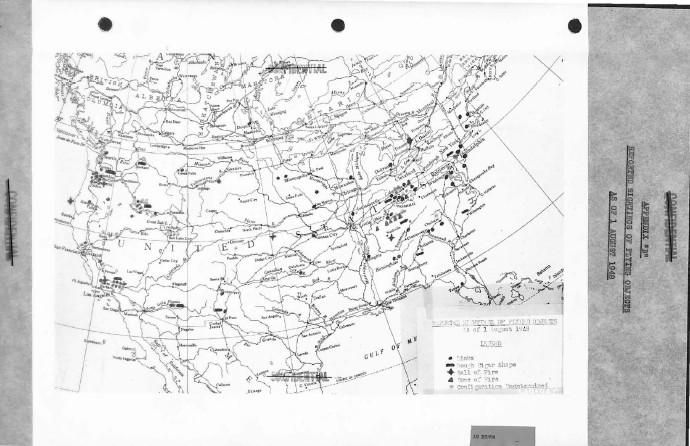
Estudo da Força Aérea sobre OVNIs nos EUA, 1948