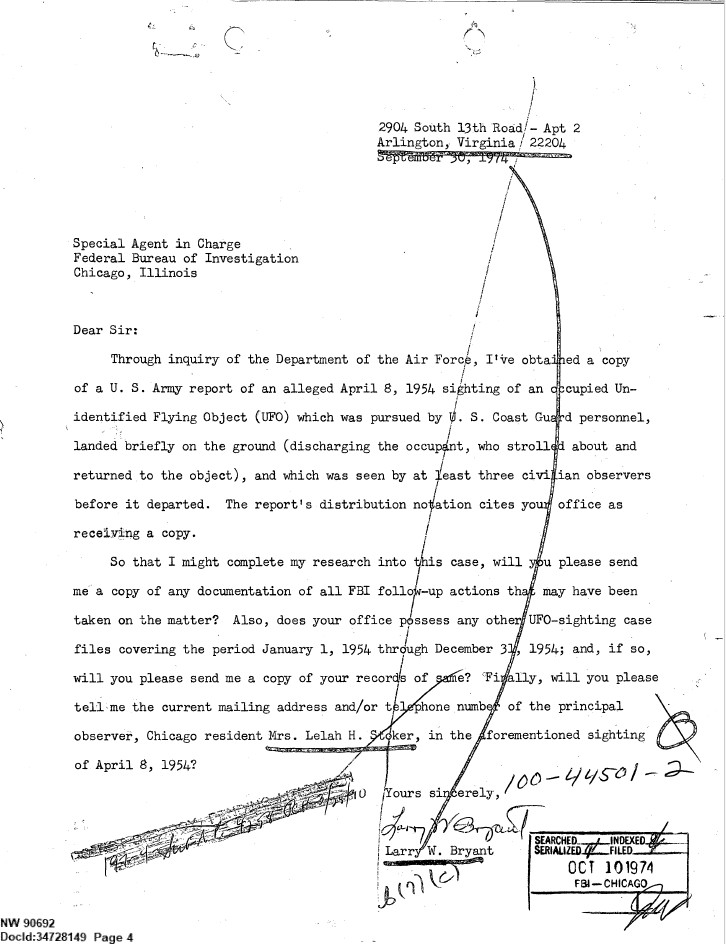
File UFO dell'FBI: memorandum dell'USAF, 1949
File ufficiale: 65_HS1-834228961_62-HQ-83894_Serial_164
Pubblicato il · Aggiornato il
Dati principali
- Tipo di documento
- Documento
- Agenzia
- FBI
- Pubblicato in
- R01 · 2026-05-08
- Data dell'incidente
- non indicata
- Luogo dell'incidente
- N/A
- Pagine leggibili
- 119/137
- VIRIN
- 260508-O-D0360-1015
Descrizione ufficiale
Incluso qui è il fascicolo del caso completo con diverse pagine recentemente desecretate e solo omissis minori.
Su questo tipo di documento
Il fascicolo del caso 62-HQ-83894 dell'FBI include record investigativi, testimonianze di testimoni oculari e rapporti pubblici riguardanti Oggetti Volanti Non Identificati e dischi volanti documentati tra giugno 1947 e luglio 1968. I record includono resoconti di incidenti di alto profilo, prove fotografiche da siti come Oak Ridge, TN e proposte tecniche riguardanti sistemi di propulsione potenziali. Argomenti aggiuntivi includono programmi di convenzione, resoconti dei ricercatori e copertura mediatica estensiva del periodo. Questo file è parzialmente postato sul vault dell'FBI con più omissis e alcune pagine mancanti.
Vedi il glossario →✦ Riassunto IA
Il serial 164 del fascicolo FBI 62-HQ-83894 è una busta di allegati dietro il fascicolo che contiene 17 copie dell'Air Intelligence Requirements Memorandum Number 4, "Unconventional Aircraft", emesso dalla Directorate of Intelligence della USAF a Washington il 15 febbraio 1949 e firmato dal maggior generale C. P. Cabell (classificato RESTRICTED). Ogni copia è di otto pagine, l'ultima è un retro bianco. Il memorandum stabilisce i requisiti permanenti dell'Air Force per le informazioni su avvistamenti di velivoli non convenzionali e oggetti volanti non identificati, compresi i cosiddetti Flying Discs, e sostituisce un memorandum di raccolta dell'Esercito del 21 gennaio 1948 e una lettera del 25 marzo 1948. La Parte I ordina rapporti immediati per via elettrica seguiti da rapporti scritti sul modulo AF Form 112, inviati all'Air Materiel Command presso la Wright-Patterson AFB, Dayton, Ohio (Attn: MCIAXO-3), con copia al Director of Intelligence. La Parte II elenca cosa raccogliere: data, ora, posizione dell'osservatore, numero e aspetto degli oggetti, manovre, scia, suono, modo di scomparsa, background e affidabilità dell'osservatore, dati radar, meteo, campioni di terreno, controlli con contatore Geiger, fotografie e dichiarazioni firmate. La distribuzione comprende il Director of Central Intelligence, il Dipartimento di Stato, l'intelligence di Esercito e Marina, la Guardia Costiera e l'FBI. Il serial non contiene rapporti di avvistamento né conclusioni, solo la procedura di segnalazione.
Generato con IA dal file ufficiale — può contenere errori.
▸Trascrizione(119 di 137 pagine leggibili)
[PAGE 1] [Diagram: manila envelope cover] 62- HQ-83894 Serials EBF 164 62-HQ-83894-EBF 164 EBF ENCL. BEHIND FILE 62-83894-164 DO NOT DESTROY FOIPA # 223087 DO NOT DESTROY FOIPA # 1142292 FBI - CENTRAL RECORDS CENTER HQ - HEADQUARTERS Class / Case # 0062 83894 Sub Vol. 1 Serial # 164 ONLY 8/11/1274166 RRP003IXG8 Declassification authority derived from FBI Automatic Declassification Guide, issued May 24, 2007. [PAGE 2] RESTRICTED DEPARTMENT OF THE AIR FORCE HEADQUARTERS UNITED STATES AIR FORCE DIRECTORATE OF INTELLIGENCE WASHINGTON 25, D. C. 15 February 1949 AIR INTELLIGENCE REQUIREMENTS MEMORANDUM NUMBER 4 UNCONVENTIONAL AIRCRAFT PART I - GENERAL 1. PURPOSE The purpose of this memorandum is twofold: a. To enunciate continuing Air Force requirements for information pertaining to sightings of unconventional aircraft and unidentified flying objects, including the so-called "Flying Discs." b. To establish procedures for reporting such information. 2. RESCISSION Department of the Army Collection Memorandum Number 7, dated 21 January 1948, and letter, CSGID 425.1, dated 25 March 1948, both subject as above, which have been transferred to Air Force agencies for action, are herewith superseded. 3. REPORTING a. General (1) As complete an answer to the requirements enunciated in Part II, as may be procurable, should be dispatched by means of electrical transmission immediately after sightings. (2) Supplementary reports should be forwarded as available by the most expeditious means consistent with the importance of the information reported. b. Major Air Commands (Overseas) and Air Attaches (1) Initial and supplementary cabled reports will be transmitted to the Director of Intelligence, Headquarters United States Air Force. Cables will contain the phase, "Pass to COMGENAMC WRIGHT-PATTERSON AFB, DAYTON, OHIO, ATTN: MCIAXO-3." additional copies behind file 62-83894-164 ENCLOSURE RESTRICTED C9-4892, AF [PAGE 3] RESTRICTED (2) Supplementary written reports, prepared on AF Form 112, will be forwarded to the Director of Intelligence, Headquarters United States Air Force. (3) Commanding General, Air Materiel Command is authorized direct contact with major Air Commands (overseas) and organizations under their control in connection with the development of information on this subject. c. Major Air Commands (ZI) (1) Reports will be forwarded direct to the Commanding General, Air Materiel Command, Wright-Patterson Air Force Base, Dayton, Ohio, Attn: MCIAXO-3 by installations receiving information pertaining to the requirements enunciated in Part II. (2) Copies of such reports may be supplied the Command Headquarters of the installation concerned. (3) A copy of all reports sent to Air Materiel Command in accordance with these instructions will be forwarded at the same time to the Director of Intelligence, Headquarters United States Air Force. (4) Written reports will be submitted on AF Form 112. (5) Commanding General, Air Materiel Command is authorized direct contact with major Air Commands (ZI) and organizations under their control in connection with the development of information on this subject. d. Non-Air Force Agencies (1) Addressees other than those of the United States Air Force are requested to forward reports direct to the Commanding General, Air Materiel Command, Wright-Patterson Air Force Base, Dayton, Ohio, Attn: MCIAXO-3. (2) In order to reduce the time factor involved in transmission of this type of information it is requested that, wherever communications facilities permit, subordinate elements be authorized to communicate reports direct to the Commanding General, Air Materiel Command. PART II - REQUIREMENTS General 1. Date of sighting. 2. Time of sighting (zonal by 24 hr. clock). 3. Where sighted (observer's position): a. Ground (1) City, town. (2) Distance and direction from city or town, road, intersection, etc. (3) From building (story), yard, etc. (4) Map coordinates (if feasible) showing latitude and longitude. - 2 - RESTRICTED [PAGE 4] RESTRICTED b. Air (1) Type aircraft, speed, altitude, direction of flight. (2) Distance and direction from city, town or known landmark. (3) Clock position of object from observer's aircraft. (4) Latitude and longitude. c. Sea (1) Latitude and longitude. (2) Proximity to land. (Name city, country, etc.) 4. Number of objects. Formation type (if any), sketch if possible. 5. Observable celestial phenomena or planets that may account for the sighting. (Local facilities or organizations which follow such celestial phenomena should be consulted for such information.) 6. Distance of object from observer. a. Laterally or horizontally. b. Angle of elevation from horizon. c. Altitude. 7. Time in sight. 8. Appearance of object. a. Color. b. Shape. (Sketch if possible) c. Apparent construction. (Of what material or substance) d. Size. (1) Estimated size. (2) Size as it appeared from observer's view. (Compared to known object) 9. Direction of flight. 10. Tactics or maneuvers. Vertical ascent or descent, horizontal, oscillating, fluttering, evasive, aggressive, erratic, etc. 11. Evidence of exhaust. a. Color of smoke. b. Length and width. RESTRICTED - 3 - [PAGE 5] RESTRICTED c. Odor (if any). d. Rate of evaporation. e. Does trail vary with sound? (spurts) 12. Effect on clouds. a. Opened path thru clouds. b. Forced cloud or mists. c. Reflected on cloud. d. Showed thru cloud. 13. Lights. a. Reflected or attached. b. Luminous c. Blinked on and off in relation to speed. 14. Support a. Wings. b. Aerodynamic list of fuselage. c. Vertical jet. d. Rotating cylinder or cone. e. Aerostatic lift (balloon or dirigible). 15. Propulsion. a. Propeller or jet. b. Rotor. c. Aerodynamic vanes (flapping or oscillating) (Katz Mayer effect). d. Visible exhaust or jet openings. 16. Control and stability. a. Fins b. Stabilizers (horizontal or vertical). (1) Size. (2) Shape. (3) Location. - 4 - RESTRICTED [PAGE 6] RESTRICTED 17. Air ducts. a. Slots. b. Duct openings. 18. Speed - M.P.H. 19. Sound. a. Continuous whine or buzz. b. Roar, whistle, whoosh. c. Intermittent. 20. Manner of disappearance. a. Explode. (1) Possibility of fragments. (2) Other physical evidence. b. Faded from view. c. Disappeared behind obstacle. Relative to the Observer 1. Name of observer. 2. Address. 3. Occupation. 4. Place of business. a. Employer or employee. 5. Pertinent hobbies. a. Is observer amateur astronomer, pilot, engineer, etc. b. Length of time engaged in hobby (experience). 6. Ability to determine: a. Color. b. Speed of moving objects. c. Size at distance. 7. Reliability of observer. a. Sources. RESTRICTED - 5 - [PAGE 7] RESTRICTED (1) Neighbors. (2) Police Dept. (3) FBI records. (4) Employer. 8. Notes relative to observer on: a. Sightings in general. b. How attention was drawn to object(s). (1) Sound. (2) Motion. (3) Glint of light. c. Degree of fatigue and duration of flight at time of sighting in cases where observer is airborne. 9. Witnesses. a. Addressees. b. Occupation. c. Reliability. 10. Comments of interrogator regarding the intelligence and character of person interrogated. Relative to Radar Sightings 1. Re radars operating on ground. a. Observations of range, speed, altitude and size of target. b. Did target executive any turns? If so, what angle (180°), etc. and what radius of turn. If radius of turn is not observable, how long did the target stay in the turn and what was its speed? c. Note particularly any separation of distant target into several targets upon approach. Track all if possible. 2. If airborne when object sighted. a. Were there any radar inductions or extra noise on radio circuits? b. Give estimates of size, speed, maneuvers, etc. GENERAL 1. Teletype sequences of local weather conditions. 2. Winds aloft report. - 6 - RESTRICTED [PAGE 8] RESTRICTED 3. Local flight schedules of commercial, private and military aircraft flying in vicinity at the time. (Check Canadian activity if close to that border.) 4. Possible releases of testing devices in vicinity sent aloft by Ordnance, Navy, Air Force, Army, Weather Units, Research Organizations or any other. 5. If object contacted earth, obtain soil samples within and without depression or spot where object landed (and then presumably departed) for purpose of making comparison of soils. 6. If object came sufficiently near other aircraft or known objects check surfaces with Geiger counters for possible radioactivity. Make comparisons with other unaffected aircraft objects, etc. 7. Obtain photographs (or original negatives) where available; if not, secure sketches of: a. Object. b. Surrounding terrain where observed. c. Place where it contacted earth (if this happened). d. Maneuvers. e. Formation if objects were more than two. 8. Secure signed statement. 9. Obtain fragments or physical evidence where possible. 10. Was any radio antenna to be observed, i.e., (any projections or extentions that might presumably be construed as such). C. P. Cabell C. P. CABELL Major General, USAF Director of Intelligence, Office of Deputy Chief of Staff, Operations DISTRIBUTION: Commanding Generals, Major Air Commands, ZI and Overseas All United States Air Attaches Director of Central Intelligence Special Assistant for Research and Intelligence, Department of State Director of Intelligence, GSUSA Chief of Naval Intelligence Commandant (INT), United States Coast Guard Director, Federal Bureau of Investigation RESTRICTED - 7 - [PAGE 9] [no legible text — blank or heavily redacted scan] RESTRICTED (stamp, top and bottom; mirrored text of the reverse side not legible) [PAGE 10] RESTRICTED DEPARTMENT OF THE AIR FORCE HEADQUARTERS UNITED STATES AIR FORCE DIRECTORATE OF INTELLIGENCE WASHINGTON 25, D. C. 15 February 1949 AIR INTELLIGENCE REQUIREMENTS MEMORANDUM NUMBER 4 UNCONVENTIONAL AIRCRAFT PART I - GENERAL 1. PURPOSE The purpose of this memorandum is twofold: a. To enunciate continuing Air Force requirements for information pertaining to sightings of unconventional aircraft and unidentified flying objects, including the so-called "Flying Discs." b. To establish procedures for reporting such information. 2. RESCISSION Department of the Army Collection Memorandum Number 7, dated 21 January 1948, and letter, CSGID 425.1, dated 25 March 1948, both subject as above, which have been transferred to Air Force agencies for action, are herewith superseded. 3. REPORTING a. General (1) As complete an answer to the requirements enunciated in Part II, as may be procurable, should be dispatched by means of electrical transmission immediately after sightings. (2) Supplementary reports should be forwarded as available by the most expeditious means consistent with the importance of the information reported. b. Major Air Commands (Overseas) and Air Attaches (1) Initial and supplementary cabled reports will be transmitted to the Director of Intelligence, Headquarters United States Air Force. Cables will contain the phase, "Pass to COMGENAMC WRIGHT-PATTERSON AFB, DAYTON, OHIO, ATTN: MCIAXO-3." RESTRICTED C9-4892, AF 62-83894-164 [PAGE 11] RESTRICTED (2) Supplementary written reports, prepared on AF Form 112, will be forwarded to the Director of Intelligence, Headquarters United States Air Force. (3) Commanding General, Air Materiel Command is authorized direct contact with major Air Commands (overseas) and organizations under their control in connection with the development of information on this subject. c. Major Air Commands (ZI) (1) Reports will be forwarded direct to the Commanding General, Air Materiel Command, Wright-Patterson Air Force Base, Dayton, Ohio, Attn: MCIAXO-3 by installations receiving information pertaining to the requirements enunciated in Part II. (2) Copies of such reports may be supplied the Command Headquarters of the installation concerned. (3) A copy of all reports sent to Air Materiel Command in accordance with these instructions will be forwarded at the same time to the Director of Intelligence, Headquarters United States Air Force. (4) Written reports will be submitted on AF Form 112. (5) Commanding General, Air Materiel Command is authorized direct contact with major Air Commands (ZI) and organizations under their control in connection with the development of information on this subject. d. Non-Air Force Agencies (1) Addressees other than those of the United States Air Force are requested to forward reports direct to the Commanding General, Air Materiel Command, Wright-Patterson Air Force Base, Dayton, Ohio, Attn: MCIAXO-3. (2) In order to reduce the time factor involved in transmission of this type of information it is requested that, wherever communications facilities permit, subordinate elements be authorized to communicate reports direct to the Commanding General, Air Materiel Command. PART II - REQUIREMENTS General 1. Date of sighting. 2. Time of sighting (zonal by 24 hr. clock). 3. Where sighted (observer's position): a. Ground (1) City, town. (2) Distance and direction from city or town, road, intersection, etc. (3) From building (story), yard, etc. (4) Map coordinates (if feasible) showing latitude and longitude. - 2 - RESTRICTED [PAGE 12] RESTRICTED b. Air (1) Type aircraft, speed, altitude, direction of flight. (2) Distance and direction from city, town or known landmark. (3) Clock position of object from observer's aircraft. (4) Latitude and longitude. c. Sea (1) Latitude and longitude. (2) Proximity to land. (Name city, country, etc.) 4. Number of objects. Formation type (if any), sketch if possible. 5. Observable celestial phenomena or planets that may account for the sighting. (Local facilities or organizations which follow such celestial phenomena should be consulted for such information.) 6. Distance of object from observer. a. Laterally or horizontally. b. Angle of elevation from horizon. c. Altitude. 7. Time in sight. 8. Appearance of object. a. Color. b. Shape. (Sketch if possible) c. Apparent construction. (Of what material or substance) d. Size. (1) Estimated size. (2) Size as it appeared from observer's view. (Compared to known object) 9. Direction of flight. 10. Tactics or maneuvers. Vertical ascent or descent, horizontal, oscillating, fluttering, evasive, aggressive, erratic, etc. 11. Evidence of exhaust. a. Color of smoke. b. Length and width. RESTRICTED - 3 - [PAGE 13] RESTRICTED c. Odor (if any). d. Rate of evaporation. e. Does trail vary with sound? (spurts) 12. Effect on clouds. a. Opened path thru clouds. b. Forced cloud or mists. c. Reflected on cloud. d. Showed thru cloud. 13. Lights. a. Reflected or attached. b. Luminous c. Blinked on and off in relation to speed. 14. Support a. Wings. b. Aerodynamic list of fuselage. c. Vertical jet. d. Rotating cylinder or cone. e. Aerostatic lift (balloon or dirigible). 15. Propulsion. a. Propeller or jet. b. Rotor. c. Aerodynamic vanes (flapping or oscillating) (Katz Mayer effect). d. Visible exhaust or jet openings. 16. Control and stability. a. Fins b. Stabilizers (horizontal or vertical). (1) Size. (2) Shape. (3) Location. - 4 - RESTRICTED [PAGE 14] RESTRICTED 17. Air ducts. a. Slots. b. Duct openings. 18. Speed - M.P.H. 19. Sound. a. Continuous whine or buzz. b. Roar, whistle, whoosh. c. Intermittent. 20. Manner of disappearance. a. Explode. (1) Possibility of fragments. (2) Other physical evidence. b. Faded from view. c. Disappeared behind obstacle. Relative to the Observer 1. Name of observer. 2. Address. 3. Occupation. 4. Place of business. a. Employer or employee. 5. Pertinent hobbies. a. Is observer amateur astronomer, pilot, engineer, etc. b. Length of time engaged in hobby (experience). 6. Ability to determine: a. Color. b. Speed of moving objects. c. Size at distance. 7. Reliability of observer. a. Sources. RESTRICTED - 5 - [PAGE 15] RESTRICTED (1) Neighbors. (2) Police Dept. (3) FBI records. (4) Employer. 8. Notes relative to observer on: a. Sightings in general. b. How attention was drawn to object(s). (1) Sound. (2) Motion. (3) Glint of light. c. Degree of fatigue and duration of flight at time of sighting in cases where observer is airborne. 9. Witnesses. a. Addressees. b. Occupation. c. Reliability. 10. Comments of interrogator regarding the intelligence and character of person interrogated. Relative to Radar Sightings 1. Re radars operating on ground. a. Observations of range, speed, altitude and size of target. b. Did target executive any turns? If so, what angle (180°), etc. and what radius of turn. If radius of turn is not observable, how long did the target stay in the turn and what was its speed? c. Note particularly any separation of distant target into several targets upon approach. Track all if possible. 2. If airborne when object sighted. a. Were there any radar inductions or extra noise on radio circuits? b. Give estimates of size, speed, maneuvers, etc. GENERAL 1. Teletype sequences of local weather conditions. 2. Winds aloft report. - 6 - RESTRICTED [PAGE 16] RESTRICTED 3. Local flight schedules of commercial, private and military aircraft flying in vicinity at the time. (Check Canadian activity if close to that border.) 4. Possible releases of testing devices in vicinity sent aloft by Ordnance, Navy, Air Force, Army, Weather Units, Research Organizations or any other. 5. If object contacted earth, obtain soil samples within and without depression or spot where object landed (and then presumably departed) for purpose of making comparison of soils. 6. If object came sufficiently near other aircraft or known objects check surfaces with Geiger counters for possible radioactivity. Make comparisons with other unaffected aircraft objects, etc. 7. Obtain photographs (or original negatives) where available; if not, secure sketches of: a. Object. b. Surrounding terrain where observed. c. Place where it contacted earth (if this happened). d. Maneuvers. e. Formation if objects were more than two. 8. Secure signed statement. 9. Obtain fragments or physical evidence where possible. 10. Was any radio antenna to be observed, i.e., (any projections or extentions that might presumably be construed as such). C. P. Cabell C. P. CABELL Major General, USAF Director of Intelligence, Office of Deputy Chief of Staff, Operations DISTRIBUTION: Commanding Generals, Major Air Commands, ZI and Overseas All United States Air Attaches Director of Central Intelligence Special Assistant for Research and Intelligence, Department of State Director of Intelligence, GSUSA Chief of Naval Intelligence Commandant (INT), United States Coast Guard Director, Federal Bureau of Investigation RESTRICTED - 7 - [PAGE 17] [no legible text — blank or heavily redacted scan] RESTRICTED (stamp, top and bottom; mirrored text of the reverse side not legible) [PAGE 18] RESTRICTED DEPARTMENT OF THE AIR FORCE HEADQUARTERS UNITED STATES AIR FORCE DIRECTORATE OF INTELLIGENCE WASHINGTON 25, D. C. 15 February 1949 AIR INTELLIGENCE REQUIREMENTS MEMORANDUM NUMBER 4 UNCONVENTIONAL AIRCRAFT PART I - GENERAL 1. PURPOSE The purpose of this memorandum is twofold: a. To enunciate continuing Air Force requirements for information pertaining to sightings of unconventional aircraft and unidentified flying objects, including the so-called "Flying Discs." b. To establish procedures for reporting such information. 2. RESCISSION Department of the Army Collection Memorandum Number 7, dated 21 January 1948, and letter, CSGID 425.1, dated 25 March 1948, both subject as above, which have been transferred to Air Force agencies for action, are herewith superseded. 3. REPORTING a. General (1) As complete an answer to the requirements enunciated in Part II, as may be procurable, should be dispatched by means of electrical transmission immediately after sightings. (2) Supplementary reports should be forwarded as available by the most expeditious means consistent with the importance of the information reported. b. Major Air Commands (Overseas) and Air Attaches (1) Initial and supplementary cabled reports will be transmitted to the Director of Intelligence, Headquarters United States Air Force. Cables will contain the phase, "Pass to COMGENAMC WRIGHT-PATTERSON AFB, DAYTON, OHIO, ATTN: MCIAXO-3." RESTRICTED C9-4892, AF 62-83894-164 [PAGE 19] RESTRICTED (2) Supplementary written reports, prepared on AF Form 112, will be forwarded to the Director of Intelligence, Headquarters United States Air Force. (3) Commanding General, Air Materiel Command is authorized direct contact with major Air Commands (overseas) and organizations under their control in connection with the development of information on this subject. c. Major Air Commands (ZI) (1) Reports will be forwarded direct to the Commanding General, Air Materiel Command, Wright-Patterson Air Force Base, Dayton, Ohio, Attn: MCIAXO-3 by installations receiving information pertaining to the requirements enunciated in Part II. (2) Copies of such reports may be supplied the Command Headquarters of the installation concerned. (3) A copy of all reports sent to Air Materiel Command in accordance with these instructions will be forwarded at the same time to the Director of Intelligence, Headquarters United States Air Force. (4) Written reports will be submitted on AF Form 112. (5) Commanding General, Air Materiel Command is authorized direct contact with major Air Commands (ZI) and organizations under their control in connection with the development of information on this subject. d. Non-Air Force Agencies (1) Addressees other than those of the United States Air Force are requested to forward reports direct to the Commanding General, Air Materiel Command, Wright-Patterson Air Force Base, Dayton, Ohio, Attn: MCIAXO-3. (2) In order to reduce the time factor involved in transmission of this type of information it is requested that, wherever communications facilities permit, subordinate elements be authorized to communicate reports direct to the Commanding General, Air Materiel Command. PART II - REQUIREMENTS General 1. Date of sighting. 2. Time of sighting (zonal by 24 hr. clock). 3. Where sighted (observer's position): a. Ground (1) City, town. (2) Distance and direction from city or town, road, intersection, etc. (3) From building (story), yard, etc. (4) Map coordinates (if feasible) showing latitude and longitude. - 2 - RESTRICTED [PAGE 20] RESTRICTED b. Air (1) Type aircraft, speed, altitude, direction of flight. (2) Distance and direction from city, town or known landmark. (3) Clock position of object from observer's aircraft. (4) Latitude and longitude. c. Sea (1) Latitude and longitude. (2) Proximity to land. (Name city, country, etc.) 4. Number of objects. Formation type (if any), sketch if possible. 5. Observable celestial phenomena or planets that may account for the sighting. (Local facilities or organizations which follow such celestial phenomena should be consulted for such information.) 6. Distance of object from observer. a. Laterally or horizontally. b. Angle of elevation from horizon. c. Altitude. 7. Time in sight. 8. Appearance of object. a. Color. b. Shape. (Sketch if possible) c. Apparent construction. (Of what material or substance) d. Size. (1) Estimated size. (2) Size as it appeared from observer's view. (Compared to known object) 9. Direction of flight. 10. Tactics or maneuvers. Vertical ascent or descent, horizontal, oscillating, fluttering, evasive, aggressive, erratic, etc. 11. Evidence of exhaust. a. Color of smoke. b. Length and width. RESTRICTED - 3 - [PAGE 21] RESTRICTED c. Odor (if any). d. Rate of evaporation. e. Does trail vary with sound? (spurts) 12. Effect on clouds. a. Opened path thru clouds. b. Forced cloud or mists. c. Reflected on cloud. d. Showed thru cloud. 13. Lights. a. Reflected or attached. b. Luminous c. Blinked on and off in relation to speed. 14. Support a. Wings. b. Aerodynamic list of fuselage. c. Vertical jet. d. Rotating cylinder or cone. e. Aerostatic lift (balloon or dirigible). 15. Propulsion. a. Propeller or jet. b. Rotor. c. Aerodynamic vanes (flapping or oscillating) (Katz Mayer effect). d. Visible exhaust or jet openings. 16. Control and stability. a. Fins b. Stabilizers (horizontal or vertical). (1) Size. (2) Shape. (3) Location. - 4 - RESTRICTED [PAGE 22] RESTRICTED 17. Air ducts. a. Slots. b. Duct openings. 18. Speed - M.P.H. 19. Sound. a. Continuous whine or buzz. b. Roar, whistle, whoosh. c. Intermittent. 20. Manner of disappearance. a. Explode. (1) Possibility of fragments. (2) Other physical evidence. b. Faded from view. c. Disappeared behind obstacle. Relative to the Observer 1. Name of observer. 2. Address. 3. Occupation. 4. Place of business. a. Employer or employee. 5. Pertinent hobbies. a. Is observer amateur astronomer, pilot, engineer, etc. b. Length of time engaged in hobby (experience). 6. Ability to determine: a. Color. b. Speed of moving objects. c. Size at distance. 7. Reliability of observer. a. Sources. RESTRICTED - 5 - [PAGE 23] RESTRICTED (1) Neighbors. (2) Police Dept. (3) FBI records. (4) Employer. 8. Notes relative to observer on: a. Sightings in general. b. How attention was drawn to object(s). (1) Sound. (2) Motion. (3) Glint of light. c. Degree of fatigue and duration of flight at time of sighting in cases where observer is airborne. 9. Witnesses. a. Addressees. b. Occupation. c. Reliability. 10. Comments of interrogator regarding the intelligence and character of person interrogated. Relative to Radar Sightings 1. Re radars operating on ground. a. Observations of range, speed, altitude and size of target. b. Did target executive any turns? If so, what angle (180°), etc. and what radius of turn. If radius of turn is not observable, how long did the target stay in the turn and what was its speed? c. Note particularly any separation of distant target into several targets upon approach. Track all if possible. 2. If airborne when object sighted. a. Were there any radar inductions or extra noise on radio circuits? b. Give estimates of size, speed, maneuvers, etc. GENERAL 1. Teletype sequences of local weather conditions. 2. Winds aloft report. - 6 - RESTRICTED [PAGE 24] RESTRICTED 3. Local flight schedules of commercial, private and military aircraft flying in vicinity at the time. (Check Canadian activity if close to that border.) 4. Possible releases of testing devices in vicinity sent aloft by Ordnance, Navy, Air Force, Army, Weather Units, Research Organizations or any other. 5. If object contacted earth, obtain soil samples within and without depression or spot where object landed (and then presumably departed) for purpose of making comparison of soils. 6. If object came sufficiently near other aircraft or known objects check surfaces with Geiger counters for possible radioactivity. Make comparisons with other unaffected aircraft objects, etc. 7. Obtain photographs (or original negatives) where available; if not, secure sketches of: a. Object. b. Surrounding terrain where observed. c. Place where it contacted earth (if this happened). d. Maneuvers. e. Formation if objects were more than two. 8. Secure signed statement. 9. Obtain fragments or physical evidence where possible. 10. Was any radio antenna to be observed, i.e., (any projections or extentions that might presumably be construed as such). C. P. Cabell C. P. CABELL Major General, USAF Director of Intelligence, Office of Deputy Chief of Staff, Operations DISTRIBUTION: Commanding Generals, Major Air Commands, ZI and Overseas All United States Air Attaches Director of Central Intelligence Special Assistant for Research and Intelligence, Department of State Director of Intelligence, GSUSA Chief of Naval Intelligence Commandant (INT), United States Coast Guard Director, Federal Bureau of Investigation RESTRICTED - 7 - [PAGE 25] [no legible text — blank or heavily redacted scan] RESTRICTED (stamp, top and bottom; mirrored text of the reverse side not legible) [PAGE 26] RESTRICTED DEPARTMENT OF THE AIR FORCE HEADQUARTERS UNITED STATES AIR FORCE DIRECTORATE OF INTELLIGENCE WASHINGTON 25, D. C. 15 February 1949 AIR INTELLIGENCE REQUIREMENTS MEMORANDUM NUMBER 4 UNCONVENTIONAL AIRCRAFT PART I - GENERAL 1. PURPOSE The purpose of this memorandum is twofold: a. To enunciate continuing Air Force requirements for information pertaining to sightings of unconventional aircraft and unidentified flying objects, including the so-called "Flying Discs." b. To establish procedures for reporting such information. 2. RESCISSION Department of the Army Collection Memorandum Number 7, dated 21 January 1948, and letter, CSGID 425.1, dated 25 March 1948, both subject as above, which have been transferred to Air Force agencies for action, are herewith superseded. 3. REPORTING a. General (1) As complete an answer to the requirements enunciated in Part II, as may be procurable, should be dispatched by means of electrical transmission immediately after sightings. (2) Supplementary reports should be forwarded as available by the most expeditious means consistent with the importance of the information reported. b. Major Air Commands (Overseas) and Air Attaches (1) Initial and supplementary cabled reports will be transmitted to the Director of Intelligence, Headquarters United States Air Force. Cables will contain the phase, "Pass to COMGENAMC WRIGHT-PATTERSON AFB, DAYTON, OHIO, ATTN: MCIAXO-3." RESTRICTED C9-4892, AF 62-83894-164 [PAGE 27] RESTRICTED (2) Supplementary written reports, prepared on AF Form 112, will be forwarded to the Director of Intelligence, Headquarters United States Air Force. (3) Commanding General, Air Materiel Command is authorized direct contact with major Air Commands (overseas) and organizations under their control in connection with the development of information on this subject. c. Major Air Commands (ZI) (1) Reports will be forwarded direct to the Commanding General, Air Materiel Command, Wright-Patterson Air Force Base, Dayton, Ohio, Attn: MCIAXO-3 by installations receiving information pertaining to the requirements enunciated in Part II. (2) Copies of such reports may be supplied the Command Headquarters of the installation concerned. (3) A copy of all reports sent to Air Materiel Command in accordance with these instructions will be forwarded at the same time to the Director of Intelligence, Headquarters United States Air Force. (4) Written reports will be submitted on AF Form 112. (5) Commanding General, Air Materiel Command is authorized direct contact with major Air Commands (ZI) and organizations under their control in connection with the development of information on this subject. d. Non-Air Force Agencies (1) Addressees other than those of the United States Air Force are requested to forward reports direct to the Commanding General, Air Materiel Command, Wright-Patterson Air Force Base, Dayton, Ohio, Attn: MCIAXO-3. (2) In order to reduce the time factor involved in transmission of this type of information it is requested that, wherever communications facilities permit, subordinate elements be authorized to communicate reports direct to the Commanding General, Air Materiel Command. PART II - REQUIREMENTS General 1. Date of sighting. 2. Time of sighting (zonal by 24 hr. clock). 3. Where sighted (observer's position): a. Ground (1) City, town. (2) Distance and direction from city or town, road, intersection, etc. (3) From building (story), yard, etc. (4) Map coordinates (if feasible) showing latitude and longitude. - 2 - RESTRICTED [PAGE 28] RESTRICTED b. Air (1) Type aircraft, speed, altitude, direction of flight. (2) Distance and direction from city, town or known landmark. (3) Clock position of object from observer's aircraft. (4) Latitude and longitude. c. Sea (1) Latitude and longitude. (2) Proximity to land. (Name city, country, etc.) 4. Number of objects. Formation type (if any), sketch if possible. 5. Observable celestial phenomena or planets that may account for the sighting. (Local facilities or organizations which follow such celestial phenomena should be consulted for such information.) 6. Distance of object from observer. a. Laterally or horizontally. b. Angle of elevation from horizon. c. Altitude. 7. Time in sight. 8. Appearance of object. a. Color. b. Shape. (Sketch if possible) c. Apparent construction. (Of what material or substance) d. Size. (1) Estimated size. (2) Size as it appeared from observer's view. (Compared to known object) 9. Direction of flight. 10. Tactics or maneuvers. Vertical ascent or descent, horizontal, oscillating, fluttering, evasive, aggressive, erratic, etc. 11. Evidence of exhaust. a. Color of smoke. b. Length and width. RESTRICTED - 3 - [PAGE 29] RESTRICTED c. Odor (if any). d. Rate of evaporation. e. Does trail vary with sound? (spurts) 12. Effect on clouds. a. Opened path thru clouds. b. Forced cloud or mists. c. Reflected on cloud. d. Showed thru cloud. 13. Lights. a. Reflected or attached. b. Luminous c. Blinked on and off in relation to speed. 14. Support a. Wings. b. Aerodynamic list of fuselage. c. Vertical jet. d. Rotating cylinder or cone. e. Aerostatic lift (balloon or dirigible). 15. Propulsion. a. Propeller or jet. b. Rotor. c. Aerodynamic vanes (flapping or oscillating) (Katz Mayer effect). d. Visible exhaust or jet openings. 16. Control and stability. a. Fins b. Stabilizers (horizontal or vertical). (1) Size. (2) Shape. (3) Location. - 4 - RESTRICTED [PAGE 30] RESTRICTED 17. Air ducts. a. Slots. b. Duct openings. 18. Speed - M.P.H. 19. Sound. a. Continuous whine or buzz. b. Roar, whistle, whoosh. c. Intermittent. 20. Manner of disappearance. a. Explode. (1) Possibility of fragments. (2) Other physical evidence. b. Faded from view. c. Disappeared behind obstacle. Relative to the Observer 1. Name of observer. 2. Address. 3. Occupation. 4. Place of business. a. Employer or employee. 5. Pertinent hobbies. a. Is observer amateur astronomer, pilot, engineer, etc. b. Length of time engaged in hobby (experience). 6. Ability to determine: a. Color. b. Speed of moving objects. c. Size at distance. 7. Reliability of observer. a. Sources. RESTRICTED - 5 - [PAGE 31] RESTRICTED (1) Neighbors. (2) Police Dept. (3) FBI records. (4) Employer. 8. Notes relative to observer on: a. Sightings in general. b. How attention was drawn to object(s). (1) Sound. (2) Motion. (3) Glint of light. c. Degree of fatigue and duration of flight at time of sighting in cases where observer is airborne. 9. Witnesses. a. Addressees. b. Occupation. c. Reliability. 10. Comments of interrogator regarding the intelligence and character of person interrogated. Relative to Radar Sightings 1. Re radars operating on ground. a. Observations of range, speed, altitude and size of target. b. Did target executive any turns? If so, what angle (180°), etc. and what radius of turn. If radius of turn is not observable, how long did the target stay in the turn and what was its speed? c. Note particularly any separation of distant target into several targets upon approach. Track all if possible. 2. If airborne when object sighted. a. Were there any radar inductions or extra noise on radio circuits? b. Give estimates of size, speed, maneuvers, etc. GENERAL 1. Teletype sequences of local weather conditions. 2. Winds aloft report. - 6 - RESTRICTED [PAGE 32] RESTRICTED 3. Local flight schedules of commercial, private and military aircraft flying in vicinity at the time. (Check Canadian activity if close to that border.) 4. Possible releases of testing devices in vicinity sent aloft by Ordnance, Navy, Air Force, Army, Weather Units, Research Organizations or any other. 5. If object contacted earth, obtain soil samples within and without depression or spot where object landed (and then presumably departed) for purpose of making comparison of soils. 6. If object came sufficiently near other aircraft or known objects check surfaces with Geiger counters for possible radioactivity. Make comparisons with other unaffected aircraft objects, etc. 7. Obtain photographs (or original negatives) where available; if not, secure sketches of: a. Object. b. Surrounding terrain where observed. c. Place where it contacted earth (if this happened). d. Maneuvers. e. Formation if objects were more than two. 8. Secure signed statement. 9. Obtain fragments or physical evidence where possible. 10. Was any radio antenna to be observed, i.e., (any projections or extentions that might presumably be construed as such). C. P. Cabell C. P. CABELL Major General, USAF Director of Intelligence, Office of Deputy Chief of Staff, Operations DISTRIBUTION: Commanding Generals, Major Air Commands, ZI and Overseas All United States Air Attaches Director of Central Intelligence Special Assistant for Research and Intelligence, Department of State Director of Intelligence, GSUSA Chief of Naval Intelligence Commandant (INT), United States Coast Guard Director, Federal Bureau of Investigation RESTRICTED - 7 - [PAGE 33] [no legible text — blank or heavily redacted scan] RESTRICTED (stamp, top and bottom; mirrored text of the reverse side not legible) [PAGE 34] RESTRICTED DEPARTMENT OF THE AIR FORCE HEADQUARTERS UNITED STATES AIR FORCE DIRECTORATE OF INTELLIGENCE WASHINGTON 25, D. C. 15 February 1949 AIR INTELLIGENCE REQUIREMENTS MEMORANDUM NUMBER 4 UNCONVENTIONAL AIRCRAFT PART I - GENERAL 1. PURPOSE The purpose of this memorandum is twofold: a. To enunciate continuing Air Force requirements for information pertaining to sightings of unconventional aircraft and unidentified flying objects, including the so-called "Flying Discs." b. To establish procedures for reporting such information. 2. RESCISSION Department of the Army Collection Memorandum Number 7, dated 21 January 1948, and letter, CSGID 425.1, dated 25 March 1948, both subject as above, which have been transferred to Air Force agencies for action, are herewith superseded. 3. REPORTING a. General (1) As complete an answer to the requirements enunciated in Part II, as may be procurable, should be dispatched by means of electrical transmission immediately after sightings. (2) Supplementary reports should be forwarded as available by the most expeditious means consistent with the importance of the information reported. b. Major Air Commands (Overseas) and Air Attaches (1) Initial and supplementary cabled reports will be transmitted to the Director of Intelligence, Headquarters United States Air Force. Cables will contain the phase, "Pass to COMGENAMC WRIGHT-PATTERSON AFB, DAYTON, OHIO, ATTN: MCIAXO-3." RESTRICTED C9-4892, AF 62-83894-164 [PAGE 35] RESTRICTED (2) Supplementary written reports, prepared on AF Form 112, will be forwarded to the Director of Intelligence, Headquarters United States Air Force. (3) Commanding General, Air Materiel Command is authorized direct contact with major Air Commands (overseas) and organizations under their control in connection with the development of information on this subject. c. Major Air Commands (ZI) (1) Reports will be forwarded direct to the Commanding General, Air Materiel Command, Wright-Patterson Air Force Base, Dayton, Ohio, Attn: MCIAXO-3 by installations receiving information pertaining to the requirements enunciated in Part II. (2) Copies of such reports may be supplied the Command Headquarters of the installation concerned. (3) A copy of all reports sent to Air Materiel Command in accordance with these instructions will be forwarded at the same time to the Director of Intelligence, Headquarters United States Air Force. (4) Written reports will be submitted on AF Form 112. (5) Commanding General, Air Materiel Command is authorized direct contact with major Air Commands (ZI) and organizations under their control in connection with the development of information on this subject. d. Non-Air Force Agencies (1) Addressees other than those of the United States Air Force are requested to forward reports direct to the Commanding General, Air Materiel Command, Wright-Patterson Air Force Base, Dayton, Ohio, Attn: MCIAXO-3. (2) In order to reduce the time factor involved in transmission of this type of information it is requested that, wherever communications facilities permit, subordinate elements be authorized to communicate reports direct to the Commanding General, Air Materiel Command. PART II - REQUIREMENTS General 1. Date of sighting. 2. Time of sighting (zonal by 24 hr. clock). 3. Where sighted (observer's position): a. Ground (1) City, town. (2) Distance and direction from city or town, road, intersection, etc. (3) From building (story), yard, etc. (4) Map coordinates (if feasible) showing latitude and longitude. - 2 - RESTRICTED [PAGE 36] RESTRICTED b. Air (1) Type aircraft, speed, altitude, direction of flight. (2) Distance and direction from city, town or known landmark. (3) Clock position of object from observer's aircraft. (4) Latitude and longitude. c. Sea (1) Latitude and longitude. (2) Proximity to land. (Name city, country, etc.) 4. Number of objects. Formation type (if any), sketch if possible. 5. Observable celestial phenomena or planets that may account for the sighting. (Local facilities or organizations which follow such celestial phenomena should be consulted for such information.) 6. Distance of object from observer. a. Laterally or horizontally. b. Angle of elevation from horizon. c. Altitude. 7. Time in sight. 8. Appearance of object. a. Color. b. Shape. (Sketch if possible) c. Apparent construction. (Of what material or substance) d. Size. (1) Estimated size. (2) Size as it appeared from observer's view. (Compared to known object) 9. Direction of flight. 10. Tactics or maneuvers. Vertical ascent or descent, horizontal, oscillating, fluttering, evasive, aggressive, erratic, etc. 11. Evidence of exhaust. a. Color of smoke. b. Length and width. RESTRICTED - 3 - [PAGE 37] RESTRICTED c. Odor (if any). d. Rate of evaporation. e. Does trail vary with sound? (spurts) 12. Effect on clouds. a. Opened path thru clouds. b. Forced cloud or mists. c. Reflected on cloud. d. Showed thru cloud. 13. Lights. a. Reflected or attached. b. Luminous c. Blinked on and off in relation to speed. 14. Support a. Wings. b. Aerodynamic list of fuselage. c. Vertical jet. d. Rotating cylinder or cone. e. Aerostatic lift (balloon or dirigible). 15. Propulsion. a. Propeller or jet. b. Rotor. c. Aerodynamic vanes (flapping or oscillating) (Katz Mayer effect). d. Visible exhaust or jet openings. 16. Control and stability. a. Fins b. Stabilizers (horizontal or vertical). (1) Size. (2) Shape. (3) Location. - 4 - RESTRICTED [PAGE 38] RESTRICTED 17. Air ducts. a. Slots. b. Duct openings. 18. Speed - M.P.H. 19. Sound. a. Continuous whine or buzz. b. Roar, whistle, whoosh. c. Intermittent. 20. Manner of disappearance. a. Explode. (1) Possibility of fragments. (2) Other physical evidence. b. Faded from view. c. Disappeared behind obstacle. Relative to the Observer 1. Name of observer. 2. Address. 3. Occupation. 4. Place of business. a. Employer or employee. 5. Pertinent hobbies. a. Is observer amateur astronomer, pilot, engineer, etc. b. Length of time engaged in hobby (experience). 6. Ability to determine: a. Color. b. Speed of moving objects. c. Size at distance. 7. Reliability of observer. a. Sources. RESTRICTED - 5 - [PAGE 39] RESTRICTED (1) Neighbors. (2) Police Dept. (3) FBI records. (4) Employer. 8. Notes relative to observer on: a. Sightings in general. b. How attention was drawn to object(s). (1) Sound. (2) Motion. (3) Glint of light. c. Degree of fatigue and duration of flight at time of sighting in cases where observer is airborne. 9. Witnesses. a. Addressees. b. Occupation. c. Reliability. 10. Comments of interrogator regarding the intelligence and character of person interrogated. Relative to Radar Sightings 1. Re radars operating on ground. a. Observations of range, speed, altitude and size of target. b. Did target executive any turns? If so, what angle (180°), etc. and what radius of turn. If radius of turn is not observable, how long did the target stay in the turn and what was its speed? c. Note particularly any separation of distant target into several targets upon approach. Track all if possible. 2. If airborne when object sighted. a. Were there any radar inductions or extra noise on radio circuits? b. Give estimates of size, speed, maneuvers, etc. GENERAL 1. Teletype sequences of local weather conditions. 2. Winds aloft report. - 6 - RESTRICTED [PAGE 40] RESTRICTED 3. Local flight schedules of commercial, private and military aircraft flying in vicinity at the time. (Check Canadian activity if close to that border.) 4. Possible releases of testing devices in vicinity sent aloft by Ordnance, Navy, Air Force, Army, Weather Units, Research Organizations or any other. 5. If object contacted earth, obtain soil samples within and without depression or spot where object landed (and then presumably departed) for purpose of making comparison of soils. 6. If object came sufficiently near other aircraft or known objects check surfaces with Geiger counters for possible radioactivity. Make comparisons with other unaffected aircraft objects, etc. 7. Obtain photographs (or original negatives) where available; if not, secure sketches of: a. Object. b. Surrounding terrain where observed. c. Place where it contacted earth (if this happened). d. Maneuvers. e. Formation if objects were more than two. 8. Secure signed statement. 9. Obtain fragments or physical evidence where possible. 10. Was any radio antenna to be observed, i.e., (any projections or extentions that might presumably be construed as such). [signature] C. P. CABELL Major General, USAF Director of Intelligence, Office of Deputy Chief of Staff, Operations DISTRIBUTION: Commanding Generals, Major Air Commands, ZI and Overseas All United States Air Attaches Director of Central Intelligence Special Assistant for Research and Intelligence, Department of State Director of Intelligence, GSUSA Chief of Naval Intelligence Commandant (INT), United States Coast Guard Director, Federal Bureau of Investigation RESTRICTED - 7 - [PAGE 41] [no legible text — blank or heavily redacted scan] (mirrored reverse of the previous page; stamps: RESTRICTED at top and bottom) [PAGE 42] RESTRICTED DEPARTMENT OF THE AIR FORCE HEADQUARTERS UNITED STATES AIR FORCE DIRECTORATE OF INTELLIGENCE WASHINGTON 25, D. C. 15 February 1949 AIR INTELLIGENCE REQUIREMENTS MEMORANDUM NUMBER 4 UNCONVENTIONAL AIRCRAFT PART I - GENERAL 1. PURPOSE The purpose of this memorandum is twofold: a. To enunciate continuing Air Force requirements for information pertaining to sightings of unconventional aircraft and unidentified flying objects, including the so-called "Flying Discs." b. To establish procedures for reporting such information. 2. RESCISSION Department of the Army Collection Memorandum Number 7, dated 21 January 1948, and letter, CSGID 425.1, dated 25 March 1948, both subject as above, which have been transferred to Air Force agencies for action, are herewith superseded. 3. REPORTING a. General (1) As complete an answer to the requirements enunciated in Part II, as may be procurable, should be dispatched by means of electrical transmission immediately after sightings. (2) Supplementary reports should be forwarded as available by the most expeditious means consistent with the importance of the information reported. b. Major Air Commands (Overseas) and Air Attaches (1) Initial and supplementary cabled reports will be transmitted to the Director of Intelligence, Headquarters United States Air Force. Cables will contain the phase, "Pass to COMGENAMC WRIGHT-PATTERSON AFB, DAYTON, OHIO, ATTN: MCIAXO-3." RESTRICTED C9-4892,AF [handwritten: file number ending 83894-164] [PAGE 43] RESTRICTED (2) Supplementary written reports, prepared on AF Form 112, will be forwarded to the Director of Intelligence, Headquarters United States Air Force. (3) Commanding General, Air Materiel Command is authorized direct contact with major Air Commands (overseas) and organizations under their control in connection with the development of information on this subject. c. Major Air Commands (ZI) (1) Reports will be forwarded direct to the Commanding General, Air Materiel Command, Wright-Patterson Air Force Base, Dayton, Ohio, Attn: MCIAXO-3 by installations receiving information pertaining to the requirements enunciated in Part II. (2) Copies of such reports may be supplied the Command Headquarters of the installation concerned. (3) A copy of all reports sent to Air Materiel Command in accordance with these instructions will be forwarded at the same time to the Director of Intelligence, Headquarters United States Air Force. (4) Written reports will be submitted on AF Form 112. (5) Commanding General, Air Materiel Command is authorized direct contact with major Air Commands (ZI) and organizations under their control in connection with the development of information on this subject. d. Non-Air Force Agencies (1) Addressees other than those of the United States Air Force are requested to forward reports direct to the Commanding General, Air Materiel Command, Wright-Patterson Air Force Base, Dayton, Ohio, Attn: MCIAXO-3. (2) In order to reduce the time factor involved in transmission of this type of information it is requested that, wherever communications facilities permit, subordinate elements be authorized to communicate reports direct to the Commanding General, Air Materiel Command. PART II - REQUIREMENTS General 1. Date of sighting. 2. Time of sighting (zonal by 24 hr. clock). 3. Where sighted (observer's position): a. Ground (1) City, town. (2) Distance and direction from city or town, road, intersection, etc. (3) From building (story), yard, etc. (4) Map coordinates (if feasible) showing latitude and longitude. - 2 - RESTRICTED [PAGE 44] RESTRICTED b. Air (1) Type aircraft, speed, altitude, direction of flight. (2) Distance and direction from city, town or known landmark. (3) Clock position of object from observer's aircraft. (4) Latitude and longitude. c. Sea (1) Latitude and longitude. (2) Proximity to land. (Name city, country, etc.) 4. Number of objects. Formation type (if any), sketch if possible. 5. Observable celestial phenomena or planets that may account for the sighting. (Local facilities or organizations which follow such celestial phenomena should be consulted for such information.) 6. Distance of object from observer. a. Laterally or horizontally. b. Angle of elevation from horizon. c. Altitude. 7. Time in sight. 8. Appearance of object. a. Color. b. Shape. (Sketch if possible) c. Apparent construction. (Of what material or substance) d. Size. (1) Estimated size. (2) Size as it appeared from observer's view. (Compared to known object) 9. Direction of flight. 10. Tactics or maneuvers. Vertical ascent or descent, horizontal, oscillating, fluttering, evasive, aggressive, erratic, etc. 11. Evidence of exhaust. a. Color of smoke. b. Length and width. RESTRICTED - 3 - [PAGE 45] RESTRICTED c. Odor (if any). d. Rate of evaporation. e. Does trail vary with sound? (spurts) 12. Effect on clouds. a. Opened path thru clouds. b. Forced cloud or mists. c. Reflected on cloud. d. Showed thru cloud. 13. Lights. a. Reflected or attached. b. Luminous c. Blinked on and off in relation to speed. 14. Support a. Wings. b. Aerodynamic list of fuselage. c. Vertical jet. d. Rotating cylinder or cone. e. Aerostatic lift (balloon or dirigible). 15. Propulsion. a. Propeller or jet. b. Rotor. c. Aerodynamic vanes (flapping or oscillating) (Katz Mayer effect). d. Visible exhaust or jet openings. 16. Control and stability. a. Fins b. Stabilizers (horizontal or vertical). (1) Size. (2) Shape. (3) Location. - 4 - RESTRICTED [PAGE 46] RESTRICTED 17. Air ducts. a. Slots. b. Duct openings. 18. Speed - M.P.H. 19. Sound. a. Continuous whine or buzz. b. Roar, whistle, whoosh. c. Intermittent. 20. Manner of disappearance. a. Explode. (1) Possibility of fragments. (2) Other physical evidence. b. Faded from view. c. Disappeared behind obstacle. Relative to the Observer 1. Name of observer. 2. Address. 3. Occupation. 4. Place of business. a. Employer or employee. 5. Pertinent hobbies. a. Is observer amateur astronomer, pilot, engineer, etc. b. Length of time engaged in hobby (experience). 6. Ability to determine: a. Color. b. Speed of moving objects. c. Size at distance. 7. Reliability of observer. a. Sources. RESTRICTED - 5 - [PAGE 47] RESTRICTED (1) Neighbors. (2) Police Dept. (3) FBI records. (4) Employer. 8. Notes relative to observer on: a. Sightings in general. b. How attention was drawn to object(s). (1) Sound. (2) Motion. (3) Glint of light. c. Degree of fatigue and duration of flight at time of sighting in cases where observer is airborne. 9. Witnesses. a. Addressees. b. Occupation. c. Reliability. 10. Comments of interrogator regarding the intelligence and character of person interrogated. Relative to Radar Sightings 1. Re radars operating on ground. a. Observations of range, speed, altitude and size of target. b. Did target executive any turns? If so, what angle (180°), etc. and what radius of turn. If radius of turn is not observable, how long did the target stay in the turn and what was its speed? c. Note particularly any separation of distant target into several targets upon approach. Track all if possible. 2. If airborne when object sighted. a. Were there any radar inductions or extra noise on radio circuits? b. Give estimates of size, speed, maneuvers, etc. GENERAL 1. Teletype sequences of local weather conditions. 2. Winds aloft report. - 6 - RESTRICTED [PAGE 48] RESTRICTED 3. Local flight schedules of commercial, private and military aircraft flying in vicinity at the time. (Check Canadian activity if close to that border.) 4. Possible releases of testing devices in vicinity sent aloft by Ordnance, Navy, Air Force, Army, Weather Units, Research Organizations or any other. 5. If object contacted earth, obtain soil samples within and without depression or spot where object landed (and then presumably departed) for purpose of making comparison of soils. 6. If object came sufficiently near other aircraft or known objects check surfaces with Geiger counters for possible radioactivity. Make comparisons with other unaffected aircraft objects, etc. 7. Obtain photographs (or original negatives) where available; if not, secure sketches of: a. Object. b. Surrounding terrain where observed. c. Place where it contacted earth (if this happened). d. Maneuvers. e. Formation if objects were more than two. 8. Secure signed statement. 9. Obtain fragments or physical evidence where possible. 10. Was any radio antenna to be observed, i.e., (any projections or extentions that might presumably be construed as such). [signature] C. P. CABELL Major General, USAF Director of Intelligence, Office of Deputy Chief of Staff, Operations DISTRIBUTION: Commanding Generals, Major Air Commands, ZI and Overseas All United States Air Attaches Director of Central Intelligence Special Assistant for Research and Intelligence, Department of State Director of Intelligence, GSUSA Chief of Naval Intelligence Commandant (INT), United States Coast Guard Director, Federal Bureau of Investigation RESTRICTED - 7 - [PAGE 49] [no legible text — blank or heavily redacted scan] (mirrored reverse of the previous page; stamps: RESTRICTED at top and bottom) [PAGE 50] RESTRICTED DEPARTMENT OF THE AIR FORCE HEADQUARTERS UNITED STATES AIR FORCE DIRECTORATE OF INTELLIGENCE WASHINGTON 25, D. C. 15 February 1949 AIR INTELLIGENCE REQUIREMENTS MEMORANDUM NUMBER 4 UNCONVENTIONAL AIRCRAFT PART I - GENERAL 1. PURPOSE The purpose of this memorandum is twofold: a. To enunciate continuing Air Force requirements for information pertaining to sightings of unconventional aircraft and unidentified flying objects, including the so-called "Flying Discs." b. To establish procedures for reporting such information. 2. RESCISSION Department of the Army Collection Memorandum Number 7, dated 21 January 1948, and letter, CSGID 425.1, dated 25 March 1948, both subject as above, which have been transferred to Air Force agencies for action, are herewith superseded. 3. REPORTING a. General (1) As complete an answer to the requirements enunciated in Part II, as may be procurable, should be dispatched by means of electrical transmission immediately after sightings. (2) Supplementary reports should be forwarded as available by the most expeditious means consistent with the importance of the information reported. b. Major Air Commands (Overseas) and Air Attaches (1) Initial and supplementary cabled reports will be transmitted to the Director of Intelligence, Headquarters United States Air Force. Cables will contain the phase, "Pass to COMGENAMC WRIGHT-PATTERSON AFB, DAYTON, OHIO, ATTN: MCIAXO-3." RESTRICTED C9-4892,AF [handwritten: file number ending 83894-164] [PAGE 51] RESTRICTED (2) Supplementary written reports, prepared on AF Form 112, will be forwarded to the Director of Intelligence, Headquarters United States Air Force. (3) Commanding General, Air Materiel Command is authorized direct contact with major Air Commands (overseas) and organizations under their control in connection with the development of information on this subject. c. Major Air Commands (ZI) (1) Reports will be forwarded direct to the Commanding General, Air Materiel Command, Wright-Patterson Air Force Base, Dayton, Ohio, Attn: MCIAXO-3 by installations receiving information pertaining to the requirements enunciated in Part II. (2) Copies of such reports may be supplied the Command Headquarters of the installation concerned. (3) A copy of all reports sent to Air Materiel Command in accordance with these instructions will be forwarded at the same time to the Director of Intelligence, Headquarters United States Air Force. (4) Written reports will be submitted on AF Form 112. (5) Commanding General, Air Materiel Command is authorized direct contact with major Air Commands (ZI) and organizations under their control in connection with the development of information on this subject. d. Non-Air Force Agencies (1) Addressees other than those of the United States Air Force are requested to forward reports direct to the Commanding General, Air Materiel Command, Wright-Patterson Air Force Base, Dayton, Ohio, Attn: MCIAXO-3. (2) In order to reduce the time factor involved in transmission of this type of information it is requested that, wherever communications facilities permit, subordinate elements be authorized to communicate reports direct to the Commanding General, Air Materiel Command. PART II - REQUIREMENTS General 1. Date of sighting. 2. Time of sighting (zonal by 24 hr. clock). 3. Where sighted (observer's position): a. Ground (1) City, town. (2) Distance and direction from city or town, road, intersection, etc. (3) From building (story), yard, etc. (4) Map coordinates (if feasible) showing latitude and longitude. - 2 - RESTRICTED [PAGE 52] RESTRICTED b. Air (1) Type aircraft, speed, altitude, direction of flight. (2) Distance and direction from city, town or known landmark. (3) Clock position of object from observer's aircraft. (4) Latitude and longitude. c. Sea (1) Latitude and longitude. (2) Proximity to land. (Name city, country, etc.) 4. Number of objects. Formation type (if any), sketch if possible. 5. Observable celestial phenomena or planets that may account for the sighting. (Local facilities or organizations which follow such celestial phenomena should be consulted for such information.) 6. Distance of object from observer. a. Laterally or horizontally. b. Angle of elevation from horizon. c. Altitude. 7. Time in sight. 8. Appearance of object. a. Color. b. Shape. (Sketch if possible) c. Apparent construction. (Of what material or substance) d. Size. (1) Estimated size. (2) Size as it appeared from observer's view. (Compared to known object) 9. Direction of flight. 10. Tactics or maneuvers. Vertical ascent or descent, horizontal, oscillating, fluttering, evasive, aggressive, erratic, etc. 11. Evidence of exhaust. a. Color of smoke. b. Length and width. RESTRICTED - 3 - [PAGE 53] RESTRICTED c. Odor (if any). d. Rate of evaporation. e. Does trail vary with sound? (spurts) 12. Effect on clouds. a. Opened path thru clouds. b. Forced cloud or mists. c. Reflected on cloud. d. Showed thru cloud. 13. Lights. a. Reflected or attached. b. Luminous c. Blinked on and off in relation to speed. 14. Support a. Wings. b. Aerodynamic list of fuselage. c. Vertical jet. d. Rotating cylinder or cone. e. Aerostatic lift (balloon or dirigible). 15. Propulsion. a. Propeller or jet. b. Rotor. c. Aerodynamic vanes (flapping or oscillating) (Katz Mayer effect). d. Visible exhaust or jet openings. 16. Control and stability. a. Fins b. Stabilizers (horizontal or vertical). (1) Size. (2) Shape. (3) Location. - 4 - RESTRICTED [PAGE 54] RESTRICTED 17. Air ducts. a. Slots. b. Duct openings. 18. Speed - M.P.H. 19. Sound. a. Continuous whine or buzz. b. Roar, whistle, whoosh. c. Intermittent. 20. Manner of disappearance. a. Explode. (1) Possibility of fragments. (2) Other physical evidence. b. Faded from view. c. Disappeared behind obstacle. Relative to the Observer 1. Name of observer. 2. Address. 3. Occupation. 4. Place of business. a. Employer or employee. 5. Pertinent hobbies. a. Is observer amateur astronomer, pilot, engineer, etc. b. Length of time engaged in hobby (experience). 6. Ability to determine: a. Color. b. Speed of moving objects. c. Size at distance. 7. Reliability of observer. a. Sources. RESTRICTED - 5 - [PAGE 55] RESTRICTED (1) Neighbors. (2) Police Dept. (3) FBI records. (4) Employer. 8. Notes relative to observer on: a. Sightings in general. b. How attention was drawn to object(s). (1) Sound. (2) Motion. (3) Glint of light. c. Degree of fatigue and duration of flight at time of sighting in cases where observer is airborne. 9. Witnesses. a. Addressees. b. Occupation. c. Reliability. 10. Comments of interrogator regarding the intelligence and character of person interrogated. Relative to Radar Sightings 1. Re radars operating on ground. a. Observations of range, speed, altitude and size of target. b. Did target executive any turns? If so, what angle (180°), etc. and what radius of turn. If radius of turn is not observable, how long did the target stay in the turn and what was its speed? c. Note particularly any separation of distant target into several targets upon approach. Track all if possible. 2. If airborne when object sighted. a. Were there any radar inductions or extra noise on radio circuits? b. Give estimates of size, speed, maneuvers, etc. GENERAL 1. Teletype sequences of local weather conditions. 2. Winds aloft report. - 6 - RESTRICTED [PAGE 56] RESTRICTED 3. Local flight schedules of commercial, private and military aircraft flying in vicinity at the time. (Check Canadian activity if close to that border.) 4. Possible releases of testing devices in vicinity sent aloft by Ordnance, Navy, Air Force, Army, Weather Units, Research Organizations or any other. 5. If object contacted earth, obtain soil samples within and without depression or spot where object landed (and then presumably departed) for purpose of making comparison of soils. 6. If object came sufficiently near other aircraft or known objects check surfaces with Geiger counters for possible radioactivity. Make comparisons with other unaffected aircraft objects, etc. 7. Obtain photographs (or original negatives) where available; if not, secure sketches of: a. Object. b. Surrounding terrain where observed. c. Place where it contacted earth (if this happened). d. Maneuvers. e. Formation if objects were more than two. 8. Secure signed statement. 9. Obtain fragments or physical evidence where possible. 10. Was any radio antenna to be observed, i.e., (any projections or extentions that might presumably be construed as such). [signature] C. P. CABELL Major General, USAF Director of Intelligence, Office of Deputy Chief of Staff, Operations DISTRIBUTION: Commanding Generals, Major Air Commands, ZI and Overseas All United States Air Attaches Director of Central Intelligence Special Assistant for Research and Intelligence, Department of State Director of Intelligence, GSUSA Chief of Naval Intelligence Commandant (INT), United States Coast Guard Director, Federal Bureau of Investigation RESTRICTED - 7 - [PAGE 57] [no legible text — blank or heavily redacted scan] (mirrored reverse of the previous page; stamps: RESTRICTED at top and bottom) [PAGE 58] RESTRICTED DEPARTMENT OF THE AIR FORCE HEADQUARTERS UNITED STATES AIR FORCE DIRECTORATE OF INTELLIGENCE WASHINGTON 25, D. C. 15 February 1949 AIR INTELLIGENCE REQUIREMENTS MEMORANDUM NUMBER 4 UNCONVENTIONAL AIRCRAFT PART I - GENERAL 1. PURPOSE The purpose of this memorandum is twofold: a. To enunciate continuing Air Force requirements for information pertaining to sightings of unconventional aircraft and unidentified flying objects, including the so-called "Flying Discs." b. To establish procedures for reporting such information. 2. RESCISSION Department of the Army Collection Memorandum Number 7, dated 21 January 1948, and letter, CSGID 425.1, dated 25 March 1948, both subject as above, which have been transferred to Air Force agencies for action, are herewith superseded. 3. REPORTING a. General (1) As complete an answer to the requirements enunciated in Part II, as may be procurable, should be dispatched by means of electrical transmission immediately after sightings. (2) Supplementary reports should be forwarded as available by the most expeditious means consistent with the importance of the information reported. b. Major Air Commands (Overseas) and Air Attaches (1) Initial and supplementary cabled reports will be transmitted to the Director of Intelligence, Headquarters United States Air Force. Cables will contain the phase, "Pass to COMGENAMC WRIGHT-PATTERSON AFB, DAYTON, OHIO, ATTN: MCIAXO-3." RESTRICTED C9-4892,AF [handwritten: file number ending 83894-164] [PAGE 59] RESTRICTED (2) Supplementary written reports, prepared on AF Form 112, will be forwarded to the Director of Intelligence, Headquarters United States Air Force. (3) Commanding General, Air Materiel Command is authorized direct contact with major Air Commands (overseas) and organizations under their control in connection with the development of information on this subject. c. Major Air Commands (ZI) (1) Reports will be forwarded direct to the Commanding General, Air Materiel Command, Wright-Patterson Air Force Base, Dayton, Ohio, Attn: MCIAXO-3 by installations receiving information pertaining to the requirements enunciated in Part II. (2) Copies of such reports may be supplied the Command Headquarters of the installation concerned. (3) A copy of all reports sent to Air Materiel Command in accordance with these instructions will be forwarded at the same time to the Director of Intelligence, Headquarters United States Air Force. (4) Written reports will be submitted on AF Form 112. (5) Commanding General, Air Materiel Command is authorized direct contact with major Air Commands (ZI) and organizations under their control in connection with the development of information on this subject. d. Non-Air Force Agencies (1) Addressees other than those of the United States Air Force are requested to forward reports direct to the Commanding General, Air Materiel Command, Wright-Patterson Air Force Base, Dayton, Ohio, Attn: MCIAXO-3. (2) In order to reduce the time factor involved in transmission of this type of information it is requested that, wherever communications facilities permit, subordinate elements be authorized to communicate reports direct to the Commanding General, Air Materiel Command. PART II - REQUIREMENTS General 1. Date of sighting. 2. Time of sighting (zonal by 24 hr. clock). 3. Where sighted (observer's position): a. Ground (1) City, town. (2) Distance and direction from city or town, road, intersection, etc. (3) From building (story), yard, etc. (4) Map coordinates (if feasible) showing latitude and longitude. - 2 - RESTRICTED [PAGE 60] RESTRICTED b. Air (1) Type aircraft, speed, altitude, direction of flight. (2) Distance and direction from city, town or known landmark. (3) Clock position of object from observer's aircraft. (4) Latitude and longitude. c. Sea (1) Latitude and longitude. (2) Proximity to land. (Name city, country, etc.) 4. Number of objects. Formation type (if any), sketch if possible. 5. Observable celestial phenomena or planets that may account for the sighting. (Local facilities or organizations which follow such celestial phenomena should be consulted for such information.) 6. Distance of object from observer. a. Laterally or horizontally. b. Angle of elevation from horizon. c. Altitude. 7. Time in sight. 8. Appearance of object. a. Color. b. Shape. (Sketch if possible) c. Apparent construction. (Of what material or substance) d. Size. (1) Estimated size. (2) Size as it appeared from observer's view. (Compared to known object) 9. Direction of flight. 10. Tactics or maneuvers. Vertical ascent or descent, horizontal, oscillating, fluttering, evasive, aggressive, erratic, etc. 11. Evidence of exhaust. a. Color of smoke. b. Length and width. RESTRICTED - 3 - [PAGE 61] RESTRICTED c. Odor (if any). d. Rate of evaporation. e. Does trail vary with sound? (spurts) 12. Effect on clouds. a. Opened path thru clouds. b. Forced cloud or mists. c. Reflected on cloud. d. Showed thru cloud. 13. Lights. a. Reflected or attached. b. Luminous c. Blinked on and off in relation to speed. 14. Support a. Wings. b. Aerodynamic list of fuselage. c. Vertical jet. d. Rotating cylinder or cone. e. Aerostatic lift (balloon or dirigible). 15. Propulsion. a. Propeller or jet. b. Rotor. c. Aerodynamic vanes (flapping or oscillating) (Katz Mayer effect). d. Visible exhaust or jet openings. 16. Control and stability. a. Fins b. Stabilizers (horizontal or vertical). (1) Size. (2) Shape. (3) Location. - 4 - RESTRICTED [PAGE 62] RESTRICTED 17. Air ducts. a. Slots. b. Duct openings. 18. Speed - M.P.H. 19. Sound. a. Continuous whine or buzz. b. Roar, whistle, whoosh. c. Intermittent. 20. Manner of disappearance. a. Explode. (1) Possibility of fragments. (2) Other physical evidence. b. Faded from view. c. Disappeared behind obstacle. Relative to the Observer 1. Name of observer. 2. Address. 3. Occupation. 4. Place of business. a. Employer or employee. 5. Pertinent hobbies. a. Is observer amateur astronomer, pilot, engineer, etc. b. Length of time engaged in hobby (experience). 6. Ability to determine: a. Color. b. Speed of moving objects. c. Size at distance. 7. Reliability of observer. a. Sources. RESTRICTED - 5 - [PAGE 63] RESTRICTED (1) Neighbors. (2) Police Dept. (3) FBI records. (4) Employer. 8. Notes relative to observer on: a. Sightings in general. b. How attention was drawn to object(s). (1) Sound. (2) Motion. (3) Glint of light. c. Degree of fatigue and duration of flight at time of sighting in cases where observer is airborne. 9. Witnesses. a. Addressees. b. Occupation. c. Reliability. 10. Comments of interrogator regarding the intelligence and character of person interrogated. Relative to Radar Sightings 1. Re radars operating on ground. a. Observations of range, speed, altitude and size of target. b. Did target executive any turns? If so, what angle (180°), etc. and what radius of turn. If radius of turn is not observable, how long did the target stay in the turn and what was its speed? c. Note particularly any separation of distant target into several targets upon approach. Track all if possible. 2. If airborne when object sighted. a. Were there any radar inductions or extra noise on radio circuits? b. Give estimates of size, speed, maneuvers, etc. GENERAL 1. Teletype sequences of local weather conditions. 2. Winds aloft report. - 6 - RESTRICTED [PAGE 64] RESTRICTED 3. Local flight schedules of commercial, private and military aircraft flying in vicinity at the time. (Check Canadian activity if close to that border.) 4. Possible releases of testing devices in vicinity sent aloft by Ordnance, Navy, Air Force, Army, Weather Units, Research Organizations or any other. 5. If object contacted earth, obtain soil samples within and without depression or spot where object landed (and then presumably departed) for purpose of making comparison of soils. 6. If object came sufficiently near other aircraft or known objects check surfaces with Geiger counters for possible radioactivity. Make comparisons with other unaffected aircraft objects, etc. 7. Obtain photographs (or original negatives) where available; if not, secure sketches of: a. Object. b. Surrounding terrain where observed. c. Place where it contacted earth (if this happened). d. Maneuvers. e. Formation if objects were more than two. 8. Secure signed statement. 9. Obtain fragments or physical evidence where possible. 10. Was any radio antenna to be observed, i.e., (any projections or extentions that might presumably be construed as such). [signature] C. P. CABELL Major General, USAF Director of Intelligence, Office of Deputy Chief of Staff, Operations DISTRIBUTION: Commanding Generals, Major Air Commands, ZI and Overseas All United States Air Attaches Director of Central Intelligence Special Assistant for Research and Intelligence, Department of State Director of Intelligence, GSUSA Chief of Naval Intelligence Commandant (INT), United States Coast Guard Director, Federal Bureau of Investigation RESTRICTED - 7 - [PAGE 65] [no legible text — blank or heavily redacted scan] (mirrored reverse of the previous page; stamps: RESTRICTED at top and bottom) [PAGE 66] RESTRICTED DEPARTMENT OF THE AIR FORCE HEADQUARTERS UNITED STATES AIR FORCE DIRECTORATE OF INTELLIGENCE WASHINGTON 25, D. C. 15 February 1949 AIR INTELLIGENCE REQUIREMENTS MEMORANDUM NUMBER 4 UNCONVENTIONAL AIRCRAFT PART I - GENERAL 1. PURPOSE The purpose of this memorandum is twofold: a. To enunciate continuing Air Force requirements for information pertaining to sightings of unconventional aircraft and unidentified flying objects, including the so-called "Flying Discs." b. To establish procedures for reporting such information. 2. RESCISSION Department of the Army Collection Memorandum Number 7, dated 21 January 1948, and letter, CSGID 425.1, dated 25 March 1948, both subject as above, which have been transferred to Air Force agencies for action, are herewith superseded. 3. REPORTING a. General (1) As complete an answer to the requirements enunciated in Part II, as may be procurable, should be dispatched by means of electrical transmission immediately after sightings. (2) Supplementary reports should be forwarded as available by the most expeditious means consistent with the importance of the information reported. b. Major Air Commands (Overseas) and Air Attaches (1) Initial and supplementary cabled reports will be transmitted to the Director of Intelligence, Headquarters United States Air Force. Cables will contain the phase, "Pass to COMGENAMC WRIGHT-PATTERSON AFB, DAYTON, OHIO, ATTN: MCIAXO-3." RESTRICTED C9-4892,AF [handwritten: file number ending 83894-164] [PAGE 67] RESTRICTED (2) Supplementary written reports, prepared on AF Form 112, will be forwarded to the Director of Intelligence, Headquarters United States Air Force. (3) Commanding General, Air Materiel Command is authorized direct contact with major Air Commands (overseas) and organizations under their control in connection with the development of information on this subject. c. Major Air Commands (ZI) (1) Reports will be forwarded direct to the Commanding General, Air Materiel Command, Wright-Patterson Air Force Base, Dayton, Ohio, Attn: MCIAXO-3 by installations receiving information pertaining to the requirements enunciated in Part II. (2) Copies of such reports may be supplied the Command Headquarters of the installation concerned. (3) A copy of all reports sent to Air Materiel Command in accordance with these instructions will be forwarded at the same time to the Director of Intelligence, Headquarters United States Air Force. (4) Written reports will be submitted on AF Form 112. (5) Commanding General, Air Materiel Command is authorized direct contact with major Air Commands (ZI) and organizations under their control in connection with the development of information on this subject. d. Non-Air Force Agencies (1) Addressees other than those of the United States Air Force are requested to forward reports direct to the Commanding General, Air Materiel Command, Wright-Patterson Air Force Base, Dayton, Ohio, Attn: MCIAXO-3. (2) In order to reduce the time factor involved in transmission of this type of information it is requested that, wherever communications facilities permit, subordinate elements be authorized to communicate reports direct to the Commanding General, Air Materiel Command. PART II - REQUIREMENTS General 1. Date of sighting. 2. Time of sighting (zonal by 24 hr. clock). 3. Where sighted (observer's position): a. Ground (1) City, town. (2) Distance and direction from city or town, road, intersection, etc. (3) From building (story), yard, etc. (4) Map coordinates (if feasible) showing latitude and longitude. - 2 - RESTRICTED [PAGE 68] RESTRICTED b. Air (1) Type aircraft, speed, altitude, direction of flight. (2) Distance and direction from city, town or known landmark. (3) Clock position of object from observer's aircraft. (4) Latitude and longitude. c. Sea (1) Latitude and longitude. (2) Proximity to land. (Name city, country, etc.) 4. Number of objects. Formation type (if any), sketch if possible. 5. Observable celestial phenomena or planets that may account for the sighting. (Local facilities or organizations which follow such celestial phenomena should be consulted for such information.) 6. Distance of object from observer. a. Laterally or horizontally. b. Angle of elevation from horizon. c. Altitude. 7. Time in sight. 8. Appearance of object. a. Color. b. Shape. (Sketch if possible) c. Apparent construction. (Of what material or substance) d. Size. (1) Estimated size. (2) Size as it appeared from observer's view. (Compared to known object) 9. Direction of flight. 10. Tactics or maneuvers. Vertical ascent or descent, horizontal, oscillating, fluttering, evasive, aggressive, erratic, etc. 11. Evidence of exhaust. a. Color of smoke. b. Length and width. RESTRICTED - 3 - [PAGE 69] RESTRICTED c. Odor (if any). d. Rate of evaporation. e. Does trail vary with sound? (spurts) 12. Effect on clouds. a. Opened path thru clouds. b. Forced cloud or mists. c. Reflected on cloud. d. Showed thru cloud. 13. Lights. a. Reflected or attached. b. Luminous c. Blinked on and off in relation to speed. 14. Support a. Wings. b. Aerodynamic list of fuselage. c. Vertical jet. d. Rotating cylinder or cone. e. Aerostatic lift (balloon or dirigible). 15. Propulsion. a. Propeller or jet. b. Rotor. c. Aerodynamic vanes (flapping or oscillating) (Katz Mayer effect). d. Visible exhaust or jet openings. 16. Control and stability. a. Fins b. Stabilizers (horizontal or vertical). (1) Size. (2) Shape. (3) Location. - 4 - RESTRICTED [PAGE 70] RESTRICTED 17. Air ducts. a. Slots. b. Duct openings. 18. Speed - M.P.H. 19. Sound. a. Continuous whine or buzz. b. Roar, whistle, whoosh. c. Intermittent. 20. Manner of disappearance. a. Explode. (1) Possibility of fragments. (2) Other physical evidence. b. Faded from view. c. Disappeared behind obstacle. Relative to the Observer 1. Name of observer. 2. Address. 3. Occupation. 4. Place of business. a. Employer or employee. 5. Pertinent hobbies. a. Is observer amateur astronomer, pilot, engineer, etc. b. Length of time engaged in hobby (experience). 6. Ability to determine: a. Color. b. Speed of moving objects. c. Size at distance. 7. Reliability of observer. a. Sources. RESTRICTED - 5 - [PAGE 71] RESTRICTED (1) Neighbors. (2) Police Dept. (3) FBI records. (4) Employer. 8. Notes relative to observer on: a. Sightings in general. b. How attention was drawn to object(s). (1) Sound. (2) Motion. (3) Glint of light. c. Degree of fatigue and duration of flight at time of sighting in cases where observer is airborne. 9. Witnesses. a. Addressees. b. Occupation. c. Reliability. 10. Comments of interrogator regarding the intelligence and character of person interrogated. Relative to Radar Sightings 1. Re radars operating on ground. a. Observations of range, speed, altitude and size of target. b. Did target executive any turns? If so, what angle (180°), etc. and what radius of turn. If radius of turn is not observable, how long did the target stay in the turn and what was its speed? c. Note particularly any separation of distant target into several targets upon approach. Track all if possible. 2. If airborne when object sighted. a. Were there any radar inductions or extra noise on radio circuits? b. Give estimates of size, speed, maneuvers, etc. GENERAL 1. Teletype sequences of local weather conditions. 2. Winds aloft report. - 6 - RESTRICTED [PAGE 72] RESTRICTED 3. Local flight schedules of commercial, private and military aircraft flying in vicinity at the time. (Check Canadian activity if close to that border.) 4. Possible releases of testing devices in vicinity sent aloft by Ordnance, Navy, Air Force, Army, Weather Units, Research Organizations or any other. 5. If object contacted earth, obtain soil samples within and without depression or spot where object landed (and then presumably departed) for purpose of making comparison of soils. 6. If object came sufficiently near other aircraft or known objects check surfaces with Geiger counters for possible radioactivity. Make comparisons with other unaffected aircraft objects, etc. 7. Obtain photographs (or original negatives) where available; if not, secure sketches of: a. Object. b. Surrounding terrain where observed. c. Place where it contacted earth (if this happened). d. Maneuvers. e. Formation if objects were more than two. 8. Secure signed statement. 9. Obtain fragments or physical evidence where possible. 10. Was any radio antenna to be observed, i.e., (any projections or extentions that might presumably be construed as such). [signature] C. P. CABELL Major General, USAF Director of Intelligence, Office of Deputy Chief of Staff, Operations DISTRIBUTION: Commanding Generals, Major Air Commands, ZI and Overseas All United States Air Attaches Director of Central Intelligence Special Assistant for Research and Intelligence, Department of State Director of Intelligence, GSUSA Chief of Naval Intelligence Commandant (INT), United States Coast Guard Director, Federal Bureau of Investigation RESTRICTED - 7 - [PAGE 73] [no legible text — blank or heavily redacted scan] RESTRICTED RESTRICTED [PAGE 74] RESTRICTED DEPARTMENT OF THE AIR FORCE HEADQUARTERS UNITED STATES AIR FORCE DIRECTORATE OF INTELLIGENCE WASHINGTON 25, D. C. 15 February 1949 AIR INTELLIGENCE REQUIREMENTS MEMORANDUM NUMBER 4 UNCONVENTIONAL AIRCRAFT PART I - GENERAL 1. PURPOSE The purpose of this memorandum is twofold: a. To enunciate continuing Air Force requirements for information pertaining to sightings of unconventional aircraft and unidentified flying objects, including the so-called "Flying Discs." b. To establish procedures for reporting such information. 2. RESCISSION Department of the Army Collection Memorandum Number 7, dated 21 January 1948, and letter, CSGID 425.1, dated 25 March 1948, both subject as above, which have been transferred to Air Force agencies for action, are herewith superseded. 3. REPORTING a. General (1) As complete an answer to the requirements enunciated in Part II, as may be procurable, should be dispatched by means of electrical transmission immediately after sightings. (2) Supplementary reports should be forwarded as available by the most expeditious means consistent with the importance of the information reported. b. Major Air Commands (Overseas) and Air Attaches (1) Initial and supplementary cabled reports will be transmitted to the Director of Intelligence, Headquarters United States Air Force. Cables will contain the phase, "Pass to COMGENAMC WRIGHT-PATTERSON AFB, DAYTON, OHIO, ATTN: MCIAXO-3." RESTRICTED C9-4892,AF 63-83894-164 [handwritten] [PAGE 75] RESTRICTED (2) Supplementary written reports, prepared on AF Form 112, will be forwarded to the Director of Intelligence, Headquarters United States Air Force. (3) Commanding General, Air Materiel Command is authorized direct contact with major Air Commands (overseas) and organizations under their control in connection with the development of information on this subject. c. Major Air Commands (ZI) (1) Reports will be forwarded direct to the Commanding General, Air Materiel Command, Wright-Patterson Air Force Base, Dayton, Ohio, Attn: MCIAXO-3 by installations receiving information pertaining to the requirements enunciated in Part II. (2) Copies of such reports may be supplied the Command Headquarters of the installation concerned. (3) A copy of all reports sent to Air Materiel Command in accordance with these instructions will be forwarded at the same time to the Director of Intelligence, Headquarters United States Air Force. (4) Written reports will be submitted on AF Form 112. (5) Commanding General, Air Materiel Command is authorized direct contact with major Air Commands (ZI) and organizations under their control in connection with the development of information on this subject. d. Non-Air Force Agencies (1) Addressees other than those of the United States Air Force are requested to forward reports direct to the Commanding General, Air Materiel Command, Wright-Patterson Air Force Base, Dayton, Ohio, Attn: MCIAXO-3. (2) In order to reduce the time factor involved in transmission of this type of information it is requested that, wherever communications facilities permit, subordinate elements be authorized to communicate reports direct to the Commanding General, Air Materiel Command. PART II - REQUIREMENTS General 1. Date of sighting. 2. Time of sighting (zonal by 24 hr. clock). 3. Where sighted (observer's position): a. Ground (1) City, town. (2) Distance and direction from city or town, road, intersection, etc. (3) From building (story), yard, etc. (4) Map coordinates (if feasible) showing latitude and longitude. - 2 - RESTRICTED [PAGE 76] RESTRICTED b. Air (1) Type aircraft, speed, altitude, direction of flight. (2) Distance and direction from city, town or known landmark. (3) Clock position of object from observer's aircraft. (4) Latitude and longitude. c. Sea (1) Latitude and longitude. (2) Proximity to land. (Name city, country, etc.) 4. Number of objects. Formation type (if any), sketch if possible. 5. Observable celestial phenomena or planets that may account for the sighting. (Local facilities or organizations which follow such celestial phenomena should be consulted for such information.) 6. Distance of object from observer. a. Laterally or horizontally. b. Angle of elevation from horizon. c. Altitude. 7. Time in sight. 8. Appearance of object. a. Color. b. Shape. (Sketch if possible) c. Apparent construction. (Of what material or substance) d. Size. (1) Estimated size. (2) Size as it appeared from observer's view. (Compared to known object) 9. Direction of flight. 10. Tactics or maneuvers. Vertical ascent or descent, horizontal, oscillating, fluttering, evasive, aggressive, erratic, etc. 11. Evidence of exhaust. a. Color of smoke. b. Length and width. RESTRICTED - 3 - [PAGE 77] RESTRICTED c. Odor (if any). d. Rate of evaporation. e. Does trail vary with sound? (spurts) 12. Effect on clouds. a. Opened path thru clouds. b. Forced cloud or mists. c. Reflected on cloud. d. Showed thru cloud. 13. Lights. a. Reflected or attached. b. Luminous c. Blinked on and off in relation to speed. 14. Support a. Wings. b. Aerodynamic list of fuselage. c. Vertical jet. d. Rotating cylinder or cone. e. Aerostatic lift (balloon or dirigible). 15. Propulsion. a. Propeller or jet. b. Rotor. c. Aerodynamic vanes (flapping or oscillating) (Katz Mayer effect). d. Visible exhaust or jet openings. 16. Control and stability. a. Fins b. Stabilizers (horizontal or vertical). (1) Size. (2) Shape. (3) Location. - 4 - RESTRICTED [PAGE 78] RESTRICTED 17. Air ducts. a. Slots. b. Duct openings. 18. Speed - M.P.H. 19. Sound. a. Continuous whine or buzz. b. Roar, whistle, whoosh. c. Intermittent. 20. Manner of disappearance. a. Explode. (1) Possibility of fragments. (2) Other physical evidence. b. Faded from view. c. Disappeared behind obstacle. Relative to the Observer 1. Name of observer. 2. Address. 3. Occupation. 4. Place of business. a. Employer or employee. 5. Pertinent hobbies. a. Is observer amateur astronomer, pilot, engineer, etc. b. Length of time engaged in hobby (experience). 6. Ability to determine: a. Color. b. Speed of moving objects. c. Size at distance. 7. Reliability of observer. a. Sources. RESTRICTED - 5 - [PAGE 79] RESTRICTED (1) Neighbors. (2) Police Dept. (3) FBI records. (4) Employer. 8. Notes relative to observer on: a. Sightings in general. b. How attention was drawn to object(s). (1) Sound. (2) Motion. (3) Glint of light. c. Degree of fatigue and duration of flight at time of sighting in cases where observer is airborne. 9. Witnesses. a. Addressees. b. Occupation. c. Reliability. 10. Comments of interrogator regarding the intelligence and character of person interrogated. Relative to Radar Sightings 1. Re radars operating on ground. a. Observations of range, speed, altitude and size of target. b. Did target executive any turns? If so, what angle (180°), etc. and what radius of turn. If radius of turn is not observable, how long did the target stay in the turn and what was its speed? c. Note particularly any separation of distant target into several targets upon approach. Track all if possible. 2. If airborne when object sighted. a. Were there any radar inductions or extra noise on radio circuits? b. Give estimates of size, speed, maneuvers, etc. GENERAL 1. Teletype sequences of local weather conditions. 2. Winds aloft report. - 6 - RESTRICTED [PAGE 80] RESTRICTED 3. Local flight schedules of commercial, private and military aircraft flying in vicinity at the time. (Check Canadian activity if close to that border.) 4. Possible releases of testing devices in vicinity sent aloft by Ordnance, Navy, Air Force, Army, Weather Units, Research Organizations or any other. 5. If object contacted earth, obtain soil samples within and without depression or spot where object landed (and then presumably departed) for purpose of making comparison of soils. 6. If object came sufficiently near other aircraft or known objects check surfaces with Geiger counters for possible radioactivity. Make comparisons with other unaffected aircraft objects, etc. 7. Obtain photographs (or original negatives) where available; if not, secure sketches of: a. Object. b. Surrounding terrain where observed. c. Place where it contacted earth (if this happened). d. Maneuvers. e. Formation if objects were more than two. 8. Secure signed statement. 9. Obtain fragments or physical evidence where possible. 10. Was any radio antenna to be observed, i.e., (any projections or extentions that might presumably be construed as such). [signature] C. P. CABELL Major General, USAF Director of Intelligence, Office of Deputy Chief of Staff, Operations DISTRIBUTION: Commanding Generals, Major Air Commands, ZI and Overseas All United States Air Attaches Director of Central Intelligence Special Assistant for Research and Intelligence, Department of State Director of Intelligence, GSUSA Chief of Naval Intelligence Commandant (INT), United States Coast Guard Director, Federal Bureau of Investigation RESTRICTED - 7 - [PAGE 81] [no legible text — blank or heavily redacted scan] RESTRICTED RESTRICTED [PAGE 82] RESTRICTED DEPARTMENT OF THE AIR FORCE HEADQUARTERS UNITED STATES AIR FORCE DIRECTORATE OF INTELLIGENCE WASHINGTON 25, D. C. 15 February 1949 AIR INTELLIGENCE REQUIREMENTS MEMORANDUM NUMBER 4 UNCONVENTIONAL AIRCRAFT PART I - GENERAL 1. PURPOSE The purpose of this memorandum is twofold: a. To enunciate continuing Air Force requirements for information pertaining to sightings of unconventional aircraft and unidentified flying objects, including the so-called "Flying Discs." b. To establish procedures for reporting such information. 2. RESCISSION Department of the Army Collection Memorandum Number 7, dated 21 January 1948, and letter, CSGID 425.1, dated 25 March 1948, both subject as above, which have been transferred to Air Force agencies for action, are herewith superseded. 3. REPORTING a. General (1) As complete an answer to the requirements enunciated in Part II, as may be procurable, should be dispatched by means of electrical transmission immediately after sightings. (2) Supplementary reports should be forwarded as available by the most expeditious means consistent with the importance of the information reported. b. Major Air Commands (Overseas) and Air Attaches (1) Initial and supplementary cabled reports will be transmitted to the Director of Intelligence, Headquarters United States Air Force. Cables will contain the phase, "Pass to COMGENAMC WRIGHT-PATTERSON AFB, DAYTON, OHIO, ATTN: MCIAXO-3." RESTRICTED C9-4892,AF 63-83894-164 [handwritten] [PAGE 83] RESTRICTED (2) Supplementary written reports, prepared on AF Form 112, will be forwarded to the Director of Intelligence, Headquarters United States Air Force. (3) Commanding General, Air Materiel Command is authorized direct contact with major Air Commands (overseas) and organizations under their control in connection with the development of information on this subject. c. Major Air Commands (ZI) (1) Reports will be forwarded direct to the Commanding General, Air Materiel Command, Wright-Patterson Air Force Base, Dayton, Ohio, Attn: MCIAXO-3 by installations receiving information pertaining to the requirements enunciated in Part II. (2) Copies of such reports may be supplied the Command Headquarters of the installation concerned. (3) A copy of all reports sent to Air Materiel Command in accordance with these instructions will be forwarded at the same time to the Director of Intelligence, Headquarters United States Air Force. (4) Written reports will be submitted on AF Form 112. (5) Commanding General, Air Materiel Command is authorized direct contact with major Air Commands (ZI) and organizations under their control in connection with the development of information on this subject. d. Non-Air Force Agencies (1) Addressees other than those of the United States Air Force are requested to forward reports direct to the Commanding General, Air Materiel Command, Wright-Patterson Air Force Base, Dayton, Ohio, Attn: MCIAXO-3. (2) In order to reduce the time factor involved in transmission of this type of information it is requested that, wherever communications facilities permit, subordinate elements be authorized to communicate reports direct to the Commanding General, Air Materiel Command. PART II - REQUIREMENTS General 1. Date of sighting. 2. Time of sighting (zonal by 24 hr. clock). 3. Where sighted (observer's position): a. Ground (1) City, town. (2) Distance and direction from city or town, road, intersection, etc. (3) From building (story), yard, etc. (4) Map coordinates (if feasible) showing latitude and longitude. - 2 - RESTRICTED [PAGE 84] RESTRICTED b. Air (1) Type aircraft, speed, altitude, direction of flight. (2) Distance and direction from city, town or known landmark. (3) Clock position of object from observer's aircraft. (4) Latitude and longitude. c. Sea (1) Latitude and longitude. (2) Proximity to land. (Name city, country, etc.) 4. Number of objects. Formation type (if any), sketch if possible. 5. Observable celestial phenomena or planets that may account for the sighting. (Local facilities or organizations which follow such celestial phenomena should be consulted for such information.) 6. Distance of object from observer. a. Laterally or horizontally. b. Angle of elevation from horizon. c. Altitude. 7. Time in sight. 8. Appearance of object. a. Color. b. Shape. (Sketch if possible) c. Apparent construction. (Of what material or substance) d. Size. (1) Estimated size. (2) Size as it appeared from observer's view. (Compared to known object) 9. Direction of flight. 10. Tactics or maneuvers. Vertical ascent or descent, horizontal, oscillating, fluttering, evasive, aggressive, erratic, etc. 11. Evidence of exhaust. a. Color of smoke. b. Length and width. RESTRICTED - 3 - [PAGE 85] RESTRICTED c. Odor (if any). d. Rate of evaporation. e. Does trail vary with sound? (spurts) 12. Effect on clouds. a. Opened path thru clouds. b. Forced cloud or mists. c. Reflected on cloud. d. Showed thru cloud. 13. Lights. a. Reflected or attached. b. Luminous c. Blinked on and off in relation to speed. 14. Support a. Wings. b. Aerodynamic list of fuselage. c. Vertical jet. d. Rotating cylinder or cone. e. Aerostatic lift (balloon or dirigible). 15. Propulsion. a. Propeller or jet. b. Rotor. c. Aerodynamic vanes (flapping or oscillating) (Katz Mayer effect). d. Visible exhaust or jet openings. 16. Control and stability. a. Fins b. Stabilizers (horizontal or vertical). (1) Size. (2) Shape. (3) Location. - 4 - RESTRICTED [PAGE 86] RESTRICTED 17. Air ducts. a. Slots. b. Duct openings. 18. Speed - M.P.H. 19. Sound. a. Continuous whine or buzz. b. Roar, whistle, whoosh. c. Intermittent. 20. Manner of disappearance. a. Explode. (1) Possibility of fragments. (2) Other physical evidence. b. Faded from view. c. Disappeared behind obstacle. Relative to the Observer 1. Name of observer. 2. Address. 3. Occupation. 4. Place of business. a. Employer or employee. 5. Pertinent hobbies. a. Is observer amateur astronomer, pilot, engineer, etc. b. Length of time engaged in hobby (experience). 6. Ability to determine: a. Color. b. Speed of moving objects. c. Size at distance. 7. Reliability of observer. a. Sources. RESTRICTED - 5 - [PAGE 87] RESTRICTED (1) Neighbors. (2) Police Dept. (3) FBI records. (4) Employer. 8. Notes relative to observer on: a. Sightings in general. b. How attention was drawn to object(s). (1) Sound. (2) Motion. (3) Glint of light. c. Degree of fatigue and duration of flight at time of sighting in cases where observer is airborne. 9. Witnesses. a. Addressees. b. Occupation. c. Reliability. 10. Comments of interrogator regarding the intelligence and character of person interrogated. Relative to Radar Sightings 1. Re radars operating on ground. a. Observations of range, speed, altitude and size of target. b. Did target executive any turns? If so, what angle (180°), etc. and what radius of turn. If radius of turn is not observable, how long did the target stay in the turn and what was its speed? c. Note particularly any separation of distant target into several targets upon approach. Track all if possible. 2. If airborne when object sighted. a. Were there any radar inductions or extra noise on radio circuits? b. Give estimates of size, speed, maneuvers, etc. GENERAL 1. Teletype sequences of local weather conditions. 2. Winds aloft report. - 6 - RESTRICTED [PAGE 88] RESTRICTED 3. Local flight schedules of commercial, private and military aircraft flying in vicinity at the time. (Check Canadian activity if close to that border.) 4. Possible releases of testing devices in vicinity sent aloft by Ordnance, Navy, Air Force, Army, Weather Units, Research Organizations or any other. 5. If object contacted earth, obtain soil samples within and without depression or spot where object landed (and then presumably departed) for purpose of making comparison of soils. 6. If object came sufficiently near other aircraft or known objects check surfaces with Geiger counters for possible radioactivity. Make comparisons with other unaffected aircraft objects, etc. 7. Obtain photographs (or original negatives) where available; if not, secure sketches of: a. Object. b. Surrounding terrain where observed. c. Place where it contacted earth (if this happened). d. Maneuvers. e. Formation if objects were more than two. 8. Secure signed statement. 9. Obtain fragments or physical evidence where possible. 10. Was any radio antenna to be observed, i.e., (any projections or extentions that might presumably be construed as such). [signature] C. P. CABELL Major General, USAF Director of Intelligence, Office of Deputy Chief of Staff, Operations DISTRIBUTION: Commanding Generals, Major Air Commands, ZI and Overseas All United States Air Attaches Director of Central Intelligence Special Assistant for Research and Intelligence, Department of State Director of Intelligence, GSUSA Chief of Naval Intelligence Commandant (INT), United States Coast Guard Director, Federal Bureau of Investigation RESTRICTED - 7 - [PAGE 89] [no legible text — blank or heavily redacted scan] RESTRICTED RESTRICTED [PAGE 90] RESTRICTED DEPARTMENT OF THE AIR FORCE HEADQUARTERS UNITED STATES AIR FORCE DIRECTORATE OF INTELLIGENCE WASHINGTON 25, D. C. 15 February 1949 AIR INTELLIGENCE REQUIREMENTS MEMORANDUM NUMBER 4 UNCONVENTIONAL AIRCRAFT PART I - GENERAL 1. PURPOSE The purpose of this memorandum is twofold: a. To enunciate continuing Air Force requirements for information pertaining to sightings of unconventional aircraft and unidentified flying objects, including the so-called "Flying Discs." b. To establish procedures for reporting such information. 2. RESCISSION Department of the Army Collection Memorandum Number 7, dated 21 January 1948, and letter, CSGID 425.1, dated 25 March 1948, both subject as above, which have been transferred to Air Force agencies for action, are herewith superseded. 3. REPORTING a. General (1) As complete an answer to the requirements enunciated in Part II, as may be procurable, should be dispatched by means of electrical transmission immediately after sightings. (2) Supplementary reports should be forwarded as available by the most expeditious means consistent with the importance of the information reported. b. Major Air Commands (Overseas) and Air Attaches (1) Initial and supplementary cabled reports will be transmitted to the Director of Intelligence, Headquarters United States Air Force. Cables will contain the phase, "Pass to COMGENAMC WRIGHT-PATTERSON AFB, DAYTON, OHIO, ATTN: MCIAXO-3." RESTRICTED C9-4892,AF 63-83894-164 [handwritten] [PAGE 91] RESTRICTED (2) Supplementary written reports, prepared on AF Form 112, will be forwarded to the Director of Intelligence, Headquarters United States Air Force. (3) Commanding General, Air Materiel Command is authorized direct contact with major Air Commands (overseas) and organizations under their control in connection with the development of information on this subject. c. Major Air Commands (ZI) (1) Reports will be forwarded direct to the Commanding General, Air Materiel Command, Wright-Patterson Air Force Base, Dayton, Ohio, Attn: MCIAXO-3 by installations receiving information pertaining to the requirements enunciated in Part II. (2) Copies of such reports may be supplied the Command Headquarters of the installation concerned. (3) A copy of all reports sent to Air Materiel Command in accordance with these instructions will be forwarded at the same time to the Director of Intelligence, Headquarters United States Air Force. (4) Written reports will be submitted on AF Form 112. (5) Commanding General, Air Materiel Command is authorized direct contact with major Air Commands (ZI) and organizations under their control in connection with the development of information on this subject. d. Non-Air Force Agencies (1) Addressees other than those of the United States Air Force are requested to forward reports direct to the Commanding General, Air Materiel Command, Wright-Patterson Air Force Base, Dayton, Ohio, Attn: MCIAXO-3. (2) In order to reduce the time factor involved in transmission of this type of information it is requested that, wherever communications facilities permit, subordinate elements be authorized to communicate reports direct to the Commanding General, Air Materiel Command. PART II - REQUIREMENTS General 1. Date of sighting. 2. Time of sighting (zonal by 24 hr. clock). 3. Where sighted (observer's position): a. Ground (1) City, town. (2) Distance and direction from city or town, road, intersection, etc. (3) From building (story), yard, etc. (4) Map coordinates (if feasible) showing latitude and longitude. - 2 - RESTRICTED [PAGE 92] RESTRICTED b. Air (1) Type aircraft, speed, altitude, direction of flight. (2) Distance and direction from city, town or known landmark. (3) Clock position of object from observer's aircraft. (4) Latitude and longitude. c. Sea (1) Latitude and longitude. (2) Proximity to land. (Name city, country, etc.) 4. Number of objects. Formation type (if any), sketch if possible. 5. Observable celestial phenomena or planets that may account for the sighting. (Local facilities or organizations which follow such celestial phenomena should be consulted for such information.) 6. Distance of object from observer. a. Laterally or horizontally. b. Angle of elevation from horizon. c. Altitude. 7. Time in sight. 8. Appearance of object. a. Color. b. Shape. (Sketch if possible) c. Apparent construction. (Of what material or substance) d. Size. (1) Estimated size. (2) Size as it appeared from observer's view. (Compared to known object) 9. Direction of flight. 10. Tactics or maneuvers. Vertical ascent or descent, horizontal, oscillating, fluttering, evasive, aggressive, erratic, etc. 11. Evidence of exhaust. a. Color of smoke. b. Length and width. RESTRICTED - 3 - [PAGE 93] RESTRICTED c. Odor (if any). d. Rate of evaporation. e. Does trail vary with sound? (spurts) 12. Effect on clouds. a. Opened path thru clouds. b. Forced cloud or mists. c. Reflected on cloud. d. Showed thru cloud. 13. Lights. a. Reflected or attached. b. Luminous c. Blinked on and off in relation to speed. 14. Support a. Wings. b. Aerodynamic list of fuselage. c. Vertical jet. d. Rotating cylinder or cone. e. Aerostatic lift (balloon or dirigible). 15. Propulsion. a. Propeller or jet. b. Rotor. c. Aerodynamic vanes (flapping or oscillating) (Katz Mayer effect). d. Visible exhaust or jet openings. 16. Control and stability. a. Fins b. Stabilizers (horizontal or vertical). (1) Size. (2) Shape. (3) Location. - 4 - RESTRICTED [PAGE 94] RESTRICTED 17. Air ducts. a. Slots. b. Duct openings. 18. Speed - M.P.H. 19. Sound. a. Continuous whine or buzz. b. Roar, whistle, whoosh. c. Intermittent. 20. Manner of disappearance. a. Explode. (1) Possibility of fragments. (2) Other physical evidence. b. Faded from view. c. Disappeared behind obstacle. Relative to the Observer 1. Name of observer. 2. Address. 3. Occupation. 4. Place of business. a. Employer or employee. 5. Pertinent hobbies. a. Is observer amateur astronomer, pilot, engineer, etc. b. Length of time engaged in hobby (experience). 6. Ability to determine: a. Color. b. Speed of moving objects. c. Size at distance. 7. Reliability of observer. a. Sources. RESTRICTED - 5 - [PAGE 95] RESTRICTED (1) Neighbors. (2) Police Dept. (3) FBI records. (4) Employer. 8. Notes relative to observer on: a. Sightings in general. b. How attention was drawn to object(s). (1) Sound. (2) Motion. (3) Glint of light. c. Degree of fatigue and duration of flight at time of sighting in cases where observer is airborne. 9. Witnesses. a. Addressees. b. Occupation. c. Reliability. 10. Comments of interrogator regarding the intelligence and character of person interrogated. Relative to Radar Sightings 1. Re radars operating on ground. a. Observations of range, speed, altitude and size of target. b. Did target executive any turns? If so, what angle (180°), etc. and what radius of turn. If radius of turn is not observable, how long did the target stay in the turn and what was its speed? c. Note particularly any separation of distant target into several targets upon approach. Track all if possible. 2. If airborne when object sighted. a. Were there any radar inductions or extra noise on radio circuits? b. Give estimates of size, speed, maneuvers, etc. GENERAL 1. Teletype sequences of local weather conditions. 2. Winds aloft report. - 6 - RESTRICTED [PAGE 96] RESTRICTED 3. Local flight schedules of commercial, private and military aircraft flying in vicinity at the time. (Check Canadian activity if close to that border.) 4. Possible releases of testing devices in vicinity sent aloft by Ordnance, Navy, Air Force, Army, Weather Units, Research Organizations or any other. 5. If object contacted earth, obtain soil samples within and without depression or spot where object landed (and then presumably departed) for purpose of making comparison of soils. 6. If object came sufficiently near other aircraft or known objects check surfaces with Geiger counters for possible radioactivity. Make comparisons with other unaffected aircraft objects, etc. 7. Obtain photographs (or original negatives) where available; if not, secure sketches of: a. Object. b. Surrounding terrain where observed. c. Place where it contacted earth (if this happened). d. Maneuvers. e. Formation if objects were more than two. 8. Secure signed statement. 9. Obtain fragments or physical evidence where possible. 10. Was any radio antenna to be observed, i.e., (any projections or extentions that might presumably be construed as such). [signature] C. P. CABELL Major General, USAF Director of Intelligence, Office of Deputy Chief of Staff, Operations DISTRIBUTION: Commanding Generals, Major Air Commands, ZI and Overseas All United States Air Attaches Director of Central Intelligence Special Assistant for Research and Intelligence, Department of State Director of Intelligence, GSUSA Chief of Naval Intelligence Commandant (INT), United States Coast Guard Director, Federal Bureau of Investigation RESTRICTED - 7 - [PAGE 97] [no legible text — blank or heavily redacted scan] RESTRICTED RESTRICTED [PAGE 98] RESTRICTED DEPARTMENT OF THE AIR FORCE HEADQUARTERS UNITED STATES AIR FORCE DIRECTORATE OF INTELLIGENCE WASHINGTON 25, D. C. 15 February 1949 AIR INTELLIGENCE REQUIREMENTS MEMORANDUM NUMBER 4 UNCONVENTIONAL AIRCRAFT PART I - GENERAL 1. PURPOSE The purpose of this memorandum is twofold: a. To enunciate continuing Air Force requirements for information pertaining to sightings of unconventional aircraft and unidentified flying objects, including the so-called "Flying Discs." b. To establish procedures for reporting such information. 2. RESCISSION Department of the Army Collection Memorandum Number 7, dated 21 January 1948, and letter, CSGID 425.1, dated 25 March 1948, both subject as above, which have been transferred to Air Force agencies for action, are herewith superseded. 3. REPORTING a. General (1) As complete an answer to the requirements enunciated in Part II, as may be procurable, should be dispatched by means of electrical transmission immediately after sightings. (2) Supplementary reports should be forwarded as available by the most expeditious means consistent with the importance of the information reported. b. Major Air Commands (Overseas) and Air Attaches (1) Initial and supplementary cabled reports will be transmitted to the Director of Intelligence, Headquarters United States Air Force. Cables will contain the phase, "Pass to COMGENAMC WRIGHT-PATTERSON AFB, DAYTON, OHIO, ATTN: MCIAXO-3." RESTRICTED C9-4892,AF 63-83894-164 [handwritten] [PAGE 99] RESTRICTED (2) Supplementary written reports, prepared on AF Form 112, will be forwarded to the Director of Intelligence, Headquarters United States Air Force. (3) Commanding General, Air Materiel Command is authorized direct contact with major Air Commands (overseas) and organizations under their control in connection with the development of information on this subject. c. Major Air Commands (ZI) (1) Reports will be forwarded direct to the Commanding General, Air Materiel Command, Wright-Patterson Air Force Base, Dayton, Ohio, Attn: MCIAXO-3 by installations receiving information pertaining to the requirements enunciated in Part II. (2) Copies of such reports may be supplied the Command Headquarters of the installation concerned. (3) A copy of all reports sent to Air Materiel Command in accordance with these instructions will be forwarded at the same time to the Director of Intelligence, Headquarters United States Air Force. (4) Written reports will be submitted on AF Form 112. (5) Commanding General, Air Materiel Command is authorized direct contact with major Air Commands (ZI) and organizations under their control in connection with the development of information on this subject. d. Non-Air Force Agencies (1) Addressees other than those of the United States Air Force are requested to forward reports direct to the Commanding General, Air Materiel Command, Wright-Patterson Air Force Base, Dayton, Ohio, Attn: MCIAXO-3. (2) In order to reduce the time factor involved in transmission of this type of information it is requested that, wherever communications facilities permit, subordinate elements be authorized to communicate reports direct to the Commanding General, Air Materiel Command. PART II - REQUIREMENTS General 1. Date of sighting. 2. Time of sighting (zonal by 24 hr. clock). 3. Where sighted (observer's position): a. Ground (1) City, town. (2) Distance and direction from city or town, road, intersection, etc. (3) From building (story), yard, etc. (4) Map coordinates (if feasible) showing latitude and longitude. - 2 - RESTRICTED [PAGE 100] RESTRICTED b. Air (1) Type aircraft, speed, altitude, direction of flight. (2) Distance and direction from city, town or known landmark. (3) Clock position of object from observer's aircraft. (4) Latitude and longitude. c. Sea (1) Latitude and longitude. (2) Proximity to land. (Name city, country, etc.) 4. Number of objects. Formation type (if any), sketch if possible. 5. Observable celestial phenomena or planets that may account for the sighting. (Local facilities or organizations which follow such celestial phenomena should be consulted for such information.) 6. Distance of object from observer. a. Laterally or horizontally. b. Angle of elevation from horizon. c. Altitude. 7. Time in sight. 8. Appearance of object. a. Color. b. Shape. (Sketch if possible) c. Apparent construction. (Of what material or substance) d. Size. (1) Estimated size. (2) Size as it appeared from observer's view. (Compared to known object) 9. Direction of flight. 10. Tactics or maneuvers. Vertical ascent or descent, horizontal, oscillating, fluttering, evasive, aggressive, erratic, etc. 11. Evidence of exhaust. a. Color of smoke. b. Length and width. RESTRICTED - 3 - [PAGE 101] RESTRICTED c. Odor (if any). d. Rate of evaporation. e. Does trail vary with sound? (spurts) 12. Effect on clouds. a. Opened path thru clouds. b. Forced cloud or mists. c. Reflected on cloud. d. Showed thru cloud. 13. Lights. a. Reflected or attached. b. Luminous c. Blinked on and off in relation to speed. 14. Support a. Wings. b. Aerodynamic list of fuselage. c. Vertical jet. d. Rotating cylinder or cone. e. Aerostatic lift (balloon or dirigible). 15. Propulsion. a. Propeller or jet. b. Rotor. c. Aerodynamic vanes (flapping or oscillating) (Katz Mayer effect). d. Visible exhaust or jet openings. 16. Control and stability. a. Fins b. Stabilizers (horizontal or vertical). (1) Size. (2) Shape. (3) Location. - 4 - RESTRICTED [PAGE 102] RESTRICTED 17. Air ducts. a. Slots. b. Duct openings. 18. Speed - M.P.H. 19. Sound. a. Continuous whine or buzz. b. Roar, whistle, whoosh. c. Intermittent. 20. Manner of disappearance. a. Explode. (1) Possibility of fragments. (2) Other physical evidence. b. Faded from view. c. Disappeared behind obstacle. Relative to the Observer 1. Name of observer. 2. Address. 3. Occupation. 4. Place of business. a. Employer or employee. 5. Pertinent hobbies. a. Is observer amateur astronomer, pilot, engineer, etc. b. Length of time engaged in hobby (experience). 6. Ability to determine: a. Color. b. Speed of moving objects. c. Size at distance. 7. Reliability of observer. a. Sources. RESTRICTED - 5 - [PAGE 103] RESTRICTED (1) Neighbors. (2) Police Dept. (3) FBI records. (4) Employer. 8. Notes relative to observer on: a. Sightings in general. b. How attention was drawn to object(s). (1) Sound. (2) Motion. (3) Glint of light. c. Degree of fatigue and duration of flight at time of sighting in cases where observer is airborne. 9. Witnesses. a. Addressees. b. Occupation. c. Reliability. 10. Comments of interrogator regarding the intelligence and character of person interrogated. Relative to Radar Sightings 1. Re radars operating on ground. a. Observations of range, speed, altitude and size of target. b. Did target executive any turns? If so, what angle (180°), etc. and what radius of turn. If radius of turn is not observable, how long did the target stay in the turn and what was its speed? c. Note particularly any separation of distant target into several targets upon approach. Track all if possible. 2. If airborne when object sighted. a. Were there any radar inductions or extra noise on radio circuits? b. Give estimates of size, speed, maneuvers, etc. GENERAL 1. Teletype sequences of local weather conditions. 2. Winds aloft report. - 6 - RESTRICTED [PAGE 104] RESTRICTED 3. Local flight schedules of commercial, private and military aircraft flying in vicinity at the time. (Check Canadian activity if close to that border.) 4. Possible releases of testing devices in vicinity sent aloft by Ordnance, Navy, Air Force, Army, Weather Units, Research Organizations or any other. 5. If object contacted earth, obtain soil samples within and without depression or spot where object landed (and then presumably departed) for purpose of making comparison of soils. 6. If object came sufficiently near other aircraft or known objects check surfaces with Geiger counters for possible radioactivity. Make comparisons with other unaffected aircraft objects, etc. 7. Obtain photographs (or original negatives) where available; if not, secure sketches of: a. Object. b. Surrounding terrain where observed. c. Place where it contacted earth (if this happened). d. Maneuvers. e. Formation if objects were more than two. 8. Secure signed statement. 9. Obtain fragments or physical evidence where possible. 10. Was any radio antenna to be observed, i.e., (any projections or extentions that might presumably be construed as such). [signature] C. P. CABELL Major General, USAF Director of Intelligence, Office of Deputy Chief of Staff, Operations DISTRIBUTION: Commanding Generals, Major Air Commands, ZI and Overseas All United States Air Attaches Director of Central Intelligence Special Assistant for Research and Intelligence, Department of State Director of Intelligence, GSUSA Chief of Naval Intelligence Commandant (INT), United States Coast Guard Director, Federal Bureau of Investigation RESTRICTED - 7 - [PAGE 105] [no legible text — blank or heavily redacted scan] RESTRICTED RESTRICTED [PAGE 106] RESTRICTED DEPARTMENT OF THE AIR FORCE HEADQUARTERS UNITED STATES AIR FORCE DIRECTORATE OF INTELLIGENCE WASHINGTON 25, D. C. 15 February 1949 AIR INTELLIGENCE REQUIREMENTS MEMORANDUM NUMBER 4 UNCONVENTIONAL AIRCRAFT PART I - GENERAL 1. PURPOSE The purpose of this memorandum is twofold: a. To enunciate continuing Air Force requirements for information pertaining to sightings of unconventional aircraft and unidentified flying objects, including the so-called "Flying Discs." b. To establish procedures for reporting such information. 2. RESCISSION Department of the Army Collection Memorandum Number 7, dated 21 January 1948, and letter, CSGID 425.1, dated 25 March 1948, both subject as above, which have been transferred to Air Force agencies for action, are herewith superseded. 3. REPORTING a. General (1) As complete an answer to the requirements enunciated in Part II, as may be procurable, should be dispatched by means of electrical transmission immediately after sightings. (2) Supplementary reports should be forwarded as available by the most expeditious means consistent with the importance of the information reported. b. Major Air Commands (Overseas) and Air Attaches (1) Initial and supplementary cabled reports will be transmitted to the Director of Intelligence, Headquarters United States Air Force. Cables will contain the phase, "Pass to COMGENAMC WRIGHT-PATTERSON AFB, DAYTON, OHIO, ATTN: MCIAXO-3." RESTRICTED C9-4892, AF 63-83894-164 [PAGE 107] RESTRICTED (2) Supplementary written reports, prepared on AF Form 112, will be forwarded to the Director of Intelligence, Headquarters United States Air Force. (3) Commanding General, Air Materiel Command is authorized direct contact with major Air Commands (overseas) and organizations under their control in connection with the development of information on this subject. c. Major Air Commands (ZI) (1) Reports will be forwarded direct to the Commanding General, Air Materiel Command, Wright-Patterson Air Force Base, Dayton, Ohio, Attn: MCIAXO-3 by installations receiving information pertaining to the requirements enunciated in Part II. (2) Copies of such reports may be supplied the Command Headquarters of the installation concerned. (3) A copy of all reports sent to Air Materiel Command in accordance with these instructions will be forwarded at the same time to the Director of Intelligence, Headquarters United States Air Force. (4) Written reports will be submitted on AF Form 112. (5) Commanding General, Air Materiel Command is authorized direct contact with major Air Commands (ZI) and organizations under their control in connection with the development of information on this subject. d. Non-Air Force Agencies (1) Addressees other than those of the United States Air Force are requested to forward reports direct to the Commanding General, Air Materiel Command, Wright-Patterson Air Force Base, Dayton, Ohio, Attn: MCIAXO-3. (2) In order to reduce the time factor involved in transmission of this type of information it is requested that, wherever communications facilities permit, subordinate elements be authorized to communicate reports direct to the Commanding General, Air Materiel Command. PART II - REQUIREMENTS General 1. Date of sighting. 2. Time of sighting (zonal by 24 hr. clock). 3. Where sighted (observer's position): a. Ground (1) City, town. (2) Distance and direction from city or town, road, intersection, etc. (3) From building (story), yard, etc. (4) Map coordinates (if feasible) showing latitude and longitude. - 2 - RESTRICTED [PAGE 108] RESTRICTED b. Air (1) Type aircraft, speed, altitude, direction of flight. (2) Distance and direction from city, town or known landmark. (3) Clock position of object from observer's aircraft. (4) Latitude and longitude. c. Sea (1) Latitude and longitude. (2) Proximity to land. (Name city, country, etc.) 4. Number of objects. Formation type (if any), sketch if possible. 5. Observable celestial phenomena or planets that may account for the sighting. (Local facilities or organizations which follow such celestial phenomena should be consulted for such information.) 6. Distance of object from observer. a. Laterally or horizontally. b. Angle of elevation from horizon. c. Altitude. 7. Time in sight. 8. Appearance of object. a. Color. b. Shape. (Sketch if possible) c. Apparent construction. (Of what material or substance) d. Size. (1) Estimated size. (2) Size as it appeared from observer's view. (Compared to known object) 9. Direction of flight. 10. Tactics or maneuvers. Vertical ascent or descent, horizontal, oscillating, fluttering, evasive, aggressive, erratic, etc. 11. Evidence of exhaust. a. Color of smoke. b. Length and width. RESTRICTED - 3 - [PAGE 109] RESTRICTED c. Odor (if any). d. Rate of evaporation. e. Does trail vary with sound? (spurts) 12. Effect on clouds. a. Opened path thru clouds. b. Forced cloud or mists. c. Reflected on cloud. d. Showed thru cloud. 13. Lights. a. Reflected or attached. b. Luminous c. Blinked on and off in relation to speed. 14. Support a. Wings. b. Aerodynamic lift of fuselage. c. Vertical jet. d. Rotating cylinder or cone. e. Aerostatic lift (balloon or dirigible). 15. Propulsion. a. Propeller or jet. b. Rotor. c. Aerodynamic vanes (flapping or oscillating) (Katz Mayer effect). d. Visible exhaust or jet openings. 16. Control and stability. a. Fins b. Stabilizers (horizontal or vertical). (1) Size. (2) Shape. (3) Location. - 4 - RESTRICTED [PAGE 110] RESTRICTED 17. Air ducts. a. Slots. b. Duct openings. 18. Speed - M.P.H. 19. Sound. a. Continuous whine or buzz. b. Roar, whistle, whoosh. c. Intermittent. 20. Manner of disappearance. a. Explode. (1) Possibility of fragments. (2) Other physical evidence. b. Faded from view. c. Disappeared behind obstacle. Relative to the Observer 1. Name of observer. 2. Address. 3. Occupation. 4. Place of business. a. Employer or employee. 5. Pertinent hobbies. a. Is observer amateur astronomer, pilot, engineer, etc. b. Length of time engaged in hobby (experience). 6. Ability to determine: a. Color. b. Speed of moving objects. c. Size at distance. 7. Reliability of observer. a. Sources. RESTRICTED - 5 - [PAGE 111] RESTRICTED (1) Neighbors. (2) Police Dept. (3) FBI records. (4) Employer. 8. Notes relative to observer on: a. Sightings in general. b. How attention was drawn to object(s). (1) Sound. (2) Motion. (3) Glint of light. c. Degree of fatigue and duration of flight at time of sighting in cases where observer is airborne. 9. Witnesses. a. Addressees. b. Occupation. c. Reliability. 10. Comments of interrogator regarding the intelligence and character of person interrogated. Relative to Radar Sightings 1. Re radars operating on ground. a. Observations of range, speed, altitude and size of target. b. Did target executive any turns? If so, what angle (180°), etc. and what radius of turn. If radius of turn is not observable, how long did the target stay in the turn and what was its speed? c. Note particularly any separation of distant target into several targets upon approach. Track all if possible. 2. If airborne when object sighted. a. Were there any radar inductions or extra noise on radio circuits? b. Give estimates of size, speed, maneuvers, etc. GENERAL 1. Teletype sequences of local weather conditions. 2. Winds aloft report. - 6 - RESTRICTED [PAGE 112] RESTRICTED 3. Local flight schedules of commercial, private and military aircraft flying in vicinity at the time. (Check Canadian activity if close to that border.) 4. Possible releases of testing devices in vicinity sent aloft by Ordnance, Navy, Air Force, Army, Weather Units, Research Organizations or any other. 5. If object contacted earth, obtain soil samples within and without depression or spot where object landed (and then presumably departed) for purpose of making comparison of soils. 6. If object came sufficiently near other aircraft or known objects check surfaces with Geiger counters for possible radioactivity. Make comparisons with other unaffected aircraft objects, etc. 7. Obtain photographs (or original negatives) where available; if not, secure sketches of: a. Object. b. Surrounding terrain where observed. c. Place where it contacted earth (if this happened). d. Maneuvers. e. Formation if objects were more than two. 8. Secure signed statement. 9. Obtain fragments or physical evidence where possible. 10. Was any radio antenna to be observed, i.e., (any projections or extentions that might presumably be construed as such). [Signature] C. P. CABELL Major General, USAF Director of Intelligence, Office of Deputy Chief of Staff, Operations DISTRIBUTION: Commanding Generals, Major Air Commands, ZI and Overseas All United States Air Attaches Director of Central Intelligence Special Assistant for Research and Intelligence, Department of State Director of Intelligence, GSUSA Chief of Naval Intelligence Commandant (INT), United States Coast Guard Director, Federal Bureau of Investigation RESTRICTED - 7 - [PAGE 113] [no legible text — blank or heavily redacted scan] RESTRICTED RESTRICTED [PAGE 114] RESTRICTED DEPARTMENT OF THE AIR FORCE HEADQUARTERS UNITED STATES AIR FORCE DIRECTORATE OF INTELLIGENCE WASHINGTON 25, D. C. 15 February 1949 AIR INTELLIGENCE REQUIREMENTS MEMORANDUM NUMBER 4 UNCONVENTIONAL AIRCRAFT PART I - GENERAL 1. PURPOSE The purpose of this memorandum is twofold: a. To enunciate continuing Air Force requirements for information pertaining to sightings of unconventional aircraft and unidentified flying objects, including the so-called "Flying Discs." b. To establish procedures for reporting such information. 2. RESCISSION Department of the Army Collection Memorandum Number 7, dated 21 January 1948, and letter, CSGID 425.1, dated 25 March 1948, both subject as above, which have been transferred to Air Force agencies for action, are herewith superseded. 3. REPORTING a. General (1) As complete an answer to the requirements enunciated in Part II, as may be procurable, should be dispatched by means of electrical transmission immediately after sightings. (2) Supplementary reports should be forwarded as available by the most expeditious means consistent with the importance of the information reported. b. Major Air Commands (Overseas) and Air Attaches (1) Initial and supplementary cabled reports will be transmitted to the Director of Intelligence, Headquarters United States Air Force. Cables will contain the phase, "Pass to COMGENAMC WRIGHT-PATTERSON AFB, DAYTON, OHIO, ATTN: MCIAXO-3." RESTRICTED C9-4892, AF 63-83894-164 [PAGE 115] RESTRICTED (2) Supplementary written reports, prepared on AF Form 112, will be forwarded to the Director of Intelligence, Headquarters United States Air Force. (3) Commanding General, Air Materiel Command is authorized direct contact with major Air Commands (overseas) and organizations under their control in connection with the development of information on this subject. c. Major Air Commands (ZI) (1) Reports will be forwarded direct to the Commanding General, Air Materiel Command, Wright-Patterson Air Force Base, Dayton, Ohio, Attn: MCIAXO-3 by installations receiving information pertaining to the requirements enunciated in Part II. (2) Copies of such reports may be supplied the Command Headquarters of the installation concerned. (3) A copy of all reports sent to Air Materiel Command in accordance with these instructions will be forwarded at the same time to the Director of Intelligence, Headquarters United States Air Force. (4) Written reports will be submitted on AF Form 112. (5) Commanding General, Air Materiel Command is authorized direct contact with major Air Commands (ZI) and organizations under their control in connection with the development of information on this subject. d. Non-Air Force Agencies (1) Addressees other than those of the United States Air Force are requested to forward reports direct to the Commanding General, Air Materiel Command, Wright-Patterson Air Force Base, Dayton, Ohio, Attn: MCIAXO-3. (2) In order to reduce the time factor involved in transmission of this type of information it is requested that, wherever communications facilities permit, subordinate elements be authorized to communicate reports direct to the Commanding General, Air Materiel Command. PART II - REQUIREMENTS General 1. Date of sighting. 2. Time of sighting (zonal by 24 hr. clock). 3. Where sighted (observer's position): a. Ground (1) City, town. (2) Distance and direction from city or town, road, intersection, etc. (3) From building (story), yard, etc. (4) Map coordinates (if feasible) showing latitude and longitude. - 2 - RESTRICTED [PAGE 116] RESTRICTED b. Air (1) Type aircraft, speed, altitude, direction of flight. (2) Distance and direction from city, town or known landmark. (3) Clock position of object from observer's aircraft. (4) Latitude and longitude. c. Sea (1) Latitude and longitude. (2) Proximity to land. (Name city, country, etc.) 4. Number of objects. Formation type (if any), sketch if possible. 5. Observable celestial phenomena or planets that may account for the sighting. (Local facilities or organizations which follow such celestial phenomena should be consulted for such information.) 6. Distance of object from observer. a. Laterally or horizontally. b. Angle of elevation from horizon. c. Altitude. 7. Time in sight. 8. Appearance of object. a. Color. b. Shape. (Sketch if possible) c. Apparent construction. (Of what material or substance) d. Size. (1) Estimated size. (2) Size as it appeared from observer's view. (Compared to known object) 9. Direction of flight. 10. Tactics or maneuvers. Vertical ascent or descent, horizontal, oscillating, fluttering, evasive, aggressive, erratic, etc. 11. Evidence of exhaust. a. Color of smoke. b. Length and width. RESTRICTED - 3 - [PAGE 117] RESTRICTED c. Odor (if any). d. Rate of evaporation. e. Does trail vary with sound? (spurts) 12. Effect on clouds. a. Opened path thru clouds. b. Forced cloud or mists. c. Reflected on cloud. d. Showed thru cloud. 13. Lights. a. Reflected or attached. b. Luminous c. Blinked on and off in relation to speed. 14. Support a. Wings. b. Aerodynamic lift of fuselage. c. Vertical jet. d. Rotating cylinder or cone. e. Aerostatic lift (balloon or dirigible). 15. Propulsion. a. Propeller or jet. b. Rotor. c. Aerodynamic vanes (flapping or oscillating) (Katz Mayer effect). d. Visible exhaust or jet openings. 16. Control and stability. a. Fins b. Stabilizers (horizontal or vertical). (1) Size. (2) Shape. (3) Location. - 4 - RESTRICTED [PAGE 118] RESTRICTED 17. Air ducts. a. Slots. b. Duct openings. 18. Speed - M.P.H. 19. Sound. a. Continuous whine or buzz. b. Roar, whistle, whoosh. c. Intermittent. 20. Manner of disappearance. a. Explode. (1) Possibility of fragments. (2) Other physical evidence. b. Faded from view. c. Disappeared behind obstacle. Relative to the Observer 1. Name of observer. 2. Address. 3. Occupation. 4. Place of business. a. Employer or employee. 5. Pertinent hobbies. a. Is observer amateur astronomer, pilot, engineer, etc. b. Length of time engaged in hobby (experience). 6. Ability to determine: a. Color. b. Speed of moving objects. c. Size at distance. 7. Reliability of observer. a. Sources. RESTRICTED - 5 - [PAGE 119] RESTRICTED (1) Neighbors. (2) Police Dept. (3) FBI records. (4) Employer. 8. Notes relative to observer on: a. Sightings in general. b. How attention was drawn to object(s). (1) Sound. (2) Motion. (3) Glint of light. c. Degree of fatigue and duration of flight at time of sighting in cases where observer is airborne. 9. Witnesses. a. Addressees. b. Occupation. c. Reliability. 10. Comments of interrogator regarding the intelligence and character of person interrogated. Relative to Radar Sightings 1. Re radars operating on ground. a. Observations of range, speed, altitude and size of target. b. Did target executive any turns? If so, what angle (180°), etc. and what radius of turn. If radius of turn is not observable, how long did the target stay in the turn and what was its speed? c. Note particularly any separation of distant target into several targets upon approach. Track all if possible. 2. If airborne when object sighted. a. Were there any radar inductions or extra noise on radio circuits? b. Give estimates of size, speed, maneuvers, etc. GENERAL 1. Teletype sequences of local weather conditions. 2. Winds aloft report. - 6 - RESTRICTED [PAGE 120] RESTRICTED 3. Local flight schedules of commercial, private and military aircraft flying in vicinity at the time. (Check Canadian activity if close to that border.) 4. Possible releases of testing devices in vicinity sent aloft by Ordnance, Navy, Air Force, Army, Weather Units, Research Organizations or any other. 5. If object contacted earth, obtain soil samples within and without depression or spot where object landed (and then presumably departed) for purpose of making comparison of soils. 6. If object came sufficiently near other aircraft or known objects check surfaces with Geiger counters for possible radioactivity. Make comparisons with other unaffected aircraft objects, etc. 7. Obtain photographs (or original negatives) where available; if not, secure sketches of: a. Object. b. Surrounding terrain where observed. c. Place where it contacted earth (if this happened). d. Maneuvers. e. Formation if objects were more than two. 8. Secure signed statement. 9. Obtain fragments or physical evidence where possible. 10. Was any radio antenna to be observed, i.e., (any projections or extentions that might presumably be construed as such). [Signature] C. P. CABELL Major General, USAF Director of Intelligence, Office of Deputy Chief of Staff, Operations DISTRIBUTION: Commanding Generals, Major Air Commands, ZI and Overseas All United States Air Attaches Director of Central Intelligence Special Assistant for Research and Intelligence, Department of State Director of Intelligence, GSUSA Chief of Naval Intelligence Commandant (INT), United States Coast Guard Director, Federal Bureau of Investigation RESTRICTED - 7 - [PAGE 121] [no legible text — blank or heavily redacted scan] RESTRICTED RESTRICTED [PAGE 122] RESTRICTED DEPARTMENT OF THE AIR FORCE HEADQUARTERS UNITED STATES AIR FORCE DIRECTORATE OF INTELLIGENCE WASHINGTON 25, D. C. 15 February 1949 AIR INTELLIGENCE REQUIREMENTS MEMORANDUM NUMBER 4 UNCONVENTIONAL AIRCRAFT PART I - GENERAL 1. PURPOSE The purpose of this memorandum is twofold: a. To enunciate continuing Air Force requirements for information pertaining to sightings of unconventional aircraft and unidentified flying objects, including the so-called "Flying Discs." b. To establish procedures for reporting such information. 2. RESCISSION Department of the Army Collection Memorandum Number 7, dated 21 January 1948, and letter, CSGID 425.1, dated 25 March 1948, both subject as above, which have been transferred to Air Force agencies for action, are herewith superseded. 3. REPORTING a. General (1) As complete an answer to the requirements enunciated in Part II, as may be procurable, should be dispatched by means of electrical transmission immediately after sightings. (2) Supplementary reports should be forwarded as available by the most expeditious means consistent with the importance of the information reported. b. Major Air Commands (Overseas) and Air Attaches (1) Initial and supplementary cabled reports will be transmitted to the Director of Intelligence, Headquarters United States Air Force. Cables will contain the phase, "Pass to COMGENAMC WRIGHT-PATTERSON AFB, DAYTON, OHIO, ATTN: MCIAXO-3." RESTRICTED C9-4892, AF 63-83894-164 [PAGE 123] RESTRICTED (2) Supplementary written reports, prepared on AF Form 112, will be forwarded to the Director of Intelligence, Headquarters United States Air Force. (3) Commanding General, Air Materiel Command is authorized direct contact with major Air Commands (overseas) and organizations under their control in connection with the development of information on this subject. c. Major Air Commands (ZI) (1) Reports will be forwarded direct to the Commanding General, Air Materiel Command, Wright-Patterson Air Force Base, Dayton, Ohio, Attn: MCIAXO-3 by installations receiving information pertaining to the requirements enunciated in Part II. (2) Copies of such reports may be supplied the Command Headquarters of the installation concerned. (3) A copy of all reports sent to Air Materiel Command in accordance with these instructions will be forwarded at the same time to the Director of Intelligence, Headquarters United States Air Force. (4) Written reports will be submitted on AF Form 112. (5) Commanding General, Air Materiel Command is authorized direct contact with major Air Commands (ZI) and organizations under their control in connection with the development of information on this subject. d. Non-Air Force Agencies (1) Addressees other than those of the United States Air Force are requested to forward reports direct to the Commanding General, Air Materiel Command, Wright-Patterson Air Force Base, Dayton, Ohio, Attn: MCIAXO-3. (2) In order to reduce the time factor involved in transmission of this type of information it is requested that, wherever communications facilities permit, subordinate elements be authorized to communicate reports direct to the Commanding General, Air Materiel Command. PART II - REQUIREMENTS General 1. Date of sighting. 2. Time of sighting (zonal by 24 hr. clock). 3. Where sighted (observer's position): a. Ground (1) City, town. (2) Distance and direction from city or town, road, intersection, etc. (3) From building (story), yard, etc. (4) Map coordinates (if feasible) showing latitude and longitude. - 2 - RESTRICTED [PAGE 124] RESTRICTED b. Air (1) Type aircraft, speed, altitude, direction of flight. (2) Distance and direction from city, town or known landmark. (3) Clock position of object from observer's aircraft. (4) Latitude and longitude. c. Sea (1) Latitude and longitude. (2) Proximity to land. (Name city, country, etc.) 4. Number of objects. Formation type (if any), sketch if possible. 5. Observable celestial phenomena or planets that may account for the sighting. (Local facilities or organizations which follow such celestial phenomena should be consulted for such information.) 6. Distance of object from observer. a. Laterally or horizontally. b. Angle of elevation from horizon. c. Altitude. 7. Time in sight. 8. Appearance of object. a. Color. b. Shape. (Sketch if possible) c. Apparent construction. (Of what material or substance) d. Size. (1) Estimated size. (2) Size as it appeared from observer's view. (Compared to known object) 9. Direction of flight. 10. Tactics or maneuvers. Vertical ascent or descent, horizontal, oscillating, fluttering, evasive, aggressive, erratic, etc. 11. Evidence of exhaust. a. Color of smoke. b. Length and width. RESTRICTED - 3 - [PAGE 125] RESTRICTED c. Odor (if any). d. Rate of evaporation. e. Does trail vary with sound? (spurts) 12. Effect on clouds. a. Opened path thru clouds. b. Forced cloud or mists. c. Reflected on cloud. d. Showed thru cloud. 13. Lights. a. Reflected or attached. b. Luminous c. Blinked on and off in relation to speed. 14. Support a. Wings. b. Aerodynamic lift of fuselage. c. Vertical jet. d. Rotating cylinder or cone. e. Aerostatic lift (balloon or dirigible). 15. Propulsion. a. Propeller or jet. b. Rotor. c. Aerodynamic vanes (flapping or oscillating) (Katz Mayer effect). d. Visible exhaust or jet openings. 16. Control and stability. a. Fins b. Stabilizers (horizontal or vertical). (1) Size. (2) Shape. (3) Location. - 4 - RESTRICTED [PAGE 126] RESTRICTED 17. Air ducts. a. Slots. b. Duct openings. 18. Speed - M.P.H. 19. Sound. a. Continuous whine or buzz. b. Roar, whistle, whoosh. c. Intermittent. 20. Manner of disappearance. a. Explode. (1) Possibility of fragments. (2) Other physical evidence. b. Faded from view. c. Disappeared behind obstacle. Relative to the Observer 1. Name of observer. 2. Address. 3. Occupation. 4. Place of business. a. Employer or employee. 5. Pertinent hobbies. a. Is observer amateur astronomer, pilot, engineer, etc. b. Length of time engaged in hobby (experience). 6. Ability to determine: a. Color. b. Speed of moving objects. c. Size at distance. 7. Reliability of observer. a. Sources. RESTRICTED - 5 - [PAGE 127] RESTRICTED (1) Neighbors. (2) Police Dept. (3) FBI records. (4) Employer. 8. Notes relative to observer on: a. Sightings in general. b. How attention was drawn to object(s). (1) Sound. (2) Motion. (3) Glint of light. c. Degree of fatigue and duration of flight at time of sighting in cases where observer is airborne. 9. Witnesses. a. Addressees. b. Occupation. c. Reliability. 10. Comments of interrogator regarding the intelligence and character of person interrogated. Relative to Radar Sightings 1. Re radars operating on ground. a. Observations of range, speed, altitude and size of target. b. Did target executive any turns? If so, what angle (180°), etc. and what radius of turn. If radius of turn is not observable, how long did the target stay in the turn and what was its speed? c. Note particularly any separation of distant target into several targets upon approach. Track all if possible. 2. If airborne when object sighted. a. Were there any radar inductions or extra noise on radio circuits? b. Give estimates of size, speed, maneuvers, etc. GENERAL 1. Teletype sequences of local weather conditions. 2. Winds aloft report. - 6 - RESTRICTED [PAGE 128] RESTRICTED 3. Local flight schedules of commercial, private and military aircraft flying in vicinity at the time. (Check Canadian activity if close to that border.) 4. Possible releases of testing devices in vicinity sent aloft by Ordnance, Navy, Air Force, Army, Weather Units, Research Organizations or any other. 5. If object contacted earth, obtain soil samples within and without depression or spot where object landed (and then presumably departed) for purpose of making comparison of soils. 6. If object came sufficiently near other aircraft or known objects check surfaces with Geiger counters for possible radioactivity. Make comparisons with other unaffected aircraft objects, etc. 7. Obtain photographs (or original negatives) where available; if not, secure sketches of: a. Object. b. Surrounding terrain where observed. c. Place where it contacted earth (if this happened). d. Maneuvers. e. Formation if objects were more than two. 8. Secure signed statement. 9. Obtain fragments or physical evidence where possible. 10. Was any radio antenna to be observed, i.e., (any projections or extentions that might presumably be construed as such). [Signature] C. P. CABELL Major General, USAF Director of Intelligence, Office of Deputy Chief of Staff, Operations DISTRIBUTION: Commanding Generals, Major Air Commands, ZI and Overseas All United States Air Attaches Director of Central Intelligence Special Assistant for Research and Intelligence, Department of State Director of Intelligence, GSUSA Chief of Naval Intelligence Commandant (INT), United States Coast Guard Director, Federal Bureau of Investigation RESTRICTED - 7 - [PAGE 129] [no legible text — blank or heavily redacted scan] RESTRICTED RESTRICTED [PAGE 130] RESTRICTED DEPARTMENT OF THE AIR FORCE HEADQUARTERS UNITED STATES AIR FORCE DIRECTORATE OF INTELLIGENCE WASHINGTON 25, D. C. 15 February 1949 AIR INTELLIGENCE REQUIREMENTS MEMORANDUM NUMBER 4 UNCONVENTIONAL AIRCRAFT PART I - GENERAL 1. PURPOSE The purpose of this memorandum is twofold: a. To enunciate continuing Air Force requirements for information pertaining to sightings of unconventional aircraft and unidentified flying objects, including the so-called "Flying Discs." b. To establish procedures for reporting such information. 2. RESCISSION Department of the Army Collection Memorandum Number 7, dated 21 January 1948, and letter, CSGID 425.1, dated 25 March 1948, both subject as above, which have been transferred to Air Force agencies for action, are herewith superseded. 3. REPORTING a. General (1) As complete an answer to the requirements enunciated in Part II, as may be procurable, should be dispatched by means of electrical transmission immediately after sightings. (2) Supplementary reports should be forwarded as available by the most expeditious means consistent with the importance of the information reported. b. Major Air Commands (Overseas) and Air Attaches (1) Initial and supplementary cabled reports will be transmitted to the Director of Intelligence, Headquarters United States Air Force. Cables will contain the phase, "Pass to COMGENAMC WRIGHT-PATTERSON AFB, DAYTON, OHIO, ATTN: MCIAXO-3." RESTRICTED C9-4892, AF 63-83894-164 [PAGE 131] RESTRICTED (2) Supplementary written reports, prepared on AF Form 112, will be forwarded to the Director of Intelligence, Headquarters United States Air Force. (3) Commanding General, Air Materiel Command is authorized direct contact with major Air Commands (overseas) and organizations under their control in connection with the development of information on this subject. c. Major Air Commands (ZI) (1) Reports will be forwarded direct to the Commanding General, Air Materiel Command, Wright-Patterson Air Force Base, Dayton, Ohio, Attn: MCIAXO-3 by installations receiving information pertaining to the requirements enunciated in Part II. (2) Copies of such reports may be supplied the Command Headquarters of the installation concerned. (3) A copy of all reports sent to Air Materiel Command in accordance with these instructions will be forwarded at the same time to the Director of Intelligence, Headquarters United States Air Force. (4) Written reports will be submitted on AF Form 112. (5) Commanding General, Air Materiel Command is authorized direct contact with major Air Commands (ZI) and organizations under their control in connection with the development of information on this subject. d. Non-Air Force Agencies (1) Addressees other than those of the United States Air Force are requested to forward reports direct to the Commanding General, Air Materiel Command, Wright-Patterson Air Force Base, Dayton, Ohio, Attn: MCIAXO-3. (2) In order to reduce the time factor involved in transmission of this type of information it is requested that, wherever communications facilities permit, subordinate elements be authorized to communicate reports direct to the Commanding General, Air Materiel Command. PART II - REQUIREMENTS General 1. Date of sighting. 2. Time of sighting (zonal by 24 hr. clock). 3. Where sighted (observer's position): a. Ground (1) City, town. (2) Distance and direction from city or town, road, intersection, etc. (3) From building (story), yard, etc. (4) Map coordinates (if feasible) showing latitude and longitude. - 2 - RESTRICTED [PAGE 132] RESTRICTED b. Air (1) Type aircraft, speed, altitude, direction of flight. (2) Distance and direction from city, town or known landmark. (3) Clock position of object from observer's aircraft. (4) Latitude and longitude. c. Sea (1) Latitude and longitude. (2) Proximity to land. (Name city, country, etc.) 4. Number of objects. Formation type (if any), sketch if possible. 5. Observable celestial phenomena or planets that may account for the sighting. (Local facilities or organizations which follow such celestial phenomena should be consulted for such information.) 6. Distance of object from observer. a. Laterally or horizontally. b. Angle of elevation from horizon. c. Altitude. 7. Time in sight. 8. Appearance of object. a. Color. b. Shape. (Sketch if possible) c. Apparent construction. (Of what material or substance) d. Size. (1) Estimated size. (2) Size as it appeared from observer's view. (Compared to known object) 9. Direction of flight. 10. Tactics or maneuvers. Vertical ascent or descent, horizontal, oscillating, fluttering, evasive, aggressive, erratic, etc. 11. Evidence of exhaust. a. Color of smoke. b. Length and width. RESTRICTED - 3 - [PAGE 133] RESTRICTED c. Odor (if any). d. Rate of evaporation. e. Does trail vary with sound? (spurts) 12. Effect on clouds. a. Opened path thru clouds. b. Forced cloud or mists. c. Reflected on cloud. d. Showed thru cloud. 13. Lights. a. Reflected or attached. b. Luminous c. Blinked on and off in relation to speed. 14. Support a. Wings. b. Aerodynamic lift of fuselage. c. Vertical jet. d. Rotating cylinder or cone. e. Aerostatic lift (balloon or dirigible). 15. Propulsion. a. Propeller or jet. b. Rotor. c. Aerodynamic vanes (flapping or oscillating) (Katz Mayer effect). d. Visible exhaust or jet openings. 16. Control and stability. a. Fins b. Stabilizers (horizontal or vertical). (1) Size. (2) Shape. (3) Location. - 4 - RESTRICTED [PAGE 134] RESTRICTED 17. Air ducts. a. Slots. b. Duct openings. 18. Speed - M.P.H. 19. Sound. a. Continuous whine or buzz. b. Roar, whistle, whoosh. c. Intermittent. 20. Manner of disappearance. a. Explode. (1) Possibility of fragments. (2) Other physical evidence. b. Faded from view. c. Disappeared behind obstacle. Relative to the Observer 1. Name of observer. 2. Address. 3. Occupation. 4. Place of business. a. Employer or employee. 5. Pertinent hobbies. a. Is observer amateur astronomer, pilot, engineer, etc. b. Length of time engaged in hobby (experience). 6. Ability to determine: a. Color. b. Speed of moving objects. c. Size at distance. 7. Reliability of observer. a. Sources. RESTRICTED - 5 - [PAGE 135] RESTRICTED (1) Neighbors. (2) Police Dept. (3) FBI records. (4) Employer. 8. Notes relative to observer on: a. Sightings in general. b. How attention was drawn to object(s). (1) Sound. (2) Motion. (3) Glint of light. c. Degree of fatigue and duration of flight at time of sighting in cases where observer is airborne. 9. Witnesses. a. Addressees. b. Occupation. c. Reliability. 10. Comments of interrogator regarding the intelligence and character of person interrogated. Relative to Radar Sightings 1. Re radars operating on ground. a. Observations of range, speed, altitude and size of target. b. Did target executive any turns? If so, what angle (180°), etc. and what radius of turn. If radius of turn is not observable, how long did the target stay in the turn and what was its speed? c. Note particularly any separation of distant target into several targets upon approach. Track all if possible. 2. If airborne when object sighted. a. Were there any radar inductions or extra noise on radio circuits? b. Give estimates of size, speed, maneuvers, etc. GENERAL 1. Teletype sequences of local weather conditions. 2. Winds aloft report. - 6 - RESTRICTED [PAGE 136] RESTRICTED 3. Local flight schedules of commercial, private and military aircraft flying in vicinity at the time. (Check Canadian activity if close to that border.) 4. Possible releases of testing devices in vicinity sent aloft by Ordnance, Navy, Air Force, Army, Weather Units, Research Organizations or any other. 5. If object contacted earth, obtain soil samples within and without depression or spot where object landed (and then presumably departed) for purpose of making comparison of soils. 6. If object came sufficiently near other aircraft or known objects check surfaces with Geiger counters for possible radioactivity. Make comparisons with other unaffected aircraft objects, etc. 7. Obtain photographs (or original negatives) where available; if not, secure sketches of: a. Object. b. Surrounding terrain where observed. c. Place where it contacted earth (if this happened). d. Maneuvers. e. Formation if objects were more than two. 8. Secure signed statement. 9. Obtain fragments or physical evidence where possible. 10. Was any radio antenna to be observed, i.e., (any projections or extentions that might presumably be construed as such). [Signature] C. P. CABELL Major General, USAF Director of Intelligence, Office of Deputy Chief of Staff, Operations DISTRIBUTION: Commanding Generals, Major Air Commands, ZI and Overseas All United States Air Attaches Director of Central Intelligence Special Assistant for Research and Intelligence, Department of State Director of Intelligence, GSUSA Chief of Naval Intelligence Commandant (INT), United States Coast Guard Director, Federal Bureau of Investigation RESTRICTED - 7 - [PAGE 137] [no legible text — blank or heavily redacted scan] RESTRICTED RESTRICTED
Generato con IA dal file ufficiale — può contenere errori.
Traduzione automatica — il documento originale è in inglese. Vedi in inglese →
Fonte: Dipartimento della Guerra degli Stati Uniti / AARO — pubblico dominio · war.gov/ufo
Entità in questo documento
Casi collegati
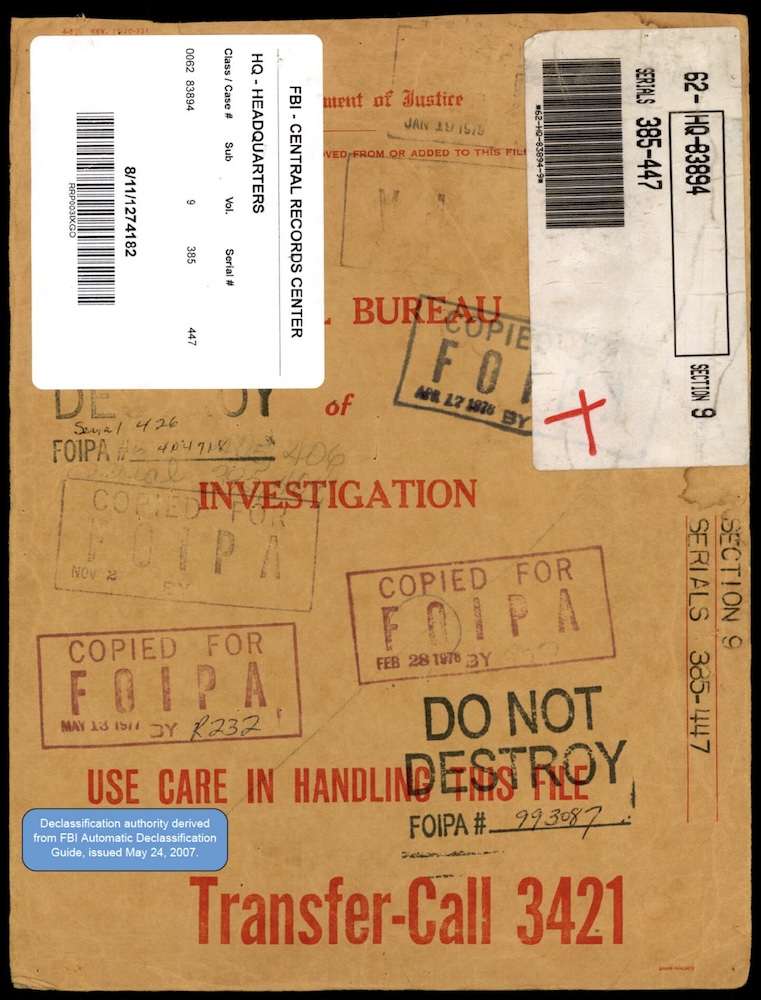
65_HS1-834228961_62-HQ-83894_Section_009
CIA-UAP-015, Project Blue Book Special Report No. 14 (Analysis of Reports of Unidentified Aerial Objects)
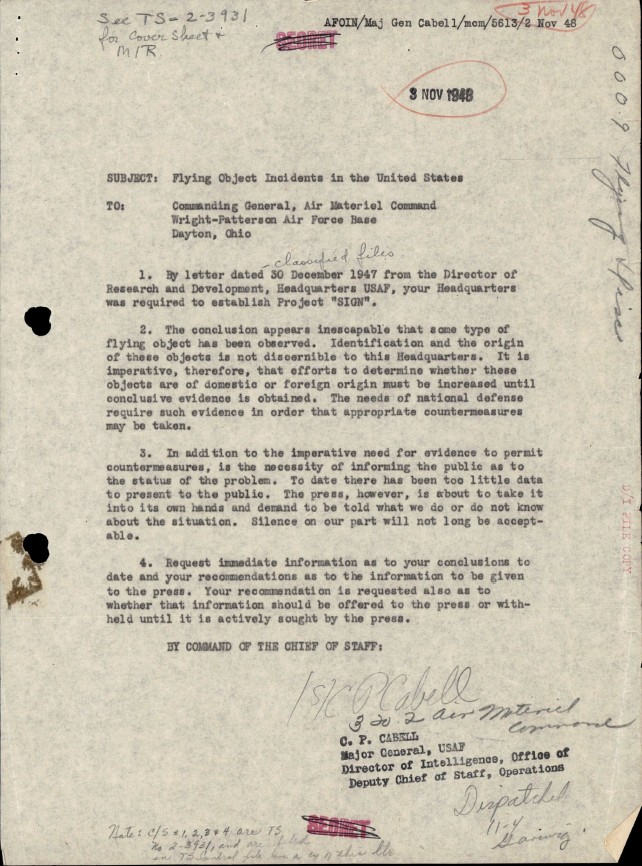
DOW-UAP-D100, Air Materiel Command Report on Unidentified Flying Objects, 1947-1948
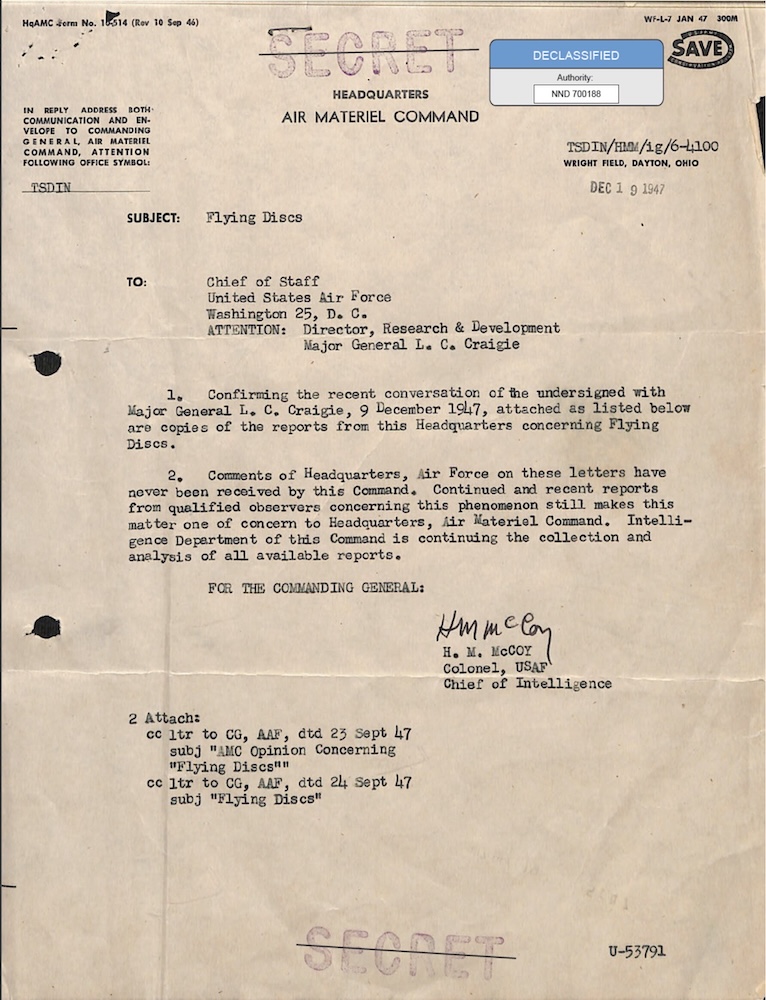
18_100754_ General 1946-7_Vol_2
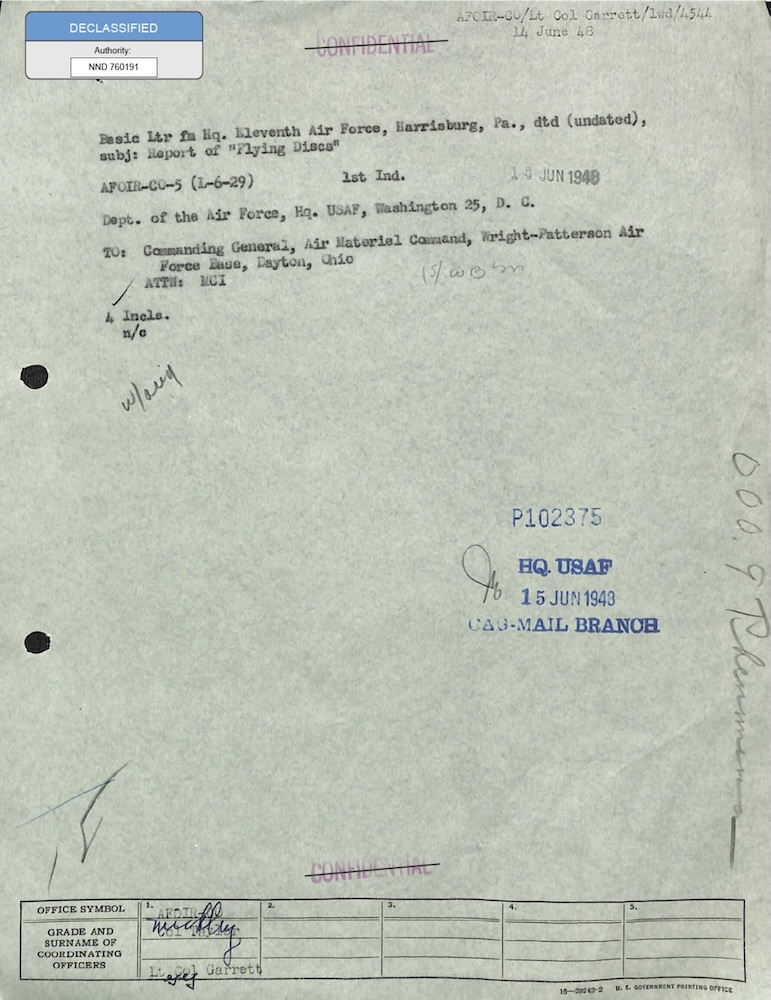
18_6369445_General_1948_Vol_1
255_413270_UFO's_and_Defense_What_Should_we_Prepare_For
Casi correlati
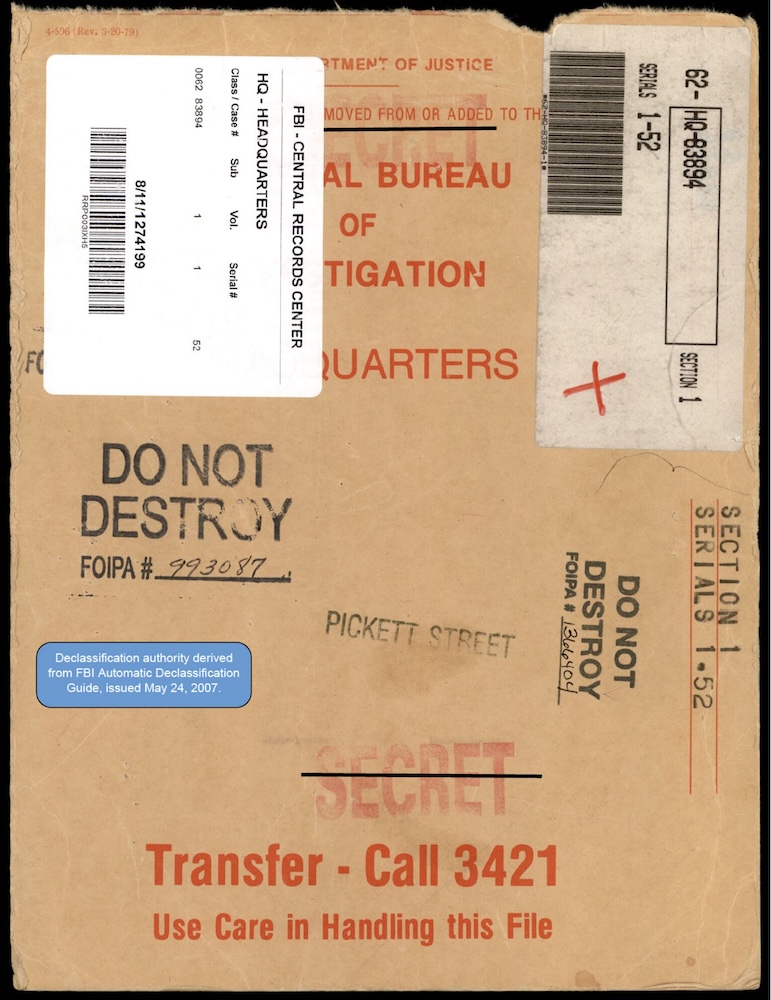
File FBI sui UFO Flying Discs, parte 1 (1947)
File FBI sui UFO Flying Discs, parte 2 (1947)

Caso Maury Island, UFO: file FBI Flying Discs, 1947
File FBI sui UFO Flying Discs, parte 4 (1947-1949)
File FBI sui UFO Flying Discs, parte 5 (1949-1950)
File FBI sui UFO Flying Discs, parte 6 (1950-1952)
Stesso periodo

Analisi UFO dell'USAF, parte 2, duello di Gorman

Analisi USAF degli UFO negli USA, parte 1
Audio UFO: debriefing Apollo 16, commento a 32:41
Audio UFO: debriefing scientifico Apollo 16, NASA
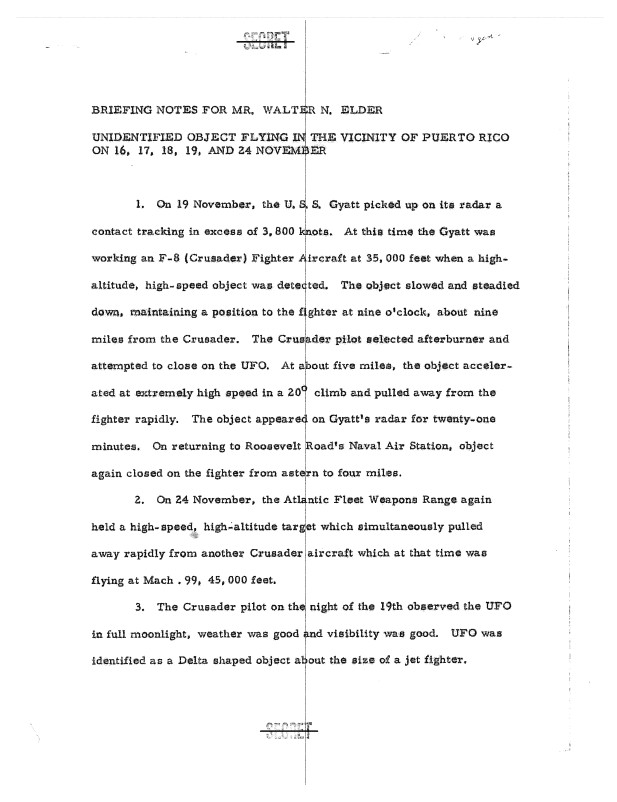
Briefing CIA: UFO a Porto Rico, USS Gyatt, 1964
Caso Maury Island, UFO: file FBI Flying Discs, 1947
Stessa pubblicazione
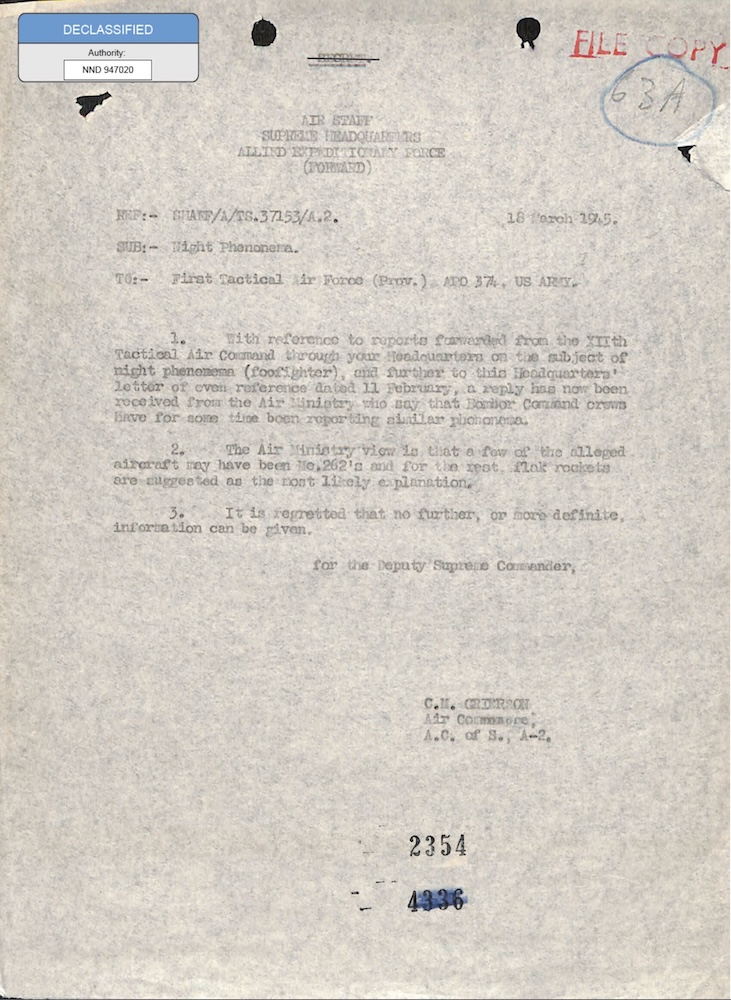
Foo fighters: file UFO dello SHAEF, 1945
Fascicolo UFO Flying Discs: lettera Twining, 1947
Project Sign: fascicolo UFO Flying Discs, 1948
Rapporto d'intelligence USAF sui UFO, 1948
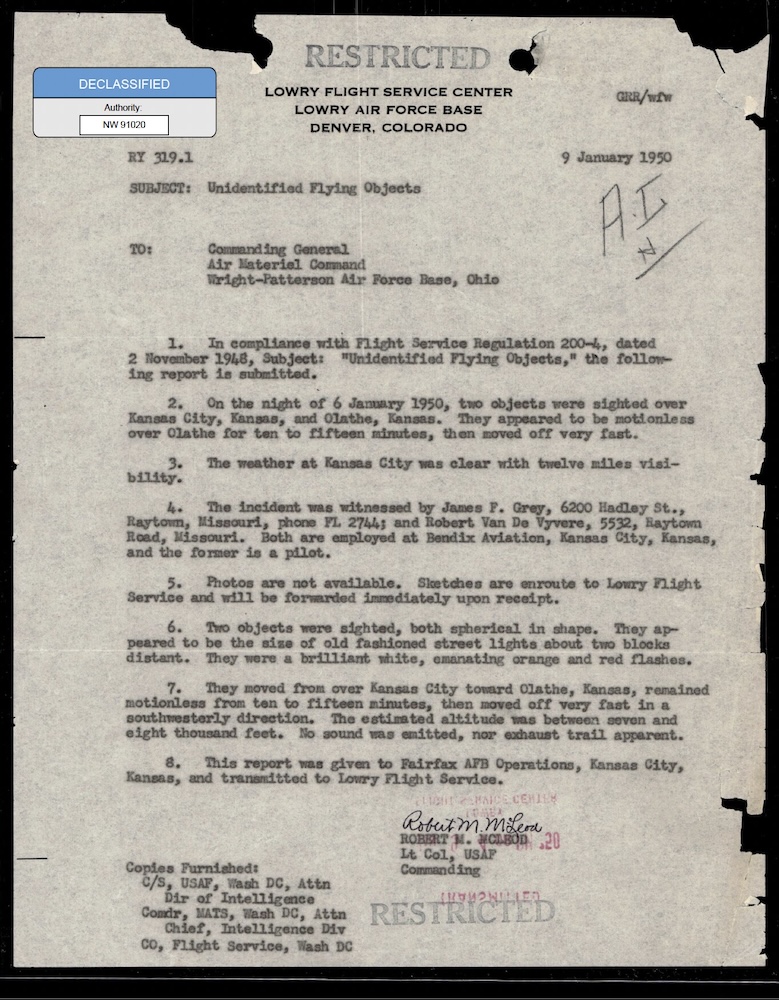
Rapporti UFO Flying Discs dell'USAF, 1948-1950
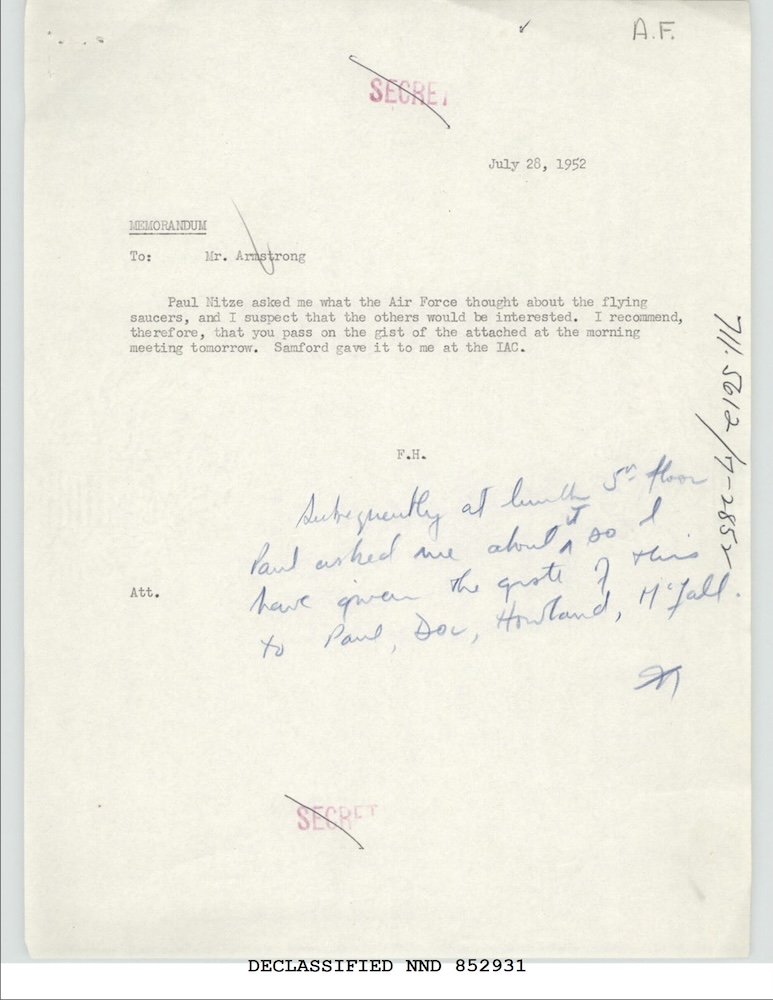
Memorandum del Dipartimento di Stato sugli UFO, 1952
Stessa agenzia
Segnalazione UFO del reverendo Barnes a Hoover, 1949
Fascicolo FBI di Newark su UFO nel New Jersey, 1952
Fascicolo FBI Flying Discs: UFO nello stato di Washington

Rapporto FBI: UFO in Germania nel 1944, Detroit, 1957

Memo dell'FBI: UFO con cupola di cristallo, Detroit, 1958