NASA-UAP-D024, “Apollo 16 Scientific Debriefing”
Key facts
- Official file ID
- NASA-UAP-D24 (cited as NASA-UAP-D024 in this file)
- Document type
- Audio
- Agency
- NASA
- Released in
- R03 · 2026-06-12
- Incident date
- not indicated
- Incident location
- Houston, Texas
- Coordinates
- 29.7589382, -95.3676974
Official description
This debriefing includes presentations from principal investigators of various Apollo experiments. The principal investigators describe preliminary results of their work to educate the Apollo crews about what they’ve obtained from Apollo 16 to help prepare for Apollo 17. They also describe anomalies, such as a “flash” that was observed that had not yet been reported. The flash is mentioned beginning at 25:15.
✦ AI summary
This is a roughly 96-minute scientific debriefing shortly after Apollo 16 (April 1972), where principal investigators present preliminary experiment results to crew members John Young (CDR), Charlie Duke (LMP), and Ken Mattingly (CMP), partly to prepare the Apollo 17 crew. Topics include the lunar magnetometers (Palmer Dial), passive and active seismic experiments (Gary Latham, Bob Kovach), the solar wind composition foil, the cosmic ray detector, the far-UV camera/spectrograph (Thornton Page, George Carruthers), and lunar geology (William Muehlberger), with extensive crew Q&A on deployment and geology observations. The notable item, beginning near 25:15: Latham raises an unreported transient event — Mattingly, observing from lunar orbit near local sunset shortly after losing Earth communication, saw a brief white flash brighter than nearby stars and distinctly below the horizon, unrelated to the known cosmic-ray 'light flash' phenomenon seen during sleep periods. Its exact time and location were not pinned down during the debrief.
Generated with AI from the official file — may contain errors.
▸Transcript
[00:00] First of all, let me say thank you from SNAD for the scientific help on Apollo 16. I personally think that you all did a very credible job in helping the science support room and pre-flighting to get all the experiments ready to prepare the crew and the flight for [00:29] Apollo 16. I think that looking back at it now we can say we had a very successful mission that we attained a tremendous amount of information from the flight. I know that the rock boxes back there at the curatorial facility are bursting at their seams and the geologists are going to have a lot to do. I think also that because of the problems that arose and the necessity to change [00:54] the flight plan that you responded quite well to get the maximum science out of the time that we had available, I realize that in all of our flights there hasn't been one flight yet that ran according to schedule. And I am very sure that Apollo 17 will be in the same boat, that we will have to change things real time to get the maximum scientists or science out of the mission. And I think the response on this flight was superb. Now today the briefing here is in two parts and for [01:27] two purposes. First of all I'd like each principal investigator to briefly describe the results so far obtained from his work. This is to sort of educate the crew on what we obtained so far from Apollo 16 so that they might have information along that line. Also I'd like to have him describe any anomalies that might have occurred that we do not know about now. And second, then we like to have the PI [01:58] with the crew working with them to have the crew answer any questions that might still be puzzling him so that he might further his analysis of the data. We have a lot of people to go through today, a lot of science to cover, so we like to keep each briefing short and we don't want to cover things that are pretty well, that are general knowledge as of today. And we can start right out. [02:28] First one is Palmer Dial, lunar service magnetometer. After each experimenter describes his experiment we'll have questions Palmer so we'll, we can ask the crew any questions after your particular talk. There's a mic, there's one right over there. [03:02] You may sit, stand, anything you want to do. I guess the main functions of both instruments went nominally. I'd like to cover both the portable and the surface, if that's acceptable. The ALSEP instrument, the surface magnetometer that you deployed first looked like it went [03:31] according to plan. The field that we measured as soon as it was turned on, I think it was turned on about 15 minutes or so after you deployed it, was 230 gamma and in a downward direction. And at that particular time that was the highest field that we'd ever measured on the lunar surface. [03:56] The, the calibration of the instrument went straightforward. We did do a gradient determination of the field at the site. That, the site survey as we call it, functioned normally. The, its thermal control subsystem is the best that we've put on the moon so far. We have a delta [04:21] T from lunar day to lunar night of 51 degrees centigrade, which is a factor of two better than our Apollo 12 thermal subsystem. The leveling of the device was, I noticed in the photograph yesterday that the bubble level was right in the center ring. The level sensors that we have are [04:47] accurate to a quarter of a degree and they show that the instrument is level to one degree accuracy right now. The, the instrument has new sensors in it. These are more stable and it's really the first chance we have of doing network type measurements of the fields on the moon. We do see whole moon, [05:16] we have seen simultaneous data now from 15 and 16. We see the magnetic fields due to eddy currents that are driven in the entire lunar sphere. And for the first time experimentally, we have always made that assumption that we've got an instrument that's setting on a, at one point on the sphere and that we're looking at the properties of a whole sphere. And we had some experimental evidence that that was the case. Now we have unambiguously shown with this second instrument that [05:46] that is indeed the case and that the assumption is correct that we are looking at a whole spherical response of the moon. You mean you're seeing eddy currents all the way through the moon? We're seeing eddy currents travel around the whole sphere, but with these new sensors now and with long-term data, what we, what we're going to try and do is look, as you say, right at the center of the moon as they go all the way through. Now that's what we're waiting for during the lunar [06:14] night is a nice step function and a long term both before and after so we can see this, these currents diffuse right through the center of the moon. The, the other thing that I think that is unique about this instrument that, that now we have a chance to look at the azimuthal variations in conductivity. We can not only look at radial dependence of the electrical conductivity and [06:43] calculate a temperature, but now we can look at the azimuthal or angular variations between Apollo 15 and Apollo 16 site. And those, and that spread is foreign enough so that we ought to be able to extrapolate those measurements to a great circle around the whole moon as opposed to azimuthal dependence. The portable magnetometer was really exciting. First of all, the field that, the first [07:11] field I think you measured was 180 gamma down and in the Cayley it looked like that all the fields were in essence pointed in a downward direction and at the ALSEP site it was 230 gamma, up near spook it was 180 gamma and then on the other side of the limb where you parked the rover at, at the last station it was 120 gamma and at that station you put a rock on it and it looks like we [07:41] measure about 4.7 gamma from that rock. So the rock was large enough and it hasn't large enough moment that it looks like we did see a difference and these measurements do have an air bar on them that is like plus or minus as much now as 5 to 10 gamma because the solar wind and all the other inductive fields that are around that have to be subtracted out of the measurements from our [08:06] magnetic, from the tape and data reduction. The measurements at station 5 were pointed upward and the measurements up near North Ray Crater were pointed downward at 313 gamma. I think that [08:32] there are some things that we could probably say with making a lot of assumptions but it looks like if this highland material is older than the other it looks like that we have at least a chance of looking at the paleomagnetic history of the lunar crust from these measurements. The high fields indicate that either the the perming source, the source of this field was [09:06] if it remains stable over the time period that the maria was cooling then the highland material would indicate this high field would indicate that it that it indeed had a time variation in its magnitude or that the maria the the flooding of the maria basins or whatever caused the maria basins to be as they are today demagnetized the material that that had been there originally. [09:36] It's in other words the maria material is less magnetic it seems than this material. The interesting thing too is that the that the samples as you know are from the regolith and they've really physically been modified over the years and I think that the measurements that we've obtained over over scale size in the order of 10 kilometers indicate that we're looking at a depth below well below the regolith and that that this is indicative of of fields that were at the moon [10:09] during a at a time period before in the order of three to four billion years ago. The direction and the other thing that we can say now from the from measurements of the solar wind simultaneous measurements of solar wind and magnetic fields at the Apollo 12 and 15 site we can say that these high fields that you measured at the Apollo 16 site [10:36] modifies drastically the the direction and interaction of the solar wind with the moon at these places. It should channel the charged particles and either different locations asymmetrically on the lunar surface in these areas and in some cases that one could now state that the scale size of the field are large enough so that you could [11:04] form a shock and actually stand off the solar wind over small regions of the moon. I guess that's covers both of them. Do you have any questions you want to ask the crew concerning anything about the deployment or any of the experiment that you know about? Paul let me ask you what is the effect of that rock out there by the big LSM did that hurt it much? [11:29] No first where you were you parked the rover the first time in the TV camera we were extremely disturbed because the angle was such it looked like that rock was as big as the electronics box and it looks like that the PRAs were oriented so it was shining right into them and all the IR radiation would really heat us up during the daytime but then the other view showed that the rock was relatively small compared to the dimensions of the box and didn't affect the [11:58] thermal subsystem at all and magnetically it didn't they really don't contain that much oriented field to do anything. I guess one of the things I'd like to say is this what we intended to do was we intended to drive a hundred yards away from the out in front of the lunar module with the with a rover and and doing sort of a north-south traverse looking for the best place to deploy [12:24] LSEP to get it away from all these things. We ran into problems with it with the UV and that it took longer to do that last measurements and anticipated and we couldn't do that and I'm sure that somebody looking at the photos can find a better place out in front of the lunar module to put the total package but I like to say that package is so big and that surface is [12:54] so blocky and so full of craters then under circumstances almost believe we had to take what we got. I hate to say that but man I just wouldn't believe that that surface was as rough and it's covered with blocks as it turned out to be. I think I could have still been walking up there with that package if I'd have been looking for a level spot. I got up on top of the ridge and I looked over and said well that's a good place over there and I ran over there and it didn't look any [13:20] better than the place I just been and well that's a good place over there and I ran over there and finally after about the third time I said well look I'm just gonna put this thing down here at best we got but it's really blocky and a lot of fresh craters are secondary. Well but I think that the if you look at the at least the magnetometers if I looked at each of the photos that I could find where you taking a picture of both the LSEP magnetometer and the [13:48] portable you picked you didn't put the thing next to rocks or craters on the scale size that was big enough to affect the instrument I think that's the main criteria which was observed during that. John did you know the rationale for doing that unplanned portable magnetometer reading? No but it doesn't make any difference I mean we did it. You can't explain it in real time that's [14:13] all right. On the hardware the sunshield on the LSM the latch didn't come loose and I kept pulling the arms up to try to get that latch loose and I finally had to hold the arm down and get the latch loose with the other hand and then as I tried to lock the thing the latch didn't fall off it tangled up into that little wire that locks in a little ball and that was a [14:46] I almost left it like that without locking it and in fact Houston said go ahead and leave it but one more little effort the thing finally dropped off and I thought I was going to disturb the level but if you seem like you're satisfied with the level of course. Yeah the the only thing I'm worried about there is that we've got a level sensor in the thing and if you disturb that you can sort of see that jiggle but the the azimuth you know when you read that shadow graph off [15:12] that's the only measurement we get in azimuth ever yeah and so as long as you could you didn't disturb the twisting of it then it's fine. Okay thank you Paul. Next experimenter will be Dr. Gary Latham, pass the sides of the experiment. [15:50] Yes, yes go ahead. How did you wish on a few gradients over there? Gradients from which instrument? Oh we don't have the uh because they got the fluctuations from the other instrument policy. We don't have that instrument. The actual photo you took of the LSM was taken off after you had the point. The three footer I think was, that's correct yes and we didn't touch it after that. [16:26] If there are any questions before any time after the discussion feel free just raise your hand. Our fund began as you know with the S-IVB impact on this mission. You also know we lost tracking on it prematurely which which meant that we were not able to get the coordinates and time of the impact independent of our own measurements. Nevertheless we could locate it fairly well from [16:55] the two near stations 12 and 14 which made it a useful impact at the greater range up to station 15. We're looking at those signals now. I think we can say that this peculiarly high velocity mantle as we called it that we had found in the 12 and 14 region can't be a global feature [17:21] unless it is exceedingly thin a thin slab of this high velocity stuff. The signals we got and I must say this that there's always the uncertainty that we really didn't see the first arrival up there because it was at 1100 kilometers and the first signal you see is quite weak. There's always the uncertainty as to whether or not it is the first the fastest traveling wave in the moment and not something else but if it is then this very high velocity material that we called mantle is not [17:52] global or an exceedingly thin layer looks as though we get velocities approaching eight kilometers per second at depths of the moon of the order of 100 kilometers not nine kilometers per second as we had in the 12 and 14 region. There's also very weak evidence from that signal and I haven't convinced my colleagues of this yet nor myself really but the possibility of a reflection from [18:19] a very deep interface perhaps 550 kilometers deep is there and we're looking for ways to see whether or not that can be verified in other words a primitive core perhaps or some other reflector at very great depth. So this impact will I think provide very very useful data despite the loss of tracking. We would have been of course much better off had we been able to photograph that impact area [18:48] and I understand the curtailed time in orbit precluded that we did not photograph it in that S-IVB. The deployment was good I think the pictures tell the story as far as I'm concerned the instrument does get hot during a lunar day as the other instruments have this has been the case in every one I think it's a matter of just it's just not possible to keep dust off of that shroud [19:18] I think when you have to work that close to it and that that degrades the thermal control some it does not degrade the seismic data it simply means that the controllers have more work to do trying to maintain the thermal stability and it's a problem we faced in every every one of the missions so it's not in fact I thought the deployment the configuration of the shroud that [19:43] I saw and so on look very very good there's one little place where it's raised up is where the cable comes out underneath it's turned on its edge a little bit and that of course is something of a heat loss but it's not not serious at all. Yeah we we patted that rascal down because of the 15 problems but maybe it's before a guy leaves at Alsepp site if he's got a problem like it maybe [20:11] is Alsepp on 17 probably it's not it's Alsepp is on the seismic it's seismic it okay well those rascally things assume some different kind of orientation than they did for before we left before we left and maybe you ought to go back one more time and make sure those things are haven't changed don't ask me I think maybe they outgassed a little and then take up a different [20:38] shape. Well it's not only it's not only your your near activities I think when we saw that that tv picture degrade on LEM ascent it's obvious that a lot of debris is being thrown around and you just can't avoid a good dusting down from that source so our our carefully prepared thermal surfaces act more like black bodies than anybody figured on as a result of all this. [21:05] Then we saw your rover signals which this time provided very very interesting data in that they showed other abrupt changes in signal level as you moved around. We're not sure yet what to make of that we're going to work with Bill Muehlberger and his crew carefully on the traverse to see whether or not we can identify [21:31] specific provinces in which the signal level is quite a bit higher. I guess I would like to ask your impression as you were rolling along and given along the given EBAs that you you felt at at given times that the rover was bouncing noticeably more than at other times that might have generated higher [21:56] signal levels. Sometimes she was off the ground there's no doubt about that. To the south on EVA two that area was a lot rougher than the traverse route to North Ray crater. My impression of North Ray crater traverse once we passed Palmetto was it was really a boulder free area very subdued [22:21] old craters then the rover just sped along much like a west Texas type terrain whereas to the south it was really rough and particularly on Survey Ridge when we were traversing that area with all the secondaries and blocks we managed to be up in here quite a bit simply because there are so many secondaries and blocks we had to hit some small ones to avoid the big ones. [22:52] The subjective opinion of mine also is that around at least at stop 13 where we actually got off the rover the regolith did not seem as as loosely compacted as to the south and in fact at North Ray crater at station 11 and 12 it was no more than a couple inches deep because we couldn't get the rake in without bending the tines of the rake. So the regolith up there was very thin and I don't [23:24] know what that means there's a just some very cobbly distally compacted blocks under there from that were thrown out or that are now that much covered or whether we just picked some bad sites but we tried to rake twice and both times the only luck we had was kicking stuff into the rake we couldn't pull the rake through the regolith. And you couldn't stick the tongs in either? Yeah the tongs wouldn't go in and every other place you could take the tongs and stick into the ground [23:50] they'd stand up for you. Well you know in general this area from from the general character of our signals it gives the appearance of being the thickest pile of of what we can quite loosely call regolith of any of the sites and I guess Bob Kovach will talk on his results on that and of course we await his motor firing to give us a little more information on that. Well we'll be [24:16] looking at these rover signals and see if we can we can somehow pin them down to to roughness of terrain or just what from the pictures that you took along the way. We now have the the quiet nighttime period and we're waiting for the first moon quake of this session which which ought to be well I was hoping it would be in the last 24 hours it wasn't but should be before May 12th so in the [24:43] next few days and of course with this last station we now have completed a very nice triangular array the other three gave us a very narrow base thing now we have a thing with a thousand kilometer baseline which which if it lasts for as long as they appear to be lasting will give us the tools to really do the job over the next couple of years and of course we'll be using that in the [25:10] S-IVB impact from the next mission. I'd like to turn to one observation reported from orbit that that has interested us a great deal and that was the flash that was reported. I haven't seen I understand the transcript is now hasn't yet been typed. I haven't seen it yet so I that's my only hope for pinning down the time if you get to about five minutes with everything. If you can help us [25:37] pin down the time and roughly the location and we'll certainly look at our records and that would be an important piece of data if we recorded that. I would like to ask was this a colored flash or white flash? White. How does it differ from the kind of thing you get with a cosmic ray impact on your brain? I didn't see any of those. He didn't see any of those. [26:07] I see well we're very much excited by that as far as I know it's the first report of a transient event of some nature that's been seen for more of it. I just have to wait for the I should have written it down and it just didn't occur to me to write it down. Did we get a time on it at all Ken? It's on the DAC if I ever get that off. Then I would correlate any information [26:37] we get to the size. How about its persistence? No it was just it was just a flash and the way I happened to notice it I was looking at a horizon that was showing up from solar corona or zodiacal light whatever you want to call it in that region. It was very shortly after we lost the signal from [27:02] Earth and I was watching stars pop up over the horizon and got this flash which was in size was about I didn't I wasn't looking directly at it at the time it happened it happened down in the side of my vision but it was brighter than the than the brightest star that I had in the field of view at [27:28] the time and I had the feeling that it was in physical or angular size it was equivalent to the size of the larger stars and in my perceived vision but it was just a it was just an instantaneous flash and it took us a couple of seconds for it to soak into me that it wasn't just a star popping [27:53] up over the horizon but rather it had been distinctly below the horizon. Is there a way for me to get that transcript? I don't know if I would normally get it. I'm glad I'm glad you asked. Oh that's it? I forgot to mention this in the opening remarks but we have about 50 copies of this technical area to ground voice transcription right back there and for the PIs and the COIs and [28:18] there's a copy for you Gary Beck. That's not what you're after. It won't be on man. And that hasn't been completed as far as I know. Okay. One other thing that I'd like to mention is from orbit it appeared to me that there was a distinctly different unit up around North Ray and an area that I'd say a third or half of the traverse to North Ray [28:45] went across and that may or may not fit in with your seismic delta. That at some point between North Ray and 11 they would cross a contact of some kind. Yes. Well except to add my thanks for a very fine deployment that's all I have. Thank you. Any questions from the floor? [29:16] Well I don't know where the S-IVB hit but this is on the on the back side of the limb so I would assume that the S-IVB didn't hit there and it's well after that. Like a couple of days, lunar days. How about 150 kilometers north of station 12? [29:53] No. The time I was doing this I was looking out the window and I had darkened the cockpit in preparation for one of the low light level photographic exercises and that's how I happened to be noticing that there was this distinct horizon which surprised me and I just happened to be kind of puzzling over that at the time. [30:22] No. Not when your advisor's down. I never looked when the advisor was supposed to do that. I suspect from what we saw on EVA on the way home that the inner visor alone has sufficient attenuation to block out stars. But you could see them from the through the AOT and the lunar module and that's of course that has a light shield around it on our last alignment even with a crescent earth in the AOT we could see [30:53] Arcnar really so good that we didn't have to roll up the window shades in a cockpit. So with the proper if you look through a tube I'm sure you could see every star up there. The only thing we saw on the lunar surface was the earth and you had to it was directly overhead that was the only thing I saw in the sky. You see your helmet reflected that's what you see you have to raise [31:28] your visor so you can get rid of all those reflections. Okay next one is active seismic experiment Dr. Kovach. Well we had several objectives on this [31:56] experiment and I'd like to summarize these basic questions like how thick is the seismic regolith would be one question. What were the in situ physical properties of the lunar near surface material and thirdly are there any distinct seismic horizons and how do they correlate with our estimates to geological horizons and finally were there any regional differences in seismic velocities i.e. something characteristically different between the mari and the islands. [32:26] Well the deployment and the execution of the thumper experiment was outstanding. I mean the records are are clearer and the background noise was sufficiently low and we got clean first breaks completely down the geophone line. I'm sorry about that first one. I was so really happy when that rascal worked that I stopped walking. I started walking to the next one. Well the record shows [32:52] that for some reason you inadvertently didn't hold it in a charged position sufficiently long enough and that's the reason when you did it the second time. No I thought I started walking too soon after the first one went off. The one that failed yeah that was my that was a pure procedure there. Well if you walked too soon it didn't hurt us any so. Didn't body okay. The data needs yet to be corrected [33:18] for topographic effects. There's some severe undulations in the topography and we can see this in the data but I can give you some first impressions of our results. Number one there's certainly no variability in the first arrival velocities across the geophone array and the parent velocity or the velocity is again very close to 100 meters per second [33:43] which is seems to be the magic number for the regolith at many different places now on the moon i.e. out in the mari and now up here in this finally up in this highland site. There are no evidence of flows beneath the beneath this geophone line. I feel sufficiently confident we would have recognized that. Now the fact that we didn't recognize any variability in [34:14] the velocity we're able to say one more thing because we recorded the limb ascent when we turned on the geophone line and that was a position some 140 meters away from our first geophone and we did get a faster apparent velocity and it's very close to the value measured for Frau Maro for Breccius and so with this type of a number now i.e. two to three hundred meters [34:41] per second underlying this this regolith we can put a thickness bound on the regolith at this site and it is indeed very thick at least 40 meters and i'll be able to refine that number a little bit when we get the mortars fired. We also did turn on the ASE geophone array and recorded you know your rover approaching [35:06] the limb during the end of EVA 3 and we also got very interesting signals and we hope to analyze these in an analogous way as Gary has suggested and that's about all i can say for the quick look of our data at this point we do have the concern of course i do have the concern about the grenade box deployment i'm sure i've asked you that i haven't seen any of the pictures yet [35:31] so maybe to be self-explained maybe you could reassure me that it's level it's level i guarantee it's actually that was probably the only level place we had around there and i was really pleased to see when we got out the end of the to where we could deploy it that would be level it's really good and i reported the i don't remember what azimuth heading that we put it on it was very close it seemed like it was 330 as opposed to 333 that it should have been on that's [36:00] off the top of my head we had to go back and look but i reported it and i found out later that you could break that pin by pulling on the leg but i certainly didn't know that uh if somebody told me that doing the training why it'd gone right over my head but we do have three good legs in there and i'll bet you that rascal can't get out of the ground because the way it went in it's sort of like pushing it into quicksand and once it gets in there i defy anybody to get that mortar box back [36:30] out of there because it uh it really grabbed a hold of it well again i'd like to offer my thanks for an outstanding execution of the experiment we couldn't ask for anything better thank you it's our pleasure boy it really worked good i was really pleased any question before how do you define the regular design well we define the regular i don't know how the geologist may not [37:00] agree with what you define but we define the material which apparently covers much of the lunar surface and has its characteristic velocity of 100 meters per second and what comes after that underneath this particular site and something that has velocities like fraught marl breccio you said something about you were sure that there was no flow material underneath this i guess i'm missing miss the conclusion well we've done enough experiments on earth and i say that [37:28] that we've been able to recognize flows because the velocities are characteristically much higher and uh if you want to argue that there may be very thin flows i.e thinner than our our sampling wavelength which is like two to three meters they could be there but we certainly on the average they don't see any big sequence of high velocity flows we would recommend that when you say high velocity this two or three hundred that you're talking about from the essence stage that's not [37:53] high in terms it's every every small crater that we looked into with exception probably a buster crater we never saw anything that looked like uh anything but uh i mean it just looked like more of the same looked like uh regolith i mean you know we never saw anything that looked like outcropper and we were sure looking for it this two to three hundred meter velocity [38:22] you talked about the limb ascent that was this breccio material that you say is underlying the regolith is that right that's my first look first look oh that's another good question what's the latest word on water firing do we have any idea about when well there's a meeting one o'clock this afternoon i'm going to request to fire it on may 23rd past steel days [38:57] and it's armed too okay our next uh next subject is a solar wind composition uh dr meister unfortunately there is not much to tell about the solar wind composition experiment [39:23] the foil was transferred to switzerland at the end of last week and we don't have any results yet of course the foil was deployed during the first EVA and retrieved at the end of the third EVA with a total exposure time of 45 hours and five minutes that's some three hours longer than the record of the previous missions it was about 52 hours on apollo 15 the main difference between the [39:57] foil of apollo 16 and the ones of the previous missions is that some pieces of platinum foil have been attached to the previous design which was composed of a pure aluminum foil these platinum foil pieces can be cleaned by floridic acid which allows to remove all the possible lunar dust contamination this technique has been tested in the lab on bombarded foils [40:29] and showed that you can remove essentially all the lunar dust contamination without losing any measurable amount of trapped rare gas ions or atoms of of solar wind origin this technique should allow us to determine the isotopic composition of the rare gas [40:55] elements of solar wind origin up to the mass of possibly krypton a first visual inspection of the foil here and MSC showed that the foil is crimpled but essentially free of lunar dust that's of course only a visual observation we don't know how the foil looks like under microscope [41:25] i would like to thank the crew for the proper deployment and retrieval of the foil we are very pleased with what the foil looks like thank you very much i can't miss when it tells you where the sun is yeah point this at sun the i would uh the thing didn't roll up like i thought it was going to and i'm sorry i had to crinkle it but it was so big and that i had to squeeze it down and get it into the bag and it and it ripped once too i guess [41:54] you saw that that's that's only a problem of aesthetics it doesn't hurt it okay good i didn't thank you dad we don't know yet that we have a discrimination between the lighter and heavier [42:21] elements in the solar wind we have to check that maybe that there's a dependence on on on the height over the lunar surface of of the composition between the heavier and lighter elements but we have to check that first and see can you see those uh i don't know i just [42:50] probably stupid question but these cosmic rate these particles that cause the light flashes i was seeing them on the lunar surface at uh during the sleep periods and those things register on your experiment you know they have higher energies and they go through the foil [43:15] no uh no difference there uh looking at it one time out the window i thought i saw some white streaks on it but that might have been just the way the sun was uh it might have been those platinum strips that i'd never noticed when i emplaced it i really don't know it just looked like i had a [43:43] couple of randomly oriented streaks on it to me from the wind limb window but when we rolled it back up again instead of rolling straight up it rolled out in a big long thing and i had to redo it again and when that happened i i'd ripped it and then had to crunch it down we don't see any difference between the foil we sent up and the foil that came down except of some lunar dust on it [44:10] nothing else can i ask the crew a question do you have a an idea how the foil was oriented was it essentially vertical to the photographs i mean along the gravitational force lines or was it reclined or inclined it's hard to tell it from if you can't tell it from the picture i i think i put it in almost uh a parallel with the gravity vector there it's it's on a slope a [44:39] little slope but it if i recall it was it's aligned almost vertically thank you very much thank you the uh next subject will be the cosmic ray detector uh doctor bob pleasure see here oh okay he's not here [45:09] the pis couldn't be here this morning they're busily at home studying the data that they got back i have some words from them that i'll pass along as to what they they think they'll be able to see they are very excited about the possibilities they have early in the mission there was a solar particle event that occurred which will enhance their data very significantly they think they [45:34] think they'll have the opportunity to see particles from the sun that on an ordinary mission they would have never had the opportunity to to see when they got the experiment back panel one did have considerable dust on it and this from the best we can tell without any analysis came from the landing itself from the blast up from the DPS panel one was hot in the taking the panels apart [46:08] panels two and three were cooler and panel four was of the same order of temperatures as panel two and three the cosmic ray data itself in the plastics appears to be degraded somewhat because of the temperature but they're very hopeful that a great part of the data will be [46:33] retrievable at the first look on panel two Dr. Fleischer says that the number of particles they see on the plastics indeed are a great deal higher than they would have nominally anticipated indicating the effects of the solar particle event and they really haven't in detail etched the plastics are analyzed and they're just beginning to do that and they think they are usable [47:01] yes the plastic i'm really surprised because we had some lengthy discussions about this pre-flight and i can never understand how we're going to fly this rascal to the moon and get it there with us with these long periods of attitude hole that we're going into where it might see plus 250 all the time and of course i'm sure those three revs in lunar orbit prior to landing didn't do any good either because we were oriented many times so that we're facing with the [47:28] to maintain communications we had the sun shining on that rascal all the way around and i really think it those 140 temperatures that we saw on a panel if you go back and look at it thermally you're going to find out they were there they had to be there long before we ever got the thing on the ground you know and i was really concerned about that as to why we didn't put some kind of shielding over it but it was too late i guess to do this well the thermal design [47:57] was such that it could sit i believe in direct sunlight almost indefinitely without any degradation it's the hour heating off the lunar surface that really cooks it from that's what the thermal people say i think and it's hard to say and i we did see the the early picture did show that the temple labels had already changed early at the beginning of the eva they were black first time [48:22] a guess is the 15 hours the the thermal analysis says if there's like 15 dust on the panel after 20 degrees of sun angle or so you'll sort of exceed the 140 degrees on the frame it appeared that there was probably 50 or 60 dust on the lower part of the panel or maybe even higher than that and it spent about 15 hours on the surface so it may have just turned out to be a number of problems [48:49] that are probably ones that could not be avoided under the circumstances that caused that lower pound overheat it was the hottest and the next panel was about 20 degrees cooler the best we can tell and the panel third panel up was 10 degrees cooler than the second panel so it seemed to be a dust problem but it doesn't seem to to have hurt the data too much panel four was the one which [49:14] was we were afraid wasn't going to be activated because of the anomaly on the red lanyard but after they have taken the panel apart apparently every portion of the experiment was activated to some degree or another the neutron portion was partially deployed and they think they will get some data from it is not not as much data statistically as they wish they had but every portion of panel four does look like it will provide some that some useful data and they [49:43] have a lot higher hopes now than they did when they first saw the gear apparently the problem and we haven't again haven't sent the hardware back to the manufacturer for analysis but apparently was a malfunction in the assembly that caused that thing to jam well we could have pulled if i'd have known about it at the time we could have got that pair of pliers out of there and pulled harder the investigator's opinion was it would have done no good wouldn't have very severely [50:11] jammed and he doesn't think any additional effort would have would have would have freed it it was jammed pretty badly but i think in all they're they're very excited about the data and i think they're very optimistic now that they'll get a considerable amount of data from it jim is probably worth mentioning on the plastic panels overuse that they did have calibration plastics in there and they'll be able to with the effect of the overuse just to deal with fraction [50:36] reducing practices but with the calibration in there they'll be able to take out most of that effective experiment the other thing is that on panel four isn't those experiments which are activated by pulling the corridor only a small fraction of the total part of the panel of course there's a lot of panel for that isn't involved in jam that's true they'll still get a lot of good data just as good data since the jam had never occurred the uh that's for all practical purposes okay i don't think we uh in fact i'm sure we you may find a fingerprint on there but if there is [51:06] it we uh we really were careful uh to get it out of there and we didn't uh once we got it loose we gave the usual ten eleven care and fold it up so i don't think there's any crew fingerprints on the panel surfaces uh that's correct we looked at it very carefully and it was except for the pot bottom part of panel one that you could see it was a spray pattern it uh it was very clean and the pis were very pleased [51:37] this uh so it started on about uh i believe monday which was the day after launch and went through about wednesday it's about a two or three day type event i think the peak was uh must have been about tuesday there are some satellite data available i don't have that on hand it was a small event but for this solar cycle it was very surprising that it [52:09] happened at all during the mission that they have it during the portion when the cosmic ray was deployed or available to accept data was the probability that's very small so it's a very gratifying thing to occur i'm curious about the dust meter kicked up by the DPS did you guys observe any dust on the thing or any other part of the limb at that level because it's always been our [52:35] question if it does just send out a pretty thin layer and you don't get a pillowy effect i'm sure it's sent out in a thin layer but with all those frontal blocks around there it's a possibility some of it could come back at you that's for sure it's extremely hard to see and when we photographed it the lights are not similar to the sun probably must much less in intensity but yet the photographic lights did wash out it's a very pale uh kind of dust but it's very predominant and it came up from [53:04] the corner dave in a in a pattern that you would expect it to be blown and there were some black streaks in there that appeared to be melted something or other and i think they are going to attempt to chemically analyze the material i want to try to find out what it is that first panel must be about chest high is it not yeah any other questions one just one comment [53:34] that was uh the frame of that thing was hot really it was hot it was the only thing i felt through my gloves the whole stay well it was jammed and john tried to pull it out and i was holding the frame and i started feeling it to my gloves it's jamming at the base yeah right right at the bottom part [54:00] yeah there's something that broke free right at the base and then it just came out like like it had grease on maybe we spilled some orange juice on it no way that's the only thing we didn't spill orange juice on it's not that you didn't try huh [54:25] it's a good cement you guys you ought to start thinking about that expose that stuff to vacuum mooring okay our next experiment was the far uv camera dr page i'll put the benefits on the geologists here all to account the goals purposes of this experiment which were to obtain photographs far over violet of the geocorona in the upper atmosphere of the [54:58] earth i should have said these photographs of course include spectra as well and solar wind clouds possibly interstellar hydrogen colors of stars in the far ultraviolet and possibly intergalactic hydrogen we had a lot of troubles i guess john well knows before launch the difficulty was to keep [55:25] the camera dry because its uh optically sensitive surface would immediately uh run away if it got damp and this was accomplished with a bag that caused uh captain young a little bit of trouble in the practices in advance but apparently worked all right on lunar surface it's great [55:50] the second difficulty was getting through the van Allen belts without fogging our film and i'll show you in a moment that we did that all right with a rather small amount of shielding around the film cassette um then uh we had some difficulty with the lens being in the way this came about because of the delay in touchdown high sun angle and the necessity to keep the [56:16] camera close to the lens so that it would be in the shadow with its gold surface it would have heated up very rapidly that had been out in the full sunlight the accomplishments that i will show you in a moment on the screen include 92 photographs in lamin alpha imagery [56:43] and 53 spectra some of them extending from 500 angstroms to 1550 angstroms that's i think the farthest into the ultraviolet anybody's ever uh taken astronomical pictures we may get evidence of gases in the lunar atmosphere from several of our uh pointings which were low across the lunar horizon [57:08] and if anything were coming out like geysers of water or whatever it is we'll certainly pick it up the data on these photographs are extremely numerous and it'll take us an estimated six months to a year to get them all out which will be done with the big computer here at the MSC so dr George Carruthers who is the p.i and designed the camera happened [57:36] to be free the day from work on an araby flight and is here and will undoubtedly make comments whenever he sees something to comment on the photographs do we have the first slide i might say that i got into trouble with the american photographers union in thanking the prince of these because i'm not a member of that unit and they tried to throw me out of the dark over here this is probably one of the most dramatic pictures of the earth [58:02] that shows auroral belt on the dark side you're looking at the earth with the sun off to your right uh the south pole of the earth is down and that funny lip like thing sticking off to the left at the bottom is aurora we think around the south magnetic pole the most striking thing is the next lip up which on the original you can see better than on this slide goes around the full back side [58:33] of the earth it's called the equatorial auroral belt and disappears back of the dark side in the upper left corner the third lip is another belt it looks at first as if that was just all one but there are two separate belts there and was quite unexpected this photo what's the intention of the earth's exercise well you know it's 8 000 miles cross [59:08] it is there's some halation here uh and i guess i'm not too sure and perhaps george knows this is a special easman ntb3 emulsion very very thin and of course the exposure was made with electrons not with light it's an electronographic camera but the dimension works outright you can't see it too well on this print the there's a ring or a a limit to the field which on the originals [59:37] is 30 degrees 30 millimeters across it's 20 degrees in the sky and the earth is two degrees and it's it checks out and so the dimension you see there is two degrees across the full diameter of the earth no you can't see through the earth that's why i asked you did you know that uh the geometry [60:07] is such that that is probably inclined 30 degrees to the magnetic equator and is an unexpected auroral belt it'll take a little more figuring to figure this out but as i just said it my guess looking at the picture it hasn't been measured accurately is 30 degrees north [60:35] you'll notice on these pictures that they're over printed that's because i'm not a member of the photographers union and the originals have a good deal more on them this picture was taken excluding hydrogen light lamin alpha we have two filters on the camera and this one is taken in light between the wavelengths 12 30 and 15 50 angstroms now the next slide yeah is that all diameter [61:04] you're saying there is that all the earth or is that twice what the earth no it's it's the earth just no no it's uh as i said the little halation which makes it a little bigger than it ought to be now in this one it's exactly the same view was taken uh after john so accurately pointed the [61:29] camera at the earth uh the earth is in the middle layer and if you look real hard you can see the dark side of it off to your left this is the geo corona the streaks are an instrumental matter actually we have a barrier membrane that george put very close in front of the film to to keep visible light from getting in there and the barrier membrane wasn't quite uniform and [61:56] that's where the streaks come from the circular thing on the right is an overlap another defect the little motor that advanced the film between exposures didn't pull it quite far enough for this one and uh those dust specks i guess are my pipe tobacco on the uh slide you know a thorton that that rasply thing was moving uh at first it wasn't moving the wheels weren't going as far [62:25] as they did toward the end no we have a complete transcript of everything you said about it and in looking at the film which i've done in great detail you can see the most serious defect in that film advance was during your short exposures on the earth john everywhere else it worked fine and i have an idea that the pushing the button so frequently [62:51] sort of confused the motor and it didn't turn as far as it should have well in any case you'll notice that the shape of the geochorona is as predicted by Dr. Meier at the naval research lab it's got a dip and dimple in the back down sun sun is still to the right here and our other photographs show that it extends at least twice as far as you see here off to the right the print [63:16] of course can be printed dark or light and if i printed this one lighter i'd have got the the background all over the whole slide and you wouldn't have been able to see as pretty a picture as this now the next slide shows the one further to the right the sun is still to your right the earth now is off the edge of the picture to the left this was one of the sequence taken through the night between eva's two and three [63:44] you see in star background here and again the geochorona those streaks which are not real extending actually right across this frame if you print the thing lighter now the next slide shows the two of these combined and i've printed a lot darker and i guess it's not as artistic an effort as i had hoped the geochorona produces is hydrogen in 12 16 inches line of alpha and the next slide [64:19] shows the spectrum actually taken on that first line the spectrum is dispersion is vertical and that white band across horizontally horizontally as line on alpha you see how strong it is the earth is in the middle of this picture and the spectrum of the upper atmosphere is spread out on that vertical line from far ultraviolet down at the bottom to nearer ultraviolet up at the top a [64:50] bright line just above limon alpha is 1304 which is an oxygen line and george do you want to describe this one more detail we've so far only made a very crude analysis of the spectrum by comparison of the laboratory spectra made in the pre-flight calibrations however we have tentatively identified the 584 line of helium the 834 line of atomic of ionized oxygen [65:24] the 1026 line limon beta of hydrogen these three lines are the first spectral measurements in the earth's upper atmosphere all previous measurements have been limited to wavelengths longward of 1100 angstroms which we also cover and which includes the limon alpha line in 1216 the 1304 and 1356 lines of atomic oxygen and the limon herd birge hopfield bands of molecular nitrogen between [65:56] 1200 and 1600 angstroms the limon alpha line of course is by far the strongest emission that we have seen in any of our spectra and it's the only one that we have conclusively identified in any of the spectra that do not include the earth however by comparison of spectra taken with and without our lithium fluoride corrector plate which cuts off at 1050 angstroms we will be able to determine [66:23] whether we see a general background in the 584 line of helium and the 1026 line of atomic oxygen hydrogen as we expect though they will be much weaker than the limon alpha line we've got that other spectrum coming in other words can you hold on a minute i think the order he's got him in has the magic cloud and we're probably taking too much time do we have the next slide well that's it go ahead so this this is without the corrector plate you notice that the [66:58] line limon alpha here is broader the definition is poorer but as george was just saying we get lines further down in the ultraviolet on spectra taken without the corrector plate with it and you see here too these other lines are not uniform this is a spectrum that was obtained with the earth off the edge here so it shows that the geochrona goes right across this slide as i [67:23] said last time by the way that's 100,000 miles and the other lines here show that either other materials in the geochrona or beyond the geochrona i guess it's going to take a little while to figure out which or which go ahead is that the next two slides quickly show that well that's right it's one the magillanic clouds which are both john was worried about what that line is seeing and [67:53] this is the large magillanic cloud and that's the initial what the initial referred to the picture on the left is with hydrogen with planet alpha and the picture on the right is without in this far ultraviolet region all that you are seeing here are the very hot blue stars and over here you see the clouds of hydrogen gas so the difference between these two photographs [68:18] is hydrogen and we get the regular magillanic clouds are nearby galaxies so we have a galaxy with all those stars and then we get what not spread out in front of us to study of carl henise there's many special studies of these magillanic clouds and is very much interested in already has copies of this these photographs which that you notice that the hydrogen is not just from the magillanic clouds this stuff up here is uh out in the open sky and [68:49] just what caused that background i don't know is there any other slide that's the last one we had a couple of questions for john one was that sticking which had us worried you talked about the the instrument may fly on a 17th rock board very interested in it [69:17] and so what was what did the sticking uh did it continue right through you didn't mention it in EVA 3 i got it got worse all along i i just got the feeling there was some kind of hang-up between in uh in uh possibly uh long-term vacuum exposure or something to the to the operation of the [69:44] of the way it was working in azimuth and i never was able to were never able to you know it never got better in fact this is the longer it sat there maybe the cold it just seemed to get stickier and stickier toward the end there every time i had to every time i got to a new setting in azimuth it completely destroyed the level and [70:11] we're unfortunate we're on that slope uh right there it's under the foot pad of the limb and so i had to go back and re-level it every time and that was uh we're really working at the limits of the level level ability of the of the of the machinery i think there and you see it didn't make much difference that magic cloud should have been [70:38] out in the middle i know i know and you're off by that much because but uh that's i if we were if we were on a level slope there would have been no problem and getting the bubble right in the middle every time and if the azimuth had worked easily it would would have uh remained level but i sure don't know what it was it couldn't have been dust that got in no i think that was impossible no i [71:04] don't think we had any in fact i'm sure we didn't have any dust on the legs uh up that far the film just that you brought back had very little dust on it in fact it was brand new well i hope if it got if it got dust on it it got it inside the limb there was plenty in there once we got into zero gravity although i don't know how to crawl through two bags that's why i was quite surprised it was [71:31] no dust but we're disappointed because we're going to collect a little bit of dust off any any questions before and what and i'm sure it got some dust on it when i removed it though i got a little a very small amount of which i'm illegally keeping don't tell anybody the FBI i'll be around to see did you see evidence of the magneto sheet or [71:59] so far we have not seen any discontinuity in the up sun geo-coronavirus would be it just sort of dribbles off the weight as you go sunward from the earth and there's no sharp drop but we're really not as far as the tall sharp [72:27] okay any more questions okay next subject is the lunar geology investigation Dr. Muehlberger okay for the benefit of the astrologer in the crowd there's been [72:57] very little evidence for water and uh none so far for geysers our experiment may not be as far reaching as there but on the other hand i think we've made a large step toward understanding the history of the moon and therefore the earth and therefore the solar system and if you guys can find any more we're out there with you so far we've completed the mission itself and all major objectives for the pre-planned traverses [73:28] were reached and were sampled and were described and photographed and as far as we can tell with our quick look at the photographs all of these were done well we've produced a so-called green back at the end of the mission operations itself which was a summary as of our knowledge at that time that was based on crew observations tv and the pre-mission data included in that thing are [73:55] station sample maps which were derived from the tv in real time and that was a very useful tool to us a sample inventory a film usage inventory and a station locations again resected from the tv pans by the end of last week we've received black and white two-time enlargements of all film [74:20] these are the typical drugstore quality prints and sooner or later we'll get good quality so our analysis is very brief we've assembled all the panoramas sample location studies are nearing completion the film inventory is also nearing completion the geological analysis is still in its infancy and i suspect it should progress rapidly now that we got all this inventory over [74:47] with you guys took so damn many pictures it takes time to get them organized we've had one session with the crew and the lro with samples and most of our questions need samples in hand and those will i'm sure we'll be able to discuss later and so the questions i've got relate more to surface observations that maybe we can amplify and some of these are questions that we've asked you [75:16] before but i have a few polaroid prints of these photos that maybe can jostle our minds and assistant refining some of the answers that we've gotten on the debriefs after the evas or on trans earth our photogeologic mapping group primarily talked about rays by their whiteness there were a few spots where they thought they were seeing dark rays you recognize both light and dark colored [75:47] rays particularly the south ray picture if i could have a slide one please which is the south ray panorama and the print i've just given to the crew a single frame from that uh there i think we can see light and dark and the real question i'm after is uh what led you to say that you were on or off [76:12] a ray and secondly are that were there any uh visible differences in the rock types as you drove by or had a chance of sampling gray material yeah sure looks that way the hills are at the bottom yeah i think the thumbprint goes in the upper right [76:39] good the projection is give that a 180 please around a horizontal axis that one's uh got the same problem there we go now it's a hill instead of a hole this is your pan from station four yeah you see that you see that black line coming over the [77:04] this this photo really doesn't do that no justice uh polaroid prints never do well i mean uh you really have to see it to believe it that white is so much whiter than than the contrast that we're able to get out of the photographs i think uh when i looked at it my assessment of this uh which is kind of bad place was that it was a black ray coming out [77:34] the right there on the photograph and it probably went right down that uh as you know that the photograph that showed the black area coming out of south ray right the and there's a series of black black blocks uh there's a bunch right there left edge yeah and and there's also and charlie described this in real time there's some some more black uh blocks in there and they seem to [78:03] come out in ray patterns too don't you think charlie that rascally uh that's one spectacular crater that that ray coming down the south south uh right edge might have been the ray that made or at least part of it that made uh survey ridge because it just ran right across uh those wreck trap craters and and we could see it going all the way down is that the bright ray you're talking about in the lower right this right right here bill came [78:31] right through stubby right up over and right out survey ridge this this one so that was the source of your terrific block field there man and uh just amazing how much rocks of rascal laid down and just couldn't believe it trying to build the end close to that thing would probably been very interesting we should have had another eva to find out i think so heat flow one the the reason we [79:00] called we were on a ray was really a an abundance of secondary craters and an abundance of blocks and they they thinned and thickened as we i think traverse raised raised but we never did get totally out of blocks to the south to the traverse to the south there were always five at least three to five percent of the surface had cobbles and i say cobbles uh [79:29] 20 centimeter blocks uh and larger and the blocks were generally asymmetrical enough to the crater or the crater shape was elongated the or just a great spattering of craters as why you're calling them secondaries i think subjectively we felt they were oriented from south ray all the time there was really just a subjective field as we're driving by [79:54] there were a lot of the blocks that were not associated with any craters there were there would be a pile of a a series of secondaries but around for a couple hundred meters there'd be more blocks in fact as far as you could see there'd be blocks just scattered over the surface that were not associated with any secondaries but the true secondaries were uh we did see some that were classic where they were you could the ejector was down range from and it pointed right to south [80:23] ray station four for instance was one it was uh can i have slide four please i might add that uh that these black rays uh and the black blocks that you see here were also evident at uh baby ray can you rotate that one too and to a more uh or to a lesser degree uh the sampling at north ray [80:48] had an appearance of uh of being black and white matrixed black and white rocks also the north ray rocks do these black streaks uh go all into the crater themselves down vertically down into the size of the crater it's south ray yeah that one on the left that you saw there was you could track it over the rim and back right across the rim and can you see that from orbit you can see a lot of these fresh look like black streak craters this one south ray does not have nearly the obvious [81:20] dark streaks that run down inside and outside that many of the other craters do there was dark material dark appearing material is very obvious in the crater interior but i never recognized it as being a ray that was thrown out with a radial dimension yeah i think uh looking at the photography the feeling we got from looking at south ray was that that black streak was just an absence of any race but i think it from the from the blocks it must be black ray material dark material maybe the [81:54] dark matrix rocks would produce that uh darkening it petered out a lot faster than the uh than the white rays so i mean you know within a quarter of a crater down from the bottom of it those could disappear just because of their general appearance could like the uh local regolith the white ones being so obviously different you'd be easy to recognize i suspect why the mappers uh did the [82:22] same thing here's uh your pan john from or part of it looking up sun and this crater you suggested was a secondary and therefore the sampling that you were doing primarily over there to the left corners where the rover is would be south ray ejecta as the principal source is one reason we wanted to move you on and i think that was a good decision now that we look at your photographs and [82:50] from what you told us well we we sampled this crater up on this uh close-in rim and down the rim a little bit but i uh man if that's not a classic secondary i never saw one uh that's type locality if you pardon the geological verbiage and you can see the debris from there scattered all out in here too the rovers back over here yes down slope you can see it right [83:16] in the left corner just the edge of it oh yeah and i think you're standing there charlie probably on my face okay okay the related to this are some of the craters that you called indurated and had clods around them uh the guy have photo seven please and that'll probably need a 182 [83:50] no number seven oh yeah that's plum okay now that that plums got a little bench in it and on the pre-mission work there were quite a lot of them that had benches and suggested that there was a indurated layer that was shallow compared to what the crater counts said that the age of that whole surface had to be we just heard kovats tell us it was a very thick regolith here which is what it should have had by the cratering stories and yet there's always this [84:18] little bench we're wondering now whether that bench has some relationship to uh the ejecta from these south ray and north ray craters and therefore might be uh might be what you brought up here on the rim of plum and some of the pre-ray indurated regolith do you have any thoughts that could go into that that wasn't what i was calling the underrated regolith bill [84:48] wasn't it no uh the underrated regolith i was talking about was uh two meter size craters two meters yeah two meter size and there were little teeny clods uh no bigger than a grapefruit and that that were symmetrically around a uh a very shallow crater that had a uh hackly black glass right in the center of these little craters and the biggest one was no more than two meters and [85:17] you see down in the plum see those that outline of rocks down in there down you know keep going down right here right no over here well keep going to it okay see those rocks right in there i think uh near the bottom of the view yeah i think i wouldn't be surprised but what uh the most likely candidate for a rock that that that was from down either in the bottom of plum or [85:46] or from the lower part of uh flag was that rock was that rock piece of rock that we chipped off of it was located right in this area yeah just outside of this thing and i uh because that had been uh that was well under the i mean it was a submerged rock and i got the feeling that it was sort of local to the area i mean i don't see how it could have been from south ray or unless that [86:17] was extremely soft when it plunked in there i didn't rule out that but i mean that would be the most likely candidate the ones we could get to we could no no way we could have got down in there and got those rocks that's true they've gotten back since they took your tether away from you i don't imagine you want to explore those craters [86:43] okay the buster crater of photo eight please this is your partial pan of buster again not a winner for photographic work it's at least as good as the astrologist pictures though i you described that there was a southwest [87:08] and northeast uh bouldery field in here we're looking almost down the sun i'm wondering i can't tell in these photographs could you tell whether there are blocks over in there and therefore uh your impression of this streak well cross it uh could not be salted by because you're looking down sun well i might have been it i didn't didn't really mean to say southeast northwest this the the predominance of blocks [87:39] and buster were oriented in this direction across that this way which is uh northeast southwest yeah and that's what you said yeah and and you're reconfirming that and reconfirm that and over in this area there you can see some of the blocks but not nearly as many as here now we can barely see the bottom of buster but the the bottom of buster is uh covered with uh blocks that were up to two [88:08] meters across and showed no uh orientation in any direction my feeling over here due to the there were blocks in this area but they're not they were not as numerous as is this pattern in here and so the blocks that you're on the side you were standing would have been derived primarily [88:34] from that hole and not from the impacting material that it has the appearance of a secondary from south ray in this kind of a photograph description of you do you not go with that interpretation well if it is it's the biggest one that we saw that is a big crater uh from here to here uh was at least 50 meters at least yeah and uh the size of those blocks and the depth of that [89:03] crater uh and south ray is six kilometers away that had to be one big block it pounded in there and i don't know whether you can even excavate something that large that's much too large to be i don't really think it's a secondary personally so my feeling that looking at it it was a primary because i couldn't conceive of how you'd get one from of course it could have maybe been a secondary from one of those big craters way down south i think that's a possibility so that's uh [89:34] either local bedrock or some of the flap or the over thrown out material from spook that we're seeing there in the floor in the walls spook didn't look like that at all this was a lot fresher crater i need to over certify this business i man because it i don't tell him where that rascal came from okay i'd like to have uh slide nine please [90:06] this is north ray crater and there were arguments among you guys and your arguments among ours as to whether we're seeing layering in there and i think the layering that you were talking about john is over in the right part where there's a dominance of blocks is that yes true statement right there yeah that's certainly one of the best candidates for yeah i just it's just hard [90:33] to imagine how the blocks would uh either all slump down there and end up at that spot or or or uh yeah slump down there and end up there you know in our geology trips we ran across a lot of contacts it was a great deal more subtle in that one right there that's why i picked it well there's a better view of that as you get on further to the north uh bill i think it shows [91:03] it a little bit deeper down but there's certainly if there is any the right polarimetric uh hand is i should have had rather than the left okay it was in use when i needed to make the picture you know up at uh going up stone mountain there was one other crater that we were looking into as we were driving up stone mountain where we could see uh what looked to be more more like [91:29] an outcrop than anything i've seen so far and it it was the same kind of thing only it wasn't broken up like that it was just one solid piece i don't think there was any way we'd gotten up the hill to it and we've got some photographs of that and it shows up on a 16 millimeter photography as we're driving up there and i can point it out to you but it was about that that you know one third of the way down from the top to the to the floor the same kind of the rover but that's the only two places [92:00] where i'd really call out well i would hazard a guess that that was outcrop that was outcrop off to the left there you can see a vertical string of blocks right in the middle far wall yeah and uh were there any visual observations you made of that that well again i got the impression we had areas white areas and dark areas now maybe the darkening was just because of the of the shadows [92:31] caused by the rocks but i got to feel those were the dark blocks like house rock and just like charlie does and i got to feel there were places where there were strings of white blocks too these rocks right here that are more buried are and the regolith is deeper in this area is are all white matrix rocks around this way uh and and really right out from this little block here is house rock sits here and that is predominantly a black matrix drop and and i counted [93:02] nine radial block trails out of that crater uh one two three four five six seven and there's a couple over in here that gave you the impression that you could take a track them from the floor all the way out over the rim at least as far as we could see distinct zones of blocks good as rascally actual craters don't really exhibit the classical overturned flap that we've [93:34] been looking at they are more complicated than that when they all get shuffling around on themselves in here uh as i said we had impression that the regolith was more loosely consolidated because of a footprint impression i had down at south ray correction down at house rock uh we already commented it we couldn't even get those tongs or the shovel or the scoop in [94:00] and around the rover which was sitting right back out here we had the same problem and you don't get the impression from here but the slope going down to that block where we'd have to go down to to get a picture of the bottom of the crater was not the kind of thing i'd want charlie to be doing without having that hundred foot line on us so we didn't get any pictures of the bottom of it we'll wait until we get the pan camera stuff look into the bottom i guess no i or ken's words [94:28] on it it wouldn't mind going down there but i'd like to be able to get him back yes me too as you can see as you can see here the the white matrix rocks had more filleted and appeared to be more covered uh with regolith than the larger rocks around the over here to the north where the the black matrix rocks the house rock was it had some filleting but it was not nearly so pronounced as [94:55] this area up to the uh to the south would the house rock tv pan do you any things you'd want to point at i've got that up there in the slide if you want to it's lousy but it's i don't think you point things okay it's a big one i guess it's a quarter of the way down to the bottom [95:21] boy it's really hard to tell you know that rascal is half a mile across so some of those rocks sitting in there must be almost as big as house rock it's really hard to say uh we didn't ever see the bottom and it's about a quarter of the way down from the where we could see i would imagine at the bottom of north ray looks very much like buster the bottom of buster with uh with bigger blocks hopefully the pan camera will show that [95:50] but we never free mission photography you didn't have a feeling you didn't want to get close to that beauty that right right in this area there was a bench down in here that you could probably have walked out on and uh seen a bottom but it you'd have fallen off it or spoiled your whole days sorry that you get the flag controllers mad because you didn't get back to the limb on time
Generated with AI from the official file — may contain errors.
Source: U.S. Department of War / AARO — public domain · war.gov/ufo
Entities in this document
Connected cases
NASA-UAP-D025, “Apollo 16 Scientific Debriefing”
NASA-UAP-D002, Apollo 17 Transcript, 1972
NASA-UAP-D005, Apollo 17 Crew Debriefing for Science, 1973
NASA-UAP-D028, Apollo 17 Crew Medical Debriefing, 1972

NASA-UAP-D029, Apollo 17 Crew Medical Debriefing (Continued), 1972
18_6369445_General_1948_Vol_1
Related cases
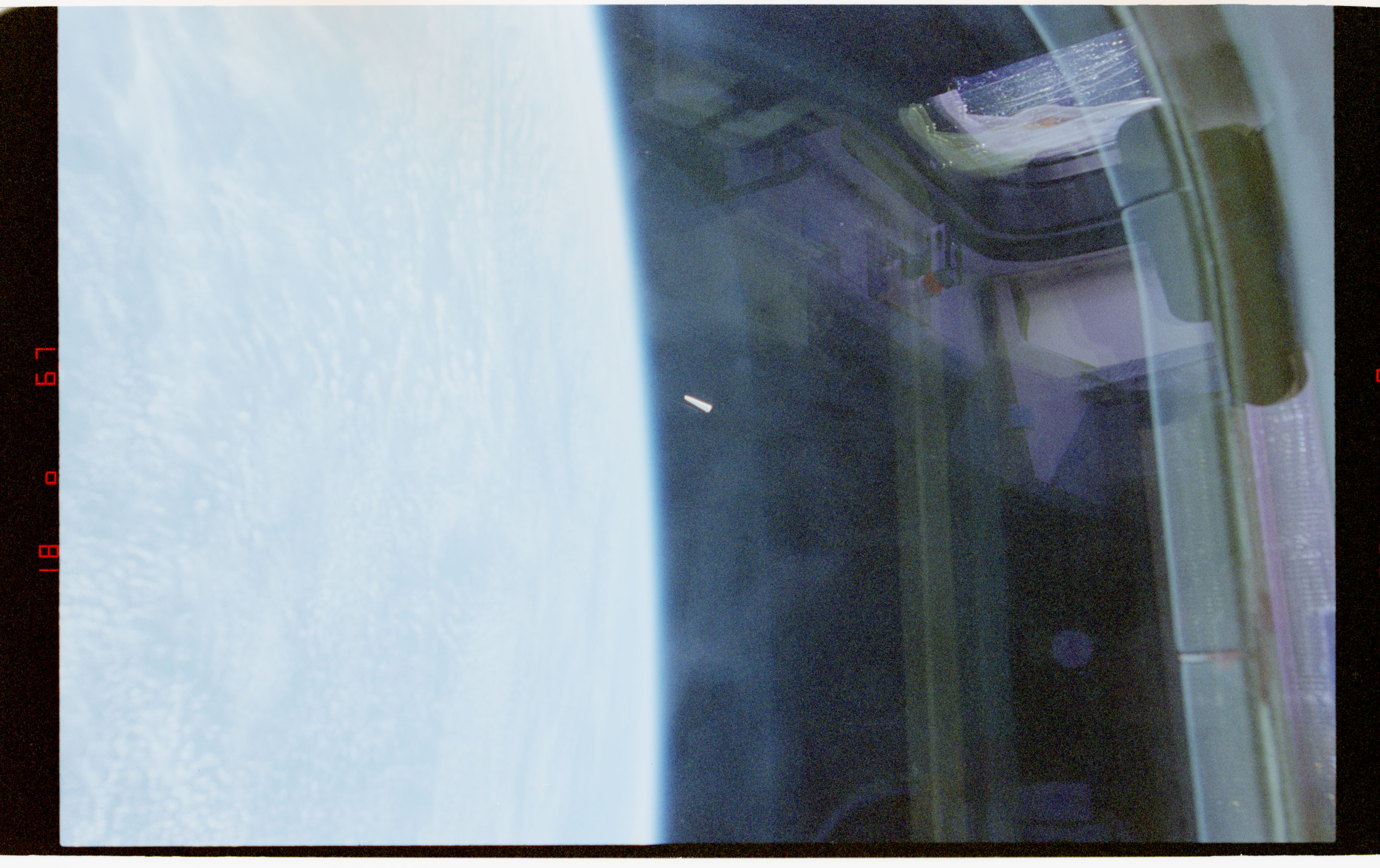
Same document series
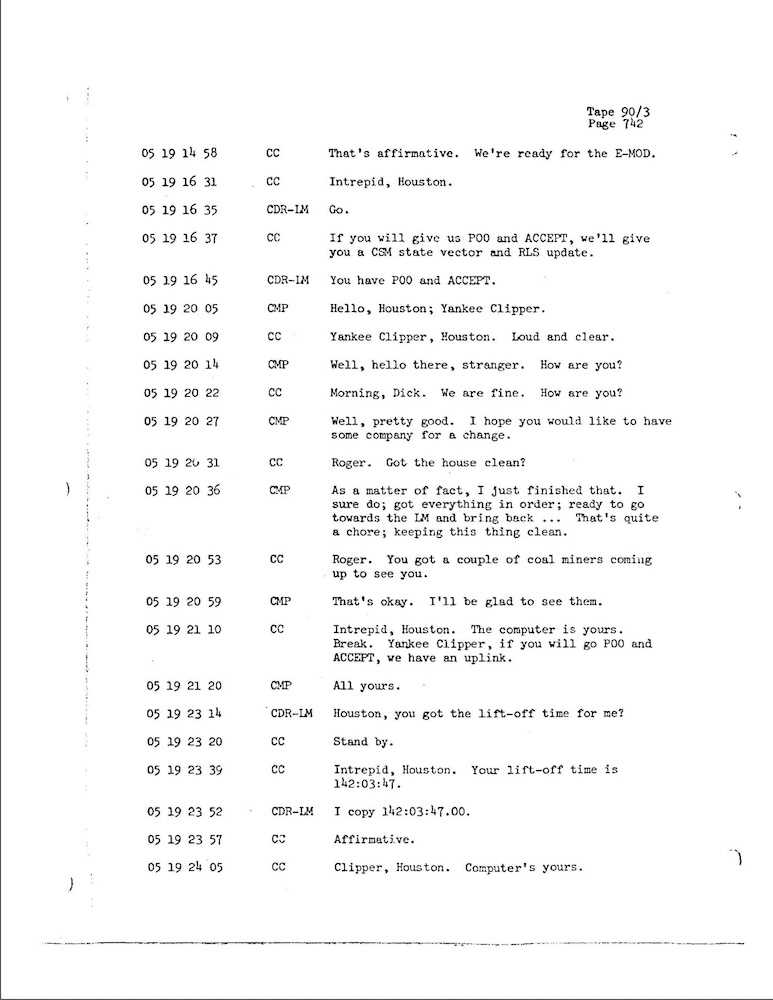
NASA-UAP-D001, Apollo 12 Transcript, 1969
NASA-UAP-D002, Apollo 17 Transcript, 1972
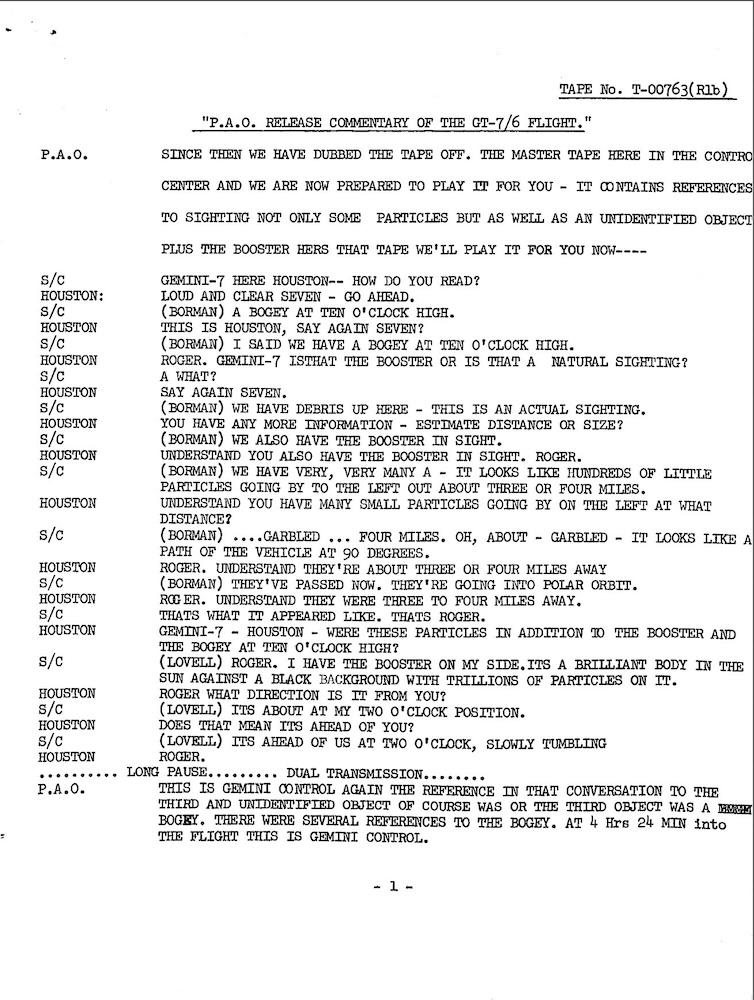
NASA-UAP-D003, Gemini 7 Transcript, 1965

NASA-UAP-D003A, Gemini 7 Audio Excerpt, 1965
NASA-UAP-D004, Apollo 11 Technical Crew Debriefing, 1969
NASA-UAP-D005, Apollo 17 Crew Debriefing for Science, 1973
Same period
255_413270_UFO's_and_Defense_What_Should_we_Prepare_For
38_143685_box_Incident_Summaries_101-172
38_143685_box_Incident_Summaries_173-233
38_143685_box7_Incident_Summaries_1-100
65_HS1-834228961_62-HQ-83894_Section_001
65_HS1-834228961_62-HQ-83894_Section_002
Same release
FBI-UAP-D011, D/FBI Correspondence Referral, 1949
CIA-UAP-005, German Scientist's Article on 'Flying Discs'
CIA-UAP-002, Scientific Advisory Panel on Unidentified Flying Objects, Report, 1952-1953
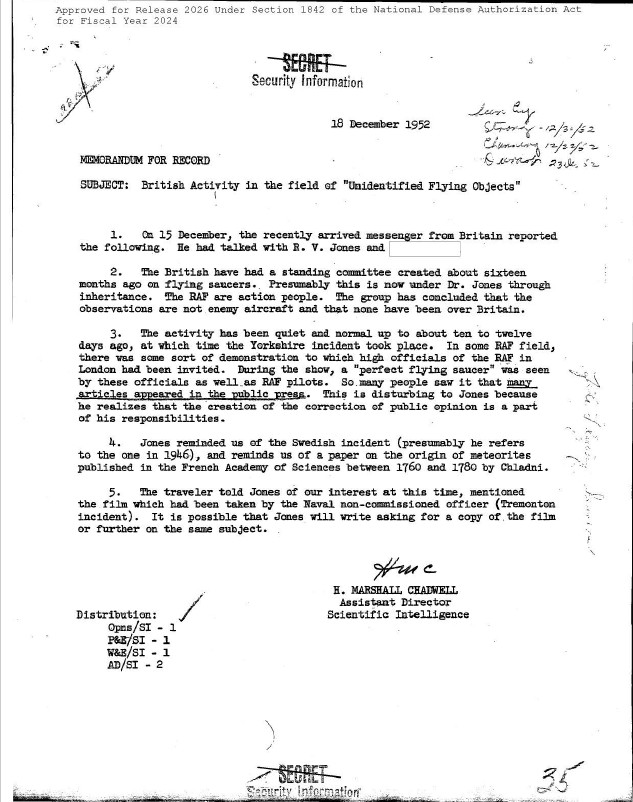
CIA-UAP-014, British activity in the Field of "Unidentified Flying Objects"
FBI-UAP-D012, Newark Field Office, 1952-1967
FBI-UAP-D013, Washington State ‘UFO’ Investigation, 1952-1960
Same agency
NASA-UAP-D014, Mercury-Redstone 4, July 21, 1961
NASA-UAP-D012, Mercury Atlas 8 Audio Excerpt, October 3, 1962
NASA-UAP-D013, Mercury Atlas 7, May 24, 1962
NASA-UAP-D015, Astronaut Scientific Debriefings, 1962-1963
NASA-UAP-D023, Interview Excerpt with Astronaut Gordon Cooper, 1962